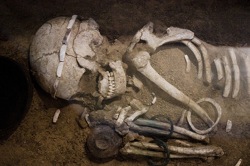
NEWS 24– Two partial skeletons unearthed in a South African cave belong
to a previously unclassified species of pre-human dating back almost two
million years and may shed new light on human evolution, scientists said on
Thursday.
Fossils of the bones of a young male and an adult female suggest the newly
documented species, called Australopithecus sediba, walked upright and shared
many physical traits with the earliest known human Homo species.
The finding of the pre-human, or hominid, fossils – which scientists say are
between 1.78 and 1.95 million years old – was published in the journal Science
and may answer some key questions about where humans came from.
Lee Berger of the University of the Witwatersrand, Johannesburg,
who led the team that found the fossils in August 2008, said the team were
hoping to reveal a possible two further skeletons from the same site.
He was reluctant to define the new species as a “missing link” in
human evolutionary history, but said it would “contribute enormously to
our understanding of what was going on at that moment where the early members
of the genus Homo emerged”.
SCIENCE NEWS– Tiny fossils discovered on Earth in samples of sulfates, a class of minerals
recently found to be common in some parts of Mars, bodes well for finding
vestiges of life on the Red Planet, astrobiologists reported April 28 during a
briefing held in conjunction with the Astrobiology Science Conference 2010 in League City, Texas.
Bill Schopf of the University of California,
Los Angeles, and his colleagues
discovered the fossils in deposits of gypsum, or calcium sulfate, that were
deposited in the Mediterranean Sea 6 million years ago
and then thrust up into the Alps.
The discovery, which included plankton and single-celled organisms such as
cyanobacteria (pond scum), some filling areas tens of micrometers in diameter,
was a surprise, he said. Schopf and other researchers had assumed that as
sulfate crystals grow, they would crush and obliterate any microfossils that
might have been trapped inside the minerals, “but that turned out not to be the
case,” he said.
TRUTHOUT– High-value detainees captured during the Bush
administration’s “war on terror,” who were subjected to brutal torture
techniques, were used as “guinea pigs” to gauge the effectiveness of
various torture techniques, a practice that has raised troubling
comparisons to Nazi-era human experimentation. according to a disturbing
new report released by Physicians for Human Rights, an international
doctors’ organization.
PHR, based in Massachusetts, called on President
Barack Obama, Attorney General Eric Holder and the US Congress to launch
investigations into the role of physicians and psychiatric experts in
the monitoring and assessments of the brutal interrogations.
“Health professionals working for and on behalf of
the CIA monitored the interrogations of detainees, collected and
analyzed the results of [the] interrogations, and sought to derive
generalizable inferences to be applied to subsequent interrogations,”
said the 27-page
report, entitled “Experiments in Torture: Human Subject Research
and Evidence of Experimentation in the ‘Enhanced’ Interrogation
Program.” “Such acts may be seen as the conduct of research and
experimentation by health professionals on prisoners, which could
violate accepted standards of medical ethics, as well as domestic and
international law. These practices could, in some cases, constitute war
crimes and crimes against humanity.”
The report is based on extensive research of
previously declassified government documents that shows the crucial role
medical personnel played in establishing and justifying the legality
of the Bush administration’s torture program. Many of the details
contained in the document has already been painstakingly documented by
Marcy Wheeler at her blog Emptywheel, and Truthout’s own Jeffrey Kaye on his blog Invictus and
in articles published on this web site and at Firedoglake.
Written by medical and psychological experts, some of
who have worked with victims of torture, the report said the research
and experimentation on detainees violate medical professional standards,
the Geneva Conventions on treatment of detainees, and international law
based on the Nuremberg principles that were embraced by the civilized
world after it was revealed that the Nazis engaged in medical atrocities
on prisoners during World War II.
“The essence of the ethical and legal protections for
human subjects is that the subjects, especially vulnerable populations
such as prisoners, must be treated with the dignity befitting human
beings and not simply as experimental guinea pigs,” the PHR report said.
Frank Donaghue, PHR’s chief executive officer, said
the report appears to demonstrate that the CIA violated “all accepted
legal and ethical standards put in place since the Second World War to
protect prisoners from being the subjects of experimentation.”
Waterboarding and Combined Techniques
For example, CIA medical personnel obtained
experimental research data by subjecting more than 25 detainees to
individual and combined torture techniques, including sleep deprivation
and stress positioning, as a way of understanding “whether one type of
application over another would increase the subjects’ susceptibility to
severe pain,” the report said, adding that the information derived from
that research informed “subsequent [torture] practices.”
The study of combined and individual torture tactics
“appears to have been used primarily to enable the Bush administration
to assess the legality of the tactics, and to inform medical monitoring
policy and procedure for future application of the techniques,” the
report said.
Drawing from the study of torture tactics, Steven
Bradbury, then head of the Justice Department’s Office of Legal Counsel
(OLC), prepared a memo in 2005 that approved combinations of torture
tactics, including forced nudity, “wall-slamming,” stress positions and
repeated periods of sleep deprivation.
PHR’s analysis on sleep deprivation concluded that
“government lawyers used observational data collected by health
professionals from varying applications of sleep deprivation to inform
legal evaluations regarding the risk of inflicting certain levels of
harm on the detainee, and to shape policy that would guide further
application of the technique.”
PHR also said the drowning method known as
waterboarding was monitored in early 2002 by medical personnel who
collected data about how detainees responded to the torture technique.
The data was then given to Bradbury, who cited it in advising CIA
interrogators how to administer the technique.
“According to the Bradbury memoranda, [CIA Office of
Medical Services] teams, based on their observation of detainee
responses to waterboarding, replaced water in the waterboarding
procedure with saline solution ostensibly to reduce the detainees’ risk
of contracting pneumonia and/or hyponatremia, a condition of low sodium
levels in the blood caused by free water intoxication, which can lead to
brain edema and herniation, coma, and death,” the report said.
In Bradbury’s memo urging revised techniques – what
the PHR report termed “Waterboarding 2.0″ – the Bush lawyer wrote that
“based on advice of medical personnel, the CIA requires that saline
solution be used instead of plain water to reduce the possibility of
hyponatremia … if the detainee drinks the water.”
The Bush administration also used the medical studies
to mitigate any blame that might be placed on CIA interrogators or
their superiors, by suggesting that doctors were involved to protect the
health of the detainees even if a side benefit was to make the torture
more effective, the report said.
Shielding
Torturers
But the administration apparently anticipated
accusations of human experimentation by adding language in the 2006
Military Commissions Act. The PHR’s report noted that the law amended
the War Crimes Act, and made it retroactive to 1997, “to delineate the
specific violations of [the Geneva Conventions’] Common Article 3 that
would be punishable. Among those violations is ‘performing biological
experiments.’
“The amended language prohibits: The act of a person
who subjects, or conspires or attempts to subject, one or more persons
within his custody or physical control to biological experiments without
a legitimate medical or dental purpose and in so doing endangers the
body or health of such person or persons.”
According to the PHR report, “the new language of the
WCA added two qualifications that appear to have lowered the bar on
biological experimentation on prisoners” by creating a loophole
regarding a “legitimate” purpose that does not necessarily match up with
the interests of the subject. The word “endangers” also would open the
door to some forms of human experimentation, the report said.
PHR and other human rights groups plan to file a
complaint Wednesday with the Department of Health and Human Services’
Office for Human Research Protections (OHRP) demanding the agency launch
a probe into the CIA’s Office of Medical Services. Additionally, the
group wants the Justice Department’s ethics watchdog, the Office of
Professional Responsibility (OPR), to launch a separate investigation.
The OPR recently concluded a four-year long investigation
into the legal work former OLC attorneys John Yoo, now a Berkeley law
professor, and Jay Bybee, a federal appeals court judge on the Ninth
Circuit, did when drafting the August 2002 torture memos and concluded
both men violated professional standards when they issued their legal
opinions that allowed CIA officers to use brutal methods when
interrogating suspected terrorists, and recommended both men be referred
to their state bar associations to face possible disbarment.
The judgment was softened by career prosecutor David
Margolis, who was put in charge of the final recommendations, and who
said he was “unpersuaded” by OPR’s “misconduct” conclusion, which
faulted Yoo and Bybee for their approval of brutal interrogation
techniques that were used against terrorism suspects after the 9/11
attacks.
The CIA denied the PHR’s allegations of wrongdoing.
Spokesman Paul Gimigliano said the agency, “as part of its past
detention program, [did not] conduct human subject research on any
detainee or group of detainees.”
Despite the latest revelations regarding the torture
program and other war crimes, President Obama still refuses to allow
war-crimes investigations into the actions of President George W. Bush
and his subordinates, saying it is better to “look forward, and not
backwards.”
However, Obama appears to have different standards
for other countries. During an interview with a reporter for an Indonesian
television station, Obama was asked whether he was satisfied with the
way Indonesia dealt with its past human rights abuses.
“We have to acknowledge that those past human rights
abuses existed,” said Obama, who lived in Indonesia as a child and whose
step-father was Indonesian. “We can’t go forward without looking
backwards.”
Stephen Soldz, a psychoanalyst and one of the
author’s of the PHR report, said “it is important to realize that the logic
used by the Obama administration to refuse an investigation of torture
claims – that the torture memos allowed the torturers to believe their
actions were legally sanctioned – does not apply to potential research
on detainees.”
“As far as is publicly known, there exist no ‘torture
research’ memos authorizing ignoring laws and regulations prohibiting
research on torture techniques,” Soldz said.
Rev. Richard Killmer, executive director of the National Religious Campaign Against Torture, said
PHR’s findings “recalls some of humanity’s darkest days – charges from
which no person of faith can afford to turn away.”
“A Guinea Pig“
The PHR report’s conclusions regarding sleep
deprivation also buttresses previous information that the Bush
administration practiced its torture techniques on the first “high-value
detainee,” Abu Zubaydah, after he was captured in March 2002 and
confirm several recent investigative reports published by Truthout.
A former National Security official knowledgeable
about the Bush administration’s torture program previously told Truthout that Zubaydah was “an
experiment … a guinea pig” used so CIA contractors could obtain data
regarding different techniques.
The data was then shared with officials at the CIA
and the Justice Department, who used the information to draft the August
2002 torture memos regarding the preferred interrogation methods and
their frequency of use, setting parameters that supposedly prevented the
interrogators from crossing the line into torture.
In an interview with the
International Committee of the Red Cross, Zubaydah said the torture he
was subjected to after his capture “felt like [his torturers] were
experimenting and trying out techniques to be used later on other
people.”
Moreover, in her book “The Dark Side,” New Yorker reporter Jane Mayer wrote that Zubaydah’s interrogation sessions became
more aggressive and experimental in April 2002, after the CIA sent in
Dr. James Mitchell, a psychologist under contract to the agency, to take
over the interrogations.
Mayer wrote that when Mitchell arrived he told Ali
Soufan, an FBI agent who had first interrogated Zubaydah using
rapport-building techniques, that Zubaydah needed to be treated “like a
dog in a cage.”
Mitchell said Zubaydah was “like an experiment, when
you apply electric shocks to a caged dog, after a while he’s so
diminished, he can’t resist.”
Soufan and the other FBI agent argued that Zubaydah
was “not a dog, he was a human being” to which Mitchell responded:
“Science is science.”
The PHR report does not identify Zubaydah by name.
In March, Truthout reported, based on interviews with more
than two dozen intelligence and national security officials, that one of
the main reasons Zubaydah’s torture sessions were videotaped was to
gain insight into his “physical reaction” to the techniques used against
him.
For example, one current and three former CIA
officials said some videotapes showed Zubaydah being sleep deprived for
more than two weeks. Contractors hired by the CIA studied how he
responded psychologically and physically to being kept awake for that
amount of time. By looking at videotapes, they concluded that after the
11th consecutive day of being kept awake Zubaydah started to “severely
break down.” So, the torture memo signed by Bybee concluded that 11 days
of sleep deprivation was legal and did not meet the definition of
torture.
Those videotapes were destroyed and the issue is now
the subject of a criminal investigation lead by John Durham, a
US attorney from Connecticut.
PHR’s report said, “information collected by health
professionals on the effects of sleep deprivation on detainees was used
to establish sleep deprivation policy” and “guide further application of
the technique.”
The report determined that the human experimentation
side of the program helped create a framework to protect the torturers
from war crimes and other charges.
“OLC lawyers argued that efforts to refine and
improve the application of techniques would provide a potential ‘good
faith’ defense for interrogators against charges of torture,” the report
said. “They argued that such a medical monitoring regime would remove
the element of intent to cause harm from the act, which is a necessary
requirement for a successful prosecution of a torture charge under US
law, and that a ‘good faith belief need not be a reasonable belief; it
need only be an honest belief.’ Thus, research on the detainees became a
key part of the OLC legal strategy to demonstrate the lack of intent to
commit torture.”
Nathaniel Raymond, director of PHR’s Campaign Against
Torture, said, “Justice Department lawyers appear to have never
assessed the lawfulness of the alleged research on detainees in CIA
custody, despite how essential it appears to have been to their legal
cover for torture.”
Brent Mickum, Zubaydah’s attorney, said PHR’s report
is evidence that there was an “experimental element to the torture
program and it was approved at the highest levels of government.”
“I have said literally for years that I believe my
client was tortured before any of these enhanced interrogation
techniques were approved by the Justice Department,” Mickum told
Truthout. “And now we know that not only was my client subjected to
torture but he was part of an experiment. This is so ugly, so shameful,
so unlawful. If this revelation doesn’t kick in an obligation on the
part of the Department of Justice to investigate war crimes than I don’t
know what does. The Obama administration has essentially refused to do
that. At some point, this president and his appointees have to take
seriously what their obligations are under the law.”
Mickum said he is preparing to file a series of
motions in federal court, calling on the government to preserve evidence
related to the CIA’s research and experimentation.
“Research” Continues
Meanwhile, Obama’s presence in the White House has
not resulted in an abandonment of the research side of the interrogation
program.
Last March, Director of National Intelligence Dennis
Blair, who recently resigned, disclosed that the Obama administration’s
High-Value Detainee Interrogation Group (HIG), planned on conducting
“scientific research” to determine “if there are better ways to get
information from people that are consistent with our values.”
“It is going to do scientific research on that
long-neglected area,” Blair said during testimony before the House
Intelligence Committee. He did not provide additional details as to what
the “scientific research” entailed.
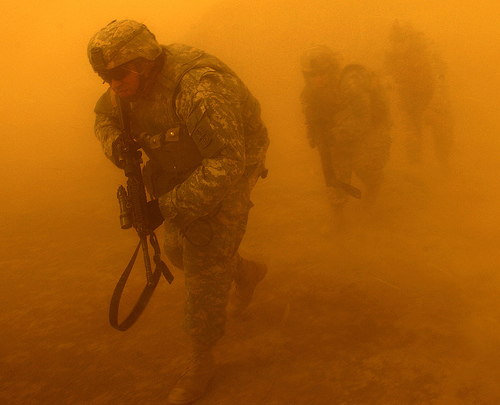
GUARDIAN– President Hamid Karzai has
lost faith in the US strategy in Afghanistan and is increasingly
looking to Pakistan to end the
insurgency, according to those close to Afghanistan’s former head of
intelligence services. Amrullah Saleh, who resigned last weekend,
believes the president lost confidence some time ago in the ability of
Nato forces to defeat the Taliban.
As head of the National
Directorate of Security, Saleh was highly regarded in western circles.
He has said little about why he quit, other than that the Taliban attack
on last week’s peace jirga or assembly in Kabul was for him the
“tipping point”; the interior minister, Hanif Atmar, also quit, and
their resignations were accepted by Karzai.
Privately Saleh has
told aides he believes Karzai’s approach is dangerously out of step with
the strategy of his western backers. “There came a time when [Karzai]
lost his confidence in the capability of the coalition or even his own
government [to protect] this country,” a key aide told the Guardian.
Saleh
believes Karzai has long thought this, but his views were crystallised
in the aftermath of last year’s election when millions of votes were
found to be fraudulent; Karzai blamed the US, UK and United Nations for
the fraud. According to the source, Saleh is deeply concerned by
Karzai’s noticeably softer attitude towards Pakistan. The president has
long dropped his past habit of excoriating Pakistan for aiding the
Taliban.
Saleh also echoes complaints of US commanders that Karzai
refuses to behave like a commander-in-chief, and is not publicly
leading the counterinsurgency campaign devised by Stanley McChrystal,
the US commander of Nato forces.
In London today, the US defence
secretary, Robert Gates, warned that progress needed to be made. “In all
coalition countries the public expects to see us move in the right
direction [but] will not tolerate the perception of a stalemate, where
we are losing our young men.”
Gates also warned of “a high level
of violence, especially this summer”, as US forces push deeper into
southern provinces where the Taliban are strongest. Today in the south,
insurgents shot down a Nato helicopter, killing four US troops, while a
British soldier died in a separate attack. In Islamabad in Pakistan, an
assault on a depot by insurgents destroyed 50 lorries belonging to the
Nato military supply chain.
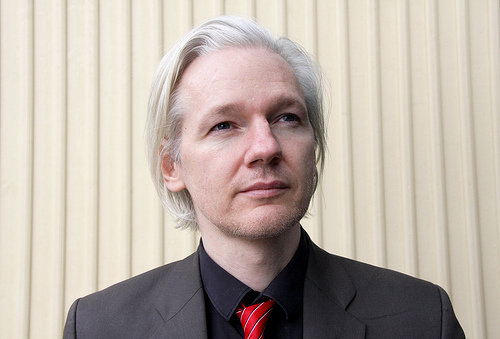
GUARDIAN– American officials are searching for Julian Assange, the founder of WikiLeaks in an attempt to pressure
him not to publish thousands of confidential and potentially hugely
embarrassing diplomatic cables that offer unfiltered assessments of Middle
East governments and leaders.
The Daily Beast, a US news reporting and opinion website, reported that Pentagon investigators are trying to track down Julian Assange –
an Australian citizen who moves frequently between countries – after the arrest
of a US soldier last week who is alleged to have given the whistleblower
website a classified video of American troops killing civilians in Baghdad.
The US authorities fear their release could “do serious damage to
national security”, said the Daily Beast, which is published by Tina
Brown, former editor of Vanity Fair and New Yorker magazines.



 NEWS 24– Two partial skeletons unearthed in a South African cave belong
to a previously unclassified species of pre-human dating back almost two
million years and may shed new light on human evolution, scientists said on
Thursday.
NEWS 24– Two partial skeletons unearthed in a South African cave belong
to a previously unclassified species of pre-human dating back almost two
million years and may shed new light on human evolution, scientists said on
Thursday. SCIENCE NEWS
 GUARDIAN
 GUARDIAN