Pluto Set for Further Humiliation

3 NEWS– Pluto lost its position as a planet in 2006, and now looks set for further humiliation.

Currently considered a dwarf planet alongside four others – Eris, Ceres, Haumea and Makemake – new research suggests there could be at least 50 more in the club, which no longer seems so exclusive.

”It’s like being a member of the Qantas Club,” astronomer Charley Lineweaver told the Sydney Morning Herald. “You think you’re elite until you realise everyone else at the airport has a Qantas Club card too.”

To be considered a dwarf planet, a celestial body must have attained hydrostatic equilibrium – another way of saying there are no gravitational imbalances in its structure. Generally, bodies that have attained equilibrium are spherical – Haumea is the only currently-known exception.

Dr Lineweaver and Dr Marc Norman calculated that objects smaller than 400km in diameter are in some cases able to be in hydrostatic equilibrium, and observed small, icy moons in the outer reaches of the solar system that had done so.

Continue reading about Pluto Set for Further Humiliation.

© 3 News, 2010

Photo by flick user Lunar and Planetary Institute

Advertiser Uses Sheep as Billboards

NY TIMES– The latest low-technology billboards along highways in the Netherlands are startling enough to prompt motorists to indulge in U-turns.

Or make that ewe-turns. These ads are walking, woolly flocks of bleating sheep. Early this month, Hotels.nl, a Dutch online reservations company, began displaying its corporate logo on royal blue waterproof blankets worn by sheep.

The company spends 1 euro, or about $1.23 a day, per sheep and sponsors about 144 sheep in flocks throughout the Netherlands. But commercially branded sheep roaming the bucolic meadows of the northern Netherlands have prompted a reaction.

On Saturday, the town of Skarsterlan began fining Hotels.nl 1,000 euros a day for putting branded blankets on sheep. Advertising on livestock violates the town’s ban on advertising along the highways.

“My first reaction was a smile; it is very creative,” said Bert Kuiper, the town’s mayor. “My second reaction is that we have to stop this. If we start with sheep, then next it’s the cows and horses.”

Hotels.nl said that it would pay the fines, but that it planned to fight the ban in court. Since the advertising strategy started, sales by Hotels.nl have been up 15 percent, and so have visits to the company’s Web site, said Miechel Nagel, chief executive of Hotels.nl, a four-year-old company based in Groningen. He plans to increase the number of sheep sporting the company’s logo and is searching for locations where there are frequent traffic jams.

Continue reading about Using Sheep as Billboards.

© NY TIMES, 2006

Odds of Dying in a Terrorist Attack in America

EYEWASH STATION – After 9/11, the fear of another attack on U.S. soil cleanly supplanted the fear of having one’s penis chopped off by a vengeful lover in the pantheon of irrational American fears. While we’re constantly being told that another attack is imminent and that radical Islamic fundamentalists are two steps away from establishing a caliphate in Branson, Missouri, just how close are they? How do the odds of dying in a terrorist attack stack up against the odds of dying in other unfortunate situations? Well, let’s take a look.

The following ratios were compiled using data from 2004 National Safety Council (NSC) Estimates, a report based on data from The National Center for Health Statistics and the U.S. Census Bureau. In addition, 2003 mortality data from the Center for Disease Control (CDC) was used.

You are 13 times more likely to die in a railway accident than from a terrorist attack

You are 12,571 times more likely to die from cancer than from a terrorist attack

You are six times more likely to die from hot weather than from a terrorist attack

You are eight times more likely to die from accidental electrocution than from a terrorist attack

You are 11,000 times more likely to die in an airplane accident than from a terrorist plot involving an airplane

You are 87 times more likely to drown than die in a terrorist attack

You are 404 times more likely to die in a fall than from a terrorist attack

You are 17,600 times more likely to die from heart disease than from a terrorist attack

You are 1048 times more likely to die from a car accident than from a terrorist attack

You are 12 times more likely to die from accidental suffocation in bed than from a terrorist attack

You are nine times more likely to choke to death on your own vomit than die in a terrorist attack

You are eight times more likely to be killed by a police officer than by a terrorist

Cities Sue Manufacturer of Weed-Killer Found in Tap Water

COMMON DREAMS– A coalition of communities in six Midwestern states filed a federal lawsuit Monday seeking to force the manufacturer of a widely-used herbicide to pay for its removal from drinking water.

Atrazine, a weed-killer sprayed primarily on cornfields, can run off into rivers and streams that supply municipal water systems. As the Huffington Post Investigative Fund reported in a  series of  articles last  fall, the U.S. Environmental Protection Agency failed to notify the public that atrazine had been found at levels above the federal safety limit in drinking water in at least four states.

The lawsuit was filed in U.S. District Court for the Southern District of Illinois by 16 cities in Kansas, Illinois, Indiana, Ohio, Missouri, and Iowa.  The communities allege that Swiss corporation Syngenta AG and its Delaware counterpart Syngenta Crop Protection, Inc. reaped billions of dollars from the sale of atrazine while local taxpayers were left with the financial burden of filtering the chemical from drinking water.

Many water utility managers  told the Investigative Fund that they could not afford the expensive carbon filters that are needed to remove atrazine.

Syngenta spokesman Paul Minehart told the Investigative Fund that the company had not yet received word of a federal action, but said that current levels of atrazine in drinking water are safe.

“What Syngenta can say is that EPA re-registered atrazine in 2006, stating it would cause no harm to the general population,” Minehart said. “In the current economy many organizations, including water systems, are looking for additional sources of revenue.  It is not surprising that some water systems would say they cannot afford additional filtering but, for atrazine, there is no need.”

Atrazine has long been a controversial product. The European Union in 2004 banned its use, saying there was not enough information to prove its safety. The EPA recently  announced that it would be re-evaluating the herbicide’s ability to cause cancer and birth defects, as well as its potential to disrupt the hormone and reproductive systems of humans and amphibians.

Last week, a study published in the Proceedings of the National Academy of Science  reported that male frogs exposed to levels of atrazine below federal limits could become functional females, with the ability to mate and lay eggs.

Citizens in all sixteen of the cities named in the lawsuit get their drinking water from sources next to or surrounded by agricultural fields where farmers use atrazine. Some of these cities sell their water in bulk to other nearby towns.

According to EPA data from 2008, at least two of the cities — Coulterville, Ill. and Monroeville, Ohio — found atrazine in their river water at levels above 30 parts per billion (ppb). To comply with federal law, the level of atrazine in drinking water must not exceed 3ppb on annual average.

Lawyer Stephen Tillery, who is representing the sixteen cities in this complaint, said that these cities alone have spent upwards of $350 million trying to filter atrazine from their drinking water.

by Danielle Ivory

Investigative Fund reporter Danielle Ivory discussed atrazine last fall on the TV program Democracy Now. To watch, click here.

Attribution-No Derivative Works 3.0 Creative Commons license

 

Posted in Uncategorized | 1 Reply

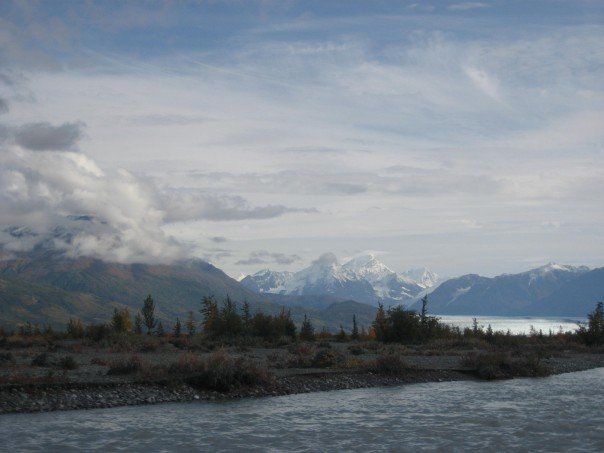
BP is Pursuing Risky Two Mile Underground Drilling in Alaska

NY TIMES– The future of BP’s offshore oil operations in the Gulf of Mexico has been thrown into doubt by the recent drilling disaster and court wrangling over a moratorium.

The BP drilling station on the artificial island in the Beaufort Sea. Because of its location on the artificial island, it has been exempted from the moratorium on offshore drilling.

But about three miles off the coast of Alaska, BP is moving ahead with a controversial and potentially record-setting project to drill two miles under the sea and then six to eight miles horizontally to reach what is believed to be a 100-million-barrel reservoir of oil under federal waters.

All other new projects in the Arctic have been halted by the Obama administration’s moratorium on offshore drilling, including more traditional projects like Shell Oil’s plans to drill three wells in the Chukchi Sea and two in the Beaufort.

But BP’s project, called Liberty, has been exempted as regulators have granted it status as an “onshore” project even though it is about three miles off the coast in the Beaufort Sea. The reason: it sits on an artificial island — a 31-acre pile of gravel in about 22 feet of water — built by BP.

The project has already received its state and federal environmental permits, but BP has yet to file its final application to federal regulators to begin drilling, which it expects to start in the fall.

Some scientists and environmentalists say that other factors have helped keep the project moving forward.

Rather than conducting their own independent analysis, federal regulators, in a break from usual practice, allowed BP in 2007 to write its own environmental review for the project as well as its own consultation documents relating to the Endangered Species Act, according to two scientists from the Alaska office of the federal Mineral Management Service that oversees drilling.

Read full article HERE.

© NY TIMES, 2010

Photo by Abby Martin