Panetta: “Not Much Choice” But to Use Blackwater

RAW STORY– How can a company allegedly responsible for killing 17 unarmed civilians in Baghdad in 2007 continue to get State Department and CIA contracts? CIA Director Leon Panetta says there is “not much choice” because few companies have the capabilities of Blackwater.

“Since I have become director, I have asked our agency to review every contract we have had with Blackwater and whatever their new name is now — Xe — to ensure first and foremost that we have no contract in which they are engaged in any CIA operations. We’re doing our own operations. That’s important that we not contract that out to anybody,” Panetta told ABC’s Jake Tapper Sunday.

“But at the same time I have to tell you that in the war zone, we continue to have needs for security. You’ve got a lot of forward bases. You’ve got a lot of attacks on some of those bases. We’ve got to have security. Unfortunately, there are few companies that provide that kind of security,” Panetta continued.

“State Department relies on them. We rely on them to a certain extent. So, we’ve bid out some of those contracts. They provided a bid that underbid everyone else by about $26 million and a panel that we had said that they can do the job, that they’ve shaped up their act,” he said.

“There was really not much choice but to accept that contract,” said Panetta.

“But having said that, I will tell you that I continue to be very cautious about any of those contracts and we’re reviewing all of the bids that we have with that company,” he concluded.

The CIA recently signed a new $100-million contract with Blackwater to guard its facilities in Afghanistan.

50 TO 100 AL QAEDA IN AFGHANISTAN

Panetta also told ABC’s Jake Tapper that he estimates there are somewhere in the vicinity of 50 to 100 Al Qaeda operatives inside Afghanistan.

“There’s no question that the main location of Al Qaeda is in the tribal areas of Pakistan,” he said.

Faiz Shakir at ThinkProgress notes that, with approximately 100,000 US troops in Afghanistan, that works out to 1,000 troops per Al Qaeda agent.

FEDS WON’T CHARGE BLACKWATER IN ATTEMPT TO BREAK SANCTIONS

The US won’t charge Blackwater over its attempts to secure security contracts in restive southern Sudan, even though the company’s attempts evidently violated sanctions placed on Sudan by the US, McClatchy news service reports.

The effort to drum up new business in East Africa by Blackwater owner Erik Prince, a former Navy SEAL who had close ties with top officials in the George W. Bush White House and the CIA, became a major element in a continuing four-year federal investigation into allegations of sanctions violations, illegal exports and bribery.

The Obama administration, however, has decided for now not to bring criminal charges against Blackwater, according to a U.S. official close to the case.

Had the company been indicted, it could have been suspended from doing business with the U.S. government, and a conviction could have brought debarment from all government contracts, including providing guard services for the CIA and State Department in war zones.

© COPYRIGHT RAW STORY, 2010
China’s Monster Three Gorges Dam About to Slow Rotation of the Earth

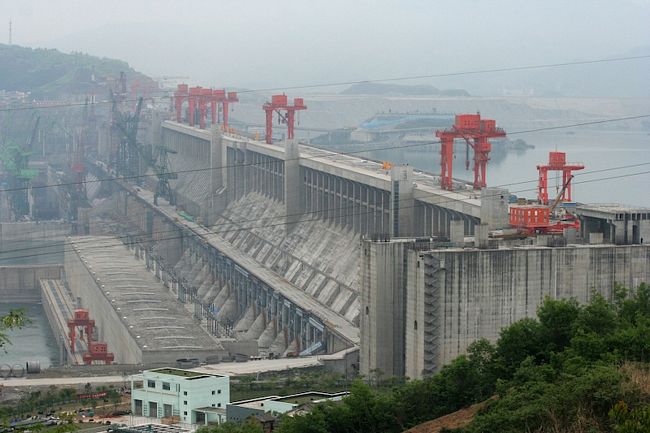
BUSINESS INSIDER The Myth: The filling of the reservoir behind Three Gorges Dam in China changed the rotation of the Earth.

The Evidence: Three Gorges Dam, China crosses the Yangtze River in Hubei province, China. It the world’s largest hydroelectric power station by total capacity, which will be 22,500 MW when completed. When the water level is maximum at 175 meters (574 ft) over sea level (91 meters (299 ft) above river level), the reservoir created by the dam is about 660 kilometers (410 mi) in length and 1.12 kilometers (0.70 mi) in width on average.

The total surface area of the reservoir is 1045 square kilometers, and it will will flood a total area of 632 square kilometers, of land.  The reservoir will contain about 39.3 cu km (9.43 cubic miles) of water. That water will weigh more than 39 trillion kilograms (42 billion tons).

A shift in a mass of that size would affect the rotation of the Earth due to a phenomena known as the moment of inertia, which is the inertia of a rigid rotating body with respect to its rotation. The moment of inertia of an object about a given axis describes how difficult it is to change its angular motion about that axis. The longer the distance of a mass to its axis of rotation, the slower it will spin. You may not know it, but you see examples of this in everyday life. 

For example, a figure skater attempting to spin faster will draw her arms tight to her bodies, and thereby reduce her moment of inertia. Similarly, a diver attempting to somersault faster will bring his body into a tucked position.

Raising 39 trillion kilograms of water 175 meters above sea level will increase the Earth’s moment of inertia and thus slow its rotation. However, the effect would extremely small.  NASA scientists calculated that shift of such as mass would increase the length of day by only 0.06 microseconds and make the Earth only very slightly more round in the middle and flat on the top.

It would shift the pole position by about two centimeters (0.8 inch). Note that a shift in any object’s mass on the Earth relative to its axis of rotation will change its moment of inertia, although most shifts are too small to be measured (but they can be calculated).

The Verdict: True.

Copyright © 2010 Business Insider, Inc. All rights reserved.

US Testing Heat Ray in Afghanistan

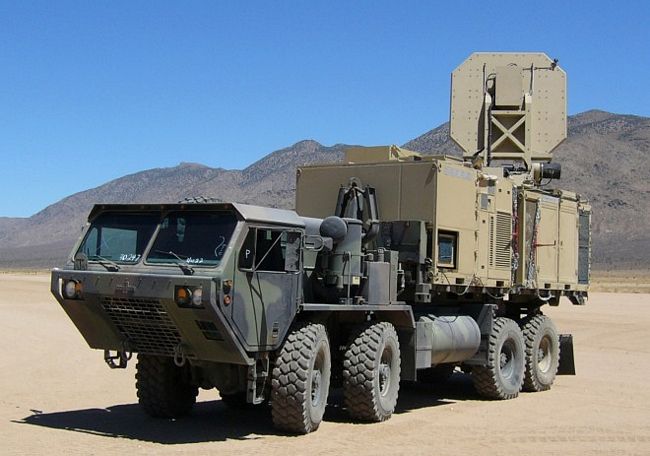
WIRED– The U.S. mission in Afghanistan centers around swaying locals to its side. And there’s no better persuasion tool than an invisible pain ray that makes people feel like they’re on fire.

OK, OK. Maybe that isn’t precisely the logic being employed by those segments of the American military who would like to deploy the Active Denial System to Afghanistan. I’m sure they’re telling themselves that the generally non-lethal microwave weapon is a better, safer crowd control alternative than an M-16. But those ray-gun advocates better think long and hard about the Taliban’s propaganda bonanza when news leaks of the Americans zapping Afghans until they feel roasted alive.

Because, apparently, the Active Denial System is “in Afghanistan for testing.”

An Air Force military officer and a civilian employee at the Air Force Research Laboratory are just two of the people telling Danger Room co-founder and AOL News ace Sharon Weinberger that the vehicle-mounted “block 2″ version of the pain ray is in the warzone, but hasn’t been used in combat.

[Update: “We are currently not testing the Active Denial System in Afghanistan,” Kelley Hughes, spokesperson for the Joint Non-Lethal Weapons Directorate, tells Danger Room.

So I ask her: Has it been tested previously? She hems and haws. “I’m not gonna get into operational,” Hughes answers.

Hughes also disputes the assertion that Active Denial creates a burning feeling. “It’s an intolerable heating sensation,” she says. “Like opening up an oven door.”]

For years, the military insisted that the Active Denial System — known as the “Holy Grail” of crowd control — was oh-so-close to battlefield deployment. But a host of technical issues hampered the ray gun: everything from overheating to poor performance in the rain. Safety concerns lingered; a test subject had to be airlifted to a burn center after being zapped by the weapon. (He eventually made a full recovery.) And then there were concerns about “the atmospherics” — how the locals might react — when they learned that the United States had turned a people-roaster on ‘em. “Not politically tenable,” the Defense Science Board concluded.

I pinged Gen. Stanley McChrystal’s staff about the use of Active Denial in Afghanistan. I’ll let you know if I hear anything back. But a few months ago, a source told me that a representative from the Joint Non-Lethal Weapons Directorate was in Afghanistan. Did that mean Active Denial was about to be put into action? Nope, the source said. “She’s just out getting some atmospherics on the use of non-lethals.”

Update 2
: “The active denial system is in the country,” e-mails Lt. Col. John Dorrian, a spokesman for Gen. McChrystal. “However, it has not been used operationally and no decision has been made at this time to deploy it.”

Photo: JNLWD

© COPYRIGHT WIRED, 2010

High Court Upholds Anti-Terror Law Prized by Obama

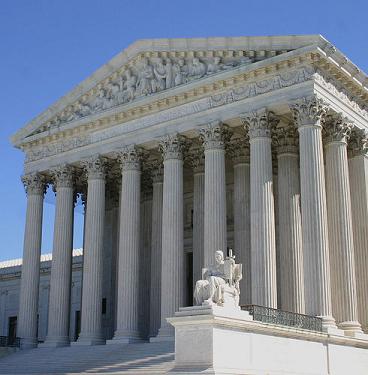
AP– The Supreme Court upheld the government’s authority Monday to ban aid to designated terrorist groups, even when that support is intended to steer the groups toward peaceful and legal activities.

The court left intact a federal law that the Obama administration considers an important tool against terrorism. But human rights organizations say the law’s ban on providing training and advice to nearly four dozen organizations on a State Department list squanders a chance to persuade people to renounce extremism.

The justices voted 6-3 to reject a free-speech challenge from humanitarian aid groups to the law that bars “material support” — everything from money to technical know-how to legal advice — to foreign terrorist organizations.

The aid groups were only challenging provisions that put them at risk of being prosecuted for talking to terrorist organizations about nonviolent activities.

But Chief Justice John Roberts said in his opinion for the court that material support intended even for benign purposes can help a terrorist group in other ways.

“Such support frees up other resources within the organization that may be put to violent ends,” Roberts said in an opinion joined by four other conservative justices, but also the liberal Justice John Paul Stevens.

The court often looks skeptically on laws that criminalize speech and holds them to a high level of scrutiny. But Roberts said there is good reason in this case to defer to Congress and the president, “uniquely positioned to make principled distinctions between activities that will further terrorist conduct and undermine United States foreign policy, and those that will not.”

Continue reading about the High Court Upholds Anti-Terror Law Prized by Obama.

AP Writer Matthew Lee contributed to this report.

Photo by flickr user dbking

© AP, 2010

American Jews Who Reject Zionism Say Events Aid Cause

NY TIMES– One day nearly 20 years ago, Stephen Naman was preparing to help the rabbi of his Reform Jewish temple in South Carolina move the congregation into a new building. Mr. Naman had just one request: Could the rabbi stop placing the flag of Israel on the altar?

“We don’t go to synagogue to pray to a flag,” Mr. Naman, 63, recalled having said in a recent telephone interview.

That rabbi acceded to the request. So, after being transferred to North Carolina and joining a temple there six or seven years later, Mr. Naman asked its rabbi to remove the Israeli flag. This time, the reaction was more predictable.

“The rabbi said that would be terrible,” recounted Mr. Naman, a retired paper company executive who now lives outside Jacksonville, Fla., “and that he’d be embarrassed to be rabbi of such a congregation.” As shocking as Mr. Naman’s insistence on taking Israel out of Judaism may seem, it actually adheres to a consistent strain within Jewish debate. Whether one calls it anti-Zionism or non-Zionism — and all these terms are contested and loaded — the effort to separate the Jewish state from Jewish identity has centuries-old roots.

For the past 68 years, that stance has been the official platform of the group Mr. Naman serves as president of, the American Council for Judaism. And while the establishment of Israel and its centrality to American Jews consigned the council to irrelevancy for decades, the intense criticism of Israel now growing among a number of American Jews has made Mr. Naman’s group look significant, or even prophetic.

It is not that members are flocking to the council. The group’s mailing list is only in the low thousands, and its Web site received a modest 10,000 unique visitors in the last year. Its budget is a mere $55,000. As Mr. Naman acknowledges, the council’s history of opposition to Zionism renders it “radioactive” for even liberal American Jewish groups, like J Street and Peace Now.

Yet the arguments that the council has consistently levied against Zionism and Israel have shot back into prominence over the last decade, with the collapse of the Oslo peace process, Israel’s wars in Lebanon and Gaza, and most recently the fatal attack on a flotilla seeking to breach the naval blockade of the Hamas regime. One need not agree with any of the council’s positions to admit that, for a certain faction of American Jews, they have come back into style.

Read full article about American Jews who Reject Zionism.

© COPYRIGHT NY TIMES, 2010

Photo by flickr user RonAlmog