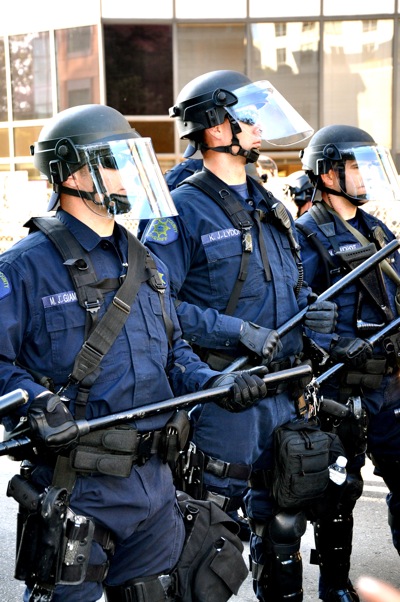
 ALTERNET– What is supposed to be a forum for deliberation and the development of
agreements on global economic governance was an utter failure. In the end, over
a billion dollars was spent to build a temporary system of apartheid in Toronto
to keep protesters out so that the twenty most wealthy countries in the world
could agree to disagree on what to do about the state of the global economy.
ALTERNET– What is supposed to be a forum for deliberation and the development of
agreements on global economic governance was an utter failure. In the end, over
a billion dollars was spent to build a temporary system of apartheid in Toronto
to keep protesters out so that the twenty most wealthy countries in the world
could agree to disagree on what to do about the state of the global economy.
Somewhere between a
billion and two billion dollars was spent in the end on the G20 in Toronto
(and the G8 meeting in Huntsville).
It was used to create a fake lake, a fence around the city (a veritable
apartheid wall) to keep protesters out, and it was used to enforce a regulation
that gave police secret arrest powers that never went through the legislature.
The Toronto Star reported:
“the regulation kicked in Monday and will expire June 28, the day after the
summit ends. While the new regulation appeared without notice on the province’s
e-Laws online database last week, it won’t be officially published in The
Ontario Gazette until July 3 — one week after the regulation expires.
According to the new regulation, “guards” appointed under the act can arrest
anyone who, in specific areas, comes within five metres of the security zone.
Within those areas, police can demand identification from anyone coming
within five metres of the fence perimeter and search them. If they refuse, they
face arrest. Anyone convicted under the regulation could also face up to two
months in jail or a $500 maximum fine.
The security was characterized
by Toronto Star’s Catherine Porter as “the Miami Model.” The reference
goes back to seven years ago when the Free Trade Area of the Americas
summit took place.
Porter explained that “Manny Diaz, Miami’s
then-mayor, called the police methods exemplary–a model to be followed by
homeland security when confronting protesters” while “human rights groups
including Amnesty International called it a model of police brutality and
intimidation.”
From an interview with Naomi Archer, an indigenous rights worker from North
Carolina, Porter outlined how the main identifiers of
the “Miami Model” are: information warfare, intimidation, always suggesting the
protesters triggered the violence, and congratulating themselves after all is
said and done no matter what brutality took place at their hands.
State Repression of Journalists, G20 Protesters
The following is just a handful or small combination of the many videos and
first-hand written accounts from those who were there at the G20 in Toronto
attempting to exercise the right to assemble peacefully and protest.
-Amy Miller, independent journalist, discusses the threats of rape that were
made against women in the detention center. She also details how guards in the
center were strip-searching, traumatizing and sexually abusing prisoners by
fingering some of the women who had been detained.
Amy Miller – Alternative Media Centre,
Independent Journalist (VIDEO)
-Stefan Christoff, an independent journalist who was targeted prior to the
G20 and featured
on last Friday’s edition of Democracy Now! details
the attacks on protesters who gathered for jail solidarity actions outside the
detention center.
-A Guardian journalist (a newspaper from the UK)
was assaulted,
arrested, as were numerous others even if they had press credentials to
prove they were “legitimate” members of the press who had a right to be
covering the police and the protesters
-A large march and rally against the meeting of the G20 ended in police
attacks against peaceful protesters and video journalist Brandon Jourdan in Queens
Park.
(VIDEO)
-Community organizers, while on the way to a press conference, were targeted
by plainclothes officers refusing to show badge numbers or identification.
(VIDEO)
-Calls to Amnesty International were made to report
on the “illegal, immoral and dangerous” conditions at the detention center,
where detained protesters were being held up to 35 hours without food, refused
water or given as little as an ounce every 12 hours, subjected to “over-filled”
cages, delayed processing, put into solitary confinement, refused the use of
pillows or mattresses, forced to endure non-stop light exposure/loss of natural
light rhythm/sensory deprivation (interrogation techniques used on Guantanamo
detainees), subjected to extreme cold (another interrogation technique used on
Guantanamo detainees), and sexually harassed.
There were peaceful protests. Most likely, few saw these images unless they
sought them out.
(VIDEO)
A video like the one above doesn’t match the idea that protesters were a
danger to the well-being of small businesses, people in the city, and those who
were failing to come to agreement on how to tackle the economic crisis.
That’s why the police probably used agents provocateurs; their needed to be
at least one incident to justify the level of police state brutality being
utilized against protesters.
The images and video of police cars up and flames have raised many
questions. Given the history of agents provocateurs in Canada,
Cory Doctorow explored
the possibility that police had incited the violence that many have linked to
black bloc protesters who were at the G20. (Global
Research also has an article up looking at the shoes the police and the
alleged provocateur were wearing.)
G20 Leaders’ “Final Communique”
This only scratches the surface of all that went on. Instead of focusing on
each incident individually, what about considering all the security and
repression in the context of the discussion at the G20? What were leaders
deliberating behind the apartheid fence built to keep protesters out? Why was
it so important that the protesters get nowhere near the site where leaders
were discussing global economics?
Naomi Klein, author of The Shock Doctrine who has been covering
globalization, trade and disaster capitalism for more than a decade, explained
on Democracy Now! on the Monday right after the G20 that she thought
the “real crime scene” was “what actually happened at the summit on Sunday
night.”
Klein explained that the “communiqué” would not levy even a measly tax on
banks to help pay for the global crisis banks had created and prevent future
crises. No financial transaction tax to create fund for social programs and
action on climate change would be created. And, Klein added, “real action to
eliminate subsidies for fossil fuel companies” that they have created many
social and environmental problems for the world would not take place.
On what
the G20 did do, Klein said:
“”What there would be was very decisive action on deficit reductions. These
leaders announced that they would halve their deficits by 2013, which is
shocking and brutal cut. You know, I don’t believe–maybe some of the leaders
intend on keeping–making good on this promise, but, on the other hand, they can
hide behind this promise as the excuse to do what a lot of them want to do
anyway, and say, you know, “We have no choice; we made this commitment.” But
so, just to put this in perspective, if the US were to cut its deficit, its
projected 2010 deficit, in half by 2013, that would be a cut of $780 billion,
you know, if there were no tax increases in that period.
So, you know, that’s
why I wrote the piece that came out this morning in Canada’s national newspaper
The Globe and Mail, that what actually happened at the summit is that the
global elites just stuck the bill for their drunken binge with the world’s
poor, with the people who are most vulnerable, because that is really who’s
going to pay, when they balance their budgets on the backs of healthcare
programs, pension programs, unemployment programs. And also, the other thing
that they did at this G8 summit, that preceded the G20 summit, is admit that
they were not meeting their commitments to doubling aid to Africa, once again,
because of the debt that was created by saving the banks.”
Indigenous natives of Canada reminded all protesters that indigenous rights
are the first to go and the first people to be impacted because of the policies
that the leaders in the G20 push and promote.
Arthur Manuel, former chief of the Neskonlith Band in British Columbia and
spokesperson for the Indigenous Network on Economies and Trade, explained on Democracy
Now!:
“…basically indigenous people are the first ones that are impacted by the
major sort of resource extraction-type industries that these big conferences
actually, you know, engender in their strategies, you know? And so, we have to
let–you know, we are part of the whole process, you know, in the sense that
we’re the people that are hurt at the community level, in terms of hunting and
fishing and food gathering that we depend on. It doesn’t matter if it’s just
North America, but it could be anywhere, in Central, South America, in Asia,
you know, all around the world. There’s like 370 million indigenous people
globally, you know?…”
Indigenous people have been challenging the environmental impacts of
“proposed massive pipelines that would carry Canadian tar sands oil 2,000 miles from northern Alberta
all the way down to refineries in Texas and tankers off the Gulf Coast.” Not
surprisingly, BP is trying to get into the dirty energy game of tar sands or
resource extraction and environmental degradation of land in Canada.
In the end, what the National Post wrote about the G20 as it
concluded may bemost
apt:
“…the Toronto summits represent a near total collapse of efforts to create
some kind of overarching centre of global economic power. Despite repeated
reference to strong collective commitments to international cooperation,
sustainable development and macroeconomic co-ordination, the G8/G20 separately
and jointly agreed to go their own ways and avoid collective action as much as
possible.
On everything from deficit reduction to climate change, from financial
regulation to trade, foreign aid, currencies and Afghanistan, the G20
ultimately marched off in 20 separate directions.
Reality trumped fantasy in Toronto, the fantasy being that leaders can
legally or would even want to commit their nations to the objectives of an
unelected collective of political leaders from the four corners of the world —
as if leaders from China, Turkey, Saudi Arabia, Indonesia, Brazil and elsewhere
could set global policy by some kind of balloted consensus at a weekend
meeting. Mr. Harper, in his wrap-up news conference yesterday, acknowledged the
pre-eminence of national sovereignty. Everything the G20 does is “voluntary,”
he said in answer to a question about the deficit targets. “Everything is
voluntary that we do here, because we are sovereign countries.” U.S. President
Barack Obama put it more starkly: “Every country is unique, and every country
will chart its own course”…
Over ten thousand community activists engaged in a US Social Forum in Detroit. Over ten
thousand regularly engage in World Social Forums that have been organized since
January 2001 when the first Forum was held in Porto Alegre, Brazil.
Those who have participated in the World Social Forums or the US Social
Forums in the past decade know every country is not unique and every country
should not chart its own course.
All humanity is connected. What one country does has repercussions in all
the countries of the world.
That any leader would utter such quotes that appeal to an ideology
supportive of unilateralism and conflict is unacceptable and should be loudly
condemned by all the people of the world.
Yet, that’s the story of the G20–Twenty leaders coming together to say what
they want for their country. Twenty leaders ultimately agreeing to disagree and
let each country carry out their own agenda. Twenty leaders planning to meet
again to do the same and to drop a billion more dollars to militarize the area
outside of where the next meeting will be.
Twenty leaders displaying utter disregard for humanity, a love for free
trade or global capitalism, and tacit support for police state repression so
they can decide to not agree in peace.
Twenty leaders who don’t want to be inconvenienced by the pratfalls of the global
economy they have created, who are perfectly okay with forcing those that they
govern to foot the tab for their excess and bourgeois view of how to handle the
political and economic future of the world.
Kevin Gosztola is a trusted author for OpEdNews.com who has
sought refuge in Chicago from the
red state of Indiana for four
years now but who has over the past years contemplated returning to help
kickstart a real progressive movement in northern Indiana
where he was born. He publishes to United Progressives, The Seminal, Open Salon
and recently launched a blog on Alternet called Moving Train Media. He is a
2009 Young People For Fellow and a documentary filmmaker who will graduate with
a Film/Video B.A. degree from Columbia
College in Chicago
in the Spring 2010. He co-organized a major arts & media summit called
“Art, Access & Action,” which explored the intersection of
politics, art and media and was supported by Free Press. He covered the 2008
Democratic and Republican National Conventions. He covered the controversy
around Obama’s invitation to speak at Notre Dame’s graduation, Operation
Rescue’s “Keep It Closed Campaign” against Dr. Carhart, the
“Showdown in Chicago,” the Tea Party rally in Chicago, and actions
against the Arizona immigration law & several past antiwar rallies in
Chicago. He is also a member of the Media Democracy Day Think Tank in Chicago.
Kevin Gosztola most recently covered the US Social Forum in Detroit
extensively. He doesn’t just write and blog about movements and struggles; he is
part of those movements and struggles.
Photo by Abby Martin
© COPYRIGHT ALTERNET, 2010



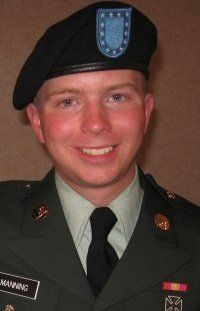 NY TIMES– An Army soldier in Iraq who was
arrested for leaking a video of a deadly American helicopter attack here in
2007 has also been charged with downloading more than 150,000 highly classified
diplomatic cables that could, if made public, reveal the inner workings of
American embassies around the world, the military here announced on Tuesday.
NY TIMES– An Army soldier in Iraq who was
arrested for leaking a video of a deadly American helicopter attack here in
2007 has also been charged with downloading more than 150,000 highly classified
diplomatic cables that could, if made public, reveal the inner workings of
American embassies around the world, the military here announced on Tuesday. 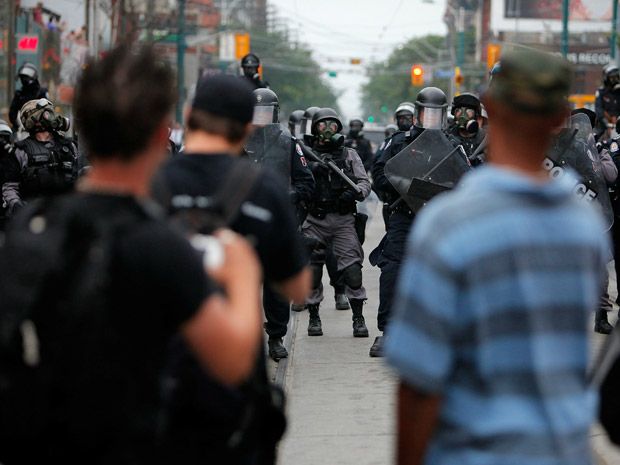 NATIONAL POST
 ALTERNET