MEDIA ROOTS— A cabal of banksters, traitorous shysters, thieving technocrats and debt hustlers, continue plying America with more financial soma: more credit cards, more debt, more loans, and more deficits. The snake oil salesmen of our era engineer the financial impotence of everyone not included in their exclusive, nano clique of psychopathic predators. They plunder U.S. wealth, like a con man scams a stumbling drunk into a game of three card monte. To complete the nightmare, the “drunk” American is arrested for gambling, as the fearless con man walks free, having paid to rig the scales of justice long ago.
The U.S. healthcare system is more accurately called “sickcare” and has more in common with a lucrative racket, than with an altruistic sense of universal compassion. Charlatans try to reanimate the housing market, only to see it fail, while playing off the cadaveric spasm as success. Meanwhile, the mass media’s black magic practitioners continue to indoctrinate the masses with soft fascism, paving the road to tyranny with dog and pony shows for elections.
The U.S. pulse of hope still gently pumps. Young people’s passion and enthusiasm for Republican Ron Paul shows a renewed vigor for democratic ideals. The emphatic rejection of SOPA and PIPA clearly told the status quo not to infringe upon the only remaining, reliable source of news and information. Americans sense that our leaders have broken the pact, and threaten them with “or else” as reflected by increased gun sales over recent years. America has badly veered off course. Do we have what it takes to avoid running aground?
Jim Quinn of The Burning Platform provides sound insight regarding the socioeconomic ailments of today’s America.
MR
***
The Burning Platform — It is mind boggling the degree to which central planners like Bernanke,
Geithner, Obama and Congress will inflict their vision of how the
economy and world in general should operate upon the trusting masses.
The American people want to believe their leaders are doing what is best
for them. They like dwelling in a land of delusion, security and
luxury, where government guarantees to protect them from: terrorists;
Iranian invasion; saving for retirement; looking out for their own
health; educating themselves; and accepting the consequences of living
above their means. Their ability to distinguish between truth and
propaganda has been thoroughly degraded by years of government
proscribed education. We have chosen to become a knowingly ignorant
nation of true believers. There is no time for critical thinking while
we anticipate our next tweet about the death of drug addicted pop
singer. We have been taught to love our servitude.
The fallacy of government protecting you, taking care of you and
providing you “free” benefits is so ingrained in the American psyche
that it is virtually impossible to voluntarily reverse the trend. The
truth that Americans refuse to acknowledge is that nothing is free in
this life. We are not entitled to own a home, a free education, free
healthcare, or a comfy privileged existence. Everything government
provides is taken by force from someone else. Everything government does
has a cost. Americans have traded freedom and liberty for the
appearance of safety and security.The cost is constant war, getting
groped by TSA perverts, surveillance by government agencies, threat of
imprisonment without charges and a $1 trillion price tag per year. The
cost of “free” healthcare is mind numbingly ludicrous rules and
regulations for doctors and patients, massive fraud, outrageously
expensive procedures and medications, and a $100 trillion unfunded
liability left for future generations. The ultimate cost of an
overbearing, all controlling government will be economic collapse and
revolution.
The concluding act during this bad week for freedom occurred on Saturday
in the great state of Maine. When it became clear that Ron Paul was
going to win the Maine caucuses, the GOP establishment, that has already
anointed Mitt Romney the Republican nominee, decided the people of
Maine would be told who won. Using the excuse of an impending snowstorm
(less than 1 inch), the powers that be cancelled the caucuses in
Washington County where a large contingent of youthful Ron Paul
supporters dominated. The Girl Scouts didn’t cancel their event in the
same county that day. The men who cancelled the caucus are strong Romney
supporters. This was a blatant Stalinist act of voter
disenfranchisement. The GOP leaders declared those votes would not count
in the totals. Despite this despicable act of rigging an election, Ron
Paul doubled his vote percentage from 2008. His message of freedom,
liberty, non-interventionism, sound money and self-reliance is
reverberating across the land among young people who have not been
programmed by the governing elite and the corporate mass media. The
establishment will do everything in their power, including vote fraud,
to prevent Ron Paul’s anti-establishment message from being heard.
MEDIA ROOTS — Project Censored has become a centrepiece at KPFA, free speech radio, the flagship motherstation of the national Pacifica Radio network. During this season’s fund drive, on Friday, February 17, 2012, Project Censored broadcast a two-point-five-hour special programme entitled ‘Brought to Justice? The Indefinite Detention and Targeted Killing of the Rule of Law’ with music by David Rovics. Abby Martin and Mickey Huff speak with Center for Constitutional Rights attorney, Pardiss Kabriaei. Also, author and investigative journalist Andy Worthington and organiser Stephanie Tang of World Can’t Wait join the dialogue, raise public class-consciousness, and encourage support for KPFA free speech radio.
MR
***
PROJECT CENSORED — “Welcome to a KPFA Fund Drive Special with
Project Censored. I’m Mickey Huff, in
studio with Dr. Peter Phillips and, Associate Director of Project Censored,
Andy Roth. We’ll also be joined for the
next two and a half hours by Abby Martin of Media Roots.
“Today’s special programme is: ‘Brought to Justice? The Indefinite Detention
and Targeted Killing of the Rule of Law.’
Again, welcome. This is a special
broadcast by Project Censored on Pacifica Radio.
Joining us, each half-hour segment, we’ll have a special guest.
“We’ll begin with investigative journalist Andy
Worthington, author of The Guantánamo
Files and Co-Director of the film, ‘Outside the Law: Stories from Guantánamo.’
“At 1:30pm, we’ll be joined by Pardiss Kabriaei, an attorney for the Center for Constitutional Rights, who has
represented a number of the men detained at Guantánamo and is also counsel in al-Awlaki vs. Obama. That will be a pre-recorded interview that we
did with Pardes last week. [See transcript below.]
“We will also have music and commentary from one of the
most notable and political folk musicians of our time, that would be the one
and only David Rovics. You just heard David Rovics’ music; that was
[his song] “Guantánamo Bay” [you heard opening this broadcast]. We’ll be playing David Rovics’ music today; and
it will be available for a premium. We’ll
also be interviewing him later on this afternoon.
“We’ll also hear from Dr.
Almerindo Ojeda, professor of linguistics and Director of the Guantánamo Testimonials Project[of
the Center for the Study of Human Rights in the Americas] at the University of
California, Davis.
“And we will round out today’s special with Stephanie
Tang, of World Can’t
Wait, talking about indefinite detention and targeted killings. And when we wrap up today, we’re going to be
focusing on who is working on trying to stop these types of things. What can be done about it?
“So, today’s programme
is not simply to bemoan the evisceration of the rule of law. It’s also to be looking at positive ways that
we can be confronting these types of measures.”
PARDISS KABRIAEI, ATTORNEY, CENTER FOR CONSTITUTIONAL RIGHTS
Mickey Huff
(c. 32:46): “That’s the music of David Rovics. You can get his new CD, ‘Red Sessions’ with a
$50 pledge [to KPFA]. You can get [the]
Andy Worthington [film] ‘Outside the Law’ on Guantánamo; you just heard from
Andy Worthington in the first segment of today’s special fundraiser here at
KPFA. We’re talking about, essentially,
the evisceration of the rule of law and the rise of targeted killings stemming
from the rise of torture. You can call
and pledge your support to free speech radio anytime this afternoon; but we
have a lot of content.
“This show originally sprang from a programme we did
about a month ago with many of the guests you’re hearing today. But there was so much to cover that we
expanded this into a two and a half hour fundraising special because you’re not
gonna hear this information on any other media outlet. You’re gonna hear it here on KPFA.
“Again, I’m Mickey Huff, joined by Peter Phillips of
Project Censored, Andy Roth and Abby Martin, again, of Media Roots. Please call in 510.848-5732,
800.439-5732. You can pledge online at
KPFA.org. And here’s Abby Martin to tell
you about the interview we did with Pardiss Kabriaei, of the Center for
Constitutional Rights.”
Abby Martin
(c. 33:55): “This is Abby Martin with Project
Censored. Pardiss Kabriaei is an attorney
with the Center for Constitutional Rights, specialising in the Center’s Global
Justice Initiative. She’s represented
men from Yemen, Syria, Algeria, and Afghanistan who have been detained at Guantánamo
Bay working on theirhabeas corpuschallenges. Her work
includes seeking accountability for torture and arbitrary detention at Guantánamo,
including representing the families of two men who died there in June
2006. We spoke with her last week about
the targeted killings in light of Obama’s expansive global drone killing
apparatus. And here’s the interview with
Pardiss Kabriaei.”
Mickey Huff
(c. 34:30): “Welcome to the show Pardiss Kabriaei,
attorney with the Center for Constitutional Rights. We’re very happy that you could join us again
today on our two and a half hour special covering issues from torture to the
evisceration of the rule of law in the United States. Could you please remind our audience a little
bit about our discussion we had a few weeks ago, stemming from the Guantánamo
programme we did?”
Pardiss Kabriaei
(c. 35:00): “Sure.
And thank you for having me back. We were talking before, around the time right before
the tenth, unfortunate, anniversary of the opening of Guantánamo, the day in January
of 2002 when the first men were flown to the prison camp, and the fact that 171
people still remain, despite President Obama’s promises to close the prison. It is alive and well and will remain open for
the foreseeable future. So, we were
discussing the issues around Guantánamo and the unjust detentions of the people
still there and some of the challenges to closure that the [Obama]
Administration has put out that we actually feel are not difficult. That’s the problem of closure; it’s actually
a simple one, but it’s become a political issue. That’s why it remains open.”
“I’ve worked on Guantánamo at CCR since I’ve been here,
since 2007, and have represented a number of men there and have gone to the
base and met with them. Some of them,
thankfully, have been released. And, as
an extension of that work, challenging unjust detention policy by the United
States, in this context of terrorism, have, from that work, started looking at
other manifestations of abusive Executive [or Presidential] policy in this
context. And, specifically, have been
looking at the policy of targeted killing by the [Obama] Administration.”
Mickey Huff
(c. 36:26): “And the website, by the way, for listeners, is
CCRjustice.org. And if you go to that
site, the Center for Constitutional Rights, there is a fact sheet, Government Kill Lists Target
U.S. Citizens Far From Any Armed Conflict.
And we actually covered this at Project Censored in the 2012 book when
we talked about the Executive Branch claiming the right to assassinate U.S.
citizens abroad and the complete evisceration of the rule of law, again, and
due process.
“Could you talk a little bit about what are the government kill lists? And why would you say this is illegal. I mean, it seems obvious; but you could
explain that for us.”
Pardiss Kabriaei
(c. 37:07): “Sure.
The basic policy we’re talking about in our concerns within it are, you
know, if we were all worried about a policy of global detention, indefinitely,
without review, of hundreds of people held at Guantánamo and elsewhere that the
[U.S.] government said were all the worst
of the worst and that we know now, after judicial review, we’re not, in
fact, terrorists or whose detentions were not founded, we’re talking now about
a, effectively, a global assassination policy
of killing people who are only suspected of being involved in terrorism. Our concern is that many of them were
actually not involved in any
fighting, even if it were lawful to kill individuals wherever they may be found
who are engaged in terrorism. Our
concern, in part, is that many of them are actually not even involved in
terrorism.
“We have questioned the standards the government is using
to determine who is and who is not targetable.
But the policy we are now talking about, and this is a policy that
existed under Bush, but that has very much escalated and expanded under
President Obama. And it is, effectively,
killing individuals wherever they may be found who are unilaterally deemed to
be dangerous to the United States, unilaterally deemed without any outside
meaningful check on what criteria are being used, what evidence supports those
targeting decisions. And these are
targeting decisions and targeting practices that are happening outside of
recognised war zones. So, we’re not
talking about the use of drones or airstrikes against individuals fighting in
Afghanistan or, previously, in Iraq. We’re
talking about people who are being killed far from those battlefields in places
like Yemen; Somalia, there was a reported strike in the Philippines,
reportedly, that was assisted or led by the United States. There are many concerns we have about the
policy.
“Our particular focus, and the focus of the al-Awlaki
case, was targeted killings that are occurring outside of ‘war’ zones and questions and concerns we have about what criteria
are being used, where these targeted killings are being carried out. What was not at issue in the al-Awlaki case,
but we’re very much worried about is the issue of civilian casualties resulting
from these strikes. So, there are many
issues we could talk about.”
Abby Martin (c. 39:34): “Pardiss, this is Abby Martin. You were talking about the unfounded claims
behind the global assassination campaign and the indefinite detention; a recent
poll that just came out in a Washington Post/ABC News talks about how 70% of
respondents approve of Obama’s decision to keep Gitmo open and 83% approve of
the U.S. drone policy that he’s expanded.
I wonder if you could speak to those [statistics] and the rebranding effort
and the danger of the conditioning.”
Pardiss Kabriaei
(c. 40:00): “M-hm.
I guess I have to believe that those poll numbers are what they are because
people still don’t know. I have to hope
that that’s the reason why we’re not authorising or sanctioning the [U.S.]
government to go after people who are innocent and should not be killed. Despite what I think is fair, and in fact
there is plenty of evidence to show, at least in Guantánamo, that of the almost
800 people that were held there most of them have been released by the Bush
Administration or the Obama Administration, the government themselves. And others, one there was an opportunity to
have their detentions reviewed by courts, courts have found most of their
cases, the majority of those cases found that the detentions were
unjustified. But I have to hope that
people still believe, as the government has, as the Obama Administration has, either
been perpetuating this myth of ‘dangerous’
people still being held at Guantánamo or just failing to educate the public
about the truth and reality of who’s still there. But that they believe the 171 people still
there must actually have been involved in fighting and need to be there. And that Guantánamo is necessary for the
national security of the United States.
“But, again, in fact, if you break down the number of the
171 people only about 30 of them were, according to the [U.S.] government
itself, only about 30 of them, according to the government itself will ever
actually be charged with anything. 89 of
them have been cleared by the Administration, by every government agency with a
stake in the matter has been cleared.
So, I have to believe that people don’t know that and we just have to
continue educating.”
Mickey Huff
(c. 4134): “This is a Kafkaesque black hole to be
sure. And you’re really on to
something. There’s been a relentless and
endless propaganda campaign under the Orwellian guise of the nebulous war on ‘terror.’
And people really, sort of, throw their own projected beliefs and ideas,
sort of a motivated reasoning: ‘There must be a reason that they’re there.’ And, again, that’s among the people that are
aware of it, as you pointed out. There’s
many people that really don’t know
what goes on and what’s going on here.
“And, going back to the Bush years, George W. Bush, in a
rare joint press conference with then-Prime Minister, at the time, Tony Blair
of Great Britain, when asked by a seemingly intrepid reporter about how they
knew these were the most dangerous people, right? Because as you said, there’s this endless
rhetoric about how: ‘These are the most dangerous people. These people are gonna get us. We
have to lock ‘em up. And they’re so especially dangerous that they absolutely
need to be put in Guantánamo. Never mind about what we did after World War II in
Nuremberg and put the Nazis on trial. These people are in a special class all
of their own, outside of any real judicial system or oversight.’
“And Bush was asked, well, how do you know they’re
dangerous? And this is after he just got
done saying that the most dangerous people in the world are in Guantánamo. And the answer to that question was: ‘Well because they are at Guantánamo Bay.’ It’s that circular kind of reasoning that
comes from the top down and reverberates throughout our culture.
“Just to be more specific with our listeners—again, we’re
talking to Pardiss Kabriaei, of the Center for Constitutional Rights,
CCRjustice.org—what laws are the [U.S.] government actually violating in these
procedures, in these policies?”
Pardiss Kabriaei
(c. 43:17): “For talking about the issue of targeting,
our legal position is that when you are in recognised war zones, we are talking about Afghanistan. A situation of war triggers a different set
of rules, it triggers the laws of war within that context.
“Factually, and within that legal framework, there is
greater leeway in terms of detaining people and even killing them. It doesn’t mean that every detention is
lawful, every killing is lawful, but the rules are different. And that’s because in situations of immediate
fighting the exigencies of wartime ordinary Constitutional provisions
just don’t apply the same way. They can’t
apply the same way.
“But what we’re talking about is, for example in the
al-Awlaki case, a targeting that occurred in Yemen and, despite conflict in
Yemen and a certain level of violence, certainly, there’s a high bar to call
something a war and an armed conflict. And the United States is not ‘at war’ in
Yemen. It is not ‘at war’ with Yemen or within it.
There may be a presence of Al Qaeda, but, again, there are legally
defined criteria that need to be satisfied to call something an armed conflict to trigger those
different set of rules.
“So our position in the case, and the position that we
continue to take is that outside of immediate battlefields and zones of active
hostilities, the law that should apply is the Constitution and international
human rights law. And under that
framework you can only kill someone, and what we were talking about in the
al-Awlaki case is a U.S. citizen with
respect to whom, clearly, the Constitution applies. And on that point the majority of the people
who are bearing the brunt of these policies are not actually U.S. citizens. They are non-citizens, foreign citizens.
“So, the government could make arguments; and they would
try to in court about the fact that the Constitution does not apply, maybe, to non-citizens. But it is, at least, clear that vis a vis
U.S. targeting and killing by the U.S. government of its own citizens, that due
process and the Constitution applies. According
to that standard, the government can only kill someone if they’ve been afforded
process, there’s been a conviction for a capital crime, and there’s been a
sentence of death. Outside of that
process, you can only kill in self-defence.
And that means that there has to be an imminent threat, an immediate
threat, of deadly harm. And lethal force
has to be a last resort.
“And what happened in the al-Awlaki case was that this
person, despite what the government was saying about him, was on a kill list of some kind, maintained by
the CIA and secret military forces. But,
reportedly, these lists maintain these people’s names for months at a time;
they are reviewed periodically every few months, reportedly. And this is what ‘credible’ news sources, like the New York Times, the L.A. Times,
the Washington Post, have reported. Just
that very fact of keeping people on lists that are reviewed months at a time
undermines this idea of immediacy.
“And what we know in the actual killing that took place
against al-Awlaki in September of last year, September 30, 2011, was when the
U.S. actually carried out the strike, is that they had been surveilling him for
weeks, potentially before he was actually killed. That also undermines this idea of an imminent, immediate, threat. And that
the killing was, based on facts that have been reported, in cooperation and in
coordination with Yemeni officials, which undermines the idea that there couldn’t
have been, potentially, other measures taken, non-lethal measures taken.
“I think what’s important for people to remember is even
if you think, and if you believe the government’s story about who this person
was and that he presented a threat, killing, again, really has to be a last
resort. And when we don’t accept that,
and that’s another standard we’re putting forward. It’s a Constitutional standard. When we don’t accept that it leads to a very
slippery, very scary slope of what is possible.
And that’s our concern looking forward; and when there are reports of
the CIA’s drone programme expanding, what they are doing in Pakistan expanding
to places like Yemen, and hearing reports of potential U.S. involvement in
strikes in the Philippines and definitely in Somalia and who know where else,
there’s a real concern about the escalation and the expansion of war and
violence led by the United States in the name of national security.”
Abby Martin
(c. 47:51): “Pardiss, exactly. And I wanted to touch upon Pakistan. I just read, you know, it seems like every
time I read about the drone strikes under Obama it’s just getting more
expansive more far-reaching. I was
wondering if you could speak upon these signature
strikes and the indiscriminate group targeted assassinations that are
happening in Pakistan.”
Pardiss Kabriaei
(c. 48:14): “Yeah, the signature strikes, I think part of the problem with this programme
is the secrecy and the lack of transparency.
And just to be clear about some factual things, the strikes, the drone
strikes and strikes carried out in other ways that we’re talking about outside
of situations of wars—so, outside of Afghanistan, for example—are mostly
carried out by the CIA and the Joint
Special Operations Command, which is a secret unit of the military.
“In Afghanistan, because our military forces carry out
these strikes, the rules by which we operate are known. There can be, and there often is after the
fact of a killing, an investigation and some kind of accounting and, in some
cases, compensation, even.
“What we are talking about in Pakistan and Yemen and
Somalia and wherever else is an entirely, well, bizarre situation where we know
the drone strikes are occurring—we see the deaths; we see drone pieces—we
certainly have independent researchers documenting, or trying their best to
document what’s happening, we still have an [Obama] Administration that
officially refuses to acknowledge that this programme even exists, let alone
disclose any meaningful information about the criteria they use, or the rules
that govern the procedures, or where it operates, who’s being killed, how many
are being killed.
“So, just going back to the signature strikes, there’s very little known exactly about the
criteria that are used or how the strikes are governed and what procedures are
used. My understanding of the signature strikes is that they are
strikes carried out based on observing patterns of behaviour and patterns of
life. And they are not necessarily
people who are on kill lists. They are
just individuals who, based on unknown criteria, are deemed to be engaging in
threatening behaviour or conduct and that are killed.”
Mickey Huff (c.
50:08): “Well, you mentioned, Pardiss Kabriaei, you
mentioned that ‘scary slippery slope.’
And here we are sliding further into it.
And this was reported in Wired magazine.
There was a piece in the Wall Street Journal, even. Again, these are pretty mainstream, even
corporate, media sources here. One
article, ‘CIA Drones Kill Large Groups Without Knowing Who They Are.’ This is a quote
from the Wall Street Journal: ‘Men
believed to be militants associated with terrorist groups, but whose identities
aren’t always known.’
“So, the CIA is killing people without even knowing who
they are on suspicion, suspicion of association ‘with terrorist groups.’ I
mean how many degrees away from certainty are we here?”
Pardiss Kabriaei
(c. 51:00): “Right.
Many degrees. And just in terms
of context, too, on these signature
strikes, when you consider just family relationships and the context in
Pakistan where sometimes you’ve got 30, 40 people in one home, family members
living together, or entire communities living under one roof, if you’ve got one
individual the government has been tracking and deems to be a threat, when they
are in that home and a missile strikes everyone dies. And that is how we’ve got, then, the numbers
that have been reported. And according
to, sort of, moderate estimates, for example the New America Foundation that
is, I think, even by the [Obama] Administration, perceived to be a
non-partisan, non-biased, group that has been documenting these strikes there
have been hundreds of civilian deaths in Pakistan alone just over a period of
years that were strikes that have actually been documented. If you talk to the government, though,
amazingly, a U.S. official said there were zero civilian casualties in Pakistan
for the year of 2011.
“I mean there is something wrong between how the United
States is defining civilian or militant and how the rest of the world and
people who actually are on the ground documenting this stuff, what they are
seeing.”
Mickey Huff
(c. 52:19): “It’s simply propaganda and deception.”
Pardiss Kabriaei
(c. 52:22): “I agree with you. But I think wherever you stand I think there
is growing consensus, at least on the need for some transparency. And the [U.S.] government says, well, we’ve
given transparency. Well, how can there
be transparency when you still have an [Obama] Administration that still doesn’t
officially acknowledge that this programme exists?”
Abby Martin
(c. 52:37): “Right.
It seems like whatever the [U.S.] government says, this is an insurgent—that must be true; anyone we just killed
with a drone must be an insurgent without any sort of due process or evidence
against him. Can you expand upon now the
Congressional approval of the domestic use of drones in the United States and the
surveillance that we are going to be seeing in a couple of years? What do you think about that?”
Pardiss Kabriaei
(c. 53:03): “Well, I know that the drone technology
is another piece of this. The legal
issues with drones to the extent that there may not be legal issues—the [U.S.] government’s
talking about how ‘they are more precise’
and ‘actually as a method of killing they
are not problematic, legally’—there are certainly ethical issues, at least.
“These Drone operators sit in rooms thousands of miles
away, for example in Nevada, watching targets and people on video screens and
with the press of a button kill, make decisions to kill people. And then drive home to their families, pick
up their kids from soccer practice and have dinner. There is something very scary and concerning
about how the use of drones is further dehumanising the act of killing and
war. I think that’s something people should
be thinking about, separate from the legal issues, just the ethical and moral issues
with that and how much easier it makes killing
and warfare.”
Abby Martin (c.
53:58): “Yeah.
Just the chilling effect, just curbing political activism, knowing that
there are these drones surveilling the country.”
Pardiss Kabriaei
(c. 54:06): “Absolutely.”
Abby Martin (c.
53:58): “And there’s certainly a privacy issue.”
Pardiss Kabriaei
(c. 54:08): “Yeah.
And then there are billions of dollars being poured into research and
drone technology and advancements for drones.
And the way we’re seeing them being used in the United States so far is,
as far as what’s been reported, they’ve been used and are being used for
surveillance along borders. There’s talk
of them being used by law enforcement, by police departments for surveillance
purposes. I mean the capacity for drones
is really limitless. And we know that
there’s a lot of money that’s being poured into research and technology to
further advance the technologies. So,
what’s possible and what may come in the United States is unknown. So far they are being used for surveillance
by law enforcement, for border patrol.
I know that there are some groups in the United States
that have filed Freedom of Information Act requests to get more information on
exactly how these things are being used and the basis for authorising them in
the United States. But, certainly, they
are present here. They are in the skies
in the United States. And it’s really a
question and a concern about what may come here to the extent that people are
not concerned about what the United States is doing abroad.”
Mickey Huff
(c. 55:20): “That’s right. Pardiss Kabriaei, you were also talking about
priorities. And when we hear these cries
of austerity coming from on high, they ring pretty hollow when one sees so much
is being sunk into these incredibly dubious and problematic policies of
targeted killing, of surveillance, not just abroad, but here at home [in the
U.S.], potentially.
“We have one minute left, Pardiss. Could you tell us, what are you trying to
accomplish, then, through the courts?
Why is this important? Why should
people get active? And where can they
get more information?”
Pardiss Kabriaei
(c. 54:06): “M-hm.
What we were trying to do with the courts in our last case was just to
impose a process of review over these decisions and to force some level of
transparency. And we will continue those
efforts in the courts and take them as far as we can.
“What I would say is, with Guantánamo and the poll
numbers, what they are in the United States, there are still a lot of people, I
think, who are outraged by Guantánamo because it was so known. And I think we still talk very much about the
detentions there. I think what people
need to do is educate themselves about this killing policy as well. And we need the same level of outcry and the
same demand for transparency and information.
People should know, at a minimum, what the United States government is
doing in their name and with their money.
“I think that, for more information, please go to our
website CCRjustice.org. We have
information about the prior case we fought on behalf of al-Awlaki. And we’ll be putting out more
information. And I think, at this point,
just the basic minimum is educate yourself about what the United States is
doing in your name.”
Mickey Huff
(c. 56:56): “That’s the voice of Pardiss Kabriaei from
the Center for Constitutional Rights.
And that’s certainly what we’re trying to do here at [KPFA] free speech
radio. We are trying to get the word out
and get people to really understand what’s going on and understand what’s at
stake.
Pardiss, thanks so much for your time and for taking time
out of your very busy schedule and your important work. Thank you, again.”
Abby Martin
(c. 57:15): “Thanks, Pardiss.”
Pardiss Kabriaei
(c. 57:16): “Thank you so much. Bye-bye.”
Transcript by Felipe Messina
Photo by Flickr user Art Makes Me Smile
***
Fund Drive Special – Guantanamo and the Gulag with Project Censored – February 17, 2012 at 1:00pm
MEDIA ROOTS — Organic farmers, seed growers, and seed businesses took
another step at reclaiming their land last month, as 83 plaintiffs representing over 300,000 farmers described Big Agribusiness Monsanto’s harrassment in court. Monsanto threatens lawsuits against organic farmers
for “patent infringement” if farmlands have any trace amounts of Monsanto’s genetically-modified
seeds. Additionally, many organic seeds have not even been planted for fear of any unwanted frankenplants which Monsanto might sue them over.
Willie Nelson successfully rallied many in the Occupy
Movement to ‘Occupy the Food System,‘ as hundreds supporting the organic
industry assembled outside the federal courthouse in Manhattan for a motion hearing on January 31, 2012.
MR
***
NATION OF CHANGE – Judge Naomi Buckwald heard the oral arguments on Monsanto’s
Motion to Dismiss, and the legal team from Public Patent Foundation represented
the rights of American organic farmers against Monsanto, maker of GM seeds,
[and additionally, Agent Orange, dioxin, etc.]
After hearing the arguments, Judge Buckwald stated that on
March 31st she will hand down her decision on whether the lawsuit
will move forward to trial.
Jim Gerritsen, President of the Organic Seed Growers and Trade Association, has pointed out that there are 5th and 6th generation family farmers being pushed off their farms today, and because of a “climate of fear” (from possible lawsuits from Monsanto), they can’t grow some of the food they want to grow.
Even organic dairy farmers have had to suffer lawsuits (from Monsanto) when they labeled their organic milk “non-BGH” referring to Monsanto’s bovine growth hormone used by conventional dairies.
MEDIA ROOTS — Despite the national economy still tenuously hanging on life support and many cities financially flatlining, police departments throughout the U.S. still creatively invest enormous amounts of money in futuristc, “non-lethal” crowd control weapons. As we arrive at a point in U.S. history when true democracy is fleeting and the 1% breed new ways of absolute control, the necessity to appear less heavy handed in response to large street protests becomes paramount. U.S. power brokers seek ever devious ways to bend protesters to their will, whilst maintaining a positive image in the global media machine.
U.S. cities, such as Pittsburgh and Oakland have already introduced their citizens to the Long Range Acoustic Device (LRAD), a devastating weapon capable of causing permanent hearing damage. The latest addition to this high tech class of police weaponry is the Silent Guardian. The Silent Guardian emits a high powered beam of heat, much like a microwave. The beam can generate temperatures over 120° Fahrenheit.
During an era marked by popular unrest, we must ask ourselves, how safe do we feel being increasingly confronted by police weaponry more appropriate for armies and battlefields? As U.S. imperialism delivers deadlier and more efficient violence across the globe, how easily can the same hardware and methods seep into civilian policing at home? The distinction between the police and the military is fading as our two-party system criminalizes dissent and transitions toward paramilitary domestic repression. With the G8/NATO summit coming to Chicago in May likely to be met with mass protest, U.S. citizens may get a more accurate glimpse of what’s to come in the land of the free and home of the brave.
MR
***
ZNET — But
the prohibition on such repression enforced by those traditions has had
an ironically negative and authoritarian aspect in the context of
concentrated capitalist and imperial power. It has provided a great
incentive for corporate and state authorities to invest heavily in the
deadly arts and sciences of propaganda and manipulation. It has
encouraged “the 1%”and its servants to develop quieter methods of
“taking the risk out of democracy” (Alex Carey) by “manufacturing [mass]
consent” (Edward Herman and Noam Chomsky) through public relations,
propaganda, media control, education control, highly controlled and
personalized election spectacles, among other “soft” forms of population
management. At the same time, the proscriptions against sheer
repression have also incentivized American authorities to develop more
subtle, technically sophisticated forms of repression that operate
behind the scenes (the surveillance cameras that are ubiquitous in
England and ever more prevalent in the U.S. are a key example) and to
deploy forms of coercion that prevent or discourage citizens from
assembling and protesting without creating provocative images of state
brutality.
The legal and cultural ban on outwardly murderous rule in the
nominally free and democratic U.S. has compelled elites and their
servants to develop new, less provocative ways to “incapacitate” angry and active citizens – more quietly sinister methods of repression that are deadly for democracy: penned-off “free speech zones” and “frozen zones”[54] (where protestors are denied access to those they seek to influence), “rubber
bullets” that hurt and harm but do not generally kill, “concussion
grenades” that disorient and confuse without generally shattering
skulls, tear gas and pepper spray that sends protestors running, Tasers that stun but do not generally kill[55],
sonic canons and other acoustic devices that make your eardrums feel
like they are splitting, and perhaps – someday soon to be deployed in
freedom’s “homeland” – Raytheon’s perfectly named (for the purposes of
my argument) “Silent Guardian,” which noiselessly seems to cook human
skin and eyeballs and has the capacity “to inflict limitless, unbearable pain.”
Repressive
acoustic and heat ray technologies can bring special technical
dividends for those who wish to coerce without seemingly overly
coercive. As Xeni Jardin explained as LRAD-toting troops with the
Louisiana National Guard patrolled otherwise abandoned and black New
Orleans in September of 2005: “Crowd
control is a constant challenge to law enforcement — how to stop
potential troublemakers without endangering those who are simply in the
wrong place at the wrong time. Rubber bullets can kill, tear gas drifts
with the wind.”[56]
Jardin might have added that mass billy-clubbing looks really bad on
YouTube in an allegedly free society; so does the close-range
pepper-spraying of the faces of young sitting protestors (as occurred at
the University of California at Davis and went viral on television and
internet last November).[57]
Who can forget the live-televised police riot images of from the 1968
Chicago Democratic Convention – the wildly swinging police batons
landing on the skulls and torsos of white middle class reporters and
youth as the crowd chanted “The Whole Word is Watching”[58] (the chant was revived during last fall’s pepper-spray incident).[59]
It’s not for nothing that Wall Street super-titan and New York City
Mayor Michael Bloomberg and his NYPD forced news helicopters to land and
ordered a de facto media blackout[60] when they went in for the kill on Occupy Wall Street’s original camp last November.
Better
to blare and/or cook the right of public assembly to death in carefully
focused and targeted ways without actually killing (Tiananmen Square
1989) or beating (Chicago 1968) anyone (or too many people) if you can
help it. And without letting the acrid taste of your repression drift
into comfortable middle class neighborhoods as occurred during the break
up of the mass marches against the World Trade Organization in Seattle
in November of 1999.[61] Smart repressors keep it as clean, quick, and contained as possible.
MEDIA ROOTS – This set is dedicated to all the hard work bedroom musicians put into their craft. Much love to each and every one of you for your dedication and discipline in making such rhythmic and melodic sonic beauty. IDM for life!
Love,
ATOP Akkad the Orphic Priest
All the featured music
on the mix can be found
through searching discogs.com or by emailing me: [email protected].
Artist List:
Nommo Ogo – Chromomiasma Asobi Seksu – Trails (Holy Other rmx) Dr Strangeloop – World of Your Dreams Ranvir Bass – You Are My Moon and My Moonlight Too Brian English – Scatting Loons Mr76ix – 2nd Thought Kcinsu – Retraction Exillon – Percussor No UFO’s – Freeze ï Drift Identity Theft – Silent Calliope’s Curse Ryan Hemsworth – VLMNT White Ring – Feather (Story of Isaac rmx) Fluorescent Grey – Leaf-Laden Amber Hued GUI Kossak – Mrs Crabcake William Cody Watson – I Won’t Let Them Through That Door



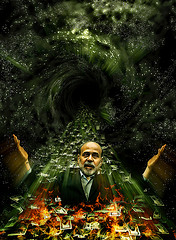 MEDIA ROOTS — A cabal of banksters, traitorous shysters, thieving technocrats and debt hustlers, continue plying America with more financial soma: more credit cards, more debt, more loans, and more deficits. The snake oil salesmen of our era engineer the financial impotence of everyone not included in their exclusive, nano clique of psychopathic predators. They plunder U.S. wealth, like a con man scams a stumbling drunk into a game of three card monte. To complete the nightmare, the “drunk” American is arrested for gambling, as the fearless con man walks free, having paid to rig the scales of justice long ago.
 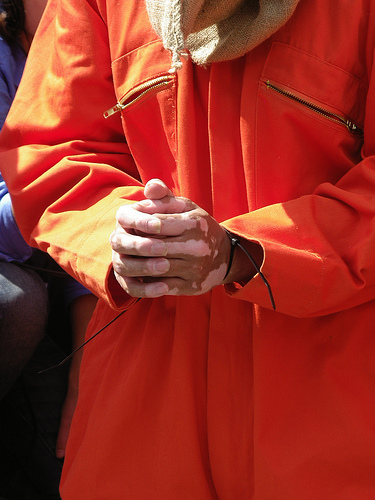 MEDIA ROOTS — Project Censored has become a centrepiece at KPFA, free speech radio, the flagship motherstation of the national Pacifica Radio network. During this season’s fund drive, on Friday, February 17, 2012, Project Censored broadcast a two-point-five-hour special programme entitled ‘Brought to Justice? The Indefinite Detention and Targeted Killing of the Rule of Law’ with music by David Rovics. Abby Martin and Mickey Huff speak with Center for Constitutional Rights attorney, Pardiss Kabriaei. Also, author and investigative journalist Andy Worthington and organiser Stephanie Tang of World Can’t Wait join the dialogue, raise public class-consciousness, and encourage support for KPFA free speech radio.
 MEDIA ROOTS — Organic farmers, seed growers, and seed businesses took
another step at reclaiming their land last month, as 83 plaintiffs representing over 300,000 farmers described Big Agribusiness
MEDIA ROOTS — Organic farmers, seed growers, and seed businesses took
another step at reclaiming their land last month, as 83 plaintiffs representing over 300,000 farmers described Big Agribusiness 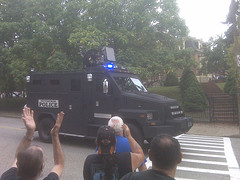 MEDIA ROOTS — Despite the national economy still tenuously hanging on life support and many cities financially flatlining, police departments throughout the U.S. still creatively invest enormous amounts of money in futuristc, “non-lethal” crowd control weapons. As we arrive at a point in U.S. history when true democracy is fleeting and the 1% breed new ways of absolute control, the necessity to appear less heavy handed in response to large street protests becomes paramount. U.S. power brokers seek ever devious ways to bend protesters to their will, whilst maintaining a positive image in the global media machine.
 Nommo Ogo – Chromomiasma