
US Spending Cuts Deal Actually Increased Spending

RT– Republicans and Democrats were deadlocked as a government shutdown loomed. Republicans refused to budge without spending cuts. A deal was struck and a shutdown averted. In the end overall spending still increased.

“Total discretionary outlays in 2011 will be $3.2 billion higher as a result of the legislation, CBO estimates–an increase of $7.5 billion for defense programs, partially offset by a net reduction of $4.4 billion in other spending,” said a report released by the non-partisan Congressional Budget Office.

The bill dubbed a historic compromise on government spending cuts was in fact not historic, not a spending-cut. The legislation passed in April increased US government discretionary spending by over $3 billion. Because of the bill total government spending will be higher as a result than if Congress had simply continued the spending at prior levels.

“CBO had previously estimated that the full-year appropriation act will yield a net reduction of $0.4 billion in nonemergency outlays in 2011,” the report says. “The comparison shown here is different: It includes emergency appropriations, excludes the effects of changes in mandatory programs, and incorporates adjustments to various estimating parameters that were applied to the appropriation act to make them consistent with the March 2011 baseline.”

Read full article about US Spending Cuts Deal Actually Increased Spending

© 2011 RT

Photo by Flickr user 31151995@N04
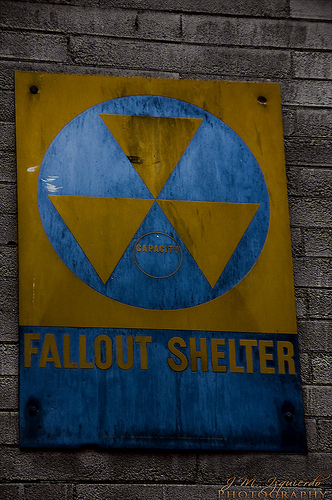
Meltdown Feared at Two More Reactors

TELEGRAPH– The fuel in reactors No 2 and 3 is suspected to have melted amid reports that the operators Tokyo Electric Power Company (TEPCO) failed to cool the plant in the aftermath of the March 11 earthquake and tsunami.

The news came only days after it was confirmed for the first time that a meltdown had taken place in the No 1 reactor only 16 hours after the earthquake and tsunami hit the plant.

“The findings at the No. 1 reactor indicate the likelihood that the water level readings in the other reactors aren’t accurate,” said Junichi Matsumoto, a general manager at Tepco. “It could be that a meltdown similar to that in the No 1 reactor has occurred.”

Tepco has faced wide criticism for its apparent failure to fully comprehend or reveal the extent of the damage inflicted in the plant after crucial cooling systems were knocked out by the March 11 disaster.

Read more about Meltdown Feared at Two More Reactors.

© 2011 Telegraph

Photo by Flickr user mypoorbrain

Posted in Uncategorized | 1 Reply

Glencore: Profiteering From Hunger and Chaos

AL JAZEERA– The rapid rise in prices for food, fuel and commodities has been disastrous for the world’s poor, including Indonesian market vendor Lia Romi. But it’s a bonanza for multinational trading firms such as Glencore.

While Romi has trouble feeding her family, Glencore – the world’s largest diversified commodities trader – is planning a US$11billion share sale, likely the largest market debut ever seen on the London Stock Exchange.

“The price for our daily food has at least doubled in the past two years,” Lia Romi told Al Jazeera through a translator. “Food costs 100 per cent of my family’s daily income [of about $3]. I have nothing saved and I owe [money] from my [market stall] business.”

While Romi, and millions like her, worry about feeding their families, the initial public offering from the commodity speculating giant will create at least four billionaires, dozens worth more than $100million and several hundred old fashioned millionaires. Chief Executive Ivan Glasenberg is set to make more than $9bn from the share sale. And speculating on food prices is an important part of his wealth.

Controlling prices

Valued at about $60billion, Glencore controls 50 per cent of the global copper market, 60 per cent of zinc, 38 per cent in alumina, 28 per cent of thermal coal, 45 per cent of lead and almost 10 per cent of the world’s wheat – according to information the firm disclosed prior to its share sale. It also controls about one quarter of the world market in barley, sunflower and rape seed.

Read more about Glencore: Profiteering From Hunger and Chaos

© 2011 Al Jazeera

Photo by Flickr user ashcroft54

World’s Top Weed Killer Linked To Infertility

LIFE SITE NEWS– The world’s top herbicide for decades has come under criticism after evidence surfaced suggesting that the chemical may be linked to infertility and miscarriage in animals, raising serious concerns about the possible effect on human consumers.

Glyphosate is the weed-killing ingredient introduced over 30 years ago by the multinational agricultural biotechnology corporation Monsanto under the brand name Roundup. Monsanto also produces “Roundup Ready” corn, soybeans and cotton genetically engineered to withstand large doses of Roundup that would be deadly to normal plants.

But Dr. Don Huber, professor emeritus at Purdue University and a well-known plant pathologist, wrote to both American and European officials earlier this year to express his concern over a newly-discovered, extremely small organism that has appeared in higher concentrations in conjunction with Roundup and Roundup Ready crops.

The “electron microscopic pathogen,” Huber wrote in a Jan 16 letter to U.S. Department of Agriculture (USDA) Secretary Tom Vilsack, “appears to significantly impact the health of plants, animals, and probably human beings,” noting that preliminary experiments have been able to reproduce the pathogen’s effect of causing miscarriages.

Huber urged the Secretary to delay deregulation of Roundup Ready crops, saying that “such approval could be a calamity.” “I believe the threat we are facing from this pathogen is unique and of a high risk status. In layman’s terms, it should be treated as an emergency,” he wrote.

Read more about World’s Top Weed Killer Linked To Infertility

© 2011 Life Site News

Photo by Flickr user artysmokes

Posted in Uncategorized | 1 Reply

Study Links Flammable Drinking Water to Fracking

TRUTH OUT– For the first time, a scientific study has linked natural gas drilling and hydraulic fracturing with a pattern of drinking water contamination so severe that some faucets can be lit on fire.

The peer-reviewed study, published today in the Proceedings of the National Academy of Sciences, stands to shape the contentious debate over whether drilling is safe and begins to fill an information gap that has made it difficult for lawmakers and the public to understand the risks.

The research was conducted by four scientists at Duke University. They found that levels of flammable methane gas in drinking water wells increased to dangerous levels when those water supplies were close to natural gas wells. They also found that the type of gas detected at high levels in the water was the same type of gas that energy companies were extracting from thousands of feet underground, strongly implying that the gas may be seeping underground through natural or manmade faults and fractures, or coming from cracks in the well structure itself.

“Our results show evidence for methane contamination of shallow drinking water systems in at least three areas of the region and suggest important environmental risks accompanying shale gas exploration worldwide,” the article states.

The group tested 68 drinking water wells in the Marcellus and Utica shale drilling areas in northeastern Pennsylvania and southern New York State. Sixty of those wells were tested for dissolved gas. While most of the wells had some methane, the water samples taken closest to the gas wells had on average 17 times the levels detected in wells further from active drilling. The group defined an active drilling area as within one kilometer, or about six tenths of a mile, from a gas well.

Read more about Scientific Study Links Flammable Drinking Water to Fracking

© 2011 Truth Out

Photo by Flickr user Aunullah

Trailer for Gasland