MEDIA ROOTS — When you’re Julian Assange, you just can’t do right. The USA’s establishment has got it in for him now. Doubtless, they’d like to grab him like Bradley Manning. Assange says he’ll be called a traitor for interviewing radicals. Journalist Glenn Greenwald says the attacks on Assange and RT reveal as much about the critics:
“The real cause of American media hostility toward RT is the same as what causes it to hate Assange: the reporting it does reflects poorly on the U.S. Government, the ultimate sin in the eyes of our ‘adversarial’ press corps.”
“In other words, like Assange, [at RT] they engage in real adversarial journalism with regard to American political power. And they are thus scorned and ridiculed by those who pretend to do that but never actually do.”
Messina
***
SALON — A new news show hosted by Julian Assange debuted yesterday on RT, the global media outlet funded by the Russian government and carried by several of America’s largest cable providers. His first show was devoted to an interview with Hezbollah leader Hassan Nasrallah (video below), who has not given a television interview since 2006. The combination of Assange and a Russian-owned TV network has triggered a predictable wave of snide, smug attacks from American media figures, attacks that found their purest expression in this New York Times review yesterday of Assange’s new program by Alessandra Stanly.
Much is revealed by these media attacks on Assange and RT — not about Assange or RT but about their media critics. We yet again find, for instance, the revealing paradox that nothing prompts media scorn more than bringing about unauthorized transparency for the U.S. government. As a result, it’s worth examining a few passages from Stanley’s analysis. It begins this way:
“When Anderson Cooper began a syndicated talk show, his first guest was the grieving father of Amy Winehouse.”
“Julian Assange, the founder of WikiLeaks, unveiled a new talk show on Tuesday with his own version of a sensational get: the Hezbollah leader Hassan Nasrallah.”
That contrast — between one of America’s Most Serious Journalists and Assange — speaks volumes already about who is interested in actual journalism and who is not. Then we have this, a trite little point, impressed by its own cleverness, found at the center of almost all of these sneering pieces on Assange’s new program:
“Mr. Assange says the theme of his half-hour show on RT is ‘the world tomorrow.’ But there is something almost atavistic about the outlet he chose. RT, first known as Russia Today, is an English-language news network created by the Russian leader Vladimir V. Putin in 2005 to promote the Kremlin line abroad. (It also broadcasts in Spanish and Arabic.) It’s like the Voice of America, only with more money and a zesty anti-American slant. A few correspondents can sound at times like Boris and Natasha of ‘Rocky & Bullwinkle’ fame. Basically, it’s an improbable platform for a man who poses as a radical left-wing whistleblower and free-speech frondeur battling the superpowers that be.”
Let’s examine the unstated premises at work here. There is apparently a rule that says it’s perfectly OK for a journalist to work for a media outlet owned and controlled by a weapons manufacturer (GE/NBC/MSNBC), or by the U.S. and British governments (BBC/Stars & Stripes/Voice of America), or by Rupert Murdoch and Saudi Prince Al-Waleed Bin Talal (Wall St. Journal/Fox News), or by a banking corporation with long-standing ties to right-wing governments (Politico), or by for-profit corporations whose profits depend upon staying in the good graces of the U.S. government (Kaplan/The Washington Post), or by loyalists to one of the two major political parties (National Review/TPM/countless others), but it’s an intrinsic violation of journalistic integrity to work for a media outlet owned by the Russian government. Where did that rule come from?
Also, while it’s certainly true that the coverage of RT is at times overly deferential to the Russian government, that media outlet never mindlessly disseminated government propaganda to help to start a falsehood-fueled devastating war, the way that Alessandra Stanley’s employer (along with most leading American media outlets) did. When it comes to destruction brought about by uncritical media fealty to government propaganda, RT — as the Russia expert Mark Adomanis documented when American media figures began attacking RT – is far behind virtually all of the corporate employers of its American media critics.
MEDIA ROOTS — Pacifica Radio’s Guns and Butter have faithfully broadcast another potent weekly installment of compelling discussions from last month’s Summit Modern Money Theory 2012 in Rimini, Italy, one of the more salient popular developments and signs of consciousness raising in recent history since Tahrir, Wisconsin, and the Occupy Movement. Join us, as we continue our exploration through the MMT school of economic thought and its implications for the world’s working-class, currently facing the worst economic recession since the Great Depression.
Media Roots previously featured the first, second, and third consecutive Guns and Butter broadcasts reporting back from the MMT Summit in Italy and have archived those broadcasts and transcripts as well. Here we present the most recent coverage of this important and inspiring international and grassroots economic summit.
Messina
***
GUNS AND BUTTER — “MMT advocates a wide range of programmes. The most important is probably the Job Guarantee. Very briefly, the Job Guarantee is a programme, that would allow the government to achieve what’s never been achieved before in any market economy—true full employment.
“The basic idea is that the government offers a wage and a benefits package to anyone who’s unemployed, but ready and willing and able to work.”
Bonnie Faulkner: “I’m Bonnie Faulkner. Today on Guns and Butter: Stephanie Kelton and Michael Hudson from the first Italian grassroots economic Summit on Modern Money Theory in Rimini, Italy, February 2012. Today’s show: Modern Money Theory and Private Banks.
“Stephanie Kelton is associate professor of economics at the University of Missouri, Kansas City, research scholar at the Levy Economics Institute, and director of graduate student research at the Center for Full Employment and Price Stability.”
Dr. Stephanie Kelton (c. 1:37): “The next thing I want to do is talk to you about functional finance. It’s not a very interesting sounding topic. In English, the opposite of functional finance is dysfunctional finance. And that’s what, I would argue, most countries in the world deal with today. And I think the reason is because none of us, that have sovereign currencies understand exactly what that means. And we act as if we face the same kinds of constraints—governments act that way—that households and businesses face. We’re told all the time that a government should have sound fiscal finances, should live within its means, should exercise fiscal discipline just the way a household must. But, hopefully, by now you understand that a country, that operates with its own fiat currency, that is a non-convertible currency—government does not pledge to convert the currency into gold or into some other country’s currency—doesn’t have to behave like a household. It can use its powers differently. And that’s what functional finance is all about.
(c. 3:02) “I mentioned this morning the name Abba Lerner. Abba Lerner wrote many important articles and books, that influence the work, that MMTeconomists do today. Most of Lerner’s early and important works were written as the world was fighting and battling the effects of the Great Depression. Lerner understood, as Keynes did, that unemployment was a normal feature of any money-using capitalist economy. For Lerner, unemployment wasn’t just something that countries needed to deal with when there was a Great Depression or serious recession, but in normal times as well because the economy always operates with some level of unemployment.
(c. 4:03) “Lerner, as an economist, viewed the workings of the economic system very differently from the conventional classical economist, who believes: Supply creates its own demand. Markets, naturally, tend to full employment. Governments just get in the way; intervention by government is unnecessary and destabilising. When something bad happens in the economy, the best course for government is to keep its hands off—laissez-faire, let it be. Markets will fix themselves. They are self-correcting.
“Lerner didn’t accept this, and neither did Keynes. They both understood that market economies are complex, that the decisions taken by the producers are different and not coordinated with the decisions taken by consumers, foreigners, other businesses, government.
(c. 5:17) “Lerner did not believe there was a mechanism, that would coordinate the spending decisions of all of us with the production decisions of the business sector in a way, that kept the economy operating in a healthy manner, in a way, that would provide full employment for everyone. Businesses have to produce, today, without knowing what the future demand for their products will be. Maybe they produced too little and demand was higher than they expected. In that case, they see their inventories fall. And it’s a good sign to them; people want more output. They respond by producing more. But if businesses produce output and find that the demand is not there; their inventories begin to rise. The signal to them is: You’ve produced too much. What do they do?
(c. 6:24) “Conventional economic theory tells us: This is not a problem. If inventories build up, prices fall until there’s demand for everything, that’s produced. But in the real world we know better. We know how businesses respond when demand for their goods is falling. They respond by cutting back their production and laying off a part of the work force. It gives rise to unemployment. It’s natural; that’s the way market economies all operate. There isn’t a single capitalist economy anywhere in the world, that achieves full employment and sustains it.Every market economy goes through a business cycle, an upswing where times are good and unemployment is low, and a downswing, where times are not good and unemployment is rising. Lerner recognised that; and he called on the government to respond in a particular way.
(c. 7:26) “The conventional view is that if there’s unemployment, it simply means employers don’t want to hire the workers at such a high price. The solution to unemployment for most of the academic economists in the world is, therefore, lower wages. Right? Too much supply of labour—unemployment—must mean the price of labour is too high. So, the solution is to cut wages. If something goes wrong in markets, you let markets fix things. Keep governmentout!
(c. 8:07) “Sometimes, economists talk about structural problems in the labour market. Well, unemployment exists because the jobs, that are available require certain skills, that the unemployed don’t have. Therefore, they propose things like training programmes for the unemployed. All we need to do is get the unemployed together, train them, give them better skills, and they will go out and find jobs. The problems are almost always with the worker.
“Lerner and Keynes and the MMT school reject the notion that problem is with the worker. The problem is that there aren’t enough jobs.
“If you took 100 dogs and you buried 95 bones in a field and you told the dogs their job was to go out and find a bone, what’s the very best case scenario? The best you can possibly hope for is that 95 dogs come back with bones. Five dogs can’t get bones. More likely, some dogs will get lucky; they’ll stumble across a few extras. Some may have better skills; they’ll find three or four. So, the number of dogs, that come back without bones may be ten or fifteen.
(c. 9:38) “The conventional economist would gather the dogs together, the ones that had no bones, and train them to sniff out bones more effectively. Then they would send those hundred dogs back out into the field and tell them to go come back with a bone. And, again, the best you can get is 95 dogs with bones. What’s wrong is that there aren’t enough bones. There’s nothing wrong with the dogs. The bones are the jobs. There’s nothing wrong with the unemployed. There simply aren’t enough jobs.
(c. 10:20) “Economists actually believe that unemployment is, not just unavoidable, but, actually, beneficial. They think that unemployment helps to discipline the worker because if you’re afraid of becoming unemployed, you’re more likely to work harder, do a better job for fear that you may lose your job. Economists believe in a trade off: We could have lower unemployment, but that would lead to inflation; and that’s the worst possible evil in the world. So, we better keep some people unemployed, so the economy doesn’t operate at too high a level, so that we can keep prices from rising too rapidly.So, they actually define full employment, as the level of unemployment, that helps you keep prices from rising. We define unemployment into our models. We accept it. It provides an excuse for not striving for more. We enshrine in it in our policies.
(c. 11:35) “The Maastricht Treaty does not place full employment as a goal at all for the central bank, for the ECB. It has a sole mandate, which means there is really only one cruel enemy in the world; and that is inflation. The Federal Reserve, in the United States, has a dual mandate, at least in theory; the central bank in the U.S. is supposed to use policy to keep prices stable, but also to try to encourage high levels of growth and high levels of employment. At the end of the day, though, the Fed considers price stability the primary objective, probably recognising that there’s little the central bank can do, anyway.
(c. 12:33) “Employment policy does not belong with the central bank. It belongs with the national government, as part of its fiscal policy. And that’s where Lerner placed it.
“Unemployment is every bit as damaging to a society as inflation. The costs are tremendous. We know, and we talked this morning, about what some of those costs are. The direct costs are obvious. Anyone who’s not working, not producing something, represents an economic waste, a loss of output for the whole of society, an income, that’s not produced. But there are other costs, maybe even more important, indirect costs. We talked this morning about some of these.
(c. 13:27) “What happens when you’re unemployed? You feel excluded from society? Your skills degrade. The longer you’re unemployed, the longer your skills break down. The longer you’re unemployed, the less employable you are. Businesses don’t wanna hire people who’ve been unemployed for months or, in the case of the US, years. Unemployment creates psychological harm, depression, anxiety, suicide rates increase. It may be great for the pharmaceutical companies, who sell anti-depressant drugs and make billions. But it’s very, very damaging for society. People lose their motivation. Family relations, divorce, spousal abuse, all become problems when unemployment is high.
(c. 14:24) “It’s difficult to measure these kinds of costs, but it can be done. Just this year, the White House put out a study, that attempted to figure out exactly what are the costs of having a young person unemployed, not in school. What are the indirect costs, that are borne by all of us? Crime goes up. You lose your job. You lose your health care. You get sick; health care costs increase because you don’t seek care until you’re quite ill. Spending on various social programmes increases because you don’t have an income to support yourself. The White House estimates that the cost of a single unemployed, out-of-school, young American is almost $38,000 per year.”
Bonnie Faulkner (c. 15:19): “You’re listening to professor and research scholar, Stephanie Kelton. Today’s show: Modern Money Theory and Private Banks. I’m Bonnie Faulkner. This is Guns and Butter.”
Dr. Stephanie Kelton (c. 15:34): “Now the direct costs, the loss of output and income from having someone sit on the sidelines, producing nothing, as opposed to being in a job producing a good or service in the economy. If you see the light grey line at the top it shows you what the path was for the US GDP before the financial crisis and recession. If that had never happened, the estimate is we would’ve been up on that light grey line. But, because of the financial crisis and the economic recession, our GDP fell sharply. The difference between the blue line and the grey line is our GDP gap. It represents the lost income, the lost production from all of the additional unemployment. How much is that?
(c. 16:33) “Bill Mitchell, who is a major MMT figure has run the numbers. What he did was estimate the daily costs of unemployment in the US, the difference between the blue line and the grey line on a daily basis. And he concludes that the US is sacrificing the equivalent of between $6 and $11 billion dollars every single day that we permit our unemployment level to remain elevated. So, Bill says—and he doesn’t mince words—he says, ‘Just say to yourself, every day the US government is allowing $9.7 billion dollars to go down the drain in lost income just because they’re too stupid to create sensible job creation.’ What is sensible job creation?
(c. 17:38) “If you ask a technocrat or a member of the conservative party in the US, they’ll tell you that the key to job creation is creating a better environment for businesses. Okay. I agree. But what does creating a ‘better environment’ mean? For them, it means lower taxes; it means less regulation. Those are the things, that are really holding the employer back. That’s why they won’t hire and invest. It’s why the economy is not growing.
“But ask an employer what’s holding them back. Survey after survey, in the US, tells us that it’s not high taxes or burdensome regulation, that’s primarily keeping them from adding to their workforce and increasing their investment spending, it’s poor sales. They don’t have customers. And the reason they don’t have customers is that we had a financial crisis, that was fuelled by a huge debt bubble, that crashed and left major portions of the U.S. population without the income to go shopping.
(c. 19:00) “The fundamental economics for a person like Lerner, Keynes, or an MMTer is simple. Sales create jobs. Employers hire workers when they are swamped with demand, not when they get a tax cut, not when regulations are eased. Customers create sales. But customers have to have income to spend. So, income creates sales. And spending creates income. Every time someone spends money, someone else is on the receiving end. It becomes their income.
“If you think that you’re going to cut your way to prosperity, I think you’ve got your economics all backwards. Fiscal austerity, sound finance, as they call it, means cutting spending. But that means cutting income. But that means cutting sales. And that means losing jobs.
(c. 20:05) “So, what did Lerner suggest? Unemployment exists because there’s not enough spending in the economy. In any economy in the world, spending comes from one of four places: the household sector, the biggest and most important source of demand in the economy; business sector; the government sector; and the rest of the world, whatever they want to buy from you. What’s the problem today? Consumption spending is down because income is down. If people aren’t consuming, businesses don’t have customers, investment spending falls. So, two important components of demand in the economy are massively depressed right now. Lerner’s recommendation is that you have to offset that with government spending. Functional finance is the term he gave to his proposal for the way the government should run its fiscal, macroeconomic policies.
(c. 21:11) “You have to have a sovereign currency in order to run functional finance. You cannot do it on a gold standard or with fixed exchange rates. You can’t do it with the euro. The US has a sovereign currency, but its finances are dysfunctional. Just because we can doesn’t mean we do. So, it’s not enough just to create the correct monetary system; you also have to create the correct macro policy.
“Abba Lerner wrote a very colourful article called ‘The Economics of the Steering Wheel.’ And in the beginning of the article he talks about this imaginary planet where the Martians drive around on this complicated interplanetary highway system. The cars don’t have steering wheels. The roadways have high curbs. The cars bounce from left to right, meandering around the path. Lerner says, ‘If someone from Earth visited this planet, they would look at this highway system and call it crazy. Wow, aren’t we clever on Earth? We put steering wheels in our cars. We don’t bounce around from curb to curb. We control our destiny.’
(c. 22:39) “And then he says, ‘Why aren’t we so smart when it comes to our economy? We give up the steering wheel. We let markets push us around. And we assume there’s nothing we can do.’ Laissez faire, let it be.
“So, what does Lerner want? Functional finance. The government’s job is twofold. One, the government has to keep the level of spending in the economy high enough to maintain full employment. Two, the government uses its powers to adjust taxes, spending in order to achieve the first goal. You don’t target an arbitrary deficit level. You let the deficit go where it needs to go in response to what’s happening in the economy. Taxes don’t finance the government; they help to drive the monetary system. They get the government’s currency accepted. They give it value, but the government doesn’t need to get money from the private sector to spend. The government spends by issuing its own currency. The government doesn’t even need to borrow to do this. In fact, Lerner said it shouldn’t. Borrowing takes money from those that have it, when the goal is to let people spend as much as they will on their own to get to full employment. With a sovereign currency, governments spend by directing their bank to credit someone else’s account. This almost always happens without the government even writing a check. In a modern era, governments spend with keystrokes. And you can’t run out of keystrokes.
(c. 24:31) “We sometimes say the government is like a scorekeeper. If you go to a football match and your team is doing really well, scoring goal after goal after goal after goal, do you sit in the audience and worry that the stadium is going to run out of points? It’s impossible. It’s also impossible for the government to run out of keystrokes. There’s no financial constraint on a government, that issues its own currency. The only relevant constraints are real constraints, resource constraints. If you try to use more resources than there are available, you’ll push up the price of those resources and the result will be inflation.
(c. 25:23) “So, what should the government do? Use its powers to tax and spend to keep the economy operating at the right temperature. Lerner thinks of taxes and bonds, not as financing tools, but like a thermostat in your home. What do you do if it’s too cold? Turn up the heat. What do you do if you’re too warm? Turn down the heat. Same thing with the economy. If the economy is not operating at a high level, you cut taxes or increase spending. If the economy is operating too hot, you raise taxes. Or cut spending. These are tools to use to achieve the goals of the macroeconomic policy.
(c. 26:09) “Lerner recognised that deficits are normal. Government will almost always be in deficit; and that was okay for him. When it comes to the type of deficit, what should the government spend on? If it cuts taxes, who should benefit?
“MMT advocates a wide range of programmes. The most important is probably theJob Guarantee. Very briefly, the Job Guarantee is a programme, that would allow the government to achieve what’s never been achieved before in any market economy—true full employment. The basic idea is that the government offers a wage and a benefits package to anyone who’s unemployed, but ready and willing and able to work. This programme acts as a buffer stock. It absorbs workers when the economy is weak; and it releases workers when the economy is strong. They flow in and out of the government employment programme, as the economy goes through natural cycles. The benefits of such a programme are many. And we probably can talk more specifically later this evening. Thank you. [Applause]”
Bonnie Faulkner: “You’ve been listening to professor and research scholar, Stephanie Kelton at the Summit on Modern Money Theory in Rimini, Italy. She is Creator and Editor of New Economic Perspectives. Her research expertise is in Federal Reserve operations, fiscal policy, social security, healthcare, international finance, and employment policy.
“We next hear from financial economist and historian Michael Hudson. Michael Hudson is a Wall Street financial analyst and Distinguished Research Professor of Economics at the University of Missouri, Kansas City. Today’s show: Modern Money Theory and Private Banks. I’m Bonnie Faulkner. This is Guns and Butter.”
Dr. Michael Hudson (c. 28:29): “One of the last questions, before lunch, this morning was, how is it that Italians are so poor and work so hard if Berlusconi can have so many girlfriends? [Laughter in Audience] So, just imagine how your world was back in 1945. Suppose you were alive in 1945 and somebody had told you about all of the new technology, that would be invented between then and now. What if you were told about all of the computers, the internet, the communications and television, the jet air travel, the super trains, the increased gas mileage, the plastics, the medical breakthroughs? You would’ve imagined that we all would be living in a life of leisure society by this time. And, in fact, all of this was celebrated, as a post-industrial economy. And, indeed, productivity has grown so much that under all of the textbook models the idea was that rising productivity would be passed on to labour in the form of lower prices, so wages would go further or higher wages. The whole idea was: Who was to get the fruits of all of this productivity?
“And in all the textbooks there was what was called Say’s Law; workers had to be able to buy the results of what they produced. And this was a circular flow, the circular flow between producers and consumers. And this idea goes all the way back to the French Physiocrats, just before the French Revolution, who created economics and account keeping. The founder of Physiocracy, François Quesnay was a medical doctor and a surgeon. And he based the idea of national income accounting on the circular flow within the body, between producers and consumers.
(c. 31:00) “So, the idea was that all of this increased production had to increase consumption. So, the idea was, as a variant of functional finance, that production creates its own market for consumption by paying workers, who’d then buy the products they produce. So, the question is: Why hasn’t this occurred? With all of this productivity since the end of World War II and, especially, since 1980, why aren’t you all rich and enjoying a leisure economy?
“After World War II, mainly the men worked and the women were at home. Since 1945, women have been forced into the labour force for what are called two-jobfamilies. And now there are three-job families. If you project labour participation rates, by the year 2020, every woman will have to work 18 hours a day and her children will have to begin working at age three to sustain their standard of living. If you are going to have children, you had better send them to work at the age of three or you will go broke. [Applause]
(c. 32:28) “Well, obviously, what has happened is that what was then applauded as the post-industrial economy has become the financialised economy. The reason you are working so much harder than you were before is because you are paying off your debts. You’re not buying the goods and services, that you produce. You’re paying the banker because you can only maintain your consumption standards and keep on spending what you produce if you borrow to do it. That is the euro plan for you. That is how the euro plan is replacing industrial capitalism with finance capitalism.
(c. 33:13) “Wages and living standards have not risen. All of the gains have been siphoned off by finance. When they call for austerity, it is not the fat, that they are cutting—the fat is the financial sector—it’s the bone; it’s the industrial sector. So, the post-industrial economy means deindustrialisation. It means unemployment for you. And unemployment means lower wages.
“In all of the economics textbooks in Economics 101, as you saw on the door, there are supply and demand curves. The idea is that the higher the employment rate, the more you have to pay labour to drive it into the labour force. So, the government officials and the bankers read these textbooks and they say, Ah! Okay. So, the less employment, the more wages go down! And the more we earn! And, so, we want unemployment in order to maximise the power of our wealth over labour.
(c. 34:34) “150 years ago, this was called the reserve army of the unemployed. You need unemployment to keep labour down. So, despite the fact that you have productivity rising since World War II, the real economy and you’re wages have become an S curve, tapering off. What has grown, in keeping with productivity, is the magic of compound interest. This growth in compound interest has absorbed all of the increase of productivity and it’s accrued to the 1% not to the 99%.
(c. 35:17) “So, when you understand this, you have to understand how to answer the questions, that were raised before lunch today. The key is to look at how today’s economy is different from what occurred in 1945. And you’ll see that we are at the end of a long cycle. Back in 1945, in every country, the private sector was relatively free of debt. There was very little for consumers to buy in the War. And companies had little reason to invest, except for the government. So, most families had very little debt, but they had a lot of savings. And today, the economy is the reverse. The savings have been run down. And the economy is in debt.
“It’s important to know how this occurs to stop the process that has taken place for the last 70 years. The reason is not only financial; it’s been fiscal. The taxes have been shifted off banks and their customers—mainly real estate and monopolies—onto labour. In the United States, for instance, in the 1930s, 70% of all state and local tax revenues came from real estate, from the property tax. Today, only 1/6 comes from that. States and cities have been convinced to lower the property tax burden and to take an income tax and a sales tax and the worst, most anti-labour, tax of all—your value added tax. Your value added tax is intruding onto the market and shrinking it and preventing you from buying the goods, that you produce. And they are taking your value added tax and they are giving it to the bankers who control your governments and control your politicians. And when even your politicians can’t sell out, they then say,we need a technocrat to impose even more taxes to tax you—labour—more to give more to the banks to ‘bail’ them out because the plan they have for you doesn’t work; and it leaves somebody bankrupt; and it’s not going to be the banks because they are who give us our jobs. [Applause]
(c. 38:10) “So, in the United States, for instance, one problem is that in 1982 Alan Greenspan, a free marketer, headed a social security commission and said, ‘social security should not be a public service. It should be a user fee. We have to make the private sector—the users, the labourers—pay for it. And they, not only, have to pay for it, they have to pay five times as much as they get for the banks because my clients—the bankers—we have overhead.‘
(c. 38:57) “The saver in America, the pensions were paid by bankers saving the money in advance, creating a huge budget surplus, giving the budget surplus to the government, so that the government would cut taxes on real estate, cut taxes on finance, cut taxes on the rich, cut them in half, cut capital gains taxes, and then say, now, we’re broke; we have to increase the social security tax further because the workers have not paid enough to social security to give it enough money to fight the war in Iraq, to fight the war in Iran, to fight the war in Afghanistan, and most of allto fight the class war against labour. [Applause]
(c. 39:42) “So, the banks have become part and parcel of this Finance, Insurance, and Real Estate sector, that I spoke about. We have what is called pension fund capitalism in America where the employees are supposed to become capitalists in miniature by employee stock ownership programmes. In America, one half of employee stock ownership programmes have gone bankrupt by being grabbed by the corporate employers, like I described Sam Zell of the Chicago Tribune today. Banks lend money to corporate raiders and to management buyouts to buy the company, to pledge all of the earnings as interest, to steal the employee pension plans, and, essentially, become a process of looting. So, you have the way to get fortunes today to be essentially by looting. They’ve given a Nobel Prize for the writer who described this, but it basically is what I talked about earlier today, what Balzac said, ‘Behind every great fortune is a great theft.’
(c. 41:08) “Today, the economy is being based on theft and that’s called ‘free enterprise.’ That’s called ‘social democracy.’ That’s called ‘socialism.’ But it’s not socialism and it’s not social democracy, as people were told a hundred years ago. It is a travesty of social democracy, a travesty of socialism. And we’re living in an Orwellian world where the politician’s names for their parties are the exact opposite. No party calls themselves fascist today. No party calls themselves anti-labour. They call themselves social democracy, but I get the idea you realise it’s not social democracy at all.”
Bonnie Faulkner: “You are listening to financial economist and historian Michael Hudson. Today’s show: Modern Money Theory and Private Banks. I’m Bonnie Faulkner. This is Guns and Butter.”
Dr. Michael Hudson (c. 42:08): “In America, in order to get a job, students now, instead of getting free education or low-priced education have to take out loans, that put them in debt. To create a family, you have to take on a lifetime of 30-year mortgages in debt to pay a mortgage. You have to take out an auto loan to be able to buy an automobile to get to work. And then you have to take on credit card debt. When you pay this debt and the result is debt deflation, that’s why the workers do not have enough money to buy the things that they produce. That’s why the bankers have ended up with the increase in productivity.
(c. 42:54) “Now, I’ve spoken in generalities and principles so far. But it’s good to give an example of the country, that is held out to you, as how you want to be. If Italy succeeds, what country should you be? You’re told: Latvia. Latvia is where the neoliberals had a completely free hand, as they did in Russia, as to what kind of an economy they were going to create. And they created a neoliberal paradise. Angela Merkel, Sarkozy: This is what we want for Europe. What they did in Latvia is have an employment tax of 59% for labour. They have a real estate tax of 1%. When I went there I asked how they got the 1%. They based it on the most recent real estate appraisal they had, which is in 1917 before the Russian Revolution. So, you can imagine that what happened was that, with real estate taxed so low and labour taxed so high, there was almost no employment. But there was a real estate bubble. People have blamed the real estate interests for making a ton of money and getting rich off absentee ownerships. But the principle of real estate speculation in America is that rent is for paying interest. Whatever the tax collector gives up and relinquishes in taxes, is available to be paid to the banks as interest. So, the banks end up with all the rent, that used to accrue to the landed aristocracies of Europe. So, bankers have become the new aristocracy. And it is as hard, as if there is feudalism.
(c. 45:04) “So, what you’re seeing today is the same economic grab, that gave birth to European feudalism. And that grab is backed by the finance sector on behalf of its clients—the real estate sector, the monopolies, and the legal sector. The result is that 1/3 of Latvia’s population between the age of 20 and 35, either, has emigrated from the country or is planning to emigrate. The population has shrunken by 15% under neoliberalism. Lifespans are shortening. Marriage rates are falling off. Who can marry and buy a house when your wages are taxed at 59% and you have to take on a debt?
(c. 46:00) “Now, in Latvia, a year ago, I met with bank insurance agencies; and they saw that this was a problem. And they told the banks, you cannot collect from the value of real estate, that you’re lending against. Their solution was not to have the government tax real estate more, so that there’s less available to pay the creditor. Their solution was to go to the banks and say, when somebody comes to borrow a mortgage you have to have their parents sign, their children sign, their aunts and their uncles sign, so that when we foreclose, we can not only foreclose on you, we can foreclose on the whole family. And we can make the whole family emigrate or be reduced to poverty.
“The same thing has happened to Iceland. Iceland’s debt, which is much worse, people have spoken to Iceland, as if it were a model of what should be. It was only a model of how the populations should vote against the banks. But Iceland, even more than Latvia, is a banker’s paradise and such a hell for workers that, as I said, 10% of the population—30,000 Icelanders—have emigrated to Norway and other countries. Icelanders have moved elsewhere. What Iceland has is what is planned as a model for you. The index that they owe to the bank of the debt is linked to the foreign exchange and the consumer price index. So, since the Credit Crash of 2008 from the crooked Icelandic banks, that were looted, if you took out a €1,000 euro debt, you now owe €180 euros on it against property, that has fallen from the equivalent of €100 euros down to €40 euros. So, you’re in negative equity. You’re personally liable. You’re family is liable. And the debt has gone up.
(c. 48:13) “Now, Paolo [Barnard] asked me earlier to talk about the vulture banks. When the crooked banks of Iceland went under—and they’ve just in the last few weeks begun to arrest the crooks—when the banks went under, the government took them over and, at European advice, saying, No matter what, you have to pay the bankers, you have to punish labour; but you have to sell the banks to vulture investors. The vulture investors bought the banks at ten cents on the dollar. Under the Constitution of Iceland, they were not allowed to increase the debts by indexing, but they did. Under the bank agreement, their promise was if you write down, if you buy a bank at ten cents on the dollar, you have to write down its debts by 90%. The banks promised to do this; they have not done it. The Icelandic people and economists have demanded that the government apply this. The social democratic government says: We don’t have to do what the people said. The people voted to send the power. And we work for the banks, not for the people. Social democracy means rule by the bankers. It means rule by a small number of families in England, in Holland, in Germany. The social democratic government says: We’re part of Europe. We are not part of Iceland. We are not your democracy. We are the democracy of the European and German and French bankers and English bankers who’ve supported and put us in power. [Applause]
(c. 50:04) “So, when many of you asked, before lunch, What do we do in this situation? We want to do something about it. We want to be active. What can you do when the political system on both ends of the spectrum are so corrupt? To me, what is so amazing is how the social democratic parties, that were supposed to begin on the Left side of the political spectrum have moved to the Right wing of the political spectrum.
“Now, I’ve known most of the social democratic leaders of America and the world since I was a little boy. In the 1960s, I was told that the travel and hotel expenses of every member of the Socialist International, the Second International, of which Dimitri Papandreou of Greece was the President, was paid for by the CIA. I watched the Socialist Party in America come to support the Vietnam War and to ban all criticism of theVietnam War in its youth magazine. So, it lost 90% of its members. The theory was that you could not have Marxism until you’ve freed the world from Stalinism.And to do that, the Social Democratic Party of America, the socialist party, joined the Cold War effort and became the supporters of the Johnson Administration and the Vietnam War. Politics was turned upside down by the triangulation of socialism and Stalinism and the ability of the United States to convince the social democrats of Europe that if it bribed them and paid them enough, they would be willing to support the banks, as a bulwark against communism and Stalinism. So, the Social Democrats sold out with great personal benefit to themselves and really believed that the way to finance industry, to oppose the industrial exploitation, was to support financial exploitation. They imagined that the banks would lead the world into economic progress, not in just the opposite direction of what the progressive era did.
(c. 52:38) “So, the result is that the Social Democratic parties of Iceland, of Latvia, of Scandinavia, and of other European countries, now believe the way to employ labour is by austerity. If you can only lower your wages by 30%, stop having children, and emigrate there will be an equilibrium. This is the exact opposite of what industrial capitalism proposed. And, yet, it’s the dynamic, that you have today.
“The alternatives—and I’m just hint them for what I will be talking about in the next—not all taxes are bad. Taxes on labour add to the cost of labour. Of course, you want to untax labour, untax consumers, get rid of the value added tax. But there’s one kind of tax that’s good. And that’s the tax on unearned income, on land rent, and monopoly rent. The more you tax—you shift the tax system onto the land and property—the lower housing prices are; and the less you have to tax labour by income tax, the less there is for the banks to collect in interest. The bankers are against government because they want all of the taxes, that are now paid to the government, to be paid to themselves as interest. I’ll expand that in the later versions tomorrow morning. Thank you.”
Paolo Barnard (c. 54:18): “Un applauso per i traduttori, per favore.”
Bonnie Faulkner: “You’ve been listening to financial economist and historian Michael Hudson at the Summit on Modern Money Theory in Rimini, Italy.
“Today’s show has been: Modern Money Theory and Private Banks.
“Dr. Hudson is president of The Institute for the Study of Long Term Economic Trend, a Wall Street financial analyst, and Distinguished Research Professor of Economics at the University of Missouri, Kansas City. His 1972 book, Super Imperialism: The Economic Strategy of American Empire is a critique of how the United States exploited foreign economies through the IMF and World Bank.
“Please visit the University of Missouri, Kansas City New Economic Perspectives blog at www.NewEconomicPerspectives.org. Visit the website for the first Italian Summit on Modern Money Theory at www.DemocraziaMMT.info.
“Guns and Butter is produced by Bonnie Faulkner and Yara Mako. To leave comments or order copies of shows, email us at [email protected]. Visit our website at www.gunsandbutter.org.”
Transcript by Felipe Messina for Media Roots and Guns and Butter
MEDIA ROOTS —The shameless political minions of insidious U.S. plutocrats and oligarchs continue to push civil rights down the memory hole. The latest power grab by Washington elites is H.R. 347, also known as the “Federal Restricted Buildings and Grounds Improvement Act of 2011.” Furtively tucked away in this ordinary legislation lies a new tool for the ruling-class to further neutralize popular protest and political dissent.
The bill effectively outlaws the ability of U.S. citizens to protest near any politician or people who are under Secret Service protection. This means, for example, the President and Vice President of the United States are now effectively immune to public protest. The list of people provided with Secret Service protection is long and can arbitrarily grow under their discretion. H.R. 347 was signed by President Obama on March 8, 2012 and enacted soon thereafter.
This law continues the dismantling of First Amendment rights and largely gives police the prerogative to subjectively arrest any person that “impedes or disrupts the orderly conduct of Government business or official functions.” Furthermore, this political will to snuff out free speech also enables cops to detain any person who “engages in disorderly or disruptive conduct in, or within such proximity to, any restricted building or grounds….” In light of upcoming, headline-grabbing events like the NATO Summit in Chicago and the Republican National Convention in Tampa come August, it seems that this legislation has been premeditated and enacted in a very timely manner.
Adam Miezio
***
INFORMATION LIBERATION — Don’t you just love Congress, where almost no bills actually are what they say on the tin? There’s some buzz building online about the “Federal Restricted Buildings and Grounds Improvement Act of 2011″ (or HR 347), which has been positioned as a simple updating of trespassing laws concerning federal grounds. However, as some are pointing out, hidden in there is quite the Easter egg that effectively outlaws protests near people who are “authorized” to be protected by the Secret Service (mainly the President and Vice President, but it could include a lot more as well). Only three Representatives voted against it, including Rep. Justin Amash who explained his concerns via Facebook:
“Some government officials may need extraordinary protection to ensure their safety. But criminalizing legitimate First Amendment activity — even if that activity is annoying to those government officials — violates our rights. I voted “no.” It passed 388-3.”
You know all those stories we’ve had about people being arrested for filming police? Quite often those people are charged with disorderly conduct — which often seems to boil down to “that person did something law enforcement doesn’t like.” To then take that and say that anything that constitutes disorderly conduct on the grounds of a building where someone who is protected by the Secret Service is a crime, it appears to be wide open to abuse, and a pretty clear restriction on the free speech rights of anyone wishing to engage in normal and healthy protest of our political process.
On top of that, the punishment can be pretty severe. You can get up to a year in jail for being found guilty of these things, and that jumps up to 10 years if you are carrying a “deadly or dangerous weapon.”
As Amash notes, there are legitimate safety concerns to be aware of, and there are issues with doing something that significantly impedes government regulations. But it’s really not difficult to see how this bill could very, very easily be stretched to be used against those doing standard protesting against significant political figures.
FRONT PORCH POLITICS — Just when you think the government can’t possibly violate the First Amendment anymore than they already have, they up and surprise you.
Last week the House of Representatives approved a bill that outlaws protests where some government officials are nearby. Oh, and by the way this applies whether you know the officials are there or not!
They voted 388-3 in favor of HR347. The bill is being referred to as the Federal Restricted Buildings and Grounds Improvement Act or as we’ll refer to it as it should be called, “The Treasonous Trampling of the First Amendment Rights of American Citizens Under the Constitution Act” (TTFARACCA).
Now hold onto your hats here folks because this bill does not just apply to protests where you are in Washington, DC on a tourist escapade or some such vacation where you wish to engage in peaceful protest as your […] inalienable right. No, no my friends, this bill is written in such a way that [it] gives power to the government to bring charges against any American engaged in political protest anywhere in the country.
Currently, trespassers of the White House can be arrested and prosecuted under a local ordinance and obviously just as with any property such laws can and should be in place. However, to restrict peaceful protests simply because a government official might be within earshot of it is ridiculous. What is the point of protesting if the people you are protesting against don’t hear it?
MEDIA ROOTS —At Media Roots, we’ve been following and featuring the recent radical, or grassroots, economics summit in Rimini, Italy produced by journalist Paolo Barnard, the first annual grassroots Modern Monetary Theory (MMT) Summit. Bonnie Faulkner, of Guns and Butter, travelled to Rimini, Italy and documented the event over its course of several days to broadcast the radical discussions challenging ruling-class dogma, which Italy’s corporate media has virtually censored and U.S. corporate media must similarly marginalise.
Media Roots has previously featured the first and second Guns and Butter broadcasts covering the MMT Summit and have archived those broadcasts and transcripts as well. And here we present the most recent coverage of this important and inspiring international and grassroots summit in Italy. Whether you often follow economic trends or not, this is one discussion of political economy which carries such implications for everyone; you won’t want to miss.
Messina
***
GUNS AND BUTTER — “And it is ironic, in many respects, that the very policies the Allies imposed on Germany after World War I are now being introduced to some degree by the Germans in countries like Greece, Italy, Portugal, and Spain.” —Marshall Auerback
Bonnie Faulkner: “I’m Bonnie Faulkner. Today on Guns and Butter: Marshall Auerback. Today’s show: European Integration: The ECB Laid Bare.
“Marshall Auerback has over 28 years of experience in investment management. He is currently a portfolio strategist with Madison Street Partners, a Denver-based investment management group. He is a fellow with the Economists for Peace and Security and a research associate for the Levy Institute. He is a frequent contributor to New Economic Perspectives.
“Today’s show features introductory remarks by Marshall Auerback at the first Italian grassroots economic Summit on Modern Money Theory in Rimini, Italy, February 2012, produced by Italian journalist Paolo Barnard. The five speakers were Stephanie Kelton, William Black, Marshall Auerback, Alain Parguez, and Michael Hudson.”
Marshall Auerback (c. 1:46): “I’m going to give you a small history lesson today just to explain that what you are experiencing today is nothing new. Arguably, this has been a problem that has affected Europe for the last 150 years. And the only difference is now it’s in the context of something we call the European Monetary Union.
“Before I start let me explain that I have worked in the financial markets. But when I started in the financial markets, we were trained to believe, in fact, finance was something that was the hand-maiden of industry and not the other way around.
“So, I have never played any role in creating these financial Frankenstein products like credit default swaps. I want to make that clear. There is an expression called Gresham’s Law, which states that bad money drives out good. Some of us, who stay in finance, are trying to bring back the good money and drive out the bad.
“Okay, so this is the problem that you face today in the European Monetary Union: When you joined the euro, you gave up your sovereign currency in favour of a new currency called the euro. So, in a sense, national central banks obtain reserves from the European Central Bank for clearing purposes. And the European Central Bank, in turn, is prevented from buying the public debt of the governments directly. So, in a sense, you have surrendered your national sovereignty. Your relationship to the European Central Bank is similar, in many respects, in all respects, in fact, to an American state or American provinces to the central bank. You are a user of a currency, but you no longer create your currency. And you have, therefore, lost your sovereignty.
(c. 4:31)“Now, the reason why this was done—there may have been noble, historical reasons behind it—there was a desire to avoid the horrors of what we experienced from two World Wars. And there was an ideal of creating a broader, United States of Europe. But, ultimately, the house, these United States of Europe that we are trying to create is built on very faulty foundations. And this faulty architecture is at the root cause of today’s problem. This is not a fault of Italy as a lazy Mediterranean profligate, as say, the Germans like to indicate. That is a myth being propagated by today’s financial elites, but it has no bearing in reality.
(c. 5:32)“Okay, so, here’s the history lesson. One could argue that the last 150 years has been a history of trying to deal with the so-called ‘German Problem’. Now, when I say that there’s a ‘German Problem,’ I’m not trying to suggest that there is a problem with the German people. And I’m not trying to reduce this to crude caricatures, like we’ve seen recently with some of the papers, where, for example, Angela Merkel has been appearing in Nazi uniforms. I’m not trying to say that there’s a problem in those terms.
“What I’m trying to suggest is that we’ve had a problem of a country, that has been historically much more dominant economically and politically than its neighbours. And we are attempting to resolve that problem in various different forms.
“Now, in the period of 1865 to 1870 it was very, very similar, in many respects, to the period we had in the aftermath of the fall of the Berlin Wall. We had a severely divided continent. And even Germany, itself, was a series of smaller principalities, which were gradually unified into one larger country during that period.
(c. 7:10)“Now, the creation of that nation-state did not originally cause any problems. And it didn’t because of the skillful diplomacy of Bismarck, who managed to keep her German aspirations in line and control the imperialist impulses of the Kaiser. Unfortunately, Bismarck, ultimately, retired. And the rest was history. Ultimately, the expansionist impulse of the Kaiser led to the disaster of World War I.
(c. 7:56)“And in the aftermath of that, we had the first way of dealing with the so-called German Problem. It’s what I call the Carthaginian solution. We tried to destroy Germany, punish them. We implemented very harsh reparations. And we occupied large parts of their country. And it is ironic, in many respects, that the very policies the Allies imposed on Germany after World War I are now being introduced to some degree by the Germans in countries like Greece, Italy, Portugal, and Spain. And we all know what happened. I’m not suggesting we are about to experience the rise of another Hitler, but certainly it is creating dangerous populist movements, which risks turning Europe into a much less civilised place, in which to live. And it leaves us with a much more difficult future.
(c. 9:20)“Now, obviously, the Carthaginian solution created a huge backlash. We had the rise of Nazism. And we had the Second World War. And after the Second World War, we tried a different approach. We divided Germany. In the West, we had the French and American inluence. And then East Germany became part of the Soviet bloc. And I think this, obviously, could work for a short time until the force of history caused Germany to be reunified.
(c. 10:03) “But I think it’s important to realise that the foundation of the modern German state came during that period. We had a ‘Western’ government, that was fully committed to the freedom of the market, the freeplay of supply and demand, and the importance of where the state had to intervene to insure that competition was not unduly hindered by cartels and monopolies. It was Germany’s social market economy.
(c. 10:39)“And this worked very, very successfully. It created the foundation of the modern Germany. And I think it’s worth pointing out at that time it was aided largely by American generosity in the aftermath of World War II. After the intense destruction of World War II, you didn’t have American politicians lecturing the Europeans about how they were lazy, profligate, and had to pull themselves up by their own bootstraps. The Americans responded with massive fiscal transfers equivalent to about 2½% each year for several years in the late 1940s. And this created the foundations for Europe’s greatest period of growth. So, it’s important to realise we had fiscal surpluses recycled to create growth, not to repay debts and, certainly, not to aid in the imposition of financial reunification.
(c. 12:00)“Now, obviously, once Germany was reunified, the whole issue of the German Problem arose again. There were some, such as Prime Minister Margaret Thatcher in Great Britain who worried that we were going to create a new Fourth Reich. But her concerns were, ultimately, overridden by the actions of what I would call the Europeanist wing in the German government. The theory was that if Germany bound itself into Europe fully, into a United States of Europe, that somehow the rest of Europe wouldn’t have to worry about the so-called German problem. So, we created the Treaty of Maastricht, which was negotiated in December 1991 and signed the following February where Germany’s sovereign powers were further reduced, in spite of the country’s tremendous post-war economic success, as an individual country.
(c. 13:18)“Now, that meant that Germany, like other countries, ultimately, would surrender the deutschmark. Europe, in theory, was to have a common foreign and defence policy and the frontiers of the European Union were going to be open. But there was a problem that came in the aftermath of the creation of the euro. In spite of the many benefits offered by a single-market economy, there was a question as to how many countries should actually join this new union. There were some who argued that the union should be small; it should be linked by a few countries that had common cultural, social, and economic policies. This so-called small is beautiful school, of which the Bundesbank was a core member, argued that pooled national soveriegnty, greater monetary and fiscal coordination were all more feasible where the countries involved had common comparable social, political, and economic structures and similar social outlooks. They argued that a large expansion of the Eurozone amongst a larger group of more heterogenous nations with substantially different ideological and historical traditions would complicate the desire and drive to converge.”
Bonnie Faulkner (c. 15:05):“You’re listening to economist and portfolio strategist Marshall Auerback at the Summit on Modern Money Theory in Rimini, Italy. Today’s show: European Integration: The ECB Laid Bare. I’m Bonnie Faulkner. This is Guns and Butter.
Marshall AuerbacK:“By contrast, you had the advocates of what I call a big and broad Eurozone. And they argued that the bigger the Eurozone the more likely the currency could compete with the decaying dollar standard as a viable reserve currency. Now, I think that’s questionable, but the gamble was that the euro was launched in the face of substantial regional economic disparities amongst the twelve founding members, both, in terms of unemployment rates and per capita income levels. And there was no corresponding fiscal authority to help alleviate these problems.
(c. 16:10)“The belief was that the longer these countries stayed under a common currency the more they would converge. And that’s been the gamble. And, clearly, it has not been successful. If anything, as we can see now, the disparities amongst the various countries has got worse, not better. So, you have to ask, Why did Germany, ultimately, agree to this larger structure, in spite of the problems it’s now created? And I think this is important because when you understand why Germany agreed to the bigger and broader union, it will help you to understand that they have been huge beneficiaries of this system, as it stands today. And that they are totally unjustified in criticising countries like Italy and Greece, Spain or Portugal for what has happened in its aftermath.
(c. 17:19)“Let me go into that in a bit more detail because I think when we speak of Germany there are actually three Germanies that we have to talk about. Germany number one is the Germany of the Bundesbank. This is the finance capitol, the segment of the country, which to this day retains huge phobias about the recurrence of Weimar-style of inflation and they have an almost theological belief in hard money and a corresponding hatred of inflation. In their heart of hearts, this Germany would probably rather be on a gold standard and, as much as possible, they have tried to recreate a Eurozone with a model of gold standard in mind.
(c. 18:10)“Germany number two is what I would call the internationalist wing of the country. And they were led for a long time by Helmut Kohl. This group is probably the foremost exponent of the idea that Europe can rid itself of the so-called German Problem, once and for all, if Germany binds itself to a United States of Europe structure and continues to help institutions that move the EU broadly in this direction. I think it is questionable whether this vision has survived significantly beyond the tenure of Helmut Khol, himself, but this is certainly a part of the German political spectrum, which still exists.
“Now, you could see the inherent tension between the two views. Bundesbank Germany would never allow vague internationalist aspirations to dilute the goal of sound money, low inflation, and fiscal discipline. You can almost imagine many of them looking askance at the Treaty of Maastricht and the corresponding threat to their ideals of sound money, which brings us to the key variable in German politics.
“Germany number three—and that’s industrial Germany. This is the Germany of Siemens, Daimler-Benz, Volkswagen, and the great steel and chemical companies, the capital goods manufacturers. These companies have clearly benefitted substantially from the economic stewardship provided by institutions such as the Bundesbank. But they also recognised that there were huge benefits entailed by a completely open and integrated European market, which was still the largest component of their sales. In their eyes, a currency union—even if it meant the admission of so-called fiscal profligates, such as Italy and Spain—minimised the threat of competitive currency devaluations.So, the idea really was: lock in countries like Italy and Spain into uncompetitive exchange rates,insure that they could never use their currency to bear the burden of economic adjustment, and, thereby, entrench Germany’s dominant export position in global trade.
(c. 20:51) “And this is why Germany, today, continues to run large current account surpluses. Yet, still has the audacity to blame other countries, such as Italy and Greece for running large deficits when they use those deficits, in fact, to buy German-manufactured products. And I think that when the Germans contend that they are doing nothing, but bailing out profligates and they have derived no benefit from the union. They crucially forget this component of the European Economic Union.
(c. 21:39) “So, I think, what we have today is a dysfunctional marriage. The partners haven’t grown together. Countries such as Greece, Portugal, Spain, Ireland have benefitted from the illusion of economic convergence through lower interest rates and a stable currency. And when the European economy was growing these markets indulged the fantasy that there was little to choose between, say, Greek bonds and German debt. And that’s all now changed. All these countries now are struggling to compete with a much more productive German economy. But because of fiscal austerity and the rules of the Stability and Growth Pact, they are given no means of competing and they are consigned to a form of indentured servitude. There is a feeling that, somehow, all of these countries have to get their labour costs down, they have to undergo as what’s known as an internal devaluation. So, that wages are crushed in order, [so] they can export and compete with the Germans.
(c. 23:00) “The problem is this runs into what we, economists, call the fallacy of composition, which is to say that; if we all deflate at the same time, there is no possibility of any of us growing. So, there are two or three possible solutions. One is to admit the whole thing is a failure and to go back to letting 17 individual currencies bloom. This would have the virtue of restoring full fiscal sovereignty to all of the euro member states and getting them away from the insane fiscal austerity policies, that are now being advocated by the European Central Bank, the IMF, and a whole host of core countries, such as Germany.
“Now, obviously the economic dislocations, to the banking system, the payment system, both, within Europe and globally, would be, potentially, catastrophic. It could make the Lehman bankruptcy seem like a leisurely jog in the park by comparison. Now, what some people in Germany have suggested is solution number two, therefore, is that you have a two-speed euro. Some have even argued that Germany should withdraw from the euro, reestablish the deutschmark, and the euro, itself, can become a so-called soft currency.
(c. 24:36) “Well, first of all, there’s the same problem in place. You have no mechanism to do this in an orderly way. And the question becomes: Which countries join the hard-currency bloc? And which join the soft-currency bloc? One country, which I think is particularly vulnerable in this context, is France, even though the French like to think of themselves as a disciplined Teutonic-style country. Its economic and industrial profile is more like that of Italy. So, it could face huge competitive threats from Italian industry, were Italy to remain in a so-called soft currency bloc.
(c. 25:25) “It’s also questionable, whether the French populace, as a whole, could withstand the kinds of restraints to living standards, which the Greeks and the Spanish and the Portuguese are now accepting in order to stay in the Eurozone. This is, after all, the country that invented the guillotine.
“So, the third possibility, which, I think, is the most sensible for a longer term solution, is the United States of Europe. Now, when I use the term United States of Europe, I don’t mean to conjure up an image that it has to be exactly like the United States [of America]. I’ll use the example of my own country, Canada, because it sounds like a lot less threatening example to many people.
“So, let’s take my country, Canada, for example. I come from Toronto. I’m from the largest province, Ontario. So, imagine for a moment that the two largest Canadian provinces—Ontario and Quebec—were independent countries. If this were the case, their debt burdens would consist of their existing debts plus their respecting shares of the current federal government debt. Their capacity to repay those debts would be determined by their respective tax bases, which is to say each province’s nominal GDP.
(c. 27:03) “So, how will these debt burdens look? Well, if you look at the numbers today, Ontario and Quebec would each have debts, that are higher than Spain and about the same as Portugal. This reflects the growing significant social spending responsibilities of the Canadian provinces in areas, such as healthcare and education, which are the two largest sources of government expenditures in Canada. Now, these spending commitments today are funded by fiscal deficits and dead issuance. Quebec and Ontario are also similar to Spain and Portugal in the new environment, that I’ve described, in that they would not control the currency, in which they issue debt. That would be the Canadian dollar, which would be issued by the Bank of Canada, which in turn is a central bank that is now controlled by the federal government. So, given the poor fiscal fundamentals and its inability now to print money, these bonds would surely be skyrocketing in terms of the yields, if they were independent countries.
(c. 28:14) “Well, clearly, that’s not the case. Yields on 10-year Ontario/Quebec government bonds are substantially lower than almost any European Monetary Union country right now. Why is that the case? Because of fiscal federalism and the pooling of risk within the Canadian monetary union. There is an implicit understanding that the federal government will rescue any Canadian province that runs into trouble in the bond market.
“So, that provides an indication that a monetary union, when it’s complemented by a credible fiscal union, can actually work.”
Bonnie Faulkner (c. 28:55): “You’re listening to economist and portfolio strategist Marshall Auerback at the Summit on Modern Money Theory in Rimini, Italy. Today’s show: European Integration: The ECB Laid Bare. I’m Bonnie Faulkner. This is Guns and Butter.
Marshall Auerback (c. 29:15): “Now, if Europe, ultimately, opted for this solution, then you would never have a situation where people worried about the creditworthiness of each individual country because it would all be aggregated into the broader Eurozone. Nobody would be worrying about so-called balance of payments deficits. Nobody would be talking about ‘profligate‘countries, tax cheats, etcetera.
“If you look at the United States today, nobody knows and nobody cares if, say, a country like Texas runs a huge current account surplus with the other 49 States. Nobody cares if West Virginia is a constant recipient of federal fiscal transfers because West Virginia is seen as a broader part of the United States. It’s not a relevant consideration. That’s, ultimately, what we have to do.
(c. 30:24) “But I think, obviously, to get from here to there will take several more years. And the markets are not giving that time. So, I would like to suggest that there is an interim proposal, which can be used to solve the immediate problems at hand.
“Unfortunately, as I’ve said before, we do not have a United States of Europe treasury in Europe. There is only one entity, which creates euros. And that is the European Central Bank. And the European Central Bank, unfortunately, has to play a quasi-fiscal role even though it [resists this] because it is the only entity that actually can solve the underlying solvency problem, which the European Union faces today.
(c. 31:17) “What some of us have suggested, therefore, is for the European Central Bank to distribute trillions of euros, annually, to the national governments on a per capita basis. The per capita criteria means that it is, neither, a targeted bailout nor a reward for so-called bad behaviour. The idea is the distribution would immediately adjust national public debt ratios downward, whilst simultaneously easing credit fears, and not necessarily triggering additional government spending.
(c. 32:05) “Once markets perceive that the countries are no longer heading for insolvency they are more likely to demand less in terms of interest rate. They are more likely to extend credit and to help the countries’ growth again. I liken this to a company, which has a debt problem, which has a large rights issue in the capital markets. If that company is able to successfully conclude a rights issue and is no longer perceived to be facing looming bankruptcy, it’s much easier for it to secure additional funding, so that it can begin to grow again.
“Now, I would emphasise that what I am suggesting is not a means of dealing with the problem of aggregate demand deficiency in the Eurozone. But it is a means of providing a credible way of restoring perceptions of national solvency, so as to open up the capital markets again to countries like Italy, so that they can engage in fiscal expenditures to support growth. Debt without growth is a non-starter, as the Greeks are finding out.
(c. 33:24) “The reason why Greece, for example, can’t grow today is because it is completely shut out of the capital markets for reasons of perceived insolvency. If you eliminate that problem and you create a situation where countries like Italy, Spain, Ireland, Portugal, are viewed more like Ontario than a bankrupt state, then you’re no longer under the strictures of the ECB’s harsh enforced austerity programmes. I will elaborate on these proposals later on this afternoon. But I think it’s important to start to think in these terms.
(c. 34:08) “The crisis is, certainly, forcing a much more radical approach on policymakers than they may have originally felt comfortable about. And I think that it’s important to point out that if this idea I propose seems radical, it’s worth recalling that a few years ago the idea of the European Central Bank buying sovereign debts in the secondary market, as they do today, was considered to be heretical. We were told that this was going to create massive inflation; Zimbabwe was around the corner; and this was gonna be a real problem. And, of course, it hasn’t been the case at all.
“So, we can actually see that the European Central Bank’s balance sheet has expanded massively over the last several months. Weimar hasn’t come. So, it’s time, I think, to dismiss these old economic shibboleths and make people realise that there is an alternative and we’ll try to sketch that out later. But I thought it was important, first, to place this in a historic context. This is a multi-year project. But we can start now. Thank you very much.
(c. 35:23) “I want to make a clarification on something that’s already been discussed a few times today regarding the difference between a user and an issuer of the currency. Countries, such as the United States, Canada, Australia, Japan, and the United Kingdom, all issue their own currency. They have sovereignty in the fullest sense of the word. They can spend with no financing constraints. There may be inflationary constraints, real resource constraints, but there is no inability to pay in a financial sense. That used to be the case for Italy when you had the lira. But now you are a user of a currency. You use other people’s money, so to speak.
“So, that means you are dependent on, either, tax revenues or funding from the capital markets, the bond markets, in order to sustain your growth. So, if the bond markets decide that you are bankrupt or insolvent, they can, effectively, shut you down. They can charge you such a high interest rate that the country can no longer function. That, for example, is the situation in which Greece is in today. And Portugal is coming into that situation as well.
(c. 36:58) “So, we in America we have control of the steering wheel. We don’t often act like we do, but we have total control over the steering wheel. And, unfortunately, you in Italy are passengers in the car. And the bond markets have the steering wheel. And it doesn’t matter what kind of car it is; it could be a dumpy little Ford or it could be a fancy Ferrari. But if you don’t have control of the steering wheel, you can’t drive the car. So, I think it’s very important to clarify that point.
(c. 37:34) “The other thing I’d like to discuss this afternoon is this disturbing trend I see amongst my Italian friends who continue to blame themselves for the current crisis in which they find themselves. There is this sense that somehow you have become lazy profligates and that you’ve been the brats of the European Union and that, therefore, you deserve to be punished. Well, I’m here to absolve you of your sins, even though I’m not a priest. [Applause]
(c. 38:07) “I’m going to discuss a variation on an old Greek fable about the industrious ant and the profligate grasshopper. You probably know the traditional story. Over the past two years, in particular, the Greeks have earned an international reputation, as Europe’s grasshoppers. And the Germans have become the ants. Unfortunately, the Greek’s reputation has now spread westward to Portugal, Italy, Spain, and even northwards toward Ireland, as all sorts of non-Greeks are painted with the same brush, as being lazy grasshoppers. The bailout packages for Greece have been accompanied by this propaganda that the Eurozone has been divided into two regions full of industrious northern ants in Germany, the Netherlands, etcetera, and lazy southern grasshoppers.
“So, now with the warmth of the euro’s summer days behind us, now that the easy money of Wall Street has gone, a winter of discontent has descended upon us, allegedly due to the lazy grasshopper’s idleness. That’s the dominant story you hear in Europe today, that you lazy grasshoppers are knocking on the northern ants’ doors, cap in hand, seeking one bailout after another. And the ants, understandably, are coy and they say, ‘Yeah, we’ll give you more money, if you promise to change your ways.’ So, what they are saying is that the stocks that the ants accumulated for the heavy winter are being endangered by these hungry, careless, lazy grasshoppers who resist changing their profligate ways. I’m sure you’ve all heard this story over the last year.
(c. 40:04) “Now, the problem with attractive stories like this is that they can distort as much as they can help. This afternoon I’d like to argue that Aesop’s fable, as attractive as it might be contributes more to Europe’s problem, than it does the solution. And my reason for this is simple. The ants and grasshoppers are found in all areas, in Greece and Italy there are hard-working industrious people, just as there are lazy, profligate grasshoppers in Germany and in the Netherlands and in Austria. But we have tended to assume that all the ants are in the north and all the grasshoppers are in the south. And, therefore, we are introducing toxic remedies to rectify the problem.
(c. 40:52) “It is true that the crisis has placed a disproportionate share of burden on the back of Europe’s ants. But the ants are not exclusively German, Dutch, or Austrian, nor are the grasshoppers exclusively Greek, Italian, or Spanish. Some ants are German and some are Italian. What unites all of Europe’s ants, north and south, east and west, is that they have worked very hard, struggling to make ends meet during the good times and are struggling even more during the bad times. Meanwhile, the grasshoppers, otherwise known as bankers or technocrats, both, in the north and the south of Europe, have lived the good life before the ‘crisis’ and are still doing well today. They are keen as always to privatise any gains they have and socialisethe losses. And they socialise the losses by distributing on the hard-working ants. [Applause]
(c. 41:54) “As I’ve said, you’ve been told that you are a bunch of lazy grasshoppers. You’ve been told that you are a nation of tax cheats, profligates, living beyond your means. Those have been the charges. We hear them all the time. That’s the narrative, that has taken hold over the last couple of years. And that’s what the Germans, in particular, continue to propagate. And they have been so successful that even in this great proud nation many people believe it. You have this very weird idea that you’ve been bad and you deserve to be punished. It’s like a form of Stockholm syndrome, or I guess we could call it Berlin syndrome in this case.
(c. 42:36) “Well, it’s not true! And the sooner we understand this fact, the quicker will be the possibility of a proper set of reforms, which will help ants everywhere and where we can stop bailing out the interests of corrupt bankers and EU technocrats, who are totally insulated from the realities of day to day life in Italy and other parts of the European Union.”
Bonnie Faulkner: “You’re listening to economist and portfolio strategist Marshall Auerback at the Summit on Modern Money Theory in Rimini, Italy. Today’s show: European Integration: The ECB Laid Bare. I’m Bonnie Faulkner. This is Guns and Butter.”
Marshall Auerback (c. 43:17): “In Italy, just as in Germany, you have many hard-working people. In many instances, as Alain [Parquez] was saying earlier, they hold two jobs, but have traditionally found it very hard to make ends meet due to low wages, exploitative working conditions, and the rate of inflation for their lowly basket of goods, which is much above the official average, especially after the euro’s introduction boosted food and basic goods prices. Because of this, they took on more debt. They faced massive pressure from the banks to take out loans in order to provide for their children those things that the TV tells them no child should be without and which those with a meagre income cannot really afford.
(c. 44:05) “Now, comes the crisis. A number of members of these families lost their jobs. Many of you lost part of your earnings, bank loans were called in, taxes rose, and, in some instances, people have had to contemplate living without electricity because the state is trying to squeeze more tax out of them and they can’t afford it. So, these families’ prospects have collapsed. Yet, somehow, they are being painted as the villains of the peace and the source of the problems of the euro.
“Now, in Germany we also have ants, as I’ve said before. We have hard-working people who make products, that many people enjoy. But they have workers who have had stagnant wages. They, also, have struggled to make ends meet before and after the Eurozone Crisis. Their increasingly productive labour and stagnant wages has meant that there has been a huge transfer of capital from workers to the manufacturers. Profits in Germany have skyrocketed over the last few years; and these have been converted into surpluses whose size grew, largely, due to the redistribution of income away from the German ants, towards their employers. And partly because of the countries greater net exports, which accelerated the cheap German labour, that Germany was becoming.
(c. 45:28) “So, once created these surpluses, these trade surpluses, began to seek higher returns elsewhere due to the low interest rates they produced in Germany. At this point, the German grasshoppers, these bankers, whose aim it was to maximise gain out of the short run out of zero effort, looked south for a good deal. They turned their attention to Greece. They turned their attention to Italy. They turned their attention to Portugal and Ireland.
(c. 46:00) “Now, we were all at this point in this common currency area, but there was still the prospect for an interest rate arbitrage, especially in the areas of personal credit and credit card loans. So, you had German capital produced by the manufacturers’ hard, cheap labour and directed by the irresponsible German grasshoppers flowed south in search of higher returns.
“So, what happens when money floods in unexpectedly? Well, you get bubbles. It’s that simple. In Spain, this took the form of a real estate bubble. In Greece, the bubble manifested itself in the form of public debt, as the Greek grasshoppers, otherwise known as Greek property developers, found it easier to grab the German capital flows by the accounts of the state and whose administrators were only keen to shower the Greek grasshoppers with procurement contracts.
“So, the precise form of the southern bubbles does not matter. They would burst anyway, once the larger bubbles created by our über-grasshoppers on Wall Street popped. What does matter is that the German ants could see that their hard work was not translating into a better life, but into more drudgery and less purchasing power. Now, come the crisis: The German ants, in particular, were told that they must tighten their belt again, at a time when they were falling deeper into a poverty trap. They were told that their government was sending millions, trillions to the so-called P.I.I.G.S.—Portugal, Italy, Ireland, Greece, and Spain, who these Germans assumed were the lazy grasshoppers, since they were never told that the Greek or Spanish or Italian governments are not allowed to use this money to revive growth, but simply to bail out the banks. In fact, the loans were given on the condition that the blow against the ants would be maximised, so as to minimise the pain of the grasshoppers. They were very puzzled. ‘Why,’ they asked, ‘are we working harder than ever and taking home less money? Why does our government keep sending money to these so-called lazy profligates and not to us?‘
(c. 48:21) “Meanwhile, here in Italy and in Greece and in Portugal, hard-working people like yourselves remain, both, desperate and, also, angry. The grasshoppers of these countries, these would include, as I said, the bankers and the so-called technocrats, such as Signor Monti and Draghi, pointed the finger at them and called them all sorts of names. They joined in the narrative. In fact, just in yesterday’s American Wall Street Journal Mr. Draghi launched an extraordinary attack on the welfare state. He suggested that it was and remains the source of today’s problems in the Eurozone.
(c. 49:09) “So, we’ve had a complete change in the narrative. No longer, as was the case after 2008, was it the reckless lending practices of the banks, their creation of crazy, nuclear style products like credit default swaps, which caused the crisis. Thanks to people like Mr. Draghi, Mrs. Merkel, and Signor Monti, virtually all the so-called leading experts in the West now claim that the crisis was a product of public profligacy and that your failure to address this so-called problem would bring down civilisation as we know it.
“Now, you’re probably all scratching your heads thinking, Well, there must be a mistake, because you’ve never really enjoyed any of the good times the way your bankers friends have. You have struggled before. And you are struggling now, admittedly, far more desperately.
(c. 50:10) “As for the bailouts, you and your neighbours across the Adriatic in Greece can’t see them. Nobody tells you that the trillions end up in Europe’s insolvent banks where they fall into a bottomless black pit. And then you have the added insult to injury where you have the Germans calling you thieves, corrupts, spendthrifts, over-reachers. It’s hard not to reach into the collective memory for moments in history, that make it so easy to become anti-German.
“Now, when the euro was established, there was a very interesting experiment that took place simultaneously in, both, Greece and the periphery. In Germany, governments, employers, and trade unions all tried to restore German competitiveness, they claimed, employment, and growth by reducing German wages and just squeezing German inflation below the European average.
(c. 51:10) “Meanwhile, in countries like Greece, Italy, Spain, and Ireland the governments of that time struggled to prepare the country for accession to the Eurozone by also squeezing real wages and taking advantage of the influx of immigrants into the county to drive them down even further.
“Now, here in Italy there was another interesting wrinkle. And there’s been a very good paper written about this by one of your compatriots, Professor Gustavo Piga. Your public accounts were doctored; they were understated for the use of a number of Wall Street derivatives, which masked the true size of Italy’s public debt. I hasten to add that the use of these products was approved by, both, Eurostat and by Italy’s Treasury at the time. And guess who was the senior official in charge of debt management at the Treasury at this time. I’m sure you already know, but I’ll eliminate the mystery. That’s right; it was Mario Draghi, who subsequently moved to Goldman Sachs where he helped earn fees for the bank by helping to privatise Italy’s national assets. Nice work, if you can get it.
(c. 52:23) “Now, in Germany, the experiment to reduce workers’ benefits by the so-called Hartz Reform, named after the former head of Volkswagen, worked extremely well and kept working after the euro was created. Real wages for workers fell and fell and fell. Unemployment was slashed. But workers earned less; and they couldn’t buy their own output from the gleaning factories, that produced more and more for less and less. German goods flooded the other European markets. And, at the same time, Germany’s success caused money to become even cheaper, flooding the so-called surrounding Eurozone countries, including Greece, Italy, Spain, Ireland. And you used that cheap money to buy more German goods. In other words, your so-called profligacy helped to sustain Germany’s massive trade surplus, which allowed them to run smaller fiscal deficits. But Germany’s ants worked harder for less, while Germany’s own grasshoppers laughed all the way to their bank.
(c. 53:32) “And, for a time, this appeared to work well. Once, the flood of cheap money from outside, from Germany and from Wall Street, allowed the Italians, the Spanish, and the Greeks, and the Portuguese, and their political allies in government to borrow from the Germans, they did so as if there was no tomorrow. Who could blame them? If you’re offered incredibly cheap credit, the temptation becomes overwhelming. The only problem was that every time the Italian or the Greek or the Portuguese ants asked for some of the benefits of being in the euro, they were either paid off with more cheap-skate public sector jobs, paid with borrowed money, or they were told to go to the banks and borrow directly to sustain their lifestyles.
(c. 54:16) “This was done on the back of European structural funds and tied to borrowed money. The Italian grasshoppers, in alliance with some of the German ones, got fatter and fatter, while hard-working ants, such as yourselves, continued to struggle to make ends meet. And then, of course, Wall Street collapsed in 2008. When the collapse occurred across the Atlantic, it hit the banks first and then the Eurozone’s public finances later. I think it’s important to recognise that the banks were hit first. This ‘crisis’ was not caused by excessive government spending. So, of course, when the funding dried up, the bond markets began to question the solvency of the various states who use the euro.
(c. 55:03) “In the first instance, it was Greece. We were told that this is a one-off, that they have been saved. But the reality is that the speculative forces of capital are now heading towards Lisbon.And, after they take care of Lisbon, they will soon go to Spain and Italy.
“The euro was not supposed to work like this. But someone had to be blamed because you can’t own up to a colossal failure like this. Too many people like Signor Monti and Signor Draghi are invested with the success of the euro. They couldn’t possibly admit that they were wrong.”
“So, they all found it convenient to fall back on the scoundrel’s last refuge, nationalism. Suddenly, we have a war of words between Greeks and Germans, northerners and the southerners. We’re now told that nobody was ever bailed out, except for some lazy, grasping people and the deeds of the banks are completely ignored.
“Now, as you know, all of Aesop’s fables have a moral. Many like to think of Aesop’s parable as a morality tale, whose purpose was simply to warn against sloth, laziness, and an unhealthy disregard for the future. But it was more than that; Aesop was also sounding the alarm against, both, the grasshopper spendthrift ways and the ant’s extreme parsimony.
(c. 56:22) “Today, there is another wrinkle that needs to be added to his moral. And that is that when the ants and the grasshoppers are distributed across the division, separating surplus from deficit nations within a badly designed monetary system, the stage is set for a depression, that sets all against each other in a vicious spiral, from which only losers can emerge. So, our only option is that we have to start to subvert this dominant narrative. We have to recognise that coexistence of neglected ants in, both, Italy and Germany, and also recognise that there are over-pampered grasshoppers in, both, Germany and Italy. If we start recognising that, that is a good beginning. Then we can start working towards a system that promotes growth and employment, not perpetual bailouts for banks. And I will leave it at that. Thank you very much.”
Bonnie Faulkner (c. 57:30): “You’ve been listening to economist and investment manager Marshall Auerback. Today’s show has been European Integration: The ECB Laid Bare. I’m Bonnie Faulkner. This is Guns and Butter.
“Marshall Auerback has over 28 years of experience in investment management. He is currently a portfolio strategist with Madison Street Partners, a Denver-based investment management group. He is a fellow with the Economists for Peace and Security and a research associate for the Levy Institute. He is a frequent contributor to New Economic Perspectives. Visit www.NewEconomicPerspectives.org Or search online for Marshall Auerback. Visit the website for the first Italian Summit on Modern Money Theory at www.DemocraziaMMT.info.”
Transcript by Felipe Messina for Media Roots and Guns and Butter
MEDIA ROOTS —Earlier this week, Pacifica Radio’s Flashpoints spoke with Project Censored Director, Mickey Huff to discuss various topics addressed in the new Project Censored 2012 Sourcebook.
Messina
***
FLASHPOINTS — “You’re listening
to Flashpoints on Pacifica Radio. My
name is Dennis Bernstein.
“We are joined by Project Censored
Director Mickey Huff. There’s going to
be an event held by Project Censored tomorrow at the Arlene Francis Center in
Santa Rosa. Mickey Huff, welcome back to
Flashpoints.”
Mickey
Huff (c. 52:02):
“Dennis, thanks so much for having
us back. We appreciate it.”
Dennis
Bernstein: “Well, it’s good to have
you with us. Why don’t you take a minute
or two to talk about, I don’t know, what’s the latest corporate media outrage
that’s on your mind? I know that there’s
a lot, a big selection.”
Mickey
Huff:
“Yeah. [Laughs] Yeah, to have a few
minutes for that. I mean, gee, it’s
overwhelming. I mean just the reporting
that’s been going on over the weekend concerning the alleged lone gunman. And, certainly, you’ve covered that and some
other people at KPFA and some independent media have been covering this. And it’s always the case that it’s some lone gunmen and it’s one tragic disaster. And it has nothing to do with the overall
architecture of empire. And the dots are
never connected. In terms of that type
of framing and issues of censorship in the Obama Administration’s War on Whistleblowers and Journalists,
it connects, at least in our minds at Project Censored, to Obama’s role in
continuing the imprisonment of Abdulelah
Haider Shaye in Yemen, who also revealed the significant involvement of the
U.S. in the slaughter of civilians there that they later claimed to be
militants. He went and uncovered that
material. Jeremy Scahill has reported
that. Glenn Greenwald’s reported
that. The corporate media is completely
silent on those types of things.
“And, again, it also helps hide to the
public the fact that these are not bad apples; these are not lone
instances; these are not exceptions to
the rule. How many exceptions need to happen before it becomes the rule? These are war atrocities. War is
terrorism. And the media—the corporate media—in this country is
complicit in, not only covering it up, but cheerleading it along the way.”
Dennis
Bernstein (c. 53:48): “I noted with Kathy Kelly,
at the beginning of the show, that the mainstream media was saying there’s not
nearly the response to this slaughter as there was, for instance, to the
burning of the Quran. But then we learn
the so-called independent media supported by the U.S. government, was warned, ‘Shut
it down or you’re gonna be punished.’
Sound familiar?”
Mickey
Huff (c. 54:12):
“Yeah, it’s kind of amazing the
collusion between government and these media organisations. I mean, again, it’s easily, if anybody
bothers to read the First Amendment they can see where there’s some problems
here. But the problem, really, goes
further. Again, the problem isn’t that
just simply that these are horrible things that are happening. These are things as you’ve mentioned earlier
in the programme are things that come here at home in terms of the
paramilitarisation of police against the Occupy Movement; H.R. 347, the new law
that will basically criminalise dissent even if people are unaware that they
are in an area that is a so-called restricted
zone. This is a continuation of the free speech pens under the Bush era.
“And the thing that’s quite alarming is
both in the corporate media and even among liberals,
why is this okay when Obama does it? Can
one imagine the outcry in the streets if there was a Bush president and these types
of things were going on? I mean you
would have a serious mobilisation of many people that are liberal. Certainly, the
peace movement is still somewhat active in some of these movements.
“But because it’s an election year,
there’s a serious tendency for people to say, well, there’s nobody else, but
Obama. We certainly can’t withstand a
Santorum; or a Gingrich; or a Jeb Bush, dark horse out of the blue; or what
have you.
“But, again, these people are turning a
blind eye to, not again, not just these kinds of atrocities are being committed
in Afghanistan and Iraq and Yemen and Syria and Libya. But they’re acting as if, again, Obama is
somehow different. He has actually
continued the trajectory of the Bush wars and attacks. He has continued the illegality of them. He has made real assassination strikes
against U.S. citizens and drone attacks.
And he continues to be the worst
president on record for attacking whistleblowers.”
Dennis
Bernstein: “Alright. Let me jump in here, Mickey ‘cos I want to
tell people what’s goin’ on. We’re speaking with Mickey Huff. He is Project Censored’s Director. They have an incredible new yearbook,
Censored 2012 Sourcebook for the Media Revolution. In Santa Rosa, there’s gonna be an event
tomorrow night, there’s a reception 6-7pm, doors open from 7-9pm, at the Arlene
Francis Center, 99 Sixth Street, Santa Rosa.
“And if people want more information
about what’s gonna happen, how do they get that, Mickey?”
Mickey
Huff (c. 56:35):
“ProjectCensored.org is our
website. The event tomorrow: Dispatches from the Media Revolution Project
Censored 2012. Again, food and
refreshments, 6-7pm. Arlene Francis
Center for Spirit, Art, and Politics, a wonderful space in Santa Rosa in the
North Bay.
“We’ll be hearing from Michael Levitin of the Occupy Wall Street Journal. Nora Barrows Friedman, Electronic Intifada,
also formerly with Flashpoints. We’re
delighted that you’ll be there to talk about your new book, Dennis. Abby Martin of Media Roots. Associate Director, Andy Roth. Peter Phillips. Carol Brouillet,
long-time activist in the South Bay.
Paul Ray, 9/11 researcher. Again,
we’ll have many, many different people.
And we’d love to come out and meet everybody. And talk to students and professors about the
research we’ve done on the 2012 book.
And also foreshadow what’s going on for the near future.”
Dennis
Bernstein (c. 57:18): “And we want to let people
know that if they can’t make it. They
can check it out on NoLiesRadio.org, right?”
Mickey
Huff:
“That’s correct. Allan Rees
will be streaming the show live. And we
invite people to watch and to, again, make comments, stream, and, of course, if
anybody has stories that they’re interested in seeing; get more of a voice and
a megaphone because they are not being covered, whether it’s at Pacifica or any
other media outlet, please nominate stories at ProjectCensored.org.”
Dennis
Bernstein: “Alright. Mickey Huff, Director of Project Censored. Hoping to see you tomorrow night at the Arlene
Francis Center. Starting at six o’clock
for the reception. Thanks, Mickey.
Mickey
Huff:
“Thanks so much, Dennis. We appreciate being on.”
Transcript by Felipe Messina for Media Roots, Flashpoints, and Project Censored



 MEDIA ROOTS — When you’re Julian Assange, you just can’t do right. The USA’s establishment has got it in for him now. Doubtless, they’d like to grab him like Bradley Manning. Assange says he’ll be called a traitor for interviewing radicals. Journalist Glenn Greenwald says the attacks on Assange and RT reveal as much about the critics:
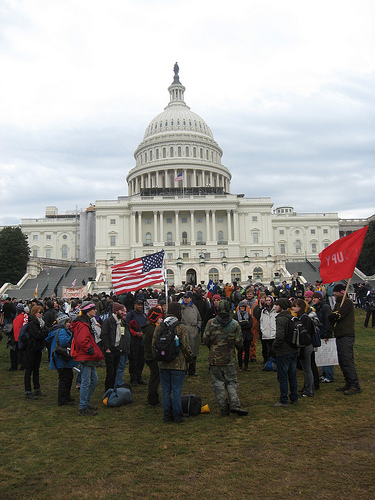 MEDIA ROOTS — The shameless political minions of insidious U.S. plutocrats and oligarchs continue to push civil rights down the
 MEDIA ROOTS — Earlier this week, Pacifica Radio’s