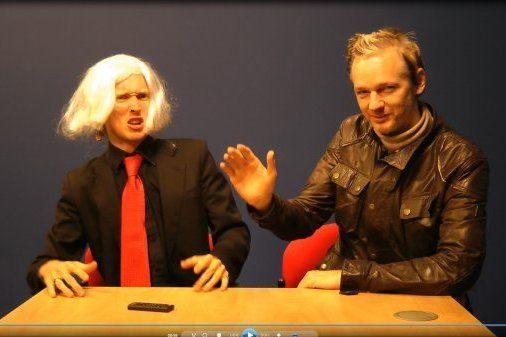
COMMON DREAMS– Food & Water Watch today unveiled the newest version of its pioneering Factory Farm Map (www.factoryfarmmap.org)
that charts the concentration of factory farms across the country and
the impacts these massive operations have on human health, communities,
and the environment. The interactive map illustrates the geographic
shift in where and how food is raised in the U.S. and allows anyone to
quickly search for the highest concentration of animals by region,
state and county.
Food & Water Watch analyzed U.S. Department
of Agriculture Census data from 1997, 2002 and the most current census,
2007, for beef and dairy cattle, hogs, broiler meat chickens and
egg-laying operations, and found the total number of livestock on the
largest factory farms rose by more than 20 percent between 2002 and
2007-while the number of dairy cows and broiler chickens nearly doubled
during the same time, making them the fastest-growing population of
factory farmed animals.
Despite the fact that the number of livestock farms across the
country has decreased, the Food & Water Watch Factory Farm Map
illustrates that big farms are getting bigger, with specific regions
and states bearing the brunt of intensive animal production.
“While
more and more light is being shed on the ways our food system is broken
and consumers are increasingly interested in knowing where their food
comes from, there is still a lot of information that’s hidden from
public view,” said Wenonah Hauter, Food & Water Watch’s executive
director. “The purpose of the Factory Farm Map is to provide an
easy-to-use tool that anyone can access to learn more about where our
food is really coming from.”
Key findings in Food & Water Watch’s analysis and map show:
* In five years, total animals on factory farms grew by 5 million, or more than 20 percent.
o Cows on factory dairy farms nearly doubled from 2.5 million cows in
1997 to 4.9 million in 2007. Factory dairy farms growth in western
states like Idaho, California, New Mexico and Texas shifted the dairy
industry away from traditional states like Wisconsin, New York and
Michigan. o Beef cattle on industrial feedlots rose 17 percent from
2002 to 2007 – adding about 1,100 beef cattle to feedlots every day for
five years. o Nationally, about 5,000 hogs were added to factory farms every day for the past decade. o The growth of industrial broiler chicken production added 5,800 chickens every hour over the past decade. o Egg laying hens on factory farms increased by one-quarter over the decade.
* The average size of factory farms increased by 9 percent in five years, cramming more animals into each operation.
o In 2007, the average factory-farmed dairy held nearly 1,500 cows and
the average beef feedlot held 3,800 beef cattle. o The average size of hog factory farms increased by 42 percent over a decade. o Five states with the largest broiler chicken operations average more than 200,000 birds per factory farm. o Over a decade, average-sized layer chicken operations have grown by 53.7 percent to 614,000 in 2007.
Food
& Water Watch released a companion report, Factory Farm Nation,
which explains the forces driving factory farms, as well as the
environmental, public health, and economic consequences of this type of
animal production. The report also examines the causes for
industrial-scale livestock and the demise of small and medium farms.
“This
map shows the extent to which factory farms have taken over farming and
our communities,” said Robby Kenner, director of the Academy
Award-nominated film Food, Inc. “Through the Factory Farm Map, Food
& Water Watch is shining a spotlight on the mega-corporations that
need to be held accountable for the damage they’re doing to our health,
environment and rural economies.”
In addition to the map itself,
the website ranks the top concentrations of factory farmed livestock
nationwide as well as by state and county. It features a newsfeed for
monitoring local and national factory farm news and social media tools
that allow users to share the map and its data via Facebook, Twitter,
email and RSS feed. The Factory Farm Map website includes a widget that
bloggers and other websites can embed on their sites and a variety of
other online tools for activists to spread the word and encourage
local, regional or national action.
“Whether you live near a
factory farm and are subject to the groundwater contamination or air
pollution it causes, or live thousands of miles away and eat the meat
or eggs from potentially unsafe facilities, very few people are spared
the risk that these operations bring,” said Hauter. “The Factory Farm
Map arms consumers with critical information about how our food is
being produced and what we need to do to chart a course to a more
sustainable food system.”
The Factory Farm Map and the companion report can be found at www.factoryfarmmap.org.
Democracy Now! has spent this week examining the revelations behind the first installments of State cables released by WikiLeaks on Sunday. Below is a collection of the outlet’s interviews and broadcasts covering torture, renditions, secret U.S. War Ops in Pakistan, U.S. pressure on other countries to thwart justice, and the most startling leaks that have yet to come.
The latest disclosures from the massive trove of diplomatic cables
published by WikiLeaks reveal U.S. officials tried to influence Spanish
prosecutors and government officials to drop court investigations into
torture at Guantánamo Bay and CIA extraordinary rendition flights. We
speak to Scott Horton, an attorney specializing in international law
and human rights and a contributing editor of Harper’s Magazine.
Leaked U.S. embassy cables from Madrid reveal the United States
pressured the Spanish government to close a court case brought by the
family of a Spanish cameraman, José Couso. Couso was killed in Baghdad
when a U.S. Army tank fired on the Palestine Hotel, which was filled
with journalists, on April 8, 2003. Three U.S. soldiers have been
indicted in Spanish court for Couso’s death. “I am outraged,” says
Javier Couso, the brother of José Couso. “I can’t believe my government
conspired with a foreign government… It seems we are citizens, or at
least a small province, of the empire of the United States.”
Despite sustained denials by the Pentagon, the leaked cables from
WikiLeaks confirm that U.S. military special operations forces have
been secretly working with the Pakistani military to conduct offensive
operations and coordinate drone strikes in the areas near the Afghan
border. A U.S. embassy cable from October of 2009 states: “These
deployments are highly politically sensitive because of widely-held
concerns among the public about Pakistani sovereignty and opposition to
allowing foreign military forces to operate in any fashion on Pakistani
soil.” The cables confirm aspects of a story about the covert U.S. war
in Pakistan published in The Nation magazine last year by investigative journalist and Democracy Now! correspondent Jeremy Scahill.
In the coming days, we are going to see some quite startling
disclosures about Russia, the nature of the Russian state, and about
bribery and corruption in other countries, particularly in Central
Asia,” says Investigations Executive Editor David Leigh at the Guardian,
one of the three newspapers given advanced access to the secret U.S.
embassy cables by the whistleblower website, WikiLeaks. “We will see a
wrath of disclosures about pretty terrible things going on around the
world.” Leigh reviews the major WikiLeaks revelations so far, explains
how the 250,000 files were downloaded and given to the newspaper on a
thumb drive, and confirms the Guardian gave the files to the New York Times. Additional cables will be disclosed throughout the week.
One of the leaked U.S. State Department cables released by WikiLeaks
urges diplomats to gather intelligence about “plans and intentions of
member states or U.N. Special Rapporteurs to press for resolutions or
investigations into U.S. counter-terrorism strategies and treatment of
detainees in Iraq, Afghanistan or Guantanamo.” We speak to Juan Méndez,
the new U.N. Special Rapporteur on Torture and Other Cruel, Inhuman and
Degrading Treatment or Punishment. He has called on the United States
to investigate and prosecute torture committed under former President
George W. Bush. He also said he hopes to visit Iraq and Guantánamo Bay
to probe widespread torture allegations. Méndez says, “We seem to be
focusing on whether disclosing [the cables] merits some kinds of action
against Julian Assange… I am very concerned about the documents that
show that thousands of people first imprisoned by U.S. forces [were]
transferred to the control of forces in Iraq and perhaps even in
Afghanistan, where they knew they were going to be tortured.”
Democracy Now! has spent this week examining the revelations behind the first installments of State cables released by WikiLeaks on Sunday. Below is a collection of the outlet’s interviews and broadcasts covering torture, renditions, secret U.S. War Ops in Pakistan, U.S. pressure on other countries to thwart justice, and the most startling leaks that have yet to come.
The latest disclosures from the massive trove of diplomatic cables
published by WikiLeaks reveal U.S. officials tried to influence Spanish
prosecutors and government officials to drop court investigations into
torture at Guantánamo Bay and CIA extraordinary rendition flights. We
speak to Scott Horton, an attorney specializing in international law
and human rights and a contributing editor of Harper’s Magazine.
Leaked U.S. embassy cables from Madrid reveal the United States
pressured the Spanish government to close a court case brought by the
family of a Spanish cameraman, José Couso. Couso was killed in Baghdad
when a U.S. Army tank fired on the Palestine Hotel, which was filled
with journalists, on April 8, 2003. Three U.S. soldiers have been
indicted in Spanish court for Couso’s death. “I am outraged,” says
Javier Couso, the brother of José Couso. “I can’t believe my government
conspired with a foreign government… It seems we are citizens, or at
least a small province, of the empire of the United States.”
Despite sustained denials by the Pentagon, the leaked cables from
WikiLeaks confirm that U.S. military special operations forces have
been secretly working with the Pakistani military to conduct offensive
operations and coordinate drone strikes in the areas near the Afghan
border. A U.S. embassy cable from October of 2009 states: “These
deployments are highly politically sensitive because of widely-held
concerns among the public about Pakistani sovereignty and opposition to
allowing foreign military forces to operate in any fashion on Pakistani
soil.” The cables confirm aspects of a story about the covert U.S. war
in Pakistan published in The Nation magazine last year by investigative journalist and Democracy Now! correspondent Jeremy Scahill.
In the coming days, we are going to see some quite startling
disclosures about Russia, the nature of the Russian state, and about
bribery and corruption in other countries, particularly in Central
Asia,” says Investigations Executive Editor David Leigh at the Guardian,
one of the three newspapers given advanced access to the secret U.S.
embassy cables by the whistleblower website, WikiLeaks. “We will see a
wrath of disclosures about pretty terrible things going on around the
world.” Leigh reviews the major WikiLeaks revelations so far, explains
how the 250,000 files were downloaded and given to the newspaper on a
thumb drive, and confirms the Guardian gave the files to the New York Times. Additional cables will be disclosed throughout the week.
One of the leaked U.S. State Department cables released by WikiLeaks
urges diplomats to gather intelligence about “plans and intentions of
member states or U.N. Special Rapporteurs to press for resolutions or
investigations into U.S. counter-terrorism strategies and treatment of
detainees in Iraq, Afghanistan or Guantanamo.” We speak to Juan Méndez,
the new U.N. Special Rapporteur on Torture and Other Cruel, Inhuman and
Degrading Treatment or Punishment. He has called on the United States
to investigate and prosecute torture committed under former President
George W. Bush. He also said he hopes to visit Iraq and Guantánamo Bay
to probe widespread torture allegations. Méndez says, “We seem to be
focusing on whether disclosing [the cables] merits some kinds of action
against Julian Assange… I am very concerned about the documents that
show that thousands of people first imprisoned by U.S. forces [were]
transferred to the control of forces in Iraq and perhaps even in
Afghanistan, where they knew they were going to be tortured.”
COMMONDREAMS– The Middle East policies of US President Barack Obama may well prove
the most detrimental in history so far, surpassing even the rightwing
policies of President George W. Bush. Even those who warned against the
overt optimism which accompanied Obama’s arrival to the White House
must now be stunned to see how low the US president will go to appease
Israel – all under the dangerous logic of needing to keep the peace
process moving forward.
Former Middle East peace diplomat Aaron David
Miller argued in Foreign Policy that “any advance in the excruciatingly
painful world of Arab-Israeli negotiations is significant.” He further
claimed: “The Obama administration deserves much credit for keeping the
Israelis, Palestinians, and key Arab states on board during some very
tough times. The U.S. president has seized on this issue and isn’t
giving up — a central requirement for success.”
But at what
price, Mr. Miller? And wouldn’t you agree that one party’s success can
also mean another’s utter and miserable failure?
Secretary of
State Hilary Clinton reportedly spent eight hours with Israeli Prime
Minister Benjamin Netanyahu only to persuade him to accept one of the
most generous bribes ever bestowed by the United States on any foreign
power. The agreement includes the sale of $3 billion worth of US
military aircrafts (in addition to the billions in annual aid
packages), a blanket veto of any UN Security Council resolution deemed
unfavorable to Israel, and the removal of East Jerusalem from any
settlement freeze equation (thus condoning the illegal occupation of
the city and the undergoing ethnic cleansing). But even more dangerous
than all of these is “a written American promise that this will be the
last time President Obama asks the Israelis to halt settlement
construction through official channels.”
Significant.
Achievement. Success. Are these really the right terms to describe the
latest harrowing scandal? Even the term ‘bribe’, which is abundantly
used to describe American generosity, isn’t quite adequate here. Bribes
have defined the relationship between the ever-generous White House and
the quisling Congress to win favor with the ever-demanding Israel and
its growingly belligerent Washington lobby. It is not the concept of
bribery that should shock us, but the magnitude of the bribe, and the
fact that it is presented by a man who positioned himself as a
peacemaker (and actually became certified as one, courtesy of the Nobel
Peace Prize Committee).
Equally shocking is the meager return
that Obama is expected to receive for hard-earned US taxpayers’
dollars. According to the Atlantic Sentential, this will be “a measly
three month extension of the settlement moratorium that originally
expired in late September.”
Acknowledging from the onset that
these are mere “midterm maneuvers”, Noah Feldman, writing in the New
York Times, asks the question: “Can Obama succeed where so many others
have not?” He preludes his answer with: “Israel and the Palestinian
Authority will not, of course, make things easy.”
Seriously, Mr. Feldman?
Palestinian
Authority President Mahmoud Abbas, whose mandate has already expired,
must be living the most humiliating and difficult moments of his not so
distinguished career. At one stage he had hoped that the advent of
President Obama would spare him and his authority further
embarrassment. Imagining the president would side with his ‘moderate’
position, he placed all his eggs in the Obama basket, even bidding
against the democratically elected government of Palestinians in the
occupied territories. He went as far as to halt an international
investigation into Israeli crimes in the recent Israeli war on Gaza so
that not to frustrate Netanyahu’s government or upset the pro-Israeli
sensibilities in the US Congress.
True, Abbas tried to appear as
a confident and self-assertive leader at times. He asked for a chance
to think about the resumption of peace talks, conditioned his
acceptance on Israeli actions that never really actualized, and finally
sought the help of the Arab League, a beleaguered and muted
organization without any political mandate.
How did Abbas and his
authority make things ‘difficult’ for the US, Mr. Feldman? Would any
self-respecting government agree to concessions that are made on its
behalf without the opportunity to offer its own input? This is exactly
what the PA has repeatedly done under Abbas.
Still, many Israelis
are not happy with the barter. Caroline B. Glick, writing in the
Jerusalem Post, described the freezing of construction in the illegal
Jewish settlements in the West Bank as “discriminatory infringement on
the property rights of law abiding citizens (that) is breathtaking.”
She had the hubris to consider the pitiable moratorium as equivalent to
“land surrenders.”
As for the major F-35 deal, it is “simply
bizarre,” she argued, for after all, “Israel needs the F-35 to defend
against enemies like Iran.”
Mind-boggling. US generously hands
Palestinian rights to Israel on a silver platter, and the far-right
mentality, which now governs Israeli mainstream politics and society,
still finds it unacceptable.
But aside from this arrogant
Israeli response, and the US media’s attempts to find the positive in
Obama’s latest scandal, one question must be raised. What happens now
that Obama has finally shown he really is no different from his
predecessors? That the United States has lost control of its own
foreign policy in the Middle East? That, frankly, Netanyahu has proved
more resilient, more steadfast, and more resourceful than the American
president?
Shall we go on making the same argument, over and over
again, or has the time finally arrived for Palestinians to think
outside the American box? Can Arabs finally venture off to seek other
partners and allies in the region and around the world who understand
the link between peace, political stability, and economic prosperity?
It may perhaps be time for them to further their relationship with
Turkey, to reach out to Latin America, to demand accountability from
Europe and to try to understand and engage China.
The latest US
elections have showed that the Obama hype has run its course in the US
itself. One can only hope that Palestinians, Arabs and their friends
will realize that it was all indeed a hype – before it’s too late.
MEDIA ROOTS– An age-old question among activists and the media is how to
grab an audience’s attention and hold it. In a society accustomed to twitter
feeds, blog hosting, sound bites and news that serves to either placate viewers with
entertainment or alarm them beyond reason, knowing how to engage people on
serious issues can be quite the challenge.
In order to reach a culture that is
over saturated with sensationalism and new technology, one thing though, is for
sure– you have to be creative.
Many people would rather be mindlessly entertained than learn about depressing news. So why not use entertainment to inform the masses? Inspired to combine music and news-room
journalism, two European expatriates living in Australia combined their powers
of lyrically creative brilliance, comical acting and historical and political
knowledge to form the eccentric character Robert Foster– host of Rap News.
From the initial looks of it, Rap News appears to be a one-man
show with a series of goofy wigs and costume changes that turn Hugo Farrant from anchorman Robert Foster into multiple other
entertaining characters featured in each episode. Yet, upon closer listening, the creativity
of the report’s content and lyrics reveal the wit and intellect of Giordano
Nanni, the composer, editor, director and researcher who co-writes the episodes
with Hugo.
As a team, Hugo and Giordano take on important issues facing
the world and critically frame them with ingenious, cutting lyrical verse, all
the while using humor to relay their message. For example, their latest episode
Rap News vs. News World Order, inwhich Wikileaks’s Julian Assange made a live debut,
Robert Foster wrapped up the show with these words-
It seems,
journalism’s become a dangerous profession
Risking ostracism,
extradition
To provide a clear
picture of the world we live in
But without truth,
history will certainly repeat.
The same wars, in
this time of universal deceit,
Telling the truth
has become a revolutionary act
So I salute those
who disclose the necessary facts.
Some of our other favorite Rap News lyrics are from Obama Wins the Nobel ‘War is Peace’ Prize–
Any serious examination
leads to the raw truth
This isn’t a prize
for Obama, it’s a prize for George Bush
Nobel’s message
seems to be War is Peace and it’s all well
When all is war, and
didn’t we read that in Orwell?
Well, From the
depths of doublethink and newspeak
This is Robert
Foster, for Juice Media
Have a double plus
good week.
Julian Assange thinks these guys have got it right and so do
we. Inspired by the duo, Media Roots reached out to the minds behind Rap News
to learn how they started, what inspires them and what the future has in store
for Robert Foster.
***
MR:Who are you both? What are your backgrounds?
Hugo: I’m an exile from the UK who
left to find greener pastures, both creatively and socially, here in Australia. My background is in teaching, but my passion is rhyme writing and performance.
Giordano: I’m an exile from Italy who came
to Melbourne about 8 years ago. My background is history—having studied and
written on colonial history—but my various projects and activities embrace
music, theatre, indy-journalism and film-making, etc.
MR: What caused your political awakening? What led you both to Australia
and ultimately to finding each other?
Hugo: I wouldn’t describe myself as
politically awakened. More politically curious, but lacking in discipline, and
someone like Giordano has the requisite knowledge to satisfy my curiosity. I
was always into bands like Rage Against the Machine back in the day, so I was
aware of the potential of music to deliver political messages.
I was keen to
participate in that style of art, but absolutely didn’t want to be another
rapper complaining about things without the academic clout to back up the
arguments. Giordano and I found each other through a mutual rock musician
friend, and immediately bonded over shared interests in media, movies, music,
conspiracy theories and Medieval Italian poetry.
Giordano: I think one of my first
‘political’ awakenings occurred when I was 18 or so; one of the (few) great teachers
I had at University suggested I read Hidden Agendas by John Pilger. It shocked
and blew me away at the time. It was one of the first books which sparked my
awareness of what was happening in the world, and which alerted me to the vital
importance of journalism therein.
But the awakenings have been ongoing since then. Relatively
recently, during the 2008 presidential campaign I discovered Ralph Nader—thanks
to the Internet and YouTube—not thanks to TV, interestingly enough. Hearing
him speak was a real awakening, in the sense that I had long since given up
placing any faith in the political process. Nader has taught me that politics
can be a noble profession; it’s not that all politicians are bastards, but
rather that most Americans seem to vote for the bastards rather than honest
ones!
MR: I agree about Nader. How did Rap News come into fruition and why did you choose this
approach?
Giordano: Rap News was born in late 2009
but its roots go back a bit further.
Hugo: It came about through
resurrecting a ‘music journalism’ project, which Giordano had previously worked
on—an audio precursor to Rap News. I heard about this and liked the idea, and
asked if I might get involved. Once we sat down and planned, and decided that I
would rap all the characters, it became clear that trying to be serious while
wearing so many stupid wigs was probably unrealistic, so the comedy element
came to the fore.
Giordano: Yeah, as George Bernard Shaw
said, “If you’re going to tell people the truth, you better make them laugh;
otherwise they’ll kill you”.
The news-room has become such a powerful and globally
recognized icon of knowledge and information: everything is offered daily, to
millions of viewers, as ‘the truth’. Rap News appropriated this device but
tries to shine a little light on some of the unspoken premises that prop up the
cultural fictions regurgitated daily by the mainstream news networks. Back in the days when I still bothered watching TV news, I
often felt an irresistible urge to shout back at TV set in frustration. Now Robert
Foster provides a channel for that outlet! I guess this also inspired our
approach to delivering the news.
MR: Hugo is an extremely good rapper and the rhymes in Rap News are
incredibly informative, intelligent and cutting. Have you always used hip-hop
as a form of poetic expression and when did you begin incorporating political
commentary into your rapping? How long have you been performing publicly?
Hugo: Thanks for your feedback! The
informative and intelligent nature of the rhymes comes from Giordano. He
provides the ‘juice’ of the dialogue, the research to back it up, and is
responsible for all the most cutting elements of each episode. Rumsfeld saying,
‘We’ll write the history books’ as a prime example.
My job is to make the thing rhyme and flow, and put in a bit
of puerile humor, as well as over-act! My own rap persona is much less popular
than Rap News, but yes, I do perform at festivals and venues in Australia, both
with Treats—an excellent DJ—and with the rising live band ‘Dub The
Magic Dragon’, touring India, March 2011.
My stage name is Hugo, but political listeners will not find
much juice there—now that I am involved with Rap News, I prefer to wax
philosophical, comical and spiritual in my solo work, and leave the political
content to a properly researched forum such Rap News.
Giordano: Hugo is being characteristically
modest: He is in fact very well known, and highly appreciated, in Melbourne,
for rocking audiences and making a real impact on people’s lives through his
art.
MR: Your two latest videos seem to have a more professional production than
your first couple—the lower third
text scroll, the Fox news graphics, etc. Are more people offering to help or are you just refining your skills together?
Giordano: Ever since we launched Rap News,
people have offered to help us by offering to donate their talent and skills to
the show. Probably one of most rewarding results has been witnessing all this
willingness to contribute. As suggested to me by someone who truly
understands this—Julian Assange—this willingness to contribute is
one of the benefits of promoting a shared value. People want to lend their skills and play a part in it.
Ironically, however, we’ve never been too concerned with
trying to look pro: the bedroom-studio-feel being a faithful reflection of the
means and time at our disposal—a reminder that anyone can potentially do this.
We started off simply by borrowing cameras and making do with
what we had at hand. Our backdrops were bed sheets and the lighting rig comprised
an array of six, tenuously balanced desk-lamps. We incorporated new stuff gradually—like
the green-screen background—and I am slowly getting a lot better and faster at
editing, even though I’m really still just hacking it.
But to answer your question: we decided to call upon reinforcements
for the latest News World Order
episode because we really needed to replicate that familiar ‘official newsroom’
environment—saturated with useless information, artificially enhanced by fancy
graphics, logos and slogans which distract and sedate and constantly blur the
line between fact and fiction, information and entertainment. Such visual
mayhem couldn’t have come about without the help of some skilled artists:
Melbourne-based artist, Zoe Tame, in particular, worked hard to create all the
images, replica logos and overlays; while others helped with tickertapes,
animations and advice.
Oh and Zoe also designed the kick-ass website: www.TheJuiceMedia.com. So yeah, Hugo and I still do the vast majority of the work,
but we’ve also benefitted immensely from the help of other people.
MR:What does the creation process of rap news look like? How long does it
take to produce one video—from the
idea to the lyrics to the costumes, editing and graphics? How many people are
involved in the production and what are their roles?
Hugo: A realistic minimum length of
production is two weeks. That includes initial meetings and brainstorming,
about 24 hours of writing—spread over a few days, and with several drafts
winging back and forth between me and Giordano—recording is generally done in
two sessions, we source the costumes from fancy dress shops, and the most fun
day, as far as I’m concerned, is filming day, when we get to bring the audio to
life on screen, and horse around. Then the real work begins in Giordano’s lab,
where it all gets edited and tweaked until it’s ready to be unleashed.
MR:Are your videos getting viral just because they kick so much ass or are
you getting some outside help with promotion and coverage?
Hugo: We try to keep the ass-kicking
level to the highest degree.
We’re not affiliated with YouTube’s partner program, and so we
never get ‘featured video’ status. We are regularly offered the opportunity to
opt in for ‘revenue-sharing’, i.e. advertizing, but the prospect of earning a
bit of money this way is outweighed by the desire to keep the Juice Media Rap
News channel free of ads for our viewers
Having said that, we have managed to attract many excellent fans
to the show, and they, along with some great contacts in the indy-media world,
are responsible for spreading the clips far and wide. We really do feel very
grateful to everyone who watches, comments, gets in touch, shares the link, and
of course to the numerous people who have donated through the website since
episodes 4 and 5 hit the sites.
MR:You incorporate many
facts that are under reported by the mainstream, like the 1,000,000 dead Iraqis
figure, and Obama’s continuation of Bush-era policies. Where do you guys go to
for your information—what media outlets and organizations out there do you
think are doing it right? I am assuming Democracy Now is one of them—with the
product placement and all.
Giordano: There are many indy-news outlets
which do a fantastic job—Media Roots being a good case in point—but there are
very few large news organizations which I know about, that are doing it right.
As you’ve deduced so perceptively from Robert Foster’s choice
of coffee mug, Democracy Now is definitely one of them. After
years of following this show, I am still thrilled about what it does. I really feel
a sense of responsibility for how much (and how little) I know about the world
around me; so I really value this portal of information. For the past 2 years
I’ve had them as my computer home page.
Amid the wasteland of mainstream
journalism, Amy Goodman and the DN crew have set a proper standard for how ‘news’ ought to be delivered
and debated. It’s an hour-long show, with in-depth interviews that truly
elucidate subjects, which are not given anywhere near the attention that is due
to them in the mainstream media. And, above all, they don’t waste broadcast
time reporting on sports!! They are not entertainers and media hacks; and, most
importantly, they are independently funded. I can trust them.
Other than this, I rely on links to website, articles by indy-journalists, and random bits of information that come my way.
MR:I couldn’t help but notice the play on the phrase “New World Order”.
A lot of people think that the New World Order is an elite group of globalists
embarking to take over every aspect of life on this planet. Others think it is
simply a powerhouse of ideas and groups of people for the purpose of control
and profit maximization. What do you guys
think the New World Order is and why did you choose to portray O’Reilly/Fox as
part of it?
Giordano: It’s a good question Abby.
We tend to think that many popular understandings of the ‘NWO’
are falsely premised on an externalized source of power. This is appealing,
since it evokes that basic paradigm of good versus evil—and sure enough, we
always identify as the goodies.
But let’s look at it this way: The two descriptions you
provided for the NWO—‘a group of globalists embarking to take over every aspect
of life on this planet’ and ‘a powerhouse of ideas and groups of people for the
purpose of control and profit maximization’—could well apply to the general
behavior of western/westernized society over the past six hundred years—some sections
of that society of course benefitting more than others!
In this sense we are virtually all beneficiaries and patrons
of the ‘NWO’ in one way or another; which makes the prospect of defeating it
somewhat paradoxical—or hypocritical. It’s a fascinating issue and it goes to
the very heart of what we’re trying to say. We’re actually planning an episode,
which will focus precisely on this subject; hopefully it will make more sense
expressed in rhyme! But it’s probably not going to be what most people expect
to hear.
MR:I love the Wikileaks endorsement of Rap News. Did
Assange reach out to you after seeing your work? How did you get him in the
flesh for your recent video?
Giordano: Julian really loved the first Rap
News episode we did on Wikileaks, Wikileaks
v. The Pentagon, in which Hugo impersonated Assange as a quirky, matrix-like
trickster.
Subsequently, ahead of Wikileaks’ latest historic disclosure of
400,000 documents relating to the Iraq war, Julian made contact with us and
invited us to take a sneak peak at some of the Iraq War Logs in view of
informing the content of a new episode.
Of course, we jumped at the opportunity and were aboard planes
within a fortnight. We arrived in London only two weeks prior to the scheduled
launch of the Iraq War Logs, on October 23, which meant that we faced the
absurd and terrific challenge of writing, recording and filming an entire
episode in under 4 days—a stunt we pulled thanks to the invaluable help of two
awesome Wikileaks crew-members, and thanks to our friend and supporter back in Melbourne,
Asher—aka Mama Wolf.
As for the cameo, we asked Julian straight up, thinking that
his appearance might be a historic and comedic event—not just for Wikileaks and
Rap News, but for that demographic of the internet community which has been so
avidly following what’s going on with Wikileaks. Despite a couple of initial raised
eyebrows, Julian was totally up for it. We didn’t pull any punches on the gags,
either. Thankfully the man has a great sense of humor.
MR:Awesome! What issues today are of greatest concern to you both?
Giordano: I wouldn’t know where to start;
all the seemingly separate issues, which I could list, are really interconnected.
I am deeply concerned about environmental issues, but I don’t think it’s just about
energy use.
If I had to choose one central issue, I’d point to the ongoing
treatment of, and attitude towards, ‘Indigenous’ cultures on this planet, which
represents an ongoing war on alternative philosophies of life. I think there’s
a strong correlation between this war and the multiple problems we face
today—especially the devastation of our environment.
Hugo: For my part, modern humanity’s general
belief in separateness is probably my over-arching concern. We have spent
centuries alienating ourselves from the planet, which gave birth to us, and
separating ourselves from each other, along barely relevant racial and cultural
lines. We now face the dramatic, inevitable consequences of our desire for
separateness. But if reading philosophy has brought me any concrete conclusion
at all, it is that ultimately, and in a very real sense, as Neil deGrasse Tyson
asserts, ‘we are all connected’. By perceiving our connectedness, even to the aspects
of life we judge as negative, I strongly believe that true lasting evolution
can take place. Rejecting and excluding those aspects only leads to their
perpetuation.
MR:What are some of your biggest musical, poetic and political inspirations?
Hugo: Too numerous to mention, but in
terms of comedy, certainly the great, great Bill Hicks, the guys behind South
Park and Team America, Chris Morris for his incredible work on Brass Eye and
The Day Today, and of course, the 90’s BBC comedy The League of Gentlemen—if
we could get access to their make-up department, I’d be one happy over-actor.
As for hip hop, my top inspiration is now-defunct but never
surpassed French outfit Saian Supa Crew, and from Australia, close friends and
personal heroes, DJ Treats, Julez, Mantra and Elf Tranzporter.
And as far as literature goes, it’s all about Dante Alighieri
and Jonathan Swift. Gulliver’s Travels is a satire broader than any before or
since, and is the benchmark against which all such work must be measured.
Giordano: My mind has been blown, and my
soul nourished, by many more powerful and precious sources of musical and poetic
inspiration than I can even mention—from William Blake and Leopardi, to Pink
Floyd, Roger Waters in particular, to Rage Against the Machine; from comedians
Bill Hicks and George Carlin—who saved my life by revealing the comedy of it
all—to writers like George Orwell, Jorge Louis Borges and Herman Hesse, who
have been guiding lights.
As for political inspiration, I listen carefully to what Noam
Chomsky and Ralph Nader have to say these days, while they’re still with us.
MR:Do you hope to team up or collaborate with any other political or media
players in the future?
Hugo: The beauty of the project is
that we don’t really need to. If we want someone in the show, like Donald
Rumsfeld, we can just come up with a poor impersonation of him and get some
laughs out of the hokiness of it. Nevertheless, we’re always open to offers,
and when the possibility of that episode 5 cameo was mooted, we jumped at it. So
the answer is, ‘definitely’; but in the meantime, we’ll just keep doing the bad
wig, bad accent, bad hand gestures thing.
MR:What else is in store for Juice Media and Rap News? Are you planning
any other projects or just focusing on these segments for now?
Hugo & Giordano: We’re really going with the
flow here, working during the glitches of our less-adventurous lives.
TheJuiceMedia will continue it’s less glamorous but highly valuable purpose of
broadcasting Indigenous, Aboriginal Australian voices to a wider local and
international audience. We’ll keep developing Rap News, exploring the vastness
of topics and narratives, which are out there begging to be translated into
rhyme and reason. We hope that Robert Foster’s voice might one day become an
important one. Stay tuned.
***
Rap News vs News World Order ( Wikileaks and the War on Journalism)



 COMMON DREAMS– Food & Water Watch today unveiled the newest version of its pioneering Factory Farm Map (www.factoryfarmmap.org)
that charts the concentration of factory farms across the country and
the impacts these massive operations have on human health, communities,
and the environment. The interactive map illustrates the geographic
shift in where and how food is raised in the U.S. and allows anyone to
quickly search for the highest concentration of animals by region,
state and county.
COMMON DREAMS– Food & Water Watch today unveiled the newest version of its pioneering Factory Farm Map (www.factoryfarmmap.org)
that charts the concentration of factory farms across the country and
the impacts these massive operations have on human health, communities,
and the environment. The interactive map illustrates the geographic
shift in where and how food is raised in the U.S. and allows anyone to
quickly search for the highest concentration of animals by region,
state and county.
 Former Middle East peace diplomat Aaron David
Miller argued in Foreign Policy that “any advance in the excruciatingly
painful world of Arab-Israeli negotiations is significant.” He further
claimed: “The Obama administration deserves much credit for keeping the
Israelis, Palestinians, and key Arab states on board during some very
tough times. The U.S. president has seized on this issue and isn’t
giving up — a central requirement for success.”
Former Middle East peace diplomat Aaron David
Miller argued in Foreign Policy that “any advance in the excruciatingly
painful world of Arab-Israeli negotiations is significant.” He further
claimed: “The Obama administration deserves much credit for keeping the
Israelis, Palestinians, and key Arab states on board during some very
tough times. The U.S. president has seized on this issue and isn’t
giving up — a central requirement for success.”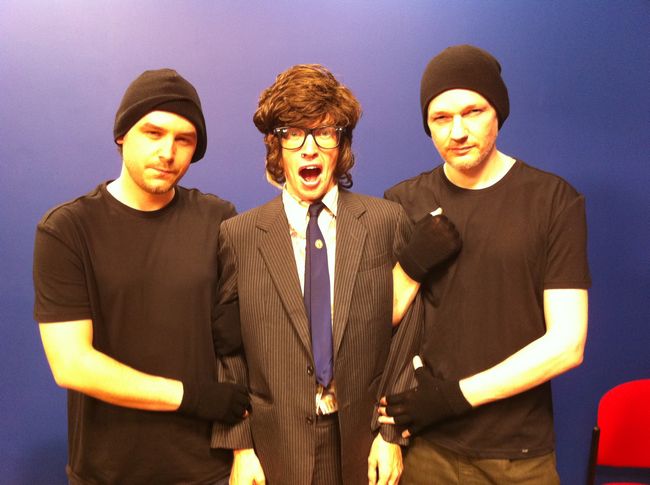 MEDIA ROOTS– An age-old question among activists and the media is how to
grab an audience’s attention and hold it. In a society accustomed to twitter
feeds,
MEDIA ROOTS– An age-old question among activists and the media is how to
grab an audience’s attention and hold it. In a society accustomed to twitter
feeds,  MR: Who are you both? What are your backgrounds?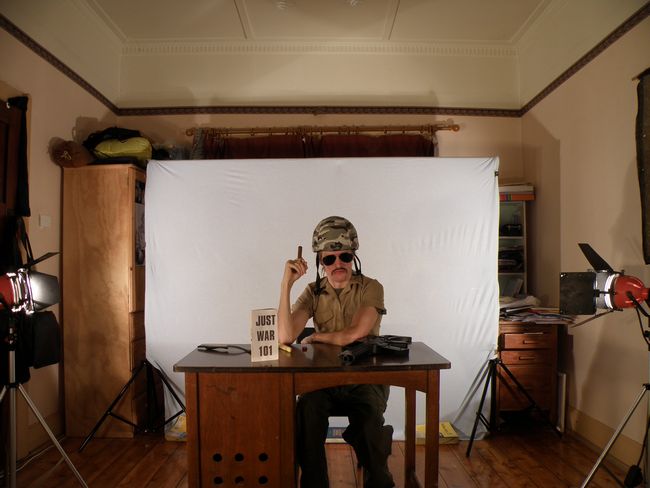
 As you’ve deduced so perceptively from Robert Foster’s choice
of coffee mug,
As you’ve deduced so perceptively from Robert Foster’s choice
of coffee mug,