


December 18. 2010
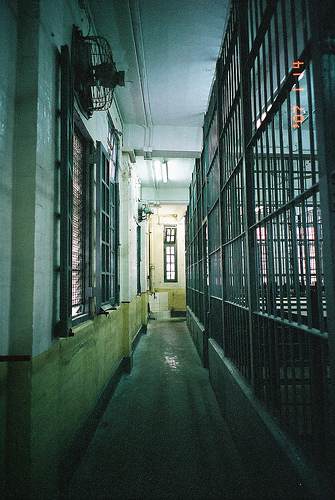 IN THESE TIMES – Last week a diverse group of nonviolent protesters across Georgia
stood up for their rights, calling for decent wages, better social
services and respect for their civil liberties. It didn’t take
long for the government to crack down on the demonstrations,
however: the protesters were already in prison.
IN THESE TIMES – Last week a diverse group of nonviolent protesters across Georgia
stood up for their rights, calling for decent wages, better social
services and respect for their civil liberties. It didn’t take
long for the government to crack down on the demonstrations,
however: the protesters were already in prison.
The uprising of Georgia inmates on December 9 defied the stereotype of the chaotic “prison riot” in the public imagination. Yet neither did “Lockdown for Liberty” fit within the conventional model of civil disobedience or industrial action. But when the inmates in at least six different prisons refused to leave their cells to report to work and other activities that day, a strike began. And it effectively paralyzed a small chunk of the bureaucratic monstrosity of America’s prison system.
The incarcerated have historically filled the dregs of the American workforce, an emblem of racial subjugation often invisible in the politics of labor and social policy. It was against this hidden legacy of exploitation that the Georgia inmates, with the support of the NAACP and other civil rights advocates, raised issues common to incarcerated people nationwide: abusive treatment, degrading living conditions, a lack of accountability in the administration and parole authorities, and a lack of basic educational and social services (see below).
Pointedly invoking the term “slave” to describe the circumstances under which they toiled, the strikers showed how historically entrenched racial divisions play out today in the black-white disparities throughout the criminal justice system. Still, Georgia protesters included Latinos and whites as well as blacks, in a joint effort to resist and challenge structural injustices.
Their demands were hardly radical, but rather, embodied mainstream standards for reasonable and humane treatment: protection from cruel and unusual punishment by officers, affordable medicine when they’re sick, and above all, fair pay for their labor. According to the Atlanta-Journal Constitution, “state law forbids paying inmates except for one limited program.”
Final Call quoted reports trickling out from inmates earlier this week:
One brother told me, ‘We will ride until the wheels fall off,’ and that’s been the sentiment amongst the men when they started this,” said Elaine Brown, a spokesperson for the strike… Part of our purpose for doing this is that Georgia is the only state that does not pay its inmates at all. Some guys in here work seven days a week and they don’t get a dime,” said Dondito, one of the strikers, who requested anonymity.
You can almost hear the zero-tolerance conservatives in Washington now: how dare these criminals demand better treatment from the state? The official reaction was to immediately curtail what few resources the inmates possess. According to news reports, prison staff locked down four facilities, attempted to transfer out the leading troublemakers, cut off the hot water, and revoked cell phone privileges (yes, according to Facing South, “Cell phones are contraband in Georgia’s prisons, but widely available for sale from correctional officers.”)
The strike was called off after six days, following reports of violent crackdowns and rising fears that the situation would escalate. But by then, the inmates had made their mark with one of the largest prison protests in U.S. history. The decision to end the strike, moreover, seems like the beginning of another phase in the inmates’ collective action, now that they’ve caught national political attention. The AJC reported:
an inmate at Smith State Prison in Glenville said in a telephone interview prisoners had agreed to end their “non-violent” protest to allow administrators time to focus on their concerns rather than operating the institutions without inmate labor.
“We’ve ended the protest,” said Mike, a convicted armed robber who was one of the inmates who planned and coordinated the work stoppage. “We needed to come off lock down so we can go to the law library and start … the paperwork for a [prison conditions] lawsuit.
The proactive militancy of the strike organizers underscores the fact that the entire action not only proceeded largely without violence, but also spread rapidly through several institutions thanks to careful planning and clandestine technology–messages spread via cell, expanding the traditional jailhouse grapevine.
It may be a while before we see another prisoner strike going viral, as the potential for prison-based activism remains constrained by the criminal-justice power structure. But the Georgia inmates helped change the public face of Americans who’ve been caught up in the country’s incarceration industry. Under the most oppressive of conditions, they used disciplined strike tactics to align their grievances with broader struggles for human rights.
It makes sense. Prison is the everyday reality lived by a huge swath of the population (roughly one in one hundred, according to recent surveys) Meanwhile, the impact of prison labor leaves a hidden imprint on our economy as well. Noah Zatz of UCLA Law School has estimated that:
well over 600,000, and probably close to a million, inmates are working full time in jails and prisons throughout the United States. Perhaps some of them built your desk chair: office furniture, especially in state universities and the federal government, is a major prison labor product. Inmates also take hotel reservations at corporate call centers, make body armor for the U.S. military, and manufacture prison chic fashion accessories, in addition to the iconic task of stamping license plates.
As a captive workforce and disenfranchised populace, the prison system reaches deep into American society, and the distance between the people on the inside and those on the outside is increasingly a matter of luck–whether you’re unfortuate enough to have been born the wrong color or in the wrong neighborhood. If the movement launched by the Georgia inmates, and their demands for dignity, look surprisingly familiar, there’s a good reason for that: they are us.
For more information, follow the Black Agenda Report’s ongoing coverage of the Georgia prison activists.
The strikers’ demands, which they continue to press with state officials, are as follows:
A LIVING WAGE FOR WORK: In violation of the 13th Amendment to the Constitution prohibiting slavery and involuntary servitude, the DOC demands prisoners work for free.
EDUCATIONAL OPPORTUNITIES: For the great majority of prisoners, the DOC denies all opportunities for education beyond the GED, despite the benefit to both prisoners and society.
DECENT HEALTH CARE: In violation of the Eighth Amendment prohibition against cruel and unusual punishments, the DOC denies adequate medical care to prisoners, charges excessive fees for the most minimal care and is responsible for extraordinary pain and suffering. AN END TO CRUEL AND UNUSUAL PUNISHMENTS: In further violation of the Eighth Amendment, the DOC is responsible for cruel prisoner punishments for minor infractions of rules.
DECENT LIVING CONDITIONS: Georgia prisoners are confined in over-crowded, substandard conditions, with little heat in winter and oppressive heat in summer.
NUTRITIONAL MEALS: Vegetables and fruit are in short supply in DOC facilities while starches and fatty foods are plentiful.
VOCATIONAL AND SELF-IMPROVEMENT OPPORTUNITIES: The DOC has stripped its facilities of all opportunities for skills training, self-improvement and proper exercise.
ACCESS TO FAMILIES: The DOC has disconnected thousands of prisoners from their families by imposing excessive telephone charges and innumerable barriers to visitation.
JUST PAROLE DECISIONS: The Parole Board capriciously and regularly denies parole to the majority of prisoners despite evidence of eligibility.
Michelle Chen’s work has appeared in AirAmerica, Women’s International Perspective, Extra!, Colorlines and Alternet. She is a regular contributor to In These Times’ workers’ rights blog, Working In These Times. She also blogs at Racewire.org.
Photograph by flickr user mocvdleung
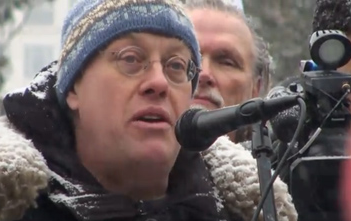 Washington
Police arrested 135 of the protesters, in what is being called the
largest mass detention in recent years. Among those arrested were Ray
McGovern, a former CIA analyst who used to provide the president’s daily
briefings, Daniel Ellsberg, who released the government’s Pentagon
Papers during the Nixon administration, and Chris Hedges, former war
correspondent for the New York Times.
Washington
Police arrested 135 of the protesters, in what is being called the
largest mass detention in recent years. Among those arrested were Ray
McGovern, a former CIA analyst who used to provide the president’s daily
briefings, Daniel Ellsberg, who released the government’s Pentagon
Papers during the Nixon administration, and Chris Hedges, former war
correspondent for the New York Times.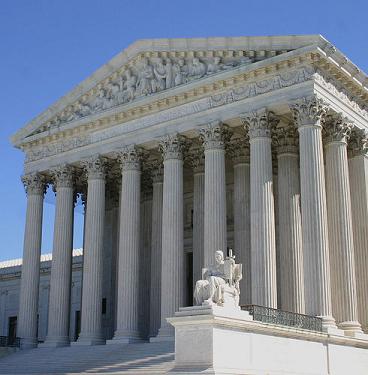 Jamil Dakwar, director of the ACLU Human Rights Programme,
told IPS, “Access to justice is a fundamental human right and bedrock
tenet of American democratic system – it was even codified by the
Universal Declaration of Human Rights, which the U.S. championed 62
years ago.”
Jamil Dakwar, director of the ACLU Human Rights Programme,
told IPS, “Access to justice is a fundamental human right and bedrock
tenet of American democratic system – it was even codified by the
Universal Declaration of Human Rights, which the U.S. championed 62
years ago.”