Court: No Warrant Needed to Search Cell Phone

REDTAPE.MSNBC – The next time you’re in California, you might not want to bring your cell phone with you. The California Supreme Court ruled Monday that police can search the cell phone of a person who’s been arrested — including text messages — without obtaining a warrant, and use that data as evidence. 

The ruling opens up disturbing possibilities, such as broad, warrantless searches of e-mails, documents and contacts on smart phones, tablet computers, and perhaps even laptop computers, according to legal expert Mark Rasch.

The ruling handed down by California’s top court involves the 2007 arrest of Gregory Diaz, who purchased drugs from a police informant. Investigators later looked through Diaz’s phone and found text messages that implicated him in a drug deal.  Diaz appealed his conviction, saying the evidence was gathered in violation of the Fourth Amendment, which prohibits unreasonable searches and seizures. The court disagreed, comparing Diaz cell phone to personal effects like clothing, which can be searched by arresting officers.

“The cell phone was an item (of personal property) on (Diaz’s) person at the time of his arrest and during the administrative processing at the police station,” the justices wrote. “Because the cell phone was immediately associated with defendant’s person, (police were) entitled to inspect its contents without a warrant.”  

In fact, the ruling goes further, saying essentially that the Diaz case didn’t involve an exception — such as a need to search the phone to stop a “crime in progress.” In other words, this case was not an exception, but rather the rule.

Click to continue reading the full article, including reactions to the ruling that says no warrant needed to search cell phones.

Article by Bob Sullivan

© MSNBC.COM, 2011

Photograph by samantha celera

 

One Tip Enough to Put Name on Terrorist Watch List

WASHINGTON POST – A year after a Nigerian man allegedly tried to blow up a Detroit-bound airliner, officials say they have made it easier to add individuals’ names to a terrorist watch list and improved the government’s ability to thwart an attack in the United States.

The failure to put Umar Farouk Abdulmutallab on the watch list last year renewed concerns that the government’s system to screen out potential terrorists was flawed. Even though Abdulmutallab’s father had told U.S. officials of his son’s radicalization in Yemen, government rules dictated that a single-source tip was insufficient to include a person’s name on the watch list.

Since then, senior counterterrorism officials say they have altered their criteria so that a single-source tip, as long as it is deemed credible, can lead to a name being placed on the watch list.

The government’s master watch list is one of roughly a dozen lists, or databases, used by counterterrorism officials. Officials have periodically adjusted the criteria used to maintain it.

But civil liberties groups argue that the government’s new criteria, which went into effect over the summer, have made it even more likely that individuals who pose no threat will be swept up in the nation’s security apparatus, leading to potential violations of their privacy and making it difficult for them to travel.

“They are secret lists with no way for people to petition to get off or even to know if they’re on,” said Chris Calabrese, legislative counsel for the American Civil Liberties Union.

Click to read the full article by the Washington Post about the 440,000 names on the Terrorist Watch List.

Article by Ellen Nakashima

© Copyright The Washington Post, 2010

Photograph by ebrkut


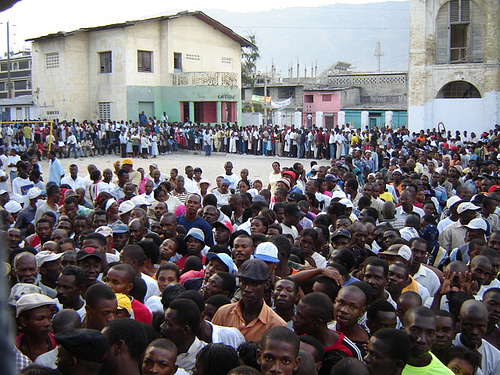
Haiti’s Election Tally Shows Massive Irregularities

CENTER FOR ECONOMIC AND POLICY RESEARCH – An independent recount and review of 11,171 tally sheets from Haiti’s November 28 election shows that the outcome of the election is indeterminate. The review, conducted by the Center for Economic and Policy Research (CEPR), found massive irregularities and errors in the tally. A report detailing the recount’s findings, and methodology, will be made available next week.

“With so many irregularities, errors, and fraudulent vote totals, it is impossible to say what the results of this election really are,” said Mark Weisbrot, economist and CEPR Co-Director.

“If the Organization of American States certifies this election, this would be a political decision, having nothing to do with election monitoring,” said Weisbrot. “They would lose all credibility as a neutral election-monitoring organization.”

Among the preliminary findings:

While OAS Assistant Secretary General Albert Ramdin was quoted by the Associated Press as saying that “Nearly 4 percent of polling place tally sheets used to calculate the results were thrown out for alleged fraud at the tabulation center,” the actual number is closer to 12 percent. CEPR found that 11.9 percent (1,324) of the tally sheets were either never received by the CEP (Haiti’s Provisional Electoral Council) or were quarantined by the CEP due to irregularities.  These tally sheets added up to more than 15 percent of the total votes counted.

In addition to the 11.9 percent of tally sheets not counted by the CEP, CEPR found that 6.4 percent of the tally sheets were irregular. These tally sheets contained vote counts that were so far outside the distribution of votes that they would not be considered valid. If we add these to the tally sheets not counted by the CEP, there are more than 18 percent of tally sheets – representing more than 22 percent of votes counted — that are invalid.

In addition, there were widespread clerical errors – mis-recorded numbers – on the tally sheets: 5.4 percent of tally sheets had numbers that were obvious clerical errors. Although these errors did not necessarily affect the distribution of votes among the candidates, they add another element of uncertainty to the vote count. It is clear that with so many mistakes in recorded totals in the tally sheets, there would have to be errors in the candidate vote counts in addition to those that CEPR detected.

Turnout was extremely low: an estimated 22.3 percent of the electorate participated, as compared with 59.3 percent in the last (2006) presidential election. This was partly due to the fact that more than 12 political parties were arbitrarily excluded from participating in the election, including the country’s most popular political party.

Internally displaced people (IDP’s), who have been made homeless by the earthquake, were especially disenfranchised. In the cities of Port-au-Prince, Carrefour, Delmas and Petionville – which contain 20 percent of Haiti’s registered voters – the average participation rate was just 12.4 percent (11.25 percent if we remove additional irregular tally sheets).

“This election was of questionable legitimacy to begin with because the electoral authorities banned over a dozen political parties, including the country’s most popular political party,” said Weisbrot. “But with this massive level of irregularity, fraud, and disenfranchisement, it can hardly be considered a legitimate election.”


Photograph of Haiti’s 2006 election by Flickr user Robert Miller


New Obama Offshore Oil Plan Sacrifices Polar Bear Habitat

CENTER FOR BIOLOGICAL DIVERSITY – Interior Secretary Ken Salazar today issued a revised offshore oil plan that will allow drilling in the heart of polar bear habitat in Alaska. Salazar’s announcement, which came in response to a previous court ruling, finalized a revised 2007-2012 nationwide offshore oil leasing plan. The previous plan, issued under the Bush administration, had been overturned by a federal appeals court for failing to properly analyze impacts of drilling off the Arctic coast of Alaska. Salazar’s new plan reaffirms a 2008 lease sale in polar bear critical habitat in the Chukchi Sea.

“Once again Secretary Salazar has placed political expediency over sound science and the rule of law, and polar bears and other arctic species will suffer for it,” said Brendan Cummings, senior counsel at the Center for Biological Diversity.

Oil development in the Chukchi Sea, home to America’s polar bears, remains a dangerous proposition because no technologies exist to clean up oil spills in icy waters. Today’s plan upholds the sale of leases in the Chukchi.

The Center for Biological Diversity and other organizations filed a court challenge to the 2007-2012 offshore oil leasing plan issued by the Bush administration. The Court of Appeals for the District of Columbia set aside that plan for failing to adequately assess the environmental impacts of opening up areas off Alaska to drilling. Today’s announcement comes in response to that ruling. A court in Alaska also separately ruled this year that the environmental analysis underlying the lease sale in the Chukchi Sea was unlawful.

“Secretary Salazar has apparently learned nothing from either the Gulf spill or the courts. No matter how many times the courts overturn his decisions to open the Arctic to oil, he comes back with the exact same decision,” said Cummings. “This year in the Gulf of Mexico we saw the damage that a massive oil spill can cause. Given the lack of clean-up technology for an oil spill in the Arctic, Salazar’s decision to move forward with the Chukchi leases demonstrates that all the promised reforms following the Gulf spill ultimately mean nothing for the Arctic.”

In a separate but related development, also in response to a court order, Salazar announced on Wednesday he would uphold a Bush-era decision to list polar bears as merely “threatened,” rather than the more protective status of “endangered.” Such a move allows Salazar to exempt greenhouse gas polluters nationwide, as well as oil companies operating in polar bear habitat, from some of the Endangered Species Act’s most protective provisions.

“This week Secretary Salazar has delivered a double-barreled blast to the future of the polar bear,” said Cummings. “At this rate Secretary Salazar will be writing the polar bear’s obituary rather than its recovery plan.”

###  

At the Center for Biological Diversity, we believe that the welfare of human beings is deeply linked to nature – to the existence in our world of a vast diversity of wild animals and plants. Because diversity has intrinsic value, and because its loss impoverishes society, we work to secure a future for all species, great and small, hovering on the brink of extinction. We do so through science, law, and creative media, with a focus on protecting the lands, waters, and climate that species need to survive.

© CENTER OF BIOLOGICAL DIVERSITY, 2010

Photograph by Flickr user mape_s


3D X-Rays Piece Together the Evolution of Flight

SCIENCE DAILY – Three-dimensional X-ray scanning equipment is being used to help chart the evolution of flight in birds, by digitally reconstructing the size of bird brains using ancient fossils and modern bird skulls.

In a collaborative project between National Museums Scotland, the University of Abertay Dundee, and University of Lethbridge, Canada, researchers are using an incredibly sensitive CT (computerised tomography) scanner at Abertay to analyse whole skulls and fossilised fragments and recreate accurate 3D models of extinct birds’ brains.

Bird skulls grow to a fixed size before they leave the nest, with the brain then growing to almost completely fill the cavity space. This means that bird skulls can be used to accurately calculate the size and shape of the brain.

By working this out, the size of part of the brain called the flocculus can be established. This small part of the cerebellum is responsible for integrating visual and balance signals during flight, allowing birds to focus on objects moving in three dimensions while they are flying.

Continue reading about 3D X-Rays Piece Together the Evolution of Flight.

© Science Daily, 2011

Photograph by flickr user BotheredByBees