US Military Prepares Transport of Bunker Buster Bombs for Iran Nuclear Strikes

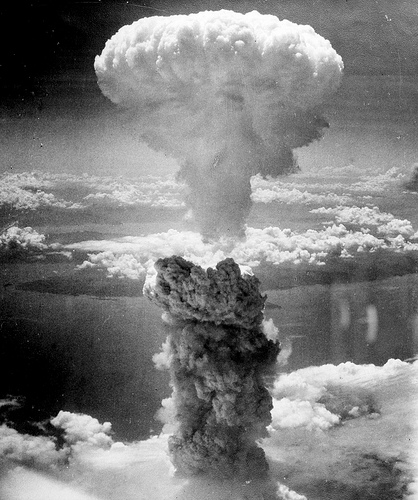
SCOTLAND HERALD– Hundreds of powerful US “bunker-buster” bombs are being shipped from California to the British island of Diego Garcia in the Indian Ocean in preparation for a possible attack on Iran.

The Sunday Herald can reveal that the US government signed a contract in January to transport 10 ammunition containers to the island. According to a cargo manifest from the US navy, this included 387 “Blu” bombs used for blasting hardened or underground structures.

Experts say that they are being put in place for an assault on Iran’s controversial nuclear facilities. There has long been speculation that the US military is preparing for such an attack, should diplomacy fail to persuade Iran not to make nuclear weapons.

Although Diego Garcia is part of the British Indian Ocean Territory, it is used by the US as a military base under an agreement made in 1971. The agreement led to 2,000 native islanders being forcibly evicted to the Seychelles and Mauritius.

The Sunday Herald reported in 2007 that stealth bomber hangers on the island were being equipped to take bunker-buster bombs. Although the story was not confirmed at the time, the new evidence suggests that it was accurate.

Continue reading about US’s Bunker Buster Bombs.

© SCOTLAND HERALD, 2010

Photo by flickr user TheOfficialCTBTO Photostream

Does Activism Make You Happy?

activism happyGUARDIAN– Marching in the drizzle against wars in far-off countries, writing letters protesting the government’s latest reactionary policy, sitting through interminable meetings that keep sprouting Any Other Business. It may be noble, but political activism is hardly a barrel of laughs. And yet it makes you happier.

So find two university psychologists in new research that looks for the first time at the link between political activity and wellbeing. Malte Klar and Tim Kasser started by interviewing two sets of around 350 college students, both about their degree of political engagement and their levels of happiness and optimism. Both times, they found that those most inclined to go on a demo were also the cheeriest.

So there’s a link – but can politics actually make a person happier? In the third study, the academics took a bunch of students and divided them up into groups. The first were encouraged to write to the management of the college cafeteria asking for tastier food. The next lot wrote asking the cafe to source local or Fairtrade products. They were then tested on their wellbeing, and the group who had involved themselves in the political debate were far and away the strongest on the “vitality” scale: they felt more alive and enriched than those who merely complained about the menu.

Continue reading about Does Activism Make You Happy?

© The Guardian, 2010

Photo by flickr user Fibonacci Blue

Blackwater Took Hundreds of Weapons From U.S. Military, Afghan Police

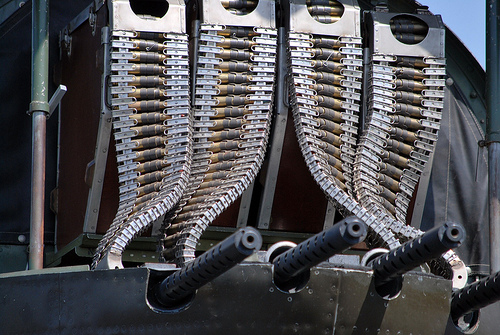
WASHINGTON INDEPEDENT– Employees of the CIA-connected private security corporation Blackwater diverted hundreds of weapons, including more than 500 AK-47 assault rifles, from a U.S. weapons bunker in Afghanistan intended to equip Afghan policemen, according to an investigation by the Senate Armed Services Committee.

On at least one occasion, an individual claiming to work for the company evidently signed for a weapons shipment using the name of a “South Park” cartoon character. And Blackwater has yet to return hundreds of the guns to the military.

A Blackwater subsidiary known as Paravant that until recently operated in Afghanistan acquired the weapons for its employees’ “personal use,” according to committee staffers, as did other non-Paravant employees of Blackwater. Yet contractors in Afghanistan are not permitted to operate weapons without explicit permission from U.S. Central Command, something Blackwater never obtained. A November 2008 email from a Paravant vice president named Brian McCracken, obtained by the committee, nevertheless reads: “We have not received formal permission from the Army to carry weapons yet but I will take my chances.”

As a result of Blackwater’s disregard for U.S. military restrictions on contractor firearms, four employees of Paravant — which held a subcontract from defense giant Raytheon to train Afghan soldiers — under the influence of alcohol opened fire on a car carrying four Afghan civilians on May 5, 2009, wounding two. That incident, occurring less than two years after Blackwater guards killed 17 Iraqi civilians in Baghdad, prompted the committee’s investigation.

“In the fight against the Taliban, the perception that the Afghans have of us is critical,” Sen. Carl Levin (D-Mich.), the chairman of the committee, told reporters Tuesday afternoon. “It’s clear to me that if we’re going to win that struggle, we need to know that contractor personnel are adequately screened, they’re adequately supervised and they’re adequately held accountable.” Levin will hold a hearing on Blackwater’s Afghanistan contracts Wednesday morning.

The committee’s investigation points to the contrary. Blackwater personnel appear to have gone to exceptional lengths to obtain weapons from U.S. military weapons storehouses intended for use by the Afghan police. According to the committee, at the behest of the company’s Afghanistan country manager, Ricky Chambers, Blackwater on at least two occasions acquired hundreds of rifles and pistols from a U.S. military facility near Kabul called 22 Bunkers by the military and Pol-e Charki by the Afghans. Gen. David Petraeus, the commander of all U.S. military forces in the Middle East and South Asia, wrote to the committee to explain that “there is no current or past written policy, order, directive, or instruction that allows U.S. Military contractors or subcontractors in Afghanistan to use weapons stored at 22 Bunkers.”

Continue reading about Blackwater Seizing Guns.

© WASHINGTON INDEPENDENT, 2010

Photo by flickr user dcbprime

France Bans Islamic Head Scarves in Schools

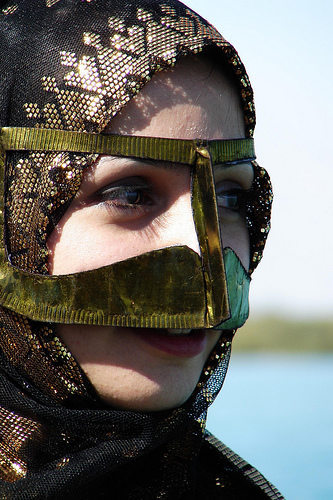
BBC NEWS– As expected, the French parliament has voted in favour of a new law to ban the wearing of Islamic headscarves in schools. And despite mass protests by French Muslims in recent weeks, the ban won by a landslide.

It will not just affect Muslim girls- large Christian crosses and Jewish skullcaps are also banned, as almost certainly are Sikh turbans.

After months of public debate, the vote in parliament was a brief affair. Just five minutes for each party to sum up their position on this controversial new law.

Then, the vote itself- passed by 494 votes in favour, with just 36 against. This means that as long as it is approved by the upper house next month, the new law will come into effect in September, banning all obvious religious symbols from schools.

President Jacques Chirac’s ruling centre-right UMP party has been the driving force behind the law, which is backed by some 70% of French people.

UMP deputy Jerome Riviere says France’s secular nature was being challenged by a small minority of hardline Islamists, and he insists the law is not about suppressing religious freedom.

“We have to give a political answer to what is a political problem,” he said.

“We don’t have a problem with religion in France. We have a problem with the political use by a minority of religion.”

Yet others warn that far from uniting the country, this new measure will divide it more than ever.

At a small demonstration outside the National Assembly, just under 200 protesters gathered to oppose the new law. Most were young Muslim women, all wearing headscarves.

Risk

As the children of immigrants, they say, they have a dual identity – both French and Muslim – and they blame France for failing to accept its newer citizens.

“It is unjust and I am very angry, angry yes, it’s not just, it’s a law, a segregation,” one woman told me.

Another protester said: “We are very upset especially with this law, we think this is very unfair against the Muslims. But this is not only a threat for Muslims but for whole French community.”

Others here say that that feeling of rejection or alienation could even drive some young Muslims into the arms of Islamic fundamentalists.

Green party leader Noel Mamer opposed the new law.

“I think it’s a very bad law, a law which takes the risk to make worse the rift between two parts of the French population,” he said.

Yet teachers in France are relieved that it will no longer be up to them to arbitrate on disputes over whether Muslim pupils can wear the Islamic headscarf in class.

Continue reading about the Banning of Islamic Headscarfs in Schools.

© COPYRIGHT BBC NEWS, 2004

Photo by Flickr user HamedSaber

Haiti Quake Opens Window on Dismal Prisons

MSNBC– The skinny teenager appears nervous, and with reason: He is waiting for a tap on the shoulder that could send him back to the dismal prison where he spent four years without being charged or seeing a judge.

He is one of more than 5,000 prisoners who fled their cells after January’s devastating earthquake and are now being rounded up by Haitian police and returned to a system notorious for appalling conditions and delays.

Legal experts say the earthquake has given the country a chance to reform its judiciary, which has been the source of international condemnation for years. But the young man on the run, who insists he is innocent, is afraid any solution will come too late for him.

“I’d like to be able to go to them and just say, ‘You were wrong, let me be free,'” said the 19-year-old, who spoke to The Associated Press on condition of anonymity because of his legal situation. “But I’m scared that they’ll just lock me up again.”

Justice Minister Paul Denis acknowledged that the justice system is guilty of “extremely serious” human rights violations and agreed the problem is particularly bad for juveniles. Authorities will seek to speed up the process in the future, he added, though no one has yet offered a formal plan for rebuilding the judiciary.

Continue reading about Haiti’s Dismal Prisons.

Copyright 2010 The Associated Press.