
Presidential Assassination of U.S. Citizens

SALON The Washington Post‘s Dana Priest today reports that “U.S. military teams and intelligence agencies are deeply involved in secret joint operations with Yemeni troops who in the past six weeks have killed scores of people.”  That’s no surprise, of course, as Yemen is now another predominantly Muslim country (along with Somalia and Pakistan) in which our military is secretly involved to some unknown degree in combat operations without any declaration of war, without any public debate, and arguably (though not clearly) without any Congressional authorization.  The exact role played by the U.S. in the late-December missile attacks in Yemen, which killed numerous civilians, is still unknown.

But buried in Priest’s article is her revelation that American citizens are now being placed on a secret “hit list” of people whom the President has personally authorized to be killed:

After the Sept. 11 attacks, Bush gave the CIA, and later the military, authority to kill U.S. citizens abroad if strong evidence existed that an American was involved in organizing or carrying out terrorist actions against the United States or U.S. interests, military and intelligence officials said. . . .

The Obama administration has adopted the same stance. If a U.S. citizen joins al-Qaeda, “it doesn’t really change anything from the standpoint of whether we can target them,” a senior administration official said. “They are then part of the enemy.”

Both the CIA and the JSOC maintain lists of individuals, called “High Value Targets” and “High Value Individuals,” whom they seek to kill or capture.  The JSOC list includes three Americans, including [New Mexico-born Islamic cleric Anwar] Aulaqi, whose name was added late last year. As of several months ago, the CIA list included three U.S. citizens, and an intelligence official said that Aulaqi’s name has now been added.  

Indeed, Aulaqi was clearly one of the prime targets of the late-December missile strikes in Yemen, as anonymous officials excitedly announced — falsely, as it turns out — that he was killed in one of those strikes.

Just think about this for a minute.  Barack Obama, like George Bush before him, has claimed the authority to order American citizens murdered based solely on the unverified, uncharged, unchecked claim that they are associated with Terrorism and pose “a continuing and imminent threat to U.S. persons and interests.”  They’re entitled to no charges, no trial, no ability to contest the accusations.  Amazingly, the Bush administration’s policy of merely imprisoning foreign nationals (along with a couple of American citizens) without charges — based solely on the President’s claim that they were Terrorists — produced intense controversy for years.  That, one will recall, was a grave assault on the Constitution.  Shouldn’t Obama’s policy of ordering American citizens assassinated without any due process or checks of any kind — not imprisoned, but killed — produce at least as much controversy?

Read full article about the Presidential Assassination of US Citizens Abroad.

Written by Glenn Greenwald

Photo by flickr user DVID SHUB
Presidential Assassination of U.S. Citizens

SALON The Washington Post‘s Dana Priest today reports that “U.S. military teams and intelligence agencies are deeply involved in secret joint operations with Yemeni troops who in the past six weeks have killed scores of people.”  

That’s no surprise, of course, as Yemen is now another predominantly Muslim country (along with Somalia and Pakistan) in which our military is secretly involved to some unknown degree in combat operations without any declaration of war, without any public debate, and arguably (though not clearly) without any Congressional authorization.  The exact role played by the U.S. in the late-December missile attacks in Yemen, which killed numerous civilians, is still unknown.

But buried in Priest’s article is her revelation that American citizens are now being placed on a secret “hit list” of people whom the President has personally authorized to be killed:

After the Sept. 11 attacks, Bush gave the CIA, and later the military, authority to kill U.S. citizens abroad if strong evidence existed that an American was involved in organizing or carrying out terrorist actions against the United States or U.S. interests, military and intelligence officials said. . . .

The Obama administration has adopted the same stance. If a U.S. citizen joins al-Qaeda, “it doesn’t really change anything from the standpoint of whether we can target them,” a senior administration official said. “They are then part of the enemy.”

Both the CIA and the JSOC maintain lists of individuals, called “High Value Targets” and “High Value Individuals,” whom they seek to kill or capture.  The JSOC list includes three Americans, including [New Mexico-born Islamic cleric Anwar] Aulaqi, whose name was added late last year. As of several months ago, the CIA list included three U.S. citizens, and an intelligence official said that Aulaqi’s name has now been added.  

Indeed, Aulaqi was clearly one of the prime targets of the late-December missile strikes in Yemen, as anonymous officials excitedly announced — falsely, as it turns out — that he was killed in one of those strikes.

Just think about this for a minute.  Barack Obama, like George Bush before him, has claimed the authority to order American citizens murdered based solely on the unverified, uncharged, unchecked claim that they are associated with Terrorism and pose “a continuing and imminent threat to U.S. persons and interests.”  They’re entitled to no charges, no trial, no ability to contest the accusations.  Amazingly, the Bush administration’s policy of merely imprisoning foreign nationals (along with a couple of American citizens) without charges — based solely on the President’s claim that they were Terrorists — produced intense controversy for years.  That, one will recall, was a grave assault on the Constitution.  Shouldn’t Obama’s policy of ordering American citizens assassinated without any due process or checks of any kind — not imprisoned, but killed — produce at least as much controversy?

Obviously, if U.S. forces are fighting on an actual battlefield, then they (like everyone else) have the right to kill combatants actively fighting against them, including American citizens.  That’s just the essence of war.  That’s why it’s permissible to kill a combatant engaged on a real battlefield in a war zone but not, say, torture them once they’re captured and helplessly detained.  But combat is not what we’re talking about here.  The people on this “hit list” are likely to be killed while at home, sleeping in their bed, driving in a car with friends or family, or engaged in a whole array of other activities.  More critically still, the Obama administration — like the Bush administration before it — defines the “battlefield” as the entire world.  So the President claims the power to order U.S. citizens killed anywhere in the world, while engaged even in the most benign activities carried out far away from any actual battlefield, based solely on his say-so and with no judicial oversight or other checks.  That’s quite a power for an American President to claim for himself.

Read full article about Presidential Assassination of U.S. Citizens.

© 2010 SALON

A Kinder, Gentler Gitmo

AMERICAN PROSPECT– Two weeks ago, Noor Uthman Mohammed sat in the same high-security military-commissions courtroom at Camp Justice, Guantánamo Bay, that was built to hold the trial of Khalid Sheik Mohammed and the other September 11 defendants.

Clad in the white garments of a detainee who has had no recent “discipline” problems, Mohammed stroked his gray-flecked beard as the judge, Navy Cpt. Moira Modzelewski, set the next hearing for August. Mohammed’s presumptive trial date is in February 2011, nearly a decade after his 2002 capture in Pakistan alongside Abu Zubaydah. Zubaydah is perhaps best known as the first detainee to be subjected to waterboarding by the Bush administration.

Mohammed is one of the lucky ones. He is, after all, among the 35 Guantánamo detainees getting a trial and not one of the 50 the administration says are “too dangerous to release” but can’t be tried. His lawyers — while frustrated with the pace of the proceedings — are nonetheless relieved by the changes made to the military commissions.

“There are significant improvements both in terms of procedure, rights available, and rights to resources, in particular in death-penalty cases,” says Mike Berrigan, principal deputy chief defense counsel for the Office of Military Commissions. “But there’s a large hill to climb.” The size of that hill will become apparent in the coming weeks as reporters from all over the world descend on Guantánamo for the initial hearings in the case of Canadian national Omar Khadr, who was captured in Afghanistan in 2002 at the age of 15.

Howard Ross Cabot, a civilian attorney who is a part of Mohammed’s defense team, agrees. “Often times I read a lot of critical things about Guantánamo. It’s not that it’s great, but when you compare where we are today to where they were in 2002, 2003, 2004, we’re moving ahead,” Cabot says.

None of this is supposed to be happening. Barack Obama was elected having rejected the national-security policies of the Bush administration as a “false choice between security and liberty.” Just days after his inauguration, Obama signed an executive order mandating that the prison at Guantánamo Bay be closed within a year. Mohammed’s is the first of the new military-commission hearings to occur since that promise was broken. With the administration waffling on its original decision to try the 9-11 defendants in civilian court, the high-security courtroom where Mohammed’s hearing took place may yet serve its original purpose.

In the meantime, the ongoing existence of the detention camp at Guantánamo Bay stands as a poignant symbol of the Obama administration’s failure to reverse the trajectory of U.S. national-security policy and of its ultimate decision to embrace the core framework of the Bush administration’s “war on terror.” The military commissions, for example, are fairer. They ban evidence gained through torture, put the burden on the government to argue that hearsay evidence is reliable, (in the past, the presumption went in the other direction), and now require judges to use virtually the same standards as civilian courts in evaluating classified evidence — all reforms put in place by the 2009 Military Commissions Act.

Continue reading about the Kinder, Gentler Gitmo.

© AMERICAN PROSPECT, 2010

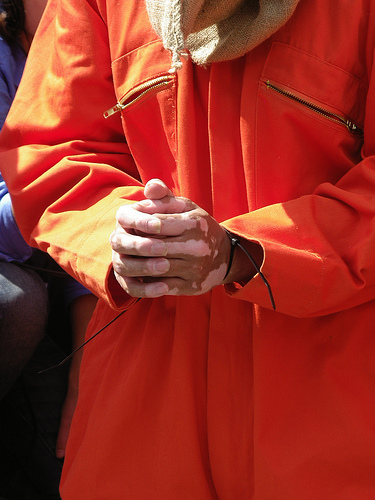
Photo by flickr user Art Makes Me Smile

Environmentalists Blast Obama’s Mining Reversal

CBS– The same week President Barack Obama riled environmentalists with plans for offshore oil drilling, he faces criticism for signaling he will support a Bush-era policy criticized as giving mining companies unlimited access to public lands to dump toxic waste.

The administration asked a federal judge Tuesday to dismiss a challenge by environmental and community groups to a rule that lifted a restriction on how much public land companies can use. The groups are also challenging a 2008 rule that says companies aren’t required to pay the going rate to use the land.

Environmentalists said the administration’s decision conflicts with its pledge to overhaul the nearly 140-year-old law regulating the mining of gold, silver and other hard-rock minerals on public land.

“The Obama administration can’t have it both ways,” said Jane Danowitz of the Pew Environment Group in Washington. “Either it stands by its earlier commitment to bringing mining law into the 21st Century, or it continues to allow the industry to dump unlimited toxic waste on public land at the expense of taxpayers and the environment.”

National Mining Association spokeswoman Carol Raulston said Friday that her group is pleased with the Obama administration’s decision to support the Bush policy.

Read full article about Environmentalists Blast Obama’s Mining Reversal.

© 2010 CBS NEWS

One in Every 100 Americans Are in Jail

POST GAZETTE– Pennsylvania had the largest prison population growth in the Northeast last year, part of a national trend of proliferating prison populations in which more than one in 100 American adults now is incarcerated, according to a study released yesterday by the Pew Center’s Public Safety Performance Project.

In spite of the sobering statistics behind the highest imprisonment rate in American history, the report concluded that efforts to reduce incarceration and recidivism have proved effective in some states.

“We’ve crossed this statistical and psychological threshold, but we don’t have to keep heading down this path,” said the project’s director, Adam Gelb, in a news teleconference.

Pennsylvania added about 1,600 prisoners to its state prison population in 2007 — a 3.7 percent increase from the previous year – and totaled 46,028 on Jan. 1. While that was the highest numerical growth in the Northeast, it was far behind increases in Florida’s and Georgia’s incarcerations, which grew by 4,447 and 2,413, respectively.

Texas’ prison population – 171,790 – is the nation’s highest, according to the study.

The study concluded that much of the growth in prison populations has to do with “a wave of policy choices that are sending more lawbreakers to prison and, through popular ‘three-strikes’ measures and other sentencing enhancements, keeping them there longer.”

Alfred Blumstein, a criminologist at Carnegie Mellon University, said it has a lot to do with politics. In the early ’80s, Dr. Blumstein predicted that the prison population in Pennsylvania would continue to rise until the end of the decade and flatline at about 8,000 inmates.

Today, there are about 46,000 inmates. What he did not anticipate, he said, was a dramatic shift in the political paradigm in the early ’90s that led politicians to push for stricter penalties for all offenders, bloating the prison population.

“The political system took over,” he said. “As the public became increasingly concerned about crime, the politicians and particularly the Legislature responded by instituting a variety of tougher legislation such as mandatory minimum sentencing.

“It doesn’t necessarily work in reducing crime but it did work in satiating the public,” he said.

The study included some startling statistics.

Men are about 10 times more likely to be incarcerated, but the female population is growing at a faster rate. The study also found that age limits jail time. One in every 53 people in their 20s is in prison, but above age 55 that falls to one in 837. Even so, between 1992 and 2001, the number of state and federal inmates aged 50 and older rose from 41,586 to 113,358, a jump of 173 percent.

Continue reading about how 1 out of every 100 Americans are in jail.

Article written by Moriah Balingit

© COPYRIGHT POST GAZETTE, 2008