 This is the first in a series of articles from a soldier’s
perspective that I am writing for Media Roots.
These articles will provide an inside look at the military, war, the
players involved, and my own personal take on it all. While I’ll try not to overly indulge myself
in biographical reverie, I feel it will be important for the reader to know a little about me.
This is the first in a series of articles from a soldier’s
perspective that I am writing for Media Roots.
These articles will provide an inside look at the military, war, the
players involved, and my own personal take on it all. While I’ll try not to overly indulge myself
in biographical reverie, I feel it will be important for the reader to know a little about me.
As a young boy I remember visiting the Smithsonian
Air & Space
Museum and
indoctrinating myself with aviation. I was in love with it. There is no clear place in my evolution where
I can remember thinking that I really wanted to fly military aircraft, it was just always there. Smithsonian imagery no doubt played a part.
I wonder, in every person I meet doing what I
do, what that thing was for them when they were young. But here we are now,
young military pilots, the best of the best flying army gunships in the
night.
My perspective of this experience, and the path
leading up to it, has opened myself to questions I might not otherwise have
entertained, and forced me to examine core beliefs and basic assumptions within
myself. That has been a good thing, a
very good thing – hastening thought processes within myself.
This and subsequent articles are my attempt to give the
reader a different perspective, my take on what might actually be going on in
the world. I don’t mean at any point to be presumptuous, condescending, or
inconsiderate. In fact, I truly believe
that your right to your personal beliefs and the freedom to express those
beliefs is why I’m here. But do you really know what your beliefs
are? Are they really your beliefs? What is in YOUR mind?
The war I want is a war of the minds – a
mental jousting match followed by respect and a better understanding and openness to original ideas. My father taught me to begin
with the assumption that you are, in fact brainwashed. In other words, take everything you think you
know and question it mightily, peeling the layers back. Therefore, my opening question shall be: Who will
wake up and step up to participate? Will
you truly exercise this innate human faculty?
I am a warrior. I
swore to ‘defend and uphold the Constitution of the United States against all enemies foreign and domestic.’ My job is to kill, lose fellow soldiers, and
to continue functioning exceptionally well physically and mentally, in spite of all
that. However, in doing this, I have come to believe there is no just
war, only just defense. That means that if
I am defending my life, or the life of my nation, I am innocent. Have you asked yourself if your country is
conducting a war of defense? Do you have
the information required to decide if you support what your young country men
and women are tasked to do?
As an officer, and proud member of my unit in the United
States Army, I fly gunship helicopters. Yes, the kind so many of you have seen shooting people to pieces –
literally. I am not here to openly
question my chain of command. That
remains within the chain, just as your family’s business remains internal, or
should at least.
My purpose in writing
is to invigorate the cause of freedom as the Constitution of the United States
of America intended, a document and concept to which I am sworn and bound to
defend and uphold. I implore you to drop
what you think you know about it and read it. Develop a fresh understanding of
its purpose. Why was it written the way it was?
Then simply compare that doctrine to the actions of your current representation
and system of laws. I want you to
understand that freedom of expression is the first and most important one to
consider, especially during times of
war.
I spent thirteen months flying over enemy in Iraq. I was a creature of the night – a young man who stares at people through a
powerful infrared camera for six to ten hours a night, followed by head-bobbing
a helicopter back to base as the sun was rising. Redbull was my friend. I helped give ground commanders the leverage
they needed, tools that ensured the preservation of lives, not only of young
American soldiers, but of innocent civilians as well.
Before I became a military aviator, I was a totally
different person. I experienced a
typical middle class upbringing. Before
twelve, family was everything, Christmas was magic, and my neighborhood was
candy land. JV and Varsity years pulled
my attention to girls, grades, sports, and working random jobs to fill my gas tank, drink alcohol, and pay even more attention to
girls. I was the typical middle class
male, basically trying to have a good time and not kill myself while preparing
for higher education.
My folks had limited financial means to support me in
college. Fortunately, I was able to deal
with this burden without their help.
Clearly, the middle class is under financial attack when it comes to
tuition. If you’re wealthy, obviously
paying for school isn’t an issue in the first place but universities don’t pay
their bills off the affluent few. If you’re
poor, you’ll get the financial assistance you need. If you’re middle class, you’ll likely be
crushed with six-figure debt per child.
In any event, I decided to finance my college education with running my own
professional business. It
worked and it also set me apart from all the other students.
I figured out early on that college was a sham. The classes were kind of bullshit. I could do a lot at home, without any
aid. Many students didn’t give a
shit. Many professors didn’t
either. No one knew why they were
there. If you spoke about any social
issue in a way that was inconsistent with the crowd (and faculty), you were in
trouble. Better to be outwardly
politically correct no matter what you actually think. I mistakenly thought it was an environment
that welcomed debate, flexing the grey matter, but in practice that wasn’t
really true. As I made money,
connections, and experienced firsthand how the business world actually worked,
I began looking at my schooling in a different and more cautious light.
I became by degree an engineer. The co-op portion of my program put me into
real-world industrial environments where often my stark “book-based” learning
process came up short of the practical world’s real
problems of an applied technology, business concerns and how one engineer might fit in and provide value.
School had not prepared me for the thought processes required for
dealing with the reality of industry. One
of the most valued engineers at the mill I worked at had no
degree. He kept trying to retire but
management needed his skills so badly they just kept offering him more money
until he’d say okay to another few years. He was truly a legacy. While the
co-op aspect of the program intended to
give an appreciation of all of this, I was nonetheless amazed at the level of indifference real business and
industry had towards academia.
Ultimately, people are hired based on their true ability and
skill. All around me I see people
putting their faith in a diluted form of education to which we now must subscribe
to in order to be considered for any well-paying job. Kids pay a hundred thousand dollars and up
only to end up slowly paying off outrageous debt working at Home Depot, Best
Buy, TGI Fridays, or in their field using relatively little of what they
studied with no creativity. I began to
see the whole system as an over-priced shake down of the middle class. Why do I bring this up?
Our culture really believes in that diploma. So do the soldiers. Many young soldiers joined the military for
college money. We are so entrenched with
the idea that we need to shell out large sums of money in order to learn skill
sets to survive and prosper in the economy that we will actually risk getting
blown up to get that money!? Ridiculous!
Despite my growing awareness of a system that seemed to punish the middle
class, regulate speech through PC pressure, and propogate a cultural myth in
which an expensive 4-year college experience was more important than anything
else, I was still wistfully dreamed about being a military aviator.
9/11 did nothing to increase or decrease my desire to
fly. The desire just was. I remember saying I wanted to do something
for my country in response to the tragedy but was only a small part of me. I
wanted the glory. I wanted to do this
thing I thought was heroic. I sold my
business, and when I was finally within weeks of leaving for flight
school, my father told me that I was entering into something dangerous, and that this decision could mean
that in just a matter of a few years, I could very easily be dead. He was right in the case of two friends. And equally important, he said I would likely take the lives of others. He asked me if I really understood what that
meant and if I thought the cause was just.
I was angry at him.
He was ex-Army, and his father had fought in WW2 and survived – with lasting
physical and mental effects. But we took pride in his service. His older brother flew two tours in Nam and
was highly decorated. His uncle flew Air
Force One under President Ford. How
could my father expound upon our family’s participation in the US military and
then question my motives? How could he
allow me to watch every war movie ever made, and then not understand why I
wanted to join?
I simply remarked back that I could die on the highway
tomorrow, and that I wanted to do something for my country. If 18 year olds were going to be risking their
lives and dying, than I should help. He
basically backed me down until I admitted that I was joining more for the glory
of being a military pilot, than for any of the altruistic reasons I was
touting. He was right and I was pissed, but
I joined anyways.
Not to spite him, but because I was so excited… to become an Army
aviator!
Yossarian.
Photo by flickr user US Army



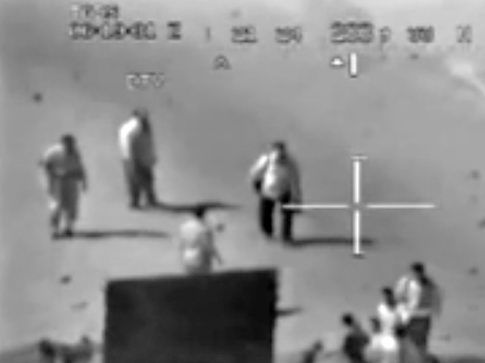 MEDIA ROOTS- What do you get for all the effort and risk involved to
become an Army aviator? In the Apache
video footage of the journalist massacre, US ground forces had already been
engaged sporadically in that area earlier that day.
MEDIA ROOTS- What do you get for all the effort and risk involved to
become an Army aviator? In the Apache
video footage of the journalist massacre, US ground forces had already been
engaged sporadically in that area earlier that day.  This is the first in a series of articles from a soldier’s
perspective that I am writing for Media Roots.
These articles will provide an inside look at the military, war, the
players involved, and my own personal take on it all. While I’ll try not to overly indulge myself
in biographical reverie, I feel it will be important for the reader to know a little about me.
This is the first in a series of articles from a soldier’s
perspective that I am writing for Media Roots.
These articles will provide an inside look at the military, war, the
players involved, and my own personal take on it all. While I’ll try not to overly indulge myself
in biographical reverie, I feel it will be important for the reader to know a little about me. 



 NY TIMES