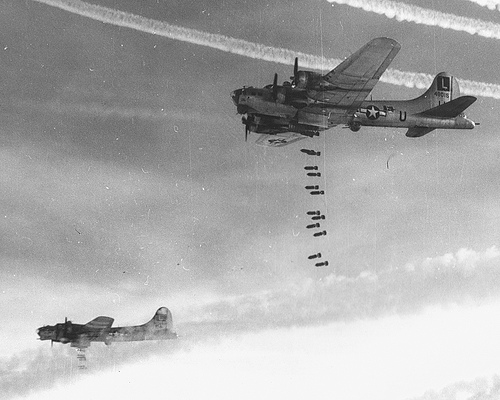
Army Reports Record Number of Suicides for June

USA TODAY– Soldiers killed themselves at the rate of one per day in June making it the worst month on record for Army suicides, the service said Thursday.

There were 32 confirmed or suspected suicides among soldiers in June, including 21 among active-duty troops and 11 among National Guard or Reserve forces, according to Army statistics.

Seven soldiers killed themselves while in combat in Iraq or Afghanistan in June, according to the statistics. Of the total suicides, 22 soldiers had been in combat, including 10 who had deployed two to four times.

“The hypothesis is the same that many have heard me say before: continued stress on the force, said Army Col. Christopher Philbrick, director of the Army Suicide Prevention Task Force. He pointed out that the Army has been fighting for nine years in Iraq and Afghanistan.

Last year was the Army’s worst for suicides with 244 confirmed or suspected cases.

The increase was a setback for the service, which has been pushing troops to seek counseling. Through May of this year, the Army had seen a decline in suicides among active-duty soldiers this year compared with the same period in 2009.

Continue to read about the Record Number of Suicides.

Photo by US Army flickr

© COPYRIGHT USA TODAY, 2010
BP Allegedly Stops Oil Leak in Gulf, Temporarily

GUARDIAN– The gush of oil from BP’s spewing well in the Gulf of Mexico was stopped for the first time in three months yesterday, raising hopes that it could be sealed off for good. The Obama administration immediately warned that a cap sealing off the well might only be a temporary fix.

“We’re encouraged by this development, but this isn’t over,” said Thad Allen, the US Coast Guard commander.

But for the first time in 87 days, it appeared last night that BP had control over the well. The company said it would have to monitor the cap holding back the oil in a series of pressure tests every six hours for the next 48 hours, before it could be certain the well would hold.

It also cautioned that the final solution remained a relief well, still some weeks away. “I am very excited that there’s no oil in the Gulf of Mexico,” Kent Wells, a senior vice-president for BP, said in a conference call. “But we just started the test and I don’t want to create a false sense of excitement.”

Read full article about BP Allegedly Having Stopped the Leak.

© COPYRIGHT THE GUARDIAN, 2010

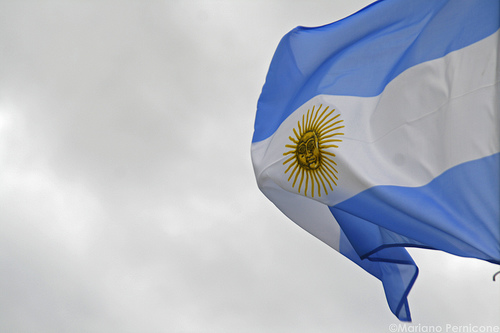
Argentina Legalizes Gay Marriage

BBC– Argentina has become the first country in Latin America to legalise gay marriage after the Senate voted in favour. The country’s Chamber of Deputies had already approved the legislation.

The vote in the Senate, which backed the bill by just six votes, came after 14 hours of at times heated debate.

The law, which also allows same-sex couples to adopt, had met with fierce opposition from the Catholic Church and other religious groups. The legislation, backed by President Cristina Fernandez’s centre-left government, passed by 33 votes to 27 with three abstentions.

There were demonstrations for and against the bill outside Congress as senators debated. Outside Congress, as the debate continued into the early hours of Thursday, supporters and opponents of the bill held rival demonstrations.

“Nearly every political and social figure has spoken out in favour of marriage equality,” said Maria Rachid, president of the Argentine Federation of Lesbians, Gays, Bisexuals and Transsexuals. “And we hope that the Senate reflects this and that Argentina, from today forward, is a more just country for all families,” she told the Associated Press.

Ines Frank, from a group called Argentine Families Argentina, said opposition was not discrimination “because the essence of a family is between two people of opposite sexes.”

There have been several gay marriages recently in Argentina, some of which were annulled by the Supreme Court, creating a legal controversy. Civil unions between people of the same sex are legal in Buenos Aires and in some other provinces but there was no law to regulate it on a country-wide level.

Argentina’s capital is widely considered to be among the most gay-friendly cities in Latin America. It was the first Latin American city to legalise same-sex unions. Same-sex civil unions are also legal in Uruguay and some states in Brazil and Mexico, while gay marriage is legal in Mexico City.

© COPYRIGHT BBC, 2010

Photo by flickr user Mariano Pernicone

An Attack on Iran- Back on the Table

YAHOO NEWS– In late 2006, George W. Bush met with the Joint Chiefs of Staff at the Pentagon and asked if military action against Iran’s nuclear program was feasible. The unanimous answer was no. Air strikes could take out some of Iran’s nuclear facilities, but there was no way to eliminate all of them.

Some of the nuclear labs were located in heavily populated areas; others were deep underground. And Iran’s ability to strike back by unconventional means, especially through its Hizballah terrorist network, was formidable. The military option was never officially taken off the table. At least, that’s what U.S. officials always said.

But the emphasis was on the implausibility of a military strike. “Another war in the middle East is the last thing we need,” Secretary of Defense Robert Gates wrote in 2008. It would be “disastrous on a number of levels.”

Gates is sounding more belligerent these days. “I don’t think we’re prepared to even talk about containing a nuclear Iran,” he told Fox News on June 20. “We do not accept the idea of Iran having nuclear weapons.” In fact, Gates was reflecting a new reality in the military and intelligence communities. Diplomacy and economic pressure remain the preferred means to force Iran to negotiate a nuclear deal, but there isn’t much hope that’s going to happen. “Will [sanctions] deter them from their ambitions with regards to nuclear capability?” CIA Director Leon Panetta told ABC News on June 27. “Probably not.” So the military option is very much back on the table.

Read full article about an Attack with Iran Being Back on the Table.

Photo by flickr user Foqus

© COPYRIGHT YAHOO NEWS, 2010

Plants ‘Can Think and Remember’

BBC– Plants are able to “remember” and “react” to information contained in light, according to researchers. Plants, scientists say, transmit information about light intensity and quality from leaf to leaf in a very similar way to our own nervous systems.

These “electro-chemical signals” are carried by cells that act as “nerves” of the plants. The researchers used fluorescence imaging to watch the plants respond.

In their experiment, the scientists showed that light shone on to one leaf caused the whole plant to respond. And the response, which took the form of light-induced chemical reactions in the leaves, continued in the dark.

This showed, they said, that the plant “remembered” the information encoded in light.

“We shone the light only on the bottom of the plant and we observed changes in the upper part,” explained Professor Stanislaw Karpinski from the Warsaw University of Life Sciences in Poland, who led this research.

He presented the findings at the Society for Experimental Biology’s annual meeting in Prague, Czech Republic.

“And the changes proceeded when the light was off… This was a complete surprise.”

Continue reading about Plants ‘Can Think and Remember’.

© BBC, 2010

Photo by Abby Martin