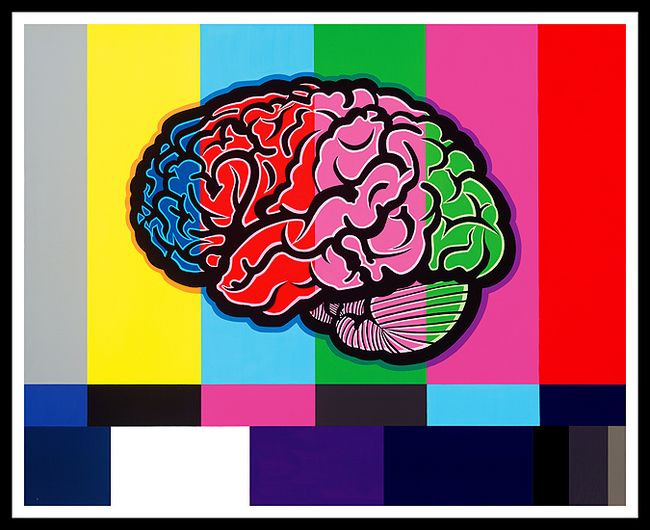
Ban TV to Protect Children’s Health, Top Psychologist Says

DAILY MAIL– TV should be banned for toddlers and severely rationed for other youngsters to protect their health and family life, a leading psychologist will tell MEPs today. Dr Aric Sigman claims that millions of children spending hours slumped in front of TVs and computers is ‘the greatest unacknowledged health scandal of our time’.

He says it is linked to ills ranging from obesity and heart disease to poor grades and lack of empathy. Some British children spend as much as seven-and-a-half hours a day in front of a screen  –  the equivalent of a full year of 24-hour days by the age of seven.

Dr Sigman, an Associate Fellow of the British Psychological Society, believes that the youngest children, whose brains are undergoing massive development, should not watch any TV at all. From the ages of three to 12, boys and girls should be limited to an hour a day, rising to an hour and a half for teenagers.

The psychologist will tell an EU parliamentary working group on the ‘quality of childhood’ that TVs and computers should be kept out of bedrooms until a child is 15.

‘Governments throughout Europe regularly advise their citizens on the most intimate health matters: from daily grams of salt intake and units of alcohol to number of sexual partners,’ he will say.

‘Yet when it comes to children’s main waking activity, politicians are mysteriously lost for words.

‘Irrespective of what our children are watching or doing on the screen, a clear relationship is emerging between daily hours of screen time and negative medical, psychological, behavioural and educational consequences.

‘The more hours per day, the more likely the risk of these negative consequences and the greater their intensity.

Continue reading about Banning the TV.

Photo by Nathan Janes of UNPLUG THE SIGNAL

© COPYRIGHT DAILY MAIL, 2010

Posted in Uncategorized | 1 Reply

Lakota Indians Establish Their Own Country Within the US

native americansNATURAL NEWS– During the week of December 17 – 19, 2007, Lakota Indian leaders traveled to Washington DC and withdrew from the constitutionally mandated treaties to become a free and independent country. They did so in a fully honest, legal, and ethical manner.

“We are no longer citizens of the United States of America and all those who live in the five-state area that encompasses our country are free to join us,” long-time Indian rights activist Russell Means told a handful of reporters and a delegation from the Bolivian embassy.

All were gathered in a church in a run-down neighborhood of Washington for a news conference. In other words, the Republic of Lakota is now inviting everyone within their country borders to join them and to live free and create a new government based on the laws of brotherhood.

Lakota leaders delivered a message to the United States State Department in December of 2007, announcing they were unilaterally withdrawing from treaties they signed with the federal government of the United States.

The Lakota activists rightly describe treaties Native American’s signed with the United States as “worthless words on worthless paper,” because the United States never holds up their end of the treaty.

Continue reading about Lakota Indians Establish Their Own Country Within the United States.

© Natural News, 2008

Photo by flickr user Grand Canyon NPS

Bizarre Sea Slug is Half Plant, Half Animal

MOTHER NATURE NETWORK– It looks like any other sea slug, aside from its bright green hue. But the Elysia chlorotica is far from ordinary: it is both a plant and an animal, according to biologists who have been studying the species for two decades.

Not only does E. chlorotica turn sunlight into energy — something only plants can do — it also appears to have swiped this ability from the algae it consumes.

Native to the salt marshes of New England and Canada, these sea slugs use contraband chlorophyll-producing genes and cell parts called chloroplasts from algae to carry out photosynthesis, says Sidney Pierce, a biologist at the University of South Florida in Tampa.

That genetic material has since been passed down to the next generation, eliminating the need to consume algae for energy.

However, the baby slugs can’t carry out photosynthesis until they’ve stolen their own chloroplasts, which they aren’t yet able to produce on their own, from their first and only meal of algae.

Continue reading about Bizarre Sea Slug is Half Plant, Half Animal.

© Mother Nature Network, 2010

Photo by Nicholas E. Curtis and Ray Martinez

A Nation That Spends More Money on War Than Life is Approaching Spiritual Death

BUZZFLASH– The August 9 announcement by Secretary of Defense Robert Gates of cost-containment measures at the Defense Department should not obscure two underlying facts.  First, as he conceded, these proposed economies will not result in cutting the overall Pentagon budget, which is slated for expansion.  And, second, as a Washington Post article reported, “defense officials characterized them as a political preemptive strike to fend off growing sentiment elsewhere in Washington to tackle the federal government’s soaring deficits by making deep cuts in military spending.”

But why should anyone want to cut the U.S. military budget?

One reason is that—with $549 billion requested for basic military expenditures and another $159 billion requested for U.S. wars in Iraq and Afghanistan—the record $708 billion military spending called for by the Obama administration for fiscal 2011 will be nearly equivalent to the military spending of all other nations in the world combined. When it comes to military appropriations, the U.S. government already spends about seven times as much as China, thirteen times as much as Russia, and seventy-three times as much as Iran.

Is this really necessary?  During the Cold War, the United States confronted far more dangerous and numerous military adversaries, including the Soviet Union.  And the U.S. government certainly possessed an enormous and devastating military arsenal, as well as the armed forces that used it.  But in those years, U.S. military spending accounted for only 26 percent of the world total.  Today, as U.S. Congressman Barney Frank has observed, “we have fewer enemies and we’re spending more money.” / Where does this vast outlay of U.S. tax dollars—the greatest military appropriations in U.S. history—go?  One place is to overseas U.S. military bases.  According to Chalmers Johnson, a political scientist and former CIA consultant, as much as $250 billion per year is used to maintain some 865 U.S. military facilities in more than forty countries and overseas U.S. territories.

The money also goes to fund vast legions of private military contractors.  A recent Pentagon report estimated that the Defense Department relies on 766,000 contractors at an annual cost of about $155 billion, and this figure does not include private intelligence organizations.  A Washington Post study, which included all categories, estimated that the Defense Department employs 1.2 million private contractors.

Of course, enormously expensive air and naval weapons systems—often accompanied by huge cost over-runs—account for a substantial portion of the Pentagon’s budget.  But exactly who are these high tech, Cold War weapons to be used against?  Certainly they have little value in a world threatened by terrorism.  As Congressman Frank has remarked:  “I don’t think any terrorist has ever been shot by a nuclear submarine.”

Furthermore, when bemoaning budget deficits, Americans should not forget the enormous price the United States has paid for its wars in Iraq and Afghanistan.  According to the highly-respected National Priorities Project, their cost, so far, amounts to $1.06 trillion. (For those readers who are unaccustomed to dealing with a trillion dollar budget, that’s $1,060,000,000,000.)

When calculating the benefits and losses of these kinds of expenditures, we should also include the opportunities forgone through military spending.  How many times have government officials told us that there is not enough money available for health care, for schools, for parks, for the arts, for public broadcasting, for unemployment insurance, for law enforcement, and for maintenance of America’s highway, bridge, and rail infrastructure?

Admittedly, there are other reasons for America’s failure to use its substantial wealth to provide adequate care for its own people.  Some Americans, driven by mean-spiritedness or greed, resent the very idea of sharing with others.  Furthermore, years of tax cuts for the wealthy have diminished public revenues.

Even so, it is hard to deny that there is a heavy price being paid for making military power the nation’s top priority.  With more than half of U.S. government discretionary spending going to feed the Pentagon, we should not be surprised that—in America, at least—it is no longer considered feasible to use public resources to feed the hungry, heal the sick, or house the homeless.

We would do well to recall an observation by one of the great prophets of our time, Martin Luther King, Jr.:  “A nation that continues year after year to spend more money on military defense than on programs of social uplift is approaching spiritual death.”

~~~~~~~~~~~~

Dr. Wittner is Professor of History at the State University of New York/Albany. His latest book is Confronting the Bomb: A Short History of the World Nuclear Disarmament Movement (Stanford University Press).

© COPYRIGHT BUZZFLASH, 2010

How to Be Alone

A video by fiilmaker, Andrea Dorfman, and poet/singer/songwriter, Tanya Davis.


Davis wrote the beautiful poem and performed in the video which Dorfman directed, shot, animated by hand and edited. The video was shot in Halifax, Nova Scotia and was produced by Bravo!FACT http://www.bravofact.com/

For more information on Tanya, go to http://www.tanyadavis.ca or visit her facebook page at http://www.facebook.com/?ref=home#!/p… You can purchase her first two CDs Make A List and Gorgeous Morning on iTunes and look out for her third CD which will be released in the fall!

For more information on Andrea Dorfman, visit her facebook page http://www.facebook.com/pages/Andrea-… or http://www.andreadorfman.com


HOW TO BE ALONE

by Tanya Davis

If you are at first lonely, be patient. If you’ve not been alone much, or if when you were, you weren’t okay with it, then just wait. You’ll find it’s fine to be alone once you’re embracing it.

We could start with the acceptable places, the bathroom, the coffee shop, the library. Where you can stall and read the paper, where you can get your caffeine fix and sit and stay there. Where you can browse the stacks and smell the books. You’re not supposed to talk much anyway so it’s safe there.

There’s also the gym. If you’re shy you could hang out with yourself in mirrors, you could put headphones in (guitar stroke).

And there’s public transportation, because we all gotta go places.

And there’s prayer and meditation. No one will think less if you’re hanging with your breath seeking peace and salvation.

Start simple. Things you may have previously (electric guitar plucking) based on your avoid being alone principals.

The lunch counter. Where you will be surrounded by chow-downers. Employees who only have an hour and their spouses work across town and so they — like you — will be alone.

Resist the urge to hang out with your cell phone.

When you are comfortable with eat lunch and run, take yourself out for dinner. A restaurant with linen and silverware. You’re no less intriguing a person when you’re eating solo dessert to cleaning the whipped cream from the dish with your finger. In fact some people at full tables will wish they were where you were.

Go to the movies. Where it is dark and soothing. Alone in your seat amidst a fleeting community.
And then, take yourself out dancing to a club where no one knows you. Stand on the outside of the floor till the lights convince you more and more and the music shows you. Dance like no one’s watching…because, they’re probably not. And, if they are, assume it is with best of human intentions. The way bodies move genuinely to beats is, after all, gorgeous and affecting. Dance until you’re sweating, and beads of perspiration remind you of life’s best things, down your back like a brook of blessings.

Go to the woods alone, and the trees and squirrels will watch for you.
Go to an unfamiliar city, roam the streets, there’re always statues to talk to and benches made for sitting give strangers a shared existence if only for a minute and these moments can be so uplifting and the conversations you get in by sitting alone on benches might’ve never happened had you not been there by yourself

Society is afraid of alonedom, like lonely hearts are wasting away in basements, like people must have problems if, after a while, nobody is dating them. but lonely is a freedom that breaths easy and weightless and lonely is healing if you make it.

You could stand, swathed by groups and mobs or hold hands with your partner, look both further and farther for the endless quest for company. But no one’s in your head and by the time you translate your thoughts, some essence of them may be lost or perhaps it is just kept.

Perhaps in the interest of loving oneself, perhaps all those sappy slogans from preschool over to high school’s groaning were tokens for holding the lonely at bay. Cuz if you’re happy in your head than solitude is blessed and alone is okay.

It’s okay if no one believes like you. All experience is unique, no one has the same synapses, can’t think like you, for this be releived, keeps things interesting lifes magic things in reach.

And it doesn’t mean you’re not connected, that communitie’s not present, just take the perspective you get from being one person in one head and feel the effects of it. take silence and respect it. if you have an art that needs a practice, stop neglecting it. if your family doesn’t get you, or religious sect is not meant for you, don’t obsess about it.

You could be in an instant surrounded if you needed it
If your heart is bleeding make the best of it
There is heat in freezing, be a testament.