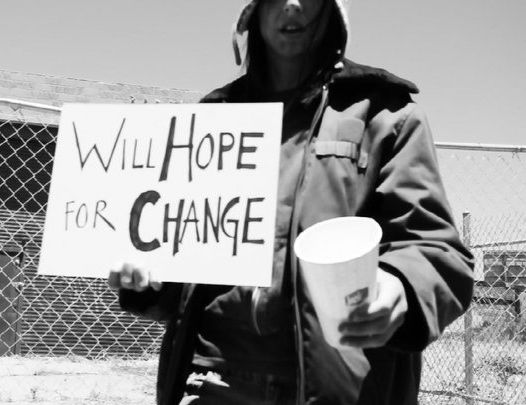
MR Original – Stop the Airport Body “Scammer” Racket

MEDIA ROOTS- Follow the money and you will always find the truth.

U.S. Marine Major General Smedley Butler, one of only 19 people to be twice awarded the Medal of Honor, wrote War is a Racket in 1935:

“War is a racket. It always has been. It is possibly the oldest, easily the most profitable, surely the most vicious. It is the only one international in scope. It is the only one in which the profits are reckoned in dollars and the losses in lives. A racket is best described, I believe, as something that is not what it seems to the majority of the people. Only a small ‘inside’ group knows what it is about. It is conducted for the benefit of the very few, at the expense of the very many. Out of war a few people make huge fortunes.”

If General Butler were still alive, he would probably write, “The War on Terror is a Racket on Steroids.”

On Christmas Day in 2009, a young Nigerian man named Umar Farouk Abdulmutallab boarded Delta Airlines Flight 253 bound to Detroit from Amsterdam. During the flight, he was caught trying to detonate explosives that he’d hidden in his underwear. His photo and story was instant “breaking news” and was broadcasted worldwide over and over again.

The hysteria built up by the media was immediate and non-stop. They constantly parroted that “the system didn’t work,” “he slipped through the cracks,”  and “they didn’t’ connect the dots”.

Janet Napolitano, the present Secretary of the Department of Homeland Security (DHS), attempted to quell the hysteria by stating on CNN that the system did work.  She was immediately ridiculed and wasn’t seen on TV again for weeks- but she was absolutely correct. The system did work. She apparently didn’t get the memo of what the “official” government story was supposed to be.

On Jan 27, 2010, there was a House Committee on Homeland Security hearing titled “Flight 253: Learning Lessons from an Averted Tragedy.”

During the hearing, Patrick F. Kennedy, Secretary Management of the Department of State, stated that “They had the individual under investigation and our revocation action would have disclosed the U.S. Governments interest in the individual and ended our colleagues’ ability to quietly pursue the case and identify terrorists’ plans and co-conspirators.”

According to a recent article, “The revelation that U.S. intelligence agencies made a deliberate decision to allow Abdulmutallab to board the commercial flight, without any special airport screening, has been buried in the media. ‘Revocation action would have disclosed what they were doing,’ Kennedy said in the testimony before the House Committee on Homeland Security. Allowing Adbulmutallab to keep his visa increased the chances that federal investigators would be able to get closer to apprehending the terror network he was accused of working with, ‘rather than simply knocking out one solider in that effort.'”

Additionally, there were eye witness reports from passengers on Flight 253 that the suspect was escorted onto the aircraft by a “sharp dressed man.” Why wasn’t this information breaking news like the original story was? The politicians and the media didn’t want it to be, because they wanted to use this event to justify the enforcement of the new body scanners.

Even though DHS Secretary Napolitano had been silenced, former DHS Secretary Michael Chertoff was featured on numerous news programs fear mongering the public into thinking that since the system failed, we now need these scanners to keep us safe.

One important thing he neglected to mention was that he works as a lobbyist for Rapiscan, the company that makes the body scanners.

The Washington Post reported that “Michael Chertoff, Former Department of Homeland Security, is the head of the Chertoff Group, the lead cheerleader for what is being called the Full Body Scanner Lobby.”

Furthermore, President Barack Obama recently handed Rapiscan a one billion dollar contract to deploy the scanners – no questions asked. On his recent trip to India, Obama traveled with Deepak Chopra, chairman and CEO of OSI Systems- the parent company of Rapiscan Systems. 

In the months leading up to Christmas of 2009, the Transportation Security Administration (TSA) conveniently began removing the so-called “puffer machines” from U.S. airports at a cost of nearly one million dollars. Puffer machines are bomb detection machines that have been used for years, yet are suddenly now deemed unreliable. 

Thankfully, the American people are starting to wake up to these police state tactics and are now refusing to use these scanners. They are not yet mandatory, and you can still opt out of using them. But the TSA doesn’t advertise that little known fact.

Alarmingly, scientists are also warning that the full-body airport scanners pose serious health risks and could cause cancer.

On July 14, 2010,  two Senators proposed a bi-partisan bill, called “Securing Aircraft From Explosives Responsibly: Advanced Imaging Recognition, or the SAFER AIR Act”, which would make going through the scanners mandatory. The Democrats and Republicans can’t seem to agree on anything except forcing people to go through potentially cancer-causing X-ray machines in which the naked bodies of children and adults will be on display to everyone in the TSA.

Now, in a further attempt to intimidate flyers who refuse to submit to the scanners, the TSA has started a new much more invasive full body search much like the police do to criminals after arrest, which includes groping genitalia. However, flyers are reporting that even though they go through the scanners, they are still being subjected to physical “pat downs” as well.

In an attempt to dispel privacy fears, the TSA claimed that the scanners don’t and can’t store the naked body images. This is another lie. The simple fact is that the images are potential forensic evidence that must be kept and stored on record.

“The Electronic Privacy Information Center (EPIC) said documents it has obtained from DHS show the machines used by the department’s Transportation Security Administration at some U.S. airports also can record and store images from the body scanners even though they are slightly different from the scanners used at federal courts. When asked if TSA has stored any images from passengers, EPIC staff counsel Ginger McCall said TSA claims it has not stored such images, but EPIC believes that statement is false. She said the airport body scanners are not secure enough and voiced concern that the images stored on them could be transferred to an external device such as a USB flash drive.”

In another alarming revelation, Forbes reports that the government is now deploying mobile full body scanners in vans that look like normal delivery trucks.  These vans have the capability to see through your clothes as you walk down the street, into your car and even your house!

I implore everyone to refuse to go through the scanners. Write and call your representatives in Congress to let them know you are against any mandatory body scanning, invasive body groping searches and mobile body scanners.

If you are on Facebook, there’s a body scanner protest page with over 14,200 members called Facebook Against Airport Full Body Scanners. I urge you to join it and spread the word.

If these violations are not stopped, I predict these mobile body scanners will soon be deployed at the mall, movie theaters, sporting events – everywhere.

The most important question we should be asking is: Why? Why are they deploying these police state devices and tactics? I don’t believe these scanners are being used for our safety, but for our control. We are now all assumed to be guilty until proven innocent.

General Butler would be absolutely horrified at the ultimate racket that is the “terror industrial complex” and the destruction of the U.S. Constitution because of it.

Written by Nick

Body Scanners: Just the Beginning?

Biometric ID for India’s 1.2 Billion People

TRUTHOUT– Fears about loss of privacy are being voiced as India gears up to launch an ambitious scheme to biometrically identify and number each of its 1.2 billion inhabitants.

In September, officials from the Unique Identification Authority of India (UIDAI), armed with fingerprinting machines, iris scanners and cameras hooked to laptops, will fan out across the towns and villages of southern Andhra Pradesh state in the first phase of the project whose aim is to give every Indian a lifelong Unique ID (UID) number.

“The UID is soft infrastructure, much like mobile telephony, important to connect individuals to the broader economy,” explains Nandan Nilekani, chairman of the UIDAI and listed in 2009 by Time magazine as among the world’s 100 most influential people.

Nilekani is a co-founder of the influential National Association of Software and Services Companies and, before this assignment, chief of Infosys Technologies, flagship of India’s information technology (IT) sector.

According to Nilekani, the UID will most benefit India’s poor who, because they lack identity documentation, are ignored by service providers.

“The UID number, with its ‘anytime, anywhere’ biometric authentication, addresses the problem of trust,” argues Nilekani.

But a group of prominent civil society organisations are running a Campaign For No-UID, explaining that it is a “deeply undemocratic and expensive exercise” that is “fraught with unforeseen consequences.”

Participants in the campaign include well-known human rights organisations such as the Alternative Law Forum, Citizen Action Forum, People’s Union for Civil Liberties, Indian Social Action Forum, and the Centre for Internet and Society.

A meeting was organised by the campaigners in New Delhi on Aug. 25 where speakers ridiculed the idea of a 12-digit number, and said it is unlikely to rectify, for example, the massive corruption in the public distribution system that is supposed to provide food to poor families.

J.T. D’Souza, an IT expert, asserted at the meeting that the use of biometrics on such a massive scale has never been attempted before and is bound to be riddled with costly glitches.

Other speakers raised issues of security and the possibility of hackers getting at databases and passing on information to commercial outfits, intelligence agencies or even criminal gangs.

In talks and television interviews, Nilekani has maintained that the benefits of the UID project far outweigh its risks. “It’s worth taking on the project and trying to mitigate the risks so that we get the outcomes we want,” he told the CNN-IBN television channel in an interview.

But the possibility of religious profiling by state governments or misuse by caste lobbies is real. This is because the central government has decided to include caste as a category in the UID questionnaire to be filled out by applicants.

Because identity is already a potent issue and the trigger for frequent identity-related conflict – such as the 2002 anti-Muslim riots in Gujarat that left 2,000 people dead – any exercise that enhances identification is fraught.

Usha Ramanathan, a prominent legal expert who is attached to the Centre for the Study of Developing Societies in the national capital, does not buy the UIDAI’s assurances.

At the Aug. 25 meeting, Ramanthan said that while enrolling with the UIDAI may be voluntary, other agencies and service providers might require a UID number in order to transact business. Indeed, the UIDAI has already signed agreements with banks, state governments and hospital chains which will allow them to ask customers for UIDs.

Ramanathan said that, taken to its logical limit, the UID project will make it impossible, in a couple of years, for an ordinary citizen to undertake a simple task such as travelling within the country without a UID number.

The UIDAI will work with the National Population Register (NPR) which draws its powers from the Citizenship Rules of 2003 and provides for penalties if information is withheld.

And as a government website says: “Certain information collected under the NPR will be published in the local areas for public scrutiny and invitation of objections.” Seeking to allay privacy fears, the website goes on to explain that this is merely “in the nature of the electoral roll or the telephone directory.”

But things begin to look ominous when seen in the context of the National Intelligence Grid (NATGRID), the setting up of which home minister P. Chidambaram announced in February as part of his response to a major terrorist attack.

Chidambaram said NATGRID would tap into 21 sets of databases that will be networked to achieve “quick, seamless and secure access to desired information for intelligence and enforcement agencies.”

He added that NATGRID will “identify those who must be watched, investigated, disabled and neutralised.”

“Internationally only a few countries have provided national ID cards because of the unsettled debate on privacy and civil liberties,” says Prof. R. Ramakumar at the Tata Institute of Social Sciences in Mumbai. He added that several countries have had to withdraw ID card schemes or drop biometric aspects because of public opposition.

Nilekani maintains that the main purpose of the UID project is to empower the vast numbers of excluded Indians. “For the poor this is a huge benefit because they have no identities, no birth certificates, degree certificates, driver’s licences, passports or even addresses.” 

By Ranjit Devraj

Creative Commons License


This work by Truthout is licensed under a Creative Commons Attribution-Noncommercial 3.0 United States License.

Photo by Tom Thai

Rachel Sussman: The World’s Oldest Living Things

July 2010

TED– Rachel Sussman shows photographs of the world’s oldest continuously living organisms — from 2,000-year-old brain coral off Tobago’s coast to an “underground forest” in South Africa that has lived since before the dawn of agriculture.

Rachel Sussman is on a quest to celebrate the resilience of life by identifying and photographing continuous-living organisms that are 2,000 years or older, all around the world.

Continue reading about Rachel Sussman: The World’s Oldest Living Things.

© TED, 2010

30 False Fronts Won Contracts for Blackwater

NY TIMESBlackwater Worldwide created a web of more than 30 shell companies or subsidiaries in part to obtain millions of dollars in American government contracts after the security company came under intense criticism for reckless conduct in Iraq, according to Congressional investigators and former Blackwater officials.

While it is not clear how many of those businesses won contracts, at least three had deals with the United States military or the Central Intelligence Agency, according to former government and company officials. Since 2001, the intelligence agency has awarded up to $600 million in classified contracts to Blackwater and its affiliates, according to a United States government official.

The Senate Armed Services Committee this week released a chart that identified 31 affiliates of Blackwater, now known as Xe Services. The network was disclosed as part of a committee’s investigation into government contracting. The investigation revealed the lengths to which Blackwater went to continue winning contracts after Blackwater guards killed 17 Iraqi civilians in Baghdad in September 2007. That episode and other reports of abuses led to criminal and Congressional investigations, and cost the company its lucrative security contract with the State Department in Iraq.

Read full article HERE.

© COPYRIGHT NY TIMES, 2010

One Million US Public School Students Homeless

WSWS– A report released in July by the advocacy groups National Association for the Education of Homeless Children and Youth (NAEHCY) and First Focus reveals the explosive growth of homelessness among public school students during the economic crisis.

Based on Federal data from the US Department of Education, the number of students identified as homeless by public school districts rose by more than 40 percent between the 2006-2007 school year and 2008-2009, to 956,914. The figure has almost assuredly passed one million in the current school year.

That well over one million public school students are homeless is a damning indictment of the entire social order. The staggering growth in student homelessness took place simultaneously with the transfer of trillions of dollars in public funds to Wall Street, overseen by the administrations of former President George W. Bush and current President Barack Obama.

No part of the country was spared. NAEHCY and First Focus found that 70 percent of school districts reported an increase in homelessness since 2007-2008, and 39 percent reported enrolling more homeless students in the first six months of the 2009-2010 school year than in the entire previous year.

The worst affected states have been Texas and Iowa, with increases of 139 and 136 percent, respectively, between the 2006-2007 and 2008-2009 school year. Other hard-hit states include New Mexico (91 percent), Kansas (88 percent), New Jersey (84 percent), New York and South Dakota (73 percent), and Georgia (72 percent). Of the 50 states plus the District of Columbia, 13 registered increases of child homelessness of 50 percent or more.

In Delaware, one out of every forty students was homeless last year. “These children share bedrooms with extended family, check in to cheap motels, and sleep in cars or shelters,” the Delaware Online reports. “Some are with their parents. Others go it alone.”

School districts in major metropolitan areas like Chicago, Detroit, and New York are especially plagued by high levels of student homelessness. The Chicago Public Schools reported a 28 percent rise in homeless students from November 2007 to November 2008. At the end of the 2007-2008 school year, a record 10,642 CPS students were homeless. (See “Over ten thousand public school students homeless in Chicago”)

The numbers of homeless students are likely higher than the report indicates. “Every year we’re doing a better job at locating [homeless students],” John Elliott of Chesterfield County Public Schools in Virginia said. “[B]ut it’s not something a lot of people want to come forward and talk about, especially if you’ve lost your home in a foreclosure. You don’t really want a lot of people to know about that.”

Chesterfield County public schools saw a 45 percent increase in student homelessness between the last academic year and the current one. “Of the 526 students that the school system identified as homeless last year, most are in families who are ‘doubling up,’ meaning they are living in a temporary situation with friends, relatives or other families and have no permanent address,” according to the Chesterfield Observer. “Ninety-six students spent the school year living in motels. ‘Can you imagine living with parents and three or four children in one motel room…and trying to do homework?’ Elliott asks.”

Other children were living in homeless shelters, and at least one family in each of the county’s schools was living out of cars “or in similarly bleak circumstances.”

The Obama administration temporarily doubled the funding for combating student homelessness through the American Recovery and Reinvestment Act—to the miserly sum of $70 million. Even so, less than one in five of the nation’s school districts received any aid to deal with the growth of homeless students. Limited as it is, this extra funding is all but certain to be removed with the expiration of the federal stimulus.

Concern is growing among educators that none of the underlying causes of student homelessness—access to steady employment, affordable housing, transportation, and healthcare and other vital services—have been addressed. They point to the obvious fact that children who have no homes to return to after school face an enormous obstacle to learning.

“These kids have a lot more stress,” Kathleen Kropf of Macomb County (Michigan) Intermediate School District told The Voice, a local newspaper. “They know what is going on at home, if their parents have lost their jobs or their homes are in foreclosure. How can a child do well in school and on their tests if they have not eaten or are not sleeping or they are sick?” Macomb schools have seen an increase in student homelessness of over 50 percent since 2007.

The rapid growth in student homelessness is no accident. It is the inevitable result of policies consciously pursued by the Obama administration and both big business parties, which have ruled out any measures to address the social crisis, instead adopting policies designed to shift the full burden of the economic crisis onto the working class.

Photo by Neema Sadeghi

© COPYRIGHT WSWS, 2010