TRUTHDIG– Chris Hedges made these remarks about
Osama bin Laden’s death at a Truthdig fundraising event in Los
Angeles on Sunday evening.
I know that because of this
announcement, that reportedly Osama bin Laden was killed, Bob wanted
me to say a few words about it … about al-Qaida. I spent a year of
my life covering al-Qaida for The New York Times. It was the work in
which I, and other investigative reporters, won the Pulitzer Prize.
And I spent seven years of my life in the Middle East. I was the
Middle East bureau chief for The New York Times. I’m an Arabic
speaker. And when someone came over and told Jean and me the news, my
stomach sank. I’m not in any way naïve about what al-Qaida is.
It’s an organization that terrifies me. I know it intimately.
But I’m also intimately familiar with
the collective humiliation that we have imposed on the Muslim world.
The expansion of military occupation that took place throughout, in
particular the Arab world, following 9/11—and that this presence of
American imperial bases, dotted, not just in Iraq and Afghanistan,
but in Kuwait, Saudi Arabia, Doha—is one that has done more to
engender hatred and acts of terror than anything ever orchestrated by
Osama bin Laden.
And the killing of bin Laden, who has
absolutely no operational role in al-Qaida—that’s clear—he’s
kind of a spiritual mentor, a kind of guide … he functions in many
of the ways that Hitler functioned for the Nazi Party. We were just
talking with Warren about Kershaw’s great biography of Hitler,
which I read a few months ago, where you hold up a particular
ideological ideal and strive for it. That was bin Laden’s role. But
all actual acts of terror, which he may have signed off on, he no way
planned.
I think that one of the most
interesting aspects of the whole rise of al-Qaida is that when Saddam
Hussein … I covered the first Gulf War, went into Kuwait with the
1st Battalion, 1st Marines, was in Basra during the Shiite uprising
until I was captured and taken prisoner by the Iraqi Republican
Guard. I like to say I was embedded with the Iraqi Republican Guard.
Within that initial assault and occupation of Kuwait, bin Laden
appealed to the Saudi government to come back and help organize the
defense of his country. And he was turned down. And American troops
came in and implanted themselves on Muslim soil.
When I was in New York, as some of you
were, on 9/11, I was in Times Square when the second plane hit. I
walked into The New York Times, I stuffed notebooks in my pocket and
walked down the West Side Highway and was at Ground Zero four hours
later. I was there when Building 7 collapsed. And I watched as a
nation drank deep from that very dark elixir of American nationalism
… the flip side of nationalism is always racism, it’s about
self-exaltation and the denigration of the other.
And it’s about forgetting that
terrorism is a tactic. You can’t make war on terror. Terrorism has
been with us since Sallust wrote about it in the Jugurthine wars. And
the only way to successfully fight terrorist groups is to isolate
[them], isolate those groups, within their own societies. And I was
in the immediate days after 9/11 assigned to go out to Jersey City
and the places where the hijackers had lived and begin to piece
together their lives. I was then very soon transferred to Paris,
where I covered all of al-Qaida’s operations in the Middle East and
Europe.
So I was in the Middle East in the days
after 9/11. And we had garnered the empathy of not only most of the
world, but the Muslim world who were appalled at what had been done
in the name of their religion. And we had major religious figures
like Sheikh Tantawi, the head of al-Azhar—who died recently—who
after the attacks of 9/11 not only denounced them as a crime against
humanity, which they were, but denounced Osama bin Laden as a fraud …
someone who had no right to issue fatwas or religious edicts, no
religious legitimacy, no religious training. And the tragedy was that
if we had the courage to be vulnerable, if we had built on that
empathy, we would be far safer and more secure today than we are.
We responded exactly as these terrorist
organizations wanted us to respond. They wanted us to speak the
language of violence. What were the explosions that hit the World
Trade Center, huge explosions and death above a city skyline? It was
straight out of Hollywood. When Robert McNamara in 1965 began the
massive bombing campaign of North Vietnam, he did it because he said
he wanted to “send a message” to the North Vietnamese—a message
that left hundreds of thousands of civilians dead.
These groups learned to speak the
language we taught them. And our response was to speak in kind. The
language of violence, the language of occupation—the occupation of
the Middle East, the wars in Iraq and Afghanistan—has been the best
recruiting tool al-Qaida has been handed. If it is correct that Osama
bin Laden is dead, then it will spiral upwards with acts of suicidal
vengeance. And I expect most probably on American soil. The tragedy
of the Middle East is one where we proved incapable of communicating
in any other language than the brute and brutal force of empire.
And empire finally, as Thucydides
understood, is a disease. As Thucydides wrote, the tyranny that the
Athenian empire imposed on others it finally imposed on itself. The
disease of empire, according to Thucydides, would finally kill
Athenian democracy. And the disease of empire, the disease of
nationalism … these of course are mirrored in the anarchic violence
of these groups, but one that locks us in a kind of frightening death
spiral. So while I certainly fear al-Qaida, I know its intentions. I
know how it works. I spent months of my life reconstructing every
step Mohamed Atta took. While I don’t in any way minimize their
danger, I despair. I despair that we as a country, as Nietzsche
understood, have become the monster that we are attempting to fight.
Thank you.
© 2011 TRUTHDIG



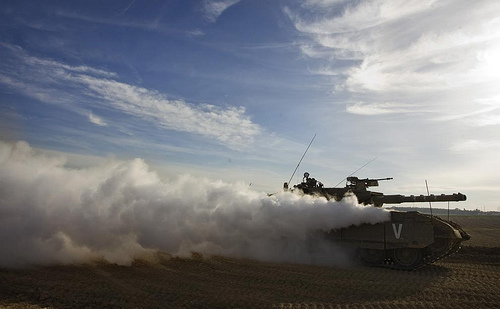 JERUSALEM POST– There is a increasing chance for war on multiple fronts in 2011, according to the IDF’s new multi-year plan, called Halamish, which is in the final stages of approval.
 YAHOO NEWS
 GUARDIAN