Activists Protest BP Sponsorship in Tate Museum

CONSUMERIST– A group of art activists this week staged an unsanctioned protest inside the world-famous Tate Modern museum in London by pouring oil over a naked body lying on the floor.

Wearing black hoods, two of the artists slowly pour the oil from gas cans painted with the BP logo over the fetal form of a third member lying naked. A Bach piece in minor plays underneath the video, which is safe for work.

The group behind the protest is called Liberate Tate, whose aim is to get the museum to break off ties with BP and stop taking sponsorship payola from the oil giant. The group was formed in 2010 during a workshop on art and activism that the museum itself sponsored. “The art activists running the workshops,” says the group on its website, “were told by Tate curators that no interventions could be made against the museum’s sponsors. The workshop participants refused this censorship, ended the workshop with an intervention and decided to continue their work together, setting up Liberate Tate the following spring.”

“Liberate Tate believes Tate’s sponsorship by BP, a corporation engaged in socially and ecologically destructive activities, is incompatible with the museum’s ethical guidelines,” continues the group’s statement. “Tate’s stated vision in regard to sustainability and climate change and its reputation as a progressive institution is damaged by its association with oil companies. In addition, Tate’s mission is undermined if visitors to its galleries cannot enjoy great art without the museum making them complicit in creating climate chaos. Liberate Tate calls on the museum’s governing body to recognise this and end its relationship with BP.”

Human Cost, Tate Britain Performance (87 minutes), charcoal and sunflower oil 20 April 2011– First anniversary of the Gulf of Mexico disaster.

© 2011 Consumerist

LIBERATETATE– On the same day, 166 people who work in the arts published a letter in the Guardian calling on Tate to end its sponsorship relationship with BP. “In the year since its catastrophic oil spill in the Gulf of Mexico, BP has massively ramped up its investment in controversial tar sands extraction in Canada, has been shown to have been a key backer of the Mubarak regime in Egypt, and has attempted to commence drilling for oil in the Arctic Ocean. While BP continues to jeopardise ecosystems communities and the climate by the reckless pursuit of “frontier” oil, cultural institutions like Tate damage their reputation by continuing to be associated with such a destructive corporation.

The massive cuts to public arts funding in the UK have left hundreds of culturally important arts organisations in a position of great financial vulnerability, which means that the debate about the appropriateness of particular potential corporate sponsors like BP and Shell is more relevant than ever. As people working in the arts, we believe that corporate sponsorship does not exist in an ethical vacuum. In light of the negative social and ecological impacts of BP around the world, we urge Tate to demonstrate its commitment to a sustainable future by ending its sponsorship relationship with BP.”

‘End oil sponsorship of the arts’ on Facebook, @liberatetate on twitter
http://www.liberatetate.org

Jeffrey Smith: The Big GMO Cover-Up

THE INSTITUTE FOR RESPONSIBLE TECHNOLOGY– Something doesn’t quite add up about genetically modified (GM) foods.

Big biotech claims that genetic engineering is a necessary step towards feeding the world’s growing population. And yet debate still rages as to whether GM crops actually increase yields at all. Furthermore, the UN recently stated that 30,000 people a day were starving to death, but not because of underproduction of crops. It’s simply through lack of access.

Independent scientific studies raised serious alarm bells over the safety of GM foods over a decade ago. But while this made front-page headlines in European newspapers, the North American mainstream media were conspiratorially silent.

Biotech companies stand to make billions from their seed patents. Governments and supreme courts have sanctioned the patenting of life itself. The planet’s food supply is becoming increasingly dominated by fewer and fewer players.

If the biotech industry’s stated intention of feeding the world is misguided or even misdirecting, is there another political agenda behind GM food? Have we been mis-sold? Were we even given a choice in the first place?

Jeffrey M. Smith, international bestselling author of Seeds of Deception and Genetic Roulette: The Documented Health Risks of Genetically Engineered Foods, reveals the shocking truth behind GM foods and the huge effort by governments and Biotech corporations to keep it out of the mainstream media and outside of your awareness.

WORDS: Jeffrey M. Smith

It looks the same—the bread, pies, sodas, even corn on the cob. So much of what we eat every day looks just like it did 20 years ago. But something profoundly different has happened without our knowledge or consent. And according to leading doctors, what we don’t know may already be hurting us big time.

In May, the American Academy of Environmental Medicine (AAEM) publicly condemned genetically modified organisms (GMOs) in our food supply, saying they posed “a serious health risk.” They called on the US government to implement an immediate moratorium on all genetically modified (GM) foods, and urged physicians to prescribe non-GMO diets for all patients.

GM-What?

Genetic engineering is quite distinct from selective breeding because it involves taking genes from a completely different species and inserting them into the DNA of a plant or animal. The long term effects of this for our health and our planet’s biodiversity are unknown.

AAEM, an “Academy of Firsts,” was the first US medical organization to describe or acknowledge Gulf War Syndrome, chemical sensitivity, food allergy/addiction, and a host of other medical issues. But the potential for harm from GMOs dwarfs anything they have identified thus far. It can impact everyone who eats.

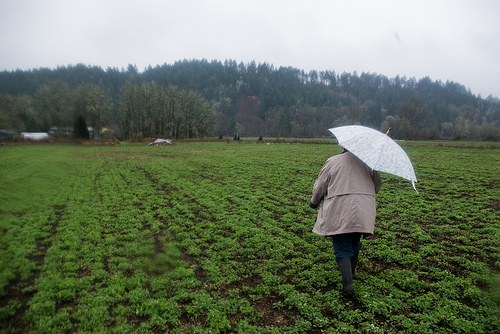
More than 70% of the foods on supermarket shelves contain derivatives of the eight GM foods on the market—soy, corn, oil from canola and cottonseed, sugar from sugar beets, Hawaiian papaya, and a small amount of zucchini and crook neck squash. The biotech industry hopes to genetically engineer virtually all remaining vegetables, fruits, grains, and beans (not to mention animals).

The two primary reasons why plants are engineered are to allow them to either drink poison, or produce poison. The poison drinkers are called herbicide tolerant. They’re inserted with bacterial genes that allow them to survive otherwise deadly doses of toxic herbicide. Biotech companies sell the seed and herbicide as a package deal, and US farmers use hundreds of millions of pounds more herbicide because of these types of GM crops. The poison producers are called Bt crops. Inserted genes from the soil bacterium Bacillus Thuringiensis produce an insect-killing pesticide called Bt-toxin in every cell of the plant. Both classes of GM crops are linked to dangerous side effects.

Read more about The Big GMO Cover-Up

© 2011 The Institute for Responsible Technology

Photo by Flickr user margaretkilljoy

Renewable Energy Can Supply 80% of World Demand

RAW STORY– Governments approved on Monday a U.N. report projecting that renewable energies such as solar, wind or hydropower could leap to supply almost 80 percent of the world’s demand by 2050, with the right policies.

The study broadly matched a draft written by scientists before the meeting, but environmental group Greenpeace said some findings were watered down due to opposition by OPEC heavyweight Saudi Arabia and also by Brazil.

The report by the U.N.’s Intergovernmental Panel on Climate Change (IPCC) also said that a shift to cleaner energies would help cut greenhouse gas emissions, which it blamed for climate change including floods, droughts, heat waves and rising sea levels.

“Close to 80 percent of the world energy supply could be met by renewables by mid-century if backed by the right enabling public policies,” it said in a statement after government delegates approved a special report at talks in Abu Dhabi.

Continue reading about Renewable Energies Can Supply 80% of World Demand by 2050.

© 2011 RAW STORY

Photo by flickr user Dominic’s Pics

Posted in Uncategorized | 1 Reply

Media Roots Music – Atop Mix #3

Media Roots Music – Atop Set #3 by Media Roots

MEDIA ROOTS– In this week’s set I try to discredit the notion that electronic music is not organic or emotional. Most electronic music that has been integrated into contemporary music sounds robotic and lifeless. The tracks I chose for this week’s set feel organic, yet maintain the unique timbres and intonations of electronic music.

This set is for people who may still think that only traditional instruments make the only acceptable sounding organic sounds available to us. With the invention of the computer, and the blending of real instrumentation with electronic ones through sampling or playing, I feel this attitude is no longer relevant.

I love electronic music, because of its infinite nature- with the right amount of imagination, an electronic song can be just as beautiful and engaging as any traditional instrumentation. All the featured music on the mix can be found through searching discogs.com or by emailing me: [email protected].

Akkad the Orphic Priest aka ATOP

Artist List:

ISAN – Salamander
Marcus Intalex – TB or not TB?
Instra:mental – Thomp
Pixelord – Kiwi Dream
Kryptic Minds – Alone
Fluorescent Grey – Gomez Childs Shult
Boxcutter – Moon Pupils
Amon Tobin – Bedtime Stories
Prefuse 73 – The Only Trial of 9000 Sons
Freeform – Saigon
Jake Mandell – Pan Culture Workup
Autechre – 6852

Listen to last week’s Media Roots Music Fluorescent Grey Mix, an Interview with Songwriter John Vanderslice, or a broadcast about Fukushima: Coverage and Break Down of Radiation.

How Goldman Sachs Created the Food Crisis

FOREIGN POLICY– Demand and supply certainly matter. But there’s another reason why food across the world has become so expensive: Wall Street greed.

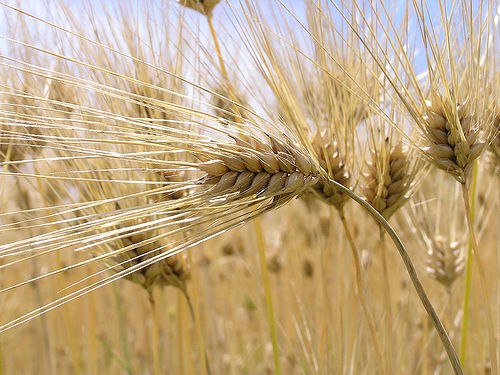
It took the brilliant minds of Goldman Sachs to realize the simple truth that nothing is more valuable than our daily bread. And where there’s value, there’s money to be made. In 1991, Goldman bankers, led by their prescient president Gary Cohn, came up with a new kind of investment product, a derivative that tracked 24 raw materials, from precious metals and energy to coffee, cocoa, cattle, corn, hogs, soy, and wheat.

They weighted the investment value of each element, blended and commingled the parts into sums, then reduced what had been a complicated collection of real things into a mathematical formula that could be expressed as a single manifestation, to be known henceforth as the Goldman Sachs Commodity Index (GSCI).

For just under a decade, the GSCI remained a relatively static investment vehicle, as bankers remained more interested in risk and collateralized debt than in anything that could be literally sowed or reaped.

Then, in 1999, the Commodities Futures Trading Commission deregulated futures markets. All of a sudden, bankers could take as large a position in grains as they liked, an opportunity that had, since the Great Depression, only been available to those who actually had something to do with the production of our food.

Change was coming to the great grain exchanges of Chicago, Minneapolis, and Kansas City — which for 150 years had helped to moderate the peaks and valleys of global food prices. Farming may seem bucolic, but it is an inherently volatile industry, subject to the vicissitudes of weather, disease, and disaster.

The grain futures trading system pioneered after the American Civil War by the founders of Archer Daniels Midland, General Mills, and Pillsbury helped to establish America as a financial juggernaut to rival and eventually surpass Europe. The grain markets also insulated American farmers and millers from the inherent risks of their profession. The basic idea was the “forward contract,” an agreement between sellers and buyers of wheat for a reasonable bushel price — even before that bushel had been grown.

Not only did a grain “future” help to keep the price of a loaf of bread at the bakery — or later, the supermarket — stable, but the market allowed farmers to hedge against lean times, and to invest in their farms and businesses. The result: Over the course of the 20th century, the real price of wheat decreased (despite a hiccup or two, particularly during the 1970s inflationary spiral), spurring the development of American agribusiness. After World War II, the United States was routinely producing a grain surplus, which became an essential element of its Cold War political, economic, and humanitarian strategies — not to mention the fact that American grain fed millions of hungry people across the world.

Read more about How Goldman Sachs Created the Food Crisis

© 2011 Foreign Policy

Photo by Flickr user Tamaki


Posted in Uncategorized | 1 Reply