Whales Descended From Tiny Deer-Like Ancestors

SCIENCE DAILY– Hans Thewissen, Ph.D., Professor of the Department of Anatomy, Northeastern Ohio Universities Colleges of Medicine and Pharmacy (NEOUCOM), has announced the discovery of the missing link between whales and their four-footed ancestors.

Scientists since Darwin have known that whales are mammals whose ancestors walked on land, and in the past 15 years, researchers led by Dr. Thewissen have identified a series of intermediate fossils documenting whale’s dramatic evolutionary transition from land to sea. But one step was missing: The identity of the land ancestors of whales.

Now Dr. Thewissen and colleagues discovered of the skeleton of Indohyus, an approximately 48-million-year-old even-toed ungulate from the Kashmir region of India, as the closest known fossil relative of whales. Dr. Thewissen’s team studied a layer of mudstone with hundreds of bones of Indohyus, a fox-sized mammal that looked something like a miniature deer.

Dr. Thewissen and colleagues report key similarities between whales and Indohyus in the skull and ear that show their close family relationship.

Thewissen and colleagues also explored how Indohyus lived, and came up with some surprising results.  They determined that the bones of the skeleton of Indohyus had a thick outside layer, much thicker than in other mammals of this size.  This characteristic is often seen in mammals that are slow aquatic waders, such as the hippopotamus today.  Indohyus’ aquatic habits are further confirmed by the chemical composition of their teeth, which revealed oxygen isotope ratios similar to those of aquatic animals.  All this implies that Indohyus spent much of its time in water.

Dr. Walt Horton, Vice-President for Research at NEOUCOM commented:  “This remarkable research demonstrates that the study of the structure and composition of fossil bones can tell us about how the skeleton of whales and, by extension, other mammals like humans, interacts with the environment and changes over time.”

Read the full article on Whales Descended From Tiny Deer-Like Ancestors.

© 2011 Science Daily

Photo courtesy of Northeastern Ohio Universities Colleges of Medicine and Pharmacy

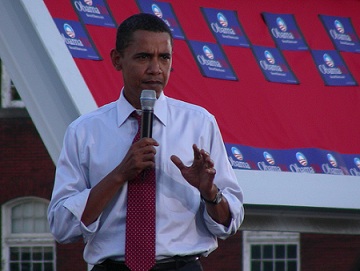
The GOP Should Nominate Obama In 2012

SALON– With the possible exception of Jon Huntsman, the Republican presidential field is weak on candidates who could appeal to centrist swing voters, including moderate Republicans. But there is one 2012 prospect who has a proven track record of pursuing policies that owe a great deal to the moderate Republican tradition and who could potentially shake up the race for the GOP presidential nomination: President Barack Obama.

If Obama chose to run for reelection not as a Democrat but as a moderate Republican, he could bring about two healthy transformations in the American political system. The moderate wing of the Republican Party could be restored. And the Democratic presidential nomination might be opened up to politicians from the Democratic wing of the Democratic Party.

 In the last generation, the old-fashioned moderate Republicans from New England and the Midwest symbolized by Nelson Rockefeller have been driven out of the GOP by the conservative followers of Barry Goldwater and Ronald Reagan. Streaming into the Democratic Party as voters, and buying it with ample Wall Street cash as donors, this upscale elite has changed the party from a populist liberal alliance of unionized workers and populists into a socially liberal, economically conservative version of the old country-club Republicanism of the pre-Reagan era.

The transformation began under Jimmy Carter, accelerated under Bill Clinton and has nearly been completed under Barack Obama. This is not your grandfather’s Democratic Party. It is your grandfather’s Republican Party of 1955.

Read the full article about Why The GOP Should Nominate Barack Obama In 2012.

© 2011 Salon

Photo by Flickr user jamesomalley

Girl Talk’s Ultimate Summer Playlist

NY MAG– When we asked Girl Talk mastermind Gregg Gillis to put together his ultimate summer playlist, he immediately thought of a party he went to last year. “My friend Lord Grunge from the rap group Grand Buffet had this cookout,” he remembers. “People were drinking all day, relaxing, listening to tunes. At night, it got crazy, and by noon the next day we were all swimming in the pool and trashing his kitchen.” Gillis is just coming off the raucous Governors Ball Music festival, so we asked him for something a bit mellower. “At the Girl Talk show, people really want to rage,” he said, “but here I was thinking more about what you want to listen to while hanging out on your porch all afternoon.” Summer is all about ease, so Gillis has taken care of your summer soundtrack: queue these up, hit shuffle, and warm up the grill. (And then go download last year’s summer mix, from Danger Mouse.)

We’ve assembled all of the songs into four alphabetical YouTube playlists… Just hit play and get grilling at HERE.

Aaliyah, “Try Again”

Aerosmith, “Sweet Emotion”

Alice Cooper, “School’s Out”

Alicia Keys, “Unbreakable”

America, “Sister Golden Hair”

Amerie, “1 Thing”

Annie, “Heartbeat”

The Apples in Stereo, “Tidal Wave”

Ash, “Goldfinger”

A Tribe Called Quest, “Electric Relaxation”

Baby ft. Clipse, “What Happened to That Boy”

Anita Baker, “Sweet Love”

Bananarama, “Cruel Summer”

David Banner ft. Lil Flip, “Like a Pimp”

Beach Boys, “Feel Flows”

The Beatles, “Here Comes the Sun”

Beyonce ft. Bun B and Slim Thug, “Check on it”

Big Boi ft. Gucci Mane, “Shine Blockas”

Big Tymers, “Oh Yeah!”

Blue Öyster Cult, “Don’t Fear the Reaper”

Blur, “Boys and Girls”

Boards of Canada, “In a Beautiful Place Out of the Country”

Bone Thugs-N-Harmony ft. Eazy-E, “Foe tha Love of Money”

The Breeders, “No Aloha”

Joe Budden, “Pump It Up”

Bobby Caldwell, “What You Won’t Do for Love”

Camp Lo, “Luchini AKA This Is It”

Cam’ron, “Hey Ma”

Mariah Carey, “Shake It Off”

The Cardigans, “Lovefool”

Carl Carlton, “She’s a Bad Mama Jama”

The Cars, “Let the Good Times Roll”

The Chairman of the Board, “Give Me Just a Little More Time”

Chicago, “Saturday in the Park”

Da Backwudz, “You Gonna Luv Me”

Daft Punk, “Digital Love”

DeBarge, “Rhythm of the Night”

De La Soul, “Stakes Is High”

DJ Jazzy Jeff and the Fresh Prince, “Summer Time”
“If people end up dancing, no, I won’t be pissed. It’s all good!”

DMX, “Ruff Ryders’ Anthem”

The Doobie Brothers, “What a Fool Believes”

Dr. Dre, “Let Me Ride”

Earth Wind & Fire, “Fantasy”

Electric Light Orchestra, “Sweet Talkin’ Woman”

Missy Elliott, “Pass That Dutch”
“Maybe only 10 to 15 percent of these — like this track or the new Lil Wayne, ‘6 Foot 7 Foot’ — I’ve used either on an album or in a live show.”

Fleetwood Mac, “Dreams”

Fountains of Wayne, “Sink to the Bottom”

The Game ft. 50 Cent, “Hate It or Love It”

The Gap Band, “Outstanding”

Marvin Gaye and Tammi Terrell, “Ain’t Nothing Like the Real Thing”

Ghost Town DJ’s, “My Boo”

Grateful Dead, “Touch of Grey”

Guided by Voices, “Game of Pricks”
“On the tour bus, people will be passing around the iPod, and there’s a feeling of ‘Oh, man, no one thought he’d put this on’ or ‘What is this again!?’ That sensation is also important for a tight summer mix.”

Daryl Hall and John Oates, “I Can’t Go for That (No Can Do)”

Harvey Danger, “Flagpole Sitta”

The Honey Cone, “Girls It Ain’t Easy”

Hot Boys, “We On Fire”

Huey Lewis & the News, “If This Is It”
“Girl Talk is heavily influenced by American radio culture. Classic songs that weren’t necessarily huge but that have carried on — songs you’re always hearing in the grocery store.”

R. Kelly, “Step in the Name of Love”

Len, “Steal My Sunshine”

Ice Cube, “It Was a Good Day”

Jackson Browne, “Somebody’s Baby”

The Jackson Five, “It’s Great to Be Here”

Janet Jackson, “When I Think of You”

Jadakiss ft. Styles P, “We Gonna Make It”

Jane’s Addiction, “Jane Says”

Jade, “Don’t Walk Away”

Jay-Z ft. Foxy Brown, “Sunshine”

Billy Joel, “It’s Still Rock and Roll to Me”

Juelz Santana, “Oh Yes”

Junior M.A.F.I.A., “Player’s Anthem”

Junk Culture, “West Coast”

Kelis, “Milk Shake”

Killer Mike ft. Big Boi, “A.d.i.d.a.s.”
“I’d almost forgotten about this one, which came out in the early 2000s. There’s so many feel-good hip-hop songs from the last ten years that came and went. You never hear them, but they’re classics.”

Level 42, “Something About You”

Lil Flip, “This Is the Way We Ball”

Lil Kim, “Lighters Up”

Lil Wayne ft. Cory Gunz, “6 Foot 7 Foot”

Ludacris, “Saturday (Ooh! Oooh! Oh!)”

LL Cool J, “Around the Way Girl”
“There’s songs on here where it’s like ‘Ooooh, yeah, I haven’t heard this one in ten years, but this was the jam in 1993.’ Or 2002, or whatever.”

Cheryl Lynn, “Got to Be Real”

Manfred’s Mann’s Earth Band, “Blinded by the Light”

Martha Reeves & the Vandellas, “(Love Is Like a) Heat Wave”

Masta Ace, “Born to Roll”

Michael McDonald, “Sweet Freedom”

MGMT, “Congratulations”

Kylie Minogue, “Love at First Sight”

µ-Ziq, “Brace Yourself (Remix)”

Nas, “Memory Lane (Sittin’ in da Park)”

Naughty by Nature, “Feel Me Flow”

Next, “Too Close”

Nirvana, “Molly’s Lips”

The Notorious B.I.G., “Juicy”
“These songs were designed to work in the daylight hours but can still be effective when it gets dark and people start partying a little harder.”

Outkast, “Ms. Jackson”

Freda Payne, “Band of Gold”

P.Diddy, “Bad Boy for Life”

Pastor Troy, “Are We Cuttin’?”

Pavement, “Range Life”

CeCe Peniston, “Finally”

Katy Perry, “Teenage Dream”

Peter Bjorn and John, “Amsterdam”

The Pharcyde, “Runnin”

Phoenix, “If I Ever Feel Better”

The Pixies, “Here Comes Your Man”

Prefuse 73, “Nuno”

Billy Preston, “Nothing From Nothing”

Raekwon ft. Ghostface, Cappadona, and Method Man, “Ice Cream”

Smokey Robinson, “Crusin'”

Tommy Roe, “Dizzy”

Diana Ross, “Stoney End”

Rufus ft. Chaka Khan, “Sweet Thing”

Scarface, “On My Block”

Seals and Crofts, “Summer Breeze”

Shawty Lo, “They Know [Dey Know]”

Paul Simon, “You Can Call Me Al”

Sly & the Family Stone, “Hot Fun in the Summertime”

Smashing Pumpkins, “1979”

Snoop Dogg ft. Pharrell, Uncle Charlie Wilson, “Beautiful”

Sonic Youth, “100%”

Soulja Boy Tell’em, “Donk”

Spinners, “I’ll Be Around”

Squarepusher, “My Red Hot Car”

Stardust, “Music Sounds Better With You”

Starr, “Twenty Five Miles”

Steve Miller Band, “Swingtown”

Stone Temple Pilots, “Big Bang Baby”

The Strokes, “Hard to Explain”
“This weekend, we played one of my mixes before we went onstage. I was eager to see how the crowd reacted because some of it was on this playlist — selecting songs to hear is so different from sampling. But they were way into it!”

Superdrag, “Sucked Out”

Swing Out Sister, “Breakout”
“I love stuff like this: There’s that kind of eighties music that’s hard to describe, it’s a little funky, it sometimes has horns, it relates to Lionel Richie’s ‘All Night Long.’”

Supergrass, “Alright”

SWV, “Right Here”

10cc, “I’m Not in Love”
“This is one of my favorite songs, one that doesn’t find a place in anything I do, so I’m psyched to include it.”

T.I., “Why You Wanna”

That Dog, “Never Say Never”

Three 6 Mafia, “Stay High”

Trick Daddy, “I’m a Thug”

Thunderclap Newman, “Something in the Air”

TLC, “Waterfalls”

Max Tundra, “Which Song”

2pac, “I Get Around”

U.G.K. ft. OutKast, “International Player’s Anthem”

Waka Flocka Flame ft. Kebo Gotti, “Grove St. Party”

Weezer, “In the Garage”

Matthew Wilder, “Break My Stride”

Bill Withers, “Lovely Day”
“Over half of these songs you would like to party to, and the other half are songs you relax to. That’s the essence of summertime — you can be sitting around drinking beer outside or you can be up celebrating.”

Wiz Khalifa, “The Thrill”

Stevie Wonder, “Living for the City”

Xscape, “Just Kickin’ It”
“There are so many of those nineties feel-good R&B tracks, and this one is the top to me.”

Wreckx-N-Effect, “Rumpshaker”

Yg, “Toot It and Boot It”

Yo La Tengo, “Season of the Shark”

Young Gunz, “Can’t Stop, Won’t Stop”

Young Jeezy, “Go Crazy”

Zhane, “Hey Mr. DJ”

© 2011 NY Mag

Photo by flickr user carnoodles

Defining ‘Withdrawal’ From Afghanistan

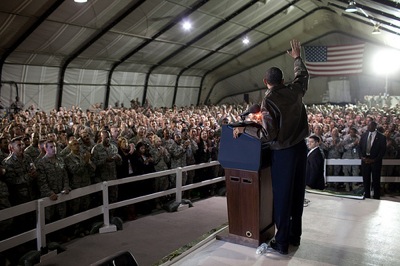
COMMON DREAMS– Barack Obama’s June 22 announcement of a phased troop withdrawal from Afghanistan was often portrayed as a major step towards ending the war, with many outlets neglecting to accurately explain the pace of escalation that has happened under his watch.

When Obama took office in 2009, the U.S. had about 34,000 troops in Afghanistan. Obama has initiated two major troop increases in Afghanistan: about 20,000 additional troops were announced in February 2009, followed by the December 2009 announcement that an another 33,000 would be deployed as well; other smaller increases have brought the total to 100,000. Much of the media conversation portrays the announced withdrawal schedule as a removal of all the surge troops–“the withdrawal of the entire surge force by the end of next summer,” as the New York Times put it (6/23/11)–which ignores the initial escalation.

News accounts over how many troops might leave should account for the total U.S. military presence in Afghanistan, in historical context. As ThinkProgress noted (6/22/11), if the reductions are carried out as planned, the United States would still have far more troops in Afghanistan than it did when Obama came into office and more than at any point during former president George W. Bush’s administration. This means that the troop reduction would not put us much closer to actually ending the war by the end of 2012.

That was not the impression many in the media were giving; coverage often made it sound as if the war was ending. “Obama Moves Toward Exit from Afghanistan” read one Reuters headline (6/22/11). USA Today reported (6/23/11), “President Obama heralded the beginning of the end of the nation’s 10-year war in Afghanistan on Wednesday.”

Reporting also nearly universally excluded any mention of the 100,000 Pentagon contractors currently in Afghanistan, which double the U.S. military commitment there. Given the full context, it’s hard to read a phased pullout of 30,000 out of 200,000 over the course of an entire year as a “rapid” withdrawal (Los Angeles Times, 6/23/11). Nor is it clear how this withdrawal, which conforms to Obama’s promise to begin to pull out troops from the second surge within 18 months of their deployment, merits a headline like the New York Times‘ “Obama Will Speed Military Pullout From Afghan War” (6/23/11).

Instead, the pace of the withdrawal, and the remaining U.S. presence in the country, reveal that the Afghan War is a long way from being over. A Washington Post headline before the speech (6/22/11) was: “Obama’s Challenge: Leaving, But Not Too Quickly.” Given the public’s anti war sentiment, the real challenge might be exactly the opposite: leaving too slowly.

***

FAIR, the national media watch group, has been offering well-documented criticism of media bias and censorship since 1986. We work to invigorate the First Amendment by advocating for greater diversity in the press and by scrutinizing media practices that marginalize public interest, minority and dissenting viewpoints.

Amy Goodman on Democracy Now explains how President Obama’s Afghan drawdown will leave the US occupation at his pre-surge levels.


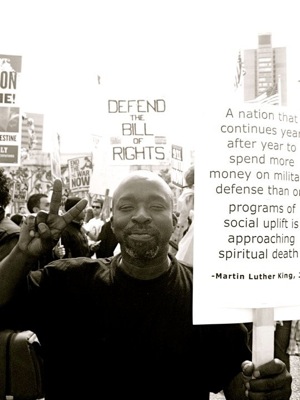
Chris Hedges: Global Revolution Must Begin in US

ADBUSTERS The unrest in the Middle East, the convulsions in Ivory Coast, the hunger sweeping across failed states such as Somalia, the freak weather patterns and the systematic unraveling of the American empire do not signal a lurch toward freedom and democracy but the catastrophic breakdown of globalization. The world as we know it is coming to an end. And what will follow will not be pleasant or easy.

The bankrupt corporate power elite, who continue to serve the dead ideas of unfettered corporate capitalism, globalization, profligate consumption and an economy dependent on fossil fuels, as well as endless war, have proven incapable of radically shifting course or responding to our altered reality. They react to the great unraveling by pretending it is not happening. They are desperately trying to maintain a doomed system of corporate capitalism. And the worse it gets the more they embrace, and seek to make us embrace, magical thinking. Dozens of members of Congress in the United States have announced that climate change does not exist and evolution is a hoax. They chant the mantra that the marketplace should determine human behavior, even as the unfettered and unregulated marketplace threw the global economy into a seizure and evaporated some $40 trillion in worldwide wealth. The corporate media retreats as swiftly from reality into endless mini-dramas revolving around celebrities or long discussions about the inane comments of a Donald Trump or a Sarah Palin. The real world – the one imploding in our faces – is ignored.

The deadly convergence of environmental and economic catastrophe is not coincidental. Corporations turn everything, from human beings to the natural world, into commodities they ruthlessly exploit until exhaustion or death. The race of doom is now between environmental collapse and global economic collapse. Which will get us first? Or will they get us at the same time?

Carbon emissions continue to soar upward, polar ice sheets continue to melt at an alarming rate, hundreds of species are vanishing, fish stocks are being dramatically depleted, droughts and floods are destroying cropland and human habitat across the globe, water sources are being poisoned, and the great human migration from coastlines and deserts has begun. As temperatures continue to rise huge parts of the globe will become uninhabitable. The continued release of large quantities of methane, some scientists have warned, could actually asphyxiate the human species. And accompanying the assault on the ecosystem that sustains human life is the cruelty and stupidity of unchecked corporate capitalism that is creating a global economy of masters and serfs and a world where millions will be unable to survive.

We continue to talk about personalities – Ronald Reagan, Bill Clinton, George W. Bush and Barack Obama or Stephen Harper – although the heads of state and elected officials have become largely irrelevant. Corporate lobbyists write the bills. Lobbyists get them passed. Lobbyists make sure you get the money to be elected. And lobbyists employ you when you get out of office. Those who hold actual power are the tiny elite who manage the corporations. The share of national income of the top 0.1 percent of Americans since 1974 has grown from 2.7 to 12.3 percent. One in six American workers may be without a job. Some 40 million Americans may live in poverty, with tens of millions more living in a category called “near poverty.” Six million people may be forced from their homes in the United States because of foreclosures and bank repossessions. But while the masses suffer, Goldman Sachs, one of the financial firms most responsible for the evaporation of $17 trillion in wages, savings and wealth of small investors and shareholders in the United States, is giddily handing out $17.5 billion in compensation to its managers, including $12.6 million to its CEO, Lloyd Blankfein.

The massive redistribution of wealth happened because lawmakers and public officials were, in essence, hired to permit it to happen. It was not a conspiracy. The process was transparent. It did not require the formation of a new political party or movement. It was the result of inertia by our political and intellectual class, which in the face of expanding corporate power found it personally profitable to facilitate it or look the other way. The armies of lobbyists, who write the legislation, bankroll political campaigns and disseminate propaganda, have been able to short-circuit the electorate.

Our political vocabulary continues to sustain the illusion of participatory democracy. The Democrats and the Liberal Party in Canada offer minor palliatives and a feel-your-pain language to mask the cruelty and goals of the corporate state. Neofeudalism will be cemented into place whether it is delivered by Democrats and the Liberals, who are pushing us there at 60 miles an hour, or by Republicans and the Conservatives, who are barreling toward it at 100 miles an hour.

“By fostering an illusion among the powerless classes that it can make their interests a priority,” Sheldon Wolin writes, “the Democratic Party pacifies and thereby defines the style of an opposition party in an inverted totalitarian system.” The Democrats and the Liberals are always able to offer up a least-worst alternative while, in fact, doing little or nothing to thwart the march toward corporate collectivism. 

It is not that the public in the United States does not want a good healthcare system, programs that provide employment, quality public education or an end to Wall Street’s looting of the U.S. Treasury. Most polls suggest Americans do. But it has become impossible for most citizens in these corporate states to find out what is happening in the centers of power. Television news celebrities dutifully present two opposing sides to every issue, although each side is usually lying. The viewer can believe whatever he or she wants to believe. Nothing is actually elucidated or explained. The sound bites by Republicans or Democrats, the Liberals or the Conservatives, are accepted at face value. And once the television lights are turned off, the politicians go back to the business of serving business.

Human history, rather than being a chronicle of freedom and democracy, is characterized by ruthless domination. Our elites have done what all elites do. They have found sophisticated mechanisms to thwart popular aspirations, disenfranchise the working and increasingly the middle class, keep us passive and make us serve their interests. The brief democratic opening in our society in the early 20th century, made possible by radical movements, unions and a vigorous press, has again been shut tight. We were mesmerized by political charades, cheap consumerism, spectacle and magical thinking as we were ruthlessly stripped of power. 

Adequate food, clean water and basic security are now beyond the reach of half the world’s population. Food prices have risen 61 percent globally since December 2008, according to the International Monetary Fund. The price of wheat has exploded, more than doubling in the last eight months to $8.56 a bushel. When half of your income is spent on food, as it is in countries such as Yemen, Egypt, Tunisia, Somalia and Ivory Coast, price increases of this magnitude bring with them widespread malnutrition and starvation. Food prices in the United States have risen over the past three months at an annualized rate of five percent. There are some 40 million poor in the United States who devote 35 percent of their after-tax incomes to pay for food. As the cost of fossil fuel climbs, as climate change continues to disrupt agricultural production and as populations and unemployment swell, we will find ourselves convulsed in more global and domestic unrest. Food riots and political protests will be frequent, as will malnutrition and starvation. Desperate people employ desperate measures to survive. And the elites will use the surveillance and security state to attempt to crush all forms of popular dissent.

The last people who should be in charge of our food supply or our social and political life, not to mention the welfare of sick children, are corporate capitalists and Wall Street speculators. But none of this is going to change until we turn our backs on the wider society, denounce the orthodoxies peddled in our universities and in the press by corporate apologists and construct our opposition to the corporate state from the ground up. It will not be easy. It will take time. And it will require us to accept the status of social and political pariahs, especially as the lunatic fringe of our political establishment steadily gains power as the crisis mounts. The corporate state has nothing to offer the left or the right but fear. It uses fear to turn the population into passive accomplices. And as long as we remain afraid, or believe that the formal mechanisms of power can actually bring us real reform, nothing will change.

It does not matter, as writers such as John Ralston Saul have pointed out, that every one of globalism’s promises has turned out to be a lie. It does not matter that economic inequality has gotten worse and that most of the world’s wealth has become concentrated in a few hands. It does not matter that the middle class – the beating heart of any democracy – is disappearing and that the rights and wages of the working class have fallen into precipitous decline as labor regulations, protection of our manufacturing base and labor unions have been demolished. It does not matter that corporations have used the destruction of trade barriers as a mechanism for massive tax evasion, a technique that allows conglomerates such as General Electric or Bank of America to avoid paying any taxes. It does not matter that corporations are exploiting and killing the ecosystem for profit. The steady barrage of illusions disseminated by corporate systems of propaganda, in which words are often replaced with music and images, are impervious to truth. Faith in the marketplace replaces for many faith in an omnipresent God. And those who dissent are banished as heretics.

The aim of the corporate state is not to feed, clothe or house the masses but to shift all economic, social and political power and wealth into the hands of the tiny corporate elite. It is to create a world where the heads of corporations make $900,000 an hour and four-job families struggle to survive. The corporate elite achieves its aims of greater and greater profit by weakening and dismantling government agencies and taking over or destroying public institutions. Charter schools, mercenary armies, a for-profit health insurance industry and outsourcing every facet of government work, from clerical tasks to intelligence, feed the corporate beast at our expense. The decimation of labor unions, the twisting of education into mindless vocational training and the slashing of social services leave us ever more enslaved to the whims of corporations. The intrusion of corporations into the public sphere destroys the concept of the common good. It erases the lines between public and private interests. It creates a world that is defined exclusively by naked self-interest.

Many of us are seduced by childish happy talk. Who wants to hear that we are advancing not toward a paradise of happy consumption and personal prosperity but toward disaster? Who wants to confront a future in which the rapacious and greedy appetites of our global elite, who have failed to protect the planet, threaten to produce widespread anarchy, famine, environmental catastrophe, nuclear terrorism and wars for diminishing resources? Who wants to shatter the myth that the human race is evolving morally, that it can continue its giddy plundering of nonrenewable resources and its hedonistic levels of consumption, that capitalist expansion is eternal and will never cease?

Dying civilizations often prefer hope, even absurd hope, to truth. It makes life easier to bear. It lets them turn away from the hard choices ahead to bask in a comforting certitude that God or science or the market will be their salvation. This is why these apologists for globalism continue to find a following. And their systems of propaganda have built a vast, global Potemkin village to entertain us. The tens of millions of impoverished Americans, whose lives and struggles rarely make it onto television, are invisible. So are most of the world’s billions of poor, crowded into fetid slums. We do not see those who die from drinking contaminated water or being unable to afford medical care. We do not see those being foreclosed from their homes. We do not see the children who go to bed hungry. We busy ourselves with the absurd.

The game is over. We lost. The corporate state will continue its inexorable advance until two-thirds of the nation and the planet is locked into a desperate, permanent underclass. Most of us will struggle to make a living while the Blankfeins and our political elites wallow in the decadence and greed of the Forbidden City and Versailles. These elites do not have a vision. They know only one word: more.  They will continue to exploit the nation, the global economy and the ecosystem. And they will use their money to hide in gated compounds when it all implodes. Do not expect them to take care of us when it starts to unravel. We will have to take care of ourselves. We will have to rapidly create small, monastic communities where we can sustain and feed ourselves. It will be up to us to keep alive the intellectual, moral and cultural values the corporate state has attempted to snuff out. It is either that or become drones and serfs in a global corporate dystopia. It is not much of a choice. But at least we still have one.

Chris Hedges is a Pulitzer Prize–winning author and former international correspondent for the New York Times. His latest book is The World As It Is: Dispatches on the Myth of Human Progress.

© 2011 Adbusters

Photo by Abby Martin