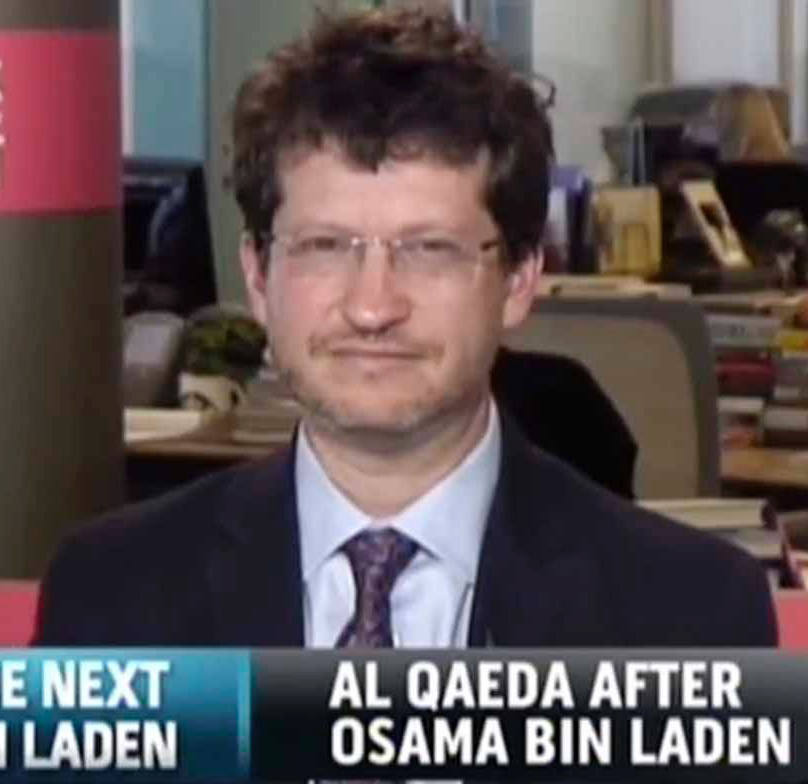
Abby Martin Interviews Hip Hop Artist Immortal Technique

MEDIA ROOTS Abby Martin of Media Roots and RT extends meaningful and challenging questions to the iconic hip hop artist and activist Immortal Technique, who notes what “seems to be a meticulous strategy to keep anything that is thought-provoking out of the mainstream.”

Like other renegades, such as artists like Zack de la Rocha, Tom Morello, Morrissey and Paul Mooney, independent recording artist Immortal Technique delivers a potent interview on an array of sundry topics.  They discuss music, conspiracy, politics, culture and the evolution of consciousness throughout the extended thirty minute interview for RT TV.

Messina

***

RT — Hip-hop artist Immortal Technique is a self-described social guerrilla.  Felipe Coronel is the real name of the Peruvian-born, Harlem-raised political activist who raps about politics, religion and racism.  Since the genesis of the OWS movement, Tech has been an active voice for the cause, and on July 10 a documentary will be released showing his everyday life.  He now joins us with more on his beliefs and his work.

***

Abby Martin:  “Something you rarely see these days in the MTV-generated music industry mainstream: hip hop with a message of raw truth.  Felipe Coronel, better known as Immortal Technique, is a Peruvian-born, Harlem-raised hip hop artist and political activist, a self-described social guerilla.  Tech’s views about politics, religion, classism, and racism are expressed poetically and powerfully through his lyrics.  And some of his albums pack more historical relvance than an entire school history book.  To maintain control over his work, Tech has never signed with a label, which gives him ultimate freedom of expression.  He’s a vocal supporter of many political movements and struggles for justice.  Since the Occupy Wall Street movement started last year, he’s been an active voice of support for the cause.  And now a new documentary coming out July 10 gives us an intimate look at his life, music, and activism.  Here’s a sneak peek.”

***

Rand Paul Confronted on Mitt Romney Endorsement

MEDIA ROOTSLuke Rudkowski of WeAreChange and I got the chance to confront Senator Rand Paul about some of the questions thousands of his supporters have about his endorsement for Presidential candidate Mitt Romney. Luke spots the Senator walking outside and questions him about his endorsement, just days after Mitt was spotted at the Bilderberg Group, according to the London Guardian. He also brings up his previous interview he had with pre-Senate Paul where Paul said that the Bilderberg Group had malintentions and that Goldman Sachs should be audited.  Romney has received over half a million dollars from Goldman Sachs for his 2012 campaign. I then follow up inside the Senate building and ask him why he is supporting a candidate that endorses all the policies Rand claims he is against.

Abby

***

Rand Paul Confronted about Romney Endorsement

***


MR Original – Global War On Drugs: A Brief History

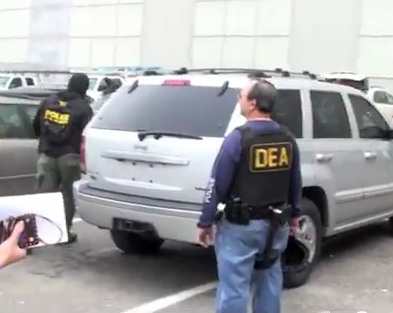
DEAMEDIA ROOTS — Disregarding the 1970 National Commission on Marijuana and Drug Abuse, which recommended de-criminalizing marijuana usage, President Nixon opted to declare a War on Drugs.  Every U.S. President since Nixon has repeated this approach.  In order to understand our present condition, we must analyze this war’s key traits, including its history, the means by which it achieves its aims, and its beneficiaries.

HISTORY and MODUS OPERANDI

The CIA and the Pentagon boast a shocking tradition of interference in Latin America, a brief summary of which includes: Bolivia 1964; Brazil 1961; Chile 1973; Costa Rica; Dominican Republic 1963; Ecuador 1960; El Salvador 1980; Grenada 1983; Guatemala 1954; Guyana 1953; Haiti 1959 and 1987; Honduras and Nicaragua in the 1980s; Mexico and Colombia 1980s-present; Panama 1989; Peru 1965; Uruguay 1969; Venezuela 2002; and Honduras 2009.  This short list doesn’t include several examples of election interference, Foreign Military Financing, or clandestine Foreign Internal Defense.  Looking at a map of Latin America, one would have great difficulty finding a nation in which the USA hasn’t interfered.

Today, the Pentagon exploits Latin America through Southern Command (USSOUTHCOM).  Success in the so-called War on Drugs rests on the Pentagon’s ability to build international and interagency partnerships, according to USSOUTHCOM Commander General Fraser.  Pentagon officials also camouflage U.S. military interference in sovereign nations as the pursuit of “common interests.”  These interests include: border protection, tackling transnational organized crime, stopping “those who would undermine the stability of nations,” violent extremist organizations, narco-terrorism, “narco-syndicates,” and criminal gangs.  Sweetening the proverbial pot, Pentagon officials always tout their specialties – cyber security, airlift capacity, ISR, logistics, C4S, humanitarian assistance, and intelligence fusion – in order to induce cooperation from Latin American government elites.

Colombia is an excellent example of how the Pentagon operates in Latin America.  U.S. military officials divvy out armaments and lip service while deliberately ignoring Colombia’s appalling human rights record.  (U.S. General Martin Dempsey, Chairman of the Joint Chiefs of Staff under Obama, admits all Colombian military leaders “have received at least some American military training.”)  Omitting any mention of human rights violations, Obama’s Secretary of Defense Leon Panetta declares that Colombia “is one of our closest partners in the hemisphere and an emerging regional and global leader.”  General Douglas Fraser even asserts that Colombia “can serve as a model for other regional nations.”

General Dempsey boldly alleges the Colombian people have “become fond of [the Colombian Armed Forces’] presence,” contrary to published reports.  Dempsey supports “Colombia’s strategy” against the FARC, which he describes as the “main terrorist group in the country.”  In reality, “Colombia’s strategy” is imposed from above by the Pentagon, and remains in place through the USA’s excessive Foreign Military Financing (bribery) to Colombia.  A substandard diplomat, Dempsey drags the USA’s name through the mud: “As the chief of our armed forces, I come here today to first of all say thank you, and secondly, how much we admire your courage and democratic values. I commit to continuing to be a good partner with you in this conflict.”  Even rudimentary knowledge of U.S. imperialism should cause Latin American officials to think twice before signing on to the USA’s War on Drugs.

TENTACLES

USSOUTHCOM personnel have monitored drug trafficking across Latin America for more than twenty years.  Under this paradigm, U.S. tax dollars pay for military raids, drills, foreign internal defense operations, and counter-narcotics reconnaissance missions (including using assets in Mexico and Curacao).  In military parlance, the Pentagon merely provides “unique military platforms, personnel, systems and capabilities that support federal law enforcement agencies and foreign security forces involved in counter-narcotics missions.”  This presence is enhanced by task forces, exercises, operations, international agreements, and general training.

Task Forces include JTF-Vulcano and JITF-South. JTF-Vulcano, which is nominally under Colombian leadership, was established in December 2011 and aims to defeat the FARC.  In March 2012, Dempsey visited JTF-Vulcano with “virtually the entire Colombian defense leadership.” JITF-South is the primary instrument through which USSOUTHCOM interdicts maritime drug shipments.  Its boundaries frequently cross into areas of responsibility belonging to USNORTHCOM, USSOUTHCOM, USEUCOM, and USPACOM.  Although nominally operating out of USSOUTHCOM’s headquarters in Miami, many of JITF-South’s activities are run out of El Salvador, Panama, Soto Cano and other bases throughout Honduras.

The Pentagon and U.S. government agencies extend their reach through various exercises and operations:

Fused Response—the “largest bilateral exercise of its kind in the Western hemisphere”—includes aspects of field training, command post instruction, communications work, staff planning, and reconnaissance drills.  It is designed to enhance nations’ ability to “work together in any circumstance [my emphasis].”  PANAMAX involves 17 nations and advertises itself as training to “protect and guarantee safe passage of traffic through the Panama Canal,” despite focusing mostly on counter-narcotics procedures.  Tradewinds is “conducted in the Caribbean region and focuses on countering drug, arms and human trafficking.”  CRUZEX works on “broad applications across many spectrums of conflict” and trains with military counterparts “so that we can integrate seamlessly during future operations as part of a larger coalition.”  Unitas stresses countries “operate and train together in scenario-based environments, which include theater security operations, anti-terrorism and anti-narcotic operations, live-fire exercises, humanitarian assistance and disaster response.”

Martillo is a multinational, interagency drug-interdiction operation run by JITF-South, and focuses on both coasts of the Central American isthmus.  Its aim is to “use persistent surveillance to force traffickers to move their shipping routes into international waters.”  Its other goal is to “deny transnational criminal organizations the ability to move narcotics, precursor chemicals for explosives, bulk cash and weapons along Central American shipping routes.”  (For propaganda pictures of Operation Martillo, see here.)  Through these task forces, exercises, and operations, the Pentagon retains the right to VBSS (Visit, Board, Search, and Seize) any private property traveling in USSOUTCOM’s area of responsibility.  Hence, it is reasonable to conclude that the Pentagon enjoys full hegemony, both directly and indirectly, throughout Latin America.

Executive and legislative programs and international agreements till the international soil for Pentagon expansion.  Existing on various jurisdictional and hierarchical planes, these programs include, but are not limited to: Andean Counterdrug Initiative (ACI), the Andean Trade Promotion and Drug Eradication Act (ATPDEA), Plan Colombia, the Merida Initiative, the Caribbean Basin Security Initiative (CBSI), the Central America Regional Security Initiative (CARSI), the U.S. – Colombia Action Plan on Regional Security Cooperation, the U.S.-Brazil Defense Cooperation Dialogue, the U.S.-Colombia Trade Promotion Agreement, the U.S.-Brazil Defense Cooperation Agreement, and the West Africa Cooperative Security Initiative (WACSI).  Some of these programs, like ATPDEA, aim to provide economic alternatives to cocaine production, but misuse their power through scorched-earth policies, which eradicate all crops in the Pentagon’s crosshairs.  Moreover, blanket use of defoliants and pesticides affect the livelihood of indigenous farming communities.  Other programs, like Merida, shower more than a billion dollars across Mexico and Central America with no tangible results.  All of these programs waste time, lives, treasury, and agriculture.

The Defense Language Institute English Language Center (DLIELC) and the Western Hemisphere Institute for Security Cooperation (WHINSEC), are two training institutions providing the Pentagon with leverage over, and connections to, Latin American militaries.  DLIELC, which is located primarily at Lackland AFB, Texas, trains foreign military personnel in American English.  WHINSEC, which is complicit in flooding Latin America with numerous atrocities, claims to provide “professional education and training for civilian, military and law enforcement students from nations throughout the Western Hemisphere.”  Tellingly, WHINSEC’s link to its page on “Democracy, Ethics and Human Rights” cannot be found.  (For an official U.S. Army video about WHINSEC, see here.  For the reality of WHINSEC, see here.)

These schools, the Center for Hemispheric Defense Studies, bilateral exchange programs, and various senior-level forums allow the Pentagon to network with young Latin American officers.  Through these connections, the Pentagon can dictate policy, manipulate foreign militaries, sustain the War on Drugs, facilitate CIA coups d’état, and generally undermine democracy.  The Pentagon also uses these connections in order to marginalize any institutions offering a counter-vision to the USA’s regional military and economic hegemony, like the Central American Integration System and the Bolivarian Alliance for the Americas (ALBA).

With the hemisphere covered, the Pentagon has turned its attention on the “homeland,” formerly known as the United States of America (270).  The Pentagon’s arsenal, which was once reserved for warzones abroad, is now deployed at home against the War on Drugs.  Noting the “effectiveness” of weapons platforms and special operations forces in Iraq and Afghanistan, an Assistant Defense Secretary remarked these systems and units can be applied to “protect our borders as well.”  The Pentagon recently sent more air assets to the USA’s Southwest border, describing its support to Customs and Border Protection (CBP) as giving them “more flexibility against an adaptive adversary.”  For the record, CBP has grown to about 21,500 personnel in recent months along the border.  The Pentagon, which already provides ISR platforms to the U.S.-Mexico border, also intends to “ramp up” this support throughout 2012.  Based on this evidence, the Posse Comitatus Act is being turned into gossamer.

The militarized Bureau of Narcotic Enforcement’s Campaign against Marijuana Planting (CAMP) is a solid example of domestic militarization, and is just one droplet in the War on Drugs’ excess.  A phenomenal waste of taxpayer dollars, CAMP thrives on bureaucratic inefficiency as it tackles California’s marijuana crops.  More than 110 agencies have participated in CAMP, which is “the largest law enforcement task force in the United States.”  Contrary to the acclaim on CAMP’s website, such rabid inefficiency should never invoke a sense of accomplishment.  Littered with disheartening statistics, CAMP’s website states that the “1,675,681 plants seized with an estimated street value of more than $6.7 billion” had surpassed the previous record by 540,989 plants.  When considered realistically, removing this amount of marijuana from the market has not impacted the plant’s supply or consumption.  All of CAMP’s efforts were for naught; all of the taxpayer dollars that contributed to CAMP’s “successes” were wasted, and the U.S. taxpayer continues to get bamboozled.  Whether home or abroad, the Pentagon has successfully created an aperture, known as the Global War on Drugs, through which to jam military hegemony and from which U.S. corporate interests profit.

MILITARY INDUSTRIAL COMPLEX

Just like the War on Terror, the military-industrial complex fuels the War on Drugs.

Panetta couches the sale of war materiel to Colombia as “the United States [standing] in solidarity with Colombia and its campaign [against the narco-terrorist group FARC]… We will continue to provide training, equipment and assistance that Colombia has requested in order to defeat this common enemy.”  It’s a clever gambit: impose a war upon a Colombia – through USA’s insatiable drug demand, Capitol Hill’s flawed policy response, and the Pentagon’s insatiable military expansion – then require that Colombia purchases war materiel from USA’s domestic armaments industry.

As a minute example, Panetta confirmed on his trip to Colombia that the U.S. “is prepared to facilitate the sale of 10 helicopters, five U.S. Army Black Hawks and five commercial helicopters, to help Colombia’s efforts against the FARC.”  Insisting on keeping USA’s “industrial base” afloat, Pentagon officials continually mention “technology transfers” as one of the “common interests” uniting Latin America and USA.  Unfortunately for Brazil, Colombia, Peru, et alii, the phrase “technology transfer” simply means “buy from us.”  Ominously, General Dempsey articulated that drones (remotely piloted vehicles) are part of these transfers.  Panetta and Brazilian Defense Minister Amorim discussed expanding two-way trade into areas of advanced defense technology.  Panetta’s candor illustrates the military-industrial complex’s power: “We continue to look for ways to improve the technology we share with Brazil so hopefully Brazil can provide jobs and opportunities for its people as we provide jobs and opportunities for ours.”  In sum, help USA’s war machine, por favor.

More than seven U.S. weapons manufacturers toured Brazil prior to Pentagon officials’ April visit this year.  Tellingly, the Pentagon has submitted Boeing’s Super Hornet (F/A 18-E/F) to the Brazilian Air Force’s F-X2 fighter competition.  Panetta explicates: “This offer is about much more than providing Brazil with the best fighter available…  With the Super Hornet, Brazil’s defense and aviation industries would be able to transform their partnerships with U.S. companies, and they would have the best opportunity to plug into worldwide markets.”  Of course, General Dempsey boasts, “I went in hoping that we wouldn’t get bogged down in a single weapons system or on technology transfer and we didn’t.”

Entrenched U.S. corporate interests (e.g. Pfizer, Johnson & Johnson, Lockheed Martin, Raytheon, GEO Group, CCA, MTC) also fuel the War on Drugs.  They lobby daily for strict drug laws to keep their profits robust.  Pharmaceutical companies favor the status quo, since they’re unable to profit from the marijuana plant whose naturally occurring cannabinoids are difficult to synthesize or patent.  Weapons manufacturers favor the status quo, since they profit excessively from producing aircraft, weaponry, and ammunition with which to “fight” the drug war.  Finally, private prison industries favor the status quo in order to fill their occupancy quotas and keep their jails filled.

TWINS

Having analyzed this War’s history, appendages, and beneficiaries, we realize that the War on Drugs and the War on Terror are virtually indistinguishable. Examples abound:

Both the War on Drugs and the War on Terror escalated under President Obama’s direction. Upon ascension to office, the Obama administration increased USA’s military and espionage interference in Latin America, Southwest Asia, Africa, and elsewhere.  The administration also altered the names of the War on Terror and the War on Drugs.  The War on Terror became Overseas Contingency Operations, while the administration simply stopped using the phrase War on Drugs.  When pressed on the seemingly ineffective nature of counter-narcotics efforts, Obama’s advisers indicate that it’s too soon to judge the results.  The U.S. public was fed the same excuses about the Afghanistan troop “surge.”  In Afghanistan, U.S. Forces assert that Afghans are leading the fight.  In Central America, U.S. Forces assert that the respective host nation military is leading the fight.

The Pentagon trains Afghan army and police forces, and also trains Mexican soldiers and federal police.  Pentagon officials also frame their Wars on Drugs and Terror as a “responsibility” that USA has to the rest of the world.  In both Afghanistan and Mexico, corruption is always cited as the main obstacle to “success.”

According to Pentagon officials, the porous Colombia-Venezuela border makes it a prime shipping point for cocaine and “terror group” activities.  Similarly, the porous Afghanistan-Pakistan border is often cited as teeming with terrorist activity and narcotic trading.  Officials view borders, not policy, as the problem.  

In confronting Drugs and Terror, policymakers consistently fail to see each “war” within their wider contexts.  The War of Drugs is implemented through attempting to crush the supply of drugs.  The War on Terror is implemented through attempting to kill the terrorists.  In both cases, the Pentagon and D.C. policymakers never examine internal issues; the War on Drugs never examines domestic drug policies, while the War on Terror never examines imperial foreign policies.

Pentagon officials are unable to envision the War on Drugs and the War on Terror without reference to conventional numerical metrics.  For example, they aim to cut the FARC’s numbers in half by 2014 and they applaud sending 10,000 more troops to help JTF-Vulcano.  In the same mindset, the Pentagon attempted “surges” in Iraq and Afghanistan. Pentagon officials also use numbers to laud the “progress” they’ve made.  For example, they boast about drug seizures, without acknowledging that confiscating drugs doesn’t impair the overall drug flow.  Likewise, killing terrorists, insurgents, civilians, and children doesn’t stop terrorism.

U.S. agencies are complicit in arming the all sides in the War on Drugs and the War on Terror.  U.S. officials have run illegal arms and smuggled weaponry to drug cartels.  (After this information was disclosed, the U.S. government conveniently reaffirmed its commitment to combatting arms trafficking, and repeated this commitment often over the next six months.)  In the War on Terror, USA has funded various terrorist organizations.  Today, the MEK is a fan-favorite among U.S. policymakers.

Even U.S. personnel cross over from the War on Terror to the War on Drugs.  The Commander in charge of U.S. military operations in Central America was once in charge of U.S. military operations in Baghdad.  According to General Dempsey, the Pentagon is sending “brigade commanders who have been in Iraq and Afghanistan” to Colombia, because “the challenges they face are not unlike the challenges we’ve faced in Iraq and Afghanistan.”  DEA’s FAST (Foreign-Deployed Advisory Support Team) honed its militancy against the poppy industry in Afghanistan and is now pursuing cocaine distributors in Central America.  The U.S. ambassador to Mexico even has extensive experience working in Afghanistan.

Failed tactics and strategies from War on Terror are now being used in the War on Drugs.  These include emphasis on becoming a network, recycling a “clear, hold and build” mindset, and weaponizing healthcare.

General Stanley McChrystal, the former 4-star in charge of ISAF, was a proponent of molding USA’s forces into a flexible network in order to defeat the Taliban’s fluid network.  Secretary of State Hillary Clinton repeated this thinking at the Global Counterterrorism Forum in September 2011 when she stated: “We can build an international counterterrorism network that is as nimble and adaptive as our adversaries.” Dempsey later reaffirmed this concept when addressing Duke University in January 2012.  In March, Dempsey applied this GWOT concept to the War on Drugs: “If you are going to beat a network, you’ve got to have a network.”  In grafting the War on Drugs onto the Pentagon’s European area of operations, the director of EUCOM’s Joint Interagency Counter Trafficking Center explained: “In order for us – the United States and international community – to have the best chance of disrupting and dismantling illicit trafficking, we, too, have to be a network of networks.”  William F. Wechsler, a deputy assistant secretary of defense, agrees: “A network of adversaries requires a network to defeat it.”

“Clear, hold and build” – in which NATO forces “clear” insurgents out of localities, and “hold” population centers in order to “build” civilian institutions – is the Pentagon’s favored strategy in Afghanistan.  Although it hasn’t provided any fruit in Afghanistan, the Pentagon is now applying it to the War on Drugs by introducing these procedures in Colombia.  General Dempsey appreciates “what we called in Iraq clear, hold, build,” and boasted about it  when speaking in Brazil and Miami.  (Dempsey doesn’t consider that these tactics never achieved anything beyond “fragile and reversible” results in Afghanistan.)  Furthermore, U.S. bases in Central America are now patterned after U.S.  Forward Operating Bases in Iraq and Afghanistan, and U.S. military compounds in northern Mexico have been modeled after U.S. “fusion intelligence centers” in Afghanistan.

The Pentagon also uses healthcare as a weapon in its counterinsurgency campaigns in Afghanistan and Colombia. USA has a long history of using Civil Affairs (CA) programs in Afghanistan.  To the U.S. military, Civil Affairs essentially means performing good deeds for local populations in order to “leverage” this goodwill during imminent military operations.  In Afghanistan, CA often takes the form of medical clinics.  Similarly, the Colombian military has incorporated “civil affairs” into most operations.  In the words of the American Forces Press Service, health care is “a big draw.”  In fact, one of JTF-Vulcano’s first orders of business was to set up a healthcare program in Tibu, Colombia.  In Honduras, USSOUTHCOM also uses medicine as a tool to win hearts and minds.  In 2011, USSOUTHCOM conducted 56 medical exercises in 13 countries, which is a testament to its widespread implementation.  If U.S. military elites actually cared for the health and safety of native populations, they would end the War on Drugs and use deep pockets to provide state-of-the-art clinics for all of the War’s victims.  But they don’t.  Instead, they use healthcare as a weapon, all in an attempt to lure the locals’ “hearts and minds.”

Both the so-called War on Drugs and the War on Terror involve hyping amorphous, unsubstantiated threats.  Pentagon officials claim that Latin American trafficking organizations “are using 21st century technologies to commit their crimes.”  We heard the same allegations about the criminality of pre-occupation Iraq.  Both terrorists and narco-terrorists, according to the official narrative, exercise “command and control” over significant territory, adapt quickly, and are an “asymmetric” threat.  Both entities are “syndicated,” which means that they will “ally themselves” with any organization that “suits their needs at the time.”  Remember when Saddam was “allied” with al-Qaeda?  In Dempsey’s words, “they’re networked, they are decentralized and they are syndicated.”  Vice Admiral Kernan, second in command at USSOUTHCOM, warns of “insidious” parallels between terrorists and translational criminal organizations.  General Dempsey recognizes “the threat that transnational organized crime presents, not just because of what they transport to our shores, but what they could also transport — terrorists and weapons and weapons of mass destruction.”  Other officials present USA’s presence in Latin America as a “quest to halt proliferation and prevent weapons of mass destruction from falling into enemy hands.”  Drawing on a sordid history, unimpeded expansion, and backed by the military-industrial complex, the War on Drugs increasingly resembles the War on Terror.

Written by Christian Sorensen for Media Roots [Please see the upcoming MR Original article Global War On Drugs: Status Quo]                                                        Additional labour by Messina

***

Photo by Robbie Martin

Propagandist for the ”Anti-War’ Liberals: Daniel Klaidman


MEDIA ROOTS – Daniel Klaidman, former editor for Newsweek magazine, recently produced a slick and pandering ‘anti-war’, pro-drone, pro-Obama video on the ‘liberal’ website The Daily Beast.  The segment insinuated that Muslims in Pakistan are grateful for US drone strikes, even when they kill innocent people.  
A portion of the clip humanizes drone operators, saying that sometimes they linger for hours, even days, to make sure they have the right target, illustrating how in one instance an operator waited until a father was finished playing with a child before bombing him to death. Interestingly enough, other reports show the exact opposite–that drones actually target innocent people, and mourners of the dead.  Not only do the strikes target innocent civilians, but the reason the administration can tout such low civilian casualties from the strikes is because they automatically consider every military aged male in a strike region to be a combatant.

The video also makes the claim that tribal Muslims fear the Pakistani ‘anti al-Qaeda’ tactics far more than they do US drones.  Klaidman must have missed the petition from Pakistani families filed early this year pleading for the US to halt drone warfare in their country.

In this new Orwellian era, where black is white and up is down, a video production style normally reserved for Robert Greenwald, a prolific anti-war filmmaker (who also seems to have softened his approach towards Obama as compared to Bush), with a dash of video music artist Michel Gondry, has been employed to promote the idea of robotic ‘targeted assassinations’.  Overall message from this piece of propaganda: C’mon guys, just trust the President and let him do his job! He’s a good guy who means well, just like you and me!  Forget about the eradication of habeus corpus or that old fashioned concept of “proving” guilt before murdering groups of people and calling it a day.

Written by Robbie and Abby Martin

***

Pro-Drone Propaganda on the Daily Beast

***

Abby Martin reports on Klaidman’s pro-drone video on RT TV

***

SALON – How is it remotely justifiable — using the standards of “objective journalism” that these media outlets incessantly invoke — for Newsweek to produce a video that has little purpose other than to justify, glorify, and defend Obama’s drone attacks on other countries? Is this not one of the most glaring examples ever demonstrating that “objective journalists” like Newsweek‘s Daniel Klaidman are barred from expressing opinions — unless the opinion expressed is that the actions of the U.S. Government are justified and noble? That’s why Chris Hedges was forced out of The New York Times for opposing the attack on Iraq while John Burns was venerated and made the chief war correspondent after he supported that attack: opinions are perfectly permissible from American journalists only to the extent that they defend official actions. In what conceivable way is it the proper role of Newsweek and its national security “reporters” to produce melodramatic agitprop which vigorously takes the U.S. Government’s side in ongoing, highly divisive political controversies?

Then there’s the content itself. Klaidman (now in the midst of promoting his new book based on ample access generously providedby Obama officials) pretends to speak on behalf of — or to read the minds of — drone opponents by claiming that what really motivates opposition is the weapon’s unique “pinpoint” precision, its “almost supernatural effectiveness.” Actually, what motivates opposition are totally different and very significant facts that Klaidman completely ignores because it would spoil the creepy and uplifting message of that video — Embrace the drone. Love the drone. Become one with the drone — little things like this (“Obama terror drones: CIA tactics in Pakistan include targeting rescuers and funerals”), and this (“The boy, 16, sitting with me in these photos was protesting against deadly US drone strikes… Three days later he was killed – by a US drone, says Jemima Khan”), and this (“Anwar al-Awlaki’s family speaks out against his [16-year-old American] son’s death in airstrike”), and this (“In Yemen, U.S. airstrikes breed anger, and sympathy for al-Qaeda”), and this (Obama administration “counts all military-age males in a strike zone as combatants”)

Continue Reading Glenn Greenwald At Salon.

MR Original – From Persia To Iran


From Persia to Iran: The Iran Neighborhood, Friend or Foe: Part 1 of 3 

MEDIA ROOTS 
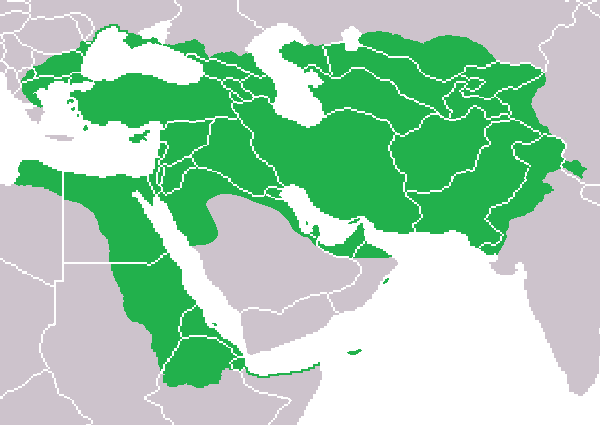
—The so called “diplomacy” currently being conducted by international surrogates to control the momentum of Iranian nuclear ambitions is conducted by the very same people who saturated the region with nuclear weapons technology. Iran, in one sovereign form or another, has been operating for 2,500+ years. The Median Empire allied with the Babylonians to capture Nineveh in 612 BC. Cyrus the Great, a descendant of Achaemenes conquered the Median Empire to establish the Achaemenid Empire. The Achaemenid Empire in Persis for more than two centuries stretched from the Indus Valley to Egypt.

Hidden in the halls of history, irony reveals, Persia championed the emancipation of Jewish slaves from Babylonian captivity during the Greco-Persian wars. After the fall of Babylon, Cyrus the Great guided Jewish slaves to Yehud province to rebuild the second temple of Jerusalem. The Babylonian slavery and the subsequent return to Israel was a pivotal biblical event between Yahweh and the people of Israel. Persia played both a pivotal historic and biblical role in preserving the Jewish people and homeland.

Fast forward a millennium, after the Muslim conquest of Persia the Safavid Dynasty of the Sufi Order ascended to power from 1501 – 1722. The Twelver School of Shi’a Islam was established as the official religion of the Empire. Shah Abbas I fought the Ottoman Empire over modern Iraq, courted European monarchs and remained resistant to Spanish and Portuguese overtures to end the relationship with Britain. In 1622, the English East India Company helped Shah Abbas retake Hormuz from the Portuguese. It was the beginning of a long running British interest in Iran.

Today, Iran is in the crosshairs of western foreign policy as Israel and western powers align to confront Iran over harnessing nuclear weapons technology. On the surface it appears Israel and Iran are the primary actors in an impending Middle-East war. Scratch a little deeper and you find Britain and Russia playing an old game, now acting as marionette masters. It must be said that each of these masters has a marionette that occasionally dances to its own rhythm.

Britain via America has waning influence over Israeli movements, while Russia dominates the crippled Syrian marionette by influencing the guarded Iranian led dance. The British mother remains a ghost as America and Israel represent her interests. She opaquely nods her approval to the cheers of the international banking cabal. Russia and China both call for respect of sovereignty and signal a willingness to protect their collective interests. Tensions are high and those aware of world history know the wicked brew well.

Israel and Iran

The divide between Iran and Israel transcends politics and roots itself in religion, ancient culture, millennia of war and ultimately land. Sects of humanity have always quantified protecting culture by defining and defending geographical boundaries. This is my land–that is your land. Nowhere on Earth is this starker than Jerusalem or Al-Quds. The cosmic lottery awards you either an Israeli or Palestinian mother and from here you choose sides.

In 1896, Theodor Herzl published Der Judenstaat –The Jewish State. The publication claimed the only resolution for the “Jewish Question” in Europe was the establishment of a Jewish state. At the 1897 First Congress of the Zionist Organization (ZO), founder Theodor Herzl again called for securing a homeland for the Jewish people under public law –the origin of modern political Zionism. A letter dated November 2, 1917 from Britain’s Foreign Secretary Arthur James Balfour to Baron Walter Rothschild, liaison to British Jewish leaders, reads as follows:

“His Majesty’s government view with favour the establishment in Palestine of a national home for the Jewish people, and will use their best endeavours to facilitate the achievement of this object, it being clearly understood that nothing shall be done which may prejudice the civil and religious rights of existing non-Jewish communities in Palestine, or the rights and political status enjoyed by Jews in any other country.”

Later this agenda evolved into the Sèvres peace treaty with Turkey and the Mandate for Palestine. In 1917, after the British defeat of Ottoman Turkish forces during World War I, Britain occupied and ruled under a military administration across Ottoman Syria. The cloak of international consensus and impetus was deployed in the form of a League of Nations to administer and control the Middle East, “until such time as they are able to stand alone.” The Zionist intended to “piggyback” the British coup d’état and a series of diplomatic and political moves provided or restored or captured –depending on perspective– a homeland for the Jewish people of the world.

The Zionist Commission formed in 1918. In April 1920, the Zionist commission elected representatives for the Palestinian Jewish Community. In July 1920, the eloquently named Occupied Enemy Territory Administration was replaced by a civilian commissioner named Herbert Samuel. Herbert Samuel would also be instrumental in forming the Muslim Supreme Council by appointing his half-brother Mohammad Amin al-Husayni as Grand Mufti of Jerusalem –the Sunni cleric in charge of holy places. The locals insisted al-Husayni was a British puppet and demanded As’ad Shukeiri was the Grand Mufti. It makes sense then if you are now told that As’ad Shukeiri would have a son named Ahmad Shukeiri who would become the first leader of the Palestine Liberation Organization.

The arrogant and ill-conceived British occupation of Palestine unapologetically causes and fosters the modern Palestinian liberation organizations agendas, Fatah and Hamas. Britain created Israel in the face of specific Arab opposition. Britain carved out Palestine and created Israel for persecuted Jewish citizens world-wide to have a home. More can be said about the centuries of failed European crusades, but it is clear Britain achieved some level of permanence with this diplomatic move into the Middle-East. Israel as a British proxy has never been well received by Iran and the history of British regional imperialism is largely to blame.

In 1980, irony would find Yehoshua Saguy, Director of Israeli military intelligence, publicly urging and assisting Iran’s strike on the Iraqi Osirak nuclear reactor. In 1981, three weeks before the Israeli elections, Israel again bombed the French-built Iraqi Osirak reactor. Superficially criticized by the United Nations Security Council, the strike is currently used as an example of preventive strikes in modern international law. An Israeli strike on Iranian nuclear reactors in 2012 will not be setting precedent, only revisiting old method.

Today, Israel backed and armed by Britain and America, is the center of gravity for all Middle-East issues. Iran leads the Muslim world in denouncing Israel and it is only a matter of time before Israel attacks Iranian nuclear facilities. Iran demands the world recognize its inalienable nuclear right to a full nuclear fuel cycle as granted by their membership in the nuclear Non-Proliferation Treaty –a treaty that nuclear Israel refuses to sign. Recent reports suggest Iran has suffered state-sponsored cyber-attacks against nuclear centrifuges and nuclear scientist assassinations. Iran is strapped to the Israeli table enduring overt acts of war, biting economic sanctions, requests to search sovereign military sites and the threat of Israeli military action.

On June 6, 2012 Iran sparred with western diplomats accusing the United Nations IAEA of acting like a “western-manipulated intelligence agency.” Iranian media said Tehran had written twice, with no response, to the permanent five members of the United Nations Security Council seeking a foundation for the talks scheduled in Moscow on June 18, 2012. The dialogue falls on deaf ears on both sides of the table and the diplomats and politicians may soon scurry behind their militaries for cover. The ultimate culmination of political arrogance, diplomatic madness and catastrophic human relation is war.

The Permanent Five: Britain and Iran

Look to Britain for explanations of the current trajectory in the Middle-East. This slice of history begins in 1735 when Persian leader Nader Shah attacked deep into India capturing the Peacock throne, adorned with the largest diamond in the world, the koh-i-noor. The riches of India were on full display and western imperialists took notice. Assassinated in 1747, Nader Shah was succeeded by the Zand and Qajar Persian dynasties. In the dusk of the 18th Century Iran would bow, but not break to British and Russian aggression.

The Iranian Qajar dynasty ceded close to half of its territory to Britain and Russia. Signed in 1813, the Treaty of Gulistan ceded modern-day Azerbaijan to Russia. The treaty text was prepared and mediated before the Persian court by British Ambassador to Persia, Sir Gore Ouseley. Meanwhile, Britain’s increasing occupation of Egypt allowed Russia to make sweeping regional gains. Likewise, the Persian losses and subsequent weakening grasp in India left it ripe for British plucking. This 18th century Russo-Anglo expansionist “tag-team” would turn sour for the next century as the game began.

Britain fearing Russian acquisition of the jewel of British imperialism –India, fought proxy wars with Russia across central Asia from 1813 to 1907. Afghanistan and then China became the primary theatres for what was called “The Great Game.” Reigniting during the Bolshevik Revolution of 1917, the game fizzled after Britain and the Soviet Union once again became allies in World War II.

In 1925, Shah Reza Khan came to power in Iran only to once again be invaded by Britain and Russia because of alleged ties to the German regime. In all historical honesty it was to commandeer the Iranian railroad. Shah Khan was forced to abdicate his position to his son, Shah Mohammed Reza Pahlavi. Iranians after enduring more than two centuries of invasion, territorial concessions and castration of regional influence were again the subject of British and Russian imperialist foreign policy. The seeds of distrust were thus sewn for generations and the worst was yet to come.

In 1951, Shah Pahlavi ratified the Iranian parliamentary appointment of Prime Minister Dr. Mohammad Mosaddegh who quickly nationalized Iran’s petroleum industry. British Prime Minister Winston Churchill countered by embargoing Iranian oil and enlisting American President Dwight Eisenhower to carry out operation Ajax. This was the first time the United States had openly overthrown a democratically elected civilian government. British heavy-handed ethnocentric diplomacy once again reaped the rotten fruits of ill-will, floundering down the historically redundant path of promoting the fallacy of war and occupation. As the grip of western interference strangled Shah Pahlavi, another was rising to relieve the population’s malcontent with foreign interference.

Sayyed Ruhollah Musavi Khomeini (Grand Ayatollah) was of Kashmiri descent, his grandfather left India because of British occupation.  Studying at some of Iran’s elite seminaries Khomeini became an expert in Islamic Law and jurisprudence. A philosopher and a poet, privately Khomeini was an expert in Sufi mysticism and controversially knowledgeable of Gnosticism. In 1963, Shah Pahlavi proposed a White Revolution consisting of sweeping governmental changes at odds with the traditions of Islamic law. Khomeini was having none of it. After 16 years in exile, Khomeini returned to Tehran on February 1, 1979. He steamrolled the provisional government and appointed his own interim government.

Iran is still dominated by a clerical style of government, staunchly mistrustful of Britain. In November of 2011, the British embassy in Tehran was stormed on the heels of an IAEA report. Britain was so infuriated it expelled all Iranian diplomats with 48 hours notice. This set off a flurry of ambassador recalls for consultation and condemnation across the European Union. In the same month, Britain announced prohibition on all trade between British financial institutions and the Iranian central bank. The British-Persian relationship is at a new low, it is difficult to imagine Britain standing in the way of Israeli or American aggression, especially since it is the wizard wielding the levers behind the curtain.

Russia and Iran

Much of the Russian engagement of Persia – now Iran, dovetails with the British history already discussed. However it is important to note that Russia currently maintains a friendly posture with Iran and its surrogates Syria, Southern Lebanon and Palestine. Russia has relaxed its complicity interfering in Iranian affairs to a posture of trading partner, military and diplomatic ally and potentially proxy-war boss.

Russia-Persia relations originate in the early 1600s. As mentioned, Persia suffered a succession of annexations at the hands of the Russians during the 1800s, then again a bitter occupation in the 1900s, all ensued by an American-British coup d’état and counter revolution in the last 60 years. Russia still dances on the fence as evidenced in 2010, Russia scuttled a $13 billion arms sale to Iran, which included signing a decree banning the delivery of S-300 missile systems, warplanes, helicopters and ships.

Russia continues to veto United Nations attempts to sanction the Syrian government, the key regional Iranian proxy. Russian United Nations ambassador, Vitaly Churkin, accused the United States and its European allies of deceiving fellow Security Council members by using a civilian protection mandate to implement regime change in Libya. Iranian President Ahmadinejad and Russian President Vladimir Putin are meeting before the June 18, 2012 summit scheduled in Moscow to “feel the heat” surrounding the nuclear ambitions of Iran. The irony of Russia coming full-circle to Persia’s rescue is mind boggling viewed through the glasses of imperialist history, however the modern culture of business cultivated between Russia and Iran is reality.

America and Iran

The United States maintains no formal diplomatic relations with Iran. America maintains an “interests section” at the Swiss embassy in Tehran, while Iran maintains a similar section at the Pakistan embassy in Washington D.C. Since the MI6 and CIA coup d’état against the Iranian Mosaddegh regime in the 1953, the British conceived and Shah Pahlavi endorsed White Revolution of 1963 and the 1979 taking of hostages at the United States embassy in Tehran –it is an understatement to say Iran and America have a significant trust deficit.

Recent tightening of banking sanctions, Persian Gulf naval skirmishes, hostage taking and release, assassinations and alleged assassinations bring the United States to the brink of war with Iran in 2012. The irony is breathtaking when you consider the Iranian Nuclear program began with the direct assistance of the United States Atoms for Peace program in the 1950s. Western nuclear assistance eventually gave way to Russian and French assistance. Iran with Russian help opened the Bushehr Reactor in September of 2011. America stands only behind Britain and Israel in fervent opposition of Iranian nuclear ambitions.

The President of the United States of America and the United States State Department are now fully represented by international bodies and independent civilian foreign policy “think tanks,” abdicating sovereign American foreign policy to central bankers and corporate lobbying interests. On June 8, 2012, talks between Iran and these international surrogates collapsed as pessimism and distant points of compromise were feigned, tabled and trashed. Increasingly it appears only the American election cycle and the timing of war with Iran remains to be determined. War weary Americans are being lined up to support the Israeli proxy engagement of Iran. Britain created Israel and America continues to support and arm Israel for this very “showdown.” America’s international surrogates travel to Moscow on June 18, 2012, for perhaps a final discussion on Iran’s sovereign right to develop nuclear energy.

China and Iran

China and Iran have trade and diplomatic relations spanning back millennia. In modern times the relationship between Iran and China is one of trade reliance. China is fully invested in developing Iran’s capacity to export oil and natural gas, Iran is fiscally dependent on oil sales to China and energy dependent upon Chinese conversion of oil to gasoline. This relationship is expansive and current attempts to place Iranian import and exports under an international microscope, is unnerving to both China and Iran.

In 2011, a group known as the Green Experts of Iran reported large swaths of Iranian land had been given to China for construction of oil and gas fields, sovereignty intact. China has vowed that any attack against these regions would be considered an attack against its own sovereign territory and will be defended. The Green Experts of Iran have speculated that this was the impetus for Chinese Major General Zhang Zhaozhong’s statement that “China will not hesitate to protect Iran even with World War III.”

China is a major supplier of military arms to Iran. Having delicately not taken sides in the Iran-Iraq war, China has steadily maintained military support. Initially using North Korea as a proxy to transit sensitive arms to Iran, China has opted for direct trade to avoid antagonizing the west. China continues to be a major arms provider for Iran, including surface-to-surface anti-ship missiles that threaten to wreak havoc on Persian Gulf shipping through the Straits of Hormuz.

Chinese nuclear cooperation with Iran once flourished as China assisted Iran in developing several nuclear research reactors. Additionally, China has assisted Iran in developing its capacity to domestically enrich hexafluoride uranium in Isfahan, Iran. China currently has no official direct cooperation with Iran concerning nuclear materials, while indirect cooperation remains murky. Chinese nuclear scientists and technicians remain in Iran even as China openly opposes Iranian domestic production of nuclear arms.

China continues to straddle the fence as it encourages Iran to be flexible and pragmatic through negotiations, while the mainstream press is selling the idea that China is arming Iran, Syria and the Lebanese proxy Hezbollah. China does not share the West’s urgency to intervene in Iran and certainly can be expected at a minimum to protect its Iranian energy and infrastructure investments.

France and Iran

The relationship between France and Iran spans back almost five centuries. The French East India Company promoted French interests in Persia as far back as 1664. The Shah of Iran welcomed the French to balance the trade and corresponding influence of the Dutch and British. With favorable rates on customs duties and a French trading post in Bandar Abbas the relationship flourished.

In 1807, Napoleon I formed a Franco-Persian alliance with Fath Ali Shah to challenge Russia and Great Britain. The alliance collapsed as it became apparent it was a French ruse to march across the Middle-East to seize British held India. France would practice further treachery when it then aligned with Russia to focus on European war campaigns. The relationship would continue to be on again–off again between France and Iran, depending predominately on Russian regional posture.

After the 1979 Iranian Revolution, French involvement in the Iranian nuclear program became a heated issue. The French Cogema Company and the Iranian Sofidif Company formed a joint venture to establish the Société Franco–iranienne pour l’enrichissement de l’uranium par diffusion gazeuse. Primarily France, Belgium, Spain and Sweden formed the Eurodif joint stock company of which Iran’s Sofidif Company held about 40% of the company stock. Iran would also lend more than $1.25 billion for construction of the Eurodif factory. In 1982, Francois Mitterrand refused to provide any uranium to Iran and reneged on paying back the $1.25 billion loan.

On November 17, 1986 as Georges Besse, Renault CEO and Eurodif manager stepped from his chauffeured car a motorcycle approached and shot him in the head and chest and he died instantly. The assassination was blamed on a militant group claiming responsibility, while at trial these members vehemently denied any involvement. Nathalie Menigon, Joelle Aubron, Jean-Marc Rouillan and Georges Cipriani are all serving life imprisonment for the assassination.

Along comes French investigative journalist Dominique Lorentz to uncover a series of terrorist acts in France related to proliferating the Iranian nuclear program. Dominique Lorentz’s documentary film, La République Atomique, analyzes the French domestic and foreign policy agenda through economic, diplomatic, technological and military sectors. She exposes how American reluctance to help anyone in the world with nuclear technology after World War II found American officials backing France to do the job. Starting with Israel, France would assist an additional 44 countries with their nuclear programs.

Dominique Lorentz investigated and reported on a series of attacks that were said to be an Iranian campaign to force France to pay back the Eurodif debt. She reported these attacks included the French Hostage affair in Lebanon, bombing of Hotel de Ville, bombing of Pub Renault, the assassination of Georges Besse and the plane crash of Michel Baroin. Dominique Lorentz reports that on the day Besse was shot the French paid $330 million to Tehran and another payment after Baroin’s plane crash in December 1987. In 1988, the last French hostages were released from Lebanon and French Premier Jacques Chirac signed an accord saying Tehran would get its shareholder status back in Eurodif and delivered its enriched Uranium.

During these 10 years of crisis between France and Iran over the nuclear program, Germany, Argentina, China and Pakistan filled the nuclear collaboration void. Iran expanded its nuclear technology holdings, including enriched uranium. In 1995, the Russians lined up to build the Bushehr nuclear power facility and in 1997 the French signed on to provide Russia with enriched uranium. Whether you agree with the hard-hitting investigative journalism Dominique Lorentz has shared, no one can deny who supplied nuclear technology to Iran. America, France, China, Russia, Britain, Germany, Argentina and Pakistan have all provided Iran (and Israel) with nuclear technology, fuel and weapons.

So the political, economic and diplomatic lust that led all these geniuses to proliferate nuclear technology is ready to give birth to the war they all knew was coming. A fleeting flurry of diplomacy occurred in 2005 ending with the Iranian President calling for the destruction of Israel. In 2009, French diplomats in Tehran were accused by Iran for instigating post-election protests. In 2010, the Iranian state-run daily paper called France’s first lady a prostitute and this symbolizes the bottom as French and Iranian diplomacy descends into petty media slurs. In February 2012, Iran ceased oil exports to France. In June 2012, the French continue to isolate Iran through diplomacy and the media.

Iran and Israel are squared off at the peak of useful diplomacy as the mainstream media begins a campaign of conditioning and deterioration. The Permanent Five members of the United Nations are both responsible for creating and destroying the sovereign nuclear ambitions of Iran. Two key members, Russia and China, are being pushed to the brink of their capacity to remain neutral on military engagement of Iran. The old game between Britain and Russia is alive and the marionette masters begin to seriously plan their dance. The British war drums are thundering and Uncle Sam rides shotgun with the Queen as they encourage the heavily armed Israeli proxy to jump down the slippery slope of war.

Part two of this three part feature on the Iranian Neighborhood will delve into the allegiance of critical regional neighbors –Turkey, Syria, Saudi Arabia, Palestine and Lebanon. Part three of the Iranian Neighborhood will take a look at the neighborhood through snapshots of allegiance with contiguous countries such as Jordan, Egypt, Armenia, Azerbaijan, Turkmenistan, Afghanistan, Pakistan, Iraq and Kuwait. Join us again at Media Roots for the exclusive conclusion of this in depth analysis of the Iranian Neighborhood.

Chris Martin for Media Roots

***

 Photo by Flickr user Daniella Zalcman