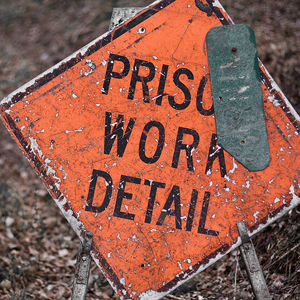
Thousands of CA Inmates on Hunger Strike

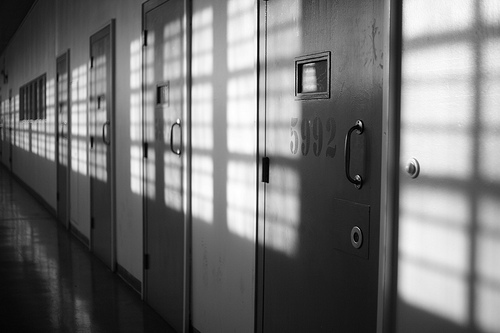
COLOR LINES– What began as a hunger strike among inmates of the isolation wing of California’s Pelican Bay prison has turned into a statewide display of solidarity. A number of prisoners in Pelican Bay’s Security Housing Unit, California’s highest-security complex, refused their state-provided morning meal on Friday to protest the inhumane conditions of their confinement. Inmates in the Security Housing Unit spend 23 hours per day in soundproofed, windowless cells. Their daily hour of exercise is walking around a small, walled space. The intent is to keep prison-gang members and those considered dangerous to others separated from fellow inmates.

Despite original claims by the California Department of Corrections and Rehabilitation that the hunger strike was limited to fewer than two dozen Pelican Bay inmates, spokesperson Terry Thornton said yesterday that the weekend had seen a peak of 6,600 protesters. According to Thornton, there are currently around 2,100 prisoners declining meals. Thirteen of California’s 33 penal facilities have counted protesters among their inmate populations and it appears that the sentiment of solidarity is spreading beyond state borders. On Friday, a number of those incarcerated at Ohio State Penitentiary refused their food trays for a full 24 hours.

Molly Porzig, spokesperson for Critical Resistance, an organization dedicated to developing alternatives to incarceration, highlighted the significance of the strike’s timing. “California has been ordered by the Supreme Court to release prisoners due to the neglect and overcrowding in the state’s prisons. They recognize that the conditions of California’s prisons are absolutely atrocious.” Additionally, Porzig pointed to the state’s recent budget, which includes $140 million in overtime for guards, especially those in SHUs. “California is demonstrating that it prioritizes prisons over education, parks, health care, keeping our libraries’ doors open and other things that our communities need.”

The strikers’ demands include better food, warmer clothing and a phone call each month. They also hope to end the unit’s debriefing policy, which allows inmates to leave the unit in exchange for information about the actions of other gang members and prisoners. “Its an incredibly dangerous system for prisoners and their families because of retaliation,” said Porzig. “On the other end, all someone needs to do is point a finger at you and you’re in SHU indefinitely.”

Read more about Thousands of CA Inmates on Hunger Strike.

This video explains what the Pelican Bay Hunger Strike is all about, with former prisoners detailing why prisoners are protesting, how this action relates to a history of prisoner-led resistance, and what people outside prison can do to support the hunger strike.

This video was made by a coalition called Prisoner Hunger Strike Solidarity. For updates on the hunger strike, check out: prisonerhungerstrikesolidarity.wordpress.com

© 2011 Color Lines

Photo by Flickr User Ben Kraus
Thousands Join Hong Kong Protest

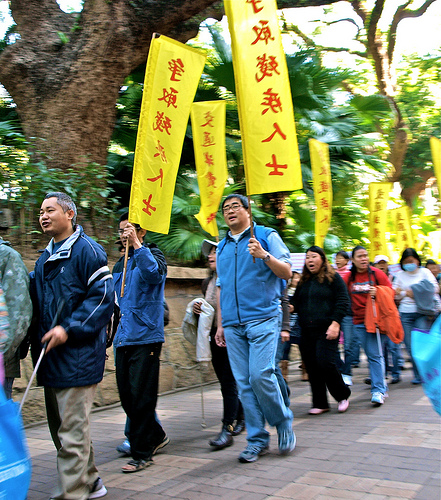
IRISH INDEPENDENT NEWS– Tens of thousands of people have voiced anger over Hong Kong’s skyrocketing property prices and government policies at an annual march marking the former British colony’s return to Chinese rule.

People blew whistles, beat drums and banged metal cups, and many waved flags calling for improved voting rights while others chanted “down, down with property tycoons” and called for chief executive Donald Tsang to step down.

Since the territory was handed back to China on July 1, 1997, Hong Kong has largely retained its Western-style civil liberties, including press freedom and the right to hold public protests.

But its people still cannot directly elect the city’s chief executive or all legislative members.

One of the big themes of the march marking the 14th anniversary is the growing rich-poor divide in Hong Kong, where soaring property prices have left many homes unaffordable and forced out small shopkeepers.

Some protesters carried large signs depicting Mr Tsang and billionaire Li Ka-shing, Hong Kong’s richest man whose business empire includes a major property developer, with devil horns and vampire fangs. They chanted slogans accusing the government and developers of colluding to establish a monopoly.

Citizens are also upset over a recent government proposal to scrap by-elections and instead fill vacant legislative seats based on previous results.

“The proposal to get rid of by-elections to fill vacancies in the Legislative Council is a crazy idea and insulting to the intelligence of the people of Hong Kong,” said veteran democracy activist Martin Lee.

Hong Kong is the only place in China that enjoys a degree of Western-style adversarial parliamentary politics.

Read more about Thousands Join Hong Kong Protest.

© 2011 Irish Independent News

Photo by Flickr user yip667

The Pentagon and Slave Labor in U.S. Prisons

GLOBAL RESEARCH– Prisoners earning 23 cents an hour in U.S. federal prisons are manufacturing high-tech electronic components for Patriot Advanced Capability 3 missiles, launchers for TOW (Tube-launched, Optically tracked, Wire-guided) anti-tank missiles, and other guided missile systems. A March article by journalist and financial researcher Justin Rohrlich of World in Review is worth a closer look at the full implications of this ominous development. (minyanville.com)

The expanding use of prison industries, which pay slave wages, as a way to increase profits for giant military corporations, is a frontal attack on the rights of all workers.

Prison labor — with no union protection, overtime pay, vacation days, pensions, benefits, health and safety protection, or Social Security withholding — also makes complex components for McDonnell Douglas/Boeing’s F-15 fighter aircraft, the General Dynamics/Lockheed Martin F-16, and Bell/Textron’s Cobra helicopter. Prison labor produces night-vision goggles, body armor, camouflage uniforms, radio and communication devices, and lighting systems and components for 30-mm to 300-mm battleship anti-aircraft guns, along with land mine sweepers and electro-optical equipment for the BAE Systems Bradley Fighting Vehicle’s laser rangefinder. Prisoners recycle toxic electronic equipment and overhaul military vehicles.

Labor in federal prisons is contracted out by UNICOR, previously known as Federal Prison Industries, a quasi-public, for-profit corporation run by the Bureau of Prisons. In 14 prison factories, more than 3,000 prisoners manufacture electronic equipment for land, sea and airborne communication. UNICOR is now the U.S. government’s 39th largest contractor, with 110 factories at 79 federal penitentiaries.

The majority of UNICOR’s products and services are on contract to orders from the Department of Defense. Giant multinational corporations purchase parts assembled at some of the lowest labor rates in the world, then resell the finished weapons components at the highest rates of profit. For example, Lockheed Martin and Raytheon Corporation subcontract components, then assemble and sell advanced weapons systems to the Pentagon.

Increased profits, unhealthy workplaces

However, the Pentagon is not the only buyer. U.S. corporations are the world’s largest arms dealers, while weapons and aircraft are the largest U.S. export. The U.S. State Department, Department of Defense and diplomats pressure NATO members and dependent countries around the world into multibillion-dollar weapons purchases that generate further corporate profits, often leaving many countries mired in enormous debt.

But the fact that the capitalist state has found yet another way to drastically undercut union workers’ wages and ensure still higher profits to military corporations — whose weapons wreak such havoc around the world — is an ominous development.

According to CNN Money, the U.S. highly skilled and well-paid “aerospace workforce has shrunk by 40 percent in the past 20 years. Like many other industries, the defense sector has been quietly outsourcing production (and jobs) to cheaper labor markets overseas.” (Feb. 24) It seems that with prison labor, these jobs are also being outsourced domestically.

Meanwhile, dividends and options to a handful of top stockholders and CEO compensation packages at top military corporations exceed the total payment of wages to the more than 23,000 imprisoned workers who produce UNICOR parts.

The prison work is often dangerous, toxic and unprotected. At FCC Victorville, a federal prison located at an old U.S. airbase, prisoners clean, overhaul and reassemble tanks and military vehicles returned from combat and coated in toxic spent ammunition, depleted uranium dust and chemicals.

A federal lawsuit by prisoners, food service workers and family members at FCI Marianna, a minimum security women’s prison in Florida, cited that toxic dust containing lead, cadmium, mercury and arsenic poisoned those who worked at UNICOR’s computer and electronic recycling factory.

Prisoners there worked covered in dust, without safety equipment, protective gear, air filtration or masks. The suit explained that the toxic dust caused severe damage to nervous and reproductive systems, lung damage, bone disease, kidney failure, blood clots, cancers, anxiety, headaches, fatigue, memory lapses, skin lesions, and circulatory and respiratory problems. This is one of eight federal prison recycling facilities — employing 1,200 prisoners — run by UNICOR.

After years of complaints the Justice Department’s Office of the Inspector General and the Federal Occupational Health Service concurred in October 2008 that UNICOR has jeopardized the lives and safety of untold numbers of prisoners and staff. (Prison Legal News, Feb. 17, 2009)

Read more about The Pentagon and Slave Labor in U.S. Prisons.

© 2011 Global Research

Photo by Flickr user flee the cities

Posted in Uncategorized | 1 Reply

South Sudan, the Newest Nation

NY TIMES– After five decades of guerrilla struggle and two million lives lost, the flags are flapping proudly here in this capital. The new national anthem is blasting all over town. People are toasting oversize bottles of White Bull beer (the local brew), and children are boogieing in the streets.

“Free at Last,” reads a countdown clock.

But from the moment it declares independence on Saturday, the Republic of South Sudan, the world’s newest country and Africa’s 54th state, will take its place at the bottom of the developing world. A majority of its people live on less than a dollar a day. A 15-year-old girl has a higher chance of dying in childbirth than she does of finishing primary school. More than 10 percent of children do not make it to their fifth birthday. About three-quarters of adults cannot read. Only 1 percent of households have a bank account.

Beyond that, the nation faces several serious insurrections within its own sprawling territory and hostilities with northern Sudan, its former nemesis.

It is clearly an underdog story.

So many people here embody the distance traveled and the hopes to come. James Aguto, a former child soldier and longtime guerrilla fighter, now delivers babies. Mr. Aguto is a newly minted clinical officer, working in a government hospital, and his journey from taking life to sustaining it makes him an apt symbol for the transition this country is trying to make.

“There was one night I delivered six babies, six babies in one night!” he said. “I was so happy. I was making development here. I was showing that I had skills.”

Mr. Aguto now wants to be a doctor. “I have that spirit,” he explained.

The nation will certainly need it. More than 2,300 people have been killed in ethnic and rebel violence this year, with at least a half-dozen rebel groups, some with thousands of fighters, prowling the bush, attacking government soldiers, terrorizing civilians, and stealing cattle and even children.

Read the full article about South Sudan, the Newest Nation, Is Full of Hope and Problems.

© 2011 New York Times

Photo by Flickr user UN Photos

Food Companies That Serve You ‘Wood’

THE STREET– The recent class-action lawsuit brought against Taco Bell raised questions about the quality of food many Americans eat each day.

Chief among those concerns is the use of cellulose (read: wood pulp), an extender whose use in a roster of food products, from crackers and ice creams to puddings and baked goods, is now being exposed. What you’re actually paying for — and consuming — may be surprising.

Cellulose is virgin wood pulp that has been processed and manufactured to different lengths for functionality, though use of it and its variant forms (cellulose gum, powdered cellulose, microcrystalline cellulose, etc.) is deemed safe for human consumption, according to the FDA, which regulates most food industry products. The government agency sets no limit on the amount of cellulose that can be used in food products meant for human consumption. The USDA, which regulates meats, has set a limit of 3.5% on the use of cellulose, since fiber in meat products cannot be recognized nutritionally.

Jump directly to the slideshow of companies whose food contains cellulose.

“As commodity prices continue to rally and the cost of imported materials impacts earnings, we expect to see increasing use of surrogate products within food items. Cellulose is certainly in higher demand and we expect this to continue,” Michael A. Yoshikami, chief investment strategist at YCMNet Advisors, told TheStreet.

Manufacturers use cellulose in food as an extender, providing structure and reducing breakage, said Dan Inman, director of research and development at J. Rettenmaier USA, a company that supplies “organic” cellulose fibers for use in a variety of processed foods and meats meant for human and pet consumption, as well as for plastics, cleaning detergents, welding electrodes, pet litter, automotive brake pads, glue and reinforcing compounds, construction materials, roof coating, asphalt and even emulsion paints, among many other products.

“Cellulose adds fiber to the food, which is good for people who do not get the recommended daily intake of fiber in their diets,” Inman said. “It also extends the shelf life of processed foods. Plus, cellulose’s water-absorbing properties can mimic fat,” he said, allowing consumers to reduce their fat intake.

Read the full article about 15 Food Companies That Serve You ‘Wood’.

© 2011 The Street

Photo by Flickr user freya_gefn