1 in 5 US Veterans Jobless in 2010

PRESS TV – Recent data released by the United States Bureau of Labor Statistics shows that more than one fifth of US veterans aged between 18-24 returning from Iraq and Afghanistan were unemployed in 2010.

The unemployment rate for the young male veterans was nearly 22 percent last year, more than two percent higher than their non-veteran counterparts, a press TV correspondent reported on Saturday.

“More than 25 percent of us returning from Iraq and Afghanistan can’t find employment (in the first year),” said Jake Diliberto from Veterans for Rethinking Afghanistan.

“One of the major reasons is because we have ongoing deployments, we have ongoing wars. We can’t enter the workplace and sustain the job successfully,” he added.

Experts say it is challenging for some veterans to translate their military skills into civilian life. Furthermore, the unemployment problem is exasperated by the mental and physical injuries soldiers sustained during the wars.

Read more about 1 in 5 US Veterans Jobless in 2010

© 2011 Press TV

Photo by Press TV
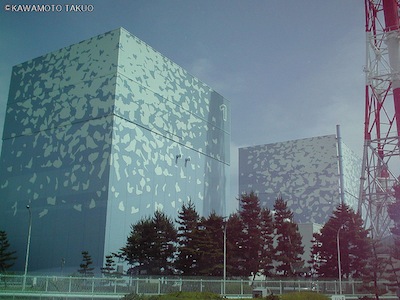
Japan Consumers May Bail Out Nuke Plant Owner

MSNBC – Japanese consumers would be on the hook for nuclear damage payments and earthquake reconstruction costs under two tax plans the government is considering, officials said Tuesday.

The Kyodo News agency said one plan would raise electricity customers’ charges to help cover claims against Tokyo Electric Power Co. from people who suffer losses from the crisis at the Fukushima Dai-ichi nuclear power plant. The increase would come in the form of a higher electricity source-development tax, which is collected from customers as part of their electricity bills.

TEPCO must pay people forced to evacuate from the region surrounding the nuclear plant, but officials said the power company may not be able to pay all the claims.

“While TEPCO will be primarily responsible for damages payments, the government may have to support the firm,” Economy, Trade and Industry Minister Banri Kaieda told a press conference Tuesday. “We are considering taxation, the electricity charge and other measures to enable the government to shoulder some of the burden.”

A second plan would raise to 8 percent Japan’s current 5 percent consumption tax for about three years, Kyodo said. The extra $273 billion ($22.5 trillion yen) would pay for reconstruction of the country’s northeastern region, said senior lawmakers in the Democratic Pary of Japan.

The March 11 earthquake and ensuing tsunami caused about $300 billion in damage, experts have estimated.

Read full article on Japan Consumers May Bail Out Nuke Plant Owner

© 2011 MSNBC

Photo by flickr user hige2

EPA Plan to Raise Radiation Limits Sparks Debate

April 19th 2011

INSTITUTE FOR SOUTHERN STUDIES – The U.S. Environmental Protection Agency is considering dramatically increasing the allowable level of radioactive contamination in water, food and soil after radiological incidents such as spills or “dirty bomb” attacks.

The move preceded the nuclear disaster now unfolding in Japan in the wake of last month’s devastating earthquake and tsunami. Documents released today by the whistleblower group Public Employees for Environmental Responsibility show the plan has sparked concerns within EPA.

The agency’s Office of Radiation and Indoor Air (ORIA) has prepared an update of the 1992 “Protective Action Guides” for radiation exposure. Other EPA divisions have raised concerns about how much the new guidelines would raise allowable exposures.

As Charles Openchowski of EPA’s Office of General Counsel wrote in a January 2009 e-mail to ORIA:

“[T]his guidance would allow cleanup levels that exceed MCLs [Maximum Contamination Limits under the Safe Drinking Water Act] by a factor of 100, 1000, and in two instances 7 million and there is nothing to prevent those levels from being the final cleanup achieved (i.e., it’s not confined to immediate response of emergency phase).”

Other EPA officials have raised concerns that drinking water containing radioactive contamination at the proposed limits would result in acute health effects such as vomiting and fever. PEER obtained the internal EPA e-mails after filing a lawsuit last fall under the Freedom of Information Act. It is still waiting for the agency to turn over thousands more communications.

Read full article on EPA Plan to Raise Radiation Exposure Limits Sparks Debate.

 © Copyright 2011 by the Institute for Southern Studies

Photo by flickr user Evil Cheese Scientist

Michigan: Police Search Cell Phones During Traffic Stops

THETRUTHABOUTCARS– The Michigan State Police have a high-tech mobile forensics device that can be used to extract information from cell phones belonging to motorists stopped for minor traffic violations. The American Civil Liberties Union (ACLU) of Michigan last Wednesday demanded that state officials stop stonewalling freedom of information requests for information on the program.

ACLU learned that the police had acquired the cell phone scanning devices and in August 2008 filed an official request for records on the program, including logs of how the devices were used. The state police responded by saying they would provide the information only in return for a payment of $544,680. The ACLU found the charge outrageous.

“Law enforcement officers are known, on occasion, to encourage citizens to cooperate if they have nothing to hide,” ACLU staff attorney Mark P. Fancher wrote. “No less should be expected of law enforcement, and the Michigan State Police should be willing to assuage concerns that these powerful extraction devices are being used illegally by honoring our requests for cooperation and disclosure.”

Read more about Michigan: Police Search Cell Phones During Traffic Stops.

© 2011 TheNewsPaper.com

Photo by flickr user Oracio Alvarado

US Ranks 9th to Last in Social Spending

April 19,2011

BUSINESS INSIDER In the U.S. debate on social spending and entitlements, it’s important to remember that we spend more than some and less than most.

In fact, we’re ninth from the bottom of the OECD‘s 34 listed countries in social spending as a share of the economy. 

Ireland is above us and Australia below.

Following is a list of the 14 greatest social spenders included in the OECD’s rankings.

Continue reading about US Ranks 9th to Last in Social Spending.

© 2011 BUSINESS INSIDER

Photo by flickr user Boasorte Careca