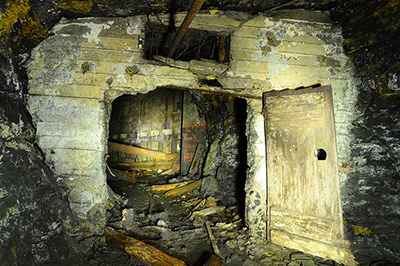
Obama Strikes Out on Global Warming

SALON– In our globalized world, old-fashioned geography is not supposed to count for much: mountain ranges, deep-water ports, railroad grades — those seem so nineteenth century. The earth is flat, or so I remember somebody saying.

But those nostalgic for an earlier day, take heart. The Obama administration is making its biggest decisions yet on our energy future and those decisions are intimately tied to this continent’s geography. Remember those old maps from your high-school textbooks that showed each state and province’s prime economic activities? A sheaf of wheat for farm country? A little steel mill for manufacturing? These days in North America what you want to look for are the pickaxes that mean mining, and the derricks that stand for oil.

There’s a pickaxe in the Powder River Basin of Montana and Wyoming, one of the world’s richest deposits of coal. If we’re going to have any hope of slowing climate change, that coal — and so all that future carbon dioxide — needs to stay in the ground. In precisely the way we hope Brazil guards the Amazon rainforest, that massive sponge for carbon dioxide absorption, we need to stand sentinel over all that coal.

Doing so, however, would cost someone some money. At current prices the value of that coal may be in the trillions, and that kind of money creates immense pressure. Earlier this year, President Obama signed off on the project, opening a huge chunk of federal land to coal mining. It holds an estimated 750 million tons worth of burnable coal. That’s the equivalent of opening 300 new coal-fired power plants. In other words, we’re talking about staggering amounts of new CO2 heading into the atmosphere to further heat the planet.

As Eric de Place of the Sightline Institute put it, “That’s more carbon pollution than all the energy — from planes, factories, cars, power plants, etc. — used in an entire year by all 44 nations in Central America, South America, and the Caribbean combined.”Not what you’d expect from a president who came to office promising that his policies would cause the oceans to slow their rise.

But if Obama has admittedly opened the mine gate, it’s geography to the rescue. You still have to get that coal to market, and “market” in this case means Asia, where the demand for coal is growing fastest. The easiest and cheapest way to do that — maybe the only way at current prices — is to take it west to the Pacific where, at the moment, there’s no port capable of handling the huge increase in traffic it would represent.

And so a mighty struggle is beginning, with regional groups rising to the occasion. Climate Solutions and other environmentalists of the northwest are moving to block port-expansion plans in Longview and Bellingham, Washington, as well as in Vancouver, British Columbia. Since there are only so many possible harbors that could accommodate the giant freighters needed to move the coal, this might prove a winnable battle, though the power of money that moves the White House is now being brought to bear on county commissions and state houses. Count on this: it will be a titanic fight.

Read the full article about Obama Strikes Out on Global Warming.

© 2011 Salon

Photo by Flickr group Abandoned Mines

Former World Leaders Say ‘Decriminalize Marijuana’

RAW STORY– A group of prominent former world leaders said Wednesday the so-called war on drugs has “failed” and that decriminalizing marijuana may help curb drug-related violence and social ills.

“The global war on drugs has failed, with devastating consequences for individuals and societies around the world,” the members of the Global Commission on Drug Policy say in a report.

“Fifty years after the initiation of the UN Single Convention on Narcotic Drugs, and 40 years after President (Richard) Nixon launched the US government’s war on drugs, fundamental reforms in national and global drug control policies are urgently needed.”

And saying that restrictions on marijuana should be loosened, the report urged governments to “end the criminalization, marginalization and stigmatization of people who use drugs but who do no harm to others.”

The commission includes former Brazilian president Fernando Cardoso, former Colombian president Cesar Gaviria, Mexico’s former president Ernesto Zedillo and the ex-UN chief Kofi Annan. It presents its report officially on Thursday in New York.

Read full article about Former World Leaders Say ‘Decriminalize Marijuana’.

© 2011 Raw Story

Photo by Flickr user Torben Bjørn Hansen

Posted in Uncategorized | 1 Reply

NATO Airstrikes Hit Tripoli, Heaviest Bombing Yet

NPR– NATO warplanes bombarded targets in Tripoli with more than 20 airstrikes early Tuesday, striking around Moammar Gadhafi’s residential compound in what appeared to be the heaviest night of bombing of the Libyan capital since the Western alliance launched its air campaign against his forces.

The rapid string of strikes, all within less than half an hour, set off thunderous booms that rattled windows and sent heavy plumes of smoke over the city, including from an area close to Gadhafi’s sprawling Bab al-Aziziya compound.

Government spokesman Moussa Ibrahim said at least three people were killed and dozens wounded in NATO strikes that targeted what he described as buildings used by volunteer units of the Libyan army.

NATO said in a statement that a number of the strikes hit a vehicle storage facility adjacent to Bab al-Aziziya that has been used in supplying regime forces “conducting attacks on civilians.” It was not immediately clear if the facility was the only target hit in the barrage. Bab al-Azizya, which includes a number of military facilities, has been pounded repeatedly by NATO strikes.

As jets whooshed low over the city during the night, anti-aircraft fire crackled in response. People could be heard screaming and shouting outside a hotel where journalists are staying. Pro-Gadhafi loyalists beeped their car horns and fired guns, shouting their support for the Libyan leader.

Observers described the bombing as the heaviest attack on the Libyan capital since NATO began its air campaign on March 19 after the passage of a U.N. Security Council resolution to protect civilians after Gadhafi responded to the public uprising against his rule by unleashing his military and his militias.

NATO has been escalating and widening the scope of its strikes over the past weeks, hiking the pressure on Gadhafi, while the alliance’s members have built closer ties with the rebel movement that has control of the eastern half of Libya. On Monday, the highest-ranking U.S. diplomat in the Middle East, Jeffrey Feltman, was in the de facto rebel capital of Benghazi in a show of support.

Despite NATO bombing runs, the rebels have not been able to break Gadhafi’s grip on the west of the country, including the capital, Tripoli.

In a significant new deployment of firepower, France and Britain are bringing attack helicopters to use in the strikes in Libya as soon as possible, French Defense Minister Gerard Longuet said Monday.

The use of attack helicopters would appear to mark a new strategy for NATO, which has relied on strikes by fighter planes and seen that result in a stalemate on the ground as Gadhafi forces adapted, often turning to urban fighting to make such strikes more difficult.

Read full article about NATO Airstrikes Hit Tripoli, Heaviest Bombing Yet

© 2011 NPR

Photo by Flickr user turkairo

US, Pakistan Near Open War, China Warns

TARPLEY.NET– China has officially put the United States on notice that Washington’s planned attack on Pakistan will be interpreted as an act of aggression against Beijing. This blunt warning represents the first known strategic ultimatum received by the United States in half a century, going back to Soviet warnings during the Berlin crisis of 1958-1961, and indicates the grave danger of general war growing out of the US-Pakistan confrontation.

“Any Attack on Pakistan Would be Construed as an Attack on China”

Responding to reports that China has asked the US to respect Pakistan’s sovereignty in the aftermath of the Bin Laden operation, Chinese Foreign Ministry spokesperson Jiang Yu used a May 19 press briefing to state Beijing’s categorical demand that the “sovereignty and territorial integrity of Pakistan must be respected.” According to Pakistani diplomatic sources cited by the Times of India, China has “warned in unequivocal terms that any attack on Pakistan would be construed as an attack on China.” This ultimatum was reportedly delivered at the May 9 China-US strategic dialogue and economic talks in Washington, where the Chinese delegation was led by Vice Prime Minister Wang Qishan and State Councilor Dai Bingguo. [Reference] Chinese warnings are implicitly backed up by that nation’s nuclear missiles, including an estimated 66 ICBMs, some capable of striking the United States, plus 118 intermediate-range missiles, 36 submarine-launched missiles, and numerous shorter-range systems.

Support from China is seen by regional observers as critically important for Pakistan, which is otherwise caught in a pincers between the US and India: “If US and Indian pressure continues, Pakistan can say ‘China is behind us. Don’t think we are isolated, we have a potential superpower with us,’” Talat Masood, a political analyst and retired Pakistani general, told AFP. [Reference]

The Chinese ultimatum came during the visit of Pakistani Prime Minister Gilani in Beijing, during which the host government announced the transfer of 50 state-of-the-art JF-17 fighter jets to Pakistan, immediately and without cost. [Reference] Before his departure, Gilani had stressed the importance of the Pakistan-China alliance, proclaiming: “We are proud to have China as our best and most trusted friend. And China will always find Pakistan standing beside it at all times….When we speak of this friendship as being taller than the Himalayas and deeper than the oceans it truly captures the essence of our relationship.” [Reference] These remarks were greeted by whining from US spokesmen, including Idaho Republican Senator Risch.

The simmering strategic crisis between the United States and Pakistan exploded with full force on May 1, with the unilateral and unauthorized US commando raid alleged to have killed the phantomatic Osama bin Laden in a compound at Abottabad, a flagrant violation of Pakistan’s national sovereignty. The timing of this military stunt designed to inflame tensions between the two countries had nothing to do with any alleged Global War on Terror, and everything to do with the late March visit to Pakistan of Prince Bandar, the Saudi Arabian National Security Council chief. This visit had resulted in a de facto alliance between Islamabad and Riyadh, with Pakistan promising troops to put down any US-backed color revolution in the kingdom, while extending nuclear protection to the Saudis, thus making them less vulnerable to US extortion threats to abandon the oil-rich monarchy to the tender mercies of Tehran. A joint move by Pakistan and Saudi Arabia to break out of the US empire, whatever one may think of these regimes, would represent a fatal blow for the fading US empire in South Asia.

As for the US claims concerning the supposed Bin Laden raid of May 1, they are a mass of hopeless contradictions which changes from day to day. An analysis of this story is best left to literary critics and writers of theatrical reviews. The only solid and uncontestable fact which emerges is that Pakistan is the leading US target — thus intensifying the anti-Pakistan US policy which has been in place since Obama’s infamous December 2009 West Point speech.

Obama Has Already Approved Sneak Attack on Pakistan’s Nukes

According to the London Sunday Express, Obama has already approved an aggressive move along these lines: “US troops will be deployed in Pakistan if the nation’s nuclear installations come under threat from terrorists out to avenge the killing of Osama Bin Laden… The plan, which would be activated without President Zardari’s consent, provoked an angry reaction from Pakistan officials… Barack Obama would order troops to parachute in to protect key nuclear missile sites. These include the air force’s central Sargodha HQ, home base for nuclear-capable F-16 combat aircraft and at least 80 ballistic missiles.” According to a US official, “The plan is green lit and the President has already shown he is willing to deploy troops in Pakistan if he feels it is important for national security.” [Reference]

Extreme tension over this issue highlights the brinksmanship and incalculable folly of Obama’s May 1 unilateral raid, which might easily have been interpreted by the Pakistanis as the long-awaited attack on their nuclear forces. According to the New York Times, Obama knew very well he was courting immediate shooting war with Pakistan, and “insisted that the assault force hunting down Osama bin Laden last week be large enough to fight its way out of Pakistan if confronted by hostile local police officers and troops.”

Read the full article about US, Pakistan Near Open War

Written by Webster G. Tarpley, Ph.D.

© 2011 Tarpley.net

Photo by Flickr user Coda2

A War Powers Challenge to Obama’s Libya Project

COMMON DREAMS– President Obama failed to seek a declaration of war before ordering U.S. attacks on Libya. Now, he faces a challenge under the War Powers Resolution.

By any reasonable reading of the Constitution, that was a violation of the provision in the founding document that requires the executive to attain authorization from Congress before launching military adventures abroad. But presidents have skirted that requirement in recent decades by claiming that the 1973 War Powers Resolution — an act originally intended to constrain presidential warmaking — affords them the freedom to fight first and consult Congress later.

The War Powers Resolution, enacted in the late stages of the Vietnam War over a veto by President Richard Nixon, requires the commander in chief to notify Congress within 48 hours of committing armed forces to military action that he or she determines is necessary in the face of  “a national emergency created by attack upon the United States, its territories or possessions, or its armed forces.” The resolution also forbids armed forces from remaining in action for more than 60 days without congressional authorization of the use of military force.

That’s not supposed to be a blank check from White House wars of whim, even if successive presidents have relied on self-serving interpretations of the law to lauch and maintain military endeavors.

Read the full article about A War Powers Challenge to President Obama’s Libya Project

© 2011 Common Dreams

Article originally appear in The Nation

NATO’s campaign in Libya rumbles on, two months after it started. The U.S., which led the operation, is still highly engaged without official consent from Congress. According to the Constitution, America’s military action over Libya is now illegal. But as RT’s Lauren Lyster reports, few on Capitol Hill seem concerned.

Photo by Flickr user state_library_south_australia