


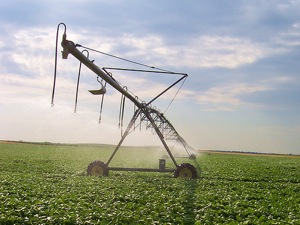
 MEDIA ROOTS — Seeds are at the very core of the public commons as the first link in an essential food chain. Throughout the 20th century, the agricultural biotech giant Monsanto perverted intellectual property laws to corner the world’s seed supply.
By allowing the food supply to be attached to the bottom line of a corporation, the world places its future in the hands of a corrupt few. Abby Martin of Media Roots and RT explores the multinational corporation’s sordid past of corruption and toxicity and their current scandalous dealings.
Abby Martin reports on Monsanto’s corruption and current dealings for RT TV
***
Abby Martin explores Monsanto’s scandalous legacy in depth for RT TV
The Monsanto Corporation has a nefarious public record that extends beyond the genetically modified seed industry. It is responsible for the controversial artificial sweeteners saccharin and aspartame that are used in more than 6,000 consumer foods and beverages; dioxin based herbicides like 245-T/24-D (Agent Orange) that directly killed and maimed millions of Vietnamese; banned pesticides such as dichlorodiphenyltrichloroethane (DDT) responsible for the death of millions of marine animals, birds of prey and amphibians; deadly polychlorinated biphenyl (PCB) discharged into rivers and landfills at the expense of human health; and Bovine Growth Hormone (BGH) to unnaturally increase the milk yield in lactating cows.
In particular, the American legacy of PCBs is horrifying as witnessed by Pittsfield, Massachusetts when locals were given PCB-contaminated material to use as fill. General Electric released millions of pounds of PCB-contaminated waste from capacitor manufacturing plants in the Hudson River. In North Carolina, 240 miles of road was sprayed with more than 30,000 pounds of PCB-contaminated oil, during the infamous “midnight dumping.” Finally, in Anniston, Alabama, the site of a Monsanto chemical factory for 50 years was exposed as the most toxic city in America after it was discovered Monsanto had been dumping high concentrations of PCBs into local tributaries.
This blatant poisoning of the public commons as massive and wicked as it seems pales in comparison to allowing a company with this sort of record to control and modify the food supply. Monsanto expanded its share of the worlds seed supply with its $1.4 billion acquisition of Seminis Incorporated, the world’s largest developer, grower and marketer of fruit and vegetable seeds in 2005. Two years later, Monsanto purchased the Delta and Pine Land Company for $1.5 billion, staking its position as a major player in the cotton seed business and the demonic terminator gene designed to increase farmer dependency on seed suppliers. Additionally, the corporation also purchased the Dutch De Ruiter Seed company to establish itself alongside DuPont as the world’s largest supplier of seeds.
In addition to the sick and dying humans, animals and plants in the wake of Monsanto’s bottom line, the company has a legacy of legal troubles across the globe. Suing and being sued is merely a business expense to be countered by penetrating political and regulatory systems. Former Monsanto employees are firmly entrenched in the US Food and Drug Administration (FDA), the US Environmental Protection Agency (EPA) and even the Supreme Court. Supreme Court justice Clarence Thomas, a former Monsanto attorney, ruled in favor of genetically modified crops in the J. E. M. Ag Supply, Inc. v. Pioneer Hi-Bred International, Inc. case. Linda Fisher rotated from EPA bureaucrat, to Vice President of Monsanto, to Vice President of DuPont. Michael Taylor was an FDA commissioner, Monsanto attorney and recently passed backed through the revolving door as President Barack Obama’s Food Safety Czar in the FDA.
Monsanto maintains a stranglehold on the American government by deploying lobbyists to coerce legislators into doing what regulators cannot. This includes an emphasis on resisting the overwhelming public cry to label genetically modified foods, avoid responsibility for colony collapse disorder wreaking havoc on global bee populations and deterrence of any effort to institute independent government led testing of genetically modified seeds and food. While Monsanto maintains a motto of “Improving Agriculture, Improving Lives,” its true intentions were summed up by Monsanto’s director of corporate communication Phil Angell in 1998 when he explained, “Monsanto should not have to vouch for the safety of biotech food. Our interest is in selling as much of it as possible. Assuring its safety is FDA’s job.”
Chris Martin for Media Roots
Photo by Flickr user foto 3116
 MEDIA ROOTS — The Cyber Intelligence Sharing and Protection Act (CISPA) is the next looming threat to internet freedom, as the American government continues its relentless siege of the digital domain. Coming on the heels of SOPA, PIPA and ACTA, CISPA sounds more like the final name in a quartet of lovable Disney characters as opposed to draconian internet legislation. However, this latest incarnation appears to be the internet’s biggest foe to date. If CISPA becomes law, the risk to civil liberties is greater than all the previous bills combined.