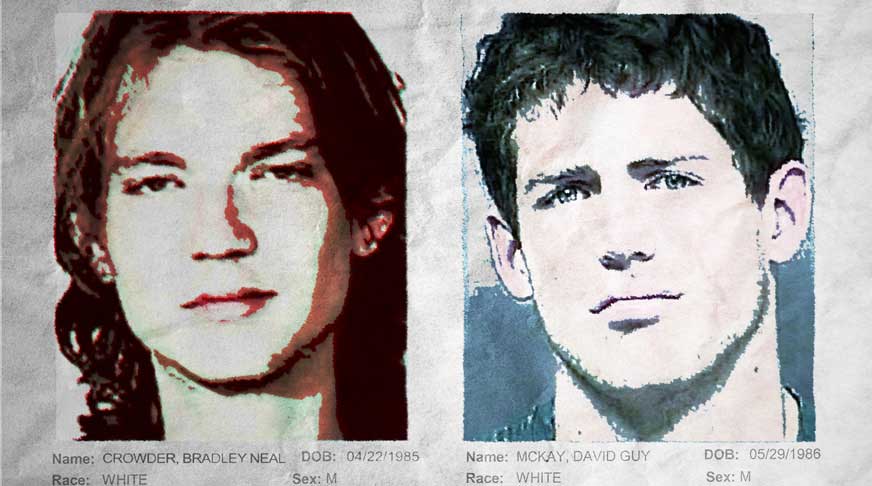
Monsanto Nation: Exposing Monsanto’s Minions

COMMONDREAMS – My expose last week, “The Organic Elite Surrenders to Monsanto: What Now?” has ignited a long-overdue debate on how to stop Monsanto’s earth killing, market-monopolizing, climate-destabilizing rampage. Should we basically resign ourselves to the fact that the Biotech Bully of St. Louis controls the dynamics of the marketplace and public policy? Should we seek some kind of practical compromise or “coexistence” between organics and Genetically Modified Organisms (GMOs)? Should we focus our efforts on crop pollution compensation and “controlled deregulation” of genetically engineered (GE) crops, rather than campaign for an outright ban, or mandatory labeling and safety-testing? Should we prepare ourselves for a future farm landscape where the U.S.’s 23 million acres of alfalfa, the nation’s fourth largest crop, (93% of which are currently not sprayed with toxic herbicides), including organic alfalfa, are sprayed with Roundup and/or genetically polluted with Monsanto’s mutant genes?
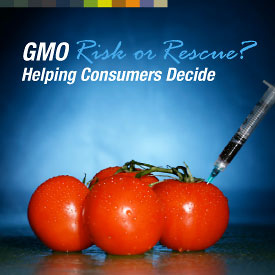
Or should we stand up and say Hell No to Monsanto and the Obama Administration? Should we stop all the talk about coexistence between organics and GMOs; unite Millions Against Monsanto, mobilize like never before at the grassroots; put enormous pressure on the nation’s grocers to truthfully label the thousands of so-called conventional or “natural” foods containing or produced with GMOs; and then slowly but surely drive GMOs from the market?

Of course “coexistence” and “controlled deregulation” are now irrelevant in regard to Monsanto’s herbicide-resistant alfalfa.  Just after my essay was posted last week, the White House gave marching orders to the USDA to allow Monsanto and its Minions to plant GE Roundup-resistance alfalfa on millions of acres, from sea to shining sea, with no restrictions whatsoever.

“Bill Tomson and Scott Kilman of the Wall Street Journal reported that Vilsack’s rejection of a compromise proposal – partial deregulation, which was vehemently opposed by biotech companies and only tepidly accepted by non-GE interests – was the result of an Obama administration review of “burdensome” regulations.”

“Sources familiar with the negotiations at USDA, who preferred to remain anonymous, told Food Safety News they believe the White House asked Vilsack to drop proposed regulations so the administration would appear more friendly to big business.”   – Helena Bottemiller, Food Safety News

This post-holiday gift to Monsanto from the White House is ominous. After the deliberate contamination of 20 million acres of U.S. alfalfa, we can then expect Monsanto and corporate agribusiness to call for GMOs to be allowed under the National Organic Standards. But of course let us hope we get another temporary reprieve from the same federal judge in California who halted the planting of GE alfalfa previously, since the USDA has still failed to demonstrate in their current Environmental Impact Statement that Monsanto’s alfalfa is safe for the environment.

Organic Infighting

Whole Foods and others spent a lot of time this week on their blogs and on the Internet attacking me and the Organic Consumers Association for supposedly mischaracterizing their position on “coexistence” with Monsanto. In an internal company memorandum, marked “For Internal Use Only – Do Not Distribute” January 30, 2011, Whole Foods execs basically told their employees that the OCA is spreading lies to “uniformed consumers” in exchange for money and publicity. Quoting directly from the WFM company memo:

“Why is the OCA spreading misinformation? That’s a hard question for us to answer. Perhaps because we don’t share their narrow view of what it means to support organics, or perhaps because we do not support them with donations. Either way, it’s a shame that an organization that claims to “campaign for health, justice and sustainability” can’t simply tell the truth. This just confuses consumers. Despite all their noise, no industry leaders listen to the OCA – but uninformed consumers might. Their fear-mongering tactics, combined with the OCA’s lack of transparency about its funding sources, underscore the fact that it is neither credible nor trustworthy. We can only assume their activities are intended for further fund-raising.”

After bashing the OCA, Whole Foods then goes on to admit that WFM stores are filled with conventional and “natural” products that are contaminated with GMOs (they neglect to mention to their staff that these conventional and “natural” products make up approximately 2/3 of WFM’s total sales). Again quoting directly:

“The reality is that no grocery store in the United States, no matter what size or type of business, can claim they are GE-free. While we have been and will continue to be staunch supporters of non-GE foods, we are not going to mislead our customers with an inaccurate claim (and you should question anyone who does). Here’s why: the pervasive planting of GE crops in the U.S. and their subsequent use in our national food supply.  93% of soy, 86% of corn, 93% of cotton, and 93% of canola seed planted in the U.S. in 2010 were genetically engineered. Since these crops are commonly present in a wide variety of foods, a GE-free store is currently not possible in the U.S. (unless the store sells only organic foods.)”

But of course we are not asking WFM to lie to or “mislead” their customers, to claim that all their products are GMO-free, or to sell only organically certified foods. On the contrary, we are simply asking them to abandon the “business as usual” industry practice of remaining silent on the scope and degree of contamination in the billions of dollars of non-organic food they are selling to unwitting consumers every year. What we are asking is that WFM ethically lead the way – in what is now a very unethical marketplace – by admitting publicly (not just in an internal memo) that a major portion of the non-organic foods they are selling (especially processed foods and animal products) are contaminated with GMOs. Then we want them to take the next step and announce that they will start labeling these GMO and/or CAFO foods truthfully, meanwhile pressuring their non-organic food suppliers to either reformulate products with non-GMO ingredients or start making the transition to organic.

Let us hope that WFM eventually does the right thing. It’s unlikely WFM will adopt Truth-in-Labeling unless they get a massive amount of pressure from their customers, workers, and natural food competitors. But if we can build a grassroots Movement strong enough to convince WFM and other natural food stores to adopt Truth-in-Labeling practices, there will be enormous pressure in the marketplace for other larger supermarket chains to follow suit. However, if WFM and other grocery stores refuse to voluntarily label GMO and CAFO products, OCA is prepared to mobilize nationwide to press for mandatory labeling ordinances at the city, county, and state level.

To sign up as a grassroots coordinator for OCA’s Millions Against Monsanto and Factory Farms Truth-in-Labeling Campaign go to: http://organicconsumers.org/oca-volunteer/

Beyond Organic Infighting

The good news this week is that WFM, Organic Valley, Stonyfield, the National Coop Grocers Association and the Organic Trade Association have been making strong statements about fighting against GMOs. In a lengthy telephone conversation two days ago with Organic Valley CEO George Sieman, George told me how angry he was at me and the OCA, but he also said that Organic Valley was going to step up the fight against Monsanto. I said I was glad to hear this. I told him that OCA was going to do the same. I told him that our Millions Against Monsanto Truth-in-Labeling campaign is already attracting thousands of volunteers all across the USA and that we weren’t going to give up until grocery stores, natural food stores, and coops start labeling conventional and “natural” products containing GMOs or coming from CAFOs.

We’ll certainly see Organic Valley and the rest of the organic industry’s pledge to fight GMOs put to the test in the near future, when the USDA unleashes genetically engineered sugar beets for nationwide planting. But given the need for a United Front, OCA would like to stress that Whole Foods Market is not the enemy. Wal-Mart and Monsanto are the enemy. Stonyfield Farm is not the enemy. The Biotechnology Industry Association, Archer Daniels Midland, and Cargill are the enemy. Organic Valley is not the enemy. The Grocery Manufacturers Association, Kraft and Dean Foods are the enemy. OCA wants the organic community to unite our forces, cut the bullshit about “coexistence,” and move forward with an aggressive campaign to drive GMOs and CAFOs off the market.

Monsanto’s Minions: The White House, Congress, and the Mass Media

The United States is rapidly devolving into what can only be described as a Monsanto Nation. Despite Barack Obama (and Hillary Clinton’s) campaign operatives in 2008 publicly stating that Obama supported mandatory labels for GMOs, we haven’t heard a word from the White House on this topic since Inauguration Day. Michele Obama broke ground for an organic garden at the White House in early 2009, but after protests from the pesticide and biotech industry, the forbidden “O” (Organic) word was dropped from White House PR.  Since day one, the Obama Administration has mouthed biotech propaganda, claiming, with no scientific justification whatsoever, that biotech crops can feed the world and enable farmers to increase production in the new era of climate change and extreme weather.

Like Obama’s campaign promises to end the wars in Iraq and Afghanistan; like his promises to bring out-of-control banksters and oil companies under control; like his promises to drastically reduce greenhouse gas pollution and create millions of green jobs; Obama has not come though on his 2008 campaign promise to label GMOs. His unilateral approval of Monsanto’s genetically engineered alfalfa, overruling the federal courts, scientists, and the organic community, offers the final proof: don’t hold your breath for this man to do anything that might offend Monsanto or Corporate America.

Obama’s Administration, like the Bush and Clinton Administrations before him, has become a literal “revolving door” for Monsanto operatives. President Obama stated on the campaign trail in 2007-2008 that agribusiness cannot be trusted with the regulatory powers of government.

But, starting with his choice for USDA Secretary, the pro-biotech former governor of Iowa, Tom Vilsack, President Obama has let Monsanto and the biotech industry know they’ll have plenty of friends and supporters within his administration. President Obama has taken his team of food and farming leaders directly from the biotech companies and their lobbying, research, and philanthropic arms:

Michael Taylor, former Monsanto Vice President, is now the FDA Deputy Commissioner for Foods. Roger Beachy, former director of the Monsanto-funded Danforth Plant Science Center, is now the director of the USDA National Institute of Food and Agriculture. Islam Siddiqui, Vice President of the Monsanto and Dupont-funded pesticide-promoting lobbying group, CropLife, is now the Agriculture Negotiator for the US Trade Representative. Rajiv Shah former agricultural-development director for the pro-biotech Gates Foundation (a frequent Monsanto partner), served as Obama’s USDA Under-Secretary for Research Education and Economics and Chief Scientist and is now head of USAID. Elena Kagan, who, as President Obama’s Solicitor General, took Monsanto’s side against organic farmers in the Roundup Ready alfalfa case, is now on the Supreme Court. Ramona Romero, corporate counsel to DuPont, has been nominated by President Obama to serve as General Counsel for the USDA.

Of course, America’s indentured Congress is no better than the White House when it comes to promoting sane and sustainable public policy. According to Food and Water Watch, Monsanto and the biotech industry have spent more than half a billion dollars ($547 million) lobbying Congress since 1999. Big Biotech’s lobby expenditures have accelerated since Obama’s election in 2008. In 2009 alone Monsanto and the biotech lobby spent $71 million. Last year Monsanto’s Minions included over a dozen lobbying firms, as well as their own in-house lobbyists.

America’s bought-and-sold mass media have likewise joined the ranks of Monsanto’s Minions. Do a Google search on a topic like citizens’ rights to know whether our food has been genetically engineered or not, or on the hazards of GMOs and their companion pesticide Roundup, and you’ll find very little in the mass media. However, do a Google search on the supposed benefits of Monsanto’s GMOs, and you’ll find more articles in the daily press than you would ever want to read.

Although Congressman Dennis Kucinich (Democrat, Ohio) recently introduced a bill in Congress calling for mandatory labeling and safety testing for GMOs, don’t hold your breath for Congress to take a stand for truth-in-labeling and consumers’ right to know what’s in their food. In a decade of Congressional lobbying, the OCA has never seen more than 24 out of 435 Congressional Representatives co-sponsor one of Kucinich’s GMO labeling bills. Especially since the 2010 Supreme Court decision in the outrageous “Citizens United” case gave big corporations like Monsanto the right to spend unlimited amounts of money (and remain anonymous, as they do so) to buy elections, our chances of passing federal GMO labeling laws against the wishes of Monsanto and Food Inc. are all but non-existent. Keep in mind that one of the decisive Supreme Court swing votes in the “Citizen’s United’ case was cast by the infamous Justice Clarence Thomas, former General Counsel for Monsanto.

To maneuver around Monsanto’s Minions in Washington we need to shift our focus and go local. We’ve got to concentrate our forces where our leverage and power lie, in the marketplace, at the retail level; pressuring retail food stores to voluntarily label their products; while on the legislative front we must organize a broad coalition to pass mandatory GMO (and CAFO) labeling laws, at the city, county, and state levels. And while we’re doing this we need to join forces with the growing national movement to get corporate money out of politics and the media and to take away the fictitious “corporate personhood” (i.e. the legal right of corporations to have all the rights of human citizens, without the responsibility, obligations, and liability of real persons) of Monsanto and the corporate elite.

Monsanto’s Minions: Frankenfarmers in the Fields

The unfortunate bottom line is that most of the North American farmers who have planted Monsanto’s Roundup-resistant or Bt-spliced crops (soybeans, corn, cotton, canola, sugar beets, or alfalfa) are either brain-washed, intimidated (Monsanto has often contaminated non-GMO farmers crops and then threatened to sue them for “intellectual property violations” if they didn’t sign a contract to buy GMO seeds and sign a confidentiality contract to never talk to the media), or ethically challenged. These “commodity farmers,” who receive billions of dollars a year in taxpayer subsidies to plant their Frankencrops and spray their toxic chemicals and fertilizers, don’t seem to give a damn about the human health hazards of chemical, energy, and GMO-intensive agriculture; the cruelty, disease and filth of Factory Farms or CAFOs; or the damage they are causing to the soil, water, and climate. Likewise they have expressed little or no concern over the fact that they are polluting the land and the crops of organic and non-GMO farmers.

Unfortunately, these Frankenfarmers, Monsanto’s Minions, have now been allowed to plant GMO crops on 150 million acres, approximately one-third of all USA cropland. With GE alfalfa they’ll be planting millions of acres more.

Click to continue reading about Monsanto Nation.

Article by Ronnie Cummins, National Director for the Organic Consumers Association.

© COPYRIGHT COMMONDREAMS.ORG, 2011

Image by Ashoka’s Changemakers
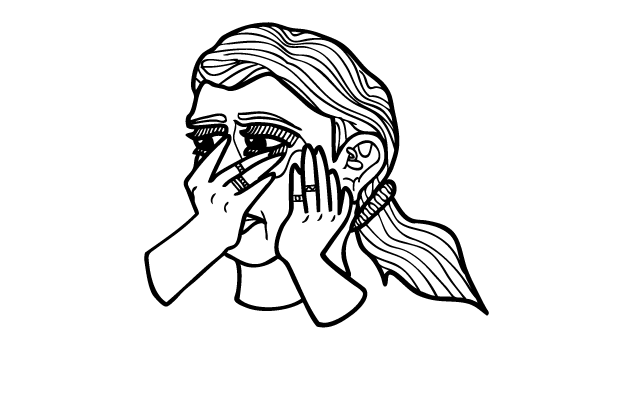
MR Exclusive – Where is Your Disbelief?


where is your disbelief?

suppose you were to know,
all those lies you’ve been told.
then maybe this shock,
this latest disaster,
might break
your
dis
belief.


i came across an editorial photo capturing a woman, hand to cheek, eyes venetian, at the scene of some unfortunate event. she was unable to believe that the horror before her was real. but her eyes partially covered ensured that her eyes were witness to the events unfolding.

i then thought of all the truth and reality we experience on a daily basis and the lack of disbelief at what is happening in front of us. i wanted to know where the anger, frustration, shock and sense of justice was in my fellow americans.

i’m still looking for that disbelief, that critical thinking combined with the collective consciousness to bring us beyond the current paradigm of exploitation, division and atomization.


by rickpickett

Posted in Uncategorized | 1 Reply

MR Original – Some Better This World Through Film

MEDIA ROOTS – The ability to combine audio and visuals to tell a compelling narrative makes documentary films a powerful means of storytelling. They are education through entertainment and, at their best, a persuasive and motivating push to action. It is no surprise that the Bay Area, teeming with political and artistic thought, is a documentary film capitol of the world. As an aspiring documentarian, encouraged by the learning potential from this rich network, I began seeking out insight from local filmmakers.

Following a tip from a friend, I came across Better This World – a film in post-production about two young men from Midland, Texas who are facing multiple domestic terrorism charges after manufacturing and bringing Molotov cocktails, or petrol bombs, to the 2008 Republican National Convention. What drew me into the story, and the filmmakers themselves, was the government’s star witness in the case – a controversial and unsuspected FBI informant.

Many of the stories behind the ‘foiled’ terrorist plots of the past few years share in common the trend of an undercover paid FBI informant that often times held a facilitating role in the group– a detail that frequently goes missing from mainstream media reports. (You can find more information on a few of these cases here, here and here.) Knowing this, I became eager to speak with the filmmakers who are taking on such an important and overlooked story.

Loteria Films, the local non-profit production company behind the film, is run by two women, Kelly Duane de la Vega and Katie Galloway. Kelly’s background in still photography and photojournalism, and Katie’s, in radio and print journalism, drew both women to film for what it could accomplish by blending these mediums.

When we met, Kelly recounted the restriction she felt in conveying people’s amazing personal stories as a photographer. “I think there are photographers whose photographs blow my mind, even more than a story. But I wasn’t feeling that about mine. I became so hungry for people to know the story. I knew there was another step.“

For Katie, filmmaking was a natural progression out of her love for working with audio and the depth and intimacy it brought to storytelling. While apprenticing at Frontline under documentarian, Ofra Bickle, criminal justice became her passion.
It was a blurb that Katie found in the Federal Court section of the New York Times that set the two women in pursuit of their first film together. Katie believed the story of two young men facing terrorism charges against the word of an FBI informant was a “really sexy, boiled down way into a story that is my life work so far – examining the criminal justice system and the problems with it.”

The trial was starting a week later, leaving not a moment for second-guessing.

“You say ‘I’m never going to do this on my credit card again. I’m never going to just start spending my own money again.’ But no one is going to give you money in a week’s turn around,” Katie explained with a smile reflecting love for the thrill and risk of chasing a good story. “It’s a gamble, its like going to Vegas.”

Better This World presents tough questions about the balance between liberty and safety in the face of post 9/11 domestic security. “The common thread in many of these [foiled terrorism] cases is some sort of political aspiration and an informant or a government agent who they hook up with and spend a lot of time with, and then at other end, the terrorism case. The question is what happened? Was it entrapment?”

Somewhat tongue-in-cheek Katie went on to ask, “What happens when you have so many resources going into the domestic security apparatus and not necessarily enough terrorists to go around?”

“In the FBI they call it ‘aspirational and not necessarily operational’,” she added.

In a recent interview by Reuters, filmmaker and award winning journalist, John Pilger described a mindset of reporters that says, “only authority can really determine the ‘truth on the news’,” and which leads to a dangerous form of embedding in government and official versions of events.  “Authority has its place, but the skepticism about authority must be ingrained in people,” he said.

And so it seems to be among documentarians.

It is the often skeptical and critical voice of documentary film that has shaped its long and growing legacy of critiquing the status quo while motivating people to educate themselves and take action.

Filmmakers do not face the same time constraints that can lead print and broadcast journalists to regurgitate the press releases handed to them by government, military and business leaders. Instead, they use a richly layered medium to tell the deeper story that hasn’t been told before, or to tell it differently. “Otherwise, what’s the point?” asked Katie.

Kelly pointed to the lack of a concrete power structure, or system, for documentaries to pander to.  “There isn’t a central authority figure in documentary filmmaking. There isn’t a central voice. There isn’t an outlet that is determining what we get to see and don’t get to see – except for PBS and HBO and A&E, but there are ways to get your film out if you are not in those venues.

In some ways it is a much more democratic universe than mainstream journalism. We’re already so far out of the system in some ways.”

One consequence of being outside of the ‘system’ is the struggle of fundraising. As an educational nonprofit, Loteria Films can apply for grants. It has been fortunate for the support it has received so far – the Independent Television Service, the biggest grant maker nationally for documentary films, is funding Loteria’s current project but only funds 1-2% of projects that come in its door.

“When you look at all the labor and heart and soul and money that goes into independent projects and the struggle…” Katie reflected.

“We went a year and a half with very little funding. You know, begging, borrowing and stealing. That’s really the life of an independent unless you’ve made it and have money coming in regularly for projects. We’re not there yet. We’ve been really lucky raising money through grants and so forth.”

But, funding is only part of the equation. Kelly attributes the success of the partnership to their base of trust and respect, calling it the “bedrock” of their collaboration.

“When the other person is talking you know that you respect the way they think as a creative person and as a story teller. So, if they are challenging your idea it is something you have to listen to because it very well might be right. When you and your partner are both able to do that for one another it deepens your respect and base trust.”

Comparing the partnership positively to a marriage Kelly added, “It’s a long intimate journey. Its pretty damn intense – you are really committing so much to each other.”

When I asked what advice the activist filmmakers had for aspiring documentarians, Kelly’s words resonated with my pull to the medium.

“I feel like there are certain people who don’t have a choice in life, who just are going to do something creative whether it makes good sense or not…I think you have to have something inside of you that is somewhat predetermining your fate, that is driving you, that is making you choose something that is difficult. You can’t be materialistic. You have to be the kind of person that gets pride from the good their work does, or the quality and pleasure of their work.”

Just as Katie had, Kelly was sure not to gloss over the financial struggles that, more often than not, accompany the production of an independent film, while highlighting that flexibility is key in overcoming those challenges.

“Sometimes you might have to take a commercial job and that sucks because it might not be at the core of where your values are. But unless you are from a financial situation where you aren’t forced to have that choice I think you have to be okay with that – moving in and out of those worlds to tell a bigger, larger more important story. You have to figure out how to keep yourself viable so you can raise the seed money to do the thing that matters.

You just have to go for it and at the end of the journey you know whether you can do it again. Whether it was great or if it was too hard.”


Better This World
will be premiering at SXSW in March. Stay tuned to Loteria Films for an upcoming trailer of the film.


Article by alicia roldán, editor for Media Roots

Image © Copyright of Loteria Films

MR Original – Some Better This World Through Film

MEDIA ROOTS – The ability to combine audio and visuals to tell a compelling narrative makes documentary films a powerful means of storytelling. They are education through entertainment and, at their best, a persuasive and motivating push to action. It is no surprise that the Bay Area, teeming with political and artistic thought, is a documentary film capitol of the world. As an aspiring documentarian, encouraged by the learning potential from this rich network, I began seeking out insight from local filmmakers.

Following a tip from a friend, I came across Better This World – a film in post-production about two young men from Midland, Texas who are facing multiple domestic terrorism charges after manufacturing and bringing Molotov cocktails, or petrol bombs, to the 2008 Republican National Convention. What drew me into the story, and the filmmakers themselves, was the government’s star witness in the case – a controversial and unsuspected FBI informant.

Many of the stories behind the ‘foiled’ terrorist plots of the past few years share in common the trend of an undercover paid FBI informant that often times held a facilitating role in the group– a detail that frequently goes missing from mainstream media reports. (You can find more information on a few of these cases here, here and here.) Knowing this, I became eager to speak with the filmmakers who are taking on such an important and overlooked story.

Loteria Films, the local non-profit production company behind the film, is run by two women, Kelly Duane de la Vega and Katie Galloway. Kelly’s background in still photography and photojournalism, and Katie’s, in radio and print journalism, drew both women to film for what it could accomplish by blending these mediums.

When we met, Kelly recounted the restriction she felt in conveying people’s amazing personal stories as a photographer. “I think there are photographers whose photographs blow my mind, even more than a story. But I wasn’t feeling that about mine. I became so hungry for people to know the story. I knew there was another step.“

For Katie, filmmaking was a natural progression out of her love for working with audio and the depth and intimacy it brought to storytelling. While apprenticing at Frontline under documentarian, Ofra Bickle, criminal justice became her passion.
It was a blurb that Katie found in the Federal Court section of the New York Times that set the two women in pursuit of their first film together. Katie believed the story of two young men facing terrorism charges against the word of an FBI informant was a “really sexy, boiled down way into a story that is my life work so far – examining the criminal justice system and the problems with it.”

The trial was starting a week later, leaving not a moment for second-guessing.

“You say ‘I’m never going to do this on my credit card again. I’m never going to just start spending my own money again.’ But no one is going to give you money in a week’s turn around,” Katie explained with a smile reflecting love for the thrill and risk of chasing a good story. “It’s a gamble, its like going to Vegas.”

Better This World presents tough questions about the balance between liberty and safety in the face of post 9/11 domestic security. “The common thread in many of these [foiled terrorism] cases is some sort of political aspiration and an informant or a government agent who they hook up with and spend a lot of time with, and then at other end, the terrorism case. The question is what happened? Was it entrapment?”

Somewhat tongue-in-cheek Katie went on to ask, “What happens when you have so many resources going into the domestic security apparatus and not necessarily enough terrorists to go around?”

“In the FBI they call it ‘aspirational and not necessarily operational’,” she added.

In a recent interview by Reuters, filmmaker and award winning journalist, John Pilger described a mindset of reporters that says, “only authority can really determine the ‘truth on the news’,” and which leads to a dangerous form of embedding in government and official versions of events.  “Authority has its place, but the skepticism about authority must be ingrained in people,” he said.

And so it seems to be among documentarians.

It is the often skeptical and critical voice of documentary film that has shaped its long and growing legacy of critiquing the status quo while motivating people to educate themselves and take action.

Filmmakers do not face the same time constraints that can lead print and broadcast journalists to regurgitate the press releases handed to them by government, military and business leaders. Instead, they use a richly layered medium to tell the deeper story that hasn’t been told before, or to tell it differently. “Otherwise, what’s the point?” asked Katie.

Kelly pointed to the lack of a concrete power structure, or system, for documentaries to pander to.  “There isn’t a central authority figure in documentary filmmaking. There isn’t a central voice. There isn’t an outlet that is determining what we get to see and don’t get to see – except for PBS and HBO and A&E, but there are ways to get your film out if you are not in those venues.

In some ways it is a much more democratic universe than mainstream journalism. We’re already so far out of the system in some ways.”

One consequence of being outside of the ‘system’ is the struggle of fundraising. As an educational nonprofit, Loteria Films can apply for grants. It has been fortunate for the support it has received so far – the Independent Television Service, the biggest grant maker nationally for documentary films, is funding Loteria’s current project but only funds 1-2% of projects that come in its door.

“When you look at all the labor and heart and soul and money that goes into independent projects and the struggle…” Katie reflected.

“We went a year and a half with very little funding. You know, begging, borrowing and stealing. That’s really the life of an independent unless you’ve made it and have money coming in regularly for projects. We’re not there yet. We’ve been really lucky raising money through grants and so forth.”

But, funding is only part of the equation. Kelly attributes the success of the partnership to their base of trust and respect, calling it the “bedrock” of their collaboration.

“When the other person is talking you know that you respect the way they think as a creative person and as a story teller. So, if they are challenging your idea it is something you have to listen to because it very well might be right. When you and your partner are both able to do that for one another it deepens your respect and base trust.”

Comparing the partnership positively to a marriage Kelly added, “It’s a long intimate journey. Its pretty damn intense – you are really committing so much to each other.”

When I asked what advice the activist filmmakers had for aspiring documentarians, Kelly’s words resonated with my pull to the medium.

“I feel like there are certain people who don’t have a choice in life, who just are going to do something creative whether it makes good sense or not…I think you have to have something inside of you that is somewhat predetermining your fate, that is driving you, that is making you choose something that is difficult. You can’t be materialistic. You have to be the kind of person that gets pride from the good their work does, or the quality and pleasure of their work.”

Just as Katie had, Kelly was sure not to gloss over the financial struggles that, more often than not, accompany the production of an independent film, while highlighting that flexibility is key in overcoming those challenges.

“Sometimes you might have to take a commercial job and that sucks because it might not be at the core of where your values are. But unless you are from a financial situation where you aren’t forced to have that choice I think you have to be okay with that – moving in and out of those worlds to tell a bigger, larger more important story. You have to figure out how to keep yourself viable so you can raise the seed money to do the thing that matters.

You just have to go for it and at the end of the journey you know whether you can do it again. Whether it was great or if it was too hard.”


Better This World
will be premiering at SXSW in March. Stay tuned to Loteria Films for an upcoming trailer of the film.


Article by alicia roldán, editor for Media Roots

Image © Copyright of Loteria Films

MR Original – Some Better This World Through Film

MEDIA ROOTS – The ability to combine audio and visuals to tell a compelling narrative makes documentary films a powerful means of storytelling. They are education through entertainment and, at their best, a persuasive and motivating push to action. It is no surprise that the Bay Area, teeming with political and artistic thought, is a documentary film capitol of the world. As an aspiring documentarian, encouraged by the learning potential from this rich network, I began seeking out insight from local filmmakers.

Following a tip from a friend, I came across Better This World – a film in post-production about two young men from Midland, Texas who face multiple domestic terrorism charges after manufacturing Molotov cocktails, or petrol bombs, at the 2008 Republican National Convention. What drew me into the story, and the filmmakers themselves, was the government’s star witness in the case – a controversial and unsuspected FBI informant.

Many of the stories behind the ‘foiled’ terrorist plots of the past few years share in common the trend of an undercover paid FBI informant that often times held a facilitating role in the group– a detail that frequently goes missing from mainstream media reports. (You can find more information on a few of these cases here, here and here.) Knowing this, I became eager to speak with the filmmakers who are taking on such an important and overlooked story.

Loteria Films, the local non-profit production company behind the film, is run by two women, Kelly Duane de la Vega and Katie Galloway. Kelly’s background in still photography and photojournalism, and Katie’s, in radio and print journalism, drew both women to film for what it could accomplish by blending these mediums.

When we met, Kelly recounted the restriction she felt in conveying people’s amazing personal stories as a photographer. “I think there are photographers whose photographs blow my mind, even more than a story. But I wasn’t feeling that about mine. I became so hungry for people to know the story. I knew there was another step.“

For Katie, filmmaking was a natural progression out of her love for working with audio and the depth and intimacy it brought to storytelling. While working at Frontline with documentarian, Ofra Bikel, Katie wrote and produced stories on criminal justice – a theme she also passionately explored for Pacifica Radio through coverage of the prison system and its excesses.

It was a blurb that Katie found in the Federal Court section of the New York Times that set the two women in pursuit of their first film together. Katie believed the story of two young men facing terrorism charges against the word of an FBI informant was a “really sexy, boiled down way into a story that is my life work so far – examining the criminal justice system and the problems with it.”

The trial was starting a week later, leaving not a moment for second-guessing.

“You say ‘I’m never going to do this on my credit card again. I’m never going to just start spending my own money again.’ But no one is going to give you money in a week’s turn around,” Katie explained with a smile reflecting love for the thrill and risk of chasing a good story. “It’s a gamble, its like going to Vegas.”

Better This World presents tough questions about the balance between liberty and safety in the face of post 9/11 domestic security. “The common thread in many of these [foiled terrorism] cases is some sort of political aspiration and an informant or a government agent who they hook up with and spend a lot of time with, and then at other end, the terrorism case. The question is what happened? Was it entrapment?” Katie went on to ask, “What happens when you have so many resources going into the domestic security apparatus and not necessarily enough terrorists to go around?”

“In the FBI they call it ‘aspirational and not necessarily operational’,” she added.

In a recent interview by Reuters, filmmaker and award winning journalist, John Pilger described a mindset of reporters that says, “only authority can really determine the ‘truth on the news’,” and which leads to a dangerous form of embedding in government and official versions of events.  “Authority has its place, but the skepticism about authority must be ingrained in people,” he said.

And so it seems to be among documentarians.

It is the often skeptical and critical voice of documentary film that has shaped its long and growing legacy of critiquing the status quo while motivating people to educate themselves and take action.

Filmmakers do not face the same time constraints that can lead print and broadcast journalists to regurgitate the press releases handed to them by government, military and business leaders. Instead, they use a richly layered medium to tell the deeper story that hasn’t been told before, or to tell it differently. “Otherwise, what’s the point?” asked Katie.

Kelly pointed to the lack of a concrete power structure, or system, for documentaries to pander to.  “There isn’t a central authority figure in documentary filmmaking. There isn’t a central voice. There isn’t an outlet that is determining what we get to see and don’t get to see – except for PBS and HBO and A&E, but there are ways to get your film out if you are not in those venues.

In some ways it is a much more democratic universe than mainstream journalism. We’re already so far out of the system in some ways.”

One consequence of being outside of the ‘system’ is the struggle of fundraising. As an educational nonprofit, Loteria Films can apply for grants. It has been fortunate for the support it has received so far – the Independent Television Service, the biggest grant maker nationally for documentary films, is funding Loteria’s current project but only funds 1-2% of projects that come in its door.

“When you look at all the labor and heart and soul and money that goes into independent projects and the struggle…” Katie reflected.

“We went a year and a half with very little funding. You know, begging, borrowing and stealing. That’s really the life of an independent unless you’ve made it and have money coming in regularly for projects. We’re not there yet. We’ve been really lucky raising money through grants and so forth.”

But, funding is only part of the equation. Kelly attributes the success of the partnership to their base of trust and respect, calling it the “bedrock” of their collaboration.

“When the other person is talking you know that you respect the way they think as a creative person and as a story teller. So, if they are challenging your idea it is something you have to listen to because it very well might be right. When you and your partner are both able to do that for one another it deepens your respect and base trust.”

Comparing the partnership positively to a marriage Kelly added, “It’s a long intimate journey. Its pretty damn intense – you are really committing so much to each other.”

When I asked what advice the activist filmmakers had for aspiring documentarians, Kelly’s words resonated with my pull to the medium.

“I feel like there are certain people who don’t have a choice in life, who just are going to do something creative whether it makes good sense or not…I think you have to have something inside of you that is somewhat predetermining your fate, that is driving you, that is making you choose something that is difficult. You can’t be materialistic. You have to be the kind of person that gets pride from the good their work does, or the quality and pleasure of their work.”

Just as Katie had, Kelly was sure not to gloss over the financial struggles that, more often than not, accompany the production of an independent film, while highlighting that flexibility is key in overcoming those challenges.

“Sometimes you might have to take a commercial job and that sucks because it might not be at the core of where your values are. But unless you are from a financial situation where you aren’t forced to have that choice I think you have to be okay with that – moving in and out of those worlds to tell a bigger, larger more important story. You have to figure out how to keep yourself viable so you can raise the seed money to do the thing that matters.

You just have to go for it and at the end of the journey you know whether you can do it again. Whether it was great or if it was too hard.”


Better This World
will be premiering at SXSW in March. Stay tuned to Loteria Films for an upcoming trailer of the film.


Article by alicia roldán, editor for Media Roots

Image © Copyright of Loteria Films

Posted in Uncategorized | 1 Reply