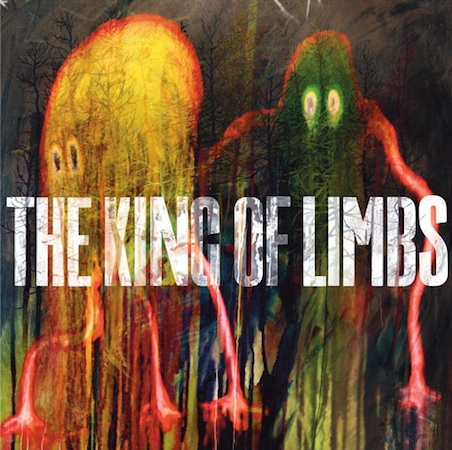
New Radiohead Album Coming This Week!

ANTIQUIET – Happy Valentine’s Day! On this special morning we’d like you to forget last night’s back-patting spectacle of mediocrity at the Grammys to familiarize you with a 1,000-year-old oak tree in Wiltshire’s Savernake Forest called The King of Limbs. Savvy fans are familiar with the tree, which was three miles away from where Radiohead recorded In Rainbows. What’s even more fascinating is that those crazy Brits are naming their new album after that tree.

Oh yeah, they’re also releasing it this Saturday. Yes, Radiohead’s eighth album is arriving on February 19th. Here are the details  from Thom Yorke & Co. via TheKingOfLimbs.com:

Radiohead’s new record, The King Of Limbs, is presented here as the world’s first Newspaper Album, comprising:

Two clear 10″ vinyl records in a purpose-built record sleeve. A compact disc. Many large sheets of artwork, 625 tiny pieces of artwork and a full-colour piece of oxo-degradeable plastic to hold it all together. The Newspaper Album comes with a digital download that is compatible with all good digital media players. The Newspaper Album will be shipped on Monday 9th May 2011 you can, however, enjoy the download on Saturday 19th February 2011. Shipping is included in the prices shown.

The King Of Limbs will also be presented with your choice of two digital formats: an MP3 version which is a 320K constant bit rate file, or a WAV version, which is a full CD quality uncompressed digital audio file.

One lucky owner of the digital version of The King Of Limbs, purchased from this website, will receive a signed 2 track 12″ vinyl.

The King oOf Limbs can be pre-ordered now and downloaded on Saturday 19th February 2011. A visit to TheKingOfLimbs.com brings up a world map, where users can click on the region in which they live. You are then taken to a pre-order screen where you can order the full physical package of the new album, or the digital-only version.

The Newspaper Album will run $48, while the digital album will cost only $9. The shipping date for The Newspaper Album is May 9th, 2011. The album will also be released as a 12″/CD on March 28th via XL (Europe), TBD (North America), and Hostess (Japan/Asia).

Can I get a Hell Yes? And what the fuck is a “Newspaper Album?”

By Johnny Firecloud for Antiquiet

© Copyright Antiquiet, 2011

Obama Suggests Mubarak Regime Didn’t Abuse Protesters

DEMOCRACY NOW! – Obama Suggests Mubarak Regime Didn’t “Shoot, Beat, Arrest” Protesters

On Tuesday, President Obama addressed the protests in Iran and across the Middle East at a news conference in Washington, D.C. Comparing the Iranian government’s crackdown on protesters with Egypt’s, Obama appeared to suggest the U.S.-backed Mubarak regime did not also try to violently repress the recent uprising.

President Obama: “What has been true in Egypt should be true in Iran, which is, is that people should be able to express their opinions and their grievances and seek a more responsive government. What’s been different is the Iranian government’s response, which is to shoot people and beat people and arrest people. And my hope and expectation is, is that we’re going to continue to see the people of Iran have the courage to be able to express their yearning for greater freedoms and a more representative government.”

Obama also defended his administration’s handling of the Egyptian uprising, claiming he wanted to avoid the appearance of meddling in pushing for a transition. But Obama refused to acknowledge that two top officials—Secretary of State Hillary Clinton and special envoy Frank Wisner—voiced support for Mubarak’s regime.

President Obama: “What we didn’t do was pretend that we could dictate the outcome in Egypt, because we can’t, so we were very mindful that it was important for this to remain an Egyptian event, that the United States did not become the issue, but that we sent out a very clear message that we believed in an orderly transition, a meaningful transition, and a transition that needed to happen not later, but sooner, and we were consistent on that message throughout.”

Democracy Now! also reports that as the Mideast “rolling revolution” grows, the U.S. dounces the Iranian crackdown, while remaining silent on the brutal repression and death of protestors in Bahrain, a key ally.


The transcript of this story can be found here: U.S. stays silent on key ally, Bahrain.

For more on the Bahrain crackdown, see the story by Democracy Now! – “People Are Bleeding in the Streets:” Bahrain Police Wage Brutal Overnight Attack on Hundreds of Pro-Democracy Protesters.

Check out Democracy Now! for more coverage of the Mideast ‘Rolling Revolution’.

© Copyright Democracy Now!, 2011

Obama Suggests Mubarak Gov Didn’t Abuse Protesters

DEMOCRACY NOW! – Obama Suggests Mubarak Regime Didn’t “Shoot, Beat, Arrest” Protesters

On Tuesday, President Obama addressed the protests in Iran and across the Middle East at a news conference in Washington, D.C. Comparing the Iranian government’s crackdown on protesters with Egypt’s, Obama appeared to suggest the U.S.-backed Mubarak regime did not also try to violently repress the recent uprising.

President Obama: “What has been true in Egypt should be true in Iran, which is, is that people should be able to express their opinions and their grievances and seek a more responsive government. What’s been different is the Iranian government’s response, which is to shoot people and beat people and arrest people. And my hope and expectation is, is that we’re going to continue to see the people of Iran have the courage to be able to express their yearning for greater freedoms and a more representative government.”

Obama also defended his administration’s handling of the Egyptian uprising, claiming he wanted to avoid the appearance of meddling in pushing for a transition. But Obama refused to acknowledge that two top officials—Secretary of State Hillary Clinton and special envoy Frank Wisner—voiced support for Mubarak’s regime.

President Obama: “What we didn’t do was pretend that we could dictate the outcome in Egypt, because we can’t, so we were very mindful that it was important for this to remain an Egyptian event, that the United States did not become the issue, but that we sent out a very clear message that we believed in an orderly transition, a meaningful transition, and a transition that needed to happen not later, but sooner, and we were consistent on that message throughout.”

Democracy Now! also reports that as the Mideast “rolling revolution” grows, the U.S. dounces the Iranian crackdown, while remaining silent on the brutal repression and death of protestors in Bahrain, a key ally.


The transcript of this story can be found here: U.S. stays silent on key ally, Bahrain.

For more on the Bahrain crackdown, see the story by Democracy Now! – “People Are Bleeding in the Streets:” Bahrain Police Wage Brutal Overnight Attack on Hundreds of Pro-Democracy Protesters.


Check out Democracy Now! for more coverage of the Mideast ‘Rolling Revolution’.


© Copyright Democracy Now!, 2011


MR Music – Rebel by Greg Fernandez Jr.

Building Seven Empty LotMEDIA ROOTS Greg Fernandez Jr. is a freelance song writer, performer, author, truth activist, researcher, and a member of We Are Change East Bay. Born and raised in the Bay Area of California, Greg has devoted his life to seeking truth and participating in social activism. His new CD, Made In The USA, has been inspired by the 9/11 tragedy and other acts of government sponsored terrorism.

Greg comes from a uniquely personal perspective. His father is a retired firefighter, and he has family and friends who have served in World War II, Vietnam, and Iraq. His passion and goals within the truth movement are ending the wars in Iraq and Afghanistan while preventing all future wars, ending the reign of the corrupt and unconstitutional Federal Reserve, and bringing about a new re-investigation into 9/11 (and JFK). Most of his music and books can be downloaded for free at Lulu.com and his books are also available for purchase at Barnes & Nobel and Amazon.

GF: This song is intended to inform people about the third building that fell on September 11, 2001 and to get them thinking about World Trade Center building seven in a more critical way. Now that we have the “Building What?” campaign, buildingwhat.org, I hope this song will keep the awareness of Building 7 at the forefront of this information war. I do not use vulgar language in my music, nor do I use any hate speech- my songs are meant for people of all ages to enjoy. This song is dedicated to those who believe in and seek truth. I don’t expect you to agree with me, but I thank you for listening.

To contact Greg Fernandez Jr. visit www.enzymedynamite.com/profile/GregFernandezJr

Photography by Robert Scoble

Corporate Control? Not in These Communities

YES! MAGAZINECan local laws have a real effect on the power of giant corporations?

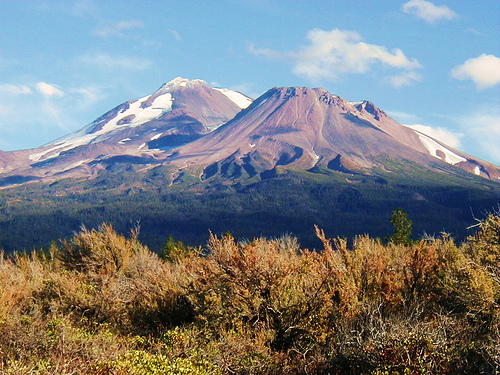
Mt. Shasta, a small northern California town of 3,500 residents nestled in the foothills of magnificent Mount Shasta, is taking on corporate power through an unusual process—democracy.

The citizens of Mt. Shasta have developed an extraordinary ordinance, set to be voted on in the next special or general election, that would prohibit corporations such as Nestle and Coca-Cola from extracting water from the local aquifer. But this is only the beginning. The ordinance would also ban energy giant PG&E, and any other corporation, from regional cloud seeding, a process that disrupts weather patterns through the use of toxic chemicals such as silver iodide. More generally, it would refuse to recognize corporate personhood, explicitly place the rights of community and local government above the economic interests of multinational corporations, and recognize the rights of nature to exist, flourish, and evolve.

Mt. Shasta is not alone. Rather, it is part of a (so far) quiet municipal movement making its way across the United States in which communities are directly defying corporate rule and affirming the sovereignty of local government.

Since 1998, more than 125 municipalities have passed ordinances that explicitly put their citizens’ rights ahead of corporate interests, despite the existence of state and federal laws to the contrary. These communities have banned corporations from dumping toxic sludge, building factory farms, mining, and extracting water for bottling. Many have explicitly refused to recognize corporate personhood. Over a dozen townships in Pennsylvania, Maine, and New Hampshire have recognized the right of nature to exist and flourish (as Ecuador just did in its new national constitution). Four municipalities, including Halifax in Virginia, and Mahoney, Shrewsbury, and Packer in Pennsylvania, have passed laws imposing penalties on corporations for chemical trespass, the involuntary introduction of toxic chemicals into the human body.

These communities are beginning to band together. When the attorney general of Pennsylvania threatened to sue Packer Township this year for banning sewage sludge within its boundaries, six other Pennsylvania towns adopted similar ordinances and twenty-three others passed resolutions in support of their neighboring community. Many people were outraged when the attorney general proclaimed, “there is no inalienable right to local self-government.”

Bigger cities are joining the fray. In November, Pittsburgh’s city council voted to ban corporations in the city from drilling for natural gas as a result of local concern about an environmentally devastating practice known as “fracking.” As city councilman Doug Shields stated in a press release, “Many people think that this is only about gas drilling. It’s not—it’s about our authority as a municipal community to say ‘no’ to corporations that will cause damage to our community. It’s about our right to community, [to] local self-government.”

What has driven these communities to such radical action? The typical story involves a handful of local citizens deciding to oppose a corporate practice, such as toxic sludge dumping, which has taken a huge toll on the health, economy, and natural surroundings of their town. After years of fighting for regulatory change, these citizens discover a bitter truth: the U.S. environmental regulatory system consists of a set of interlocking state and federal laws designed by industry to serve corporate interests. With the deck utterly stacked against them, communities are powerless to prevent corporations from destroying the local environment for the sake of profit.

Enter the Community Environmental Legal Defense Fund, a nonprofit public interest law firm that champions a different approach. The firm helps communities draft local ordinances that place the rights of municipalities to govern themselves above corporate rights. Through its Democracy School, which offers seminars across the United States, it provides a detailed analysis of the history of corporate law and environmental regulation that shows a need for a complete overhaul of the system. Armed with this knowledge and with their well-crafted ordinances, citizens are able to return to their communities to begin organizing for the passage of laws such as Mt. Shasta’s proposed ordinance.

The Community Environmental Legal Defense Fund is collaborating with Global Exchange, an international environmental and workers’ rights organization, to help supporters of the Mt. Shasta ordinance organize. In an interview for this article, I asked Shannon Biggs, who directs Global Exchange’s Community Rights Program, if she expected ordinances of this type to be upheld in court. Biggs was dubious about judges “seeing the error of their ways” and reversing a centuries-old trend in which courts grant corporations increased power. Rather, she sees these ordinances as powerful educational and organizing tools that can lead to the major changes necessary to reduce corporate power, put decision-making back in the hands of real people rather than corporate “persons,” and open up whole new areas of rights, such as those of ecosystems and natural communities. Biggs connects the current municipal defiance of existing state and federal law to a long tradition of civil disobedience in the United States, harkening back to Susan B. Anthony illegally casting her ballot, the Underground Railroad flouting slave laws, and civil rights protesters purposely breaking segregation laws.

But the nascent municipal rights movement offers something new in the way of political action. These communities are adopting laws that, taken together, are forming an alternative structure to the global corporate economy. The principles behind these laws can be applied broadly to any area where corporate rights override local self-government or the well-being of the local ecology. The best place to start, I would suggest, is with banning corporations from making campaign contributions to local elections.

The municipal movement could provide one of the most effective routes to building nationwide support for an Environmental and Social Responsibility Amendment to the U.S. Constitution. In fact, the movement is already expanding. In Pennsylvania, people are now organizing on the state level and similar stirrings have been reported in New Hampshire.

What about your community?


Allen D. Kanner, Ph.D., is a cofounder of the Campaign for a Commercial-Free Childhood, co-editor of Psychology and Consumer Culture and Ecopsychology, and a Berkeley, California child, family, and adult psychologist.

This article originally appeared in © Tikkun.

Photography by ThreadedThoughts

Posted in Uncategorized | 1 Reply