YES! MAGAZINE – It was a tough year. The economy continued its so-called jobless
recovery with Wall Street anticipating another year of record bonuses
while most Americans struggle to get work and hold on to their homes.
The wars in Iraq and Afghanistan continued, and spilled over into
Pakistan and Yemen, and more American soldiers died by suicide than
fighting in Afghanistan. And it was a year of big disasters, some of
them indicators of the growing climate crisis.
World leaders, under the sway of powerful corporations and banks,
have been unable to confront our most pressing challenges, and one
crisis follows another.
Nonetheless, events from 2010 also contain the seeds of
transformation. None of the following stories is enough on its own to
change the momentum. But if we the people build and strengthen social movements, each of of these stories points to a piece of the solution.
 1. Climate Crisis Response Takes a New Direction. After the failure of Copenhagen, Bolivia hosted a gathering
of indigenous people, climate activists, and grassroots leaders from
the global South—those left out of the UN-sponsored talks. Their
solution to the climate crisis is based on a new recognition of the
rights of Mother Earth. Gone are notions of trading the right to
pollute (which gives a whole new meaning to the term “toxic assets”).
Instead, life has rights, and we can learn ways to live a good life
that doesn’t require degrading our home.
1. Climate Crisis Response Takes a New Direction. After the failure of Copenhagen, Bolivia hosted a gathering
of indigenous people, climate activists, and grassroots leaders from
the global South—those left out of the UN-sponsored talks. Their
solution to the climate crisis is based on a new recognition of the
rights of Mother Earth. Gone are notions of trading the right to
pollute (which gives a whole new meaning to the term “toxic assets”).
Instead, life has rights, and we can learn ways to live a good life
that doesn’t require degrading our home.
The official climate agreement that came out of Cancún was weak and
disappointing, although it did represent a continued commitment to work
to address the challenge. But the peoples’ mobilizations, and the solutions born in Cochabamba, continue to energize thousands.
Meanwhile, Californians
voted to uphold their ambitious climate law, despite millions spent by
oil companies to rescind the measure in November’s election. And cities—Seattle, for one—are moving ahead with their own plans to reduce, and even zero-out, their climate emissions.
2. Wikileaks Lifts the Veil. The release of secret documents by Wikileaks has lifted the veil on U.S. government actions around
the world. While the insights themselves don’t change anything, they do
offer grist for a national dialogue on our role in the world—especially
at a time when our federal budget crisis may require scaling back on
our hundreds of foreign military bases,
our protracted overseas wars, and our budget-busting weapons programs.
Likewise, the traumas inflicted on civilian populations and on our own
military are spurring fresh thinking. We now have data points for a
bracing, reality-based conversation on the future of war—the kind of conversation that makes democracy a living reality.
3. Momentum is Building for the Abolition of Nuclear Weapons.
The ratification of the START Treaty is an important step in the right
direction. And the National Council of Churches, the U.S. Conference of
Catholic Bishops, the U.S. Conference of Mayors, and others from across
the political spectrum have joined UN Secretary-General Ban Ki-moon in
calling for an even more ambitious goal: the end of nuclear weapons.
4. Resilience is the New Watchword. As familiar sources of security erode, people are rebuilding their communities to be green and resilient. Detroit,
a city abandoned by industry and many of its former residents, now has
over 1,000 community gardens, a six-block-long public market with some
250 independent vendors, and a growing support network among small
businesses. Around the country, faith groups and others are forming Common Security Clubs to help members weather the recession and consider more life-sustaining economic models. Communities are becoming Transition Towns
as a means to prepare for breakdowns in society that may result from
any combination of the triple crises of climate change, an end to cheap
fossil fuels, and an economy on the skids.
5. Health Care—Still in Play. The passage of the
Obama health care package seemed to lock us into a reform package that
maintains the expensive and bureaucratic role of private insurance and
props up the mega-profits of the pharmaceuticals industry. But the
story is not over. The decision by U.S. District Judge Henry Hudson to strike down the individual mandate in the health care reform may begin unraveling the new health care system.
As insurance premiums continue their steep climb, some are advocating expansion of Medicare to cover more people—or everyone. Thom Hartmann points out
this could be done with a simple majority vote in Congress—expanding
Medicare to everyone was what its founders had in mind in the first
place, he says.
Vermont is exploring instituting a statewide single-payer healthcare system. The United States may wind up following Canada’s path to universal coverage,
which began when the province of Saskatchewan made the switch to
single-payer health care, and the rest of Canada, seeing the many
benefits, followed suit.
6. Corporate Power Challenged. Small businesses are distancing themselves from the Chamber of Commerce,
which promotes the interests of mega-corporations over Main Street
businesses. And there are more direct confrontations to corporate
power. The citizens of Pittsburgh, Penn., passed a law prohibiting
natural gas “fracking,” and declaring that the rights of people and nature supersede the rights of corporations. Other towns and cities are adopting similar laws. The biggest challenge will be undoing the damage of the Citizens United decision,
which opened the floodgates to wealthy special interests to spend what
they like on elections. Groups around the country are gearing up to
take on the issue, with a constitutional amendment just one of the potential fixes.
7. A local economy movement is taking off
as it becomes clear that the corporate economy is a net drain on our
well-being, the environment, communities, and even jobs. A “Move Your Money” campaign
inspired thousands to close their accounts with predatory big banks,
and instead, to open accounts at credit unions and locally owned banks.
Schools, hospitals, local retailers, and families are increasingly
demanding local food. Farmers markets are spreading. Independent, local
stores have huge cachet as people look local for a sense of community.
And the experience of one state with a budget surplus and very low
unemployment is capturing the imagination of other states—North Dakota’s state bank is creating a buzz.
8. Cooperatives Make a Comeback. A new model for local, just, and green job creation is gaining national attention. Leaders in Cleveland, Ohio, created worker-owned cooperatives with
some of the strongest, local institutions (a hospital and university)
promising to be their customers. The result: formerly low-income
workers now own shares in their workplace and earn family-supporting
wages. They can plan for their families’ futures, knowing that their
jobs can be counted on not to flee the country. The model is spreading,
and people now talk about how to bring “the Cleveland model” to their
cities.
9. A Turn Away from Homophobia. The
revoking of Don’t Ask, Don’t Tell is just the most dramatic sign that
the country has turned away from homophobia. A widespread anti-bullying campaign sparked by the suicide of Rutgers freshman Tyler Clementi led to an “It Gets Better” campaign with videos created by celebrities and others.
10. Social Movements Still Our Best Hope. Thousands gathered in Detroit in June for the second US Social Forum, an event that galvanized grassroots social movements
from across the United States. In Toronto, the meeting of the G20 was
greeted by thousands of protesters, many of whom were subjected to
police beatings and gassing. The Cancún climate talks brought caravans of farmer/activists and global justice activists
as well as greens to press for a meaningful response to the climate
crisis. Social movements are alive and well, even though they are
disparaged or ignored by the corporate media, which choose to instead
shower attention on the well-funded Tea Party. And movement leaders are
connecting the dots between Wall Street’s plunder, growing poverty, and
the climate crisis, and setting priorities instead for people and the
planet.
The turbulence of our lives is increasing, spurred by the crises in
the economy and the environment, growing inequality and debt, military
overreach, deferred peacetime investments, and species extinctions.
Turbulent times are also times when rigid belief systems and
institutions are shaken, and change is more possible. Not automatic,
and definitely not easy, but possible. The question of our time is how
we use these openings to work for a better world for all life.
Sarah van Gelder is co-founder and executive editor of YES! Magazine,
a national, independent media organization that fuses powerful ideas
with practical actions for a just and sustainable world. Sarah is
executive editor of YES!
photograph by flicker user daveparker



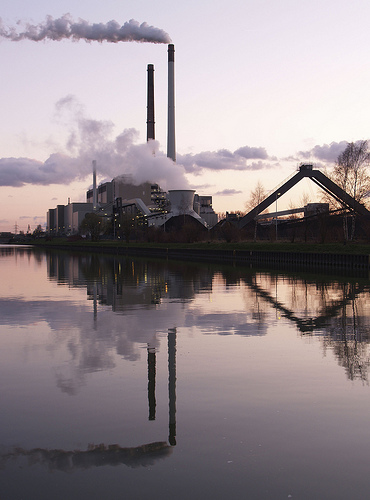 ALTERNET – It was another tough year for the coal industry. In the last 25 months
not one coal-fired power plant broke ground for construction in the
United States. In 2010 alone a total of 38 proposed plants were erased
from the drawing board, the most ever recorded in a single year.
Utilities also announced 12,000 MW in coal plant retirements — or
enough power to bring electricity to a whopping 12 million American
households. And even Massey Energy’s infamous henchman Don Blankenship
is set to retire, effective next month.
ALTERNET – It was another tough year for the coal industry. In the last 25 months
not one coal-fired power plant broke ground for construction in the
United States. In 2010 alone a total of 38 proposed plants were erased
from the drawing board, the most ever recorded in a single year.
Utilities also announced 12,000 MW in coal plant retirements — or
enough power to bring electricity to a whopping 12 million American
households. And even Massey Energy’s infamous henchman Don Blankenship
is set to retire, effective next month.  NATIONAL GEOGRAPHIC
 1. Climate Crisis Response Takes a New Direction. After the failure of Copenhagen,
  COMMONDREAMS
 THE GUARDIAN UK