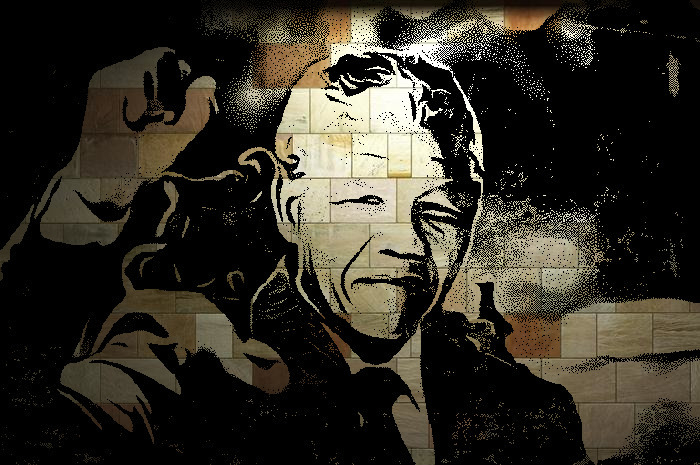
 When Nelson Mandela died on December 5, 2013 at the age of 95, the outpouring of praise from the political elite and establishment media around the world was overwhelming. In larger-than-life terms, Mandela was lionized and romanticized as the world’s most admired human being.
In some ways, such praise is encouraging in our age when the wealthy and powerful, usually lacking any admirable values, are held up by their mass media as our success stories. In a world with such dehumanizing, violent, and unjust images and unworthy role models, the overwhelming praise for Mandela is hopeful. His was a life of dedicated struggle for freedom, self-sacrifice, suffering, courage, and admirable moral, economic, and political values.
In other ways, such praise is hollow, hypocritical, self-serving, and troubling, especially when uttered by many who condemned Mandela during his lifetime of struggles for freedom and who continue to uphold the most anti-Mandela priorities and values. The powerful, lavish in their praise for Mandela, conveniently fail to mention how our economic and political elite favored white apartheid South Africa and classified Mandela as a “terrorist.” During the Nixon Administration, the Kissinger Doctrine singled out white supremacist, apartheid South Africa as one of America’s pivotal allies. In the 1980s, President Ronald Reagan and Prime Minister Margaret Thatcher opposed the anti-apartheid divestment movement, despised the “terrorist” Mandela and opposed his release from prison. Dick Cheney, Secretary of Defense and later Vice President under George Bush, was extreme in expressing his contempt for Mandela, viciously labeling him a terrorist who should not be freed.
In general, those with corporate economic, political, and military power in the U.S. identified with the anti-Mandela white power elite in South Africa, who were pro-Western, anti-Communist, and provided access to South Africa’s diamonds and other vast economic resources and their exploited labor. Indeed, the elite professing current admiration for Mandela conveniently fail to note that he remained on the U.S. terrorist list until 2008, even while he served as President of South Africa’s first multiracial democratic government.
The establishment now praises Mandela by emphasizing his great humanity and his ability to forgive his enemies, even those who imprisoned him for 27 years. Yet it conveniently omits his radical critique of U.S. and other unjust relations of domination, corporate capitalism, imperialism, inequality and exploitation, militarism and war making, racism and other forms of oppression.
It is important to distinguish between celebrating Mandela, in which there is so much to celebrate in appropriating what we can learn and apply from his life and values, and packaging and commodifying him. In reducing Nelson Mandela to a celebrity, those with power define how we should honor him. They selectively soften a completely political person who repeatedly proclaimed “the struggle is my life.” In return, we get a fake and depoliticized icon, not a complex human being with strengths and weaknesses.
What exacerbates this problem is the global yearning of so many who suffer, including many oppressed and impoverished South Africans, to regard the very human leader as a kind of Messiah figure. In fairness, Mandela also contributed to this celebrity transformation, especially during the last two decades of his life. Partially based on very practical calculations, but enhanced by some personality weaknesses, Mandela, for all of his integrity, enjoyed rubbing shoulders with the rich and the powerful.
Therefore, in assessing the significance of Nelson Mandela for us today, we are confronted with many contradictory questions: Which Nelson Mandela? Do we accept the disempowering narrative in which Mandela is celebrated as a kind of Messianic leader who will save us and overcome widespread injustice? Or do we accept a Mandela narrative more consistent with how he actually viewed his struggles as a remarkable but flawed human being; a complex narrative we can selectively appropriate in ways that are contextually relevant to our social justice struggles?
Mandela was primarily a revolutionary, a freedom fighter for equality and justice. As he developed as a freedom fighter, he developed his remarkable capacity for self-control, controlling his emotions, self-discipline, strength of will, focus, and seeing the world with its injustices clearly so that one could respond intelligently and most effectively.
Mandela also emphasized the importance of core principles, of which one could then work out appropriate tactics and strategy. He was a radical egalitarian who believed in the core principle that everyone should have equal rights. During the 1980s while in prison and after his release on February 11, 1990, he focused on the core belief that South Africa should become a multiracial, democratic, constitutional, unified nation with a one-person, one-vote basis.
Although he experienced so much racism, classism, exploitation, humiliation, and inhumanity, Mandela believed that human beings are basically good, which was central to his remarkable focus on forgiveness. Not only are human beings basically good, but if you approach them as if they are, it will more likely bring out the best in them.
In contrast to our dominant Western view of the separate individual with one’s individualistic orientation, Mandela emphasized the basic interconnectedness and unity of life. This is often expressed through the African concept of Ubuntu: I am an integral part of a meaningful whole, and I am human only in relation to others. This belief system was part of the tribal decision-making process of Mandela’s youth in which group consensus was valued over conflict; in his view of his African National Congress as a collective, in which others were “comrades” and part of a unified community; and his emphasis on restorative justice, depersonalizing evil, and struggling for freedom and equality in which each one of us can realize our true interconnected unity.
Although Mandela should be seen as a freedom fighter in the tradition of Mahatma Gandhi, who spent 21 years in South Africa, and Martin Luther King, Jr., he did not fully endorse their views of nonviolence. Mandela personally disliked violence, but he disagreed with earlier African National Congress policies upholding nonviolence starting with its founding in 1912; the position of Chief Albert Luthuli, the proponent of nonviolence and head of the ANC, who had been awarded the Nobel Peace Prize in 1960, as was Mandela in 1993; and the philosophies of Gandhi and King, both of whom he greatly admired. For Mandela, nonviolence is not an absolute principle, philosophy, or way of life. In different contexts, where nonviolence is not possible or effective, the use of violence may be justified.
Nelson Mandela’s real legacy raises difficult questions about the contexts within which Mandela and we live, and how they reveal limitations of what we can achieve. These contextual power structures and relations are both limiting and enabling. From his youth and throughout his life, Mandela was willing to take big risks, defy authority, challenge or evade status quo limitations, and radically change his own positions. But there were always real economic, political, military, cultural, and historical limitations on his remarkable achievements. In other words, in dealing with the real world, and not some utopian world of his imagination, Mandela had many personal and political setbacks, and he was necessarily limited in the extent to which he and his comrades could reshape their South African world in ways that reflected his vision.
It is certainly open to debate as to how Nelson Mandela understood the changing limits throughout his life, and whether he redefined his positions in the most adequate ways. A small sample of such topics on contextual limits would include the following: Mandela’s earlier anti-white, Africanist view of the African National Conference as only open to blacks and his later formulations of a multiracial ANC and South Africa; his earlier anti-Communist views and exclusion of Communists from the ANC and his later embrace of important Communists as among his mentors and closest comrades in the ANC; his conclusion that policies of nonviolence had become ineffective and suicidal, with his launching of the Umkhonto we Sizwe (MK, the Spear of the Nation) in 1961 as the arm of the ANC dedicated to armed struggle directed at weakening the hold of the white apartheid regime; his conclusion while in prison that the liberation forces could not defeat the white racist regime through armed struggle; his subsequent decision, defying the ANC positions on negotiating and on collective leadership, that he would negotiate on his own with representatives of the white power structure; and most controversially, his secret meetings and negotiations with the most powerful white economic leaders after his release from prison that led to radical shifts in his own values and policies.
The ongoing debate often focuses on what limits necessitated changes in values, priorities, and policies and which changes were not necessary but reflected disastrous shifts, concessions, and even betrayals. This is significant in terms of Mandela’s ineffectiveness in realizing many of his major goals during his Presidency. It is especially significant when examining Mandela’s post-apartheid, independent South Africa with growing class inequality, incredible poverty and frustration and violence among the black masses, continuing white power and privilege, and the rapid emergence of a corrupt, wealthy, black elite.
Through his secret negotiations with the white power elite, Mandela accepted loan arrangements with the International Monetary Fund and its structural adjustment requirements, endorsed what has been labeled as “the U.S. Consensus Plan,” and adopted policies of neoliberalism promoted by globalized corporate capitalism. The results for the overwhelming majority of South Africa have been disastrous.
In fairness, the situation that confronted Mandela was very complex and daunting with South Africa’s large debt; the collapse of the Soviet Union and the aggression of triumphalist globalized capitalism; the fact that Mandela and the ANC were part of a freedom movement with limited knowledge of economics and of the politics of running a nation; and, most importantly, Mandela’s understandable immediate priority of avoiding a likely civil war, with an incredible bloodbath, and creating a unified, multiracial, democratic nation that would not repeat the patterns of extreme divisiveness, dictatorship, tribalism, religious hatred and violence, and genocide found throughout Africa.
It is easy to second guess and have a critical analysis in hindsight, recognizing what has happened to South Africa and the globalized world, but it is fair to ask whether Nelson Mandela was pressured, flattered, and seduced by those with dominant power in ways that greatly sabotaged and subverted his vision, core values, and priorities, often expressed upon his release from prison and to the end of his life. Mandela is often praised for adopting a more “mature” and realistic “pragmatism,” but questions remain as to whether he compromised too much and unwisely gave away concessions that were not pragmatically necessary. Did he give such a high priority to overcoming the fears of whites and winning over their trust that he deemphasized the needs of the disadvantaged masses and what was needed for radical changes in the unjust power relations?
“Apartheid” is a Dutch Afrikaans word in South Africa meaning “separateness.” It was the name used for an economic, political, legal, and social system of the separation and control of black Africans and other nonwhites by the dominant white minority. It finally became the official system of apartheid or “separate development” of the Afrikaner National Party that ruled South Africa from 1948 until 1994.
Educating ourselves about the system of apartheid, showing solidarity with the liberation movement in South Africa and throughout the world, and exposing U.S. and University of Maine complicity in profiting from apartheid became major issues at UMaine, starting in the late 1970s and continuing for a decade. In 1982, the University of Maine (and the Maine System) agreed to divest all of their holdings in corporations and banks doing business in South Africa (one-third of the principle portfolio). We became one the first ten universities in the U.S. to divest completely. It took six more years of intense organizing and struggle before the semi-private University of Maine Foundation agreed to divest its large holdings in apartheid South Africa. We had the sense of a spectacular, rare, significant, and meaningful victory.
At this celebratory event, I read some of Mandela’s heroic and defiant speech at the Ravonia Trial in 1964 before his imprisonment. This included his words that had so inspired us, proclaiming that he was prepared to die for freedom: “I have fought against white domination, and I have fought against black domination.” Mandela continued: “I have cherished the ideal of a democratic and free society in which all persons live together in harmony and with equal opportunities. It is an ideal which I hope to live for and to achieve. But if needs be, it is an ideal for which I am prepared to die.”
In 1990, after his dramatic release from prison, Mandela went on a tour of the United States that included being honored at a huge evening gathering at Yankee Stadium in New York. A group of us, who had been anti-apartheid activities for many years, gathered during the day at a church for workshops and celebrations. Suddenly, to our great surprise, Nelson Mandela appeared, much to the overwhelming tearful and joyful responses of the activists. I’ll always remember his words. “Tonight, all of the famous influential politicians and dignitaries will praise me. However, I want you to know that I’ll never forget who my real friends are, those who struggled all those years against the apartheid system and for my freedom.” In the last years of his life, Mandela made similar kinds of statements.
While preparing several Nelson Mandela talks after his death and in writing this article, it struck me how most students and community members easily admire Mandela and his message and genuinely believe in equality, freedom, democracy, and the need to overcome the injustices and oppressions of economic exploitation, racism, sexism, and environmental destruction. But we feel powerless, are so easily discouraged, and are often cynical. When one begins to appreciate what Mandela went through, his suffering and sacrifice and long struggle, it really puts into perspective how easily we become discouraged, feel hopeless, and give up.
Mandela leaves us with a legacy of hope; that even in the darkest of times, we can live meaningful value-based lives of integrity and bring about dramatic, qualitative changes in the unjust status quo. Mandela shows us that we can live lives of admirable courage, even when we have deep fears and insecurities, as he often had. In an age when we are socialized to desire instant rewards and gratifications, Mandela teaches us the necessary value of disciplined will power and perseverance, as evidenced in the title of his autobiography, Long Walk to Freedom, and in his frequent declarations that we must view what we are doing in the long run. Mandela shows us the importance of having worthy principles, of clarifying what we really believe, and then, as he quoted Gandhi, “Be the change you seek.”
In an age when I am socialized to view myself as separate, isolated I-me, egotistic individual, who lives in an adversarial world of win-lose competitions and learns to calculate what is in my own narrow self-interest, Mandela teaches us that such aggressive self-interested individualism is false and destructive; that I am really an integral part of interconnected unified wholes in which others are a necessary part of who I am and how I can live a meaningful life.
It is now up to us to understand, appreciate, and selectively appropriate what is of lasting value in Mandela’s vision, values, and ideals and to contextualize his legacy in ways that inspire us, give us hope, and inform our lives as integral to an action-oriented interconnected movement working for a much better world.
Doug Allen is Professor of Philosophy at the University of Maine. He is Coordinator of the Marxist and Socialist Studies Program at UMaine, and he has lectured and published extensively on the philosophy of Mahatma Gandhi.
Photo by Flickr user Emanuele Bertuccelli



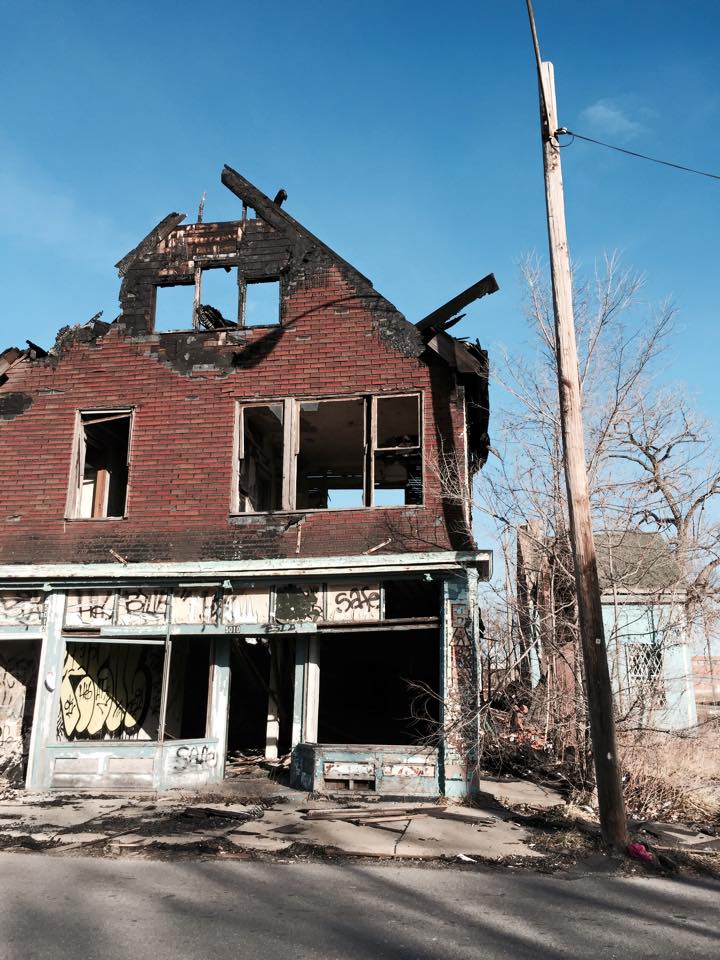 Six years ago, Congress passed a bailout to the tune of 80 billions dollars funded by American taxpayers to rescue the bankrupt auto industry, mostly based in Detroit. But when the Motor City itself needed help and retirees were on the brink of losing everything, the money was nowhere to be found, apparently to avoid “meddling” in the bankruptcy process.
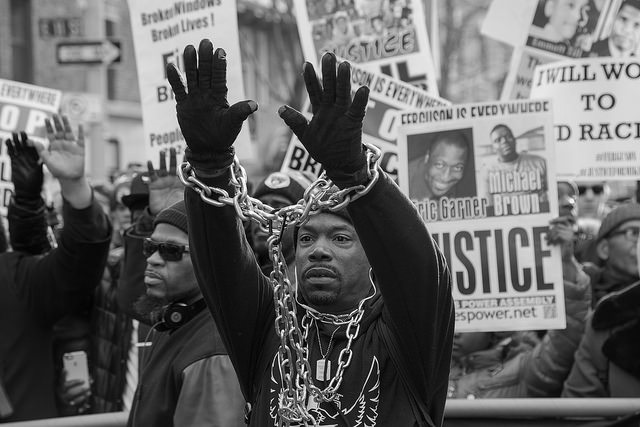 In the wake of the police killings of Michael Brown and Eric Garner, many mainstream media outlets featured guests who
 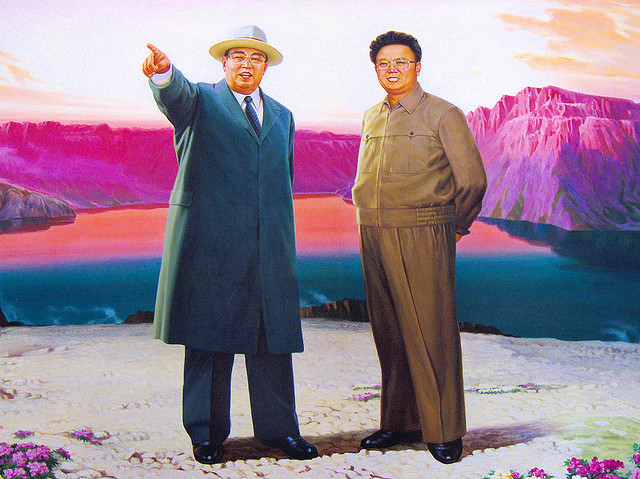 Robbie and Abby Martin get together after the holidays for a densely packed episode of Media Roots Radio discussing anti-North Korea propaganda surrounding the Sony hack; the worst aspects of the US torture program not being talked about; and the ‘liberals’ who jump on the bandwagon to demonize every country the US just happens to want to bomb.
 When Nelson Mandela died on December 5, 2013 at the age of 95, the outpouring of praise from the political elite and establishment media around the world was overwhelming. In larger-than-life terms, Mandela was lionized and romanticized as the world’s most admired human being.
 This week marks two years since the massacre at Sandy Hook Elementary School in Newtown, Connecticut, where twenty helpless children and six staff members were gunned down in cold blood.