
Man Tried to Arrest George Bush, Found Guilty of Obstruction

WINNIPEG FREE PRESS– A man who tried to break through a barricade of Calgary police officers to get inside a building where a speech was being given by former U.S. president George W. Bush was found guilty Monday of obstructing a peace officer.

But following sentencing arguments that included remarks of support from former U.S. attorney general Ramsey Clark, John Boncore was released with a conditional discharge that would spare him a criminal record.

Boncore, an actor and carpenter who often uses his aboriginal name Splitting the Sky, was taken into custody when he tried push past a line of police officers outside the downtown building where Bush was speaking in March 2009.

Boncore was with a cluster of activists who were protesting the paid appearance by the former president, who they accuse of war crimes in Afghanistan and Iraq. It was Bush’s first public speech since leaving office.

Clark, who held office in the 1960s under President Lyndon Johnson, has since given legal advice to a number of controversial figures at odds with the U.S. government, including Saddam Hussein and Slobodan Milosevic.

He told court that he has known Boncore, 58, since he was a teenager growing up in the U.S. and that the anti-war activist has thousands of supporters in the country.

“There’s not much I wouldn’t do for John,” said Clark. “He is a passionate and committed man.”

However, Judge Manfred Delong said that Boncore’s testimony was inconsistent. The activist began by testifying that he was trying to put Bush under citizen’s arrest but later admitted that was unlikely and said that he was trying to serve him with papers.

Boncore also admitted that he wanted his actions filmed and that he didn’t truly expect to make it past security.

Boncore testified he only tried to break through the line once and was otherwise simply trying to urge RCMP officers to arrest Bush themselves. However, Delong said he found more credible the police testimony suggesting Boncore tried to force his way past the line multiple times.

Delong said that Boncore passionately believed in his case against Bush, but that doesn’t change his actions.

“His sincerity in holding these views is not at issue in this case,” he said.

Crown prosecutor Tracy Davis argued that Boncore should be fined $1,000. She said his actions were planned and deliberate, and that he should have a criminal record so that police know to watch out for him at future protests.

Defence lawyer Charles Davison said that an absolute discharge would be best, pointing out that Boncore has no criminal record and that even without a criminal record police will have his name and image on file.

Before being sentenced, Boncore said he was willing to accept the consequences of his actions and he still believed he was right about Bush’s need to take responsibility for his administration’s actions.

“If it’s only going to cost me $1,000 to make that point, bring it on,” he told the judge.

Delong gave Boncore a conditional discharge and ordered him to pay $1,000 to a charity of his choice. He will also be on probation for a year and must notify his parole officer if he changes his name, address or job. Once he’s served that time he will not have a criminal record.

Outside court, Boncore said that he plans to pick as his charity a group of architects and engineers who claim that residue from the twin towers following 9-11 proves that they were deliberately blown up. His choice of charity must be approved by his parole officer.

Boncore said he still stands by his actions and he can’t say what he’ll do in the future to protest the former and current U.S. administrations.

“I’m not so sure if I’ll make a citizen’s arrest, but you can believe wherever George Bush (and his former cabinet colleagues) … wherever they come I will be there to voice my opposition.”

© COPYRIGHT WINNIPEG FREE PRESS, 2010
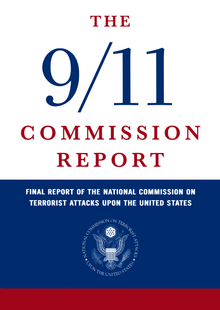
Stonewalled by the C.I.A.

NY TIMES– More than five years ago, Congress and President Bush created the 9/11 commission. The goal was to provide the American people with the fullest possible account of the “facts and circumstances relating to the terrorist attacks of Sept. 11, 2001” — and to offer recommendations to prevent future attacks. Soon after its creation, the president’s chief of staff directed all executive branch agencies to cooperate with the commission.

The commission’s mandate was sweeping and it explicitly included the intelligence agencies. But the recent revelations that the C.I.A. destroyed videotaped interrogations of Qaeda operatives leads us to conclude that the agency failed to respond to our lawful requests for information about the 9/11 plot. Those who knew about those videotapes — and did not tell us about them — obstructed our investigation.

There could have been absolutely no doubt in the mind of anyone at the C.I.A. — or the White House — of the commission’s interest in any and all information related to Qaeda detainees involved in the 9/11 plot. Yet no one in the administration ever told the commission of the existence of videotapes of detainee interrogations.

When the press reported that, in 2002 and maybe at other times, the C.I.A. had recorded hundreds of hours of interrogations of at least two Qaeda detainees, we went back to check our records. We found that we did ask, repeatedly, for the kind of information that would have been contained in such videotapes.

The commission did not have a mandate to investigate how detainees were treated; our role was to investigate the history and evolution of Al Qaeda and the 9/11 plot. Beginning in June 2003, we requested all reports of intelligence information on these broad topics that had been gleaned from the interrogations of 118 named individuals, including both Abu Zubaydah and Abd al Rahim al-Nashiri, two senior Qaeda operatives, portions of whose interrogations were apparently recorded and then destroyed.

The C.I.A. gave us many reports summarizing information gained in the interrogations. But the reports raised almost as many questions as they answered. Agency officials assured us that, if we posed specific questions, they would do all they could to answer them.

So, in October 2003, we sent another wave of questions to the C.I.A.’s general counsel. One set posed dozens of specific questions about the reports, including those about Abu Zubaydah. A second set, even more important in our view, asked for details about the translation process in the interrogations; the background of the interrogators; the way the interrogators handled inconsistencies in the detainees’ stories; the particular questions that had been asked to elicit reported information; the way interrogators had followed up on certain lines of questioning; the context of the interrogations so we could assess the credibility and demeanor of the detainees when they made the reported statements; and the views or assessments of the interrogators themselves.

The general counsel responded in writing with non-specific replies. The agency did not disclose that any interrogations had ever been recorded or that it had held any further relevant information, in any form. Not satisfied with this response, we decided that we needed to question the detainees directly, including Abu Zubaydah and a few other key captives.

In a lunch meeting on Dec. 23, 2003, George Tenet, the C.I.A. director, told us point blank that we would have no such access. During the meeting, we emphasized to him that the C.I.A. should provide any documents responsive to our requests, even if the commission had not specifically asked for them. Mr. Tenet replied by alluding to several documents he thought would be helpful to us, but neither he, nor anyone else in the meeting, mentioned videotapes.

A meeting on Jan. 21, 2004, with Mr. Tenet, the White House counsel, the secretary of defense and a representative from the Justice Department also resulted in the denial of commission access to the detainees. Once again, videotapes were not mentioned.

As a result of this January meeting, the C.I.A. agreed to pose some of our questions to detainees and report back to us. The commission concluded this was all the administration could give us. But the commission never felt that its earlier questions had been satisfactorily answered. So the public would be aware of our concerns, we highlighted our caveats on page 146 in the commission report.

As a legal matter, it is not up to us to examine the C.I.A.’s failure to disclose the existence of these tapes. That is for others. What we do know is that government officials decided not to inform a lawfully constituted body, created by Congress and the president, to investigate one the greatest tragedies to confront this country. We call that obstruction.

Thomas H. Kean and Lee H. Hamilton served as chairman and vice chairman, respectively, of the 9/11 commission.

© COPYRIGHT NY TIMES, 2008

Posted in Uncategorized | 1 Reply

Latin America’s Path to Independence

GUARDIAN– Latin America took another historic step forward this week with the creation of a new regional organisation of 32 Latin American and Caribbean countries. The United States and Canada were excluded.

The increasing independence of Latin America has been one of the most important geopolitical changes over the last decade, affecting not only the region but the rest of the world as well. For example, Brazil has publicly supported Iran’s right to enrich uranium and opposed further sanctions against the country. Latin America, once under the control of the United States, is increasingly emerging as a power bloc with its own interests and agenda.

The Obama administration‘s continuation of former President Bush’s policies in the region undoubtedly helped spur the creation of this new organisation, provisionally named the Community of Latin American and Caribbean States. Most importantly, the Obama team’s ambivalence toward the military coup that overthrew the democratic government of President Mel Zelaya in Honduras last summer provoked deep resentment and distrust throughout the region.

Although the Obama administration was officially against the coup, numerous actions from day one – including the first White House statement that failed to condemn the coup when it happened – made it clear in the diplomatic world that its real position was something different. The last straw came in November 2009 when the Obama administration brokered a deal for the return of Zelaya, and then joined the dictatorship in reneging on it. Washington then stood against the vast majority of the region in supporting the November elections for a new president under the dictatorship, which had systematically repressed the basic rights and civil liberties necessary to an electoral campaign.

Arturo Valenzuela, the US state department’s top official for Latin America, said that the new organisation “should not be an effort that would replace the OAS [Organisation of American States]”.

The differences underlying the need for a new organisation were clear in the statements and declarations that took place in the Unity Summit, held in Cancun from 22-23 February. The summit issued a strong statement backing Argentina in its dispute with the UK over the Malvinas (as they are called in Argentina) or Falklands Islands. The dispute, which dates back to the 19th century and led to a war in 1982, has become more prominent lately as the UK has unilaterally decided to explore for oil offshore the islands. President Lula da Silva of Brazil called for the United Nations to take a more active role in resolving the dispute. And the summit condemned the US embargo against Cuba.

These and other measures would be difficult or impossible to pass in the OAS. Furthermore, the OAS has long been manipulated by the United States, as from 2000 when it was used to help build support for the coup that overthrew Haiti’s elected president. And most recently, the US and Canada blocked the OAS from taking stronger measures against the Honduran dictatorship last year.

Meanwhile, in Washington foreign policy circles, it is getting increasingly more difficult to maintain the worn-out fiction that the US’s differences with the region are a legacy of President Bush’s “lack of involvement,” or to blame a few leftist trouble-makers like Bolivia, Nicaragua, and of course the dreaded Venezuela. It seems to have gone unnoticed that Brazil has taken the same positions as Venezuela and Bolivia on Iran and other foreign policy issues, and has strongly supported Chávez. Perhaps the leadership of Mexico – a rightwing government that was one of the Bush administration’s few allies in the region – in establishing this new organisation will stimulate some rethinking.

There are structural reasons for this process of increasing independence to continue, even if – and this is not on the horizon – a new government in Washington were to someday move away from its cold war redux approach to the region. The US has become increasingly less important as a trading partner for the region, especially since the recent recession as our trade deficit has shrunk. The region also increasingly has other sources of investment capital. The collapse of the IMF’s creditors’ cartel in the region has also eliminated the most important avenue of Washington’s influence.

The new organisation is sorely needed. The Honduran coup was a threat to democracy in the entire region, as it encouraged other rightwing militaries and their allies to think that they might drag Latin America back to the days when the local elite, with Washington’s help, could overturn the will of the electorate. An organisation without the US and Canada will be more capable of defending democracy, as well as economic and social progress in the region when it is under attack. It will also have a positive influence in helping to create a more multipolar world internationally.

Mark Weisbrot is Co-Director of the Center for Economic and Policy Research (CEPR), in Washington, DC.

© Guardian News and Media Limited 2010

EU to Allow Nations to Ban Approved GM Crops

frankenfoodCOMMON DREAMS– Individual EU nations will be free to ban genetically modified crops, even if they are deemed safe and approved, under rule changes being drawn up by Brussels to unblock the clearance process.

EU Health Commissioner John Dalli, in charge of the emotive dossier, will hand over plans to national capitals and the EU parliament for their consideration next month, Green groups and Brussels sources said on Friday following a series of briefings.

GMO supporters cite the benefits of growing crops with higher yields, more resistance to pests and disease, and requiring less fertiliser and pesticide. Opponents speak of ‘frankenfoods’ which will inevitably contaminate other crops and for which there can be no definitive evidence of their safety.

While the European Commission would not confirm the plans, a spokesman said there are no immediate moves to authorise more GMO crops. Environmental group Friends of the Earth said there were two main planks to the planned rule changes,

The first is “to allow member states full flexibility to ban GM crops,” with that right extended to regions within a country, a very important point in Germany and its substantially autonomous regions, or Laenders.

Continue reading about EU to Allow Nations to Ban Approved GM Crops.

© Common Dreams, 2010

Photo by flickr user AZRainman

White Fungus #11- Editorial on the Obama Culture

May, 2010

WHITE FUNGUS– Welcome to White Fungus Issue #11 – some falling debris from Taichung City, Taiwan.

Well it’s been a pathetic year for hope, peace and change.

Despite the mood for self-congratulation among liberals and progressives following the election of Obama, the ones with real cause to celebrate were the marketing gurus who ushered in the new feeling of ‘Yes We Can.’

Pipping corporate luminaries such as Apple Computers and Dell, “Brand Obama” was named Advertising Age’s marketer of the year for 2008. The Age’s executives put it succinctly “as we have been marketing candidates like commodities ever since Ronald Reagan, I think this was the best we ever did.”

It was the triumph of feeling and spectacle over achievement of specific policy pronouncements. And despite escalating wars, the capitulation to Wall Street and pseudo posturing on the environment, for many the rallying cry is still ‘patience’, ‘give it time’ and ‘it’s not easy.’

In the face of massive global catastrophes the call is for measured incrementalism towards meager and unsubstantiated goals.

There’s been a tendency to view Obama – the kind of guy liberals would like to have a beer with – as some kind of friend, sweetheart or long lost family member, rather than as the one thing he ascertainably is, a politician.

And while liberals and progressives are now getting antsy, as their positions become increasingly untenable, and their fantasy turns into a nightmare. When it comes to criticizing Obama, the gloves are very much still on.

Talking to Larry King before the recent Afghanistan surge, Michael Moore, one of Bush’s most prominent critics, rallied against escalation but had nothing but praise for the new Decider in Chief.

“I think it’s impressive that he’s a thoughtful man. It’s great to have a smart person in the White House who really thinks about the cost of human life before making a big decision like this… I am so glad we have that man in the White House, even though I may have, whatever disagreements… I know this is weighing on him and I’m going to trust in all my heart that he’s going to make the right decisions….”

Even before the election, Naomi Klein warned Obama supporters that “if you’ve proven you’re a doormat, you can pretty much expect to get stomped on.”

And that has clearly been the pattern for this administration to date: dangle a carrot, such as the ‘public option’ to employ progressives as foot soldiers, then pull the rug out towards the end of the process, tout victory and enact corporate-friendly ‘reform.’

In his prescient article Are Liberals Pathetic?, Chris Hedges quotes Ralph Nadar who asks “What is the breaking point? The escalation of war in Afghanistan? The criminal war in Iraq? Forty-five thousand people dying a year because they can’t afford health insurance? The hollowing out of communities and sending jobs to fascist and communist regimes overseas that know how to put workers in their place? There is no breaking point.”

Hedge concludes: “So here we are again, begging Obama to be Obama. He is Obama. Obama is not the problem. We are.”

© WHITE FUNGUS, 2010