FREE LANCE STAR– Twice this weekend, police put plastic riot cuffs on Daniel Ellsberg’s hands.
The man who leaked the Pentagon Papers in 1971 was arrested Saturday in Washington and again Sunday in Quantico.
Ellsberg was one of about 35 protesters taken into custody for refusing
to leave U.S. 1 in front of the main gate of the Marine Corps base.
Hundreds rallied in support of Pfc. Bradley Manning, an Army
intelligence analyst accused of leaking classified documents to
Wikileaks.
Manning has been in the Quantico brig since May, awaiting a court
martial. Supporters said the 23-year-old Manning is confined to his cell
for 23 hours each day. He is given a tear-proof smock to wear to bed,
but until recently was required to sleep naked.
To decry these conditions, some protesters donned prison garb and
carried signs saying “I am Bradley Manning.” Many wore masks with
Manning’s boyish face and shy smile.
They kept their clothes on this time. But at earlier rallies, protesters
stripped to their underwear as a visual protest of Manning’s treatment.
The rally began with a spate of speakers. Then the protesters marched to
the intersection of U.S. 1 and Joplin Road. There police placed a
barricade to keep the rally off the street.
The protest closed U.S. 1 for about four hours for the rally. Even some
distance from Quantico, motorists on U.S. 1 encountered significant
delays during and immediately after the rally.
NATIONAL JOURNAL– With U.N. coalition forces bombarding Libyan leader Muammar
el-Qaddafi from the sea and air, the United States’ part in the
operation could ultimately hit several billion dollars — and require
the Pentagon to request emergency funding from Congress to pay for it.
The first day of Operation Odyssey Dawn had a price tag that was well
over $100 million for the U.S. in missiles alone. And the U.S.
military, which remains in the lead now in its third day, has pumped
millions more into air- and sea-launched strikes targeting air-defense
sites and ground-force positions along Libya’s coastline.
The ultimate total that the United States spends will hinge on the
length and scope of the strikes as well as on the contributions of its
coalition allies. But Todd Harrison, a senior fellow at the Center for
Strategic and Budgetary Assessments, said on Monday that the U.S. costs
could “easily pass the $1 billion mark on this operation, regardless of
how well things go.”
BIO SCHOLAR– Scientists have discovered a regulator of gene activity that tells epidermal stem cells when it”s time to grow more skin, as well as a “crowd control” molecule that can sense cell crowding and turn the growth off.
The study, in mice and in human cancer cells, provides clues to new
therapeutic strategies for cancer, particularly squamous cell carcinoma,
the second most common skin cancer, in which epidermal cell growth is
inappropriately turned on.
The findings could also aid efforts to grow skin grafts and treat burn patients.
We have found a molecular switch that tells your skin to keep growing or
stop growing,” said Fernando Camargo at Children’s Hospital Boston.
COMMON DREAMS– What will it take for our world to recognize the dangers that nuclear
scientists and even Albert Einstein were warning about at the “dawn” of
the nuclear age?
Amy Goodman reminds us of the prophetic statement by Australian
journalist Wilfred Burchett who tried to find words to describe the
horror he was seeing in Hiroshima in 1945 after the bomb fell.
“It looks as if a monster steamroller had passed over it
and squashed it out of existence. I write these facts … as a warning to
the world.”
The world heard his warning, but seems to have ignored it. In fact,
what followed has been decades of nuclear proliferation, the spread of
nuclear power plants and the escalation of the arms race with new higher
tech weaponry.
As Hiroshima becomes yesterday’s distant memory and Fukishima the
current threat, the full extent of the casualties and body count are not
yet in, partly because the Japanese government and the power companies
don’t want to alarm the public.
Years earlier, a similar cover-up was in effect at Thee Mile Island
complex in Pennsylvania where reports of the damage people suffered from
a serious accident was minimized, never examined in depth by some of
the very same media outlets who are today criticizing Japan for a lack
of transparency.
On August, 6, 2008, the anniversary of the dropping of the first
nuclear bomb, Alternet.org reported that the government and media were
complicit in minimizing public awareness of the extensive suffering that
did take place:
“But the word never crossed the conceptual chasm between
the “mainstream” media and the “alternative.” Despite a federal class
action lawsuit filed by 2400 Pennsylvania families claiming damages from
the accident, despite at least $15 million quietly paid to parents
children with birth defects, despite three decades of official
admissions that nobody knows how much radiation escaped from TMI, where
it went or who it affected, not a mention of the fact that people might
have been killed there made its way into a corporate report”
Was this just accidental or is there a deeper pattern of denial? The
great expert on psycho history, Robert J. Lifton, wrote a book,
Hiroshima In America, with journalist Greg Mitchell about the aftermath
of Hiroshima in America exploring what they call “50 years of denial.”
One reviewer explained,
“The authors examine what they perceive to be a
conspiracy by the government to mislead and suppress information about
the actual bombing, Truman’s decision to drop the bomb, and the birth
and mismanagement of the beginning of the nuclear age. The authors claim
that Americans then, and now, are haunted by the devastating
psychological effects of the bomb.”
Lifton and Mitchell are evidence-based writers, not
conspiratologists, but they could find no other explanation for how such
a seminal event could have been distorted and misrepresented for a half
century.
Nuclear power and nuclear weapons have been sold to the public
relentlessly, in the first instance as necessary, and the second, as
safe. Rory O’ Connor and Richard Bell coined the term “Nuke Speak” to
describe the Orwellian methods deployed by the nuclear industry’s PR
offensive in a book length analysis of a well funded campaign that
continues to this day using euphemistic language to mask its real
agenda.
And today, as the world watches the dreadful and even Darwinian
struggle for survival by the earthquake and tsunami victims in Japan, as
information about the extent of the nuclear danger trickles out,
President Obama has reaffirmed his commitment to build new nuclear
plants.
Others stress more parochial concerns. The TV production community
fears a shortage in Japanese made magnetic and recording tape. Consumers
are being told that they may face a delay in ordering new iPads so get
your orders in now. And, the Israeli new service YNET says people there
worry about a sushi shortage.
Meanwhile, in Germany, more than 50,000 activists took to the streets
in protest, but, so far, there has been no organized outcry here in the
U.S. At the Left Forum in New York, the issue was barely addressed in
the opening plenary.
On the right, flamboyant talking head/provocateur Ann Coulter
defended the imagined health benefits of a release of radiation to
counter what she calls the alarmism of the environmentalists. She calls
it a “cancer vaccine.”
In a talk during a recent visit to Iran, which insists it is not
making nuclear weapons, I raised questions about what their government
said they want to do: expand their nuclear power plants. When I
questioned the wisdom of that approach, I was jeered because they felt I
was challenging their “right” to have what other countries have, their
right to “progress.” The thought that the plants could be dangerous was
dismissed,
What they don’t seem to know and what millions in Japan are finding
out is this technology—with spent rods that are never “spent” and the
nuclear waste that will outlive us all– is inherently unsafe. Jonathan
Schell makes this point well in a recent essay in the Nation:
“The chain of events at the reactors now running out of control
provides a case history of the underlying mismatch between human nature
and the force we imagine we can control. Nuclear power is a complex,
high technology. But the things that endemically malfunction are of a
humble kind.
The art of nuclear power is to boil water with the incredible heat
generated by a nuclear chain reaction. But such temperatures necessitate
continuous cooling. Cooling requires pumps. Pumps require conventional
power. These are the things that habitually go wrong—and have gone wrong
in Japan. A backup generator shuts down. A battery runs out. The pump
grinds to a halt. You might suppose that it is easy to pump water into a
big container, and that is usually true, but the best-laid plans go
awry from time to time. Sometimes the problem is a tsunami, and
sometimes it is an operator asleep at the switch.”
As the “incident” records of our own Nuclear Regulatory Agency make
clear, these are not just Japanese problems. The Christian Science
Minitor reports, “The Nuclear Regulatory Commission failed to resolve
known safety problems, leading to 14 ‘near-misses’ in US nuclear power
plants in 2009 and 2010, according to a new report from a nuclear
watchdog group.”
We don’t even know the full of the extent of the accidents,
unintentional releases of radiation and other problems in this country
much less in others with fewer rules and less oversight. No one expected
Chenobyl to explode, claiming so many lives; no one knows where the
next disaster will occur.
Bernie Sandeers is calling for a full investigation of nuclear safety here. Ralph Nader writes,
“The unfolding multiple nuclear reactor catastrophe in
Japan is prompting overdue attention to the 104 nuclear plants in the
United States — many of them aging, many of them near earthquake faults,
some on the west coast exposed to potential tsunamis.”
The global nuclear roulette game goes on. Even moderate and
restrained criticisms are dismissed until there is an “event” that
cannot be denied. Nuclear energy supporters promise that “Gen 4,” the
next generation of reactors, will be much safer.
Problem solved? Not everyone thinks so. The Bulletin of Atomic
Scientists carries an assessment by Hugh Gusterson on “The Lessons of
Fukishima.”
“To this anthropologist, then, the lesson of Fukushima is
not that we now know what we need to know to design the perfectly safe
reactor, but that the perfectly safe reactor is always just around the
corner. It is technoscientific hubris to think otherwise.
This leaves us with a choice between walking back from a technology
that we decide is too dangerous or normalizing the risks of nuclear
energy and accepting that an occasional Fukushima is the price we have
to pay for a world with less carbon dioxide. It is wishful thinking to
believe there is a third choice of nuclear energy without nuclear
accidents.”
We are still debating if nuclear power is worth the risk as
irradiated clouds float over Los Angeles and there is a panicked run in
the public to buy iodine pills. The industry’s marketing machine is in
crisis response mode and hasn’t missed a beat, while many of us look on
with a sense of impotence as we are told, once again, what’s in our best
interest.
Former presidential candidate and longtime consumer advocate and nuclear
critic Ralph Nader strongly advocates phasing out nuclear power in the
United States by calling for public hearings on the status of every
single nuclear power plant in an interview with Democracy Now! March 18.
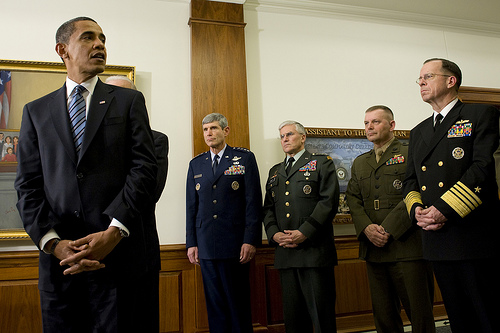
PROGRESSIVE– Our founders would be appalled that a President of the United States
could launch the country into an armed conflict half a world away
without a formal declaration of war by Congress, much less barely any
discussion of it by the House or by the Senate.
Article 1, Section 8, of our Constitution is unambiguous: Only
Congress has the authority “to declare war.” James Madison warned that
allowing the President to take the country into war would be “too much
of a temptation for one man.”
At this point in the warping of our system of checks and balances, a
President can wage war almost whenever he feels like it — or at least
whenever he can cobble together some “broad coalition,” as Obama put it,
or a “coalition of the willing,” as his predecessor put it.
Sounding just like George W. Bush when he attacked Iraq exactly eight
years ago to the day, Obama said that military action against Libya was
not our first resort.
Well, it may not have been the first resort, but it sure is Washington’s favorite resort.
We, as Americans, need to face facts: We have a runaway Executive Branch when it comes to warmaking.
And Obama appears naïve in the extreme on this one.
It is naïve to expect U.S. involvement in this war to be over in “days, not weeks,” as he said.
It is naïve to expect that he can carry this out without using ground troops.
It is naïve to wage war that is not in response to a direct threat to the U.S. national security.
It is naïve to expect millions of Libyans to cheer as their own country is being attacked by Western powers.
It is naïve to expect civilian casualties not to mount as a result of
his actions, which he said were designed “to protect Libyan civilians.”
And it is naïve to expect the world to go along with the ruse that this is not a U.S.-led act of aggression.
Finally, Obama’s stated reasons for this war, which he refuses to call by its proper name, are hypocritical and incoherent.
He said “innocent men and women face brutality and death at the hands of their own government.”
That’s true of the people of Yemen, our ally, which just mowed down dozens of peaceful protesters.
That’s true of the people of Bahrain, our ally, which also just mowed down dozens of peaceful protesters.
Then there’s the kingdom of Saudi Arabia, our chief Arab ally and a
repressive government in its own right, which just rolled its tanks into
Bahrain.
In the Ivory Coast today, another country on good terms with Washington, a dictatorial government is brutalizing its people.
And a brutal junta has ruled the people of Burma for decades now.
There is no consistent humanitarian standard for Obama’s war against Libya. None whatsoever.
Obama has now pushed the United States to a place where we are now engaged in three wars simultaneously.
He’s a man, and we’re a country, that has gone crazy on war.”



 NATIONAL JOURNAL
 BIO SCHOLAR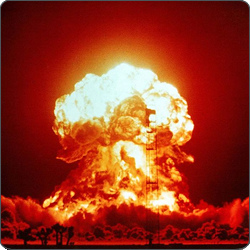
 PROGRESSIVE