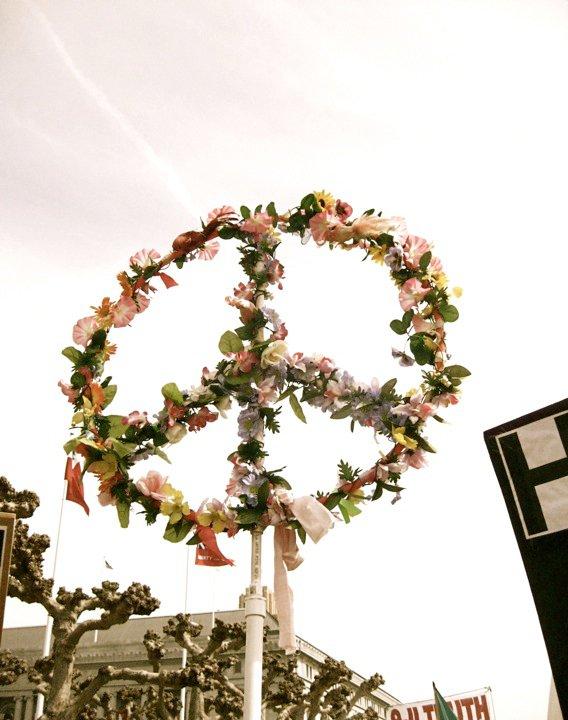
 MEDIA ROOTS- Recently, a man walking by my car inquired about
my anti-war bumper sticker. After a short conversation, I learned that
this 81 year-old peace activist, Chuck, spends every Friday evening
on a high school street intersection protesting the wars. With a solid handshake and fist bump, he was on his way.
MEDIA ROOTS- Recently, a man walking by my car inquired about
my anti-war bumper sticker. After a short conversation, I learned that
this 81 year-old peace activist, Chuck, spends every Friday evening
on a high school street intersection protesting the wars. With a solid handshake and fist bump, he was on his way.
Weeks
later, I spotted Chuck at an anti-war rally down the street. When I
approached him, a big warm smile greeted me, followed by another
solid fist bump. Having developed a curiosity about his background and anti-war stance, I asked him for an interview to which he happily agreed.
As Chuck sat on my couch over a cup of coffee, it became clear that
he is a slightly shy man, not seeking recognition. “I just care about
people”, he exclaimed. This is how our conversation went down.
***
MR: Tell me a little about your background so people get an idea who you are and where you come from.
C:
I was born in 1930 at my home in Diamond, Washington, which is the
eastern part of the state. There were seven of us kids, and my parents
owned a 206 acre farm. I worked really hard as a kid, and by my early
teenage years I was already running heavy equipment and had quite a bit
of responsibility.
MR: Have you always been politically aware or socially active?
C:
I’d always been interested in politics, but something happened during
the Great Depression that opened my eyes to the ideas of fairness and
greed. My father’s mortgage on the farm was $1,735. A neighbor, Mr.
Rock, owned the mortgage. When it became impossible to pay, he told my
father “If you can just pay one dollar, I won’t foreclose on you.” His
compassion and kindness enabled us to keep the farm, but a few months
later when Mr. Rock passed away, his son took over the property,
foreclosed immediately and started plowing our land. Thankfully, the
Federal Land Bank under Roosevelt took over the mortgage and
essentially saved our farm.
MR: Was your family always politically minded?
C: We didn’t have television back then, but we listened to the
radio. My parents paid attention to what was happening in the world,
and liked to help others. There was a train that would come through
once a week and drop off food, coal and ice. We would save some of the
coal for these four homeless people who migrated during the winter.
They stayed in our shed, and the bits of coal we had saved over the
course of the year supplied them with enough heat to get through the
cold winter months. Without a refrigerator, we’d hang our meat on the windmill outside in the winter and the hobos would come
slice pieces off to cook. They never bothered anybody or asked for
much, we just liked to help them out. I was always impressed with how
my parents recognized that some people need help– not everyone is as
fortunate as the rest of us.
I was definitely
inspired by my parents, but I’ve always been socially active. In
school I always stuck up for the kids who were bullied, even though I
was smaller. For example, this one kid in my high school had MS or was
somehow disabled. I did whatever I could to stick up for him when he
was picked on, which was often. His family had an orchard down on the
Snake River, and would can hundreds of quarts of peaches and apricots
to sell every summer. They would always tell my family “You guys don’t
pay”.
[Chuck tears up as he tells me this]
MR: That’s how the world should
work– we need to help each other out. When did you become an activist?
Was there a specific time or event that inspired you to start protesting?
C: I was in the Army during the Korean War, but luckily I never had to go
overseas. Instead I was sent all around the
country on various assignments and even ended up working at the Pentagon in Washington DC. I was one of only a handful of guys from my
squad who didn’t end up dead. Being in the military never really
settled with me. I didn’t understand what I was doing and why, and it felt very unorganized. After serving I became aware of our
military actions, and became an outspoken critic. I suppose that
evolved into physically protesting.
MR: How long have you guys been protesting on the corner?
C: We have been protesting for about four and a half
years, rain or shine. I’ve only missed about three meetings. It’s not part of a larger established organization– it’s just a few of us, but we are a committed group of concerned citizens. It’s all volunteer, but it’s not a political thing. Well, it’s somewhat
political, but it’s really about doing what’s right.
MR: Do you align yourself with a paticular political party?
C: Yes– I’m a Democrat.
MR: Historically, Democrats are known for being a bit more compassionate,
but what do you think about the idea that maybe the lines are
blurring between the two, and that both parties are just spokespersons for Big
Business and private interests?
C: I still feel that
Democrats are much more “tuned in” to people. It is unfortunate though, what these corporations are getting away with. It’s a damn crime. At one point I had a small construction company. I
thought I was smart and had a couple hundred dollars and grew that into
a labor-union based company about 200 strong. Supporting union labor
gave people a voice and enabled them to make enough money to feed their
families. Sometimes I would get
out of bounds, and they would kick me back into shape, but it was a
good relationship.
MR: I’m
sure you still ended up paying a vastly larger chunk of taxes than these
corporations are doing nowadays. You say that your anti-war stance is not a political thing, but you
have to admit that war and
politics are intertwined– they’re almost inseparable. What do you
see as the main problem with America’s current political system?
C: Simple: too much greed. It’s all about the dollars.
Unless you have money or political clout, you don’t have a voice. But you must still protest, because maybe you’ll be heard.
MR: Or at least make somebody think critically on their way home from work. What do you see as the main reasons why we are in Iraq and
Afghanistan?
C: Oil and greed, no doubt about it. We need to
get out of their countries. War creates hate and animosity. You don’t make people
love you by killing them.
MR: Do you see the US trend of aggressive war over resources slowing down anytime soon? We’ve basically achieved what we went over there for: the regions are in turmoil, and US-backed governments are being implemented. Do you think that the regions will eventually be
restructured?
C: I don’t think it
will be effectively restructured. We just have to get the
military industrial complex out of the way. The biggest thing we
have in America is guns: half of our budget goes to the military.
MR: Which makes it hard to slow down. Do you think it’ll take a long sequence
of events, like getting the right people in office and slowly chipping
away at it, or do you think it’ll take an overnight revolution?
C: I think it’ll take the
chipping away approach. We have to protest. We can’t continue
to have a military presence in 130 countries. We have to slowly get those troops out of there.
We also need to write our
Senators and Congressmen. Don’t send an email– write a letter or
send a fax. They read those things, and it could make a difference. But you have to recruit others to do the same thing. Talk about things,
spread news and hand-write lots of letters.
The key is to get the next wave of young
policy makers in office. The young people are so much more progressive and open-minded. We need young leaders and we
need more of what’s happening in Wisconsin. I think that peaceful
protesting is really working.
MR: Once these people get into office,
how realistic is it to expect them to do the things they set out to do?
C: I think it’s very difficult. They have to be concerned with re-election, and to do so you
have to know where your boundaries are.
MR: When I talk to friends who support Obama, they think I have some sort of
personal agenda against him. But for me it’s not personal– I’m sure
he’s a compassionate person who genuinely wanted
change. But after getting into office, he really has limited control over what happens.
C: I saw something similar happen with Roosevelt. In the
election of ’38, he was politically stymied. It’s exactly the same
thing that’s happening now: I think Obama really wants to do the right
things, in his mind and his heart. But he needs to be
much more vocal.
MR: What were some of the similarities between Obama and Roosevelt?
C: He got Social Security to go through the Supreme Court and pushed
for labor rights and public works projects. It was all about groups, like the Works Progress
Administration. He also helped
establish the idea of a minimum wage, and Washington state was the
first to adopt one. These things gave people dignity. Also, back then we
had these supposed enemies, the “Commies” and “Fascists” and
the worker’s parties that corporations demonized. We
see the same sort of fear-mongering now, but it’s “terrorists” and
“Muslim extremists”. Our leaders need to make a
stronger effort to push for green jobs, which could be a critical path for us.
MR: As far as Obama needing to
be more vocal– He seemed to genuinely want to go in
there and instigate change. So what happened? He has an opportunity every single day to get up in front
of the podium in the Rose Garden and say “This needs to stop”. But he
doesn’t. Is is because he’s powerless or is he trying
to play it safe to ensure his re-election?
C: I think he has great intentions, and has the potential to become very powerful if he can get into another term. But
for now he has to go along with the pundits because there’s so much
chaos and thing going on.
It’s a difficult job, and his
hands are pretty much tied. As an individual, he is respected.
But it’s really difficult to get things done in Washington, all they do is talk. But I definitely agree that he could
be doing a much better job.
MR: What is the key to getting this country back on track?
C: I don’t think it’ll be one specific thing. What’s
happening in Wisconsin is the beginning of the revolution. We need more of
that and we need to keep the pressure on ‘em. We can’t let up. And we
have to offer solutions, we can’t just bitch and moan.
MR: How would you respond to people who say that protesting won’t make a difference?
C: I would say “You’re noticing, arent’ you?” We’re pressuring all the time– you have to be consistent. All
those little grains of sand, the seemingly small voices, all
those bodies really does make a difference. I’m
seeing more activists now than ever, and it’s encouraging. I care about
people, David. I built an orphanage in Honduras, and did work with
Habitat for Humanity in the Philippines. We have to throw the balance
in favor of the people. Change– it needs to start with the heart.
***
Interview conducted, article written by David Solmes
Photo by Abby Martin



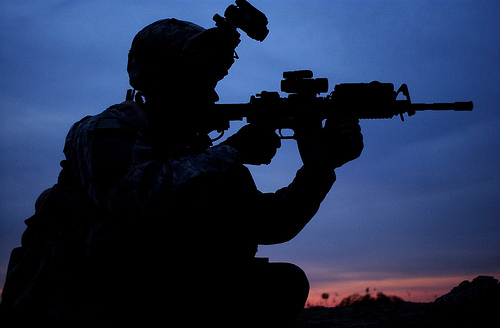 NY TIMES– Late one night last November, a plane carrying dozens of Colombian men
touched down in this glittering seaside capital. Whisked through customs
by an Emirati intelligence officer, the group boarded an unmarked bus
and drove roughly 20 miles to a windswept military complex in the desert
sand.
NY TIMES– Late one night last November, a plane carrying dozens of Colombian men
touched down in this glittering seaside capital. Whisked through customs
by an Emirati intelligence officer, the group boarded an unmarked bus
and drove roughly 20 miles to a windswept military complex in the desert
sand. ACLU
ACLU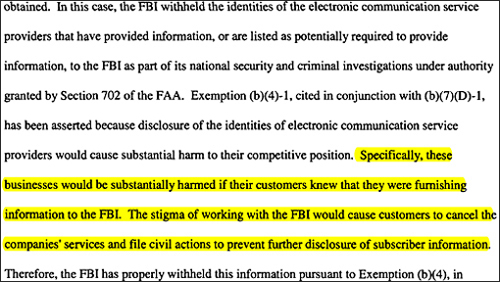

 However, the corporate consolidation and top down control of America’s
current media system undermines democracy by stifling and diluting the
discourse crucial to maintaining a critical and informed public.
However, the corporate consolidation and top down control of America’s
current media system undermines democracy by stifling and diluting the
discourse crucial to maintaining a critical and informed public. MEDIA ROOTS- Recently, a man walking by my car inquired about
my anti-war bumper sticker. After a short conversation, I learned that
this 81 year-old peace activist, Chuck, spends every Friday evening
on a high school street intersection protesting the wars. With a solid handshake and fist bump, he was on his way.
MEDIA ROOTS- Recently, a man walking by my car inquired about
my anti-war bumper sticker. After a short conversation, I learned that
this 81 year-old peace activist, Chuck, spends every Friday evening
on a high school street intersection protesting the wars. With a solid handshake and fist bump, he was on his way.