Global Surveillance – Media Roots on Russia Today

Abby Martin of Media Roots is featured in this RT article and video report.

RUSSIA TODAY– As the scandal over voicemail and phone-hacking by the Murdoch media empire rages, public and political fury has focused on ruthless tabloids out of control. But some say in this day and age, the whole concept of privacy is falling apart.

News International chairman James Murdoch has been accused of trying to mislead British MPs by saying he was unaware of the true extent of phone-hacking by reporters. His testimony was challenged by two former executives, Colin Myler and Tom Crone, who say Murdoch was informed three years ago that the illegal practice went beyond just one rogue journalist.

And as the scandal continues to grow, critics believe the issue is just the tip of the iceberg in a society that no longer values the privacy of the people.

“Everybody just clicks through, agreeing to the terms and conditions. Well those terms and conditions are very, very heavily weighted against you and your privacy interest,” says Dave Saldana, the communications director of Free Press.

“We see breaches of privacy by corporations happening all across America, all across the world really, in every sector. Surveillance is rampant. But really this is all a microcosm of the biggest surveillor of all – that is, the state,” journalist Abby Martin believes.

There is little Americans can do with the state having sweeping access to their private information – access that followed the 9/11 terrorist attacks, under a new law known as the Patriot Act.

The privacy of Hasan Elahi, who is an associate professor at the University of Maryland, was taken away from him in 2002, when he was detained by the FBI for absolutely no reason he says, and scrutinized for months, without charge.

His response? For nine years he has voluntarily documented nearly every waking hour of his life on the web. He has subsequently even turned it into an art-form.

“These are all the toilets that I’ve used. You know that on Sunday, November, 24, 2007 I used this toilet, for example,”
he explained pointing at a wall of pictures on his website.

He posts copies of every debit card transaction, so you can see what he bought, where, and when. A GPS device in his pocket reports his real-time physical location on a map.

Hasan says his extraordinary abandonment of his own privacy stems from the ignorance of the authorities.

“In fear they decided: ‘well that guy looks like an Arab, so he must be an Arab. If he’s an Arab them he must have explosives, everyone knows that.’ That’s the logic where we’re operating. You realize how ridiculous that logic sounds. But when your own country takes that as the basis for national policy… Ignorance as the basis of your national policy is a pretty scary situation. And that’s how I got caught up in it,” he told RT.

For Hasan, privacy has become a relic of the past, and he says he’s not surprised that journalists or anyone else really, would use the same surveillance tactics as the state.

In that sense, it might be of no surprise that the chief architect of the Patriot act, the lawyer who put it together, happens to be one of Murdoch’s hand-picked News Corp board directors. Viet Dinh served as assistant attorney general in the Bush administration, and was described by some as the purveyor of the most sweeping curtailment of freedom in the US since the McCarthy era.

At a time when corporations and the government can easily hack into people’s private lives, it does not come as a surprise when social networks give your personal information to ad companies, or when other industries live off breaching people’s privacy.

In the US it is so widespread, and people have gotten so used to it, that Rupert Murdoch seems to be a perfect part of the system rather than some special villain, whose corporation has been undertaking some unique unlawful practices.

Because in America they are not so unique.

© 2011 RT
Telex To Help Defeat Web Censors

BBC– Developed by US computer scientists the software, called Telex, hides data from banned websites inside traffic from sites deemed safe.

The software draws on well-known encryption techniques to conceal data making it hard to decipher.

So far, Telex is only a prototype but in tests it has been able to defeat Chinese web filters.

Outside in

Telex was developed to get around the problem that stops other anti-censorship technologies being more effective, said Dr Alex Halderman, one of the four-strong team that has worked on Telex since early 2010.

Many existing anti-censorship systems involve connecting to a server or network outside the country in which a user lives.

This approach relies on spreading information about these servers and networks widely enough that citizens hear about them but not so much that censors can find out and block them.

Telex turns this approach on its head, said Dr Halderman.

Read more about Telex To Help Defeat Web Censors

© 2011 BBC

Photo by Flickr user sploosh37

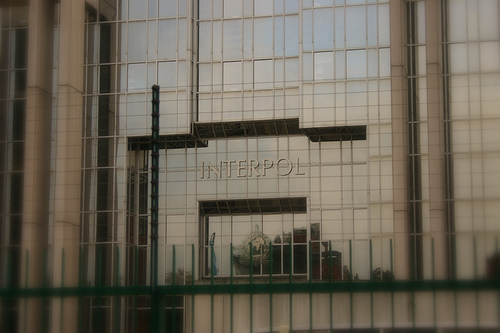
Interpol Used to Pursue Political Dissenters

IWATCH– Interpol’s primary purpose is to help police hunt down murderers and war criminals, child sex offenders and wildlife poachers.  But a five-month investigation by the International Consortium of Investigative Journalists shows a little-known side to Interpol’s work:  In cases from countries such as Iran, Russia, Venezuela and Tunisia, Interpol Red Notices are not only being used for legitimate law enforcement purposes, but to round up political opponents of notorious regimes.

For countries that want to abuse Interpol, “it’s a way to extend their arm to harass opponents – political or economic,” said Kyle Parker , policy director of the U.S. Helsinki Commission, a human rights body of the U.S. Congress.

ICIJ analyzed a snapshot of Interpol’s Red Notices, published on December 10, 2010. It includes 7,622 Red Notices issued at the request of 145 countries. About a quarter of those were from countries with severe restrictions on political rights and civil liberties. About half were from nations deemed corrupt by international transparency observers.

The Islamic regime of Iran’s use of Interpol stands out not just because of the Mazrae episode, but also because of people like Shahram Homayoun.

He fled Iran in 1992 after the mullahs took over. After he settled in Los Angeles, Homayoun started a satellite TV station to beam a message of civil resistance into the homes of Iranians.

His audience has scribbled his slogan in Farsi, Ma Hastim – “We Exist” – on walls and bridges around the country. In 2009, he called on Iranians to gather at the tomb of the ancient Persian ruler Cyrus the Great. That’s all. Just show up at his tomb, like a flash mob. That fall, he prompted Iranians to show up at their local bakery every Thursday and ask for bread.

He’s definitely a troublemaker.

 “Apparently, the Interpol thinks so too,” Homayoun said, laughing at a reporter’s quip.

In December 2009, Iran charged him with inciting “terrorism against the Islamic regime such as writing slogans [on walls] and resisting the security forces,” and, at Iran’s request, Interpol issued a Red Notice and put Homayoun on its global most-wanted list.

Now officially an Interpol fugitive because of the Red Notice, Homayoun can’t leave the United States. He’ll probably never again see his parents in Iran. Fortunately for Homayoun, the U.S. won’t arrest him, let alone send him to Iran.

Read more about Interpol’s Red Notices Used By Some To Pursue Political Dissenters, Opponents

© 2011 Center for Public Integrity

Photo by Flickr user billigwein

Antipsychotics – Mass Psychosis in the US

AL JAZEERA– Has America become a nation of psychotics? You would certainly think so, based on the explosion in the use of antipsychotic medications. In 2008, with over $14 billion in sales, antipsychotics became the single top-selling therapeutic class of prescription drugs in the United States, surpassing drugs used to treat high cholesterol and acid reflux.

Once upon a time, antipsychotics were reserved for a relatively small number of patients with hard-core psychiatric diagnoses – primarily schizophrenia and bipolar disorder – to treat such symptoms as delusions, hallucinations, or formal thought disorder. Today, it seems, everyone is taking antipsychotics. Parents are told that their unruly kids are in fact bipolar, and in need of anti-psychotics, while old people with dementia are dosed, in large numbers, with drugs once reserved largely for schizophrenics. Americans with symptoms ranging from chronic depression to anxiety to insomnia are now being prescribed anti-psychotics at rates that seem to indicate a national mass psychosis.

It is anything but a coincidence that the explosion in antipsychotic use coincides with the pharmaceutical industry’s development of a new class of medications known as “atypical antipsychotics.” Beginning with Zyprexa, Risperdal, and Seroquel in the 1990s, followed by Abilify in the early 2000s, these drugs were touted as being more effective than older antipsychotics like Haldol and Thorazine. More importantly, they lacked the most noxious side effects of the older drugs – in particular, the tremors and other motor control problems.

The atypical anti-psychotics were the bright new stars in the pharmaceutical industry’s roster of psychotropic drugs – costly, patented medications that made people feel and behave better without any shaking or drooling. Sales grew steadily, until by 2009 Seroquel and Abilify numbered fifth and sixth in annual drug sales, and prescriptions written for the top three atypical antipsychotics totaled more than 20 million.  Suddenly, antipsychotics weren’t just for psychotics any more.

Read more about Mass Psychosis in the US

© 2011 Al Jazeera

Flickr photo by Tampa Bay Informer

Corporations’ Free Pass: ALEC and “Tort Reform”

PR WATCH– On October 23, 2009, Harrison “Harry” Kothari celebrated his second birthday by blowing out candles on a cake decorated with a giant airplane. At age two, Harry could ride a tricycle, stack blocks, and say words like “mama,” “airplane,” and “thank you.” A month earlier, surgeons at a Houston hospital had removed a benign cyst from Harrison’s head without problems. In follow-up visits, nurses drained cerebrospinal fluid to test for infection, and following normal protocol, wiped the area around the drain with what they assumed were sterile alcohol wipes. On December 1, Harry was dead, his tiny brain swollen by a Bacillus cereus infection apparently caused by contaminated alcohol wipes.

According to the Milwaukee Journal Sentinel, the wipes were produced by the Hartland, Wisconsin corporation Triad Group and its manufacturing subsidiary, H&P. Employees had long complained of hygiene and safety problems; one former quality control inspector told the newspaper that “we were told to keep things running at all costs,” and after one employee cut her finger when packing alcohol wipe packets, the wipes were nonetheless shipped with blood inside and outside the box. And for years, the Food and Drug Administration FDA) –- the regulatory agency tasked with protecting public health — had noted sanitation and manufacturing problems at the plant, but did not take serious action until it was too late.

Harry’s family has sued Triad for killing their baby boy with its negligence. Triad states its products met FDA regulations. Under a bill promoted by the American Legislative Exchange Council (ALEC), the Regulatory Compliance Congruity with Liability Act, Triad’s “regulatory compliance” might be enough to absolve Triad from any and all responsibility to Harry’s family.

The Regulatory Compliance Congruity with Liability Act is part of a set of “tort reform” bills from ALEC that limit corporate responsibility at the expense of average Americans. ALEC, the corporate-funded national organization that lets Big Business hand state legislators “model bills” to introduce in their state, has been pushing “tort reform” since about 1986, with the support of Big Tobacco, the insurance industry, and other major corporations.

Read more about ALEC and “Tort Reform”

© 2011 Center for Media & Democracy

Photo by Flickr user