
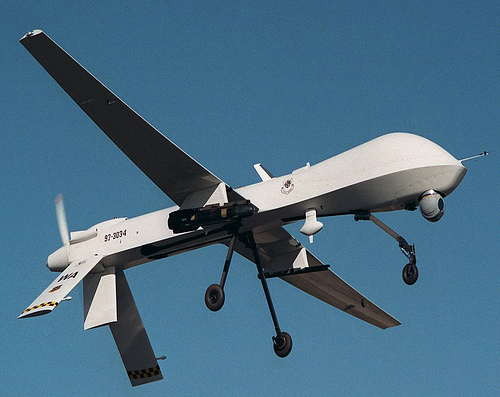
Pakistanis Belief on Drones: Perceptive or Paranoid?

MEDIA ROOTS- Fighting wars with robots is becoming an increasingly popular way for the US government to engage in combat. With the lack of US troop presence in the country, people might hardly consider America to be at war with Pakistan. However, US drone strikes in the region have dramatically escalated under the Obama administration, destroying thousands of families and further devastating the land that is still recovering from last year’s devastating floods.

Despite the government and corporate media’s propagandistic talking point about only alleged “militants” being the targets and victims of US drone strikes, the evidence compiled by independent researchers paints a more realistic picture: 90% of casualties from drone strikes are innocent civilians. Glenn Greenwald further analyzes the discrepancy between the government’s official line and the perception of Pakistanis.

Abby

***

SALON– Two weeks ago, President Obama’s former Director of National Intelligence, Adm. Dennis Blair, excoriated the White House for its reliance on drones in multiple Muslim nations, pointing out, as Politico put it, that those attacks “are fueling anti-American sentiment and undercutting reform efforts in those countries.” Blair said: “we’re alienating the countries concerned, because we’re treating countries just as places where we go attack groups that threaten us.” Blair has an Op-Ed … in The New York Times making a similar argument with a focus on Pakistan, though he uses a conspicuously strange point to make his case:

Qaeda officials who are killed by drones will be replaced. The group’s structure will survive and it will still be able to inspire, finance and train individuals and teams to kill Americans. Drone strikes hinder Qaeda fighters while they move and hide, but they can endure the attacks and continue to function.

Moreover, as the drone campaign wears on, hatred of America is increasing in Pakistan. American officials may praise the precision of the drone attacks. But in Pakistan, news media accounts of heavy civilian casualties are widely believed. Our reliance on high-tech strikes that pose no risk to our soldiers is bitterly resented in a country that cannot duplicate such feats of warfare without cost to its own troops.

Though he obviously knows the answer, Blair does not say whether this widespread Pakistani perception about civilian casualties is based in fact; if anything, he insinuates that this “belief” is grounded in the much-discussed affection which Pakistanis allegedly harbor for fabricated anti-American conspiracy theories. While the Pakistani perception is significant unto itself regardless of whether it’s accurate — the belief about drones is what fuels anti-American hatred — it’s nonetheless bizarre to mount an anti-drone argument while relegating the impact of civilian deaths to mere “belief,” all while avoiding informing readers what the actual reality is. Discussions of the innocent victims of American military violence is one of the great taboos in establishment circles; that Blair goes so far out of his way to avoid discussing it highlights how potent that taboo is.

Read the full commentary about Pakistani Belief About Drones: Perceptive or Paranoid?

Written by Glen Greenwald

© 2011 Salon

Photo by Flickr user JimNTexas

Fukushima in Meltdown Before Tsunami Hit

MEDIA ROOTS- Every time I read an article about TEPCO, the Japanese government and their handling of the Fukushima nuclear plant, the situation appears progressively more bleak. For months, Japanese officials refused to admit that any meltdowns were occurring. Finally, they admitted that all three reactors incurred full meltdowns in the immediate wake of the earthquake and subsequent tsunami.
The levels of radiation have also been substantially downplayed by corporate news outlets and government officials worldwide, putting millions at risk of radiation poisoning. The lack of accurate coverage might be due to the fact that General Electric (GE), the company that built the failed reactors, also owns 23 (near identical) sister reactors in the United States. GE also owns NBC news, which could explain why there is such little discussion in the corporate media about the extraordinarily dangerous risks involved with nuclear energy.

Disturbingly, the operator of the TEPCO plant has admitted to deliberately falsifying safety records to prevent the inspection of faulty components within the reactors at the Daiichi facility for the last decade. Just nine days before the devastating meltdown, the Nuclear Industrial Safety Industry warned TEPCO of its continued failure to inspect the critical pieces of equipment, and urged immediate repairs. Moreover, new testimony and evidence reveals that the plant’s reactors were so faulty that a meltdown was imminent regardless of whether or not the earthquake and tsunami hit.

Abby

***

RT– Workers at Japan’s Fukushima plant say the ground under the facility is cracking and radioactive steam is escaping through the fissures. They also say pipes and at least one reactor were seriously damaged before the tsunami hit the area in March.

­The allegations raise concerns that the facility was doomed even before the earthquake triggered the disaster. Problems with deteriorating pipes at the plant had been reported for years. The cooling system failed to stop reactors going into meltdown after it was hit by the 40-metre-high waves. The plant has been leaking radioactive material ever since, despite efforts to clean it up.

Robert Jacobs of the Hiroshima Peace Institute says that the evidence calls into question Japan’s nuclear safety.

“There’s certainly a great deal of evidence that appears to suggest that the first reactor, reactor number one, was melting down by the time the tsunami hit,” he told RT. “So, if that’s the case that the reactor was melting down as a result of the earthquake, and not as a result of the tsunami, a nine-point earthquake is something that has the potential to happen throughout Japan, and that would put the reliability and the design safety of all of these reactors in question,” he said. 

Reports of decreasing levels of radiation at the facility, Dr. Jacobs went on to explain, are no reason for optimism. It is more likely to mean that the radioactive material is moving away, making its way through the building structures:

“When you have a fragile structure that’s already suffered a great deal of damage and when you have continual aftershocks at the level of six-point, or there’s been some even higher, what we have now is we have the radioactive core that has melted down into the basement, into the bottom of the containment vessel of these reactors, and if the radiation level is going down, where it’s been monitored inside the buildings, and if the water pressure is going down, and the temperature is going down, it’s not that the radiation is just suddenly going away, it means that the radioactive material, the melted core, is simply moving further away from where it’s been measured,” he explained.

Watch the video:

Read the full article about Fukushima in Meltdown Before Tsunami Hit.

© 2011 RT

Photo by Flickr user 3StepsCrew

Interview with Filmmaker, Journalist Josh Wolf

Interview With Josh Wolf by Media Roots

MEDIA ROOTS – Josh Wolf is an American journalist and filmmaker who served 226 days in prison for refusing to turn over a collection of video tapes he recorded during a 2005 demonstration. Wolf recently graduated from Berkeley’s Graduate School of Journalism, where he made the film Police Tape for his thesis project. Police Tape is a half-hour award winning documentary that examines the impact of police recordings over the past two decades. In this interview, Abby Martin speaks to Josh about his journalism work, activism and the issue of police surveillance.


Trailer for Police Tape, www.PoliceTapeTheMovie.com

To find out more about Josh go to his website at JoshWolf.net follow him on twitter at twitter.com/joshwolf


The above timeline is interactive. Scroll through it to find out more about the show’s music and to resources mentioned during the broadcast. To see a larger version of the timeline with clickable resources go to the soundcloud link below the player.

If you would like to directly download the podcast click the down arrow icon on the right of the soundcloud display. To hide the comments to enable easier rewind and fast forward, click on the icon on the very bottom right.

This Media Roots podcast is the product of many long hours of hard work and love. If you want to encourage our voice, please consider supporting us as we continue to speak from outside party lines. If you donate, we want to thank you with your choice of art from AbbyMartin.org as well as music from RecordLabelRecords.org. Much of the music you hear on our podcasts comes from Robbie’s imprint Record Label Records, and Abby’s art reflects the passion and perspective that lead her to create Media Roots.org.

$40 donation: One 8×10 art print and one RLR release (You choose! Tell us in the Paypal notes.)

$80 donation: Two 8×10 art prints and two RLR releases (You choose!)

$150 donation: Four 8×10 art prints and four RLR releases (You choose!)

Even the smallest donations are appreciated and help us with our operating costs.

Thanks so much for your support!Listen to all previous episodes of Media Roots Radio here.

MR on Project Censored’s Costs of War Show

MEDIA ROOTS- Abby Martin from Media Roots co-hosts Project Censored’s special three and a half hour KPFA program “Costs of War.” At the beginning of each hour, there is an MR report on the economic, human and environmental costs of US wars in the Middle East. During the program multiple, multiple experts in different fields of study are interviewed on the show about their research for the extensive Brown University study Costs of War. The show focuses on on the socio-economic impacts of the wars in Iraq and Afghanistan and related subjects from scholars worldwide. Listen to the show here or below.

Fund Drive Special: Cost of War – August 11, 2011 at 12:00pm

Click to listen (or download)


Interview Schedule:

12:00-12:20 Catherine Lutz, Professor Anthro, Brown University, Project Director, Solders and Contractors: Recommendations and Neta Crawford, Professor Political Science at Brown University, Cost of War Project Director,

12:30-12:50 Norah Niland: Former Director Human Rights: United Nations Assistance Mission in Afghanistan, Afghanistan, social change and women, and Matthew Evangelista, Professor of History and Political Science, Cornell University, Alternatives to War

1:00-1:20 Winslow Wheeler, of the Straus Military Reform Project of the Center for Defense Information Washington DC. Department of Defense Budget, Military Cost of War

1:30-1:50 Dahr Jamail, Human Costs of War, Refugees, Life on the Ground and resistance in the military, Author: “The Will to Resist,”

2:00-2:20 John Tirman, MIT, Author of “The Deaths of Others” The Fate of Civilians in America’s Wars, Topic: Civilian Civilan Deaths In War—

2:30-2:50 Linda Bilmes, Professor Public Policy Harvard Kennedy School, Topic: Costs of Veteran Care

3:00-3:20 John Pilger, Journalist and Film Producer, covering his new documentary, “The War We Don’t See”

Catherine Lutz, Director of Costs of War: Catherine Lutz on Why We Can’t Turn the Page on America’s Wars {Costs of War} from Watson Institute on Vimeo.

Visit www.CostsOfWar.org for more information

SF Cell Shutdown: Safety issue, or Hint of Orwell?

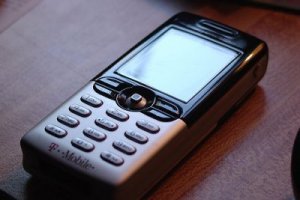
MEDIA ROOTS- Sometimes I forget that I am living in a police state, and then I hear about stories like this: last Thursday, Bay Area Rapid Transit (BART) shut off cellphone service at several stations in an attempt to stop a planned protest over another fatal shooting by BART police. It was spun as a preventative safety measure by BART and officials, but it’s a disturbing commentary on how de-valued privacy and civil disobedience have become in our society.

BART is technically private, but it has all the auspices of a public space. You can argue that private industry has the right to interfere with first amendment rights being exercised on their property, but when a public transit company works in collusion with the telecommunications industry and the government to shut down modes of communication, how can you call it anything but Orwellian? What is the difference between Mubarak’s regime cutting off the internet for Egyptians during the protests and BART officials cutting off the passengers’ freedom? Corporations are technically “people,” but how far are their rights allowed to infringe upon the rights and progress of a free society?

Abby

***

BREITBARTAn illegal, Orwellian violation of free-speech rights? Or just a smart tactic to protect train passengers from rowdy would-be demonstrators during a busy evening commute?

The question resonated Saturday in San Francisco and beyond as details emerged of Bay Area Rapid Transit officials’ decision to cut off underground cellphone service for a few hours at several stations Thursday. Commuters at stations from downtown to near the city’s main airport were affected as BART officials sought to tactically thwart a planned protest over the recent fatal shooting of a 45-year-old man by transit police.

Two days later, the move had civil rights and legal experts questioning the agency’s move, and drew backlash from one transit board member who was taken aback by the decision.

“I’m just shocked that they didn’t think about the implications of this. We really don’t have the right to be this type of censor,” said Lynette Sweet, who serves on BART’s board of directors. “In my opinion, we’ve let the actions of a few people affect everybody. And that’s not fair.”

Similar questions of censorship have arisen in recent days as Britain’s government put the idea of curbing social media services on the table in response to several nights of widespread looting and violence in London and other English cities. Police claim that young criminals used Twitter and Blackberry instant messages to coordinate looting sprees in riots.

Read more about SF Cell Shutdown: Safety issue, or Hint of Orwell?

Photo by Flickr user Aracio Olvarado