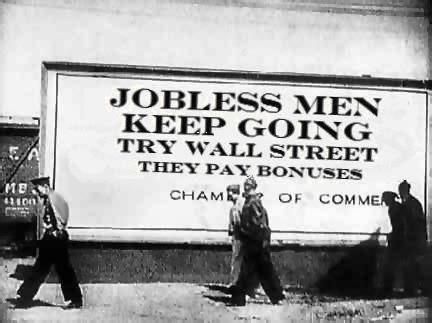
 MEDIA ROOTS- Obama’s jobs bill amounts to nothing more than a prop that his apologists will use to promote his re-election. His progressive critics, on the other hand, will bemoan its inadequacy, as they demand an FDR-like program of direct governmental employment. And so the sorry spectacle we have witnessed for the past several years will continue, all leading nowhere. Or rather, leading to further dire consequences for tens of millions.
The problem we face isn’t unemployment. The problem is that people are broke and the solution isn’t jobs, but income. With direct payments to all citizens, the government would at least begin to address the deeper problem of generalized insecurity, of which joblessness is simply one manifestation.
Enlightened government policy of this sort won’t be announced at a White House press conference. But is it delusional to contemplate revolutionary social change? Degenerating social conditions adversely affect a majority of citizens, and what is the response – to chase after neo-liberal illusions? Or to fund social entrepreneurs? Or to work towards change that addresses, without the constrictions of ideology, our real needs?
We are facing a bewildering set of catastrophes: climate change, resource depletion, and worldwide economic meltdown. It is no wonder that we are all uncertain where to start and what to support. However, if we can meet our basic needs won’t we be able to contend with all the other problems? It doesn’t take a Marxist to whisper in our ear that we are in the midst of a class struggle – we are not a country of fools some outside our borders think we are. We all understand the role of the rich who in pursuit of their gain undermine our survival.
One hundred years ago the average person knew this too, but the difference between our great grandparents and us is that they saw the power of ordinary working people putting down tools and striking, sometimes winning and sometimes smashed by the armed might of the capitalists – the State. During the Great Depression ordinary people began taking control of their circumstances; some created combative unemployed councils that organized local, collaborative economies (California had hundreds of these groups) and others occupied factories threatening the bosses’ control and spurring FDR to legalize unions to prevent revolutionary turmoil.
Obviously, we do not live in such heady times. Who will replace the workers who once toiled in those now abandoned factories scattered across the country? The pivotal role played by the old working class finds no equivalent in our age of permanent unemployment. Is it possible for the solidarity of a previous age, based on hope and resistance, but founded on a shared commonality, to be resuscitated by recognizing our generalized insecurity? Could this become the motivating force for social change hidden in plain sight?
What unites immigrants, students, the unemployed, the semi-employed in temporary and part-time jobs and all of us in jobs who face speed-ups, downsizing and off shoring? In Europe a name exists for those in this situation of precariousness: the precariat. A dissident academic, Guy Standing, has just written a thorough examination of this new class: The Precariat: The New Dangerous Class. The precariat is dangerous because, so far, its fears have only been addressed by the demagogic Right – the neo-fascists in Europe and the Tea Party in the US.
According to Standing, this new class has a tenuous grip on secure employment, with temporary contracts, no labor protections and no benefits. Or if they have a job, there is no guarantee it will last for years. These conditions lead the precarians to continuously job-hunt as a defensive strategy. They can’t expect to gain job experience as an asset for future employment and, as a consequence, a career with a professional identity fades from their lives.
Neoliberalism’s dogma of flexibility and adherence to market demands creates a centrifugal reality for the individual, destabilizing all aspects of life that define the personality, and that previously led to self-esteem. Values dissolve into attenuated opinions, friendships devolve into text messages, and love detours into pornography. Life hollows out in an endless pursuit of escapism (epitomized by consumerism) and insecurity generates fear of an uncertain future.
Ten years ago in Europe members of the precariat were the chain store workers, but today recent graduates find those jobs are unavailable. All across Europe and the US, the financial sector extracts its homage from governments as a policy of austerity that threatens even the most secure employment of all – government jobs. Can anyone doubt the continuing decline of the old working class, the industrial proletariat, and its succession by a growing mass of fringe workers, immigrants, and unemployables – the precariat? Standing estimates that in the West one-quarter of the population falls into this category, but if only those under thirty years old are counted the category swells to over half, or more. For the young the writing is on the wall, as they all know.
Jobs are scarce and will become even more so as technology continues to replace humans not only in manufacturing, but also increasingly in services. World trends for job creation, at least in the developed world, are discernable and really not contested, and to fly against them with solutions from another era merely demonstrates our inability to imagine another paradigm.
We need to take seriously the proposition that income must be separated from jobs. While this seems absurd in the context of US politics, it received a receptive hearing in the Nixon administration. At that time the fear of growing unemployment and major social unrest, like that seen in all major cities in the late 60s, prompted Washington to introduce a negative income tax to supplement income. Instead of paying taxes, the poor would receive federal funds to stay out of poverty; the federal Earned Income Tax Credit is a lame remnant of that policy. The oligarchs didn’t approve, and at about the same time both the explosive growth of poorly paid service jobs and the rise of the industrial prison complex sidetracked a more humane alternative.
While only a few academics are thinking along these lines in the US, in other parts of the world a basic income has been gaining adherence. The largest program based on this premise is in Brazil, where a modest stipend goes to families so that children can afford schooling. This may be a baby step of a program, but there are proposals to extend it. And other countries more generous benefits are contemplated. Here in the US we have a variation of this idea with the Alaska Permanent Fund that annually pays citizens approximately $1,000 apiece as their benefit from the sale of Alaskan oil.
Most advocates of a guaranteed income premise their program on a yearly subsistence paid to all without qualification, thereby with one program saving billions by ending a multiplicity of government assistance programs. Whether the funds raised for general distribution as income come from a small tax on financial transactions, or whether these funds come from the rent paid by corporations using public resources, or some other scheme or mixture of many sources, the point is that the money can be raised. The obstacle is not an economic issue, but a political one.
The assumption is that the guaranteed income would meet basic needs and be supplemented by employment, which could be part-time or full. If implemented, no one need be tied to a job for a whole year. For the young, in school, travelling, or experimenting with life’s choices, this sum might be sufficient to find meaningful engagement with others. We need to understand that this is not a scheme to avoid work, but to search out fulfillment in work. To in fact, redefine work away from forced labor as it’s conceived by most.
The long-range implications of this transformation of life’s current goal – to search for a job – address the environmental crises we face. How in fact will we contend with a world presented as a jungle, as a struggle to attain scarce resources? The reality of a life without an endless expansion of commodities must be met by transforming our values at some basic levels. The sages of all cultures have told us that we define ourselves by freely associating with others to discover our way of contributing to the commonweal. This is wise advice. We need to be free to follow it.
Bernard Marszalek is editor of The Right to be Lazy: Essays by Paul Lafargue (Kerr/AK Press). He can be reached at [email protected]



 DISINFO
 MEDIA ROOTS- Obama’s jobs bill amounts to nothing more than a prop that his apologists will use to promote his re-election. His progressive critics, on the other hand, will bemoan its inadequacy, as they demand an FDR-like program of direct governmental employment. And so the sorry spectacle we have witnessed for the past several years will continue, all leading nowhere. Or rather, leading to further dire consequences for tens of millions.
 Shockingly, Clarke also theorizes that the CIA tried to recruit a member of Al
Qaeda who later turned out to be one of the 19 hijackers, proving that the CIA was well aware of Al Qaeda ‘cells’ prior to the attacks. His allegations add credibility to the theory that some of the hijackers could have possibly been on the US government payroll.
Shockingly, Clarke also theorizes that the CIA tried to recruit a member of Al
Qaeda who later turned out to be one of the 19 hijackers, proving that the CIA was well aware of Al Qaeda ‘cells’ prior to the attacks. His allegations add credibility to the theory that some of the hijackers could have possibly been on the US government payroll.  Whereas recognition of the inherent dignity and of the equal and inalienable rights of all members of the human family is the foundation of freedom, justice and peace in the world,