 MEDIA ROOTS — Suzanne Maloney is a mainstay within élite U.S. foreign policy circles. A former employee of ExxonMobil and the U.S. State Department, Maloney now works for the Brookings Institution’s Saban Center for Middle East Policy. She recently presented testimony to the United States Congress entitled Progress of the Obama Administration’s Policy toward Iran. The Saban Center later provided an Arabic translation of her testimony on their website. Maloney’s testimony and its Arabic translation afford valuable insight into the ideology, which directs U.S. foreign policy in the Middle East.
Ideology and the Saban Center
Haim Saban, who holds dual citizenship between the USA and Israel, founded the Saban Center in 2002 with a multi-million dollar donation. By his own admission, Saban boasts, “I’m a one-issue guy, and my issue is Israel.” Saban, who has a personal net worth of roughly $3 billion, was also the second biggest private donor to U.S. Presidential and Congressional candidates. He describes his formula for influencing U.S. politics thusly: “make donations to political parties, establish think tanks, and control media outlets.” According to The New Yorker, “he is most proud of his role as political power broker. His greatest concern,” he says, “is to protect Israel by strengthening the United States-Israel relationship.” In line with Saban’s words, the Saban Center attracts those who adhere to a rigid brand of Zionist ideology.
Ideology is a constellation of ideas, which form the basis of a group’s political theory and actions. Zionism is a political ideology, which supported the establishment of an occupying Jewish state in the historical land of Palestine. Today, Zionism is dedicated to furthering Israel’s nationalist aspirations. The most widespread form of Zionism in the U.S. foreign policy arena is Revisionist Zionism, which romanticizes Jewish nationalism, emphasizes a perceived necessity of military force against any Arab or Persian ‘threat,’ and condones Israel’s territorial expansion and aggression. Adhering to this Zionist ideology, the Saban Center has employed Visiting Fellows whose ranks include numerous former IDF employees, the former head of Shin Bet, and a sprinkling of Arab nationals who turned their backs on the Palestinians and sought the prestige inanely associated with D.C. think tanks. In this context, the Saban Center doesn’t just publish texts periodically, but rather is a constituent to extensive dynamics, which prescribe Revisionist Zionist policy and advance it throughout the U.S. foreign policy lobbying apparatus.
Maloney’s testimony highlights the fact that, although the majority of U.S. think tanks are diffused across the Democrat-Republican two-party system, even the most respected think tank doesn’t deviate from the Revisionist Zionist narrative with respect to U.S. foreign policy towards the Middle East. Maloney testified in the autumn of 2011 during a time when Israeli Prime Minister Benjamin Netanyahu was mobilizing the American Israel Public Affairs Committee (AIPAC) and its propaganda apparatuses in Washington, D.C. to inflate the Iranian ‘threat.’ Netanyahu is no fool. He targets Iran, which is Israel’s lone regional rival, because Iran supports groups, which resist Israeli aggression. Maloney testifies within that context. She critiques President Obama on behalf of the Saban Center, as part of the political ebb and flow, which ensures all Washington actors adhere to the precepts of Revisionist Zionism.
Numerous U.S. think tanks perpetuate Revisionist Zionist ideology with even greater aggression than others. The Washington Institute for Near East Policy, the Center for Security Policy, the Heritage Foundation, and the American Enterprise Institute are the most prominent. However, it is crucial to focus on the Saban Center for Middle East Policy precisely because it is not often considered a Zionist enterprise, unlike these other think tanks. This low visibility allows the Saban Center to propagate a subtler, smoother mode of Revisionist Zionism throughout the U.S. foreign policy lobbying apparatus. With deliberate concealment, the Saban Center professes to provide “Washington policymakers with balanced, objective, in-depth and timely research and policy analysis from experienced and knowledgeable scholars,” while claiming that its “central objective is to advance understanding of developments in the Middle East through policy-relevant scholarship and debate.” This prevarication is even more dangerous when one considers its influential status as the 2011 “Top Think Tank in the World.”
The Saban Center’s subtle use of Revisionist Zionism is exemplified in the salient fact Maloney’s testimony doesn’t reference Israel once. This intentional silence speaks volumes. Omissions of Israel, its regional hegemony, or the USA’s history of interference in Iran’s internal affairs, are all part of a deliberate effort to de-historicize Iran and flush away any useful socioeconomic perspective. Other relevant facts—Israel possesses nuclear weapons and didn’t sign the Nuclear Non-proliferation Treaty (NPT), while Iran has no nuclear weapons and has signed the NPT—are simply not allowed to penetrate the prevailing narrative.
Mark Dubowitz and Dr. Kenneth Pollack accompanied Maloney in testifying to Congress. Mark Dubowitz is Executive Director of the Foundation for the Defense of Democracies. That think tank describes itself as a “non-partisan policy institute” dedicated to “defending free nations against their enemies,” specifically against the “threat facing America, Israel, and the West.” Kenneth Pollack is Director of the Saban Center for Middle East Policy. In 2006, the U.S. Department of Justice alleged Pollack aided two AIPAC employees while they were under investigation on allegations of spying for the state of Israel. After immense political pressure, all charges were eventually dropped. These three, the only panel members to testify before that Congressional Subcommittee, were selected deliberately to provide policymakers with the narrowest possible viewpoints of the Iranian ‘threat‘ through the lens of Revisionist Zionism.
Ideology via Translation
Revisionist Zionism is present within Maloney’s original English language testimony and also underpins the Saban Center’s translation of this document into the Arabic. (The Saban Center does not credit any individual(s) for translating Maloney’s text into Arabic). Aside from examples to be discussed momentarily, the Arabic translation is outstanding and remains completely loyal to Maloney’s English text. This faithful, direct translation is itself a strategy, stemming from the deliberate collocation of an ideology with persuasive, incisive writing (Lefevere: 51).
When reading the Arabic translation in comparison to the English text, it is evident that the Saban Center’s translator spent a great deal of time selecting the appropriate words to convey Maloney’s challenging, academic vocabulary. Therefore, one can reasonably conclude that any deviation from Maloney’s source text is entirely deliberate and may have ideological motives. As the Persian language, Farsi, is the national Iranian language, any changes, which took place during translation from the English into the Arabic, imply a sense U.S. power is omnipotent and unavoidable. These changes can foment dissent among Arab populations who read that text, and provide an Iranian minority, which is literate in the Arabic, with a sense of ascending capability to confront the Iranian theocracy.
Although the Arabic languge translation of Maloney’s testimony is a direct, accurate, and faithful translation, the instances where the translator deviates from said fidelity are fantastic discussion points. These deviations are also valuable precisely because they’re rare and offer tremendous insight into the nature of Revisionist Zionism and the broader aims of Maloney’s text. For example, Maloney’s English testimony stated, “Iran has experienced very little of the upheaval that has beset its neighbors over the course of the past year.” However, the translator opted for a stronger word in Arabic, which means “to storm through, to blow through, or to shake thoroughly.” The Arabic translation reads: “Iran had witnessed very little of the protests that stormed through its neighboring countries over the past year.” Later on, the English language testimony states Iran’s “neighborhood has been engulfed in historic change,” while the translation expresses how “the historic change stormed through/blew through Iran’s neighboring countries.” The Saban Center translated these passages in this manner in order to address the Arab audience, and emphasize Middle Easterners’ agency and ability to affect change in their region. Perhaps the translator is also targeting the slice of Iranian Persians who can read Arabic or the many Arabs who fled to Iran after USA’s 2003 invasion of Iraq. The translator deliberately selects words, which emphasize how populations in the Greater Middle East can positively affect their environments; the audience can engage in protests, which storm through regions, not passive, nameless upheaval, which besets regions.
The Saban Center often interfered with the Arabic language text during translation. In multiple instances, the translator selected two different Arabic words to translate the English language word for “liabilities.” The first context speaks of “the regime’s internal political liabilities,” which I would have translated as “political responsibilities.” The second context broaches how “the regional environment has also created new liabilities for Tehran,” which I would have translated as “obligations.” By telling the Arabic audience responsibilities are actually liabilities and obligations, the Saban Center advises the populace has a right to be upset if any regime reneges on its obligations. This can be extrapolated to other regional, oppressive regimes. This is a deliberate, indirect message to the Middle East, fitting perfectly with an Israeli propaganda apparatus, which prides itself on sewing strife within Arab and Persian lands.
Maloney’s testimony affirms “sanctions and export controls have played a subtle but significant role in slowing Iran’s capability to acquire” nuclear technology. The Saban Center deliberately didn’t translate the word “subtle” into the Arabic, despite the fact that the Arabic language contains multiple words with which to convey subtlety well. The Saban translator instead selects a word, which means “covert” or “hidden.” This Arabic word meshes well with the U.S.-Israeli clandestine subversion of Iran’s sovereignty. A covert program, supported by two hegemonic powers, is unlikely to be stopped; it can’t even be pinpointed. Those who read the Arabic translation of Maloney’s testimony may retain a feeling of inevitability the hegemons will prevent Iran from obtaining nuclear technology and the reader must go along with such a foregone conclusion.
Maloney contends “Iran’s dogmatic theocrats perceive the Arab uprisings in triumphal terms.” The Saban Center translates this into the Arabic as: “Iran’s dogmatic zealots perceive the Arab uprisings in triumphal terms.” There is no mention of a theocracy. In theocracy’s stead, the Saban Center refers to dogmatic “zealots” or “hardliners.” Zealotry, synonymous with fanaticism and intolerance of opposing views, is an amplification of mere theocracy. Theocracy, by definition and Iranian tradition, is a system of government in which clerics lead the nation. In practice, the Saban Center actualizes a cognitive distinction in the reader of its Arabic language text. The Arabic reader, having no knowledge of the tamer wording in Maloney’s original testimony, understands the Iranian rulers as fanatics, not mere theocrats.
The Saban Center’s mutation of theocrat into zealot also confines the Persian Other within Western stereotypes. “By employing certain modes of representing the other… translation reinforces hegemonic versions of the [neo]-colonized” (Niranjana: 3) and emphasizes damaging stereotypes. The readers are fully cognizant of this distortion of identity, but are helpless to alter the source of these representations, located distally in Washington, D.C., where these images serve as a mobilizing force.
Early in her testimony, Maloney asserts the Iranian regime’s durability is “the product of a resourceful campaign” to hamper popular uprisings. Notably, the Arabic translation of Maloney’s testimony indicates the regime’s durability results from a “sly” or “insidious” campaign to suppress dissent. By portraying the Persian with great negativity, the reader of Maloney’s translated testimony is imbibed with a sense of antipathy towards the Other. Perhaps this revulsion will contribute to existing Persian-Arab tensions around the Persian Gulf, or perhaps this revulsion will be internalized within the Arab or Iranian readership. No matter its effect, portraying the Persian with great negativity benefits practitioners of Revisionist Zionism.
Near the end of her English language testimony, Maloney remarks “the impediments to American sanctions represent tactical challenges,” which the Saban Center translated as representing “large” or “considerable” challenges. The Saban Center’s omission was deliberate, since the word “tactical” exists in Arabic and is used frequently. Tactical challenges are related to military manoeuvres in support of immediate martial gain and are designed to contribute to strategic objectives. By omitting any mention of the tactical nature of the challenges posed by U.S. sanctions, the Saban Center avoids military correlations and any concept Iran might possibly achieve military advantage. Furthermore, by translating the utterance “tactical” into the adjective “large,” the Saban Center places an amorphic, conceptual obstacle of indeterminate volume in Iran’s path. Once again, the Saban Center employs slight translation techniques to dramatically affect the Arabic reader’s perception. The message to the Middle East is clear: Revisionist Zionism, and those who support it, whether willingly or otherwise, will win.
In addition to manipulating individual words, the Saban Center adds Arabic words during translation. Maloney’s testimony asserts “disturbing new allegations [surround] Iran’s efforts to acquire nuclear weapons technology and its involvement with terrorism.” The Saban Center’s Arabic translation deliberately adds to Maloney’s initial assertion through contending allegations exist about “Iran’s efforts to acquire nuclear weapons technology and its involvement in acts of terrorism.” The insinuation is profound to the Arabic reader. In diplomatic terms, general involvement with terrorism pales in comparison to direct complicity in acts of terrorism. The Saban Center’s ideological additions frame Iran as an exporter of global terrorism and implicate it in finite acts of the worst kind, a contention Maloney’s counterparts at the Subcommittee hearing were eager to emphasize.
A similar narrative arises in Maloney’s testimony when she remarks “the resistance and persistence of the Islamic Republic presents a greater concern within the region than at any time in the past two decades.” The Saban Center translates this seemingly bland introduction as: “the Islamic Republic’s resistance and persistence is a source of great worry within the region, more so than at any point in the past two decades.” This addition incriminates Iran as the paramount source, insinuating boldly all fear will evaporate once Iran is dealt with. Interference through addition is a clever, measured action, calculated specifically to frame the Iranian regime in a negative light.
As expected, there are many instances where English language utterances do not exist in Arabic. These cases provide the Saban Center translator with free range to convey the precise meaning of the English word by using whatever Arabic words the translator sees fit. When discussing USA’s position relative to Iran, Maloney asserts “the threat of new measures has persuaded Tehran to take a number of steps over the years to mitigate its vulnerability to external economic leverage.” That statement alone, like much of Maloney’s testimony, is loaded with ideological prejudices. Despite all, the Saban Center chose to insert greater ideological force in the Arabic translation. Since a single, complete, apropos utterance for “leverage” doesn’t exist in Arabic, the Saban Center could have conveyed its essence through multiple words or various other translation techniques. Instead, it selects one word, whose meaning conveys influence, effectiveness, and even prestige. None of these descriptions satisfy leverage’s definition, which conveys an exertion of force designed to achieve a particular outcome. By deliberately avoiding explaining this in the Arabic, the Saban Center instead drops any connotation the U.S. achieves its goals through the application of force and implies the U.S. is enigmatically influential. In sum, the Saban Center doesn’t attempt to explain the concept of “leverage” in Arabic, because that doesn’t suit its ideological goals; implications of the inexplicable influence of non-native entities aligns well with the ideology of Revisionist Zionism.
The heart of Zionism explains why the Saban Center would omit words during translation. Zionism, by definition, is based on exclusion, both territorially and conceptually. It emphasizes a state-building process, which rejects Palestinians, prioritizes land allotment for a chosen people, and deliberately propagates ethnic division (Gordon: 821). By its very nature, Zionism demands the expulsion of aspects, which might disrupt its traditionally cohesive character (Ibid: 811). Hence, ideology tends to trump linguistic considerations during the translation process (Lefevere: 39).
Caution is mandatory because some translators might not be conscious of how the Saban Center’s ideology affects their work. Hence, deliberate intent might not be applicable to all instances where the Saban Center distorts Maloney’s text during translation into the Arabic. Concordantly, critics of the Saban Center’s perpetuation of Revisionist Zionism must accept not all ideological acts are premeditated. Nonetheless, dissecting Dr. Suzanne Maloney’s testimony and its Arabic translation illuminates how a subtle U.S. think tank adheres to a strict Zionist narrative when prescribing policy about the Greater Middle East. This analysis is a small step towards understanding how the ideological undercurrents of a refined think tank intersect with the U.S. geopolitical process.
Written by Christian Sorensen for Media Roots
***
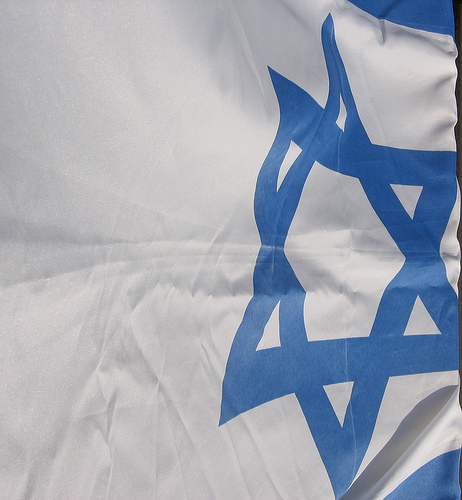
Photo by Flickr user Ron Almog
Additional labour by Messina



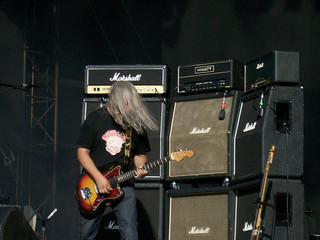 MEDIA ROOTS — If you’re like me, you’ll do your darnedest to make sure you catch the lovely J Mascis or the tender and mighty Dinosaur, Jr. anytime they come to town. For some of us, this means catching life-altering gigs at venues like San Francisco’s Fillmore or Slim’s. So, imagine my delight when my dear brother Mónchis said Henry Rollins would be previewing on his KCRW radio show J Mascis’ forthcoming release of instrumental guitar-driven transcendence from his new eponymous side-project, Heavy Blanket (below).
  MEDIA ROOTS —
 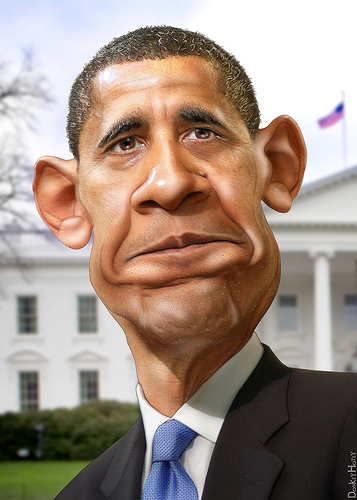 MEDIA ROOTS — The function of the U.S. presidency, essentially, is to give a human face to the empire, to offer a humanizing appeal to barbarism abroad and domestically—at least under our rigged de facto two-party dictatorship. A point Obama doesn’t deny: “People have a sense the game is rigged…” Enter Obama, to assure them otherwise.
  MEDIA ROOTS — In today’s fast paced, mostly club-dominated, electronic music culture, it is rare for dance music to convey an evocative message. A wonderful exception to this standard is Oakland analog synthesizer solo musician, Identity Theft. He has just released a new EP, Security Theatre, which you can stream for free in its entirety. Its titular track tells us that “All the World’s a Stage.”
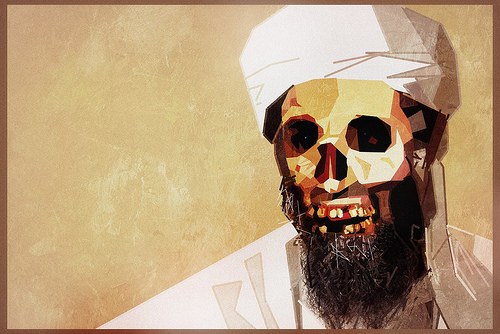 MEDIA ROOTS — It’s been a whole year since Osama bin Laden was allegedly assassinated in a Pakistani Navy Seal raid, but that isn’t stopping water-carrying media outlets and the White House from ratcheting up fears of terrorism, painting the potential for an