MEDIA ROOTS – The MegaUpload scandal is a perfect example of how the US government doesn’t let anyone get in their way of going after cases of alleged copyright infringement. The US government bypassed criminal courts and went after MegaUpload founder Kim Dotcom, seizing his assets last year after a high-profile raid of his New Zealand compound–and now America is seeking his extradition to the US. Julie Samuels, staff attorney for the Electronic Frontier Foundation, joins Abby Martin in the RT TV studio to discuss the case and what this means for Net Neutrality.
Abby Martin Interviews Julie Samuels from the Electronic Frontier Foundation at RT TV
MEDIA ROOTS – The Obama administration has the worst track record when it comes to prosecuting whistleblowers. Obama once claimed he’d work hard to have a transparent government, but many have faced retaliation for revealing controversial government information. One of the most startling whistleblowing cases is Sibel Edmonds, Iranian born former FBI translator, who has been called the “most gagged woman in history.”
She waited 340 days for FBI clearance of her memoir but finally decided to release it on her own, without any redactions or government approval. Her book gives explosive allegations that indict multiple levels of the government of traitorous deception and cover up the highest levels of government. Edmonds, founder of the National Security Whistleblowers Coalition, joins Abby Martin in the RT studio to discuss.
Abby Martin Interviews Government Whistleblower Sibel Edmonds at RT TV
MEDIA ROOTS — Igloo Magazine sits down and asks 5 questions of Robbie Martin. Robbie is the co-host of Media Roots Radio, as well as a heavy contributor to the website. He also runs a music imprint called RecordLabelRecords out of Oakland, California.
MR
***
IGLOO-MAG — RecordLabelRecords‘ own Robbie Martin (aka Fluorescent Grey) takes the Five questions spotlight to new levels with an in-depth historical overview of the label and its spawning. Central RLR theme’s generally hover around “layers of custom-cut sounds, derailed electronics, distorted audio warfare and a virtual smorgasbord of unique electro-acoustic fragments.”
Igloo Magazine :: When did RecordLabelRecords start up and what was your inspiration?
Robbie Martin (RLR) :: RecordLabelRecords technically started back in 1996, as a pseudo umbrella ‘label’ for a self-released track rap parody album I made with a friend riffing off of Coil’s Scatology. At the time, I was trying to discover all this weird music using AOL, pre web browsing, mailing lists and usenet (alt.noise, rec.music.ambient). I then met Kush Arora by typing in ‘noise’ into the music genre profile search in AOL and we struck up a friendship after I discovered that he lived 20 minutes away (and still lived with his parents and was in high school as was I).
I think the Coil mailing list itself was probably the way I discovered most of the music I grew to love like Scorn and Autechre. Brainwashed was just starting up at that time, but by the end of my ‘tenure’ on the list (after the rap parody and my friend and I trolling the list under different aliases), I had already burned several bridges including that of the guy who runs Brainwashed and who ran the old Coil list (who still won’t talk to me 15 years later). I will admit I was a cocky 17 year old who lived in a suburban town where I was the only person my age within a ten mile radius who had heard of these obscure musicians. From Coil’s association with Nurse with Wound, Throbbing Gristle and Psychic TV I had fallen in love with their jarring and psychedelic sounds. Aside from being a chin scratching elitist who didn’t care to have many friends in my home town, I was what most people would describe as straight edge. I had never smoked weed, nor cigarettes, hadn’t done acid, mushrooms or even alcohol. Music like Coil vs Elph Worship the Glitch put me into states that made me feel outside of myself; lying on my bed with headphones, I was constantly listening to this type of music fully sober and by myself. It wasn’t until I did psychedelic drugs for the first time in my twenties when I realized “Oh yeah, this is why this album is called Love’s Secret Domain.” My inspiration overall came from my adoration of the ‘post industrial’ wellspring of creative dark electronic / raw / electro-acoustic / idm music that seemed to have peaked in the mid 90’s. I feel like that aesthetic approach, even if it’s packaged in more modern advertising style branding *now*, its essence is making a big comeback in 2012 and that’s really encouraging to see.
Igloo :: Who were some of your initial artist relations and did your location help or hinder progress?
(RLR) :: My location did both; I grew up in a town where the only music scene for young people was Christian punk. It was only after meeting local experimental artists like Moe Statiano (who at the time was like a local one man band version of Einsturzende Neubauten) and the folks at Ovenguard Records in Berkeley like Chris Stecker and Erik Gallun (whom I met through Kush after they bought his noise tape at Ameoba called Too Pissed to Masturbate) did I really feel connected to any sort of artistic community in the San Francisco bay area. Living in Pleasanton I didn’t venture out to San Francisco, Oakland or Berkeley very much but over time I started to break out of my anti-social shell a little; I was still very young compared to most of the other performers I would play with, so I always had this “out of place feeling.” Almost every show I attended or performed at back then the average attendee’s age was 35, unlike today where noise and experimental shows seem to attract a lot of young people; back then it wasn’t like that at all.
MEDIA ROOTS— Graham Hancock, arguably the world’s foremost expert on ancient mysteries, has devoted his life to uncovering and demystifying the rituals, legends, and wisdom of ancient cultures. In this video, he investigates oft-ignored inconsistencies. For example, he discusses the true age of the Great Sphinx of Giza, which remains under debate. Scholars’ estimates vary widely, though mainstream Egyptologists generally believe it was constructed approximately 4,500 years ago, whereas Hancock asserts heavy water erosion indicates the Sphinx was built quite earlier than believed, at a time when the Giza Plateau wasn’t even a desert yet.
Hancock also questions how Egyptian culture could have attained, such an advanced state so quickly. As he explains, cultures generally undergo evolutionary processes before reaching a point of historic greatness or iconic status. There is usually a progression, in which the building blocks of a society are gradually created over time, giving rise to increased sophistication as the civilization matures. However, with ancient Egypt this does not seem to be the case. Egypt seemingly appeared out of nowhere, complete with massive, architectural wonders, a complex mythology, and an eerily accurate astronomy. Yet, no concrete evidence links Egypt to a previous culture. So, where did ancient Egyptians develop their wisdom? Or should we be asking: Where did the Egyptians come from?
In the video, Hancock lays out a fascinating theory. He believes an ancient culture existed far earlier than contemporary scientists believe, which laid the foundation for Egyptian civilization. He suggests around the end of the last ice age, approximately 10,500 BCE, a cataclysmic natural disaster altered the course of mankind by disrupting this ancient culture. Because most people at this time were living close to water, flooding from the disaster killed the vast majority of them. However, the small minority, which survived retained the wisdom of their antecedents.
Who were these people? Hancock believes they were from Atlantis, the mythical lost island, which most scholars have concluded to be non-existent. For example, Alex Cameron wrote in Greek Mythography in the Roman World (124), “It is only in modern times that people have taken the Atlantis story seriously; no one did so in antiquity.”
Hancock also investigates a number of other ancient artifacts, mysterious discoveries, and cultural anomalies. With cultivated elocution and an erudite demeanor, Hancock tempers his non-traditional theories with cool, detached logic and reasoning. Whether one’s persuaded by him or not, one can’t deny his ability to bring excitement and attention to the study of ancient cultures. For example, Hancock tells us ancient cultures were much more in tune with nature, astronomy, and the Earth itself, all of which helped shape their worldview. Consequently, their wisdom and spirituality was much deeper and more encompassing than modern cultures. In fact, Hancock’s theories may cause you to wonder whether humanity has progressed at all since the time of the ancients.
MEDIA ROOTS —A pair of internet archivists who call themselves ‘Neuro Linguistic Programming’ have uploaded Part one out of forty US corporate media print publications from the immediate days and weeks following 9/11. The duo plans to post multiple full issues of Time and Newsweek as well as other timely magazines that are filled with blatant fearmongering and propaganda about terrorism.
Following 9/11, news media accelerated at an amazing rate, and most companies soon adopted internet versions of their paper or magazines. Before this was commonplace, many interesting pieces of information printed about that day most likely were never reprinted again–due to false information or just abandonment by the propagandists. As we know, many government narratives and unfounded claims about 9/11 were re-printed without any journalistic investigation.
Part One gives us a look at a ‘Terrorism Survival Guide,’ an actual print magazine which was distributed and sold at grocery stores around the country. We especially like the bio-terror section displaying little girl in a hazmat suit holding a gasmasked Barbie. We hope that these archivists continue this fascinating project, it could uncover aspects of the ‘War on Terror’ that most journalists and researchers have completely forgotten about. Above all, it reveals the extent of the conditioning the American people were subject to immediately after the traumatization of our nation.
Robbie Martin for Media Roots
***
Note: The ‘Terrorism Survivlal Guide’ slide show looks best at full screen by clicking the box in the right corner. Click play to start viewing the ‘Terrorism Survival Guide.’ Click the pause button to stop the slide show from progressing automatically.



 MEDIA ROOTS — Igloo Magazine sits down and asks 5 questions of Robbie Martin. Robbie is the co-host of Media Roots Radio, as well as a heavy contributor to the website. He also runs a music imprint called RecordLabelRecords out of Oakland, California.
 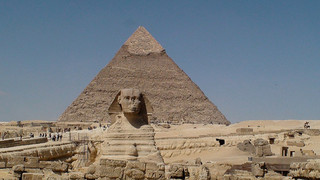 MEDIA ROOTS — Graham Hancock, arguably the world’s foremost expert on ancient mysteries, has devoted his life to uncovering and demystifying the rituals, legends, and wisdom of ancient cultures. In this video, he investigates oft-ignored inconsistencies. For example, he discusses the true age of the Great Sphinx of Giza, which remains under debate. Scholars’ estimates vary widely, though mainstream Egyptologists generally believe it was constructed approximately 4,500 years ago, whereas Hancock asserts heavy water erosion indicates the Sphinx was built quite earlier than believed, at a time when the Giza Plateau wasn’t even a desert yet.
 .jpg) MEDIA ROOTS — A pair of internet archivists who call themselves ‘Neuro Linguistic Programming’ have uploaded Part one out of forty US corporate media print publications from the immediate days and weeks following 9/11. The duo plans to post multiple full issues of Time and Newsweek as well as other timely magazines that are filled with blatant fearmongering and propaganda about terrorism.
MEDIA ROOTS — A pair of internet archivists who call themselves ‘Neuro Linguistic Programming’ have uploaded Part one out of forty US corporate media print publications from the immediate days and weeks following 9/11. The duo plans to post multiple full issues of Time and Newsweek as well as other timely magazines that are filled with blatant fearmongering and propaganda about terrorism.