
War on Terror Comes Home to Roost: The Security State’s Plans to Crush Activism

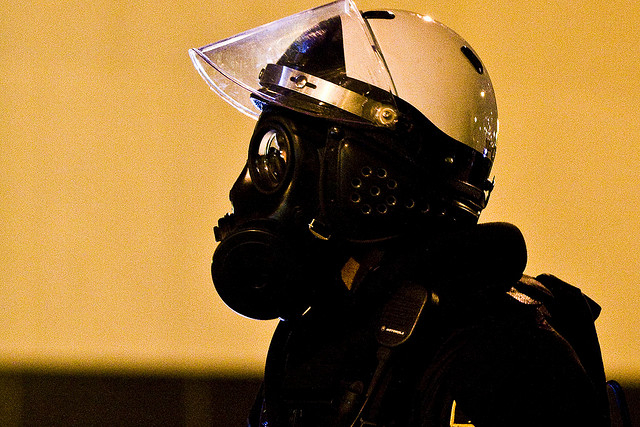
Riot Cop flickr user Tony WebsterHousing discrimination against African-Americans, also known as redlining, has long been a form of institutional racism in the post Jim Crow era.

Under the Federal Housing Act, federal loans were systematically denied to African-Americans, which helped create ghettos and further segregated blacks from whites. Ferguson is just one example among many which employed the practice.

The latent effects of racism are rooted throughout Ferguson. 93% of drivers arrested are black, yet only 67% of the city’s population is black. One-quarter of the town’s revenue is due to fines issued by a police force that disproportionately targets African-Americans.

There are unabashedly racist cops, like police lieutenant Hayes, who ordered officers to racially profile minorities. According to a whistleblower, Hayes said things like “let’s have a black day” and “make the jail cells more colorful.” Adding insult to injury, the police broke the law while investigating him.

With this reality in mind, fatal police shootings of black teens like Mike Brown are bound to happen.

The mass protests in Ferguson caused Amnesty International to make an unprecedented deployment of observers to the streets, including Jasmine M. Heiss, who told Media Roots that “Ferguson has sparked an intense and overdue conversation about race and justice in the United States.”

Heiss also witnessed the racial divide created in the West Bank, where Jewish settlements and surrounding Palestinian population had been segregated by walls and checkpoints. While illegal settlements in Hebron enjoyed basic necessities, Palestinians were denied access to human rights like water. After witnessing numerous arrests of journalists and peaceful protesters amid the tear gas, rubber bullets and sound cannons in Ferguson, Heiss said she felt like she was back in the West Bank, noting the striking similarity between the two cities in their militarized crushing of dissent.

Journalist Max Blumenthal has documented this parallel, underscoring how Israeli security state tactics have been outsourced to the US in a trend he calls the “Israelification” of American police forces. In fact, according to Electronic Intifada’s Rania Khalek, “at least two of the four law enforcement agencies that were deployed in Ferguson—the St. Louis County Police Department and the St. Louis Police Department—received training from Israeli security forces in recent years.”

Enforcing security based on racist ideology has long been field tested by Israel, which uses Palestinians as lab rats before outsourcing its defense and intelligence capabilities to other world powers. Whether it be Israeli forces training ICE officers in Tacoma, outsourcing a Behavior Pattern Recognition security system for US airports, or intelligence contractor Elbit Systems winning multimillion dollar contracts to patrol the US-Mexico border, Israel’s idea of security has now become America’s. As a result, Big Brother’s gaze is discriminatory, and racial minorities are unfairly targeted by the system.

When the state engenders unjust policies like those epitomized in places like Ferguson, the press has a duty to engage, raise awareness and advocate the reinstatement of justice. Standing in solidarity with the oppressed and amplifying the plight of the voiceless is the primary function of the Fourth Estate. Unfortunately, the police state has appropriated the corporate press and criminalized journalists who challenge systemic injustices.

In response to the police killings of Mike Brown, Ezell Ford and Eric Garner, activist groups like Black Youth Project 100, the Dream Defenders and the Million Hoodies Movement for Justice, have gained traction. To be sure though, the Defense Department has been anticipating the growth of such activism, whether it be Muslims in Michigan, blacks in Ferguson, or any other minority group which could “threaten social unrest.”

In a four-part series for Occupy.com, Dr. Nafeez Ahmed unveils a government data-mining project dubbed The Minerva Initiative. Under the guise of enhancing the drone Kill List and targeting American-Muslims that have the “potential to become terrorists,” the flawed algorithms used to search out ‘terrorists’ abroad are now being retrofitted to seek out political dissidents on US soil.

Ahmed details how a nexus of metadata and social media are being used by the Pentagon to develop a “radicalism scale” for potential social uprisings in the US, and the unconstitutional spying operation is being aided and abetted by Universities like Arizona State and the University of Washington. Effectively, social sciences are militarized with professors acting as spy proxies reporting back to their DC overlords.

One specific DoD project “seeks to uncover the conditions under which political movements aimed at large-scale political and economic change originate, and what their characteristics and consequences are.” As Ahmed states in an interview with Abby Martin, Ferguson is an example of what the Minerva Initiative sets out to suppress.

Even more disturbing, the use of predator drones on American soil is a real possibility considering the direct correlation between data-mining and extrajudicial executions. If current trends continue, American skies could soon be populated by drones targeting and potentially even executing non-violent activists.

Given the aggressive characteristics police displayed during Occupy Wall Street and Ferguson combined with the Pentagon’s intent to seek out and destroy potentially “threatening” movements, the War on Terror has officially come home to roost.

Written by Michael D. Micklow, image by flickr user Tony Webster
Posted in Uncategorized | 1 Reply

BP’s Oil Spill: Criminal Negligence, Thousands Still Sick & A Gulf Graveyard Left Behind

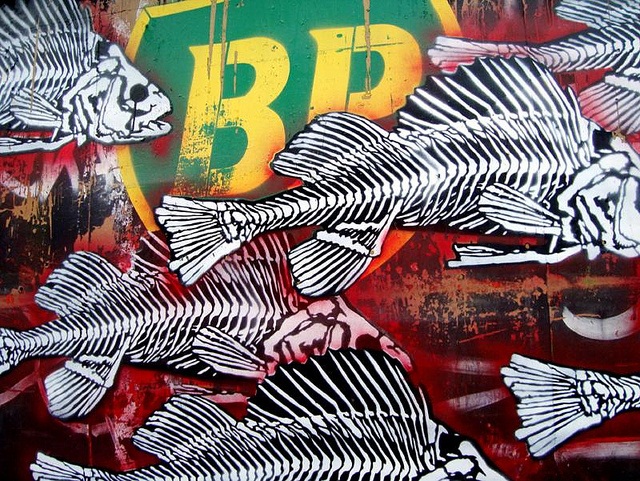
BP dead flickr user thierry ehrmannAfter BP agreed to pay $4.5 billion to the government, and another $9.2 billion in penalties since its catastrophic oil spill, a new ruling has put the corporation under fire again.
A US District Judge has found BP grossly negligent and it’s subcontractors, Halliburton and TransOcean, negligent for their roles in the 2010 Deepwater Horizon explosion and subsequent dumping of more than 210 million gallons of toxic sludge into the Gulf of Mexico, killing 11 people and countless marine creatures in the process. Under the Clean Water Act, the new ruling could effectively quadruple the penalty per barrel spilled that BP will have to pay.

BP’s criminal negligence shouldn’t come as a surprise. After nine years at sea, company management acknowledged that the Deepwater drilling rig was in decline and presented a quote “intolerable risk” to safety, yet chose to do nothing. Halliburton also plead guilty to the destruction of key evidence related to the company’s shady cost-cutting practices like failing to inspect the well’s cement mixture, and using only six of the recommended 21 centralizers to secure the site.

Besides the massive damage that’s been done to the environment as a result of the BP disaster, the health impact on humans continues – largely because of the decision by BP and the EPA to spray nearly two million gallons of a dispersant called Corexit onto the water, making the oil 52 times more toxic, according to the Environmental Pollution Journal.

All this aside, BP’s contracts with the Defense Department have more than doubled in the years since the disaster.

Even though the media is fatigued with its coverage of this disaster, Breaking the Set went down to the Louisiana Gulf Coast to see how the region is faring nearly five years later and to investigate the spill’s lasting damagesWe learned that hundreds of thousands of people are still sick, and that the oil industry has turned the once vibrant shore into a graveyard.

Abby

**

BP’s Oil Spill: Criminal Negligence, Thousands Sick & Gulf Graveyard Left Behind

**

Exclusive coverage includes interviews with Jorey Danos, a sick clean-up worker who was exposed to a toxic chemical dispersant known as Corexit, award winning toxicologist Wilma Subra, Gulf Restoration Network’s Jonathan Henderson and Clint Guidry, President of the Louisiana Shrimpers Association.

We also reached out to BP, which provided the following statements:

Q: Why were cleanup workers refused respirators and even threatened with termination if they requested them, according to multiple interviews with clean-up workers and the Louisiana Environmental Action Network?

A: We certainly do not and would not retaliate against workers. BP worked closely with OSHA, the US National Institute for Occupational Safety and Health (NIOSH) and other US government agencies to take extraordinary measures to safeguard the health and safety of responders.

Workers were provided safety training and appropriate personal protective equipment (PPE), and were monitored by federal agencies and BP to measure potential exposure levels and to help ensure compliance with established safety procedures.

Response workers applying dispersants received training on work procedures and PPE usage designed to minimize exposures, and were provided respirators and other PPE.

Workers who were not exposed to dispersants may have asked for a respirator, possibly in the mistaken belief that it would provide an extra level of protection and safety. This is not true. Perhaps the most important consideration in voluntary respirator usage is the potential physiological burden placed on the user. That was particularly true given the hot working conditions encountered during the response.

Due to the extensive controls in place, there was little potential for worker or public exposure to dispersants. More than 30,000 air monitoring samples were collected by the Coast Guard, OSHA, NIOSH, and BP as part of a comprehensive air monitoring program to evaluate the potential for human exposure to dispersant and oil compounds. The results showed that response worker and public exposures to dispersants were well below levels that could pose a health or safety concern.

Additional Background: OSHA advises that, “in workplaces with no hazardous exposures, but where workers choose to use respirators voluntarily, certain written program elements may be necessary to prevent potential hazards associated with respirator use. Employers must evaluate whether respirator use itself may actually harm employees. If so, employers must medically evaluate employees and, if necessary, restrict respirator use…”

For these reasons, respirators typically are not provided to people who do not need them, and who have not passed the required tests for fitness to wear the equipment. In consultation with NIOSH and OSHA, BP developed guidelines to help determine when PPE, including respirators, was to be used. Known as the “PPE Matrix,” this guideline was made available on several websites, including websites for BP and OSHA. Under the PPE Matrix, respirators were to be used in specifically- identified situations, including during the application of dispersants. There were times, however, when the potential risks associated with using a respirator outweighed the benefits since air monitoring data indicated that worker exposures to chemicals of concern generally were well below occupational exposure limits, and respirator use could place physiological stress on the body. In those cases, protection was provided by work practices and procedures and the use of other PPE.

A paper reviewing OSHA and NIOSH’s response to the accident can be found here.

Q: Why was the public told that Corexit was as harmless as Dawn, when five of the ingredients in it are linked to cancer, 33 are linked to skin irritation and 11 are respiratory toxins, according to expert toxicologists, Wilma Subra and Dr. Susan Shaw?

A: The Material Safety Data Sheet (MSDS) for Corexit, where human exposure characterization is addressed notes, “Based on our recommended product application and personal protective equipment, the potential human exposure is: Low.” Also, Section 16 of the MSDS characterized Corexit’s general product risk- “The human risk is: Low. The environmental risk is: Low.”

The same ingredients contained in Corexit are also found in common consumer products such as household cleaners, food packaging, hand lotion and cosmetics. The product ingredients alone do not determine if a compound has created a public health concern; there must also be exposure to a compound at levels and for sufficient duration that could cause harm.

The results of extensive monitoring conducted by federal agencies and BP show that response workers and the public simply were not exposed to dispersant compounds at levels that might pose a health risk.

Due to the controls in place during dispersant application operations, there was little potential for public or worker exposure when dispersants were applied to the oil offshore. This was confirmed by the government findings as previously mentioned.

Q: Why has the active cleanup of Louisiana’s coast officially ended when thousands of tar balls continue to wash on shore?

A: The Coast Guard ended active cleanup after an extensive four-year effort. Even so, we remain committed and prepared to respond at the Coast Guard’s direction if potential residual Macondo material is identified through the National Response Center reporting process and requires removal. We have teams and equipment at staging areas in Grand Isle, LA and Gulf Shores, AL ready to rapidly respond as necessary.

Additionally numerous studies and reports have documented the presence of tar balls along the Gulf coast in the decades before the Deepwater Horizon accident, and during our cleanup efforts we continued to find tarballs that did not contain residual Macondo oil.

Q: Why have only 148 people received any medical claim whatsoever well over four years after the disaster and why is the average benefit only $1,600 dollars, when doctors such as Michael Robichaux has studied hundreds of patients and observed long term and possibly lifelong health effects in the process?

A: BP and the PSC consulted with medical experts to determine compensation amounts and formulate a list of the conditions that, according to scientific evidence, could be caused by exposure to oil or to the dispersants used in the cleanup. Compensation for these listed conditions is subject to the clear terms of the MSA. As is common in class action settlements, the settlement program did not begin processing and paying out claims until all appeals were exhausted, which occurred earlier this year. As to Dr. Robichaux, his allegations were considered and rejected over a year ago by a New Orleans federal court, which found that the doctor “wholly failed to provide any competent evidence in support of the assertions he makes.”

**

Follow me @AbbyMartin

Art by flickr user Hierry Ehrmann

Posted in Uncategorized | 1 Reply

Hurricane Katrina Unheard: Blackwater, White Militias & Community Empowerment

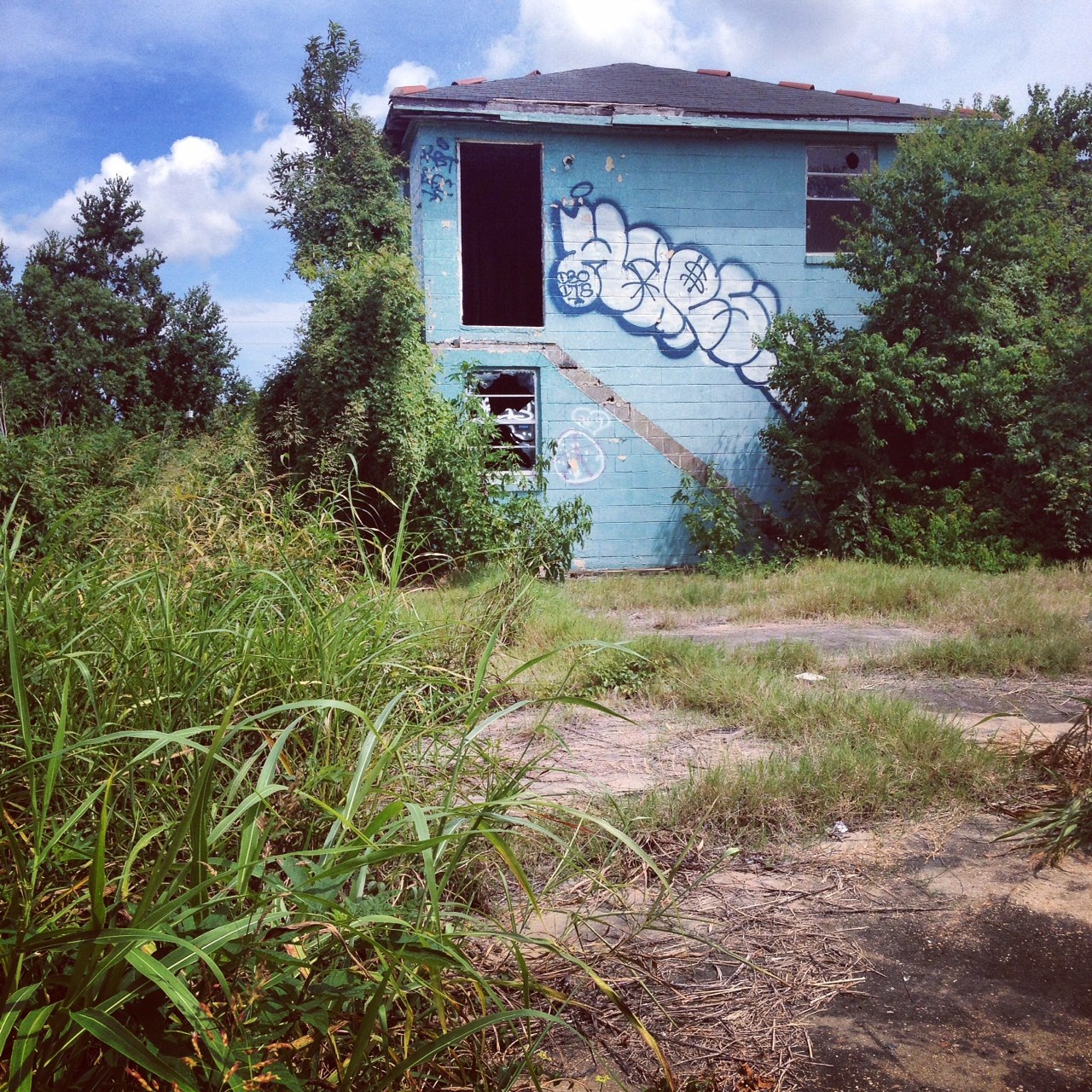
katrinahomeAfter more than 1,800 deaths, $108 billion in damages, and almost a decade of recovery efforts, Hurricane Katrina is now remembered as the single most devastating natural disaster in US history.
There were more than 50 failures in levees, leading to 80% of New Orleans being flooded. In particular, the construction of the lower ninth ward levee was called into question after a barge destroyed it, which directed the worst of the flood into the poorest areas.

Tens of thousands of people were trapped for days without food nor water and entire neighborhoods were submerged with sewage.

But instead of addressing the catastrophe like the humanitarian crisis it was, government officials treated New Orleans like a warzone. Thousands of police, national guard troops and active duty soldiers invaded the city to restore ‘law and order,’ and private mercenary firms like Blackwater were already on the streets before emergency aide could reach city residents.

Amidst the chaotic scramble by the federal government to deliver relief on the ground, defense contractors had turned large swaths of the city into an armed prison, meanwhile ordering civilians to turn in their firearms (including those legally registered). At the same time, bands of white militias patrolled the streets, using deadly force against African-Americans while police turned a blind eye.

Breaking the Set traveled to New Orleans to follow up on how the city is faring nine years after Katrina, and found miles of roadways in disrepair, tens of thousands of blighted homes and neighborhoods like the ninth ward looking like the storm just hit yesterday. According to 2010 census data, nearly a third of the population has left New Orleans, primarily in poorer communities.

The lessons of Katrina need to be heeded now, because it’s not a matter of if, but when the next Katrina hits. And the question remains: how will we respond if the government  treats its own people like refugees and goes to war with us again?

**

Hurricane Katrina Unheard: Blackwater, White Militias and Community Empowerment

 **

Exclusive coverage from New Orleans includes interviews with Ward ‘Mack’ McClendon, founder of the Lower Ninth Ward Village community center about how he is revitalizing the community and two co-founders of Common Ground Collective, former Black Panther Malik Rahim and notable anarchist Scott Crow, about taking arms against the white militias that patrolled Algiers Point and killed at least eleven black people in the aftermath of the storm.

Photo & report by @AbbyMartin

Posted in Uncategorized | 1 Reply

Media Roots Radio – Abby Goes to Gitmo

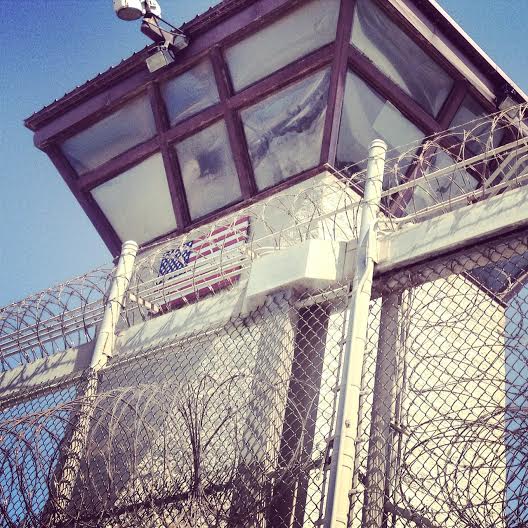
Recently I traveled to one of the most nefarious prisons in the world: Guantanamo Bay, Cuba. Despite repeated government pledges to close the infamous detention facility down, 149 men remained indefinitely imprisoned there.

gitmoAccording to a top Bush administration official, the vast majority of prisoners are innocent, and were either swept up in a dragnet or handed over in exchange for US bounties.
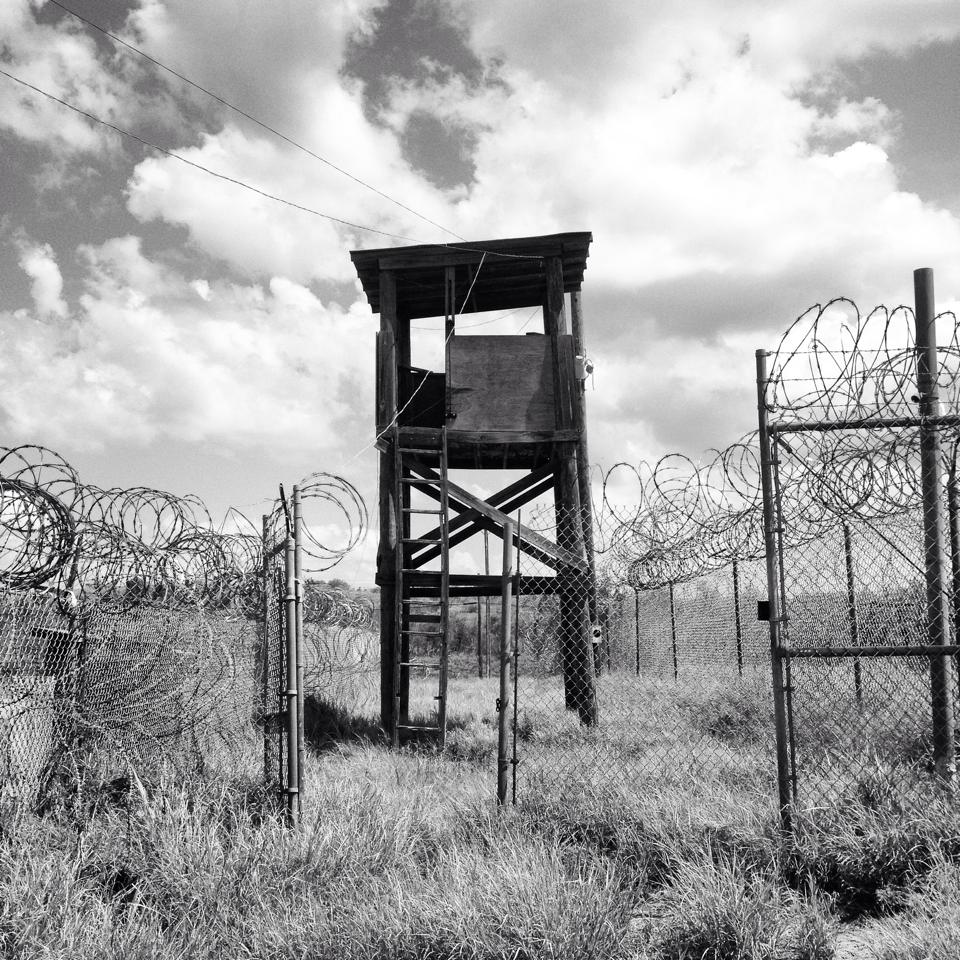
It’s already hard enough traveling to Gitmo as a journalist, but upon arrival I realized the experience was going to be controlled 24/7 by military escorts preventing us from going anywhere near the detainees I had come to report on.

However, I was able to speak with several top brass defense attorneys for the military commissions, a corrupt system that grants alleged terrorists less rights than civilian courts. The fact that six men are facing formal charges at the prison in relation to 9/11 & the USS Cole bombing gives the world the false impression that even alleged terrorists get their day in court. In reality, the remaining 143 men never charged with a crime may never get that luxury.

Amazingly, according to their lawyers, the detainees watch RT and Breaking the Set regularly.

My brother Robbie interviewed me about my intense experience at Gitmo for Media Roots Radio, a much more personal account than presented on my show.

Watch my on-the-ground documentary special about Guantanamo Bay here.

Follow me @AbbyMartin, and my brother Robbie @fluorescentgrey

Guantanamo Bay: An Untold History of Occupation, Torture, Sham Trials & Resistance

Camp XRAYFew realize how expensive it is to keep Guantanamo Bay prison operational. The Joint Task Force (JTF) detention center, which opened in 2002, costs US taxpayers $140 million a year, breaking down to about $800,000 per detainee.

The JTF was never meant to be permanent, yet twelve long years after the first round of prisoners arrived, 149 prisoners remain detained there indefinitely.

The oft repeated lie that these men are the “worst of the worst” has clouded the reality that the vast majority are completely innocent, and were simply swept up in a dragnet in Afghanistan. 78 have already been deemed innocent and cleared for release, yet pure political theater keeps them imprisoned.

Moreover, only six of the 149 men have been formally charged with a crime. Five are being tried together as alleged co-conspirators of 9/11, although they all are alleged to have varying operational levels, and one alleged mastermind of the USS Cole bombing. Yet the commissions process is completely corrupted by absurd levels of government secrecy, classification and intrusion.

A few weeks ago I traveled to Cuba to cover the continuing plight of these men and conduct an in-depth investigation for Breaking the Set. The report details how America came to host one of the most notorious prisons in Cuba, the brutal and systematic torture that took place, the sham of the 9/11 military commissions, the ongoing prisoner hunger strike and how Guantanamo Bay prison can be closed for good.

**

Gitmo Exclusive Part I: An Untold History of Occupation, Torture & Resistance

**

Gitmo Exclusive Part II: Media Brainwashing, Sham Trials & Closing Gitmo for Good

**

My brother interviewed me about my personal, intense experience at Gitmo for Media Roots Radio. Listen here.

Follow me @AbbyMartin and let me know what you think at #BTSGitmo