MR Documentary – American Anthrax

Media Roots presents American Anthrax, a documentary comprised of news footage that establishes how everything you’ve been told about the Anthrax Attacks is a lie. Conceptualized, edited and produced by Robbie Martin, co-host of Media Roots Radio.

***

 American Anthrax, by Robbie Martin

***

September 11, 2001, shook the United States to the core, a country that had been nearly untouchable since its democratic inception. However, immediately following this horrific tragedy, another equally as impactful ‘terrorist attack’ occurred when weaponized anthrax was sent to multiple Congressman and journalists through the U.S. Postal Service.

AnthraxWikimeidaCommonsThe attacks on the World Trade Center and the Pentagon were both one-time events that happened in two prominent cities. Unlike 9/11, the Anthrax Attacks localized terrorism and spread fear to every corner of American life, where the simple act of getting your mail could prove fatal. Five people died as a result of breathing in the deadly anthrax spores, including postal workers and one NY Post reporter. Countless others were infected.

The Bush administration initially tried to link this ‘second wave of terrorism’ to al-Qaeda. Once that talking point out-lived its usefulness, the official narrative began leaning towards Saddam Hussein and his mythological biological weapons program. Establishment propagandists like John Mccaine and ABC news reporters intentionally spread disinformation to plant the seed in the public mind that the anthrax came from Iraq, which eventually lead to Colin Powell’s infamous 2003 WMD speech at the UN.

All the while, the U.S. government was fully aware that the anthrax did not come from an external source, because the strain showed tell-tale signs of being a specific anthrax strain that was weaponized and manufactured by the U.S. military. Eventually, two different men were accused of being the perpetrators behind the attacks, yet no charges were ever brought to either of them. The first accused individual, Steven Hatfill, ended up being rewarded a multimillion dollar settlement from the government for being wrongly accused before any evidence was presented. The subsequent accused individual, Bruce Ivins, allegedly committed suicide while the FBI was trying to break him into confessing.

Ultimately, the FBI asked the National Academy of Sciences (NAS) to verify its evidence pointing to Ivins as the main suspect. Instead, the NAS concluded that the DNA in the anthrax sent in the mail was in fact not a match to the anthrax Ivins worked with. Before the National Academy of Sciences finished their independent investigation, the FBI rushed its pre-established conclusions about Ivins’ guilt to the press, and the case was closed. To this day, the FBI has never commented on the many glaring contradictions in the official narrative of the attacks, and Obama has threatened to veto any future investigation into them.

MR

Follow Robbie at @fluorescentgrey, photo by Wikimedia Commons

***

Robbie and Abby Martin talk ‘American Anthrax’ on Breaking the Set

***

How Neoliberalism and NGOs Stunt Civil Society: Reflections on Palestine

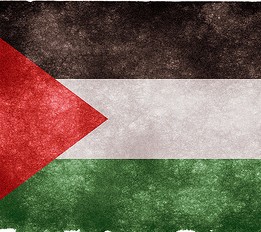
PalestineFlagFlickrFreeTextureDesignsThe act of giving to charities has become synonymous with creating a better world. Yet charities have also infiltrated our society, soliciting donations with constant advertisements.

Of course, the act of giving, purportedly for selfless reasons, results in good feelings and perhaps does help build schools or hospitals in some communities. But what are the larger consequences of the charity industrial complex, particularly of international charities that operate in the developing world?

It is oftentimes Non-Governmental Organizations [NGOs] such as Save the Children or Ducere Foundation that serve as charities. The number of NGOs has risen drastically over the past few decades, and now span across various categories – BINGOs [Business-friendly or Big International NGOs], DONGO [Donor Organized NGO], QUANGO [Quasi-Autonomous NGO], INGO [International NGO], and so on. First coined in 1945 by the United Nations, NGO is defined as a “not-for-profit group, principally independent from government, which is organized on a local, national or international level to address issues in support of the public good.”

There are polarizing views about the NGO industry – some regard it as groups of ‘do gooders’ that promote liberal democracy, while others see it as imperial spreaders of Eurocentric hegemony. NGOs have always been a continuation of imperial power, being created and staffed with colonial administrators in the wake of countries winning their independence. Today’s neoliberal economic modality ensures the global elite to safeguard their capital, and therefore, it’s pertinent to understand the role of the NGO industry within this terrain of power.

Neoliberalism is rooted in the perverse notion that the market and monetization are neutral and natural indicators of social needs, which has resulted in mass privatization of previously state-operated services such as health, education, and military intelligence, in addition to the deregulation of trade barriers in order to enhance the mobility of capital. This toxic ideology usurped the previous ideological hegemon of state-led economics after a series of events equated the ‘free market’ with ‘freedom’ – the 1973 oil crisis, the 1979 Volcker shock and the decline of the Soviet Union. It has since been egregiously applied as a ‘one recipe fits all’ economic model, oftentimes being imposed on developing countries in exchange for debt relief by international financial institutions, such as the International Monetary Fund (IMF).

One component of neoliberalism is the restructuring of the state – deemed to be inherently corrupt – into a neoliberal one. The state’s previous role under the Keynesian (state-led) economic model was to serve as a developmental actor in providing social services. It was expected to provide electricity, healthcare, education, telecommunications, and other basic services. Neoliberalism’s assault on the state has shrunk its role into simply a managerial one, in order to ensure deregulation and advance privatization.

NGOs fit into the narrative by becoming the primary providers of social services like education and healthcare. Although it appears to be the solution to governments not sufficiently providing for their people, it’s a short-term remedy that doesn’t address long-term needs and how constituents ultimately need to advocate for themselves.

While it’s unfair to umbrella all NGOs with the same depiction, most international NGOs encompass a Jekyll and Hyde dichotomy. They are subjected to neoliberal-dictated confines which marginalize the poor, yet (innocently or not) seek to provide much needed services to the poor. The result is a de-radicalized populous, less likely to advocate for state solutions to long-standing geopolitical issues due to the ideological restructuring of the market, the naturalization of NGO services, and the normalization of geopolitical issues as being terminal and requiring the aid-industry to continue its band-aid solutions. This very complex construction of the NGO industry as a ‘Jekyll and Hyde’ apolitical third sector ultimately serves to negate any space for local alternatives to neoliberalism to grow.

In 1949, the United Nations Relief and Works Agency for Palestinian Refugees [UNRWA] was established by the United Nations General Assembly resolution 302 (IV) to provide relief and work programs for Palestinian refugees. The organization was set up as a temporary solution to serve the Palestinians until UN Resolution 194, which facilitates the right to return, takes effect. Because Resolution 194 continues to fail to be implemented, the UNRWA is continuously rewarded, and now provides a variety of social services, including health and education.

NGOs have been ordained as ‘bottom up’ development actors and representatives of the people. Yet the UNRWA’s existence as a temporary provider for over fifty years serves to naturalize its own services while normalizing the geopolitical issue surrounding the occupied territories. Its assertion to be apolitical is contradictory, because the existence of an apolitical actor in a political sphere is ultimately politically influential. The perpetual renewal of the UNRWA’s mandate depoliticizes the necessity to legitimize Resolution 194, that is, the right to return.

Additionally, Israel continues to be exempt from international law as an occupying authority, as denoted by the 1907 Hague Regulations and the Fourth Geneva Convention. Nearly all of the responsibility that the occupier has to its occupied population are negated by Israel, including: the confiscation of private property, the condition to ensure public order and safely, and the the responsibility to ensure public health and food to the population under occupation. Palestinians remain disenfranchised in regards to land access and resources.

The UNRWA does provide services that help a lot of Palestinians, but the larger long-term notions of its presence is difficult to ignore. Additionally, the UNRWA provides services to Palestinians outside of the occupied territories, which only complicates the problem. The provision of these services may (temporarily or not) subdue the desire for the right to return, thereby disintegrating the ‘Palestine question.’ The depoliticization of the Palestine occupation serves as a way for Western parties to detach from the issue and fund relief organizations rather than reconsider the policy actions their governments undertake in continuing the brutal occupation.

This is just one example of how NGOs are often embedded with a contradictory, short-term framework in providing needs but ultimately being detrimental for the interests of local populations. Of course, there are many NGOs that are local and independently funded, with an ability to provide short-term needs while addressing long-term issues. These should not be discounted; however, neither should the imperial construct in which all NGOs ultimately exercise their bargaining power. As neoliberalism continues to undo the victories in social service gains over the past several decades, the material and ideological role of NGOs should be assessed within a changing power terrain that upholds the free market and dismantles the welfare state. Organic, and local alternatives to neoliberalism are desperately needed now, or seemingly benign NGOs’ Jekyll and Hyde nature will inevitably disintegrate the space in which these alternatives can ever be developed.

Written by Sabrina Nasir for Media Roots

Photo by Flickr user Free Grunge Textures

The Ongoing, Never-Ending JFK Mythology

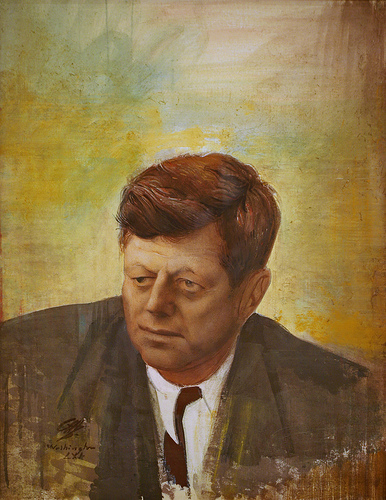
JFKCliff1066The latest eruption of John Kennedy hysteria, bordering on deification, seems safely behind us now that the 50th anniversary of his assassination has passed. Though there is much disinformation about JFK’s legacy that could and should be discussed, two areas stand out: his relationship to the Black Liberation Movement and his actions in Southeast Asia.

Despite all the evidence to the contrary, Kennedy has come to be seen as an ally of – even a hero of – the Black Liberation Movement. In fact, he opposed both the goals and actions of that movement from early in his term when terrorists were beating unarmed and vastly outnumbered Freedom Riders, to the final months of his life when four young girls were blown up in an Alabama church.

When black moderates announced plans for an action in Washington in 1963, Kennedy worked overtime to derail it, with significant success, mainly by strong arming black moderates eager to remain in good with the White House. As a result, the planned direct action protest with civil disobedience morphed into a march and the moderates went so far as to force the day’s most radical speaker, John Lewis of the Student Nonviolent Coordinating Committee, to drop portions of his speech critical of the administration.

As for Southeast Asia, many in the mainstream have argued that Kennedy was about to withdraw U.S. troops and leave the Indochinese to fight their own battles when he was assassinated. This fixation on what he might have done is understandable, for the historical record – what JFK actually did – is quite horrifying and laid the groundwork for the decade of slaughter that followed.

First was the escalation of U.S. aggression in Laos, accompanied by diplomatic shenanigans that undermined coalition governments that included the Pathet Lao revolutionaries despite their being the most popular force in the country. The goal, as always with empire, was all out victory and the annihilation of anyone who favored national liberation.

In Vietnam, a similar approach led to massive devastation. In the winter of 1961-62, Kennedy initiated the full-scale bombing of those parts of South Vietnam controlled by the National Liberation Front (all but Saigon and its immediate surroundings). The justification that bombing was needed to defeat the revolution masked the indiscriminate nature of the aerial assault, which resulted in casualties that were overwhelmingly civilian. And so the tone was set for the next eleven years of war.

It was also Kennedy who authorized the first use of Chemicals of Mass Destruction in Southeast Asia, with napalm the best-known and most deadly. Never had chemical warfare been used so extensively, though the U.S. had also used napalm in Korea in the early 1950’s. Again, the tone was established as massive amounts of phosphorous, Agent Orange and other chemicals were used for the rest of the war, chemicals the deadly affects of which are being felt to this day throughout Indochina.

And it was under Kennedy that the notorious strategic hamlets were set up throughout South Vietnam. “Strategic Hamlets” is a term worthy of Orwell at his best or Madison Avenue at its worst, designed to induce thoughts of happy, grateful peasants gathered around a campfire. The more accurate phrase would be Concentration Camps, as Vietnamese by the thousands were rounded up at gunpoint and forced to live behind barbed wire. Anyone who resisted was beaten or worse; anyone attempting to escape was shot. The aim was to separate the people from the NLF though the result, not surprisingly, as with the bombing and the chemical weapons, was the opposite, as ever larger segments of the population became supporters of the revolution.

As each of these moves failed and the NLF grew stronger, Kennedy ordered ground troops to Southeast Asia in the spring of 1962, the number of which he gradually increased until his death. There is no evidence to indicate any plan for withdrawal short of victory, the myth-making of Oliver Stone, Arthur Schlesinger, Jr. and so many others notwithstanding.

One way to get a handle on the JFK withdrawal myth is to recall another assassination in November of 1963, that of South Vietnamese dictator Ngo Dinh Diem. For much of 1963, Diem threatened to undermine empire’s goals by pushing for a negotiated peace with the NLF and a U.S. withdrawal. In response, Kennedy did what his kind frequently do in such circumstances: he authorized a hit on Diem and replaced him with generals willing to follow orders.

For all the wishful thinking about what Kennedy would have done in Indochina had he lived, the inescapable truth, as opposed to the fantasy, is that he escalated the war and initiated increasing levels of terror that eventually resulted in the deaths of millions. Significantly, there is no mention of withdrawal short of victory in the many Camelot memoirs, biographies and histories until after the tide had turned dramatically against U.S. aggression. Only then did the myth of “Kennedy the Peacemaker” emerge.

Perhaps the JFK cult can be explained by the odious legacies of his two immediate successors, Lyndon Johnson and Richard Nixon, both of whom massively escalated the carnage in Indochina and ultimately abdicated in disgrace. Odious their legacies may be but there’s no way around the fact that Kennedy’s legacy smells just as foul. Such an explanation also obscures the fact that it was Kennedy who established the terms for the domestic conflict that would rage throughout the 1960’s – outraged hostility on the part of the ruling class to the democracy movements that shook the empire to its foundations. It is those movements that will be remembered and celebrated long after the JFK cult hopefully, eventually, finally, finds its rightful resting place in the proverbial dustbin of history.

Andy Piascik is a long-time activist and writer for Z, Counterpunch and many other publications. He can be reached at [email protected].

Photo by Cliff1066

Posted in Uncategorized | 1 Reply

‘I Have a Nightmare,’ But We All Have a Choice

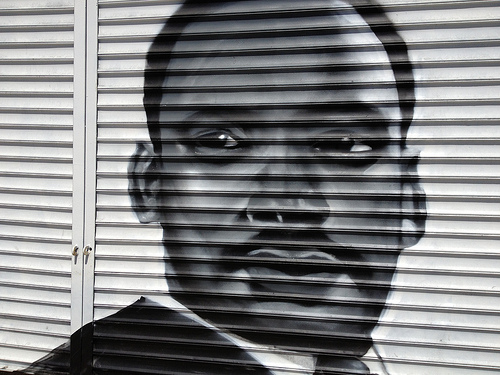
MLKbyjasonRosenburgNow that the nation has celebrated MLK’s heroic agitation for civil rights, there’s another facet of Martin Luther King Jr. often ignored in the media that deserves reflection.

What do MLK, JFK and RFK share in common?

Indeed, all three of them had undeniable charisma which directly and emphatically threatened the powers that be. Each demanded a presence with their sheer character, possessing an uncanny ability to embody the words they spoke rather than simply acting as another suit-and-tie with a political platform pre-scripted by some other PR suit-and-tie.

All three had the ability to enact change at a fundamental level, because they were personally convicted and committed to dissenting against war in a world that had become hellbent on destruction and violence.

But there is a further striking similarity between these three charismatic leaders: all of them were assassinated after focusing their critiques against the war machine.

In his formative stages, MLK was a radical proponent of non-violent protest against segregation and racism. He orchestrated sit-ins and marches in order to fight on behalf of African-Americans and the deprivation of their basic civil liberties as stamped in the Constitution. Nowadays, MLK is known for his success as a civil rights champion in regards to race equality. But later down the road, he had a stark realization which radically shifted the way he thought about political dissidence. This change of heart is what I wish to underscore, in remembrance of MLK and what he was willing to stand – and die – for.

We’re all familiar with MLK’s “I Have a Dream Speech” speech that he delivered in 1963 in Washington, D.C., culminating his March on Washington protest. In the speech, MLK envisions a day when racial inequality is no more, replaced by an egalitarian, racially colorblind America. However, in April of 1967, some four years later, Martin Luther King had a different culprit in mind – American foreign policy. In a speech entitled “Beyond Vietnam: A Time to Break Silence” delivered at Manhattan’s Riverside Church, King excoriates the military industrial complex and sees it as a fundamental wrong that ought to be first and foremost on our minds. King begins by addressing himself, critiquing his own “silence” on matters of foreign policy:

“Over the past two years, as I have moved to break the betrayal of my own silences and to speak from the burnings of my own heart, as I have called for radical departures from the destruction of Vietnam, many persons have questioned me about the wisdom of my path. At the heart of their concerns this query has often loomed large and loud: “Why are you speaking about the war, Dr. King?” “Why are you joining the voices of dissent?” “Peace and civil rights don’t mix,” they say. “Aren’t you hurting the cause of your people,” they ask? And when I hear them, though I often understand the source of their concern, I am nevertheless greatly saddened, for such questions mean that the inquirers have not really known me, my commitment or my calling. Indeed, their questions suggest that they do not know the world in which they live.” 

He then goes on to say, in some of the most moving words I have ever heard:

“As I have walked among the desperate, rejected and angry young men, I have told them that Molotov cocktails and rifles would not solve their problems. I have tried to offer them my deepest compassion while maintaining my conviction that social change comes most meaningfully through non-violent action. But, they asked, what about Vietnam? They asked if our own nation wasn’t using massive doses of violence to solve its problems, to bring about the changes it wanted. Their questions hit home, and I knew that I could never again raise my voice against the violence of the oppressed in the ghettos without having first spoken clearly to the greatest purveyor of violence in the world today, my own government.

For those who ask the question, “Aren’t you a Civil Rights leader?” and thereby mean to exclude me from the movement for peace, I have this further answer. In 1957 when a group of us formed the Southern Christian Leadership Conference, we chose as our motto: “To save the soul of America.” We were convinced that we could not limit our vision to certain rights for black people, but instead affirmed the conviction that America would never be free or saved from itself unless the descendants of its slaves were loosed from the shackles they still wear.

Now, it should be incandescently clear that no one who has any concern for the integrity and life of America today can ignore the present war. If America’s soul becomes totally poisoned, part of the autopsy must read “Vietnam.” It can never be saved so long as it destroys the deepest hopes of men the world over.”

We could call this MLK’s “I Have A Nightmare” speech, as King begins to realize that the systemic evils involved in racism are also found in the roots of militarism. After transitioning his critique from domestic to foreign policy, King was shortly thereafter assassinated.

Likewise, JFK lived out the beginning of his first term acquiescing to the Joint Chiefs of Staff and the CIA in their bid to prevent the dominoes from falling in favor of Communism, orchestrating coups and military operations in different regions of the world so to spread the seed of democracy and fulfill the long held tenants of Manifest Destiny. Like MLK, over time JFK eventually transitioned his aim toward the end of his first term, threatening to remove troops from Vietnam, negotiate an arms-treaty with Russia, and call for peace with Cuba, all of which would have effectively shut down the military machine. JFK was assassinated shortly thereafter.

Furthermore, RFK, who in his early years as the Attorney General to JFK was quite hawkish in regards to covert operations against Cuba, platformed his own presidential bid on fulfilling his brother’s wishes for peace, not war. RFK was also assassinated shortly thereafter.

Is it simply a coincidence that all three of these charismatic leaders were snuffed out by psychotic, nutty lone assassins whilst activating their political stance to reappropriate a republic that had been hijacked by aggressive militarism? In the case of MLK’s assassination, a Memphis, Tenn. grand jury in 1999 ruled his death not as the result of a lone nut but rather a government conspiracy, warranted by an enormous amount of evidence.

Fast forward to today, with Obama being another charismatic possessing the ability to sway an entire nation with his rhetorical skills. He too started out like JFK in critiquing the war machine, but after getting into office wholly relented to the military-industrial complex. In similar fashion to JFK’s unsanctioned war crimes, Obama’s drone policy has claimed the lives of many innocent human beings and so-called “terrorists,” strikes which are happening without Congressional oversight and thereby subject to the rubric of a war crime per international law.

Will we perhaps see a pang of conscience in Obama like we’ve seen with the aforementioned charismatics? Maybe. But let’s not forget, JFK committed his own war crimes even though he’s often heralded as an agitator of peace. Early on in his presidency, he was directly responsible for authorizing operations like Operation Mongoose, and the coup of South Vietnam’s president. Yet in the end, JFK had the spine to face up to his own atrocities and instead promote peace and democracy.

Although, it’s important to note that JFK made reform late in his first term, whereas Obama has dutifully served his corporate paymasters and war mongers all the way through his first term and so far into his second.

A considerable amount of evidence points to the simple fact that our presidents are only figureheads. They hold very little political power in any actual, substantive sense, because their financial backers and corporate lobbies are the ones ultimately calling the shots. Nevertheless, U.S. Presidents do retain the highest office in the land and thus have a media platform unlike any other individual. They are able to reach the masses immediately with a single speech.

While Obama has demonstrated himself to be an agent of illegality, we as political dissidents must not fall into the trap of demonizing him. Russian novelist and Nobel Prize winner, Aleksandr Isayevich Solzhenitsyn, once said:

“If only there were evil people somewhere insidiously committing evil deeds, and it were necessary only to separate them from the rest of us and destroy them. But the line dividing good and evil cuts through the heart of every human being. And who is willing to destroy a piece of his own heart?”

In the same vein of JFK, Obama retains the ability to choose to turn against the military machine and stand up for what is right and just and good. In similar fashion to MLK, Obama still has the chance to look deep within himself and break the betrayal of his own silence.

Will Obama use his undeniable charisma and fight back against the corporate masters that currently play him like a puppet, as did some of his predecessors? Or will he continue to live up to his placard of hope and change in name only, nothing more than a nice-looking, smiley suit-and-tie on strings?

One thing is for sure: if Obama were to cut the strings and stand up for what’s right, there could very well be a heavy price to pay.

Written by Mike David Micklow

Photo by flickr user Jason Rosenburg

“Obamacare” and the Bogus Healthcare Debate

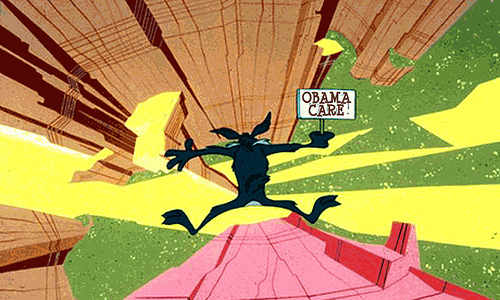
OBAMACAREcharlesfettingerThe biggest secret of politics in the United States is that a majority of the population is to the left of both major parties.

This can be amply demonstrated by comparing public opinion on a host of issues to the policies pushed by corporate and political elites. Whether it’s US aggression overseas, raising taxes on corporations and the Super Rich, expanding social services or any number of other issues, there is a vast disconnect between the people and those who purport to represent them.

This perhaps more than anything explains the widespread lack of public interest in voting. Rather than a result of apathy or ignorance, as many elite pundits arrogantly assert, public withdrawal from the electoral process is actually an informed choice. Since people often rightly view voting as a lose-lose proposition, voter turn-out in the United States is significantly lower than anywhere else in the industrialized world, plus millions who do vote do so with little enthusiasm.

On no issue is the disconnect between elites and the public more striking than health care. For decades, public opinion has favored a single payer system such as exists in every other industrialized country. Simultaneously, corporate elites and their representatives in the two major parties have been waging an unrelenting war on the people’s right to comprehensive health care. Their goals are to privatize Medicare, destroy Medicaid, and shift the cost of employment-based plans in both the public and private sectors to workers.

This disconnect is what lends the discussion about the Patient Protection and Affordable Care Act (PPACA) now before the Supreme Court such a comical tone. Amidst all the pathetic cries about Obamacare, nowhere is it mentioned that millions of those who oppose PPACA do so not because it’s a Marxist-Leninist attack on individual liberty, but because they recognize the law as a sell-out to the insurance and pharmaceutical industries. President Obama did not call on those who live and work on the frontlines of the health care crisis – nurses, social workers, public health advocates, the uninsured, the insured who have been denied necessary care – to write the bill. He delegated that task to insurance industry representatives, and they have been salivating ever since at the billions in additional profits they will reap when PPACA goes into effect.

***

Abby Martin Breaks the Set on Obamacare: Where Corporations Come First

The Democrats’ claim that there was no political will for a public option, let alone single payer, was Elite Speak for those of us in charge don’t care what the public wants. No one who’s paying the slightest bit of attention should have expected otherwise. Candidate Obama received $25 million from the insurance industry in 2008, after all, roughly four times as much as John McCain. And as most reasonably bright nine-year olds understand, Met Life, Pfizer and the rest of the ruling class are not in the business of financing Marxist-Leninist revolution.

Following the lead of the rest of the world is off the table in the boardrooms of the Super Rich even though the lack of a single payer system has been an important factor in the decline of US industry’s competitiveness (Swedish, Japanese and German automakers, for example, do not have to pay a dime for workers’ health insurance). Instead, the 1% has moved much production overseas while attacking the living standards of those domestic industrial workers who remain. The massive shift of the costs of employment health plans to workers has been a major piece of the unprecedented upward redistribution of wealth that’s occurred in this country over the last forty years.

Regardless of what supporters of PPACA may say, our health care system will remain wholly inadequate. Costs will remain out of reach, care will still be denied, needed services will remain at unacceptable levels or disappear altogether, women, people of color and children will be disproportionately impacted, and the overall result will be a further deterioration in living standards for the vast majority.

Momentum for single payer is far from dead, however. Like all efforts for social justice, the push for single payer received a tremendous infusion of energy from the Occupy Wall Street movement. Among other things, Occupy shone much-needed light on who it is that really owns this country. If that light continues to grow brighter, the openings for real health care reform – not to mention many other necessary social changes – increase.

Andy Piascik is a long-time activist and award-winning author. Write him at [email protected].

Photo by flickr user charlesfettinger

Page 7 of 16<<...56789...>>