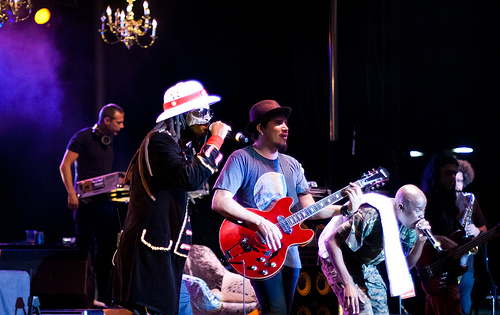
The members of the anti-establishment punk outfit, Free Children Of Earth, grew up in the Washington DC punk scene, observing the cold calculus of the Empire’s company town up close.
As a part of an underground music community that is built on principles that have little place in the prevailing culture of the Nation’s Capitol they are both alienated, and inspired to declare their opposition.
This is all too evident on the band’s new album, “Terminal Stasis”, which is as much an indictment of the irredeemable nature of Capitalist power structures, as it is a statement of dissident identity, and determination to survive, somehow sane, through these perilous times.
“The title of the album is a statement about where we find this monster that claims authority over the past, present, and future. It’s myths can no longer sustain. Afterall, civilizations are just stories. The story that they want us to internalize as our own has fallen apart. We’re writing our own story. Marginalized communities are empowering themselves to write THEIR own stories. The first step to Liberation is to claim that power. That’s what this album is for us.” – Jason Yawn, Lead Vocalist
Media Roots’ own, Abby Martin, was recruited by the band to do original art for the album. Her piece “World Revolt” accompanies the album’s title track in the elaborate layout of the 12” vinyl LP. You can purchase the LP, with Abby’s art, here.
MEDIA ROOTS – The military-industrial complex encompasses more than the arms and security industries. Now the corporate film industry is used to glorify American military might, stimulate recruitment, and even rewrite history. Most of these films, while claiming to be based on true events, are merely propaganda pieces and allow the modern military establishment to continue to operate with the tacit support of the American people.
While the federal government had often advised filmmakers throughout cinematic history, it wasn’t until the production of Top Gun in 1986 that the marriage of Hollywood and the Pentagon was formally established. Offices at the Department of Defense are now dedicated to supporting production companies – but with a catch. In order to receive military support, scripts must be thoroughly reviewed and often times completely revised; at times omitting passages that are historically accurate but negatively reflecting the American military apparatus.
The English channel of Al Jazeera examined this modern complex in their newsmagazine Empire. Featuring Academy-Award winning directors Oliver Stone and Michael Moore along with Pulitzer-Prize winning journalist Chris Hedges, the episode covers the history of the American military-film industrial-complex and offers insight into its long-term influence on world history.
***
Originally aired on Al Jazeera English in December 2010, this episode of Empire examines
the relationship of the corporate film industry and the American military apparatus.
MEDIA ROOTS – Thievery Corporation, a DC-based music group, released their sixth studio album last year titled Culture of Fear and continue to receive rave reviews among followers of this genre. Its electronic beats are expertly fused with several acoustic sounds which are the hallmark of this recording artist and DJ team.
The black album cover, featuring only a remote surveillance camera, reminds listeners of the current state of diminishing control of personal privacy in modern society. Tracks titled “False Flag Dub,” “Tower Seven,” and “Culture of Fear” invoke a perspective that is not only highly uncommon in the music industry but virtually unexpressed anywhere in general society.
The influence of this group, formed in 1995, cannot be understated. They performed last month at the Fairgrounds in Washington DC for a capacity audience and are appearing next Wednesday in Kansas City before heading to Austin City Limits the following weekend.
We have taken the liberty to feature below the official video of Culture of Fear featuring Mr. Lif as well as the song’s lyrics. Check them out and let us know what you think about this group of music activists.
Oskar Mosco for Media Roots
***
The official video of Thievery Corporation’s Culture of Fear featuring Mr. Lif.
Culture of Fear
Seems to me like they want us to be afraid, man.
Or maybe we just like being afraid.
Maybe we just so used to it at this point that it’s just a part of us,
Part of our culture.
Security alert on “orange.”
It’s been on orange since ’01 G.
I mean what’s up man?
Can’t a brother get “yellow” man?
Just for like two months or something?
God damn,
Sick o’ that.
Mic check –
The groove is dead so I’m a rhyme like a lunatic.
I do this shit with an unassuming wit.
The corporation conjured up the bass and the tempo.
My name is Liff – that’s the intro – now let’s go!
The flow of life, throwing strife into the mix,
The big dark condition and the world is sick.
The powers that be
A power in me
To speak a cause
Stress and strife that I see every day
And more to speak upon.
Culture of fear:
It’s up in your ear.
They’re telling us terrorists about to strike
“Maybe tonight?”
Right….
Let me back up slowly
With critical analysis of those who control me.
It used to be we just had a screen in the crib — on the TV,
But now we carry screens when we leave, see?
Laptops, smartphones, now we’re never alone.
A new affliction I call it “media dome.”
But on the road famine is the programming
You want to watch a favorite show because it’s so slamming
Hold hands and let’s gaze into the beautiful glare
While we’re here so immersed in this culture of fear.
Yo – we fear the IRS, fear the INS, fear God.
But we’re more afraid of the credit card than the terror squad.
That’s really all — sending weapons overseas
Yet Mastercard and Visa want to buy me the greed.
They deceive, the enemy is in the fine print.
They assassinate, sell-it, with no single assailant.
Forms, I’m stealing, to give a view of blue sky.
It’s beautiful, then a couple choppers flew by.
Represent an element ahead
A sentiment that you feel on the road, for real,
The deal stars with a spark, concludes with a handshake.
Physical to alter your subliminal landscape
Relief thinking I can really trust that guy
To be honest could have, should have really punched that guy.
Now it’s operation shank a banker
Thank you for the loan
See you when you come to repossess my home.
Alone at night sweating with visions of Armageddon
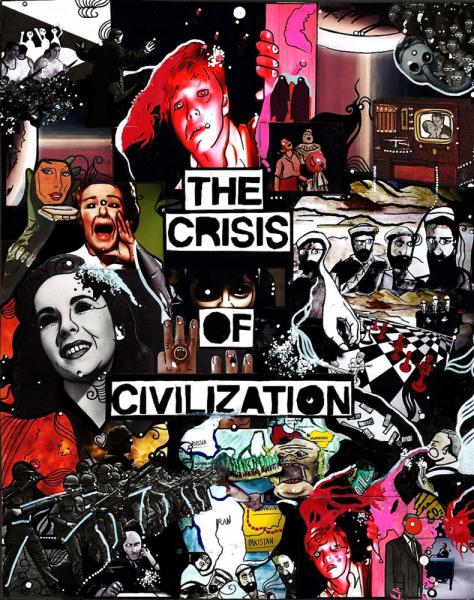
MEDIA ROOTS – Whenconfronting the global crisis waiting on Earth’s doorstep, most people deconstruct the bulk catastrophe and break it down into more palatable, bite size pieces. These smaller pieces are easier and less frightening to consume. No one dares to face the painful truth of reality as a whole. But there is one movie that has defied the status quo, rejects the fear and valiantly plunges forward, realizing that it would be fatal not to analyze global challenges as a systemic whole:Crisis of Civilization. The provocative 2011 documentary examines an array of global crises as its own ecosystem of sorts, rather than as isolated, discrete events. When taken as a composite, these crises pose an imminent threat to humanity and civilization as we know it. Director Dean Puckett leads the viewer on a tour through a plausible and, frightening scenario, using the expert commentary of Dr. Nafeez Mossadeq Ahmed.
The documentary relies on the help of animator Lucca Benney and uses several clips from campy educational films to provide an amusing visual flow that offsets the gravity of the issues discussed. The seamless insertion of these scenes offers a brief recess from the incisive and grim sociological, political, and economic insights served by Dr. Ahmed. He is the sole expert interviewed throughout the documentary which potentially compromises the film’s objectivity but given the topics discussed there may not be a reason to tap anyone else’s knowledge. Dr. Ahmed boasts a very impressive array of credentials and while calm and collected, he warns of a world that faces a tidal wave of massive and radical change.
The film acknowledges that the four main crises presented are not new. Many people before him have identified climate change, energy depletion, food production and economic crisis as major areas of concern. However, standard academic procedure examines each one of these issues in isolation, rather than in a holistic manner. The movie suggests that by framing these crises in a macro-perspective, the resulting synergy becomes the impetus of a failing global system. The system’s fatal flaw is due to a zealous belief of infallibility for neoliberal capitalism. This doctrine assumes unlimited growth and globalization but no longer suits the needs of the vast majority of people around the world. In order for these overwhelming challenges to be rectified, the film emphasizes that society must recognize the fundamental interconnection between all four crises.
Is there anything that can be done?
Unfortunately, the documentary falls a bit short on complete remedies. However it does provide some basic ideas of how the world could tackle the arduous process of systemic change. Part of the solution is to decentralize and regain land ownership. A new emphasis must be placed on localization and “participatory forms of organization and agriculture.” The overwhelming majority of people are currently dispossessed. Who owns the land? How can we reclaim it for the productive use of our local communities?
It may be unrealistic to think all the solutions have been introduced in this film given the depth and breadth of the crises presented. Due to the United States’ neoliberal agenda and mass consumer culture, many have created their own crises. Quality solutions to many of today’s issues will not be resolved until civil society is honest enough to first recognize the totality of such problems. Crisis of Civilization does a fine job starting that search.
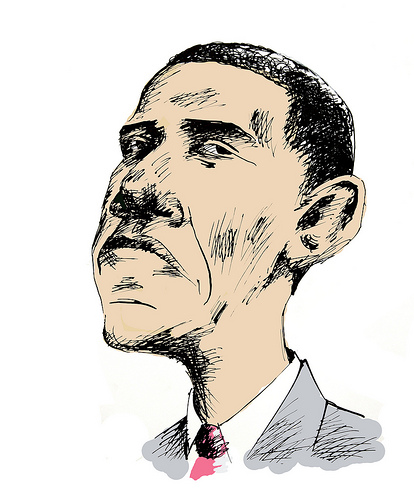
MEDIA ROOTS – Released nationwide on Friday, the documentary film Barack Obama: 2016 is not only highly critical of President Obama’s job performance, it again raises the question of who he is and what his view of America is in the world. While the film does not offer many certainties about the president’s potential second term in office, it does use his previous actions as a device for telling a story that many Americans may not be familiar.
The film, distributed by Rocky Mountain Pictures, is written and directed by Dinesh D’Souza and based on his book The Roots of Obama’s Rage. It is very open about its conservative approach, which allows the viewer to set aside any perceived spin and focus on the information presented. Some ideas about the president’s past would excite conspiracy theorists as the production makes clear there are many more questions than there are answers.
After a brief description of his own youth in India, D’Souza begins his narrative with a brief comparison of his own life and that of Mr. Obama. Born, having graduated from college, and married in the same years as each other, the two lives appear at first quite parallel. What shapes their youth more than anything is their immigration to the United States and, in particular, their Ivy League education.
But what Mr. D’Souza cannot relate to is having not been brought up with a father. He does, however, appear to make an honest effort in learning the developmental psychology of such abandonment during childhood by interviewing a specialist and a former co-worker of his mother. Additionally, he uses Obama’s own words – literally Obama’s voice from the book-on-tape – from the book Dreams from my Father, to help paint a picture of an upbringing that often felt empty. But because of his mother’s compassion, “Barry” did have several male influences throughout his upbringing and it is this subject matter that seems to interest D’Souza the most. Who were these men and how come so little is known about them?
The film goes on to explore several of these relationships. As a young boy in Indonesia, Obama’s stepfather Lolo Soetoro may have helped foster a free spirit and as a young man in Chicago, Obama worked with Weather Underground’s Bill Ayers and listened to radical sermons delivered by Reverend Jeremiah Wright. But it’s his childhood mentor, Frank Marshall Davis, which seems to be of particular influence on his development while remaining virtually unknown to most Americans. After a closer examination into this relationship, one might develop a keen insight into what is yet to come for the United States.
Two comedies, one theme
Game Change, released by HBO in March, confirmed what every rational American already knows: Sarah Palin is about as adept at managing a family as she is at answering basic questions from the press. While the film was officially denounced by both Senator McCain and Governor Palin, it was endorsed by one of Senator McCain’s former senior advisers and appeared to be a way for the Republican establishment to reconcile its 2008 campaign blunder. It hardly challenged viewers perceptions of the right wing and provided very little insight into future GOP strategy.
The Campaign has been in theaters for almost a month and offers viewers a slapstick parody of the election process. Distributed by Warner Brothers, the film provides a non-partisan approach to politics but does reinforce the corporate media establishment by providing several product placements of cable news networks. Many television pundits made cameo appearances including Chris Matthews and Ed Schultz of MSNBC, Wolf Blitzer and Piers Morgan of CNN, and Bill Mahr of HBO. (Interestingly enough, many of these personalities seem to have close ties to the White House. Mahr made news earlier this year after donating one million dollars to the Obama re-election campaign while Schultz claims he would donate to the president if he could.)
Political films released during campaign seasons will continue to leave an impression on the minds of voters and nonvoters alike. But as the left-right paradigm begins to lose traction with an increasingly alert citizenry, it is still uncertain if this same awareness will be applied when considering the corporate media establishment. For if citizens continue to consume political comedies produced by this entity just prior to an election, then their laughter will most likely translate into increased apathy of the electoral process and the elite will remain in control.



 The members of the anti-establishment punk outfit, Free Children Of Earth, grew up in the Washington DC punk scene, observing the cold calculus of the Empire’s company town up close.
  MEDIA ROOTS – The military-industrial complex encompasses more than the arms and security industries. Now the corporate film industry is used to glorify American military might, stimulate recruitment, and even rewrite history. Most of these films, while claiming to be based on true events, are merely propaganda pieces and allow the modern military establishment to continue to operate with the tacit support of the American people.
 MEDIA ROOTS – Thievery Corporation, a DC-based music group, released their sixth studio album last year titled
  MEDIA ROOTS –
  MEDIA ROOTS – Released nationwide on Friday, the documentary film