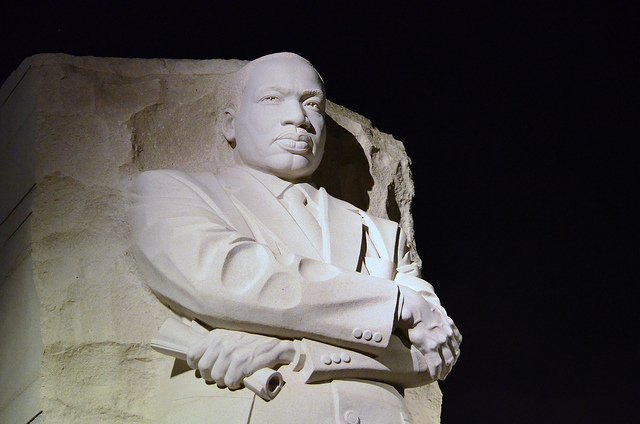
MLK Jr. – The Uncomfortable Truths History Books Won’t Touch

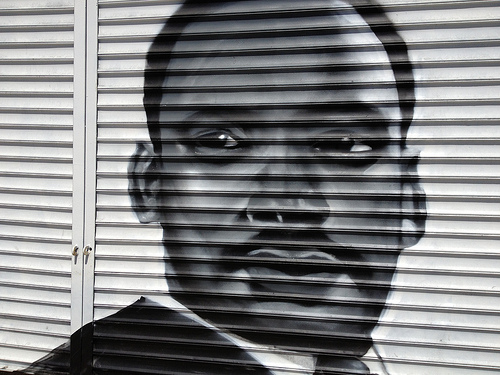
MLKflickruserangelanFor many, the words “I have a dream” are the only thing they associate with Dr. Martin Luther King, Jr.
Dr. King’s legacy is mostly depicted in the context of civil rights, with history books lauding his noble achievements of the Civil and Voting Rights Acts being passed.

But Dr. King gave hundreds of unpopular and controversial speeches ranging from the dangers of the Vietnam War to mass commercialization. During his life, he was attacked and marginalized from the white and black community alike.

The US government coined Dr. King the most “dangerous Negro leader in the country”, routinely spied on him and even went as far as writing him a letter in 1964 urging him to commit suicide.

In fact, MLK Jr.’s surviving family filed a civil suit in Memphis, TN, in which the jury found elements of the US government complicit in his assassination.

Having been arrested thirty times, Dr. King routinely threw his body upon the gears of the machine to show that change doesn’t roll in on the wheels of inevitability, but through continuous struggle against institutionalized injustice.

Focusing on America as the greatest purveyor of violence in the world, Dr. King spent the last year of his life fighting what he called the triple evils of the word: racism, militarism, and economic exploitation.

In fact, when MLK was assassinated he was planning the “Poor People’s Campaign” – a mass march and occupation of DC until the US government granted poor people an “Economic Bill of Rights”.

Listen to his profound speech “Beyond Vietnam”, given exactly one year before Dr. King’s assassination.

Rev. Dr. Martin Luther King Jr. “Beyond Vietnam”

It’s a topic Tavis Smiley explores in amazing depth and clarity in his new book, Death of a King: The Real Story of Dr. Martin Luther King Jr.s’ Final Year in which he talks about the unvarnished truth about Dr. King’s life, and last sermon entitled “Why America May Go to Hell”.

Breaking the Set speaks with Smiley about Dr. King and Mahatma Gandhi’s grandson, Arun Gandhi, about why structural and passive violence are the most inhibiting factors for peace.


Breaking the Set with Tavis Smiley and Arun Gandhi

**

 Abby Martin | @Abby Martin 

Photo by flickr user Angela N.

War on Terror Comes Home to Roost: The Security State’s Plans to Crush Activism

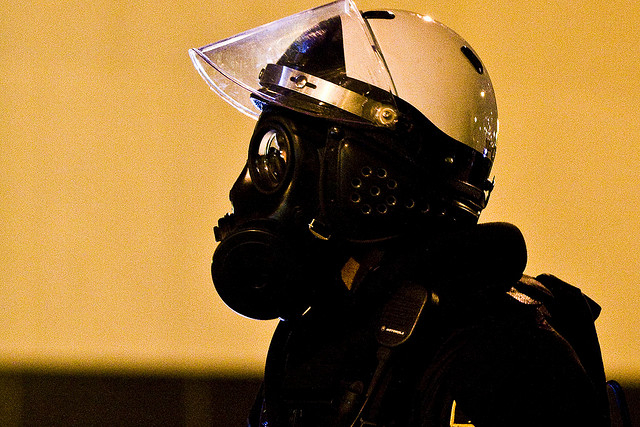
Riot Cop flickr user Tony WebsterHousing discrimination against African-Americans, also known as redlining, has long been a form of institutional racism in the post Jim Crow era.
Under the Federal Housing Act, federal loans were systematically denied to African-Americans, which helped create ghettos and further segregated blacks from whites. Ferguson is just one example among many which employed the practice.

The latent effects of racism are rooted throughout Ferguson. 93% of drivers arrested are black, yet only 67% of the city’s population is black. One-quarter of the town’s revenue is due to fines issued by a police force that disproportionately targets African-Americans.

There are unabashedly racist cops, like police lieutenant Hayes, who ordered officers to racially profile minorities. According to a whistleblower, Hayes said things like “let’s have a black day” and “make the jail cells more colorful.” Adding insult to injury, the police broke the law while investigating him.

With this reality in mind, fatal police shootings of black teens like Mike Brown are bound to happen.

The mass protests in Ferguson caused Amnesty International to make an unprecedented deployment of observers to the streets, including Jasmine M. Heiss, who told Media Roots that “Ferguson has sparked an intense and overdue conversation about race and justice in the United States.”

Heiss also witnessed the racial divide created in the West Bank, where Jewish settlements and surrounding Palestinian population had been segregated by walls and checkpoints. While illegal settlements in Hebron enjoyed basic necessities, Palestinians were denied access to human rights like water. After witnessing numerous arrests of journalists and peaceful protesters amid the tear gas, rubber bullets and sound cannons in Ferguson, Heiss said she felt like she was back in the West Bank, noting the striking similarity between the two cities in their militarized crushing of dissent.

Journalist Max Blumenthal has documented this parallel, underscoring how Israeli security state tactics have been outsourced to the US in a trend he calls the “Israelification” of American police forces. In fact, according to Electronic Intifada’s Rania Khalek, “at least two of the four law enforcement agencies that were deployed in Ferguson—the St. Louis County Police Department and the St. Louis Police Department—received training from Israeli security forces in recent years.”

Enforcing security based on racist ideology has long been field tested by Israel, which uses Palestinians as lab rats before outsourcing its defense and intelligence capabilities to other world powers. Whether it be Israeli forces training ICE officers in Tacoma, outsourcing a Behavior Pattern Recognition security system for US airports, or intelligence contractor Elbit Systems winning multimillion dollar contracts to patrol the US-Mexico border, Israel’s idea of security has now become America’s. As a result, Big Brother’s gaze is discriminatory, and racial minorities are unfairly targeted by the system.

When the state engenders unjust policies like those epitomized in places like Ferguson, the press has a duty to engage, raise awareness and advocate the reinstatement of justice. Standing in solidarity with the oppressed and amplifying the plight of the voiceless is the primary function of the Fourth Estate. Unfortunately, the police state has appropriated the corporate press and criminalized journalists who challenge systemic injustices.

In response to the police killings of Mike Brown, Ezell Ford and Eric Garner, activist groups like Black Youth Project 100, the Dream Defenders and the Million Hoodies Movement for Justice, have gained traction. To be sure though, the Defense Department has been anticipating the growth of such activism, whether it be Muslims in Michigan, blacks in Ferguson, or any other minority group which could “threaten social unrest.”

In a four-part series for Occupy.com, Dr. Nafeez Ahmed unveils a government data-mining project dubbed The Minerva Initiative. Under the guise of enhancing the drone Kill List and targeting American-Muslims that have the “potential to become terrorists,” the flawed algorithms used to search out ‘terrorists’ abroad are now being retrofitted to seek out political dissidents on US soil.

Ahmed details how a nexus of metadata and social media are being used by the Pentagon to develop a “radicalism scale” for potential social uprisings in the US, and the unconstitutional spying operation is being aided and abetted by Universities like Arizona State and the University of Washington. Effectively, social sciences are militarized with professors acting as spy proxies reporting back to their DC overlords.

One specific DoD project “seeks to uncover the conditions under which political movements aimed at large-scale political and economic change originate, and what their characteristics and consequences are.” As Ahmed states in an interview with Abby Martin, Ferguson is an example of what the Minerva Initiative sets out to suppress.

Even more disturbing, the use of predator drones on American soil is a real possibility considering the direct correlation between data-mining and extrajudicial executions. If current trends continue, American skies could soon be populated by drones targeting and potentially even executing non-violent activists.

Given the aggressive characteristics police displayed during Occupy Wall Street and Ferguson combined with the Pentagon’s intent to seek out and destroy potentially “threatening” movements, the War on Terror has officially come home to roost.

Written by Michael D. Micklow, image by flickr user Tony Webster

Posted in Uncategorized | 1 Reply

Dismantling Our Right-Wing World

(A quick note to US readers: left and right in this piece do not refer to the American liberal-conservative spectrum – both of which are considered neoliberal – but to the broader left-right spectrum as traditionally conceived, ranging from far-left communism/socialism to far-right fascism.)

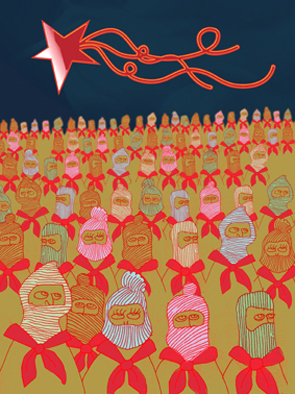
zapatistas flickr aeneastudioIt’s been an eventful few weeks for the Zapatista Army of National Liberation (EZLN), also known as the Zapatistas, midway through their 20th anniversary year.
First, Jose Luis Solís López, also known as “Compañero Galeano”, was murdered by a paramilitary group with ties to the Mexican government, which also injured fifteen other Zapatistas and destroyed a school, clinic and water system in the same attack. The attack then prompted the Zapatistas to change strategies, with well-known spokesperson Subcomandante Marcos stepping down.

These developments serve to remind us of the EZLN’s status as, in the words of Chris Hedges, “the most important resistance movement of the last two decades” – important enough to warrant the rather violent attention of the Mexican government and its paramilitary associates.

The EZLN, a group based in the state of Chiapas in southern Mexico, launched an armed rebellion against the Mexican government on January 1, 1994 as an act of protest against the North American Free Trade Agreement (NAFTA), which entered into effect on the same day. However, instead of attacking the Mexican state and society and causing endless bloodshed, the Zapatistas set up a system of self-governance in the territory it controlled, creating autonomous communities each with its own health clinic and schools to fill the void that the Mexican government had actively sought to widen in the interests of US and Canadian multinational corporations.

What the Zapatistas demonstrate is a vision of the notion articulated in the motto of the World Social Forum: another world is possible. They provide evidence that contradicts the belief that the status quo under neoliberal capitalism, in which the haves have it all and the have-nots are left to fend for themselves, is not only the best system but indeed the only viable system. The Zapatistas represent a victory for the oppressed peoples of the world over the powerful political and economic interests that rule over them. But more importantly, they represent a victory for the values of egalitarianism, compassion and solidarity – what I call the left-wing ethos. A victory over the idea that those who rule have the divine right to further their own interests, regardless of the consequences for the rest of humanity – an attitude that epitomizes what it means to be “right-wing”.

Marko Attila Hoare boils down the left-right spectrum to a simple distinction: that “the left supports the redistribution of wealth from the rich to the poor while the right opposes it”. But we can remove the entire spectrum from politics entirely to expose the values that underlie them: lefties value social equality, whereas righties value social hierarchy. Why, though? The answer lies in our individual worldview. As a self-identified lefty, I consider it more than possible for all of us to peacefully coexist in the world and have all of our common needs met, if (and only if) that’s the goal that we all work together to try to achieve. In a left-wing worldview, it’s therefore neither necessary nor ethical for us to undermine others in order to benefit ourselves. In other words: compassion, not competition. Without claiming complete objectivity, a right-wing worldview revolves around the idea that we live in a dog-eat-dog world in which the best we can do is fend for ourselves and get our share before someone else takes it.

Human history has been almost entirely dominated by the right-wing worldview. It’s been an endless cycle in which privileged groups have taken turns dominating each other in a seemingly eternal battle between the powerful and the powerless. From the imperial conquests of the ancient world through European colonialism, the two World Wars and Soviet communism to modern neoliberal capitalism, it’s always been the same story, flowing through different chapters but reaching the same inevitable conclusion: Oligarchy. It’s a story familiar to the Zapatistas as well as countless other sites of confrontation between the haves and the have-nots in recent years. The hierarchical, conflict-ridden relationship today between those who rule the world and those who are ruled, between corporate bosses and workers, between autocrats and their citizens, between the rich and the poor, is a continuation of this cycle of domination.

The right-wingers among us will assert that history simply reflects human nature, that it is in our nature to be maliciously selfish rather than compassionate, that this is the best we can do, or even that there’s nothing wrong with the world we’ve created. But their argument fails to acknowledge that the dominant worldview of the past has created the world we know today. As an example, the domination of the indigenous populations of the Americas, Africa, Asia and Oceania by European invaders and colonizers was not an inevitable result of human nature, but rather a product of widespread extreme right-wing beliefs such as Manifest Destiny and the white man’s burden. Similarly, the dominant worldview of the present will determine the world of tomorrow. A child raised in a society that values getting ahead at all costs is encouraged is far more likely to act accordingly than one raised in a society that values empathy and compassion. The dominant worldview in a society is therefore not inherent in human nature but in fact reinforces itself.

Right-wing theorists have a crucial role to play in promoting their worldview, too. “Realist” international relations scholars, capitalist economists, or simply those at the top of the social hierarchy love to tell us how it’s in our nature to always act in self-interest. They tell us that “greed is good” and that we all collectively benefit from constantly undermining each other, as ludicrous as that may sound. Yet, for the most part, even despite their contempt for those below them in the social hierarchy, even right-wingers behave in an incredibly left-wing manner towards those closest to them. And that’s because humans organized themselves into what we nowadays call “societies” precisely so that we could all benefit from being interdependent. That interdependence required us to develop compassion to allow us to survive in a society. The “savage” who undermines and betrays everyone he or she comes into contact with doesn’t survive for very long and, sociopaths aside, doesn’t find much happiness either. Surely we as a species are capable of applying that same logic to our everyday actions in today’s world so that we can all thrive at the same time instead of striving to be the “last man standing”?

Roman Krznaric couldn’t have put it any better: we need an empathy revolution. We need to turn the right-wing world that we live in into a left-wing one in which we recognize our fellow human beings as worthy of a livelihood and worthy of happiness and, in return, receive the same recognition. As the economic crisis in Greece goes to show, humans are capable of compassion even in the most desperate of situations: rather than stealing from each other, many Greeks are stepping in to provide the services that their government has failed to deliver and those that some of their compatriots can no longer afford, from food to medical services to street lighting – all for free. Similar systems have been devised in Serbia as well as in Macedonia, where numerous bakeries have introduced “solidarity baskets” to allow customers to buy an extra bun or piece of bread to leave to those who can’t afford to eat. And many customers indeed comply.

But showing empathy on our part only does half the job. While it spares those around us from our own potential malice, what it doesn’t do is liberate ourselves from those who have their hands around our necks. That involves critically examining and rethinking the false ideologies and pseudo-theories invoked by the powerful for the sole purposes of justifying their own dominating behaviour. After all, ideologies are all too often used as pretenses to mask the hidden agendas of those who assert them rather than a reflection of the values that they truly believe – in other words, purposeful bullshit. We mustn’t forget how the left-wing idea of communism was employed by self-described revolutionaries to justify right-wing oligarchic tyranny. Similarly, we can’t afford to look away when libertarians cite the dogma of enriching big businesses at the cost of everyone else, or when rich countries proclaim free trade to justify infiltrating the economies of developing countries. We’ve been raised to regard Soviet-style communism as tyranny and Western capitalism as freedom, but we need to recognize both for what they are: systems of oppression backed up by pseudo-theories that have no empirical basis and only serve those who preach them.

The empathy revolution needs a theoretical and social component. Neither pacifism nor confrontation can do the job alone. We need to channel our discontent into action by adopting the autonomist ethos of the Zapatistas to build the society we want. We need to form cooperatives and make use of cryptocurrencies, local currencies, open source, open knowledge, peer-to-peer practices, the sharing economy and countless other methods of grassroots social and economic organization the mainstream media doesn’t want us to hear a word about. What these methods all have in common is that they’re all built on the basis of cooperation and collaboration rather than malice and treachery – exactly what society needs and what the oligarchs don’t want.

Modern society is diseased and needs treatment. It’s only when we renounce one-upmanship in favour of cooperation and collaboration that we’ll be able to construct a society not for the few at the top, but for all of us. After all, isn’t fulfilling our mutual needs the whole point of even living in a society? It’ll require a good deal of empathy and creativity, as well as plenty of critical thinking to distinguish truth from pseudo-theory and other purposeful bullshit. Left-wing and right-wing are no longer a question of politics, but a question of social values and social justice. The right-wing worldview has failed us, and as the Zapatistas have shown, another world is certainly possible. It’s time to recognize that, for the purposes of redeeming ourselves from perpetual oligarchy, left is right.

Written by Ming Chun Tang, photo by flickr user aeneastudio

http://clearingtherubble.wordpress.com/

**

Jacobin Magazine’s Bhaskar Sunkara on Breaking the Set

How the Zapatistas’ Success Threatens Global Status Quo

Media Roots Radio – Ukraine Meddling, Cold War 2.0 and Fighting the Police State

Robbie and Abby Martin talk about Ukraine’s uprising, the hubris of America advocating regime change abroad and the establishment ramping up another Cold War on Media Roots Radio.

***

The above timeline is interactive. Scroll through it to find out more about the show’s music and to resources mentioned during the broadcast. If you would like to directly download the podcast click the down arrow icon on the right of the soundcloud display. To hide the comments to enable easier rewind and fast forward, click on the icon on the very bottom right.

This Media Roots podcast is the product of many long hours of hard work and love. If you want to encourage our voice, please consider supporting us as we continue to speak from outside party lines. Even the smallest donations are appreciated and help us with our operating costs.

Listen to all previous episodes of Media Roots Radio here.

‘I Have a Nightmare,’ But We All Have a Choice

MLKbyjasonRosenburgNow that the nation has celebrated MLK’s heroic agitation for civil rights, there’s another facet of Martin Luther King Jr. often ignored in the media that deserves reflection.

What do MLK, JFK and RFK share in common?

Indeed, all three of them had undeniable charisma which directly and emphatically threatened the powers that be. Each demanded a presence with their sheer character, possessing an uncanny ability to embody the words they spoke rather than simply acting as another suit-and-tie with a political platform pre-scripted by some other PR suit-and-tie.

All three had the ability to enact change at a fundamental level, because they were personally convicted and committed to dissenting against war in a world that had become hellbent on destruction and violence.

But there is a further striking similarity between these three charismatic leaders: all of them were assassinated after focusing their critiques against the war machine.

In his formative stages, MLK was a radical proponent of non-violent protest against segregation and racism. He orchestrated sit-ins and marches in order to fight on behalf of African-Americans and the deprivation of their basic civil liberties as stamped in the Constitution. Nowadays, MLK is known for his success as a civil rights champion in regards to race equality. But later down the road, he had a stark realization which radically shifted the way he thought about political dissidence. This change of heart is what I wish to underscore, in remembrance of MLK and what he was willing to stand – and die – for.

We’re all familiar with MLK’s “I Have a Dream Speech” speech that he delivered in 1963 in Washington, D.C., culminating his March on Washington protest. In the speech, MLK envisions a day when racial inequality is no more, replaced by an egalitarian, racially colorblind America. However, in April of 1967, some four years later, Martin Luther King had a different culprit in mind – American foreign policy. In a speech entitled “Beyond Vietnam: A Time to Break Silence” delivered at Manhattan’s Riverside Church, King excoriates the military industrial complex and sees it as a fundamental wrong that ought to be first and foremost on our minds. King begins by addressing himself, critiquing his own “silence” on matters of foreign policy:

“Over the past two years, as I have moved to break the betrayal of my own silences and to speak from the burnings of my own heart, as I have called for radical departures from the destruction of Vietnam, many persons have questioned me about the wisdom of my path. At the heart of their concerns this query has often loomed large and loud: “Why are you speaking about the war, Dr. King?” “Why are you joining the voices of dissent?” “Peace and civil rights don’t mix,” they say. “Aren’t you hurting the cause of your people,” they ask? And when I hear them, though I often understand the source of their concern, I am nevertheless greatly saddened, for such questions mean that the inquirers have not really known me, my commitment or my calling. Indeed, their questions suggest that they do not know the world in which they live.” 

He then goes on to say, in some of the most moving words I have ever heard:

“As I have walked among the desperate, rejected and angry young men, I have told them that Molotov cocktails and rifles would not solve their problems. I have tried to offer them my deepest compassion while maintaining my conviction that social change comes most meaningfully through non-violent action. But, they asked, what about Vietnam? They asked if our own nation wasn’t using massive doses of violence to solve its problems, to bring about the changes it wanted. Their questions hit home, and I knew that I could never again raise my voice against the violence of the oppressed in the ghettos without having first spoken clearly to the greatest purveyor of violence in the world today, my own government.

For those who ask the question, “Aren’t you a Civil Rights leader?” and thereby mean to exclude me from the movement for peace, I have this further answer. In 1957 when a group of us formed the Southern Christian Leadership Conference, we chose as our motto: “To save the soul of America.” We were convinced that we could not limit our vision to certain rights for black people, but instead affirmed the conviction that America would never be free or saved from itself unless the descendants of its slaves were loosed from the shackles they still wear.

Now, it should be incandescently clear that no one who has any concern for the integrity and life of America today can ignore the present war. If America’s soul becomes totally poisoned, part of the autopsy must read “Vietnam.” It can never be saved so long as it destroys the deepest hopes of men the world over.”

We could call this MLK’s “I Have A Nightmare” speech, as King begins to realize that the systemic evils involved in racism are also found in the roots of militarism. After transitioning his critique from domestic to foreign policy, King was shortly thereafter assassinated.

Likewise, JFK lived out the beginning of his first term acquiescing to the Joint Chiefs of Staff and the CIA in their bid to prevent the dominoes from falling in favor of Communism, orchestrating coups and military operations in different regions of the world so to spread the seed of democracy and fulfill the long held tenants of Manifest Destiny. Like MLK, over time JFK eventually transitioned his aim toward the end of his first term, threatening to remove troops from Vietnam, negotiate an arms-treaty with Russia, and call for peace with Cuba, all of which would have effectively shut down the military machine. JFK was assassinated shortly thereafter.

Furthermore, RFK, who in his early years as the Attorney General to JFK was quite hawkish in regards to covert operations against Cuba, platformed his own presidential bid on fulfilling his brother’s wishes for peace, not war. RFK was also assassinated shortly thereafter.

Is it simply a coincidence that all three of these charismatic leaders were snuffed out by psychotic, nutty lone assassins whilst activating their political stance to reappropriate a republic that had been hijacked by aggressive militarism? In the case of MLK’s assassination, a Memphis, Tenn. grand jury in 1999 ruled his death not as the result of a lone nut but rather a government conspiracy, warranted by an enormous amount of evidence.

Fast forward to today, with Obama being another charismatic possessing the ability to sway an entire nation with his rhetorical skills. He too started out like JFK in critiquing the war machine, but after getting into office wholly relented to the military-industrial complex. In similar fashion to JFK’s unsanctioned war crimes, Obama’s drone policy has claimed the lives of many innocent human beings and so-called “terrorists,” strikes which are happening without Congressional oversight and thereby subject to the rubric of a war crime per international law.

Will we perhaps see a pang of conscience in Obama like we’ve seen with the aforementioned charismatics? Maybe. But let’s not forget, JFK committed his own war crimes even though he’s often heralded as an agitator of peace. Early on in his presidency, he was directly responsible for authorizing operations like Operation Mongoose, and the coup of South Vietnam’s president. Yet in the end, JFK had the spine to face up to his own atrocities and instead promote peace and democracy.

Although, it’s important to note that JFK made reform late in his first term, whereas Obama has dutifully served his corporate paymasters and war mongers all the way through his first term and so far into his second.

A considerable amount of evidence points to the simple fact that our presidents are only figureheads. They hold very little political power in any actual, substantive sense, because their financial backers and corporate lobbies are the ones ultimately calling the shots. Nevertheless, U.S. Presidents do retain the highest office in the land and thus have a media platform unlike any other individual. They are able to reach the masses immediately with a single speech.

While Obama has demonstrated himself to be an agent of illegality, we as political dissidents must not fall into the trap of demonizing him. Russian novelist and Nobel Prize winner, Aleksandr Isayevich Solzhenitsyn, once said:

“If only there were evil people somewhere insidiously committing evil deeds, and it were necessary only to separate them from the rest of us and destroy them. But the line dividing good and evil cuts through the heart of every human being. And who is willing to destroy a piece of his own heart?”

In the same vein of JFK, Obama retains the ability to choose to turn against the military machine and stand up for what is right and just and good. In similar fashion to MLK, Obama still has the chance to look deep within himself and break the betrayal of his own silence.

Will Obama use his undeniable charisma and fight back against the corporate masters that currently play him like a puppet, as did some of his predecessors? Or will he continue to live up to his placard of hope and change in name only, nothing more than a nice-looking, smiley suit-and-tie on strings?

One thing is for sure: if Obama were to cut the strings and stand up for what’s right, there could very well be a heavy price to pay.

Written by Mike David Micklow

Photo by flickr user Jason Rosenburg