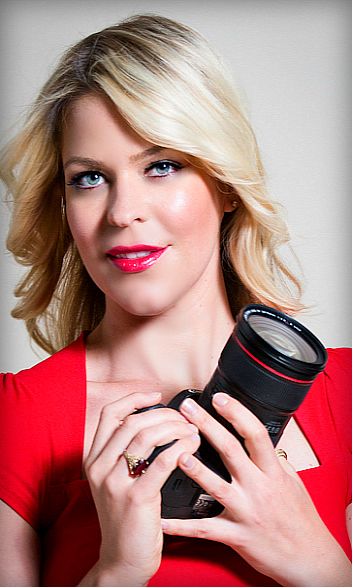
Journalist Amber Lyon: The War on Drugs is a Human Rights Crisis

JournalistAmberLyonWikimedia CommonsHave you ever found it odd that a side effect of Cymbalta, a leading anti-depressant, is suicide? It seems counterintuitive, but in a country where medicine is dictated by Big Pharma, such a paradox is hardly surprising.

That’s because, as former CNN correspondent Amber Lyon points out, Western medicine treatments are not intended to get to the root of the sickness.

The result of prolonged medical treatment is a country with 70% of its citizens on prescription drugs. And perhaps more shocking, where at least one fifth of its population is taking five or more prescription pills.

The US remains one of only two countries in the world with direct-to-consumer advertising, and the sheer amount of pills flooding the market is having deadly results. According to the book Our Daily Meds, nearly 100,000 Americans die each year from prescription drugs, roughly 270 people every day.

The non-profit organization Trust For America’s Health also found last year that deaths involving prescription drugs quadrupled between 1999 and 2010. Nearly 6.1 million people abuse prescription pills and overdose deaths have doubled in 29 states, exceeding vehicle related deaths.

With the innate perils of these drugs becoming more evident, Lyon dedicated her journalism to finding another way to treat psychological illnesses. Her personal experience curing Post Traumatic Stress Disorder (PTSD) with psilocybin mushrooms led her into a world of research establishing that what we’ve been told by the establishment about psychedelics is wrong.

Lyon travelled around the world to legally take psychedelics with foreign cultures that have used them medicinally for thousands of years. She explains that when done in a safe setting, these psychedelic therapies allow people to confront, process and purge their darkest memories, instead of numbing them with pharmaceuticals.

How Psychedelics Are Saving Lives

**

Amber Lyon joined Abby Martin on Breaking the Set to debunk the myths surrounding psychedelics and explain their proven benefits.

Amber Lyon Trips All Over the World to Discover the Power of Hallucinogens

**

Lyon launched the website Reset.Me in order to change the narrative and spread awareness about the benefits of psychedelics.

Written by Abby Martin and Anya Parampil, photo by Wikimedia Commons
The Rush To Prohibit Less Addictive Pain Killers


MEDIA ROOTS
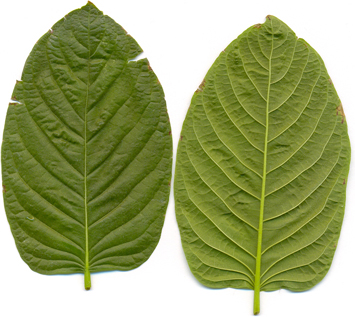
 — Known mostly in parts of south east Asia and Thailand, kratom is somewhat of a cultural intoxicant similar to the use of coca leaves (from which cocaine is derived) by the Bolivians and the use of khat or betel nut used by Arabic cultures.  The difference among these ‘cultural intoxicants’ is that kratom has effects similar to big pharma’s slew of ‘pain killer’ drugs.  The term ‘pain killer’ here is a slight misnomer since drugs like Vicodin, OxyContin, codeine and morphine ‘kill’ pain by flooding the brain with pleasure, thus, distracting you from the physical pain you may be experiencing.
This may be hard to believe in today’s society, but pharmaceutical companies used to manufacture heroin.  Before it was illegal, heroin was sold by Bayer as a way to ween oneself off of morphine addiction.  Morphine itself was prescribed as a cough syrup.  A much less potent opiate cough syrup common today is a mixture of codeine and promethazine (a sedative), referred to by rap culture as ‘purple drank.’

Presently, pharmaceutical companies rake in big money from sales of highly addictive narcotic ‘pain killers,’ such as OxyContin.  OxyContin, in and of itself, is equally as addictive as pure heroin (since heroin sold on the streets is usually not pure, especially that sold on the west coast; by all accounts, OxyContin is actually a more addictive drug than most street heroin).  Pharmaceutical companies have even gone so far as synthesizing new opiate drugs that are far more potent and addictive than even heroin, OxyContin, or morphine.  They come in highly concentrated forms like Fentanyl or Dilaudid.  Unbelievably, Fentanyl, a drug ten times more potent than heroin, can be prescribed in the form of lickable lollipop candy, as well as patches to put on the arm for a long-term timed-release ‘pain killing‘ effect.

It seems pharmaceutical companies would rather have a society addicted on their expensive pain pills than see someone medicate using a legal, less addictive and, in some cases, equally as effective, natural pain killer, such as kratom.  Now that kratom has ‘taken off’ via internet sales and it is still legal in most areas of the world, the US government, under Obama, is trying to crack down and make it unobtainable by the public.

Robbie Martin

***

THE STRANGER Kratom was first documented as an opiate substitute—a kind of herbal methadone—in Asia in the early 1800s. It’s often used by people who want an alternative to opiates, either because they’re trying to break an addiction or because they want some way to manage chronic pain without opiate-based drugs.

Every few months, a new intoxicant that isn’t technically covered by US drug-prohibition laws pops up on the market and policymakers, acting on very little information, freak out over it. Unfortunately for kratom, it has appeared in the immediate wake of the “bath salts” hysteria. (The hysteria was not entirely unjustified, as the active ingredient of “bath salts,” a chemical called MDPV, was held responsible for long-term psychiatric damage and several deaths.) Kratom is already in the early stages of the same cycle.

That cycle goes like this: Clever entrepreneurs find an intoxicant not covered under current law and begin selling it. People get excited about it and chatter online. Some user winds up in the emergency room—for reasons that may or may not be serious—and says its name to a doctor who’s never heard of it. The doctor calls the poison control center, and the public-health bureaucracy scrambles to figure out what this exotic new drug is. Someone talks to a reporter, and soon newspapers and TV stations are all over it, breathlessly warning parents about a “dangerous new high” threatening their children. Lawmakers see a chance to score some points by being tough on drugs and ban it. The drug fades away. A clever new entrepreneur finds a new drug, and the whack-a-mole cycle begins again.

Enter kratom, stage right.

Read more about The Rush To Prohibit Kratom.

© 2012 The Stranger

***

Photo by Wikimedia Commons user Abalg

Posted in Uncategorized | 1 Reply

Hallucinogenic Plant Targets Pain Receptor


MEDIA ROOTS
 — Salvia divinorum is one of the most fascinating and mysterious psychedelic drugs on the planet.  Equally as ‘powerful’ as DMT, with a peak duration of less than ten minutes, the drug can create a sense of timelessness where people may feel as if they’ve lived an eternity in another universe.  Its ‘abuse potential’ is low since the experience for most people can be jarring and disorienting.  For now, it is still legal in most parts of the United States.  Almost all other ingestion methods of Salvia, besides smoking, have led to little anecdotal conclusions.  People have had success making pure grain alcohol tinctures, which are very uncomfortable for the user to hold in the mouth.

The active ingredient in Salvia, salvinorin A, which binds to the kappa Opioid receptor, until now has been a mystery to science.  At the present time, pharmaceutical companies are most likely looking into the possibility of untapped knowledge in the world of the new frontier of psychedelic chemicals such as Salvia, which we know have already produced successful results.

Robbie Martin

***

TRI-CITY PSYCHOLOGY — At the molecular level, drugs like salvinorin A (the active ingredient of the hallucinogenic plant Salvia divinorum) work by activating specific proteins, known as receptors, in the brain and body.

Salvinorin A, the most potent naturally occurring hallucinogen, is unusual in that it interacts with only one receptor in the human brain—the kappa opioid receptor (KOR). Scientists know of four distinct types of opioid receptors, but until now the structure of the ‘salvia receptor’, and the details about how salvinorin A and other drugs interact with it, was a mystery.

In a research paper published March 21 in the journal Nature, scientists from the University of North Carolina at Chapel Hill, Scripps Research Foundation, and two other institutions revealed the first-ever glimpse of the complete structure of the KOR. The finding could accelerate the development of new drugs to treat addiction, depression, anxiety, chronic pain, and many other conditions.

“Once we see the structure of the receptor, it becomes easier for us to develop drugs that target the receptor in ways that might be beneficial for medical therapy,” says Bryan Roth, professor of pharmacology at UNC and one of the paper’s authors. “Drugs that block the receptor are potentially useful for treating a number of serious illnesses including chronic pain, cocaine addiction, and other diseases.”

Read more about Hallucinogenic Plant Targets Pain Receptor.

© 2012 Tri-City Psychology Services, Inc.

***

Photo by Wikimedia Commons user Abalg

Insomnia, Sleep, and Unconventional Rhythms


brainflickrbrain_bloggerMEDIA ROOTS — Like many customs handed down to us by ‘experts‘ we often uncritically accept, sleep is yet another custom we may be misinformed about.  Daily, millions of people struggle with the simplest of biorhythms—sleep.  And we are often led to believe this has always been so.  Insomniacs are stigmatised and branded inadequate and defective.  But what if everyone complying with the six-to-eight hour sleep rule of thumb are wrong?

A growing body of research and increasing evidence are suggesting, up until relatively recently in human history, humans have slept in a disjointed manner comprised of two phases.  Modern technology has enabled states to squeeze their working-class, even persuading them to identify with a workaholic ethic.  Prior to the industrial era, human activity was harmonised with the Sun’s cycles.  So, at night, humans slept for a few hours, then awoke for an hour or two.  They would then drift off back to sleep for another cycle.  These phases were known as first sleep and second sleep.  And the period in between was known as the watch.  People used the watch to visit neighbours, chat with family, smoke a pipe, pray, or analyze their dreams, for example.

Just as we develop more sophisticated approaches to nutrition, exercise, and health, sleep should carry equal significance in our lives.  It’s widely held we spend roughly one third of our lives sleeping.  Could we be sleeping our lives away?  Or are we maximizing our lifespans with the eight-hour sleep regimen?  Still, it’s never too late to reconnect with our true circadian rhythms.

Adam Miezio

***

ALTERNET — I’ve always been at odds with sleep. Starting around adolescence, morning became a special form of hell. Long school commutes meant rising in 6am darkness, then huddling miserably near the bathroom heating vent as I struggled to wrest myself from near-paralysis.

Pursuing the truth about sleep means winding your way through a labyrinth of science, consumerism and myth. Researchers have had barely a clue about what constitutes “normal” sleep. Is it how many hours you sleep? A certain amount of time in a particular phase? The pharmaceutical industry recommends drug-induced oblivion, which, it turns out, doesn’t even work. The average time spent sleeping increases by only a few minutes with the use of prescription sleep aids. And — surprise! — doctors have just linked sleeping pills to cancer.  We have memory foam mattresses, sleep clinics, hotel pillow concierges, and countless others strategies to put us to bed. And yet we complain about sleep more than ever.

We have been told over and over that the eight-hour sleep is ideal. But in many cases, our bodies have been telling us something else. Since our collective memory has been erased, anxiety about nighttime wakefulness has kept us up even longer, and our eight-hour sleep mandate may have made us more prone to stress. The long period of relaxation we used to get after a hard day’s work may have been better for our peace of mind than all the yoga in Manhattan.

In sleep, we slip back to a more primitive state. We go on a psychic archaeological dig. This is part of the reason that Freud proclaimed dreams to be the royal road to the unconscious and lifted his metaphors from the researchers who were sifting through the layers of ancient history on Egyptian digs, uncovering relics and forgotten memories. Ghosts flutter about us when we lie down to rest. Our waking identities dissolve, and we become creatures whose rhythms derive from the moon and the seas much more than the clock and the computer.

Read more about The 8-Hour Sleep Myth.

***

Photo by Flickr user brain blogger

Painkillers Could be a Gateway to Heroin

CNN– This past winter, I found myself following a drug dealer and his crew up the dark stairway of a triple-decker apartment building on the outskirts of Boston. Reaching a unit on the top floor, the young man pulled a gun from his waistband and set it on a coffee table next to a digital scale and a pile of drugs.

Entering a drug den, you might expect to find cocaine or heroin. But side by side with this pile of “hard stuff” were prescription pills, lots of them.

The little green tablets the men were dealing — known as “Perc 30s,” “Percs” or simply “30s” on the streets — were 30-milligram oxycodone. In medicine, oxycodone is known as an opioid analgesic, a powerful painkiller prescribed to patients with acute or chronic pain. On the streets, it’s known as heroin in a pill, and to borrow some Boston slang, it will get you “completely jammed.”

When Gil Kerlikowske, President Barack Obama’s national drug policy director, recently described today’s prescription drug abuse in the U.S. as worse than the crack epidemic of the 1980s, he was simply echoing what these drug dealers have long known.

“Pills are what it is now,” as one of them put it to us that night.

In the U.S., more people are abusing prescription drugs than cocaine, heroin and Ecstasy combined, but the most destructive have been prescription pain drugs such as oxycodone, best known by the brand name OxyContin.

The Centers for Disease Control data show overdose deaths from prescription painkillers more than doubled from 2000 to 2007, and in 17 states, painkiller overdoses are now the number one cause of accidental death.

Read full article on how Painkillers Are a Gateway to Heroin.

© 2011 CNN

Photo by Flickr user EMagineArt