On Memorial Day, politicians will speak at ceremonies all over the country and repeat their favorite mantra: “Support the troops.”
This pledge is hammered into the American psyche at every turn. But there’s a hidden, dark history that shows that the politicians are in fact no friend to service members–but their greatest enemy.
An easy way to prove this is to look at how they so quickly betray and abandon their soldiers after purposely ruining their lives, and even after using them as literal lab rats.
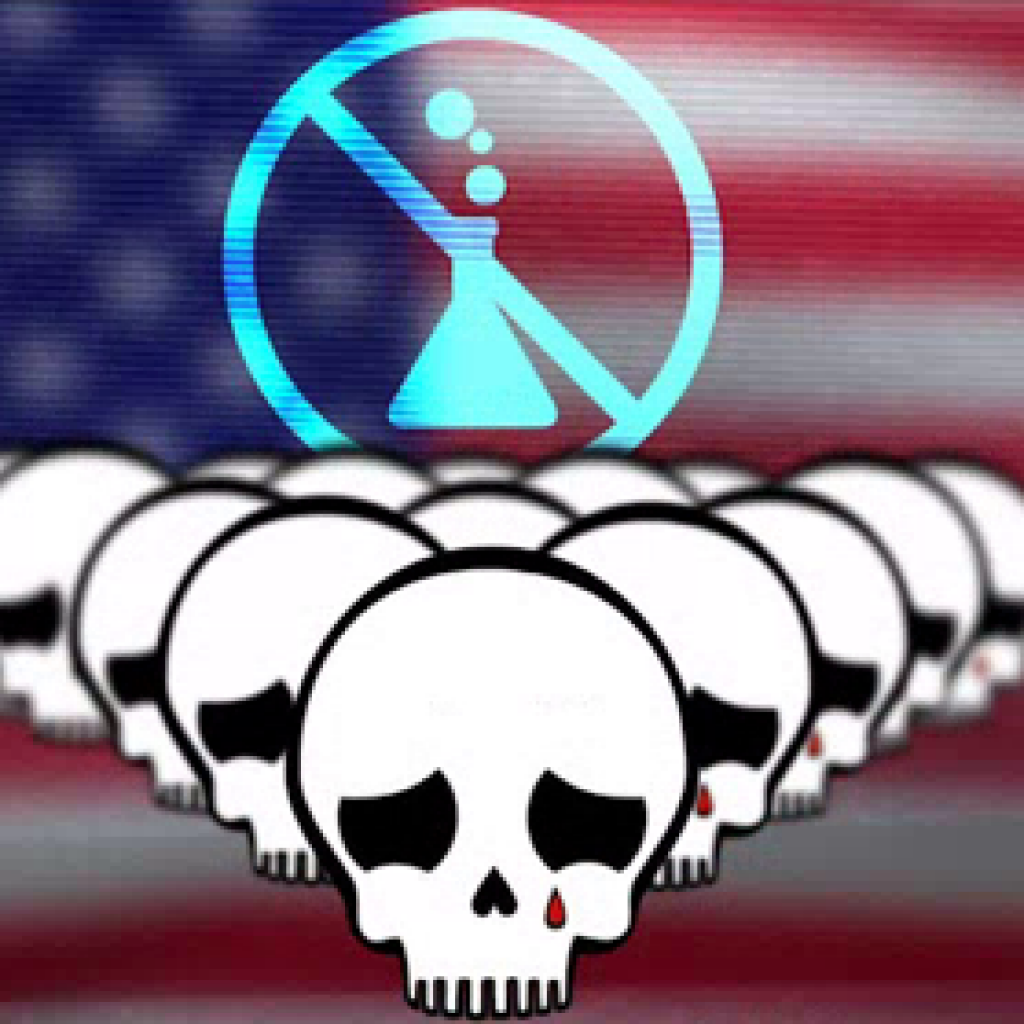
In this disturbing chapter of The Empire Files, Abby Martin documents decades of experimentation on unwitting US troops—from nuclear tests to psychotropic drugs—as well as knowingly exposing them to deadly poisons, from Agent Orange to sarin gas.
Most infuriating is that the hundreds of thousands of veterans seeking help from the government for the side-effects of these tests are always met with lies and denial. Be prepared to be armed with info and pissed off about how veterans are really treated in the US Empire.
Used & Betrayed: 100 Years of US Troops as Lab Rats
Lawrence Wilkerson, retired US Army Colonel and former chief of staff to Secretary of State Colin Powell, has some surprising things to say about the US government.
Wilkerson doesn’t hold back when he explains how US foreign policy has always been about the expansion of sheer power. After WWII, the US expanded “imperial dots”, or military impressions in order to generate a financial apparatus that would expand Empire, allowing for the rich to continue to grow their capital.
While many parts of the world are forced to live in abject poverty, there are generations of families that have a concentration of wealth that surpasses the GDP of most countries. According to the latest Oxfam study, only 62 people now own as much wealth as the bottom half of humanity.
Wilkerson decided to come forward and blow the whistle about US crimes after learning about how torture had been authorized and encouraged by the highest levels, violating the Geneva Conventions, the law of war, and the manuals that they operated under. “I can’t stay silent anymore. I’m going to speak out.”
Wilkerson joins Abby Martin for a must-watch interview exposing the dark underbelly of DC bribery, intelligence hoaxes as war pretexts and the ruthless nature of US corporate Empire.
Former Bush Official: “The Ship Is Sinking”
**
ABBY MARTIN: I’m sitting here in Washington, D.C. with the rare opportunity to speak with someone who served in the innermost circles of the US war machine. Colonel Lawrence Wilkerson is a former US Army Airborne Ranger who flew over 1,000 combat missions in Vietnam. He was national security adviser to the Reagan administration and later served as chief of staff to Colin Powell during the Bush administration. You’re a retired Army officer. You’re a Republican. Given your inside experience in the government and military, how would you explain the purpose of US foreign policy?
LAWRENCE WILKERSON: Today? Today the purpose of US foreign policy is to support the complex that we’ve created in the national security state that is fueled, funded and powered by interminable war, and the ramifications thereof. That’s a sad commentary on what America has become, but it’s a realistic and I think honest appraisal of what America has become.
AM: Has it ever been about altruism?
LW: You could say there were even altruistic aspects to the slaughter and ethnic cleansing of Native Americans from the Mississippi to the Pacific coast by Phil Sheridan’s Army of the West. If you wanted to really dip into the bag and find something, but I don’t think overall and comprehensively it’s been altruistic. It’s been about sheer power, and lately it’s not even been about realistic application of that sheer power, or realistic attempts to expand it. It’s been more or less so failed in its overall general aspects that it has diminished our real power in the world. And this is what concerns me most seriously because history demonstrates, I think, that this is what empires do when they’re getting ready to collapse. They began to be so zealous of their own power and its expansion that they actually decrease their power until it becomes inevitable that they cease to exist, or they don’t exist in the same form they did when they were an empire.
AM: And you’ve talked about the capital interests that are behind pretty much every US military intervention in the last decade if not century. What sort of economy are we waging war in today and what capital interest would you say are behind the war on terror?
LW: After WWII, the United States engaged in a monstrous twilight conflict, if you will, that it calls the Cold War. It’s probably a pretty apt term. In that process it built up what are the appurtenances now of a national security state: the military-industrial-congressional complex, all the armaments industry that goes into that, the far-flung basing structure we have all over the world which now is eight or nine hundred places that we have little colonial dots, if you will, imperial dots, and to the wars there we’re fighting now almost interminably.
All of this is the leftover of what we did during that Cold War, which could include physical expenditures beyond the scope even of human imagination. We’ve spent so much money on maintenance of our empire that is becoming a critical part of it too. Our debt now is something like eighteen trillion dollars, unparalleled debt in my mind in the in the history of empire, in constant dollars or in current dollars. So this is a situation that’s unsustainable, but it has come to a point where the power structure, which I would define as both the financial apparatus that this empire has generated, and the economic aspects of it which are less and less industrialized and productive, therefor [less] a real economy, in other words, and more and more playing with money and the interest on money and capital in general, as Thomas Piketty has pointed out in his book Capitalism in the 21st Century so eloquently. We now have more capital awash in the world than we have earned income. Earned income is a very second place in the world. Capital is the real driving force in the world and this capital is passed on from family to family, from generation to generation and therefore corruptive and poisonous.
We’re in real trouble right now because of what this empire has generated, because of the incentives and motivations of it, and because it’s basically run by about 1 percent of the people, if not fewer, in this country constituting essentially a plutocracy. There are 400 families, 400 wealth centers, private wealth centers in the United States constituted around a family structure that equal the gross domestic product of Brazil. Today I read a percentage which I can’t even recall—it had so many zeros in front of it—but it was much less than one percent of the country that has the approximate wealth of the GDP of India. So we’re talking about a concentration of wealth, and a concentration of capital, which is not productive wealth unless it is actually going back into the real economy to generate industry that produces something. It’s unconscionable. It’s reprehensible in many ways because what you’ve got is the rest of the country, and in many respects the rest of the world, living off the rest of the scraps.
AM: And it’s totally unsustainable, as you were mentioning, this is not a trajectory that is going to last. Behind the belligerents waging a war there are certain industries that are in play that continue to garner interest, extract resources.
LW: Look at what’s happening in Syria right now, for example, just a microcosmic example. The Air Force is about to run out of ordnance. It has dropped so many bombs and shot so many cruise missiles that it’s about to run out of ordnance. Well, I will guarantee you that companies like Raytheon and Lockheed and others who make these armaments are salivating because they are going to be making another round of these are armaments, and into the interminable unknown future they’re going to be making these armaments. It’s incredible what we are doing.
AM: And in fact they are salivating at that. At Lockheed, Boeing, all these different institutions, defense institutions, are openly talking about what a great benefit this is to them—this Syria war, all of these escalations. I wanted to read you a quick fact. In 2008, the Government Accountability Office found that over 2,400 former generals were employed at 52 of the biggest defense contractors as senior executives and acquisition officers. A high percentage of retired general officers retire, go straight into jobs in the defense industry making well over six figures, often with the corporations they dealt with while serving. How does this revolving door function? I mean, how close is this relationship in terms of actual foreign policy creation.
LW: It’s so close that you actually had during the Iraq war, and as far as my history lessons go, it’s the first time it’s occurred this way and now is going on continuously, general officers who not only go out into the armaments industry and its associated paraphernalia and make money based on their influence gained while in service, you actually have them going out and joining the media and making the media more conversant with and attuned to and want war. So you actually have general officers who will go to CNN, go to MSNBC, go to Fox News, and they will get again your six-figure salaries for being the security experts on those news shows, and they will report to the American people the dire need for this continued conflict, the dire need for soldiers on the ground in Syria, the dire need for more war. It’s incredible what has happened in that respect. That’s not a direct contribution to the armaments industry, but it’s certainly a very vivid contribution to the war mongering and to the interminable state of war.
AM: Is it the interlocking board of directors in these companies, or is it just advertising injected straight into the corporate media?
LW: I wish it were something that you could put your finger on like that. It’s so many different things, including what you just said, but not necessarily consciously or coherently except in some cases, I think. It’s all of these things contributing and it’s not any one of them. As Eisenhower said in his farewell address, it’s not something you put your finger on and say, “Aha! That’s malicious. That’s intent. It’s not only complicit. It’s intent.” It’s not that. It’s this accumulation of vast power that’s oriented towards what first increases its power, and second what makes it rich that comes together and causes this. If it were something that you could root out and you could hand over to the FBI or to the Supreme Court or someone to adjudicate, it would be a different matter, I think, not that it would get done very easily, but it would be a different matter. It’s not something like that. It’s pernicious. As Eisenhower said, it’s in every state house in every federal office building. It’s even in every home in America. It is this unconscious sometimes power-driven aspect of it that makes it so difficult to combat. In fact, I’ll sit here and be a pessimist, a cynic, and I’ll say we aren’t going to correct this until something truly serious happens to right the ship of state, which might also sink the ship of state. Now we have every other general officer, admiral, walking out and signing up with glee to work for armaments.
AM: Well, other than the egregious unethical nature of how this functions… I mean, what is the legal caveat to how this is actually working? Is it just a machine that’s working on its own and just continues to become more pernicious as time goes on?
LW: They’re not the most competent people in the world. They’re not the most capable people in the world, and they’re not the most, shall we say, professional people in the world. That’s a part of it, but a second part of it is it’s become the thing to do. It’s become de rigueur. I mean, it’s what you do if you serve 30-35 years. You expect to have a six-figure salary with someone like Raytheon or Halliburton or Booz Allen Hamilton. We haven’t talked about the Beltway bandits that do more intelligence than the CIA. Now I use that term very loosely there—intelligence, but it is a corporate complex that is growing, and its surrounds everything else, including what I call fateful decision making, which is the decision-making to send young men and women to die for state purposes.
AM: And speaking of the young men and women who go to die, you know there seems to be a huge class stratification between the people who are making the policy and the people who are actually giving their lives on the battlefield. I mean, if you join the military in today’s age, whose interests are you serving when you do put your life on the line?
LW: You’re serving what one veteran in my seminar at William and Mary [University] said to me not too long ago, about three weeks ago, an Army veteran of Iraq and Afghanistan: You’re serving the ulterior purposes of the leadership of the country, and I said, “What do you mean by that?” And he said, “You’re serving corporate and commercial interests. You’re serving the interests of people who bureaucratically are seeking power within the structure, and you’re serving the interest of what is basically an incompetent governing process.” Wow. That was a pretty powerful statement, I told him, and he said, “Yep, and I’ll never go back again. I guarantee you that because I didn’t realize that until I was about halfway through my last tour in Afghanistan.”
AM: Let’s talk about the draft. It hasn’t been in place for some time. On one hand, you have the military so desperate that they’re paying NFL and sports stadiums for pro-military propaganda. On the other hand, you have women that are now being pushed to enlist. What do these measures of desperation mean and what do you think about the draft?
LW: It really isn’t an all-volunteer force. It’s an all recruited force because we’re spending billions of dollars to entice these people, who feel that they don’t have many other prospects, into the armed forces. We’re bringing them into a service that is supposed to be professional, disciplined and altruistic. We’re bringing them in with the most heinous of selfish, greedy purpose. We’re paying them what they couldn’t make otherwise. We’re giving them bonuses. It is so bad now that the cost for personnel in my army and to certain extent in the marine corps is coming close to being fifty percent of the cost of that service on an annual basis. If for no other reason the all-volunteer force is going to bankrupt the defense department, so they’re going to have to look at some other options.
AM: Let’s talk about your role in the Bush administration during the lead-up to one of the most devastating wars ever perpetrated by the empire—the Iraq war. You not only served as Colin Powell’s chief of staff, but you prepared his infamous speech to the UN about Iraq and its weapons of mass destruction. How did you miss the faulty nature of the intelligence, given your weeks-long analysis, given the stakes?
LW: I’ve looked at it from a much more, shall we say, soul-piercing way. Not only was the intelligence picture a failure on the part of the intelligence agencies for various reasons, it was also cherry-picked by the vice president. It was put together to a certain extent by the Office of Special Plans, in Doug Feith’s shop in the Pentagon, and it was largely orchestrated, as the MI6, the British memo said, it was orchestrated, shaped around the policy or the policy was essentially fed with intelligence that would shape it, that would feed it. So there were a number of reasons for the failure. There were a number of reasons for my own personal failure. I lament those reasons. I will never forget the occasion. I’ll go to my grave remembering it, but I can certainly, from an academic point of view, see how this this is sad, and it frightens me to a certain extent how this happened in the past, has happened in the past or whether it’s something in the future.
For example, let me give you a vivid example. I’ll tell you how I looked at the immediate reports that Bashar al-Assad had used chemical weapons in Syria a year or so ago. I said bullshit. I’ll believe it when I see evidence that it actually happened. And I went to every person I knew in the intelligence community, and every person outside the United States I knew to include two people who were in Syria at the time, and I knew what was going on and I respected their vision and their knowledge. None of them could confirm for me, not a single one, that Bashar al-Assad used those chemical weapons. Instead there were possibilities they were used by other parties in Syria as well as by Assad, and frankly, the evidence looked more strongly for other parties than the president. So I still think there is high potential for this kind of manipulation of intelligence, this kind of fabrication of intelligence, and this kind of refusal to take dissent in the leadership in this country right now today. And I’ll tell you very seriously I’m very skeptical of the intelligence establishment and what it says.
AM: Right, I mean, I always thought it was weird that the UN weapons inspectors were there on the ground and that’s when Assad decided to use the chemical weapons—when he already knew that was the red line. This whole red line mantra is really interesting because why should weapons of mass destruction of any sort of be that red line to actually legitimize the invasion and occupation of a sovereign nation? I wanted to say one more thing about the case. One of the biggest resonating factors, I think, in the speech was Saddam’s anthrax stockpiles and bio-weapons labs. Considering the fact that America had just been traumatized by its own anthrax attacks where five people tragically lost their lives, why did you choose to hinge so much on anthrax in the speech?
LW: No, as a matter of fact, we winnowed that thing to death. We threw tons of stuff out that we simply looked at and said, “All this is is an extrapolation from 1991 or 92. In other words, we looked at it and said the CIA has no evidence that Saddam has done what they’re saying he’s done. All they’ve done is made a linear projection. If he was producing six ounces in 1991, and we knew that positively from the inspectors after the war, then he’s now got 46 ounces because he could do two a year, or whatever. That’s what they’ve done.
AM: Of course, it came out that the anthrax came from our own bio-weapons lab. The final report from the FBI found no hard evidence linking Bruce Ivins to the attack.
LW: Well, I don’t know that, and I can’t tell you why don’t know that, but I don’t know that. I don’t know it with the clarity with which you just expressed it.
AM: That’s what the FBI said.
LW: Well, the FBI is as incompetent as any other bureaucratic entity within the federal structure.
AM: Right, but I think it is pretty much conclusive that it came from within… I mean, the bio-grade of the anthrax came from within the US establishment.
LW: It wouldn’t surprise me.
AM: Well, let’s talk about what was your kind of deciding factor to speak out and be so vocal…
LW: Torture. When Powell came through my door in May, I guess it was, of 2004, and told me about some photographs that we’re going to come out, may be made public, about a place called Abu Ghraib in Iraq… By the time I walked out of the State Department, I was ready to go find somebody and cut his throat because I knew that the United States had been involved in heinous activities in Vietnam. I knew they’d been involved in heinous activities in the Philippines. Indeed, a brigadier general, as I recall it, machine-gunned a thousand people in a ditch in the Philippines, and Teddy Roosevelt had sent him a telegram congratulating him. When people found out what he’d really done, Teddy had to kind of withdraw that approval, but I knew we had done some really bad things in the past, particularly in war, but I never, never knew any time in our history where those bad things had not only been authorized at the highest levels in the land but encouraged by the highest levels in the land. And I mean the president and the vice president of the United States and some of the cabinet officers. They were complicit in this. They gave instructions that they damn well knew we’re going to cause the Armed Forces of the United States to involve themselves in violations of the Geneva Conventions, the law of war and the manuals that they operated under. That just threw me. I said I can’t stay silent anymore. I’m going to speak out.
AM: And looking back at the horrors of the administration, as you mentioned, the torture, wanton detention, and of course, the illegal war that was based on false pretenses that cost the lives of a million Iraqis. Do you think that any members of the Bush administration should be charged with war crimes?
LW: I’ve said so in the past. I do think they should be charged. I think six lawyers in particular ought to be disbarred immediately. They should have been disbarred immediately. I think they should probably also be tried.
AM: Soldiers have been continuously dying in Afghanistan in America’s longest war. Today they’re still facing death, horrific injuries, for essentially no purpose it seems. I mean…
LW: Be careful.
AM: How do you think they should understand the war in Afghanistan?
LW: Be careful.
AM: What do you think their purpose should be?
LW: The war in Afghanistan has morphed. It’s not about Al-Qaida anymore, and it’s not about the Taliban anymore. It’s about China, Russia, the soft underbelly of Russia, which is mostly Muslim, about Pakistan, about Iran, about Syria, about Iraq, about whether Kurdistan is stood up or not, and ultimately about oil, water and energy in general. And the US presence in Afghanistan, I’ll predict right now, will not go away for another half century.
AM: My God. That’s a horrible thought.
LW: And it will grow. It will not decrease. It will grow.
AM: And let’s talk about strategic influence especially. We see this Cold War resurrection going on right now. As someone who lived throughout the Cold War… the schism within the establishment when it comes to Russia and this new posturing with Russia… After the reunification of Germany there was a promise on behalf of NATO that it would not continue to build up.
LW: Not one inch further east is what Jim Baker, Secretary of State, said to Edward Shevardnadze.
AM: What interests are behind the build-up?
LW: Why do we want more countries in NATO? Because then Lockheed Martin and Raytheon and Boeing and others can sell to them. Then the Soviets, now the Russians, won’t be selling to them. Why did we want Ukraine?
AM: Don’t we have enough?
LW: Empire never has enough. That’s the nature of imperial power. It never has enough. Have you ever watched Battlestar Galactica or Star Wars, or Game of Thrones? Empire never has enough power. It never has enough wealth. It never has a more stable status quo. It has an increasingly unstable status quo, and so its efforts are ever more frenetic to protect that status quo, its power and its wealth, and even expand them. That’s the nature of Empire, and that’s what we are now. That’s what we are. Everyone’s protestations to the contrary, that’s what we are. Depending on whose reports you read, about a third, 20% I’ll say, to 30 percent of Russia’s heavy armaments industry is in Ukraine. What do they do for tanks? What do they do for their heavy armaments in their military if Ukraine goes? The idea that we could do something in Ukraine, covert or otherwise, and have Putin not respond is just laughable.
AM: I feel like a lot of people of course feel helpless, especially those of us living within the Empire, paying and sponsoring all these atrocities with our tax dollars. What can we do to prevent this government, the military industrial complex from crushing us?
LW: The people, the American people, or at least a substantial powerful minority of them, hopefully a powerful majority of them, are going to have to get sick and tired of this. They’re going to have to get angry about it, and they’re going to have to take action. That’s the only thing that I see as a way to salvage this republic before it sinks completely. We are going to have to have a very powerful minority, or hopefully, as I said a majority, 51%, 52%, who actually stand up on their hind legs and say, “I’ve had it. This isn’t going to happen anymore. You’re not getting…” Does that mean revolution? It might. It might indeed.
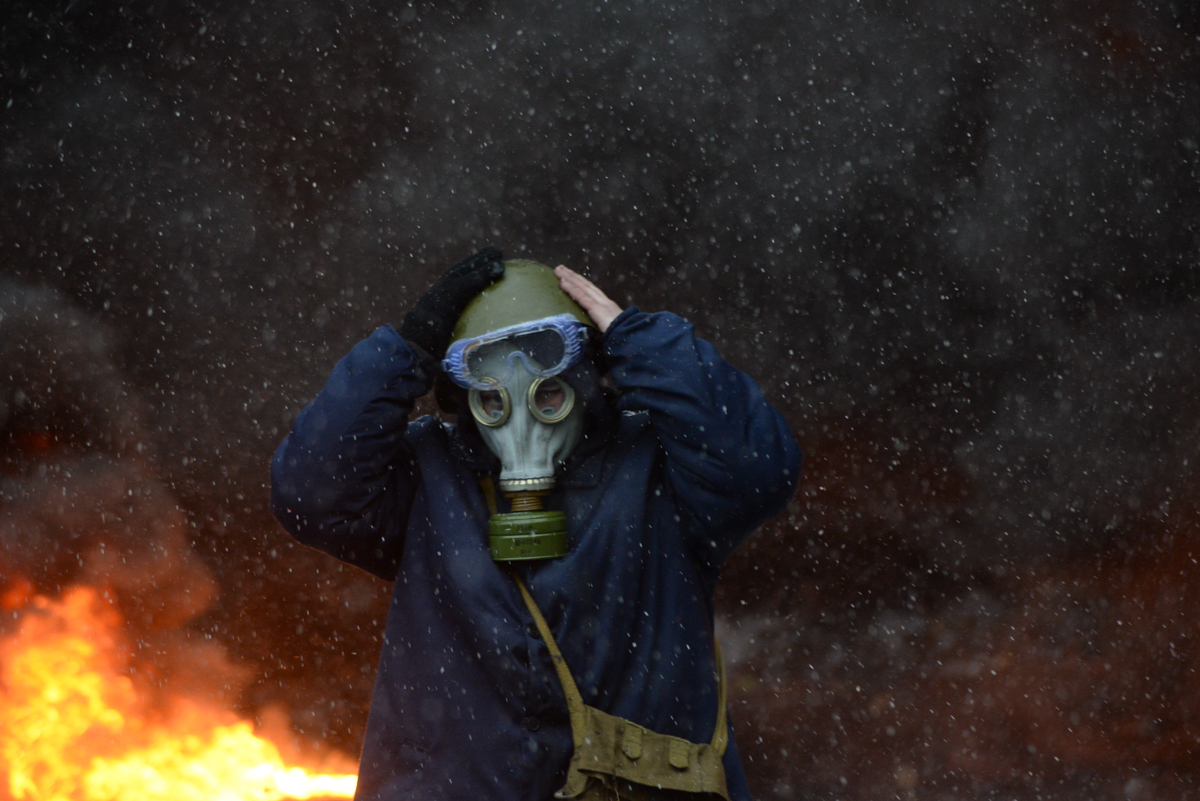
As unrest erupts from Oakland to Egypt, there’s one weapon of war that has come to define the militarized police state: tear gas.
And while a St. Louis judge ruled recently that limits must be placed on the use of tear gas in Ferguson, he didn’t rule that tear gas should only be implemented as a last resort.
Around the country, contingents of peaceful protesters are being confronted by assemblies of heavily militarized police officers that regularly use chemical agents to disperse crowds. But usually the act of getting doused with chemicals is so infuriating that it only incites chaos.
People have a good reason to be afraid of tear gas, considering it’s a banned agent of war under the 1993 Chemical Weapons Convention. Here’s the catch – there’s a clause in the treaty that includes an exception for domestic use. Yes, it’s illegal for the US military to use tear gas against ISIS, but cool to use against American citizens.
The US ensured the exception, claiming it was afraid the convention may prohibit lethal injection. Because of this caveat for riot control, countries around the world regularly and irresponsibly use chemical agents against their own populations. In American cities like Ferguson, police deploy tear gas at the drop of a hat, often at cameramen and journalists.
Despite all of the apocalyptic imagery associated with the weapon, government officials maintain tear gas is perfectly safe, including Ferguson police chief Tom Jackson, who said “There are complaints about the response from some people… but to me, nobody got hurt seriously, and I’m happy about that.”
He forgot to say yet, considering how Ferguson police are using tear gas canisters from the Cold War era and are so old, there’s a severe risk of shrapnel flying into crowds. Make no mistake, this “less than lethal” weapon can actually be quite deadly. Look no further than Palestine, where a man was killed from a tear gas canister hitting him at close range in 2011. Or in Egypt, when a policeman shot tear gas into a caravan holding 37 protesters, choking and killing them all.
Horrifyingly, tear gas also causes amputations and miscarriages. In Bahrain, Physicians for Human Rights reported that many pregnant women had miscarriages after exposure with the chemical agent. Officials assure there are no long term health effects, but that hasn’t been proven given the lack of long term studies. Sven-Eric Jordt, a leading expert in tear gas, says
“I frankly think that we don’t know much about the long-term effects, especially in civilian exposure…There’s very few follow-up studies. These are very active chemicals that can cause quite significant injury. I’m very concerned that, as use has increased, tear gas has been normalized. The attitude now is like, this is safe and we can use it as much as we want.”
And boy, do we. As the world’s leading military and arms supplier, the US is also the biggest producer of less than lethal weaponry. During Egypt’s revolution, while police gunned down protesters and made mass arrests, they liberally used tear gas that read “Made in the USA” (at a little place called Combined Systems International of Jamestown, Pennsylvania). According to VisionGain, the non-lethal weapons market has exploded over the last decade, and is worth a whopping 1.6 billion dollars this year.
Somehow the government has convinced the American people that using tear gas is perfectly harmless, despite stark evidence to the contrary. So, next time it tries to sell us another war because *this leader gasses his own people*, remember that claim isn’t so far from home.
***
Abby Martin Breaks the Set on the Lethality of Tear Gas
The latest eruption of John Kennedy hysteria, bordering on deification, seems safely behind us now that the 50th anniversary of his assassination has passed. Though there is much disinformation about JFK’s legacy that could and should be discussed, two areas stand out: his relationship to the Black Liberation Movement and his actions in Southeast Asia.
Despite all the evidence to the contrary, Kennedy has come to be seen as an ally of – even a hero of – the Black Liberation Movement. In fact, he opposed both the goals and actions of that movement from early in his term when terrorists were beating unarmed and vastly outnumbered Freedom Riders, to the final months of his life when four young girls were blown up in an Alabama church.
When black moderates announced plans for an action in Washington in 1963, Kennedy worked overtime to derail it, with significant success, mainly by strong arming black moderates eager to remain in good with the White House. As a result, the planned direct action protest with civil disobedience morphed into a march and the moderates went so far as to force the day’s most radical speaker, John Lewis of the Student Nonviolent Coordinating Committee, to drop portions of his speech critical of the administration.
As for Southeast Asia, many in the mainstream have argued that Kennedy was about to withdraw U.S. troops and leave the Indochinese to fight their own battles when he was assassinated. This fixation on what he might have done is understandable, for the historical record – what JFK actually did – is quite horrifying and laid the groundwork for the decade of slaughter that followed.
First was the escalation of U.S. aggression in Laos, accompanied by diplomatic shenanigans that undermined coalition governments that included the Pathet Lao revolutionaries despite their being the most popular force in the country. The goal, as always with empire, was all out victory and the annihilation of anyone who favored national liberation.
In Vietnam, a similar approach led to massive devastation. In the winter of 1961-62, Kennedy initiated the full-scale bombing of those parts of South Vietnam controlled by the National Liberation Front (all but Saigon and its immediate surroundings). The justification that bombing was needed to defeat the revolution masked the indiscriminate nature of the aerial assault, which resulted in casualties that were overwhelmingly civilian. And so the tone was set for the next eleven years of war.
It was also Kennedy who authorized the first use of Chemicals of Mass Destruction in Southeast Asia, with napalm the best-known and most deadly. Never had chemical warfare been used so extensively, though the U.S. had also used napalm in Korea in the early 1950’s. Again, the tone was established as massive amounts of phosphorous, Agent Orange and other chemicals were used for the rest of the war, chemicals the deadly affects of which are being felt to this day throughout Indochina.
And it was under Kennedy that the notorious strategic hamlets were set up throughout South Vietnam. “Strategic Hamlets” is a term worthy of Orwell at his best or Madison Avenue at its worst, designed to induce thoughts of happy, grateful peasants gathered around a campfire. The more accurate phrase would be Concentration Camps, as Vietnamese by the thousands were rounded up at gunpoint and forced to live behind barbed wire. Anyone who resisted was beaten or worse; anyone attempting to escape was shot. The aim was to separate the people from the NLF though the result, not surprisingly, as with the bombing and the chemical weapons, was the opposite, as ever larger segments of the population became supporters of the revolution.
As each of these moves failed and the NLF grew stronger, Kennedy ordered ground troops to Southeast Asia in the spring of 1962, the number of which he gradually increased until his death. There is no evidence to indicate any plan for withdrawal short of victory, the myth-making of Oliver Stone, Arthur Schlesinger, Jr. and so many others notwithstanding.
One way to get a handle on the JFK withdrawal myth is to recall another assassination in November of 1963, that of South Vietnamese dictator Ngo Dinh Diem. For much of 1963, Diem threatened to undermine empire’s goals by pushing for a negotiated peace with the NLF and a U.S. withdrawal. In response, Kennedy did what his kind frequently do in such circumstances: he authorized a hit on Diem and replaced him with generals willing to follow orders.
For all the wishful thinking about what Kennedy would have done in Indochina had he lived, the inescapable truth, as opposed to the fantasy, is that he escalated the war and initiated increasing levels of terror that eventually resulted in the deaths of millions. Significantly, there is no mention of withdrawal short of victory in the many Camelot memoirs, biographies and histories until after the tide had turned dramatically against U.S. aggression. Only then did the myth of “Kennedy the Peacemaker” emerge.
Perhaps the JFK cult can be explained by the odious legacies of his two immediate successors, Lyndon Johnson and Richard Nixon, both of whom massively escalated the carnage in Indochina and ultimately abdicated in disgrace. Odious their legacies may be but there’s no way around the fact that Kennedy’s legacy smells just as foul. Such an explanation also obscures the fact that it was Kennedy who established the terms for the domestic conflict that would rage throughout the 1960’s – outraged hostility on the part of the ruling class to the democracy movements that shook the empire to its foundations. It is those movements that will be remembered and celebrated long after the JFK cult hopefully, eventually, finally, finds its rightful resting place in the proverbial dustbin of history.
Andy Piascik is a long-time activist and writer for Z, Counterpunch and many other publications. He can be reached at [email protected].
There are tons of amazing Breaking the Set segments I want to elaborate on, but producing a daily TV series leaves me with little time.
I also don’t expect viewers to watch all 300 episodes, and can only assume they’ve missed some BTS gems. To solve this dilemma, I’ve compiled my favorite clips from this season for your viewing pleasure.
Of course, this list is in no way exhaustive, and doesn’t include unbelievable stories like the New Mexico man who was forced to pay for his own anal invasion, consumer zombie shopping stampedes, private armies being hired for the 1%, a Hawaii Representative clubbing the homeless and much more insanity that you can find on Breaking the Set’syoutube channel.
Abby
***
In the digital age of instant communication and entertainment overload, I explore humanity’s dependence on technology, the toxic ideal of equating consumption to happiness, and the inner dilemma of attaining conscious simplicity.
Finding Happiness Outside Material Consumption
***
By now, I’m sure you’ve heard of the bravest girl in the world, 16 year old Pakistani activist, Malala Yousafzai. Malala was paraded around the US media circuit to speak out against radical Islam and promote education in the wake of surviving a near-death Taliban assault. However, she also personally urged Obama to end US drone strikes in Pakistan during a visit at the White House – a plea completely ignored by the administration and establishment press.
Malala’s Drone Warning Ignored
***
Just one day after a frenzied media locked onto coverage of the woman executed by police after she slammed her car into a gate near the White House, John Constantino committed suicide by setting himself on fire in the middle of the National Mall in Washington DC. The difference between the two tragedies is that the corporate media made no more mention than a small blurb about the man. The omission of self-immolation coverage in the Western world, given the historical relevancy of the act, raises important questions.
How the Media Ignores Self-Immolations
***
The American people remain one of the most uninformed electorates in the industrialized world, due in large part to the fact that the mainstream media is controlled by only six giant corporate conglomerates that control nearly everything we see and hear: Viacom, Time Warner, Disney, News Corp, CBS and General Electric. I talk about putting the media back in the hands of the people by calling to unplug the MSM and join the ongoing March Against the Mainstream Media.
Join the Media Revolution
***
Remember, remember the fifth of November. If you’ve seen V for Vendetta or been to any street protest in recent years, you know how emblematic the Guy Fawkes mask is. This segment outlines the evolution of Guy Fawkes day, the mask as a symbol of resistance and the first ever Million Mask March led by the hacktivist collective Anonymous.
Unity Through Anonymity
***
I’ve often criticized the arrogant notion of American Exceptionalism when it comes to politically justifying destructive policies at home and abroad. I flip the concept around to highlight the categories in which the US truly is exceptional, from obesity to war making, but lacking in important areas like literacy and environmental protection.
Top Five Ways America is Exceptional
***
The most recent chemical weapons attack in Syria prompted the US political and media establishment to repeat the same talking points that they had in the run-up to the Iraq War, blindly supporting the notion that Syria’s chemical weapons needed to be removed by force. Thankfully, the Obama administration went the diplomatic route after immense pressure forced him to back down from a military strike. In this clip, I dissect the war propagandists and question the interests that were driving their call for war.
Syria War Propagandists Debunked
***
Speaking of Syria, Obama’s “red line” of chemical weapons as the justification to militarily intervene in other countries is extraordinarily hypocritical, considering how the US has one of the biggest chemical weapons arsenals and has used them against international law repeatedly in modern warfare. I outline the top four chemical weapons attacks perpetrated by the US and its allies that the establishment doesn’t want you to know about.
Four Chemical Weapons Attacks the US Wants You to Forget



 On Memorial Day, politicians will speak at ceremonies all over the country and repeat their favorite mantra: “Support the troops.”
 Lawrence Wilkerson, retired US Army Colonel and former chief of staff to Secretary of State Colin Powell, has some surprising things to say about the US government.
 As unrest erupts from Oakland to Egypt, there’s one weapon of war that has come to define the militarized police state: tear gas.
 The latest eruption of John Kennedy hysteria, bordering on deification, seems safely behind us now that the 50th anniversary of his assassination has passed. Though there is much disinformation about JFK’s legacy that could and should be discussed, two areas stand out: his relationship to the Black Liberation Movement and his actions in Southeast Asia.
 There are tons of amazing Breaking the Set segments I want to elaborate on, but producing a daily TV series leaves me with little time.