Scientists Remodel Brains’ Visions Into Digital Video

MEDIA ROOTS- Ten years ago, the concept of visually mapping out one’s thoughts, dreams or memories seemed like far-fetched science fiction. Now, it’s a looming reality. UC Berkeley scientists have made a mind-blowing technological breakthrough by developing a system that collects visual activity in the human brain and roughly remodels it as digital video clips. After the process is perfected it will eventually lead to the reconstruction of dreams onto computers.

Abby

***
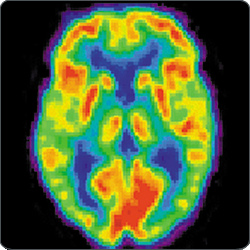
GIZMODO They used three different subjects for the experiments—incidentally, they were part of the research team because it requires being inside a functional Magnetic Resonance Imaging system for hours at a time. The subjects were exposed to two different groups of Hollywood movie trailers as the fMRI system recorded the brain’s blood flow through their brains’ visual cortex.

The readings were fed into a computer program in which they were divided into three-dimensional pixels units called voxels (volumetric pixels). This process effectively decodes the brain signals generated by moving pictures, connecting the shape and motion information from the movies to specific brain actions. As the sessions progressed, the computer learned more and more about how the visual activity presented on the screen corresponded to the brain activity.

After recording this information, another group of clips was used to reconstruct the videos shown to the subjects. The computer analyzed 18 million seconds of random YouTube video, building a database of potential brain activity for each clip. From all these videos, the software picked the one hundred clips that caused a brain activity more similar to the ones the subject watched, combining them into one final movie. Although the resulting video is low resolution and blurry, it clearly matched the actual clips watched by the subjects.

Think about those 18 million seconds of random videos as a painter’s color palette. A painter sees a red rose in real life and tries to reproduce the color using the different kinds of reds available in his palette, combining them to match what he’s seeing. The software is the painter and the 18 million seconds of random video is its color palette. It analyzes how the brain reacts to certain stimuli, compares it to the brain reactions to the 18-million-second palette, and picks what more closely matches those brain reactions. Then it combines the clips into a new one that duplicates what the subject was seeing. Notice that the 18 million seconds of motion video are not what the subject is seeing. They are random bits used just to compose the brain image.

Given a big enough database of video material and enough computing power, the system would be able to re-create any images in your brain.

Read more about Scientists Reconstruct Brains’ Visions Into Digital Video In Historic Experiment

© 2011 Gizmodo


Video comparing reconstructed clips from human brain activity compared to actual images shown

http://gallantlab.org


Photo by Flickr user alles-schlumpf

Parkinson’s Treatment Could Work For OCD, Too

NPR– The letters O-C-D have become a punch line to describe people who make lists or wash their hands a lot. But for some people with obsessive-compulsive disorder, the intrusive thoughts and rituals are severely disabling and don’t respond to drugs or behavioral therapies.

So doctors have been trying a new treatment for OCD: deep brain stimulation.

Deep brain stimulation is best known as a way to reduce the tremors of Parkinson’s disease. A surgeon places wires deep in the brain that carry electrical impulses from an implanted device a bit like a pacemaker.

In 2009, the FDA approved the treatment for some adults with really bad OCD. Since then, about 50 OCD patients have been treated. One of them is “Mike,” a man in his late 40s who agreed to talk if his real name wasn’t used.

A lot of Mike’s compulsions involve cars. Before he gets in one, he says, he feels compelled to check the doors, the brakes, the tires — sometimes more than once. And once he’s on the road, Mike says every bump can make him wonder if he’s just hit something.

One night, Mike’s OCD actually made it impossible for him to drive through a quiet neighborhood.

For nearly three decades, Mike tried the usual treatments: prescription drugs for depression and anxiety, and a type of behavioral therapy called exposure response prevention. But he was still constantly checking faucets so the house wouldn’t flood, and light switches so there wouldn’t be a fire. He couldn’t hold a job. He was living with his parents.

‘My Mind Was Free’

Greenberg offered Mike a chance to take part in a study of deep brain stimulation — something that’s been tried on only about 50 OCD patients in the U.S.

Read more about Parkinson’s Treatment Could Work For OCD, Too

© 2011 National Public Radio

Photo by Flickr user moujemouje

New Brain-Computer, Mind-Control Technology

KURZWEILAI– University of Michigan Center for Wireless Integrated Microsystems professor Euisik Yoon and colleagues are developing a next-generation design for a brain-computer interface (BCI): a brain implant called BioBolt.

This patent-pending invention could someday allow some disabled patients to control an arm muscle (or other muscles) by just thinking about the movement — without wires keeping them immobilized in a chair.

A bolt implanted in the skull would contain an ASIC (application-specific integrated circuit) microchip under the skin in the skull. It would pick up and process neural signals, and transmit them via the skin directly to a receiver located in or near the target muscle group (such as an arm or hand).

Read full article about New Brain-Computer, Mind-Control Technology.

© 2011 Kurzweilai

Photo by flickr user Blatant Truth

Are Political Views Reflected in Brain Structure?

SCIENCE DAILY– We all know that people at opposite ends of the political spectrum often really can’t see eye to eye. Now, a new report published online on April 7th in Current Biology, reveals that those differences in political orientation are tied to differences in the very structures of our brains.

Individuals who call themselves liberal tend to have larger anterior cingulate cortexes, while those who call themselves conservative have larger amygdalas. Based on what is known about the functions of those two brain regions, the structural differences are consistent with reports showing a greater ability of liberals to cope with conflicting information and a greater ability of conservatives to recognize a threat, the researchers say.

“Previously, some psychological traits were known to be predictive of an individual’s political orientation,” said Ryota Kanai of the University College London. “Our study now links such personality traits with specific brain structure.”

Kanai said his study was prompted by reports from others showing greater anterior cingulate cortex response to conflicting information among liberals. “That was the first neuroscientific evidence for biological differences between liberals and conservatives,” he explained.

Read full article on how Political Views Are Reflected in Brain Structure.

© Copyright Science Daily, 2011

Photo by flickr user Blatant Truth

Documentary Interviews – DMT: The Spirit Molecule

THE SPIRIT MOLECULE– DMT: The Spirit Molecule weaves an account of Dr. Rick Strassman’s groundbreaking DMT research through a multifaceted approach to this intriguing hallucinogen found in the human brain and hundreds of plants. Utilizing interviews with a variety of experts to explain their thoughts and experiences with DMT within their respective fields, and discussions with Strassman’s research volunteers brings to life the awesome effects of this compound, and far-reaching theories regarding its role in human consciousness.

Several themes explored include possible roles for endogenous DMT; its theoretical role in near-death and birth experiences, alien-abduction experiences; and the uncanny similarities in Biblical prophetic texts describing DMT-like experiences. Our expert contributors offer a comprehensive collection of information, opinions, and speculation about indigenous use of DMT, the history and future of psychedelic research, and current DMT research. All this, to help us understand the nature of the DMT experience, and its role in human society and evolution.

The subtle combination of science, spirituality, and philosophy within the film’s approach sheds light on an array of ideas that could considerably alter the way humans understand the universe and their relationship to it.


Part 1/5

Part 2/5

Part 3/5

Part 4/5

Part 5/5


To learn more about the film go to http://www.thespiritmolecule.com/

Art by Abby Martin and Maria Scott