MEDIA ROOTS — If you were ever wondering exactly how large corporations ‘cover up’ malfeasance, look no further than the India Times. Ag-giant Monsanto has colluded with one of the largest papers in Asia, the India Times, to heavily downplay the notion that Indian farmers have been committing suicide at abnormally high rates as a result of Monsanto’s clamp down on crop sharing. This is a perfect example of powerful interests conspiring with a major media outlet in order to conceal the truth.
Robbie Martin of Media Roots
***
COUNTER PUNCH — Three and a half years ago, at a time when the controversy over the use of genetically modified seeds was raging across India, a newspaper story painted a heartening picture of the technology’s success.
“There are no suicides here and people are prospering on agriculture. The switchover from the conventional cotton to Bollgard or Bt Cotton here has led to a social and economic transformation in the villages [of Bhambraja and Antargaon] in the past three-four years.” (Times of India, October 31, 2008).
So heartening was this account that nine months ago, the same story was run again in the same newspaper, word for word. (Times of India, August 28, 2011). Never mind that the villagers themselves had a different story to tell.
“There have been 14 suicides in our village,” a crowd of agitated farmers in Bhambraja told shocked members of the Parliamentary Standing Committee on Agriculture in March this year. “Most of them after Bt came here.” The Hindu was able to verify nine that had occurred between 2003 and 2009. Activist groups count five more since then. All after 2002, the year the Times of India story says farmers here switched to Bt. Prospering on agriculture? The villagers told the visibly shaken MPs: “Sir, lots of land is lying fallow. Many have lost faith in farming.” Some have shifted to soybean where “at least the losses are less.”
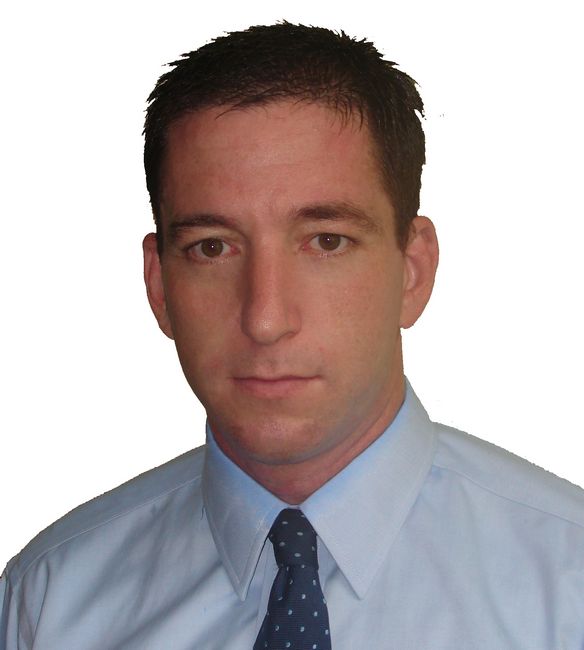
MEDIA ROOTS — When you’re Julian Assange, you just can’t do right. The USA’s establishment has got it in for him now. Doubtless, they’d like to grab him like Bradley Manning. Assange says he’ll be called a traitor for interviewing radicals. Journalist Glenn Greenwald says the attacks on Assange and RT reveal as much about the critics:
“The real cause of American media hostility toward RT is the same as what causes it to hate Assange: the reporting it does reflects poorly on the U.S. Government, the ultimate sin in the eyes of our ‘adversarial’ press corps.”
“In other words, like Assange, [at RT] they engage in real adversarial journalism with regard to American political power. And they are thus scorned and ridiculed by those who pretend to do that but never actually do.”
Messina
***
SALON — A new news show hosted by Julian Assange debuted yesterday on RT, the global media outlet funded by the Russian government and carried by several of America’s largest cable providers. His first show was devoted to an interview with Hezbollah leader Hassan Nasrallah (video below), who has not given a television interview since 2006. The combination of Assange and a Russian-owned TV network has triggered a predictable wave of snide, smug attacks from American media figures, attacks that found their purest expression in this New York Times review yesterday of Assange’s new program by Alessandra Stanly.
Much is revealed by these media attacks on Assange and RT — not about Assange or RT but about their media critics. We yet again find, for instance, the revealing paradox that nothing prompts media scorn more than bringing about unauthorized transparency for the U.S. government. As a result, it’s worth examining a few passages from Stanley’s analysis. It begins this way:
“When Anderson Cooper began a syndicated talk show, his first guest was the grieving father of Amy Winehouse.”
“Julian Assange, the founder of WikiLeaks, unveiled a new talk show on Tuesday with his own version of a sensational get: the Hezbollah leader Hassan Nasrallah.”
That contrast — between one of America’s Most Serious Journalists and Assange — speaks volumes already about who is interested in actual journalism and who is not. Then we have this, a trite little point, impressed by its own cleverness, found at the center of almost all of these sneering pieces on Assange’s new program:
“Mr. Assange says the theme of his half-hour show on RT is ‘the world tomorrow.’ But there is something almost atavistic about the outlet he chose. RT, first known as Russia Today, is an English-language news network created by the Russian leader Vladimir V. Putin in 2005 to promote the Kremlin line abroad. (It also broadcasts in Spanish and Arabic.) It’s like the Voice of America, only with more money and a zesty anti-American slant. A few correspondents can sound at times like Boris and Natasha of ‘Rocky & Bullwinkle’ fame. Basically, it’s an improbable platform for a man who poses as a radical left-wing whistleblower and free-speech frondeur battling the superpowers that be.”
Let’s examine the unstated premises at work here. There is apparently a rule that says it’s perfectly OK for a journalist to work for a media outlet owned and controlled by a weapons manufacturer (GE/NBC/MSNBC), or by the U.S. and British governments (BBC/Stars & Stripes/Voice of America), or by Rupert Murdoch and Saudi Prince Al-Waleed Bin Talal (Wall St. Journal/Fox News), or by a banking corporation with long-standing ties to right-wing governments (Politico), or by for-profit corporations whose profits depend upon staying in the good graces of the U.S. government (Kaplan/The Washington Post), or by loyalists to one of the two major political parties (National Review/TPM/countless others), but it’s an intrinsic violation of journalistic integrity to work for a media outlet owned by the Russian government. Where did that rule come from?
Also, while it’s certainly true that the coverage of RT is at times overly deferential to the Russian government, that media outlet never mindlessly disseminated government propaganda to help to start a falsehood-fueled devastating war, the way that Alessandra Stanley’s employer (along with most leading American media outlets) did. When it comes to destruction brought about by uncritical media fealty to government propaganda, RT — as the Russia expert Mark Adomanis documented when American media figures began attacking RT – is far behind virtually all of the corporate employers of its American media critics.
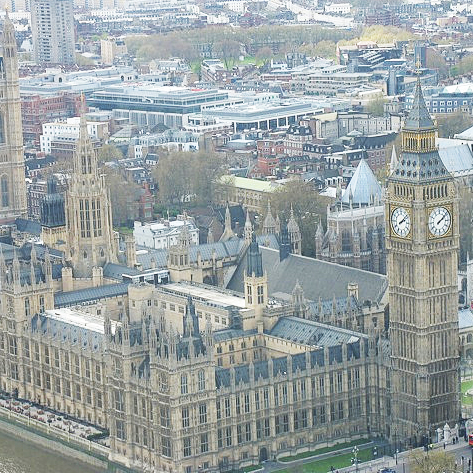
MEDIA ROOTS — A new law proposed in the UK could erode privacy to a level not yet seen in any western country (besides the United States). The law mimics the warrantless wiretapping and ‘sneak and peak’ provisions laid out in the now eleven-year old U.S.A. P.A.T.R.I.O.T. Act.
Robbie Martin of Media Roots
***
ZDNET — Controversial new British legislation could allow the UK’s electronics intelligence agency GCHQ access in real-time data of phone calls, emails, social networks, and Web traffic by all UK residents.
The UK is already the most surveilled country in the world, with number plate recognition systems, ISP deep-packet inspection, and a surveillance camera seemingly on every corner. These proposals would propel the UK into the lacking privacy realms of China, Burma, and Russia. But it already faces the possibility of stiff opposition at a European level unless safeguards are put into place that limits the scope of that monitoring. Though yet to be announced in the Queen’s speech, set for around May, which dictates the UK government’s legislative agenda for the year, it would allow the widespread monitoring of citizens’ activity — despite current UK laws making such actions only available by court-ordered search warrants.
Likened to the U.S.’ Patriot Act, it would grant the UK government access to personal data of ordinary citizens, despite the government’s defence that only certain people will be actively investigated. Data collected would include the time a call, email, or website was visited, the duration of which, and which websites or phone numbers were called. Details of the sender and recipient of emails, such as IP addresses, would also be collected. Everything scrap of data will be stored by ISPs, but not all of this data will be made available to GCHQ without a court order or Home Secretary-sanctioned authority.
MEDIA ROOTS – Like a misplaced time capsule that was never buried, one quaint town in Florida harkens back to an old-world fishing village on the Aegean Sea, a place where life slowly drips. Situated on the west central Gulf coast, Tarpon Springs might be the last bastion of unadulterated Greek culture in America. Attracted by the lucrative sponge fishing trade, Greeks began inhabiting the area over 100 years ago. The sponges have since disappeared and the docks have been reappropriated to sell schlock beach souvenirs, but what remains is the U.S.’s highest proportion of Greek-Americans, and their heritage. Not too far from the well-worn tourist path in town, a narrow street gently curves through the neighborhood, leading to a couple of Greek social clubs.
Cushy clouds stretch across the day’s powder blue sky as the sun beams through saltwater scented air. In front of one of the clubs, middle aged men loiter about smoking cigarettes and talking in a jovial manner. At another club across the street, men play cards, watch Greek soccer on TV and drink the heavy sludge known as Greek coffee. It doesn’t take long in either group to find someone willing to discuss the trials currently plaguing Greece. They pause with a glint of curiosity in their eyes, confer for a few moments in Greek, then elect the best available English speaker to voice impressions and ideas not vetted in most coverage regarding the modern Greek drama. Demetrios Dounakis, a cheery, balding man with family still in Greece, has lived in America since 1971. Another, Stavros Bairaktaris, with salt-and pepper-hair and wandering, contemplative eyes, has lived in the U.S. for four years. Now, both call Tarpon Springs home. Their views as expatriates cast new light onto the troubles of the Greek people.
After some alpha male posturing and tough talk from Bairaktaris, he begins to speak freely. First, he paints a beautiful picture of Greece: the beaches, the small towns, the home and farm handed down to him from his father. His eyes scan the blue infinity of the skies as he recalls lovely details. In short time, however, his nostalgia turns to contempt, at the subject of the debt crisis. Bairaktaris’ voice, when speaking about Greek prosperity- or lack of it- churns in heavily accented, slightly broken English. “Why they surprised?” Upset by the lack of historical context that the media and sympathizers display, he continues, “Greece like this, Greece built like this, goes back to father’s place, back my grandfather’s place: same, same, same.” Evidently the Greek crisis is multi-textured; quick forgiveness, outpourings of sympathy, and emotional lifelines weren’t going to be handed out here. Instead Bairaktaris and Dounakis did their best to tease apart the complex layers of culpability, starting at the top.
The current prime minister of Greece was never elected. Rather, Lucas Papademos, a technocrat, was appointed to the position in 2011 thanks to his prior experience as Senior Economist at the Federal Reserve Bank of Boston, Vice President of the European Central Bank, and Governor of the Bank of Greece, where he oversaw the transition from the drachma to the euro. Dounakis didn’t have much to say about Papademos specifically, but he didn’t withhold any feelings regarding political responsibility for the crisis.
For starters, Demetrios didn’t support the switch to the euro, and doesn’t think bailouts will do Greece any good. In his view, Papademos “does whatever the EU tell him and they don’t care about the people,” and furthermore, the European Union (EU) supports the current Greek government and is therefore partially responsible for the crisis. Dounakis identifies the EU along with the United States as “big powers”- the real bosses- and claims that the Greek bailout and austerity program is going as planned from American shores. “If EU and USA weren’t here this [the corrupt Greek] government is gone long time ago.” Worse, it seems, is that if things continue as they are, nothing can be changed. His ongoing charisma turned into a stinging assessment.
“Have you ever seen so many demonstrations in your life,” Dounakis asks, his eyes narrowing. “They cut down wages, cut down their social security, they cut down everything. You know so that way the big sharks make more money.” His reference to banksters and financial hustlers swarming the waters of Greece in a feeding frenzy reflects a fear that “Greece is going to be destroyed completely. This is bankruptcy right now no matter what.” Dounakis reiterates how the bailout money is not going to the Greek people, but to those “big sharks,” angered that the money designated for the people, won’t make it past the pockets of a corrupt government and an entrenched class of civil servants.
Bairaktaris lays much of the blame at the feet of the latter group. “You know somebody, you have [a way into] the system. You get 3,000 euros [a month for] the rest of your life; you never work; you never get fired; you get all this kind of stuff. This is not today. This is from 1930s.” Bairaktaris’ frustration highlights American criticisms of Europe’s inflexible labor forces feeding at the trough of socialist largesse. This doesn’t seem to be new either, rather institutionalized nepotism and cronyism. “Any office you go, the police, everybody is like a president. You have no law. I wish they could change this,” he laments. Bairaktaris continues his pointed critique of Greek civil servants, saying they “smoke a cigarette, take a break; ‘We closed today.’ Twelve o’clock in the afternoon!” He juxtaposes the plight of an elderly lady, who might receive a 300 euro a month social security benefit while having to pay 700 euros in property tax, with a civil servant who gets 2,000 euros a month to “do nothing.”
Stories of tax evasion in Europe are common and make the endeavor sound like a national pastime in some countries. An inability to levy equal taxes on the Greeks surfaced as a common complaint. Bairaktaris made a point of this when he summed up the attitude of the Greek elite: “You don’t pay no taxes, you rich, you control everything.” Dounakis reacted more vehemently to the subject; a lack of justice, fairness and shared sacrifice percolated from his anger. “Americans have best system if you are millionaire. You gotta pay no matter what…In Greece, when you millionaire, nothing happens!” he exclaims with a hearty laugh. Contrasted with this is his idealized view of American tax collection: “They gonna cut your balls if you don’t pay in the U.S.” Perhaps Greece and America have more in common than Dounakis realizes. He unknowingly exposes more similarities, saying of the toothless, Greek tax collection authority “The big corporations – [they] let ‘em free you know.” The captains of industry in Greece “owe millions to the government and do nothing,” Dounakis concludes, shrugging his shoulders. Unfortunately, for all the problems he can diagnose, his remedies number fewer.
Dounakis firmly believes that the only solution for Greece is for the leftist and communist parties to take power. He thinks that the key to solving Greece’s problems lies in the hands of the Greek people themselves. According to him, the citizens are waking up. “They need to vote for the left parties and communists…If they vote again for the right, for the same leaders, the people are stupid.”
Dounakis tells how years ago, the Communist Party (KKE) warned Greece of the plans of the “big sharks” prior to entering the EU. Like a father with his son in an “I told you so” moment, he explains further that the small parties told the truth, yet the people still voted for the “big sharks and big companies.” Thus, all the bailout money, he says, is going to the “Troika”: the International Monetary Fund, the European Central Bank and the European Commission. He compares the “Troika” to the loan rackets that Chicago gangsters ran decades ago.
Regardless, he doesn’t blame Germany, and repeats that it’s time for Greek people to wake up. “I don’t blame superpowers, they doing to make their own jobs,” his face resigned to indifference. He adds that most Greeks in Greece would agree with this, but Greek nationals in America do not. “I blame my fucked up, stupid people. Don’t stay in house and let other people with good jobs vote!” (Numbers indicate that on average, over 80 percent of Greeks vote.) He finishes by saying, “In this country, same thing, too. Get out and vote!” The wisdom of his words rings loudly, as the American masses are frequently afflicted with voter apathy. When people don’t actively participate in their democracy and the path of their country goes terribly awry, the best place to look for answers might be the closest mirror.
Sometimes Europeans say that one big difference between themselves and Americans is that “in Europe governments fear the people, and in America people fear the government.” Perhaps Bairaktaris unconsciously reflects on this as he urges “Don’t live in fear.” He submits that this is the most important thing in life as his eyes track back and forth across the sky. Maybe the problems of Greece, America’s problems, and the problems of so many other countries during this tumultuous era aren’t as different as they are frequently portrayed to be. By accepting responsibility for leading ourselves into misfortune, perhaps salvation can be found in our commonalities with others around the globe. “I don’t believe in nationalism bullshit” Bairaktaris declares. “I believe in good people is everywhere, understanding, sitting down, talking.” Sometimes the solutions to our problems are simple and easily attained, if we only saw them. With that, he bids goodbye and returns to his social club to sit and talk with his friends.
MEDIA ROOTS — Abby and Robbie Martin grew up in Pleasanton, CA, a city located ten miles from the Lawrence Livermore National Laboratory (LLNL), a secret nuclear weapons production facility. They initially set out to explore the psychological impacts of taking nuclear testing into virtual space. But as their investigation unfolded, they found that the LLNL—in conjunction with Site 300—has built an impressive greenwashing PR campaign cloaking a sinister reality.
Despite a moratorium on nuclear testing, the nuclear arms race continues unabated at very high costs. In addition to the startling cases of LLNL’s mismanagement of dangerous materials and ‘accidental‘ releases, the facilities are still testing every radioactive component of a nuclear bomb in open air, according to sources.
Malignant melanoma (skin cancer) rates are six times higher among children born in Livermore; melanoma has been linked to radiation exposure. And the amount of radiation which has been expelled from the lab since its
inception is equivalent to that released from the bombing of Hiroshima.
Most disturbingly, the Livermore community is largely unaware of what the lab
is actually doing and what its potential impacts are on its health and the
environment.
Written by Abby Martin
***
The Continuing Nuclear Arms Race & The Lawrence Livermore National Lab:
Mismanagement, Dangers & Effects
Produced/Filmed/Directed/Edited by Abby & Robbie Martin
***
Abby Martin: “The United
States has the biggest weapons arsenal in the world and is the only country who
has ever used nuclear bombs during war.
All of the nuclear weapons stockpile management and nuclear weapon technology
come from two locations in the United States:
Los Alamos Laboratory in New Mexico, which is surrounded by a giant plot
of desert, and Lawrence Livermore Laboratory, a square-mile facility located
right next to a city of 90,000 people.
If a large-scale disaster or nuclear accident happened here, it would
affect the entire Bay Area—comprised of San Francisco/Oakland—with seven
million people living in it. This blue
well behind me is used to measure radioactive runoff from the Lawrence
Livermore Lab.”
Abby Martin Narration (c. 0:36): “The United
States used to blow up full-scale nuclear weapons in open air until the 1963 Limited Test Ban Treaty, which permitted the continuation
of nuclear testing underground. In 1992,
Congress passed the Nuclear Testing Moratorium Act, which banned all nuclear
testing. However, the treaty is not yet
ratified. And the U.S. still has over
5,000 nuclear weapons, 2,000 of which are on readiness alert at all times. To compensate for the loss of full-scale
underground nuclear testing, the Department of Energy created the Stockpile
Stewardship Program, which built new facilities that test different components
of a nuclear weapons explosion, using super computers to put them all together.
“Most of
the PR surrounding the Lawrence Livermore Lab gives the impression that it’s a
technology innovator, working to harvest
the energy of the sun to create clean
energy for the world. As it turns out, out
of the Lawrence Livermore Lab’s $1.5 billion dollar annual budget, less than 1%
is alternative energy; the rest is defence and nuclear weapons development.
“Another,
more elusive, site buried in the hills behind the Lawrence Livermore Lab is called
Site 300, a live-fire explosives test range where they blow up highly
radioactive compounds used to simulate many of the nuclear systems designed at
the lab. Site 300 is mountainous with
many watersheds and canyons making contamination easy to spread and clean-up
extremely difficult. At Site 300, we
found that they are testing depleted uranium and tritium, the radioactive
hydrogen in the hydrogen bomb, in open air tests. Site 300 happens to be located in a very
high-velocity wind area.
“We took a
closer look at Lawrence Livermore Lab and Site 300 and found out if the
Livermore community is aware of its impact on their health and the environment
and the potential danger it poses to the entire San Francisco Bay Area.”
Abby Martin (c. 2:25): “Do you know about the Lawrence Livermore
Lab?”
Livermore Man:
“Yes.”
Livermore Woman: “I mean it’s common knowledge to grow up in Livermore—”
Livermore Man B: “Oh, here we go.”
Abby Martin:
“What?”
Livermore Woman B: “I’m aware of it, yeah.”
Abby Martin:
“What is it
that you think they do there?”
Livermore Woman C: “At the Lab? Oh, it’s a
government [Shrugs], testing on all kinds
of different things?”
Livermore Man B: “I’m not really educated to what exactly, what they do. You gonna tell me?”
Livermore Woman C: “I know they do a lot of research and they have, like, the top
scientists from all over the world that work there.”
Livermore Woman B: “They used to do, like, nuclear devices.
But to my knowledge they don’t really do that anymore.”
Livermore Man C: “Well, what I think they do there is research and development.”
Abby Martin:
“What do you
think it is they do there?”
Livermore Man:
“I worked
there for nearly 30 years.”
Abby Martin:
“So, what
did you do there?
Livermore Woman B: “I don’t know. My dad works in a
machine shop there. [Laughs] I don’t know what he does, though. [Laughs]”
Marylia Kelley (Tri-Valley CAREs): “In many ways, Livermore is a community that’s in denial. It is also a community that I would call
disempowered because you have a super-secret nuclear weapons laboratory and a
community around it that’s supposed to not
ask questions.”
Abby Martin Narration (c. 3:39): “We went to the lab in Site 300 to try to
find out more.”
Site 300 Armed Military Gatekeeper: “Can you just turn that off please? [Leaving
Gate Booth]”
Abby Martin:
“Isn’t this publicly-funded
property?”
Site 300 Armed Military Gatekeeper: “The Federal, um, could you turn it off just to make? I gotta make, I gotta call my captain.”
Site 300 Armed Military Captain: “Um, could you go ahead and turn the camera off?” [Camera Cuts Out]”
Abby Martin:
“I don’t know;
I’ve read somewhere that they were testing depleted uranium. I was, like, that can’t be true. [Inside a Reception Area]”
Receptionist Woman: “No, nothing nuclear.”
Scott Yundt (Tri-Valley CAREs): “What we’ve been able to place together from FOIA requests and from public documents is that they’ve released over a million curies of radiation from the lab
since 1953 when they opened. That’s
about the same amount of radiation that was released in the bombing of Hiroshima.”
“The study
also found that, for one decade, there was a threefold increase in brain
cancer in Livermore children.”
Abby Martin (c. 4:47): “Do you think that there’s any sort of
impacts on the environment or to the health of the community with the testing
that they’re doing there? [Outside in
Downtown Livermore]”
Livermore Man:
“Probably
very little over what most all of us do everyday. [Shrugs]”
Livermore Woman B: “None that haven’t been around since I was a kid. [Shrugs] So, I don’t know. [Laughs]
I mean I survived. [Young Woman
Laughs and Shrugs]”
Livermore Woman C: “Yeah, ‘cos they’ve had some problems with the, you know, ground w-,
releases of some of the poisons and—”
Livermore Man D: “I know that there was plutonium
in a park near my house when I was growing up.”
Abby Martin Narration (c. 5:16): “During the ‘70s and ‘80s, the Lawrence
Livermore Lab was flushing radioactive materials, including plutonium down the
drain. And it was recycled by the City
of Livermore’s sanitation department as compost. The City then gave away the toxic compost as
landscaping.
“Local residents
around the lab have even coined a neighbourhood park, plutonium park, which is located adjacent to a school.
Marylia Kelley (Tri-Valley CAREs): “They kept a log book, you know, a guest register. So, people signed it, but one day the lab
showed up and took it with them. And it’s
never been seen again. So, there’s no
way to track who has this plutonium-contaminated sludge or if the particular bit of
sludge they took home has plutonium contamination in it or not.
“And, in
the midst of all this, Livermore Lab went and got some of this sludge because
they were interested in looking at the uptake of plants after a nuclear war.”
Livermore Man D: “Obviously, most cities don’t dump plutonium into their sewage treatment
plants. So, that’s a unique experience
to our area.”
Abby Martin Narration (c. 6:26): “One of the most impressive PR campaigns
coming from the lab is the National
Ignition Facility (or the NIF).”
Scott Yundt (Tri-Valley CAREs): “It’s a mega-laser that they love to talk about how it’s gonna save the
world through creating nuclear fusion energy.
Most of what the National Ignition Facility is for is ‘stockpile management.’ And it’s really a way for them to test
nuclear weapon components because it creates an environment—in that chamber—that is similar to the environment created by a nuclear weapons explosion.”
Abby Martin Narration (c. 7:01): “Just like many war technologies that the
U.S. government rebrands as peace through force, the ‘Stockpile Stewardship’ program is nothing more than a cloak on the
continued and unabated nuclear arms race.”
Scott Yundt (Tri-Valley CAREs): “We have a nuclear-weapons-complex that is still stuck in the Cold War era.”
Marylia Kelley (Tri-Valley CAREs): “80% of the American population tell pollsters that they would feel
safer if no county, including the United States, had nuclear weapons.”
Abby Martin Narration: “Despite the moratorium, we continue to find a way to test nuclear
weapons. But by testing each component
of a nuclear bomb separately with Site 300, the NIF, and super computers, they’re
able to pacify the public. However, in
the back of our minds, we all know that at any moment—by mistake, by
miscalculation, or by madness—life, as we know it, could end on this planet.
“How is the
looming threat of nuclear annihalation affecting our daily lives?”



 MEDIA ROOTS — If you were ever wondering exactly how large corporations ‘cover up’ malfeasance, look no further than the India Times. Ag-giant Monsanto has colluded with one of the largest papers in Asia, the India Times, to heavily downplay the notion that Indian farmers have been committing suicide at abnormally high rates as a result of Monsanto’s clamp down on crop sharing. This is a perfect example of powerful interests conspiring with a major media outlet in order to conceal the truth.
  MEDIA ROOTS — When you’re Julian Assange, you just can’t do right. The USA’s establishment has got it in for him now. Doubtless, they’d like to grab him like Bradley Manning. Assange
  MEDIA ROOTS — A new law proposed in the UK could erode privacy to a level not yet seen in any western country (besides the United States). The law mimics the warrantless wiretapping and ‘sneak and peak’ provisions laid out in the now eleven-year old
  MEDIA ROOTS – Like a misplaced time capsule that was never buried, one quaint town in Florida harkens back to an old-world fishing village on the Aegean Sea, a place where life slowly drips. Situated on the west central Gulf coast, Tarpon Springs might be the last bastion of unadulterated Greek culture in America. Attracted by the lucrative sponge fishing trade, Greeks began inhabiting the area over 100 years ago. The sponges have since disappeared and the docks have been reappropriated to sell schlock beach souvenirs, but what remains is the U.S.’s highest proportion of Greek-Americans, and their heritage. Not too far from the well-worn tourist path in town, a narrow street gently curves through the neighborhood, leading to a couple of Greek social clubs.
  MEDIA ROOTS — Abby and Robbie Martin grew up in