NYT’s James Risen on Fighting Censorship, Endless War

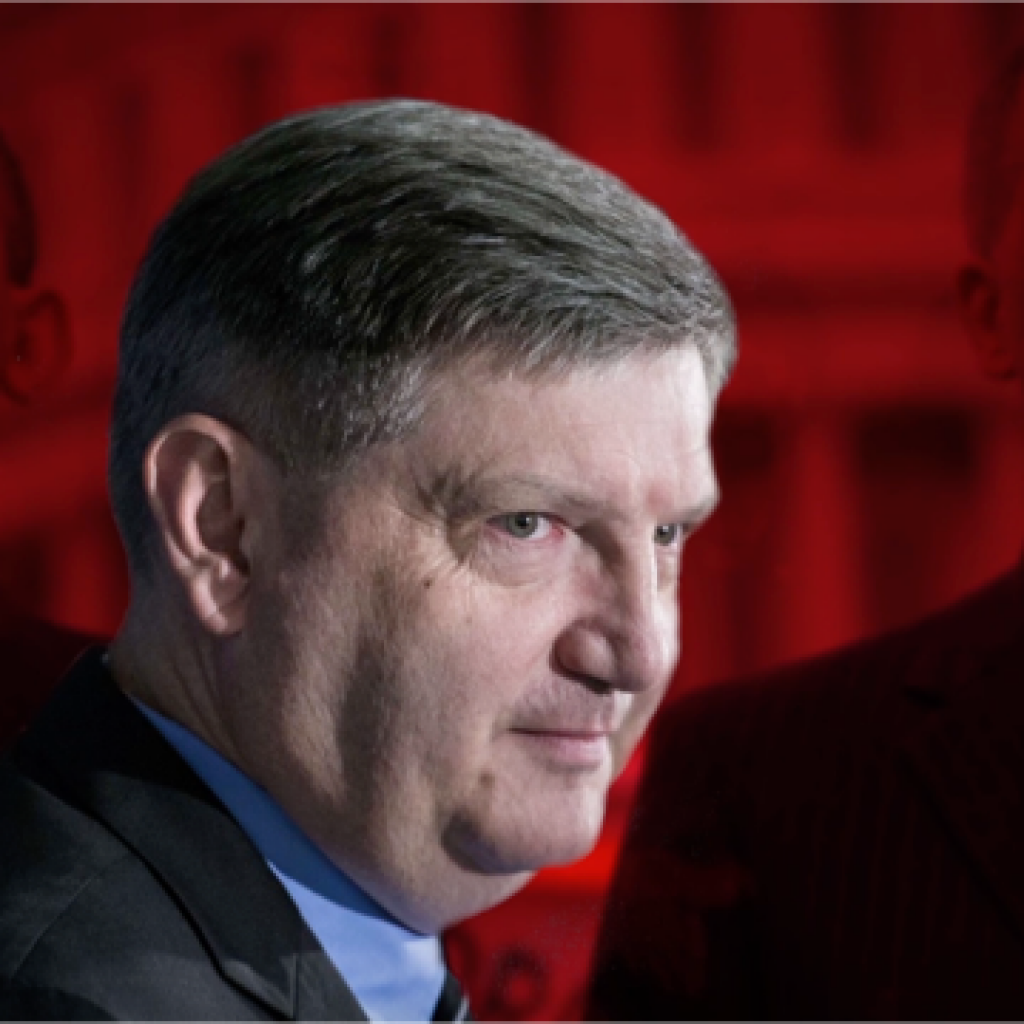
JAMES RISENFew journalists know the cruelty of government censorship as well as James Risen, Pulitzer Prize-winning journalist at the New York Times, targeted for several major stories implicating criminality by the US war machine and its national security state.

Risen was not only relentlessly attacked under the Bush administration for his coverage of warrantless wiretapping but was subpoenaed by the Obama administration over his expose on a botched CIA sabotage operation in Iran.

He went rogue and published the story in his book after the US government got the New York Times to kill it. Threatened with jail time from the government, Risen went through seven years of legal battles to protect his source. In the face of this repression, He never compromised their identity.

Abby Martin sits down with Risen at the NYT DC bureau to talk about his experience being targeted, and what he’s exposed that’s put him in the crosshairs of the US Empire. 


NYT’s James Risen on Fighting Censorship and Endless War

**

FOLLOW // @EmpireFiles & @AbbyMartin

WATCH // YouTube.com/EmpireFiles

Glenn Greenwald’s Chutzpah

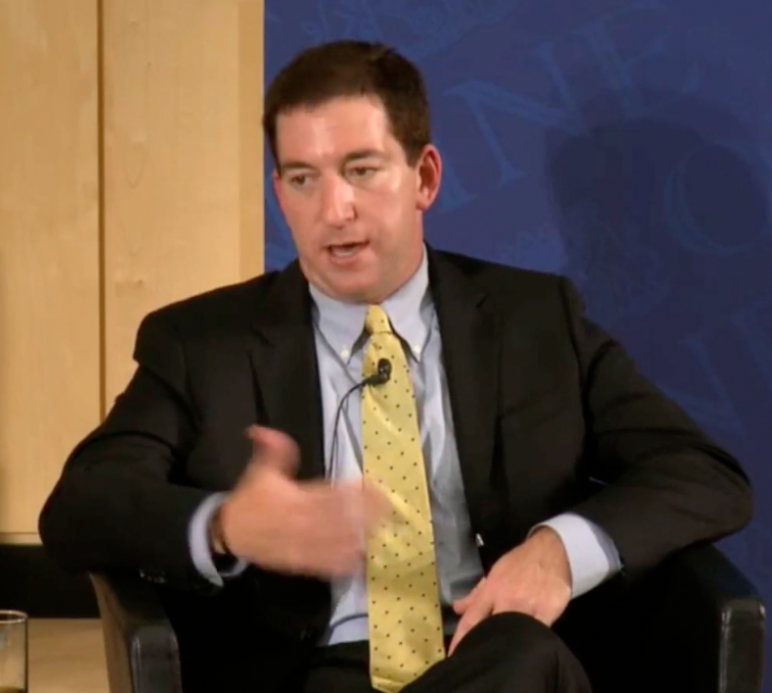
QC5wydyGlenn Greenwald was asked all-too-familiar stock questions on mainstream programs like Meet the Press and Charlie Rose during his book tour for No Place to Hide. Although he was put on the defense in almost every segment, Greenwald held firm and consistent when combating the adversarial tone of US establishment journalists.

Over the course of his high profile interviews, many may have missed his lengthier and more candid talks in Hamburg, Amsterdam and at Harvard. Here’s some of our favorite quotes from those lectures that you probably won’t hear on the corporate media.

Obama’s NSA Lies 

“I think [Obama is] due a lot of credit because it really is impressive that he’s able to say those things with a straight face and not bursting out in laughter, I find that skill really really extraordinary, and he’s very good at it and I think we ought to acknowledge it in fairness.”

CIA Assesses Senator Obama

“The greatest hope for saving America’s war fighting ability and to stem the tide of anti-war sentiment in Europe was for then-Senator Barack Obama to become president, because what that would do is transform these wars from George Bush’s face, which the world had grown increasingly tired of and had been viewed as this kind of swagger and unilateral cowboy that was particularly hated in Europe, into this kind, sophisticated, progressive face of Barack Obama.”

“And by making Obama the face of these wars it would transform all this anti-war sentiment into people who were willing to acquiesce to the war if not outright support it. [The CIA] knew that he would continue all of these policies, but his branding was so pleasant and especially in Western Europe, so beloved that it would be an immense asset for the National Security State.”

Obama’s European Branding Power 

“There’s so much rhetoric about the US government, [and Obama is] an effective salesmen around the world for this myth of American greatness. I think one of the principal things that this debate over the last year has done is open people’s eyes about the reality of president Obama vs. the image.”

Global Obama Tarnishing

“I live in Brazil where he had been beloved and across every Brazilian newspaper is very menacing pictures of him connecting him with spying.”

The Democrats

“We have been criticized very predictably and very inconsequentially from what I will call for just  lack of a better term: ‘the Right’, which is, you know, primarily Democrats who voice this critique that our disclosures are going to help the terrorists and result in the deaths of innocent people and all of that. I was on CSPAN two days ago, and every time the host said ‘And now we’re going to go to the Democrat line’ I knew I was about to be called a traitor. It was completely reliable.”

Snowden = Russian False Flag

“Those very same people who had been saying just two weeks earlier that [Snowden] was clearly a Chinese spy suddenly switched on a dime saying obviously this is an operation by Vladimir Putin.”

“It’s really remarkable how seriously all of that has been taken despite the fact that there’s zero evidence to support any of it and mountains of evidence to negate it.”

Russia is Scary

“There is this amazing dynamic in American political discourse which is that certain words drive Americans instantly into hysteria and irrationality. One of them is terrorism, the minute you say that everybody screams and jumps under the bed, not quite as much as they did before but still.”

“The much scarier word for people is Russia, this is a word that if you really want to scare an American and make them go away just whisper Russia in their ear and they’ll start running down the street.”

“On television every interviewer would say to me ‘well what about Edward Snowden he must be completely miserable, i mean he’s in Russia‘ I guess they assume that all 160 million people who live in Russia are instantly and automatically miserable from the time of their birth until they die like it’s just one big gulag.”

The Role of Journalism

“The Washington Post, New York Times and other media outlets have been more aggressive because they would have been shamed if they hadn’t been.”

Passion in Journalism

“I think it’s much more powerful as a journalist to be honest about the way you see the world and the assumptions that you’re making than it is to try and deceive your readers into pretending that you float above opinion. I think that passion and vibrancy and soul are necessary for good journalism, the attempt to drain all that out of it has made journalism not just weak but boring and sort of neutered.”

Coordinated Scripts

“I’ve been pretty scornful of the notion that there is this active plotting among journalists and media outlets to coordinate their storyline.”

“Within 24 to 48 hours literally after we first introduced Snowden to the world, there was this immediate consensus among all these media elites that they were completely capable of taking this person that they had never heard of before and didn’t know the first thing about and were diagnosing him, like clinically diagnosing him, psychologically assessing all of his pathologies. They all settled on this coordinated script that he was a ‘fame seeking narcissist’  If you Google it you will find this phrase over and over again.”

“Where did that come from, that ‘fame seeking narcissist’ thing, I really want to know.”

Pretend Respect

“There’s all these unwritten rules that govern the ways journalists are supposed to behave.”

“You’re not supposed to be too aggressive in condemning the government, you’re supposed to pretend to have respect for their fearmongering claims about why you shouldn’t be publishing.”

Exploiting Sexual Vulnerabilities

“I never used to be able to understand why in response to the leaking of the Pentagon papers the response of the Nixon administration was to break into the office of his [Daniel Ellsberg’s] psychiatrist in the hope of obtaining his psycho-sexual secrets. It never made any sense to me. It seemed like the ultimate non sequitur, ‘Oh look we have documents showing that the US government has been systematically lying to us for years about the Vietnam war’ and the response would be ‘well Daniel Ellsberg is a swinger’.”

“It’s an incredibly effective means of excluding somebody from decent company, and making everything they say instantly dismissed for that reason.”

Privacy/Encryption

“There are chat programs such as Pidgin and OTR that provide relatively good protection, there’s the TOR browser that lets you use the internet anonymously, the Tails operating system.”

“The problem is all these names are pretty daunting to people who haven’t heard them before…I think the tech community needs to develop these tools to make them much more friendly…Once that happens and that will happen, encryption will become the default means of how people communicate on the internet.”

Email Privacy

“I do use PGP email, and in part I use it because I happen to have read a lot of NSA documents talking about how frustrated they are at their inability to invade it.”

“If you use PGP email, the NSA actually looks for the people who are using encryption, because in their twisted minds, your desire to shield our communications from their prying eyes is evidence that you are suspicious.”

Laura Poitras’ Snowden Film 

Amazingly [Laura Poitras] filmed virtually everything that took place in Hong Kong, our interaction with Snowden, all of the conversations we had, which is going to be in a documentary she releases in the Fall.”

**

Check out Greenwald’s lengthiest and best public appearances so far in May 2014:

Glenn Greenwald and Noam Chomsky on Edward Snowden & The Surveillance State 

**

 Glenn Greenwald at CATO Institute: No Place to Hide

**

 The John Adams Institue Presents Glenn Greenwald: No Place to Hide

**

Richard Bacon Interviews Glenn Greenwald on BBC 

**

 Glenn Greenwald on The Kojo Nnamdi Show: State Surveillance & The Snowden Story

**

 TV Brazil’s Alberto Dines Interviews Glenn Greenwald on NSA

**

Written and compiled by Robbie Martin AKA @FluorescentGrey

Moby: Make Information Free & Stop Punishing Piracy

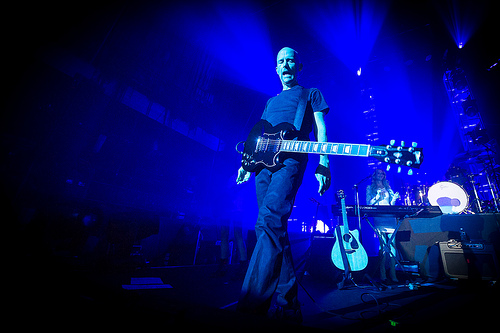
MobyFlickrJustinWiseIt’s not often you find a Grammy Award-nominated musician on the front lines of political activism. One of those exceptions simply goes by the name Moby.

The L.A. based electronic musician spends every iota of his free time making it count. When he’s not making music, he’s promoting music therapy as a board member of the Institute for Music and Neurologic Function.

He’s also taken Washington to bat, by testifying on the Hill about Net Neutrality and standing up to the ever powerful Recording Industry Association of America or the RIAA.

Recently Moby sat down with Abby Martin on Breaking the Set to discuss the problems with making piracy illegal, and why the freedom of information is so important in today’s digital age.

MR

***

Moby Breaks the Set on the Freedom of Information

***

AM: What is the corporate music industry’s biggest failure?

MOBY: I think one of the biggest failings is that music business and record companies have treated listeners terribly for a long time. Overcharging for CDs in an era of CDs, and punishing people for downloading music, and basically trying to make people feel guilty for listening to music. I just think it’s created a very sort of strange and very unhealthy climate around the release of music.

AM: You’ve also stood up to the Recording Industry Association of America and called for the group to be disbanded in 2009 for its two million dollar lawsuit against a mother who illegally downloaded music. What prompted you to go after the RIAA?

MOBY: The whole reason I make music—and maybe I’m stating the obvious—is because I love making music and I love the idea of people listening to the music that I’ve made. The idea of punishing the audience, even if they’re downloading music illegally, I don’t think and audience should be punished, nor should the RIAA take litigious action against soccer moms who are just downloading music because they want to listen to it. It seems very self-evident to me that if you’re trying to generate goodwill, suing the people who are ultimately patronizing your business is not the best way to go about that.

AM: Let’s talk about your new album “Innocents”. Why did you choose that name and how is it different from your previous work?

Moby: I’m going to try and not give a long-winded self-involved grad student answer, ‘cause I’m really good at long-winded, self-involved grad student answers…but when I was in college, I was a philosophy major and I’d just been obsessed with the simple question of: What does it mean to be human in the Universe that’s 15 billion years old? What significance do our lives have? And when I look at our collective response to the human condition, I see a lot of confusion, a lot of fear, a lot of sadness, and–in a strange way–a lot of innocence, ‘cause the truth is none of us really know what we’re doing. You know, we might put on a brave face when we go out in public, but at the end of the day we all get old, we all die, we’re all confused, and I feel like, collectively, even though at times we’re not necessarily doing the best things, we still have a quality of innocence to us and that’s what the title of the album comes from.

AM: And you’re also—this is really fascinating–you’re a board member for the Institute for Music and Neurologic Function, which studies the effects of music on the brain. Talk about this. What have you learned as part of that organization, and how can music be used in therapeutic ways?

MOBY: Well, it’s funny ‘cause I’ve dedicated my life to making music, and I always thought music was something I loved and was really fun, but I never thought it actually had anything beyond a very sort of frivolous utility. Dr. Oliver Sacks and Dr. Connie Tomaino are two amazing brain neuroscientists and they started this institute for Music and Neurologic Function. What they’ve seen is that music is a remarkably powerful healing modality. When I talk about the sort of healing effects of music it almost sounds like I’m indulging in hyperbole, but it’s truly miraculous. People who are aphasiac, who’ve had strokes, when they listen to their favorite music from childhood, even if they’ve lost the ability to walk or speak, they can still dance and sing. I know that sounds like the most absurd claim, but Dr. Sacks and Dr. Tomaino have documented this and they’re going before Congress to try and get more money for music therapy because really it is phenomenal healing. The only problem is it’s hard to make money from it, so clearly the pharmaceutical companies aren’t too thrilled about a non-profit powerful healing modality.

AM: I know that you testified in front of Congress in 2006 about Net neutrality. When are you going to get out there and testify about the music therapy?

MOBY: Hopefully soon. The funny thing about talking about music therapy is you don’t have to convince anyone of its power. All you have to do is say ask anyone how they respond to their favorite song. If you even right now think of your favorite song you could almost feel like a physiological and neurochemical change, and the truth is, it’s a real change. It promotes healing and it decreases stress hormones like norepinephrine, and adrenaline and cortisol, so in the future I think people will look at music not just as something fun, but as a really, really powerful healing modality.

AM: It’s also a revolutionary tool, which is why it’s such a travesty that it’s the first thing cut from public education; music and arts. I mentioned that you did testify in front of Congress about net neutrality. Let’s talk about that. What did you tell them back then, and are you worried about the current circuit court lawsuit that could entirely abolish the concept?

MOBY: Yeah. I was a little bit confused, because in 2006, and now, the Internet seems to be working fine the way it is. I don’t understand the idea of—to an extent and very broad terms—privatizing the Internet, when it’s this fantastic, egalitarian, granted chaotic, but democratic institution that serves everybody equally. So when you have these big corporations who want to get involved and try to monetize it and privatize it; I just don’t understand why they would mess around with something that works so flawlessly the way it is.

AM: How much do you think the music industry is a part of that push? I mean, we know that SOPA was obviously trying to implement a lot of seizure on net neutrality as well.

MOBY: In some ways I’m the wrong person to ask, because I love what I referred to as, the democratic chaos of the Internet. I love the fact that it is strangely self-regulating; it kind of polices itself, and I’ve also been a life-long member of the ACLU, so, I’m just a huge proponent of the free and uninhibited dissemination of information.

AM: I love that about the militant egalitarian method that the Internet started out as, and unfortunately we are seeing that going by the wayside. It’s really important that we cement that notion quick. Let’s talk about another thing that the ACLU is really big on, Chelsea Manning. You are also part of the I Am Chelsea Manning Video a few months back. Why is this case so important to you?

MOBY: It’s a tricky thing to talk about, because I’m a musician,  I live in L.A., so, if I worked for the NSA or had worked for the NSA, I might have a different perspective—but it seems like sometimes governments, including our own, are interested in restricting information, because it is actually sensitive and to disseminate it would be compromising. But other times governments almost restrict information either because it’s embarrassing or it’s just a knee jerk reaction. You know, this feeling like it’s their job to restrict access to information, and that’s why I thought the Chelsea Manning case was so important, because she was drawing attention to the seemingly arbitrary way in which the government was trying to restrict access to ostensibly classified information.

AM: It’s also a crime to over-classify. We see things just being classified just for the sake of classifying them. Of course, we know that no one was actually hurt by the release of those documents. What are your thoughts on other whistleblowers in the public spotlight right now, like, Edward Snowden?

MOBY: Again, it’s tricky because everything I say has to be qualified with the caveat that I am a college dropout, and I make music and I live in L.A., so, my opinions are vaguely informed at best. But I’m just a fan of openness and I can’t think of too many instances where airing on the side of openness has done harm. In fact, quite the opposite. We live in a culture where it’s becoming increasingly difficult for anyone to restrict access to information which, personally, I think is great. I’d much rather have a few instances where potentially sensitive information is released, but as a result you have so much information that the public benefit is released as well.

AM: You keep saying that your opinions are vaguely informed at best. You’d be shocked at how uninformed Americans are. I think it’s very important to voice your opinion because you wield a lot of influence in this industry, and it’s unfortunate that others don’t. Why do you think that not other musicians and entertainment people speak out about these issues?

MOBY: I think probably because they’re getting much better advice than I am, because what I’ve found is by being an opinionated loudmouth as I am, I do often times run the risk of alienating a lot of people. So, I think that a lot of musicians, actors, whomever, are getting good management-career advice, and their managers are saying, “Keep your opinions to yourself ‘cause you’ll sell more records.” I unfortunately never got that advice, and I was raised by progressive hippies who told me that if you have the ability to reach people and communicate, you might was well try and say something that has some value or some merit to it. Or at least try to do so.

AM: I agree with your parents, Moby. Let’s talk about veganism. You’re a vegan. You even released a book critiquing the modern meat industry. What lead you to the decision to practice veganism, and what are your biggest frustrations right now with factory farms?

MOBY: I’ve been a vegan now for 26 years, and an animal rights activist for about 30 years, and what informs my veganism and animal rights activism is pretty simple. I love animals and I don’t want to be involved in any process that contributes to their suffering. I guess looked at objectively death is inevitable, but suffering isn’t. I think that we have the ability to treat other creatures with respect and dignity and ameliorate their suffering, and I just wonder why we don’t make more of an effort to do so. Why collectively we’re comfortable to contributing to the suffering of—literally—tens of billions of creatures who are all incredibly sensitive. I think it was I think it was either Albert Schweitzer or Einstein said the questions isn’t ‘Do animals have an intellectual life?’, the question is ‘Do they have an emotional life?’, and anyone who’s ever been around animals knows full well animals have incredibly profound emotional lives, are incredibly sensitive, and I just feel like it’s incumbent upon me and hopefully the rest of us to sort of like decrease the amount of suffering we cause while we are alive.

AM: Right, and we’re so detached from the food that we eat and I think that if people really saw the suffering they would be absolutely horrified. The food industry has so much autonomy, so much political influence. I mean, just look at Monsanto alone. How could we ensure that the food we are eating is safe and not destructive to the environment and doesn’t contribute to the suffering of creatures?

MOBY: When we put out the movie “Gristle”, which is about factory farming, I was asked that question. What one thing could we do that would make factory farming either go away or become a lot better, and one thing would be end subsidies to meat production, ‘cause meat production—and I’m not even saying people shouldn’t eat meat–but I’m just saying the production of meat decimates the animals, it decimates the workers, it decimates the communities, and the end result is a product that causes diabetes, arteriosclerosis, heart disease, obesity, etcetera. So, just end all subsidies to it and let meat actually cost what it should cost. Truth is, without government subsidies, a pound of hamburger would cost around thirty dollars. And I have a feeling if you just let meat cost what it should cost, all of the sudden you see people eating a lot less meat.

AM: Very well put. Totally agree. Thank you so much for your input on that, and so much more. Moby, artist, activist; really appreciate you coming to the studio.

***

Transcript by Juan Martinez, Photo by Flickr User Justin Wise

Patriot Acts: Whistleblowers Defending Our Freedom

A very few, as heroes, patriots, martyrs, reformers in the great sense, and men, serve the state with their consciences also, and so necessarily resist it for the most part; and they are commonly treated as enemies by it. ” – Henry David Thoreau from ‘Civil Disobedience’

Daniel Ellsberg called Edward Snowden’s revelations of government spying, “the most important leak in American history.” As the public learns more and more about secret government programs to spy on U.S. citizens, it is tempting to believe that it is all about Edward Snowden and his startling disclosures. This is far from the truth. In fact, almost a decade ago, conscientious employees of United States government spy agencies such as the National Security Administration (NSA) and the Central Intelligence Agency (CIA) began reporting on abusive and seemingly unconstitutional government polices including torture and deliberate spying on innocent U.S. citizens.

Abby Martin interviewed three former employees of government spy agencies with a combined total of over 40 years experience in government positions. These interviews revealed that torture is official U.S. government policy, and that spying on innocent U.S. citizens is much more pervasive than the federal government’s response to Edward Snowden’s disclosures would seem to indicate. Taken together with Snowden’s revelations, these interviews paint a picture of an out of control federal government that has slipped the reins of morality and the US Constitution, and is determined and able to do whatever it desires without regard to legality or the Constitution.

Russell Tice, a satellite systems specialist, worked over 20 years in various government agencies including the NSA and Defense Intelligence Agency (DIA). In 2004, while performing his government assigned duties, Tice was shocked to learn that the U.S. government was spying on innocent U.S. citizens. Tice revealed what he knew to reporters for the New York Times and the Austin American-Statesman, and the story was published. Tice hoped the exposure would help put an end to what he considered to be illegal and unconstitutional activity on the part of the government.

NSA Blackmailing Obama? Abby Martin Speaks to NSA Whistleblower Russ Tice 

Thomas Drake is a former NSA senior executive and NSA Chair at the National Defense University. He worked on the Trailblazer Project, another program that intercepted cell phone, email and internet communications, and was a predecessor to the PRISM project revealed by Edward Snowden. Convinced that Trailblazer was illegally violating innocent Americans’ privacy, Drake and several others reported their concerns through proper government channels including the Department of Defense Inspector General. In 2007, all those involved were raided by the FBI. Drake was charged with violating the Espionage Act. Meanwhile, he continued to reveal waste, fraud, abuse, and violations of privacy perpetrated by the NSA to reporters, including those from the Baltimore Sun and The New Yorker.

 Advice on Trusting Your Government from NSA Whistleblower Thomas Drake

John Kiriakou is a former CIA analyst and case officer, a former senior investigator for the Senate Foreign Relations Committee, and former CIA Chief of Counterterrorist Operations in Pakistan. He resigned from the CIA in 2004 after being recruited to supervise a program of water boarding and other “enhanced interrogation” methods. He refused to participate because he felt the methods to be immoral and equivalent to torture. In December 2007, while being interviewed on ABC News, Kiriakou stated his opinion that water boarding was torture and that he knew through personal experience that it was official U.S. government policy. From that day on, Kiriakou states that all his activities have been monitored and investigated by the Justice Department. Eventually, in 2012, he was charged and convicted under the Espionage Act and sentenced to 2 ½ years in prison. This made him the first and only CIA officer ever to be convicted under the Espionage Act.

CIA Whistleblower John Kiriakou: ‘If I Tortured, I’d Be Free’

It’s a lot worse than you think.

On being briefed on Snowden’s revelations, Democratic member of the U.S. House of Representatives, Loretta Sanchez, said:

What we learned in there is significantly more than what is out in the media today… I can’t speak to what we learned in there…but I will tell you that I believe it is just the tip of the iceberg

In their discussions with Abby Martin, Tice, Drake, and Kiriakou all related their knowledge that illegal government activity is a great deal more intrusive and pervasive than even Snowden’s revelations illustrate. Russell Tice described a computer program known as ECHELON that allows the government to spy on innocent American’s phone calls, emails, and other internet activity. He personally witnessed a number of alarming examples of government abuse of this system including warrantless spying on:

– News organizations and journalists
– U.S. companies that do business internationally
– Financial institutions
– State Department personnel including Colin Powell
– 3-star and higher Admirals and Generals including David Petraeus
– Prominent law firms and lawyers
– Supreme Court Justices including Judge Alito
– United States Congressmen including Barak Obama when he was a Senator
– Friends, family members and personal residences of all of the above

A high level NSA source told Tice that orders to spy were coming from Vice President Cheney, himself.

Both Tice and Drake stated that they had personal knowledge that the government did look into the contents of the information they obtain and not just the “metadata” as President Obama now claims. Thomas Drake noted that the PRISM program revealed by Edward Snowden had taken the violations of privacy he objected to in the Trailblazer Project much further. “PRISM demonstrates that there is collusion between the U.S. government and the most powerful, largest internet service providers, not only in the country, but in the world. The government is essentially given direct access or the equivalent of direct access to subscriber information on a very large scale, including the content of their information.”

Attorney Jesselyn Radack is a Director of the Government Accountability Project, and the attorney who represents both Drake and Kiriakou. She explained that the PRISM program expands wiretapping without a warrant, like that which occurred in the Trailblazer Project under the Bush administration. Now, with PRISM, the government has direct access to the nine largest internet service providers in the world, including Google, Microsoft, and Apple. Radack stated that this is in direct violation of a number of federal laws as well as the 4th Amendment of the U.S. Constitution.

In addition to PRISM and the other spying efforts brought to light by Snowden, Drake believes that, “there are additional orders and there are additional programs that have not been revealed…I think that once those come out, several other shoes will drop. I think the government is desperate to protect the deepest of the secrets.” Drake believes that what will be revealed is that government spying treats U.S. citizens no differently than foreign nationals. He believes that the “Foreign” in Foreign Intelligence Surveillance Act (FISA) is irrelevant. The act might be more accurately called the Surveillance Act. He feels that all citizens in the U.S. and other countries are virtual subjects of one large surveillance state.

On the issue of torture, John Kiriakou emphasized that torture was not just a rogue activity carried out by isolated U.S. government agents. Kiriakou knew from personal experience that torture, during his time in the CIA, was an official U.S. government policy authorized from the President of the United States on down.

Russell Tice summarized the feelings of the group: “Every means of communication in this country, everything, is being watched by the federal government, and that is Orwellian, and that is the trademark of a police state.”

Why is the government doing this to us?

Thomas Drake gave the most succinct explanation for the rogue actions of the U.S. government. When asked by Abby Martin why he felt the government was doing this, he answered, “Because they can. They have the power.” “ Information is the currency of power,” Radack added. “More and more information is the name of the game.”

There is nothing to stop the intelligence agencies from doing this. So called oversight of intelligence activities is no oversight at all, explained Drake. The FISA court operates in complete secrecy. Congressional oversight committees are being briefed in secret, and those present are sworn to secrecy regarding what they learned. Even taking oversight into account, there is only a very small number of people who know what is going on, explained Drake. The FISA court virtually never denies a request to spy. In 2012, the FISA court approved nearly 2,000 requests for surveillance and turned down none. “This is unprecedented,” Drake said. “How can such deep secrets exist in a democracy, a constitutional republic, without something giving – and what’s giving is our fundamental rights and liberties.”

Drake further explained that this spying serves what he refers to as the “surveillance state.” “It serves a very, very large contractor base. Staggering amounts of money are being made off the fear mongering since 9/11. You now have an entire industrial scale mechanism. A number of contractors are feeding off of it, and it’s a lot of money. You also have those in congress who are supporting and enabling it. This has become normalized.” Drake believes that this process has now taken on a life of its own. “They are not going to give up the secret power willingly,” he said.

Russell Tice suggested that the spying was a means of control. He believes that the upper echelons of the intelligence community collect compromising information on individuals in order to influence their future behavior. In this sense, the executives of the intelligence community comprise a sort of shadow government that has the power to vet candidates for leadership positions in government, and put leverage on the three branches of government to get what they want. As evidence of this theory, Tice pointed out that U.S. government intelligence agencies were not affected by the sequester, but nearly all other government agencies were.

Tice describes how candidate Obama pledged to stop National Security Letters and other forms of abusive government surveillance and to support whistleblowers. Even though Tice was a lifelong Republican, he supported Obama for that reason. Once he was elected, however, Obama changed. Those promises never materialized. Obama continues to lie about and cover up the extent of U.S. government spying, and he has prosecuted whistleblowers more zealously than any President before him. “Is it because he is being controlled?” Tice wonders. Tice notes that before Edward Snowden presented the world with incontrovertible proof of unconstitutional government spying, the media neglected to report on the issue. This was true even though Tice and others exposed this activity years ago. Tice suggests that “another interest” making use of compromising information obtained through illegal spying was applying leverage to the media to keep them quiet.

There is debate as to whether or not all this government spying is even effective or helpful. In light of the Boston bombing and the underwear bomber, internal government reports suggested that perhaps intelligence agencies were getting too much information to effectively analyze and predict attacks. Nonetheless, the government makes ample use of fear mongering to defend their actions. Drake and Radack, debunked the government claim that NSA spying programs have stopped at least 50 terrorist attacks. Drake posed the question, “How many of those “terrorist plots” were stopped, disrupted or prevented solely on the basis of secret surveillance programs and not by other means.” Radack added, “Even if we got that answer, there is no way to verify it. The government has told huge lies, and yet we are just supposed to trust them to tell us how many terrorist plots they have foiled.” It does not make sense. “They say they can only tell us so much, but this administration has not been at all shy about bragging about the “terrorist plots” that it disrupts,” she said. “Or that it manufactures then disrupts,” Abby Martin quipped.

If the US government does it, it’s not illegal.

There is a two tiered justice system operating in the U.S. today. There is one system of justice for those who do the government’s bidding without question, and another system of justice for those patriots who hope to improve the government by pointing out its flaws.

No one responsible for the illegal warrantless wiretapping that took place during the Bush administration is in jail. In fact, the government made it all legal after the fact. No one responsible for the unconstitutional surveillance revealed by Edward Snowden is being prosecuted or is in jail. The Director of National Intelligence, James Clapper, who lied to Congress about the extent of NSA surveillance, is not being prosecuted and is not in jail.

John Yoo, Alberto Gonzalez, Donald Rumsfeld, and others who conceived of, authorized, implemented, and oversaw torture are not in jail. None of the attorneys who papered over torture with tortuous legal analysis are in jail. Former CIA agent, Jose Rodriguez, the man responsible for destroying the tapes showing evidence of CIA torture, is not in jail. In fact, he is on a book tour discussing the great benefits of torture.

“None are in prison, none will ever be prosecuted,” says John Kiriakou.

Uncle Sam to the conscientious – proceed at your own risk!

John Kiriakou refused to take part in torture, and exposed torture by the U.S. government in hopes of putting an end to it. He is going to jail for 2 ½ years, convicted under the Espionage Act. Kiriakou was convicted even though the author of the law he supposedly violated testified on his behalf. He is in jail even though he demonstrated no mal intent. He is in jail because the presiding judge disregarded and disallowed legal precedent regarding mal intent. John Kiriakou is in jail after the government prosecutors were able to meet in secret with and give secret information to the presiding judge that Kiriakou was not allowed to hear or rebut. In fact, after she alone heard the secret so-called “evidence,” the presiding judge publicly stated that she wished she could have sentenced Kiriakou to 10 years instead of 2 1/2 years.

John Kiriakou has been audited by the IRS every single year since 2007, when he stated torture was official U.S. government policy.

Thomas Drake exposed unconstitutional government spying as part of the Trailblazer program. Thomas Drake was prosecuted under the espionage act. To avoid an even worse sentence, Drake was forced to plead guilty to a misdemeanor. He lost his job and his pension and was required to serve one year of probation.

Bradley Manning exposed war crimes. He is in prison for many years. Edward Snowden exposed unconstitutional government spying. He had to flee the United States where he would certainly be in jail, to Russia where he is free.

John Kiriakou feels that this is all an intentional program of harassment on the part of the government. The government wants to punish critics in any way possible for the purpose of having a chilling effect on others other who would criticize, blow the whistle, point out evidence of waste, fraud, and abuse, or expose government crimes.

What hope do we have?

Forty years ago, the Supreme Court ruled that the President of the United States, Richard Nixon, was not above the law. Americans hailed whistleblowers for having brought down the President for his utter lawlessness. How did we get from prosecuting the criminal to prosecuting the messenger? “We have strayed so far,” notes Abby Martin.

Today, President Obama, who was elected to office promising to shut down Guantanamo Prison, closes the office responsible for doing just that shortly after he wins re-election

John Kiriakou observes that we have had an incremental loss in our civil liberties over the years that were accelerated after 9/11, but there has been surprisingly little public outrage.

Today, the United States government is known for:

– Intercepting phone calls and emails without a warrant
– Vaporizing innocent people including American citizens with missiles from predator drones
– Mistreatment of prisoners in Guantanamo Bay
– Extraordinary Rendition
– Indefinite pretrial detention
– Coercive “enhanced” interrogation techniques (A.K.A. torture)
– Zealous harassment and prosecution of political dissidents (whistleblowers)

Is there no hope? Have Americans accepted this loss of civil liberties without a fight?

Russell Tice does not believe so. He is still out there speaking out against government abuse.

Thomas Drake does not believe so. He is still speaking out too. “I do believe, if the conversations, debate, and discussions that people are now having are any indication, people are growing more uncomfortable with what’s been going on,” he says.

Jesselyn Radack does not believe so. She continues to defend and advocate for the whistleblowers. She notes, “Congressman Jim Sensenbrenner who wrote the Patriot Act is coming out against all this. Senators Wyden and Udall and others you think wouldn’t have a problem with this are coming out against this too, and Republican libertarians and progressive Democrats have joined forces saying it is unacceptable for the government to have this much power hidden from the people.”

John Kiriakou does not believe there is no hope. “I’ve come to realize this case is so much bigger than I am…It is so much more important for free speech and freedom of association, it is so much more important for freedom of the press. I just hope that there is enough rage out there…that it helps someone in the future stand up to the justice department and to stand up to these infringements on our civil liberties.”

Bradley Manning has not lost hope. He is going to jail rather than ignore the injustice he wanted to stop.

Finally, Edward Snowden has not given up:

Everyone everywhere now understands how bad things have gotten — and they’re talking about it. They have the power to decide for themselves whether they are willing to sacrifice their privacy to the surveillance state.” “I do not want to live in a world where everything I do and say is recorded. That is not something I am willing to support or live under.”

The rest is up to us. As Abby Martin said, “We should all be speaking up. If we don’t stop this now, who knows where we are going with it.”

Written by David Wiggins

Posted in Uncategorized | 1 Reply

Larry King: Glenn Greenwald ‘Not a Journalist’

Abby Martin sits down with seasoned news anchor Larry King on Breaking the Set, and soon it becomes clear they’re both in very different schools of thought regarding the media establishment. The conversation takes an interesting turn when they begin to discuss the role of journalism and Obama’s war on whistleblowers.

LIKE Breaking the Set @ http://fb.me/BreakingTheSet
FOLLOW Abby Martin @ http://twitter.com/AbbyMartin