The latest eruption of John Kennedy hysteria, bordering on deification, seems safely behind us now that the 50th anniversary of his assassination has passed. Though there is much disinformation about JFK’s legacy that could and should be discussed, two areas stand out: his relationship to the Black Liberation Movement and his actions in Southeast Asia.
Despite all the evidence to the contrary, Kennedy has come to be seen as an ally of – even a hero of – the Black Liberation Movement. In fact, he opposed both the goals and actions of that movement from early in his term when terrorists were beating unarmed and vastly outnumbered Freedom Riders, to the final months of his life when four young girls were blown up in an Alabama church.
When black moderates announced plans for an action in Washington in 1963, Kennedy worked overtime to derail it, with significant success, mainly by strong arming black moderates eager to remain in good with the White House. As a result, the planned direct action protest with civil disobedience morphed into a march and the moderates went so far as to force the day’s most radical speaker, John Lewis of the Student Nonviolent Coordinating Committee, to drop portions of his speech critical of the administration.
As for Southeast Asia, many in the mainstream have argued that Kennedy was about to withdraw U.S. troops and leave the Indochinese to fight their own battles when he was assassinated. This fixation on what he might have done is understandable, for the historical record – what JFK actually did – is quite horrifying and laid the groundwork for the decade of slaughter that followed.
First was the escalation of U.S. aggression in Laos, accompanied by diplomatic shenanigans that undermined coalition governments that included the Pathet Lao revolutionaries despite their being the most popular force in the country. The goal, as always with empire, was all out victory and the annihilation of anyone who favored national liberation.
In Vietnam, a similar approach led to massive devastation. In the winter of 1961-62, Kennedy initiated the full-scale bombing of those parts of South Vietnam controlled by the National Liberation Front (all but Saigon and its immediate surroundings). The justification that bombing was needed to defeat the revolution masked the indiscriminate nature of the aerial assault, which resulted in casualties that were overwhelmingly civilian. And so the tone was set for the next eleven years of war.
It was also Kennedy who authorized the first use of Chemicals of Mass Destruction in Southeast Asia, with napalm the best-known and most deadly. Never had chemical warfare been used so extensively, though the U.S. had also used napalm in Korea in the early 1950’s. Again, the tone was established as massive amounts of phosphorous, Agent Orange and other chemicals were used for the rest of the war, chemicals the deadly affects of which are being felt to this day throughout Indochina.
And it was under Kennedy that the notorious strategic hamlets were set up throughout South Vietnam. “Strategic Hamlets” is a term worthy of Orwell at his best or Madison Avenue at its worst, designed to induce thoughts of happy, grateful peasants gathered around a campfire. The more accurate phrase would be Concentration Camps, as Vietnamese by the thousands were rounded up at gunpoint and forced to live behind barbed wire. Anyone who resisted was beaten or worse; anyone attempting to escape was shot. The aim was to separate the people from the NLF though the result, not surprisingly, as with the bombing and the chemical weapons, was the opposite, as ever larger segments of the population became supporters of the revolution.
As each of these moves failed and the NLF grew stronger, Kennedy ordered ground troops to Southeast Asia in the spring of 1962, the number of which he gradually increased until his death. There is no evidence to indicate any plan for withdrawal short of victory, the myth-making of Oliver Stone, Arthur Schlesinger, Jr. and so many others notwithstanding.
One way to get a handle on the JFK withdrawal myth is to recall another assassination in November of 1963, that of South Vietnamese dictator Ngo Dinh Diem. For much of 1963, Diem threatened to undermine empire’s goals by pushing for a negotiated peace with the NLF and a U.S. withdrawal. In response, Kennedy did what his kind frequently do in such circumstances: he authorized a hit on Diem and replaced him with generals willing to follow orders.
For all the wishful thinking about what Kennedy would have done in Indochina had he lived, the inescapable truth, as opposed to the fantasy, is that he escalated the war and initiated increasing levels of terror that eventually resulted in the deaths of millions. Significantly, there is no mention of withdrawal short of victory in the many Camelot memoirs, biographies and histories until after the tide had turned dramatically against U.S. aggression. Only then did the myth of “Kennedy the Peacemaker” emerge.
Perhaps the JFK cult can be explained by the odious legacies of his two immediate successors, Lyndon Johnson and Richard Nixon, both of whom massively escalated the carnage in Indochina and ultimately abdicated in disgrace. Odious their legacies may be but there’s no way around the fact that Kennedy’s legacy smells just as foul. Such an explanation also obscures the fact that it was Kennedy who established the terms for the domestic conflict that would rage throughout the 1960’s – outraged hostility on the part of the ruling class to the democracy movements that shook the empire to its foundations. It is those movements that will be remembered and celebrated long after the JFK cult hopefully, eventually, finally, finds its rightful resting place in the proverbial dustbin of history.
Andy Piascik is a long-time activist and writer for Z, Counterpunch and many other publications. He can be reached at [email protected].
MEDIA ROOTS – The Pentagon and the corporate media establishment are again attempting to control the 9/11 and War on Terror narrative by claiming that they are considering legal action against former Navy SEAL Matt Bissonnette (a.k.a. Mark Owen) for publishing his book No Easy Day. The supposed context for the publication of his story, scheduled for release on Tuesday, is that the veteran did not offer the manuscript to the Department of Defense for prior review and he now may face legal recourse from the agency. Additionally, his name was leaked by the Associated Press last week, resulting in possible threats to his life.
The book was originally scheduled for release on September 11 of this year. It was an attempt made by Owen to remain apolitical about arguably the most politicized event of the decade. But the current debate appears to be scripted for the history books as several hard questions about the death of bin Laden continue to be ignored and will most likely not be answered in the upcoming publication distributed by Dutton.
The first and probably the most obvious discrepancy is if military intelligence had known of his precise location for eight months prior to the raid, then why hasn’t more proof of his whereabouts been released to the American public? “Despite the intense surveillance effort the CIA was unable to obtain a photograph of Bin Laden or a recording of the voice of the mysterious man, presumed to be the al-Qaida leader,” states the Guardian the week after the raid.
With such precise knowledge of the bunker, why was bin Laden not captured for trial in a court of law? Attorney General Eric Holder answers that the operation was not only lawful according to the Authorization for Use of Military Force (2001) but was simply an act of national self-defense. But in a nation where children are taught the belief of liberty and justice for all, it’s quite contradictory for this nation’s leadership to not protect and promote these ideals worldwide.
Furthermore, Owen recounts a scene where bin Laden may actually have already been dead upon their arrival. “At first it was funny because it was so wrong,” Owen reflected in his account of May 1, 2011. This version is in direct conflict with that of the White House in which bin Laden was allegedly reaching for a weapon at the time of the fatal shots. Owen confirms that the suspected terrorist was unarmed at the time of his death and their team may have just been on a kill mission.
But the greatest and most pertinent question has still not been asked: was Osama Bin Laden actually killed on May 1, 2011? This past March, the online hacker group Anonymous was able to obtain emails from the intelligence analysis group Stratfor which directly contradicts the official story about what happened with bin Laden’s body after the raid. While possibly the smoking gun of a White House cover-up, several news stories reported before the raid also directly contradict the official narrative. Below are a just few examples:
2001 – “Usama bin Laden has died a peaceful death due to an untreated lung complication, the Pakistan Observer reported, citing a Taliban leader who allegedly attended the funeral of the Al Qaeda leader.” [Fox News]
2002 – “Pakistan’s president says he thinks Osama bin Laden is most likely dead because the suspected terrorist has been unable to get treatment for his kidney disease.” [CNN]
2006 – “Saudi intelligence services seem to be sure that Osama bin Laden is dead. The elements gathered by the Saudis indicate that the head of Al Qaeda was the victim, while he was in Pakistan on Aug. 23, 2006, of a strong case of typhoid fever that led to a partial paralysis of his lower limbs.” [France’s Directorate-General for External Security]
2007 – “… he also had dealings with Omar Sheikh, the man who murdered Osama bin Laden.” [Benazir Bhutto]
2009 – “What if everything we have seen or heard of him on video and audio tapes since the early days after 9/11 is a fake – and that he is being kept ‘alive’ by the Western allies to stir up support for the war on terror? Incredibly, this is the breathtaking theory that is gaining credence among political commentators, respected academics and even terror experts.” [Daily Mail]
MEDIA ROOTS — Instead of the run of the mill faceless accusations of ‘The 1% are oppressing the 99%’ research organization Project Censored has compiled a valuable list with names and faces of some of the world’s biggest earners and financial elites.
Project Censored also characterizes a particular sect of these financial elitists as the ‘Global Economic Super Entity’, the biggest movers and shakers of the world economy. The assertion is made that NATO is now simply an arm of the financial elite global corporate class, a defacto ‘world police force’ to make sure the money keeps flowing as planned. A lot of interesting points are raised with ample documentation contained herein.
***
PROJECT CENSORED – The Occupy Movement has developed a mantra that addresses the great inequality of wealth and power between the world’s wealthiest 1 percent and the rest of us, the other 99 percent. While the 99 percent mantra undoubtedly serves as a motivational tool for open involvement, there is little understanding as to who comprises the 1 percent and how they maintain power in the world. Though a good deal of academic research has dealt with the power elite in the United States, only in the past decade and half has research on the transnational corporate class begun to emerge.[i]
Foremost among the early works on the idea of an interconnected 1 percent within global capitalism was Leslie Sklair’s 2001 book, The Transnational Capitalist Class.[ii] Sklair believed that globalization was moving transnational corporations (TNC) into broader international roles, whereby corporations’ states of orgin became less important than international argreements developed through the World Trade Organization and other international institutions. Emerging from these multinational corporations was a transnational capitalist class, whose loyalities and interests, while still rooted in their corporations, was increasingly international in scope.
Sklair writes: The transnational capitalist class can be analytically divided into four main fractions: (i) owners and controllers of TNCs and their local affiliates; (ii) globalizing bureaucrats and politicians; (iii) globalizing professionals; (iv) consumerist elites (merchants and media). . . . It is also important to note, of course, that the TCC [transnational corporate class] and each of its fractions are not always entirely united on every issue. Nevertheless, together, leading personnel in these groups constitute a global power elite, dominant class or inner circle in the sense that these terms have been used to characterize the dominant class structures of specific countries.[iii]
Estimates are that the total world’s wealth is close to $200 trillion, with the US and Europe holding approximately 63 percent. To be among the wealthiest half of the world, an adult needs only $4,000 in assets once debts have been subtracted. An adult requires more than $72,000 to belong to the top 10 percent of global wealth holders, and more than $588,000 to be a member of the top 1 percent. As of 2010, the top 1 percent of the wealthist people in the world had hidden away between $21 trillion to $32 trillion in secret tax exempt bank accounts spread all over the world.[iv] Meanwhile, the poorest half of the global population together possesses less than 2 percent of global wealth.[v] The World Bank reports that, in 2008, 1.29 billion people were living in extreme poverty, on less than $1.25 a day, and 1.2 billion more were living on less than $2.00 a day.[vi] Starvation.net reports that 35,000 people, mostly young children, die every day from starvation in the world.[vii] The numbers of unnecessary deaths have exceeded 300 million people over the past forty years. Farmers around the world grow more than enough food to feed the entire world adequately. Global grain production yielded a record 2.3 billion tons in 2007, up 4 percent from the year before—yet, billions of people go hungry every day. Grain.org describes the core reasons for ongoing hunger in a recent article, “Corporations Are Still Making a Killing from Hunger”: while farmers grow enough food to feed the world, commodity speculators and huge grain traders like Cargill control global food prices and distribution.[viii] Addressing the power of the global 1 percent—identifying who they are and what their goals are—are clearly life and death questions.
It is also important to examine the questions of how wealth is created, and how it becomes concentrated. Historically, wealth has been captured and concentrated through conquest by various powerful enities. One need only look at Spain’s appropriation of the wealth of the Aztec and Inca empires in the early sixteenth century for an historical example of this process. The histories of the Roman and British empires are also filled with examples of wealth captured.
Once acquired, wealth can then be used to establish means of production, such as the early British cotton mills, which exploit workers’ labor power to produce goods whose exchange value is greater than the cost of the labor, a process analyzed by Karl Marx in Capital.[ix] A human being is able to produce a product that has a certain value. Organized business hires workers who are paid below the value of their labor power. The result is the creation of what Marx called surplus value, over and above the cost of labor. The creation of surplus value allows those who own the means of production to concentrate capital even more. In addition, concentrated capital accelerates the exploition of natural resources by private entrepreneurs—even though these natural resources are actually the common heritage of all living beings.[x]
In this article, we ask: Who are the the world’s 1 percent power elite? And to what extent do they operate in unison for their own private gains over benefits for the 99 percent? We will examine a sample of the 1 percent: the extractor sector, whose companies are on the ground extracting material from the global commons, and using low-cost labor to amass wealth. These companies include oil, gas, and various mineral extraction organizations, whereby the value of the material removed far exceeds the actual cost of removal.
We will also examine the investment sector of the global 1 percent: companies whose primary activity is the amassing and reinvesting of capital. This sector includes global central banks, major investment money management firms, and other companies whose primary efforts are the concentration and expansion of money, such as insurance companies.
Finally, we analyze how global networks of centralized power—the elite 1 percent, their companies, and various governments in their service—plan, manipulate, and enforce policies that benefit their continued concentration of wealth and power.
The Extractor Sector: The Case of Freeport-McMoRan (FCX)
Freeport-McMoRan (FCX) is the world’s largest extractor of copper and gold. The company controls huge deposits in Papua, Indonesia, and also operates in North and South America, and in Africa. In 2010, the company sold 3.9 billion pounds of copper, 1.9 million ounces of gold, and 67 million pounds of molybdenum. In 2010, Freeport-McMoRan reported revenues of $18.9 billion and a net income of $4.2 billion.[xi]
The Grasberg mine in Papua, Indonesia, employs 23,000 workers at wages below three dollars an hour. In September 2011, workers went on strike for higher wages and better working conditions. Freeport had offered a 22 percent increase in wages, and strikers said it was not enough, demanding an increase to an international standard of seventeen to forty-three dollars an hour. The dispute over pay attracted local tribesmen, who had their own grievances over land rights and pollution; armed with spears and arrows, they joined Freeport workers blocking the mine’s supply roads.[xii] During the strikers’ attempt to block busloads of replacement workers, security forces financed by Freeport killed or wounded several strikers.
Freeport has come under fire internationally for payments to authorities for security. Since 1991, Freeport has paid nearly thirteen billion dollars to the Indonesian government—one of Indonesia’s largest sources of income—at a 1.5 percent royalty rate on extracted gold and copper, and, as a result, the Indonesian military and regional police are in their pockets. In October 2011, the Jakarta Globe reported that Indonesian security forces in West Papua, notably the police, receive extensive direct cash payments from Freeport-McMoRan. Indonesian National Police Chief Timur Pradopo admitted that officers received close to ten million dollars annually from Freeport, payments Pradopo described as “lunch money.” Prominent Indonesian nongovernmental organization Imparsial puts the annual figure at fourteen million dollars.[xiii] These payments recall even larger ones made by Freeport to Indonesian military forces over the years which, once revealed, prompted a US Security and Exchange Commission investigation of Freeport’s liability under the United States’ Foreign Corrupt Practices Act.
In addition, the state’s police and army have been criticized many times for human rights violations in the remote mountainous region, where a separatist movement has simmered for decades. Amnesty International has documented numerous cases in which Indonesian police have used unnecessary force against strikers and their supporters. For example, Indonesian security forces attacked a mass gathering in the Papua capital, Jayapura, and striking workers at the Freeport mine in the southern highlands. At least five people were killed and many more injured in the assaults, which shows a continuing pattern of overt violence against peaceful dissent. Another brutal and unjustified attack on October 19, 2011, on thousands of Papuans exercising their rights to assembly and freedom of speech, resulted in the death of at least three Papuan civilians, the beating of many, the detention of hundreds, and the arrest of six, reportedly on treason charges.[xiv]
On November 7, 2011, the Jakarta Globe reported that “striking workers employed by Freeport-McMoRan Copper & Gold’s subsidiary in Papua have dropped their minimum wage increase demands from $7.50 to $4.00 an hour, the All-Indonesia Workers Union (SPSI) said.”[xv] Virgo Solosa, an official from the union, told the Jakarta Globe that they considered the demands, up from the (then) minimum wage of $1.50 an hour, to be “the best solution for all.”
Workers at Freeport’s Cerro Verde copper mine in Peru also went on strike around the same time, highlighting the global dimension of the Freeport confrontation. The Cerro Verde workers demanded pay raises of 11 percent, while the company offered just 3 percent.
The Peruvian strike ended on November 28, 2011.[xvi] And on December 14, 2011, Freeport-McMoRan announced a settlement at the Indonesian mine, extending the union’s contract by two years. Workers at the Indonesia operation are to see base wages, which currently start at as little as $2.00 an hour, rise 24 percent in the first year of the pact and 13 percent in the second year. The accord also includes improvements in benefits and a one-time signing bonus equivalent to three months of wages.[xvii]
In both Freeport strikes, the governments pressured strikers to settle. Not only was domestic militrary and police force evident, but also higher levels of international involvement. Throughout the Freeport-McMoRan strike, the Obama administration ignored the egregious violation of human rights and instead advanced US–Indonesian military ties. US Secretary of Defense Leon Panetta, who arrived in Indonesia in the immediate wake of the Jayapura attack, offered no criticism of the assault and reaffirmed US support for Indonesia’s territorial integrity. Panetta also reportedly commended Indonesia’s handling of a weeks-long strike at Freeport-McMoRan.[xviii]
US President Barack Obama visited Indonesia in November 2011 to strengthen relations with Jakarta as part of Washington’s escalating efforts to combat Chinese influence in the Asia–Pacific region. Obama had just announced that the US and Australia would begin a rotating deployment of 2,500 US Marines to a base in Darwin, a move ostensibly to modernize the US posture in the region, and to allow participation in “joint training” with Australian military counterparts. But some speculate that the US has a hidden agenda in deploying marines to Australia. The Thai newspaper The Nation has suggested that one of the reasons why US Marines might be stationed in Darwin could be that they would provide remote security assurance to US-owned Freeport-McMoRan’s gold and copper mine in West Papua, less than a two-hour flight away.[xix]
The fact that workers at Freeport’s Sociedad Minera Cerro Verde copper mine in Peru were also striking at the same time highlights the global dimension of the Freeport confrontation. The Peruvian workers are demanding pay rises of eleven percent, while the company has offered just three percent. The strike was lifted on November 28, 2011.[xx]
In both Freeport strikes, the governments pressured strikers to settle. Not only was domestic militrary and police force evident, but also higher levels of international involvement. The fact that the US Secretary of Defense mentioned a domestic strike in Indonesa shows that the highest level of power are in play on issues affecting the international corporate 1 percent and their profits.
Public opinion is strongly against Freeport in Indonesia. On August 8, 2011, Karishma Vaswani of the BBC reported that “the US mining firm Freeport-McMoRan has been accused of everything from polluting the environment to funding repression in its four decades working in the Indonesian province of Papau. . . . Ask any Papuan on the street what they think of Freeport and they will tell you that the firm is a thief, said Nelels Tebay, a Papuan pastor and coordinator of the Papua Peace Network.”[xxi]
Freeport strikers won support from the US Occupy movement. Occupy Phoenix and East Timor Action Network activists marched to Freeport headquarters in Phoenix on October 28, 2011, to demonstrate against the Indonesian police killings at Freeport-McMoRan’s Grasberg mine.[xxii]
Freeport-McMoRan (FCX) chairman of the board James R. Moffett owns over four million shares with a value of close to $42.00 each. According to the FCX annual meeting report released in June 2011, Moffett’s annual compensation from FCX in 2010 was $30.57 million. Richard C. Adkerson, president of the board of FCX, owns over 5.3 million shares. His total compensation in was also $30.57 million in 2010 Moffett’s and Adkerson’s incomes put them in the upper levels of the world’s top 1 percent. Their interconnectness with the highest levels of power in the White House and the Pentagon, as indicated by the specific attention given to them by the US secretary of defense, and as suggested by the US president’s awareness of their circumstances, leaves no doubt that Freeport-MacMoRan executives and board are firmly positioned at the highest levels of the transnational corporate class.
MEDIA ROOTS —Never before has the relationship between Iran and Syria been tested as it will be in the ensuing weeks and months. Syria’s story is rippling through the media as the situation on the ground changes by the hour. Right now, Iran and Syria stand confidently alongside Russia who is moving quickly to advance diplomacy and military assets into the region. Over millennia of shared history, Iran and Syria have been connected and disjoined. Currently, the Middle-East polarization brings them together to defend self-determination, individual and regional sovereignty and the right to a full nuclear fuel cycle. Media Roots contributor Chris Martin offers part two of this Media Roots original on the Iranian Neighborhood. In part one, Martin discussed the role of Israel and the permanent five.
Iran has strengthened it’s presence in Iraq–thanks to foreign imposed regime change, Iranian Shi’ite influence has penetrated Iraqi government institutions. Syria lies geographically west of Iraq and east of Israel, thus Syria and Iraq could be central theaters of war. Israel, America and Europe remain perched atop the slippery slope of war as Syria, Iran, Palestine, Southern Lebanon, Russia and China brace themselves for impact. The Western war hawk gazes upon Syria knowing Iran relies upon the geography of Syria as both a forward operating base and supply conduit.
Indeed the history between Syria and Iran spans back several millennia, but the current relationship emanates from the ashes of early 20th century French and British imperialism. In 1920, Faisal I of the Hashemite family established the independent pan-Arab Kingdom of Syria to unify Sunni and Shia Muslims. European imperialists far from home had other uses in mind and the military muscle to clumsily occupy. Faisal I fled the French mandate assault, landing in the bosom of the British where he was summarily made the British King of Iraq. Together, France and Britain were carving up Syria, Lebanon, Iraq and Israel into various slices of occupation. The cloak of international consensus and impetus was once again deployed in the form of a League of Nations to administer and control the Middle-East, “until such time as they are able to stand alone.”
A decade and a half of Syrian revolution ensued, culminating in the return of Faisal’s original appointment President Hashim al-Atassi under the treaty of independence. Short lived as French legislators refused support and the gyrations of World War II would find the Vichy French themselves occupied by Germany. Syrian nationalists with the “help” of the ever-present British forced the French to evacuate and gain independence in 1946. A two decade chain-reaction of military coups ensued, including a brief union with Egypt. Syria was boiling with internal struggle as the Baathist party entrenched itself and the Syrian Golan Heights were surrendered to Israel in the Six Day War of 1967.
In 1970, Alawite General Hafez al-Assad led the Corrective Revolution demanding a permanent constitution, women’s rights, liberalized economy, domestic inclusion of non-Baathist groups and alliances with Jordan and Saudi Arabia. Through the revolution, general al-Assad ascended to the Syrian Presidency where he ushered in a Syrian constitution in 1973. With oil discoveries, President al-Assad opened Syria to foreign investment and invested in industry, infrastructure, education and medicine, while consolidating central government power under Shia Alawite Baathist leadership.
The Soviets invested in the Syrian regime, helping them build dams and strengthen their military. Subsequently, the country became a regional symbol of independence from British and French imperialist designs. But the Alawite Shia running Syria faced an internal threat more grave than the floundering British and French imperialists: the Muslim Brotherhood, comprised of Sunni Muslims, began an assassination campaign against the ruling Shia Alawite Baathist. In February 1982, Assad ordered the Syrian Army to attack the Syrian town of Hama. More than 30,000 people were killed including thousands of Syrian soldiers and Muslim Brotherhood militants. As a result, Assad moved to tighten his inner circle as evidenced by hundreds of extrajudicial executions of opponents.
President Hafez al-Assad subsequently developed a state sponsored cult of personality campaign, which was adopted by his son and successor–Bashar al-Assad. University of Damascus graduate, army doctor, military academy graduate –Bashar al-Assad took charge of the Syrian occupation of Lebanon. In 2000, Bashar al-Assad ascended to the Syrian Presidency where he tentatively remains today. Bashar al Assad’s Syria is now at the tipping point of international military intervention and regime change as Iran and Russia stand ready to aid the Syrian ally.
Syria and Iran’s Multi-dimensional Relationship
In the first dimension, you find Syria more than 70% Sunni Muslim and Iran more than 90% Shia Muslim. This religious divide is currently irrelevant as the minority Syrian Alawite (>15% total population) share Shia Islam with Iran and cling to power. It can be said that Iran has the hearts and minds of Syria’s ruling Shia minority but only the disdain of the Syrian Sunni masses.
In the second dimension, Syria has always been an Iranian tentacle to influence Lebanon. This opaque relationship has yielded a battle hardened and entrenched Hezbollah fighting force in South Lebanon, which is heavily dependent upon Iranian hardware, training and intelligence. Conversely, over reaching Syrian-Iranian influence in Lebanon opened the door for international condemnation as the assassination of Lebanese Prime Minister Rafiq Hariri was blamed on Syria, precipitating the Cedar Revolution and the epic withdrawal of Syrian troops.
In the third dimension, Syria supported Iran in the Iran-Iraq war. It was the only Arab State to support Iran, which reaped the rewards of Iranian adoration but marked the beginning of strained Syrian regional and international relationships. The founder of the Islamic Republic of Iran, Ayatollah Khomeini, openly expressed his desire to export the Islamic revolution to all Muslim countries. Other Arab states poured their support behind Iraq, fearing Iran would destabilize their own constituency.
In yet another dimension, Syria participated in the wars against Israel in 1948 and 1967, losing more than 500 square miles of territory to Israel known as the Golan Heights. This festering open-sore attracts and internally justifies the Iranian anti-Zionist agenda. The Golan Heights volcanic plateau has been extensively settled by Israel and strategically provides Israel with one-third of its water. In 1981, Israel extended its civil law to the occupied territory and this was condemned by United Nations Resolution 497 as an illegal violation of Syrian sovereignty.
Today, the international community is in a tug-of-war over Syria. The Supreme Leader of Iran, Ayatollah Ali Khamenei, insists the Syrian protests are the machinations of America and Israel. This sentiment is shared across the Iranian power structure as both Iran’s Revolutionary Guard and Parliament have condemned the Syrian uprising as an ongoing American attempt at regime change. Conversely, Iran is anonymously accused of supplying Syria with equipment to put down protests, including techniques on Internet surveillance, drone aircraft and lethal material for riot control. Other reports identify Iran Quds force 3rd in command, Mohsen Chizari, as the individual in charge of training Syrian security services and Iranian snipers are allegedly deployed in Syria to assist the crackdown on protests.
Media manipulation is in full bloom as the battle for public support is waged. Iran insists Syria is being destabilized to serve the Zionist agenda, while the West insists Syria is experiencing an internal revolt ignited by the cinders of the Arab spring. Media aligned with both sides fervently pushes their version of reality. The central banking cabal is whipping the politicians, diplomats and their media slaves to move the international war machine. What emanates from the stinking bowels of media spin is conditioning for the masses. In small pulsating doses the Western mass is coaxed and lulled into support for action against one side of a “civil war.” A civil war induced and now purportedly saved by foreign intervention. As with all human wars the bankers stand to gain, while humanity loses collective dignity, individual life and another opportunity to cooperate.
The Middle-East endures two continuing ailments. The clash of Shia and Sunni Islam across the Middle-East is at the core of regional disunity, which allows opportunity for imperialist penetration of regional sovereignty. The stale imperialist mandates that created the British-Israeli outpost and the borders across the region are toxic. Iran has always considered Syria as a forward theater for placing the building blocks of war and shares the blame for regional trans-national manipulation. Religious tolerance and respect of sovereignty remains the moral and ethical high road and the key to peace in the Middle-East.
Turkey and Iran
Until recently, the rise of Turkish Prime Minister Recep Tayyip improved ties with Iran. Turkey’s increasingly hard line against Israel and Syria has paralyzed the expansion of trust with Iran. Now Iran is walking a diplomatic tight-rope, favoring the Turkish position against Israel but blaming Syrian civil unrest on Turkish collusion with Zionist and Western imperialist powers. Perhaps most damaging to Turkish-Iranian relations is the decision of Turkey to host a NATO missile shield capable of limiting an Iranian counter-attack, should Israel attack Iranian nuclear facilities. The relationship between Turkey and Iran runs through Syria and Israel and untangling the diplomacy to find neutrality and peace will be monumentally difficult and remains fragile by the hour.
In 2005, the Turkish Prime Minister visited Israel to advance economic ties. In 2007, this visit was reciprocated by Israeli President Shimon Peres visiting Turkey to set a precedent as the first Israeli leader to address the parliament of a predominately Muslim nation. A series of ensuing events significantly soured the relationship between Turkey and Israel, much to the pleasure of Iran.
The 2008-2009 Israel-Gaza atrocity leaving 1,300 Palestinian human beings dead placed the Israeli President on the defensive, who reminded Turkey that if rockets had hit Istanbul they would have reacted similarly. Turkey’s Prime Minister fired back under duress that Israeli actions in Gaza were barbaric. He shouted, “I find it very sad that people applaud what you (Peres) have said because you know how to kill people.”
In hindsight, an ominous premonition as Israel would conduct a bloody maritime raid on an international flotilla attempting to bring humanitarian supplies to the blockaded and besieged Palestinians. On May 31, 2010 a ship named Mavi Marmara was stormed by Israeli commandos leaving eight Turkish citizens dead. The raid was condemned as “disproportionate” and “brutal” by the United Nations Human Rights Council. Turkey recalled its ambassador to Israel and summoned the Israeli ambassador to explain the “state sponsored terrorism.”
Turkey’s Prime Minster furthered the alignment with Iran when he described Israel as “the main threat to regional peace,” and called for Israeli nuclear facilities to come under International Atomic Energy Agency inspection. He and the Brazilian President Lula da Silva met in Tehran to secure Iranian uranium enrichment outsourcing contracts to alleviate sanctions on Iran. The Turkish-Iranian dovetail concerning the Israel-Palestine issue was summarized by Turkey’s Foreign minister saying, “Enough is enough. The longer the Palestinian-Israeli issue remained unresolved, the greater the price peoples of the region, including Turkey, pay. Israelis should decide on what they want… Israel has failed to convey any positive message…but continues to build new settlements and make provocative statements…the existing status quo cannot exist anymore. Palestinians deserve their own state.”
Recep Tayyip Erdrogan
This non-collaborative alignment with Iran against Israel is starkly contrasted by Turkey’s rapidly disintegrating relationship with Iran’s number one regional ally –Syria. What started out as Turkish objections to Syrian methods of quelling civil unrest, complaints about the flow of refugees into Turkey and the killing of Syrian refugees on Turkish soil is now teetering on all out war. Syria shot down a Turkish F-4 Phantom reconnaissance aircraft just last week.
The Syrian air defense system near the city of Latakia is also the site of an Iranian funded Syrian military installation. This military facility is close in proximity to the Russian naval base at Tartus and the entire area hosts the NATO missile shield. However, no collusion between Syria and Iran has been reported in the downing of the Turkish F-4 aircraft. The unarmed aircraft did violate Syrian airspace and did crash in Syrian territorial waters, yet Turkey is adamant in clarifying the attack occurred over international waters. Syria is acknowledging justified responsibility noting the aircraft crossed into Syrian airspace and was not known to be Turkish.
Syrian foreign ministry spokesman Jihad Makdissi said, “Syria was merely exercising its right and sovereign duty and defense…There is no enmity between Syria and Turkey, but political tension (exists) between the two countries…What happened was an accident and not an assault as some like to say, because the plane was shot while it was in Syrian airspace and flew over Syrian territorial waters.” Turkey’s Foreign Minister has asked for Iranian support in convincing Syria to apologize and compensate the country of Turkey. Since Turkey’s official accusation of Syrian aggression, their relationship has deteriorated.
Turkey’s decision to host a NATO radar system to track missiles launched from Iran was regarded by Iran as a breach of trust. Iran views the missile shield as a Western effort to protect Israel should Iran decide to retaliate for Israeli strikes on Iranian nuclear facilities.
Iran Supreme Leader Ayatollah Ali Khamenei suggested Turkey should rethink its Syrian policies and the NATO defense shield, but Turkey continues to insist the missile defense system secures Europe and Turkey consistent with NATO goals. In November 2011, the head of the Iranian Guard’s aerospace division threatened to strike the NATO missile shield in Turkey if other countries attacked Iran. Indeed, Turkey and Iran are currently enduring the most strain between the two countries in modern history.
The relationship between Turkey and Iran depends upon their individual relationships with their neighbors. It is hard to imagine Turkey abandoning NATO to fight a war against Israel and equally as hard to imagine Iran sitting idly by should Turkey strike Syria. What is horribly conceivable is Iran lashing out against Turkey should the entire region descend into the madness of war. Thus, Turkey-Iran relations are ominous.
Saudi Arabia and Iran
The relationship between Shi’ite dominated Iran and Sunni dominated Saudi Arabia has always been strained by sectarian differences. Clerics from both countries denounce the others beliefs. Sunni Muslims believe that a group of Muhammad’s prominent companions gathered after his death and elected Muhammad’s father-in-law, Abu Bakr Siddique, as the first of four Caliphs of Islam. Shia Muslims believe Muhammad’s cousin and son-in-law Ali ibn Abi Talib is the rightful successor to Muhammad. Volatile discourse, tense diplomacy and even violence have been the result of interaction between Shia Iran and Sunni Saudi Arabia.
In the early 20th century Iran and Saudi Arabia jousted diplomatically over various Persian Gulf islands, settling peacefully on ownership and waterway rights. The relationship shifted as Iran’s military began to modernize and then radically changed as the Islamic Revolution of Iran went into full swing in 1979. In 1987, Supreme Leader Ayatollah Khomeini declared that “these vile and ungodly Wahhabis, are like daggers which have always pierced the heart of the Muslims from the back,” and announced that Mecca was in the hands of “a band of heretics.” This was ensued by attacks on Shi’ite holy sites and Hajj pilgrims in Saudi Arabia and attacks on Saudi diplomats in Tehran.
The Iraqi invasion of Kuwait in 1990 shifted the relationship between Saudi Arabia and Iran. Both were opposed to the use of force to resolve regional conflict, Iran even backed United Nations sanctions against Iraq. In 1991, the stage was set for restoration of diplomatic ties between Saudi Arabia and Iran. The resumption of diplomatic ties witnessed several visits of high level dignitaries, yet every time the relationship began to warm incidents with shades of false-flag would intervene.
Following the thaw of 1991 the Hajj pilgrimage was expanded for Iranians visiting Mecca, for a period of five years the relationship took incremental steps in a positive direction. On June 23, 1996 American military barracks in Dhahran were bombed, killing military personnel and wounding hundreds of civilians. America immediately blamed Iran but was unable to provide proof significant enough to stunt the budding Iranian-Saudi relationship.
In 1997, the Organisation of the Islamic Conference witnessed regional Arab partners warming to Iran, which was followed by a Saudi delegation visiting Iran and Iranian President Khattami visiting Saudi Arabia. This led to a series of cooperative agreements that culminated in the Saudi-Iranian security agreement of 2001. While Saudi Arabia and America have been allies for sixty years, Saudi Arabia claims to walk a neutral line when it comes to American policy regarding Iran. In 2007, the controversial Iranian President Ahmadinejad accepted the invitation of King Abdullah to visit Saudi Arabia and the trip signaled a strengthening relationship.
This all came crashing down in 2009 when in the shadow of Secretary of State Clinton, Saudi Foreign Minister al-Faisal stated, “the threat posed by Iran demanded a more immediate solution than sanctions.” A statement quickly denounced by Iranian officials, but one that set the Saudi-Iranian relationship back twenty years. In late 2011, Attorney General Eric Holder accused Iran of planning to assassinate the Saudi-Arabian ambassador to the United States. To date, very little public information is available on this allegation and it appears on the surface to be consistent with the American agenda to keep Saudi Arabia and Iran at arms length.
Two weeks ago, the Organization of the Petroleum Exporting Countries met to resolve the differences between Iran and Saudi-Arabia with respect to oil production. Iran would like lower production and higher prices, while Saudi-Arabia would like to serve the tightening of Western oil sanctions by increasing production to stagnate or drop prices. A compromise was reached by agreeing to maintain the status quo of 30 million barrels a day. Saudi-Arabia shares the Persian Gulf with Iran and could be attacked by Iran should Iran perceive Saudi collusion with the Western agenda. Yet, Saudi-Arabia is well armed by America and will likely support any power opposing Iran.
Palestine and Iran
Palestine-Iran relations have shifted on several occasions. Before the Iranian revolution of 1979, the Shah of Iran was engrossed in maintaining good diplomatic relations with Britain, America and Israel. During this time the Palestinian Liberation Organization (PLO) maintained training camps in Lebanon to train Iranian opposition. Only days after the 1979 revolution occurred, PLO chief Yasser Arafat visited Iran and was handed the keys to the former Israeli embassy.
A tenuous relationship was then formed between Iranian leader Ayatollah Khomeini and Yasser Arafat. Khomeini opposed the PLO pan-Arab agenda and was rebuffed by Arafat when he asked that the PLO be modeled after the Islamic revolution. The relationship was severely strained when Arafat supported Iraq during the Iran-Iraq war and disintegrated when Arafat renounced terrorism and called for peace talks with Israel in 1988.
In 2000, Middle-East peace talks held at Camp David in America collapsed. This restored Iranian support of Palestine as evidenced in 2002, when Israel seized a ship carrying 50 tons of weapons from Iran to Gaza, Palestine. In 2004, Yasser Arafat died and a year later Israel withdrew its occupation of Gaza, which ushered in a democratically elected Hamas government. Foreign aid for Palestine quickly diminished and Iran stepped in with substantial aid to avoid Hamas bankruptcy.
The current relationship between Iran and Palestine depends upon which Palestine is being discussed. In January 2006, the Hamas party won democratic legislative elections over the long standing Palestinian Fatah party. The sovereign election results have never been challenged and are internationally accepted as legitimate. However, Israel, America, Canada and Europe all froze financial assistance declaring Hamas a terrorist organization. Hamas leader Khaled Meshaal, survivor of a 1987 Israeli assassination, and Fatah leader Mahmoud Abbas would meet in Mecca, Saudi Arabia in February 2007 to form the Palestinian national unity government.
The newly elected Hamas party would place Ismail Haniyeh as Prime Minister of the Palestinian unity government. On June 7, 2007 the Battle of Gaza was unleashed as Hamas asserted military control over the Gaza strip and forced Fatah out. Fatah leader and Palestinian President, Mahmoud Abbas, declared a state of emergency and dissolved the national unity government. Fatah leader Abbas dismissed the democratically elected Haniyeh and appointed Salam Fayyad to head a new “independent” government that has no Fatah or Hamas members but is supported by Fatah, Israel and America.
Under Palestinian law, the President may dismiss a sitting Prime Minister, but can only appoint a replacement with the approval of the Palestinian Legislative Council. The law clearly states the outgoing Prime Minster, Ismail Haniyeh, heads a caretaker government. The Palestinian Legislative Council never approved the appointment of Salam Fayyad and several prominent Palestinian constitutional lawyers have publicly declared the appointment of Fayyad illegal. Fragmentation of the Palestinian unity government across party lines evolved into geographical separation, as Hamas continues to govern the Gaza strip and Fatah controls the West Bank. Currently, the two regimes are referred to as the Palestinian National Authority and each considers itself as the legitimate Palestinian government. The stench of modern imperialism is thick in the air as America nakedly facilitates and condones an illegal regime change–in lieu of democracy.
Iran was keen to support this new usurper of Western imperialism and Hamas became a favored son. Fatah remains on Western life support and is legally illegitimate and increasingly insignificant without popular Palestinian support. In a recent interview, a Hamas political leader named Salah Barawil surprisingly said, “If there is a war between [the] two powers, Hamas will not be a part of such a war…Hamas is not part of military alliances in the region. Our strategy is to defend our rights.” Hamas formerly based out of Damascus, Syria has trimmed its “proxy” status with Iran given the deterioration of Syria. Iran has since retaliated by cutting off funding to Hamas.
Also, Iran has no relationship with the Western sponsored West Bank Fatah party and as mentioned, has severed its ties with the Gaza based Hamas party. This about face on Hamas’ part benefits Israel in any potential regional war as Hamas and Fatah are the closest in proximity to Israel and are expected to serve the Iranian master. Hamas has continued to defy the Iranian and Syrian axis by refusing to hold rallies supporting the beleaguered Syrian Assad regime. In February 2012, Hamas and Fatah reluctantly signed the Hamas-Fatah Doha agreement. The plan called for joint elections in May 2012, which have yet to materialize.
Of all the nations mentioned in this article Palestine is the most important, because the Middle-East region pivots according to the circumstances on the ground in Palestine. The fate of Palestine is in the hands of a world that does not universally recognize its sovereignty, and the area surrounding Jerusalem has been in flux for more than three-millennia. Iran views Israel as the occupier of Palestine and rejects a two state solution, and President Ahmadinejad has called for a referendum for the Palestinian population to determine the type of government of any future Palestinian state, while reiterating that establishment of a Palestinian state alongside Israel would “never mean an endorsement of the Israeli occupation.”
Lebanon and Iran
Lebanese history predates recorded history – spanning back 7000 years. The Phoenicians maintained their maritime culture in the East Mediterranean for 2500 years from roughly 3000 – 539 BC. Attacked and ruled by Macedonia, Persia, Egypt and many others Lebanon’s geographical location has placed it in the crossfire of war for millennia. As a result Lebanon enjoys significant religious diversity. Largely a Maronite Christian territory it also includes many Greek Orthodox, Druze, Shia and Sunni Muslim citizens.
Ruled by the Ottoman Empire for four centuries, Lebanon on the heels of World War I became part of the French Mandate of Syria and Lebanon. France formed the Lebanese Republic in 1926 as a democratic republic with a parliamentary system. Lebanon gained independence in 1943 when France was attacked and occupied by Germany. The remaining French command, referred to as the Vichy French Army, allied with the Germans and allowed Germany to attack regional British interests during the Anglo-Iraqi war. This led to an attack of the French mandate by Britain and allies, most notably the Australians.
From this independence came Lebanon’s unwritten National Pact. The National Pact required Maronites to not seek western intervention and accept Lebanon as an Arab affiliated country; likewise the Muslims were required to abandon the desire to unite with Syria. Further it divided the seats of power among the various religious groups; the President would always be Maronite, the Prime Minister would be Sunni Muslim, the President of the National Assembly would be Shia Muslim, the Deputy Speaker of the Parliament and Deputy Prime Minister would be Greek Orthodox and the Chief of the General Staff would be Druze.
A period of relative tranquility and prosperity was realized from the withdrawal of French troops in 1946 to the beginning of the Lebanese civil war in 1975. From 1975 to 1990 over 200,000 Lebanese civilians died, upwards of a million were wounded and another million fled the country and conflict. Adding fuel to the fire and changing the Lebanese demographic dramatically, hundreds of thousands of Palestinian refugees fled Palestine as the Israeli occupation deepened. These refugees were armed by the PLO and were significant enough in number to wield a veto in Lebanese politics. This sparked an internal arms race among all Lebanese factions.
As the Lebanese civil war came to a close in 1990, Lebanon would again enjoy a period of relative tranquility and prosperity. Reconstruction of the country was done in such a way that it serves as a model for any country devastated by a civil war catastrophe. As reconstruction was coming to a close and tourism reached peaks never before seen, a war between the Lebanese Hezbollah and Israel broke out in 2006.
Southern Lebanon borders Israel and is the main stomping ground of the Shia Muslim political and military party –Hezbollah. Some allege Hezbollah was created by Iran as a proxy force positioned on the Israeli border. Having emerged in 1982 during the Lebanese civil war, Hezbollah fighters received training and equipment from the Iranian revolutionary guard.
In February 2005, the Prime Minister of Lebanon was assassinated and investigations pointed towards Syria. This led to significant political and military flux known as the Cedar Revolution, culminating in the withdrawal of 14,000 Syrian troops from Lebanon. Four members of Hezbollah were indicted by a United Nations tribunal for involvement in the assassination, while Hezbollah maintains the Israeli Mossad carried out the assassination to dislodge Syria from Lebanon. Several other anti-Syrian politicians and investigators were assassinated in the ensuing months and the incidents remain an open wound.
On July 12, 2006 Hezbollah killed and kidnapped Israeli soldiers to be used as leverage for prisoner exchange. Israel reacted sternly with artillery and airstrikes on civilian infrastructure and Hezbollah countered with thousands of Katyusha rockets fired deep into Israeli territory. Hezbollah dug in with hardened positions on the Lebanese side of the border and fought a guerilla war against Israeli infantry with some “success.” Hezbollah has rearmed since hostilities ceased, expanding its arsenal of rockets with the help of Syria and Iran. Most of its rocket arsenal is either Iranian or Russian and Syria is widely regarded as the main supplier if only the main supply route.
In 2008, after a quasi-successful defense of Lebanon’s southern border in the 2006 conflict, Hezbollah would control eleven of thirty Lebanese cabinet seats. In August 2008, Lebanon’s new cabinet unanimously approved Hezbollah’s right to exist as an armed organization headed by its Secretary General, Hassan Nasrallah. Despite the integration of Hezbollah into the Lebanese government many Western powers still label Hezbollah as a terrorist group.
Iran via Syria and the Lebanese Hezbollah remain on the northern border of Israel ready to defend should Lebanon come under attack. It is the assertion of many military and diplomatic experts that this border area will become a major battlefield should Israel launch a pre-emptive strike on Iran. Hezbollah leader Hassan Nasrallah has also backed off from statements suggesting Hezbollah would support Iran in the event of an Israeli attack. In a Beirut, Lebanon newspaper Nasrallah said, “There is speculation about what would happen if Israel bombed Iran’s nuclear facilities…I tell you that the Iranian leadership will not ask Hezbollah to do anything. On that day, we will sit, think and decide what we will do.” This may be a feint in reaction to Israel’s warning that it will strike Hezbollah if Iran attacks Israel.
Iran and Lebanon are partially allied; to the extent Hezbollah entirely controls the South of Lebanon. The Lebanese Hezbollah continues to maintain close relations with both Iran and Syria. Many Lebanese were displeased with the excessive Israeli destruction of their newly rebuilt country and will not support Hezbollah or Iran. It is quite likely that Lebanon’s partial allegiance with Iran will suck the country back into its familiar state of civil war. The implications of an Israeli strike on Iranian nuclear facilities will engulf the entire region and Lebanon will be the first to suffer.
The entire region remains a tinder box waiting for an ample spark. If the Syrian downing of a Turkish jet won’t ignite the region, certainly an Israeli strike on Iran’s nuclear infrastructure will set off a catastrophic fire. On June 28, 2012 America will increase sanctions to include Iranian oil clients and the European Union is set to embargo Iranian oil on July 1, 2012. Iran is keeping one foot in the door insisting on rapid lifting of existing international sanctions and recognition of Iran’s right to domestically enrich uranium. Western powers insist on the complete opposite and the gluttony of war seems imminent.
The story of the Iranian Neighborhood keeps revisiting a central thread. European imperialism in the Iranian neighborhood saturates relationships with decades of malcontent. France and Britain are predominately responsible for the creation of modern, Israel, Syria, Lebanon and Iraq. America has to decide if it desires to keep watering the roots of terrorism by supporting failed European imperialist endeavors. America is a war machine with a foreign policy hi-jacked by civilian think tanks, the central banking cabal and perverted war-mongering corporate dollars. America should practice some independence and distance itself from Euro-imperialism.
Part three of this three part feature on the Iranian Neighborhood will take a look at the neighborhood through snapshots of allegiance with contiguous countries such as Jordan, Egypt, Armenia, Azerbaijan, Turkmenistan, Afghanistan, Pakistan, Iraq and Kuwait. Join us again at Media Roots for the exclusive conclusion of this in depth analysis of the Iranian Neighborhood.
From Persia to Iran: The Iran Neighborhood, Friend or Foe: Part 1 of 3 MEDIA ROOTS —The so called “diplomacy” currently being conducted by international surrogates to control the momentum of Iranian nuclear ambitions is conducted by the very same people who saturated the region with nuclear weapons technology. Iran, in one sovereign form or another, has been operating for 2,500+ years. The Median Empire allied with the Babylonians to capture Nineveh in 612 BC. Cyrus the Great, a descendant of Achaemenes conquered the Median Empire to establish the Achaemenid Empire. The Achaemenid Empire in Persis for more than two centuries stretched from the Indus Valley to Egypt.
Hidden in the halls of history, irony reveals, Persia championed the emancipation of Jewish slaves from Babylonian captivity during the Greco-Persian wars. After the fall of Babylon, Cyrus the Great guided Jewish slaves to Yehud province to rebuild the second temple of Jerusalem. The Babylonian slavery and the subsequent return to Israel was a pivotal biblical event between Yahweh and the people of Israel. Persia played both a pivotal historic and biblical role in preserving the Jewish people and homeland.
Fast forward a millennium, after the Muslim conquest of Persia the Safavid Dynasty of the Sufi Order ascended to power from 1501 – 1722. The Twelver School of Shi’a Islam was established as the official religion of the Empire. Shah Abbas I fought the Ottoman Empire over modern Iraq, courted European monarchs and remained resistant to Spanish and Portuguese overtures to end the relationship with Britain. In 1622, the English East India Company helped Shah Abbas retake Hormuz from the Portuguese. It was the beginning of a long running British interest in Iran.
Today, Iran is in the crosshairs of western foreign policy as Israel and western powers align to confront Iran over harnessing nuclear weapons technology. On the surface it appears Israel and Iran are the primary actors in an impending Middle-East war. Scratch a little deeper and you find Britain and Russia playing an old game, now acting as marionette masters. It must be said that each of these masters has a marionette that occasionally dances to its own rhythm.
Britain via America has waning influence over Israeli movements, while Russia dominates the crippled Syrian marionette by influencing the guarded Iranian led dance. The British mother remains a ghost as America and Israel represent her interests. She opaquely nods her approval to the cheers of the international banking cabal. Russia and China both call for respect of sovereignty and signal a willingness to protect their collective interests. Tensions are high and those aware of world history know the wicked brew well.
Israel and Iran
The divide between Iran and Israel transcends politics and roots itself in religion, ancient culture, millennia of war and ultimately land. Sects of humanity have always quantified protecting culture by defining and defending geographical boundaries. This is my land–that is your land. Nowhere on Earth is this starker than Jerusalem or Al-Quds. The cosmic lottery awards you either an Israeli or Palestinian mother and from here you choose sides.
In 1896, Theodor Herzl published Der Judenstaat –The Jewish State. The publication claimed the only resolution for the “Jewish Question” in Europe was the establishment of a Jewish state. At the 1897 First Congress of the Zionist Organization (ZO), founder Theodor Herzl again called for securing a homeland for the Jewish people under public law –the origin of modern political Zionism. A letter dated November 2, 1917 from Britain’s Foreign Secretary Arthur James Balfour to Baron Walter Rothschild, liaison to British Jewish leaders, reads as follows:
“His Majesty’s government view with favour the establishment in Palestine of a national home for the Jewish people, and will use their best endeavours to facilitate the achievement of this object, it being clearly understood that nothing shall be done which may prejudice the civil and religious rights of existing non-Jewish communities in Palestine, or the rights and political status enjoyed by Jews in any other country.”
Later this agenda evolved into the Sèvres peace treaty with Turkey and the Mandate for Palestine. In 1917, after the British defeat of Ottoman Turkish forces during World War I, Britain occupied and ruled under a military administration across Ottoman Syria. The cloak of international consensus and impetus was deployed in the form of a League of Nations to administer and control the Middle East, “until such time as they are able to stand alone.” The Zionist intended to “piggyback” the British coup d’état and a series of diplomatic and political moves provided or restored or captured –depending on perspective– a homeland for the Jewish people of the world.
The Zionist Commission formed in 1918. In April 1920, the Zionist commission elected representatives for the Palestinian Jewish Community. In July 1920, the eloquently named Occupied Enemy Territory Administration was replaced by a civilian commissioner named Herbert Samuel. Herbert Samuel would also be instrumental in forming the Muslim Supreme Council by appointing his half-brother Mohammad Amin al-Husayni as Grand Mufti of Jerusalem –the Sunni cleric in charge of holy places. The locals insisted al-Husayni was a British puppet and demanded As’ad Shukeiri was the Grand Mufti. It makes sense then if you are now told that As’ad Shukeiri would have a son named Ahmad Shukeiri who would become the first leader of the Palestine Liberation Organization.
The arrogant and ill-conceived British occupation of Palestine unapologetically causes and fosters the modern Palestinian liberation organizations agendas, Fatah and Hamas. Britain created Israel in the face of specific Arab opposition. Britain carved out Palestine and created Israel for persecuted Jewish citizens world-wide to have a home. More can be said about the centuries of failed European crusades, but it is clear Britain achieved some level of permanence with this diplomatic move into the Middle-East. Israel as a British proxy has never been well received by Iran and the history of British regional imperialism is largely to blame.
In 1980, irony would find Yehoshua Saguy, Director of Israeli military intelligence, publicly urging and assisting Iran’s strike on the Iraqi Osirak nuclear reactor. In 1981, three weeks before the Israeli elections, Israel again bombed the French-built Iraqi Osirak reactor. Superficially criticized by the United Nations Security Council, the strike is currently used as an example of preventive strikes in modern international law. An Israeli strike on Iranian nuclear reactors in 2012 will not be setting precedent, only revisiting old method.
Today, Israel backed and armed by Britain and America, is the center of gravity for all Middle-East issues. Iran leads the Muslim world in denouncing Israel and it is only a matter of time before Israel attacks Iranian nuclear facilities. Iran demands the world recognize its inalienable nuclear right to a full nuclear fuel cycle as granted by their membership in the nuclear Non-Proliferation Treaty –a treaty that nuclear Israel refuses to sign. Recent reports suggest Iran has suffered state-sponsored cyber-attacks against nuclear centrifuges and nuclear scientist assassinations. Iran is strapped to the Israeli table enduring overt acts of war, biting economic sanctions, requests to search sovereign military sites and the threat of Israeli military action.
On June 6, 2012 Iran sparred with western diplomats accusing the United Nations IAEA of acting like a “western-manipulated intelligence agency.” Iranian media said Tehran had written twice, with no response, to the permanent five members of the United Nations Security Council seeking a foundation for the talks scheduled in Moscow on June 18, 2012. The dialogue falls on deaf ears on both sides of the table and the diplomats and politicians may soon scurry behind their militaries for cover. The ultimate culmination of political arrogance, diplomatic madness and catastrophic human relation is war.
The Permanent Five: Britain and Iran
Look to Britain for explanations of the current trajectory in the Middle-East. This slice of history begins in 1735 when Persian leader Nader Shah attacked deep into India capturing the Peacock throne, adorned with the largest diamond in the world, the koh-i-noor. The riches of India were on full display and western imperialists took notice. Assassinated in 1747, Nader Shah was succeeded by the Zand and Qajar Persian dynasties. In the dusk of the 18th Century Iran would bow, but not break to British and Russian aggression.
The Iranian Qajar dynasty ceded close to half of its territory to Britain and Russia. Signed in 1813, the Treaty of Gulistan ceded modern-day Azerbaijan to Russia. The treaty text was prepared and mediated before the Persian court by British Ambassador to Persia, Sir Gore Ouseley. Meanwhile, Britain’s increasing occupation of Egypt allowed Russia to make sweeping regional gains. Likewise, the Persian losses and subsequent weakening grasp in India left it ripe for British plucking. This 18th century Russo-Anglo expansionist “tag-team” would turn sour for the next century as the game began.
Britain fearing Russian acquisition of the jewel of British imperialism –India, fought proxy wars with Russia across central Asia from 1813 to 1907. Afghanistan and then China became the primary theatres for what was called “The Great Game.” Reigniting during the Bolshevik Revolution of 1917, the game fizzled after Britain and the Soviet Union once again became allies in World War II.
In 1925, Shah Reza Khan came to power in Iran only to once again be invaded by Britain and Russia because of alleged ties to the German regime. In all historical honesty it was to commandeer the Iranian railroad. Shah Khan was forced to abdicate his position to his son, Shah Mohammed Reza Pahlavi. Iranians after enduring more than two centuries of invasion, territorial concessions and castration of regional influence were again the subject of British and Russian imperialist foreign policy. The seeds of distrust were thus sewn for generations and the worst was yet to come.
In 1951, Shah Pahlavi ratified the Iranian parliamentary appointment of Prime Minister Dr. Mohammad Mosaddegh who quickly nationalized Iran’s petroleum industry. British Prime Minister Winston Churchill countered by embargoing Iranian oil and enlisting American President Dwight Eisenhower to carry out operation Ajax. This was the first time the United States had openly overthrown a democratically elected civilian government. British heavy-handed ethnocentric diplomacy once again reaped the rotten fruits of ill-will, floundering down the historically redundant path of promoting the fallacy of war and occupation. As the grip of western interference strangled Shah Pahlavi, another was rising to relieve the population’s malcontent with foreign interference.
Sayyed Ruhollah Musavi Khomeini (Grand Ayatollah) was of Kashmiri descent, his grandfather left India because of British occupation. Studying at some of Iran’s elite seminaries Khomeini became an expert in Islamic Law and jurisprudence. A philosopher and a poet, privately Khomeini was an expert in Sufi mysticism and controversially knowledgeable of Gnosticism. In 1963, Shah Pahlavi proposed a White Revolution consisting of sweeping governmental changes at odds with the traditions of Islamic law. Khomeini was having none of it. After 16 years in exile, Khomeini returned to Tehran on February 1, 1979. He steamrolled the provisional government and appointed his own interim government.
Iran is still dominated by a clerical style of government, staunchly mistrustful of Britain. In November of 2011, the British embassy in Tehran was stormed on the heels of an IAEA report. Britain was so infuriated it expelled all Iranian diplomats with 48 hours notice. This set off a flurry of ambassador recalls for consultation and condemnation across the European Union. In the same month, Britain announced prohibition on all trade between British financial institutions and the Iranian central bank. The British-Persian relationship is at a new low, it is difficult to imagine Britain standing in the way of Israeli or American aggression, especially since it is the wizard wielding the levers behind the curtain.
Russia and Iran
Much of the Russian engagement of Persia – now Iran, dovetails with the British history already discussed. However it is important to note that Russia currently maintains a friendly posture with Iran and its surrogates Syria, Southern Lebanon and Palestine. Russia has relaxed its complicity interfering in Iranian affairs to a posture of trading partner, military and diplomatic ally and potentially proxy-war boss.
Russia-Persia relations originate in the early 1600s. As mentioned, Persia suffered a succession of annexations at the hands of the Russians during the 1800s, then again a bitter occupation in the 1900s, all ensued by an American-British coup d’état and counter revolution in the last 60 years. Russia still dances on the fence as evidenced in 2010, Russia scuttled a $13 billion arms sale to Iran, which included signing a decree banning the delivery of S-300 missile systems, warplanes, helicopters and ships.
Russia continues to veto United Nations attempts to sanction the Syrian government, the key regional Iranian proxy. Russian United Nations ambassador, Vitaly Churkin, accused the United States and its European allies of deceiving fellow Security Council members by using a civilian protection mandate to implement regime change in Libya. Iranian President Ahmadinejad and Russian President Vladimir Putin are meeting before the June 18, 2012 summit scheduled in Moscow to “feel the heat” surrounding the nuclear ambitions of Iran. The irony of Russia coming full-circle to Persia’s rescue is mind boggling viewed through the glasses of imperialist history, however the modern culture of business cultivated between Russia and Iran is reality.
America and Iran
The United States maintains no formal diplomatic relations with Iran. America maintains an “interests section” at the Swiss embassy in Tehran, while Iran maintains a similar section at the Pakistan embassy in Washington D.C. Since the MI6 and CIA coup d’état against the Iranian Mosaddegh regime in the 1953, the British conceived and Shah Pahlavi endorsed White Revolution of 1963 and the 1979 taking of hostages at the United States embassy in Tehran –it is an understatement to say Iran and America have a significant trust deficit.
Recent tightening of banking sanctions, Persian Gulf naval skirmishes, hostage taking and release, assassinations and alleged assassinations bring the United States to the brink of war with Iran in 2012. The irony is breathtaking when you consider the Iranian Nuclear program began with the direct assistance of the United States Atoms for Peace program in the 1950s. Western nuclear assistance eventually gave way to Russian and French assistance. Iran with Russian help opened the Bushehr Reactor in September of 2011. America stands only behind Britain and Israel in fervent opposition of Iranian nuclear ambitions.
The President of the United States of America and the United States State Department are now fully represented by international bodies and independent civilian foreign policy “think tanks,” abdicating sovereign American foreign policy to central bankers and corporate lobbying interests. On June 8, 2012, talks between Iran and these international surrogates collapsed as pessimism and distant points of compromise were feigned, tabled and trashed. Increasingly it appears only the American election cycle and the timing of war with Iran remains to be determined. War weary Americans are being lined up to support the Israeli proxy engagement of Iran. Britain created Israel and America continues to support and arm Israel for this very “showdown.” America’s international surrogates travel to Moscow on June 18, 2012, for perhaps a final discussion on Iran’s sovereign right to develop nuclear energy.
China and Iran
China and Iran have trade and diplomatic relations spanning back millennia. In modern times the relationship between Iran and China is one of trade reliance. China is fully invested in developing Iran’s capacity to export oil and natural gas, Iran is fiscally dependent on oil sales to China and energy dependent upon Chinese conversion of oil to gasoline. This relationship is expansive and current attempts to place Iranian import and exports under an international microscope, is unnerving to both China and Iran.
In 2011, a group known as the Green Experts of Iran reported large swaths of Iranian land had been given to China for construction of oil and gas fields, sovereignty intact. China has vowed that any attack against these regions would be considered an attack against its own sovereign territory and will be defended. The Green Experts of Iran have speculated that this was the impetus for Chinese Major General Zhang Zhaozhong’s statement that “China will not hesitate to protect Iran even with World War III.”
China is a major supplier of military arms to Iran. Having delicately not taken sides in the Iran-Iraq war, China has steadily maintained military support. Initially using North Korea as a proxy to transit sensitive arms to Iran, China has opted for direct trade to avoid antagonizing the west. China continues to be a major arms provider for Iran, including surface-to-surface anti-ship missiles that threaten to wreak havoc on Persian Gulf shipping through the Straits of Hormuz.
Chinese nuclear cooperation with Iran once flourished as China assisted Iran in developing several nuclear research reactors. Additionally, China has assisted Iran in developing its capacity to domestically enrich hexafluoride uranium in Isfahan, Iran. China currently has no official direct cooperation with Iran concerning nuclear materials, while indirect cooperation remains murky. Chinese nuclear scientists and technicians remain in Iran even as China openly opposes Iranian domestic production of nuclear arms.
China continues to straddle the fence as it encourages Iran to be flexible and pragmatic through negotiations, while the mainstream press is selling the idea that China is arming Iran, Syria and the Lebanese proxy Hezbollah. China does not share the West’s urgency to intervene in Iran and certainly can be expected at a minimum to protect its Iranian energy and infrastructure investments.
France and Iran
The relationship between France and Iran spans back almost five centuries. The French East India Company promoted French interests in Persia as far back as 1664. The Shah of Iran welcomed the French to balance the trade and corresponding influence of the Dutch and British. With favorable rates on customs duties and a French trading post in Bandar Abbas the relationship flourished.
In 1807, Napoleon I formed a Franco-Persian alliance with Fath Ali Shah to challenge Russia and Great Britain. The alliance collapsed as it became apparent it was a French ruse to march across the Middle-East to seize British held India. France would practice further treachery when it then aligned with Russia to focus on European war campaigns. The relationship would continue to be on again–off again between France and Iran, depending predominately on Russian regional posture.
After the 1979 Iranian Revolution, French involvement in the Iranian nuclear program became a heated issue. The French Cogema Company and the Iranian Sofidif Company formed a joint venture to establish the Société Franco–iranienne pour l’enrichissement de l’uranium par diffusion gazeuse. Primarily France, Belgium, Spain and Sweden formed the Eurodif joint stock company of which Iran’s Sofidif Company held about 40% of the company stock. Iran would also lend more than $1.25 billion for construction of the Eurodif factory. In 1982, Francois Mitterrand refused to provide any uranium to Iran and reneged on paying back the $1.25 billion loan.
On November 17, 1986 as Georges Besse, Renault CEO and Eurodif manager stepped from his chauffeured car a motorcycle approached and shot him in the head and chest and he died instantly. The assassination was blamed on a militant group claiming responsibility, while at trial these members vehemently denied any involvement. Nathalie Menigon, Joelle Aubron, Jean-Marc Rouillan and Georges Cipriani are all serving life imprisonment for the assassination.
Along comes French investigative journalist Dominique Lorentz to uncover a series of terrorist acts in France related to proliferating the Iranian nuclear program. Dominique Lorentz’s documentary film, La République Atomique, analyzes the French domestic and foreign policy agenda through economic, diplomatic, technological and military sectors. She exposes how American reluctance to help anyone in the world with nuclear technology after World War II found American officials backing France to do the job. Starting with Israel, France would assist an additional 44 countries with their nuclear programs.
Dominique Lorentz investigated and reported on a series of attacks that were said to be an Iranian campaign to force France to pay back the Eurodif debt. She reported these attacks included the French Hostage affair in Lebanon, bombing of Hotel de Ville, bombing of Pub Renault, the assassination of Georges Besse and the plane crash of Michel Baroin. Dominique Lorentz reports that on the day Besse was shot the French paid $330 million to Tehran and another payment after Baroin’s plane crash in December 1987. In 1988, the last French hostages were released from Lebanon and French Premier Jacques Chirac signed an accord saying Tehran would get its shareholder status back in Eurodif and delivered its enriched Uranium.
During these 10 years of crisis between France and Iran over the nuclear program, Germany, Argentina, China and Pakistan filled the nuclear collaboration void. Iran expanded its nuclear technology holdings, including enriched uranium. In 1995, the Russians lined up to build the Bushehr nuclear power facility and in 1997 the French signed on to provide Russia with enriched uranium. Whether you agree with the hard-hitting investigative journalism Dominique Lorentz has shared, no one can deny who supplied nuclear technology to Iran. America, France, China, Russia, Britain, Germany, Argentina and Pakistan have all provided Iran (and Israel) with nuclear technology, fuel and weapons.
So the political, economic and diplomatic lust that led all these geniuses to proliferate nuclear technology is ready to give birth to the war they all knew was coming. A fleeting flurry of diplomacy occurred in 2005 ending with the Iranian President calling for the destruction of Israel. In 2009, French diplomats in Tehran were accused by Iran for instigating post-election protests. In 2010, the Iranian state-run daily paper called France’s first lady a prostitute and this symbolizes the bottom as French and Iranian diplomacy descends into petty media slurs. In February 2012, Iran ceased oil exports to France. In June 2012, the French continue to isolate Iran through diplomacy and the media.
Iran and Israel are squared off at the peak of useful diplomacy as the mainstream media begins a campaign of conditioning and deterioration. The Permanent Five members of the United Nations are both responsible for creating and destroying the sovereign nuclear ambitions of Iran. Two key members, Russia and China, are being pushed to the brink of their capacity to remain neutral on military engagement of Iran. The old game between Britain and Russia is alive and the marionette masters begin to seriously plan their dance. The British war drums are thundering and Uncle Sam rides shotgun with the Queen as they encourage the heavily armed Israeli proxy to jump down the slippery slope of war.
Part two of this three part feature on the Iranian Neighborhood will delve into the allegiance of critical regional neighbors –Turkey, Syria, Saudi Arabia, Palestine and Lebanon. Part three of the Iranian Neighborhood will take a look at the neighborhood through snapshots of allegiance with contiguous countries such as Jordan, Egypt, Armenia, Azerbaijan, Turkmenistan, Afghanistan, Pakistan, Iraq and Kuwait. Join us again at Media Roots for the exclusive conclusion of this in depth analysis of the Iranian Neighborhood.



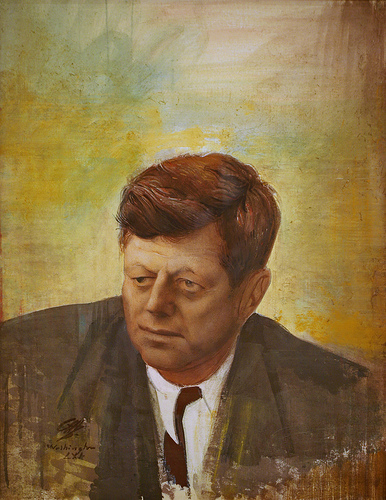 The latest eruption of John Kennedy hysteria, bordering on deification, seems safely behind us now that the 50th anniversary of his assassination has passed. Though there is much disinformation about JFK’s legacy that could and should be discussed, two areas stand out: his relationship to the Black Liberation Movement and his actions in Southeast Asia.
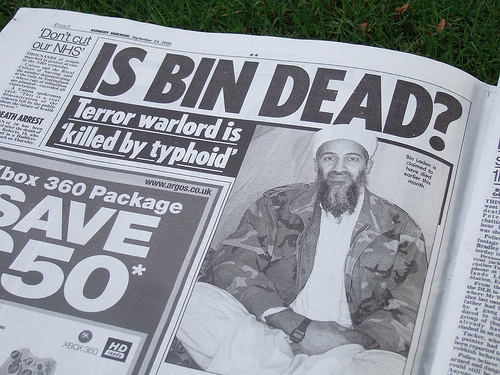 MEDIA ROOTS – The Pentagon and the corporate media establishment are again attempting to control the 9/11 and War on Terror narrative by claiming that they are considering legal action against former Navy SEAL Matt Bissonnette (a.k.a. Mark Owen) for
  MEDIA ROOTS — Instead of the run of the mill faceless accusations of ‘The 1% are oppressing the 99%’ research organization Project Censored has compiled a valuable list with names and faces of some of the world’s biggest earners and financial elites.
 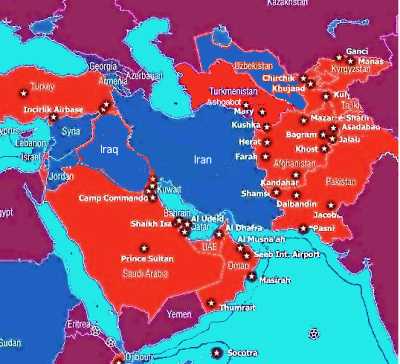 MEDIA ROOTS —Never before has the relationship between Iran and Syria been tested as it will be in the ensuing weeks and months. Syria’s story is rippling through the media as the situation on the ground changes by the hour. Right now, Iran and Syria stand confidently alongside Russia who is moving quickly to advance diplomacy and military assets into the region. Over millennia of shared history, Iran and Syria have been connected and disjoined. Currently, the Middle-East polarization brings them together to defend self-determination, individual and regional sovereignty and the right to a full nuclear fuel cycle. Media Roots contributor Chris Martin offers part two of this Media Roots original on the Iranian Neighborhood. In
 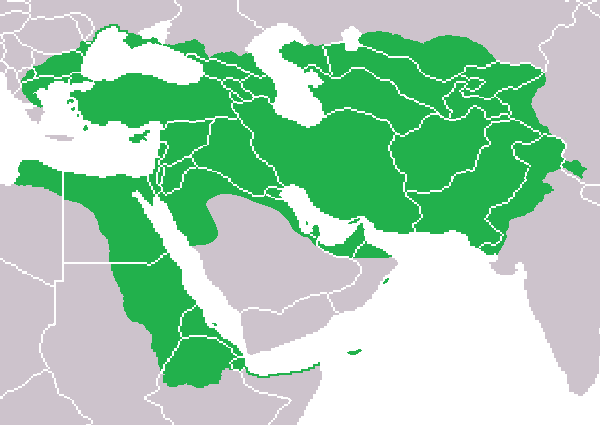 MEDIA ROOTS —The so called “diplomacy” currently being conducted by international surrogates to control the momentum of Iranian nuclear ambitions is conducted by the very same people who saturated the region with nuclear weapons technology. Iran, in one sovereign form or another, has been operating for 2,500+ years. The Median Empire allied with the Babylonians to capture Nineveh in 612 BC. Cyrus the Great, a descendant of Achaemenes conquered the Median Empire to establish the Achaemenid Empire. The Achaemenid Empire in Persis for more than two centuries stretched from the Indus Valley to Egypt.