 It’s been over a year since the groundbreaking documents were released by NSA whistleblower Edward Snowden, detailing a massive surveillance apparatus collecting the electronic communications of entire populations. The proof positive spying story sparked a global discussion reevaluating state power and a groundswell of privacy advocates.
However, years before Snowden’s damning disclosures, two former NSA insiders had also blown the whistle on the dragnet spying regime. Bill Binney was NSA Technical Director from 1965 to 2001 and Kirk Wiebe was Senior Analyst within the NSA from 1975 to 2001. They both resigned after 9/11, outraged by the unconstitutional assertions of power within the agency.
As a pioneer of the now-defunct ‘Thin Thread’ program, which upheld the privacy of US citizens, Binney broke away from the NSA after witnessing the erosion of privacy rights under the banner of national security. Wiebe, equally disgusted by the NSA’s blatant disregard for the rule of law, left his post in protest against the indiscriminate violations unfolding outside the view of the American public.
More than a decade into the “War on Terror”, it’s startlingly clear that civil liberties are under attack. And in the digital age where telecommunications continue to play a more central role in our everyday lives, the NSA’s expanding net of surveillance poses a grave threat to free and open societies worldwide.
“It’s like the Wizard of Oz. Pay no attention to the man behind the curtain. That’s what game they’re playing.” –Bill Binney
MR
**
Two Top NSA Veterans Expose Shocking History of Illegal Spying
**
AM: Bill, you were one of the creators of the pre-9/11 data collection surveillance program called ‘Thin Thread’ which actually did have privacy protections instated for American citizens. Why was this program abandoned and what kind of system replaced it?
BB: Well it actually wasn’t abandoned. The back part of the analysis part, the part that allowed them to deal with massive amounts of data and index it was taken in to manage, that was the way that they were able to build surveillance on the entire world. That particular program was that powerful and that’s why we put in those protections. So that it would be impossible for them to abuse it. That was the first thing they removed when they took it into the new program Stellar Wind.
AM: And Kirk, after you had found out what they did to ‘Thin Thread’ how did you, Bill and other intelligence insiders address these concerns within the government and how were these concerns met from officials.
KW: Well, in reality we had been trying to address what had been going on within the NSA in terms of modernization for years and it’s kind of like 9/11, the events of 9/11, were the culmination in our minds of our failure to get those at the agency to see the potential of what we were developing, what Bill had invented in the ‘Thin Thread’ project. And it was within six weeks of 9/11 that we end up–Ed Loomis, myself, Bill Binney–retiring from NSA in absolute disgust because we had failed. We had been trying to tell them that they were going to fail and we lost the battle.
AM: And Bill, in 2007 the FBI raided both of your homes along with other officials who had spoken out on the false premise that you guys had leaked classified documents or information to the press. What was that experience like for your and were you surprised by the aggressiveness of the response?
BB: Well yes, you see I had been cooperating with the FBI in their investigation into the New York Times leak for months, several months, about four months before the raid and when they came at me it was rather–it’s hard to understand why they would do that and why they were here pointing guns at me too and my family. So it’s a question of what was this all about and finally it didn’t take me too long to figure out what they were really doing was trying to intimidate us because this was like the morning after the second day after Gonzales’ testimony to the Senate Judiciary Committee about the terror surveillance program that the president had talked about which was–he only talked about the warrantless wiretaps at the time–but there were many other programs that involved CIA and also NSA that included spying on everyone in the country and building knowledge and understanding of their lives of everybody as they were living them. So it was a matter of pulling–actually it was a computer program reassembling dossiers on everybody in the country and the world eventually. So it was clear to me at that point that that’s why they were there. To keep us quiet.
So I started getting mad at these people while they were still there. So that when I reported to the FBI the real crime why they were sent there which was Bush, Cheney, Hayden and Tenet, which was the core of individuals who decided to subvert the constitution and violate all the laws, basic laws that we had in statutes at the time and I told them what it was–Stellar Wind Program–what data they were using, how they were organizing, what it was doing and I was telling that to all the FBI agents on my back porch.
So the only one who was cleared for it was the one fellow who was the special agent in charge Paul Mauric [sic]. He was the only one who was cleared for that program. The only thing he could do when I was doing that was look at the floor because what I was doing was causing him a problem, cause it was telling all these other agents (FBI agents) what crime is being committed and that they weren’t cleared for it. They were not cleared for this program. So now we had to have a meeting outside before they left my house of all the agents round the cars. They couldn’t leave until he instructed them on what they could not say.
AM: Wow and Kirk, in the case of Thomas Drake, of course, it went a little bit farther to say the least. Talk about exactly what the FBI did to him.
KW: Well, let me frame it a little bit for you. In November of 2009 Bill Binney and I received a communication from our lawyer. After we were raided in 2007, we went halfsies on a lawyer rather than pay two. The lawyer was a former US prosecutor so we thought he’d know how to deal with the government. He told us to lay low. In November 2009 he sends us an email that says “guys I just got an email from the Department of Justice. They’re coming after you.”
So Bill and I made an appointment with him an we went in to Baltimore and sat down at his desk and he was completely surprised by this move. He thought it would go away. Well it wasn’t. That was the end of that for the holidays. It was November when we got this message. Come January, we get another email. There’s a new prosecutor for the government. The other one had left government. And we are being offered letters of immunity if we are willing to sit down with the FBI and the prosecutor for the Department of Justice and answer questions about Thomas Drake. And so Bill and I agree we’ll do that. We knew Tom had done nothing wrong. Easy, let’s go. We go down to the FBI facility just outside DC in Maryland and separately we address questions. The questions were mostly questions like “Did you meet with Tom Drake? On what occasion?” And of course we had lunch with Tom, said hello but nothing very interesting. “Did he talk about mulching papers, destroying evidence?” No, no, sorry. Tom’s an honest guy.
So long story short we get letters of immunity in February saying we are under no further threat in this entire matter (Bill Binney and I). They then threw their attention on top and we think it’s because he’s the one who went to the press. NSA was very much trying to–and the government for that matter–send the message “If you work in the intelligence community and you talk to the press you’re going to get hammered.” And so they wanted to make an example. Whether they won the case or not was not important to the government. They wanted to send a message and that’s why they went after him.
AM: And they actually said they reclassified this document that he had specifically taken was unclassified. Extremely shady.
KW: Absolutely right. Absolutely right.
BB: It was also material that they had independently released publicly and Jim Bamford provided that to the judge Bennett and the court.
AM: Kirk, I wanted to–actually Bill, let’s talk about Edward Snowden. Tomorrow of course is the anniversary of the leaks. I wanted to play a quick clip from his NBC interview. Let’s check that out.
ES: They found that we had all of the information that we needed, as an intelligence community, as a classified sector, as the national defense of the United States to detect this plot. We actually had records of the phone calls from the United States and out. The CIA knew who these guys were. The problem was not that we weren’t collecting information. It wasn’t that we didn’t have enough dots. It wasn’t that we didn’t have a haystack. It was that we did not understand the haystack that we have.
AM: And of course this is why you guys left in outrage. You agree with his assessment here?
BB: Yeah, I know the specifics of it. Like six or seven phone calls from San Diego back to the Yemen facility. And by the way, both ends were known. Both numbers were there. That’s how caller ID works. And you’re talking about switches. And the switches have to know exactly how to pass or where it’s coming from, how to pass the other line back. They have to have the information to make the connection otherwise it doesn’t happen.
AM: Why expand the haystack if the haystack was already there, available and could’ve prevented the terrorism?
BB: Well the very simple reason they did that was for money. It was to build up an empire of an industrial complex around NSA and other agencies and that’s exactly what they’ve done. They spend on the order of $70 billion a year on contracts.
AM: Well let’s go along with the NSA apologists–Hayden, Clapper–who say that there’s no tangible evidence that the NSA is actually using this data against us so why should we worry. What’s your response Kirk?
KW: It’s a silly statement. NSA operates behind a wall of secrecy. You need a clearance just to enter the building. And so what goes on being those fences and facilities is unbeknownst to anyone except NSA. So NSA has a license to say what it wants to and no ability to challenge it, virtually none.
BB: I would also add that it’s not so much NSA using the data as it is law enforcement, FBI and DEA. They’re using this data directly. They have ways and means of interrogating directly. Director Mueller testified to this to the Senate Judiciary Committee. He said he had access to a technology database which he put together with DOD where he could go in and get emails with one query, get all past emails and all future ones as they come in on a person. What he’s doing is he’s going into the NSA database because NSA and DOD is responsible for communications, that’s email. And so they got all these Narus devices around the network collecting all these emails. So they’re going into the base they’re creating, interrogating all this material to get criminal activity.
AM: Yeah, as Edward Snowden has said repeatedly this is about potential for retroactive prosecution. Kind of building this whole framework around people.
BB: That’s exactly what they’re doing.
KW: Exactly right.
AM: We’re going to take a break now and we’ll be back with the two NSA whistleblowers. You guys stick around.
[BREAK]
AM: And we’re back with NSA whistleblowers Bill Binney and Kirk Wiebe. Kirk I want to with you. When Obama took office he was briefed on these programs. He decided to go forward with them. Why do you think he did this given that he ran his presidency on a platform of transparency and strict constitutional adherence?
KW: I think its the result of what I call “technospeak.” When the NSA talks about what it does it tends to put them in difficult abstract terms. It also uses words to deceive. So for example the NSA will say “we aren’t doing such and such under this program.” But what program are they doing it under? So these are correct statements in front of Congress but they’re meant to mislead, to be deceptive. So I’m not sure that Obama ever understood or fathomed really what was going on. You’re never sure that anybody does. Congress swears they get briefing all the time but still don’t understand—
AM: Well it certainly didn’t look like Bush knew but I find it hard to believe that Obama, constitutional lawyer, wouldn’t at least want to know. “Hey, what is this mass spying grid that we have?”
KW: Exactly.
AM: Bill even before Snowden made his revelations you had said that the US had turned into a police state. I was wondering if you could expand on why you made that comment and what Snowden’s revelations have kind of exposed that have helped further cement that notion.
BB: Well I said it because I knew the capacity of collecting information on everybody, mostly their focus was on the United States initially but it spread around the world so it’s really collecting the data of everybody on the planet and I knew the capacity of the systems involved. There was no limit on what you could do with them that I saw anyway when I left there. The point was how were they using it and that came out with Director Mueller in the FBI when he testified to the Senate Judiciary Committee on the 30th of March of 2011. It’s on the web. Where he said he got together with the DOD and created this database.
Well that told me that he was interrogating all the email collection that they were making. He also had access to the phone network. He said he talked about phone data too–not at that interview but at another one. So they were using this data for police operations. And so it was–and Reuters published an article on it in August of last year talking about the DEA and the SOD (the Special Operations Division) which was specifically to look at the data that NSA collected to find criminal activity and then they would use that to go arrest people. And after the arrest they’d say “wait here in this parking lot. Wait for a truck to pull in. Go arrest the guy. Bring the drug dog in and go sniff out the drugs.”
The policy was you could not use any of this information documented in any court records and you couldn’t tell the judge or the prosecutor or defending attorneys about it. You had to do a parallel construction. That meant they knew where the data was, so you do your normal policing that you would do to find evidence and then you substitute that for the NSA data as the basis for arresting them. Well I call that basically a planned program perjury policy run by the Department of Justice of the United States. Now it’s not only the United States now because they share the–with foreign counterparts. So that goes all the way around the world. So they’re subverting the entire judicial process. Here and around the world. So they’re really undermining democracy everywhere.
AM: Right, that’s important to point out. This is the Five Eyes. This is not just the US.
KW: It’s not just five eyes.
AM: It’s a lot more.
KW: Yes
AM: Kirk, there’s been alot of criticism of journalist Glenn Greenwald for the way he’s distributing the leaks. I want to see if you are happy with the process of how the leaks have been distributed.
KW: You know it’s almost a moot discussion for me because we have a government subverting the constitution. That’s what we should be focused on. Not the picayune details of Greenwald’s leaks etc. I think for an unindoctrinated, non-intel person he’s probably done a pretty good job. People ask me when you look at what has been leaked by the Greenwald Snowden team. I tell people “well what does it mean to you when you see PRISM?” They say “nothing, it means there’s a word. I don’t know what it means.” Well that’s right. You don’t. And so most of what’s on these slides are a bunch of names shown in relationship to each other but it’s difficult to interpret what’s going on because the words are few and if you’re not part of this system it’s difficult to know. You have to infer. Now Bill and I have an advantage. We’ve dealt with this kind of speak before so we can infer things from it. But I think they’ve done a pretty good job.
AM: And you know, Snowden’s clearly not an anarchist. He doesn’t want to abolish the government. He doesn’t want to abolish the NSA. He’s made a deal with these journalists to actually vet every document, to consult with the government as we found out. He’s very careful in the way that he wants this distributed. Bill, any comments on that?
BB: Basically when I look at that I see what he’s released and what he’s published and I don’t see any damage to the United States at all. Because, after all, when they claim this is irreparable damage they’re doing that just to hype up the attack on the person. What the slides are really showing is that we do all this stuff everybody knew we were doing anyway. So the other point is very simple. What alternative do people in the world have? If you don’t want to use the phone that’s a choice you can make but you can’t use any phone. So you have no choice. Just because we’re monitoring phones–if you have to communicate you have to use a phone or email or something–so you have no choice. That’s like all the Verizon people know there information is being transferred to the government but they haven’t changed companies. Why? Well it’s their choice.
AM: Another good point made in the United States of Secrets was that this is not just about government surveillance. This is about corporate surveillance but people don’t seem to care as much because it’s used for advertising collection instead of intelligence gathering but it’s very scary you have an apparatus working in conjunction with each other.
KW: That’s exactly the point.
BB: You see the industry can’t come and arrest you and put you in jail. The government can. But when they cooperate they can add extra dimensions to what the government has knowledge–in terms of knowledge–what the government has against you.
AM: Bill, you brought up a really good point about a minute ago when you said there’s people that knew about this for ten years. You guys had been saying this. You’ve been yelling from the rooftops as well as other people like Thomas Drake. What is your response to people who say “Snowden hasn’t brought us anything new. We already knew about this. The documents don’t tell us anything”?
BB: The response is pretty simple. This is irrefutable evidence. Up until then they could’ve denied it and said “no, that’s not what really true,” but now with the evidence–that’s why he took all that data out–because that was the only way to convince people. Now he has the evidence which is the government’s data. So the government–there’s no way they can deny it.
AM: Exactly. We have the documents. Finally. You brought up a good point as well when you said that people were focusing on character assassinations and the way that all of this is being done. Why? Why are people focusing so much on Snowden and Greenwald and not the leaks.
KW: That’s a good question. You know, over Europe right now there’s a greater debate about this entire matter. They seem to appreciate the threat more than the typical American does. We’re spoiled. We’ve now enjoyed this country for two to three hundred years but we’ve never lived under a dictatorship. We’ve never lived under the Nazis. We’ve never lived under the Stasi, the secret police. The Germans and many of the Europeans have and they remember those harsh conditions and they don’t want that to return. So I think that’s why they understand it and get it a little bit better. But I think most of the polling I’ve seen, pretty much the majority side with Snowden on this one which is encouraging because it is all about the constitution. It really is.
AM: Yeah, no matter how much they try to frame it “hero-traitor,” it really is about the content of the documents.
BB: It’s like the Wizard of Oz. Pay no attention to the man behind the curtain. That’s what game they’re playing.
AM: Bill, I wanted to play another clip from the Snowden interview where he talks about what it means to be a patriot.
ES: Being a patriot doesn’t mean prioritizing service to government above all else. Being a patriot means knowing when to protect your country, knowing when to protect your constitution, knowing when to protect, your countrymen, from the violations of and encroachments of adversaries. And those adversaries don’t have to be foreign countries.
AM: That clip really resonated with me. Do you agree that you sometimes have to break the law to stand up for what’s right Bill?
BB:Well let’s put it this way. There’s several things that are involved here. The oath of office that everyone takes in government, including the Congress and the President and everybody else, is to protect and defend the constitution, not the government, not defend an agency, not defend a president. So that’s the first thing. Secondly, the point that he was making in terms of standing up is really what their responsibility of citizens is. You have to stand up to defend the constitution. You cannot sit by and be quiet. If you acquiesce to it, you know, if nobody speaks up you get a state like the Nazis developed. That’s fundamentally what it is and we’re on that path now with section 1021 of the NDAA where it talked about giving the president the power to declare someone a terrorist threat, to take them off the street with the US military, to incarcerate them indefinitely, give them no due process. That’s–that’s not the Nazi order at 48 issued in 1933. That’s exactly what they did. If you go on the web you can read it. It says basically the same thing.
AM: Right, at what point are they going to stop following orders and stand up for what’s right. Kirk, what’s your opinion on the USA Freedom Act. Of course it’s been transformed quite a bit. Passed in the House now, waiting passage in the Senate.
KW: Disappointment. Much disappointment. While it narrows metadata collection using counts of tops from a known or suspected “bad person,” when you do the math the numbers are still huge numbers of innocent people who get swept up into this vacuum cleaner. All along Bill and I and others have tried to build a system (the Thin Thread that we talked about earlier) that was focused on–very closely on known bad people and there relationships with others yet to be determined but collecting all the metadata but encrypting it to protect of all those innocent people out there. That gave you the best chance to find things you didn’t know about and also focus analysis on the things you do know about and do your job and make sure you cover that well. With that kind of technique we don’t think we would’ve had a Boston Marathon, for example, explosion and so forth. So NSA is not operating at optimal, what we would call optimal levels of analysis. So when I look at the Freedom Act narrowing metadata it sounds good in the protection of privacy but it really doesn’t afford that much and I hear nothing about it encrypting the innocent, the identities of innocent people. So NSA can still look at those people illegally as far as I’m concerned.
AM: We have about a minute left but for people like me and the audience who’s watching this show I feel like we really want to get our hands on encryption and try to figure out how we can protect our data online and I feel it’s not as user friendly as I guess it should be. What’s your advice to people who want to protect their data?
BB: I think if they are after you there’s no way virtually that you can do that. Unfortunately, that true. Because I look at it this way. There’s so much capability even if you have encryption once you decrypt it’s in your system–
AM: That’s a reason for them to look at you.
BB: Yeah, and then once you put it in your system in a decrypted form they can come through and break into your computer and take it off that way so it doesn’t make any difference what you do. My point all along is that’s why I called it a police state is that Ronald Reagan said that we are a country with a government. Well now we’re a government with a country. That’s what we’re turning in to.
AM: 10 seconds.
KW: Well I would just simply say if you encrypt all the metadata they can’t get to your content because they don’t know to who it belongs.
AM: Amazing to have both of you on. Bill Binney. Kirk Wiebe. Really appreciate it you guys. Thank you so much for what you’ve done. And that’s our show you guys. Join me again tomorrow when I break the set all over again. Thank you so much.
**
Transcript by Xavier Best, Photo by Wikimedia Commons
LIKE Breaking the Set @ http://fb.me/JournalistAbbyMartin
FOLLOW Abby Martin @ http://twitter.com/AbbyMartin



 Today Israel carried out aerial strikes in Gaza targeting a mosque it claims was hosting rockets, a disabled care center and a geriatric urgent care hospital, where international volunteers have since rushed to shield patients.
 Have you ever found it odd that a side effect of Cymbalta, a leading anti-depressant, is suicide? It seems counterintuitive, but in a country where medicine is dictated by Big Pharma, such a paradox is hardly surprising.
 It’s been over a year since the groundbreaking documents were released by NSA whistleblower Edward Snowden, detailing a massive surveillance apparatus collecting the electronic communications of entire populations. The proof positive spying story sparked a global discussion reevaluating state power and a groundswell of privacy advocates.
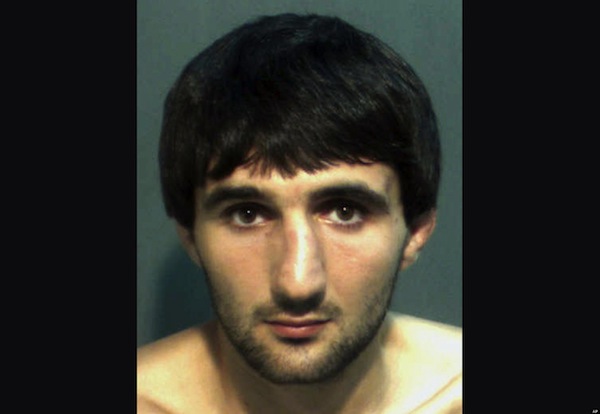 The city of Boston was shaken last year when its marathon was tragically bombed, leaving three people dead and 264 others injured. The alleged mastermind behind the deadly attacks, Tamerlan Tsarnaev, was killed in a shootout with Boston police. His little brother and alleged co-perpetrator, Dzhohar, is now awaiting trial and will potentially face execution.
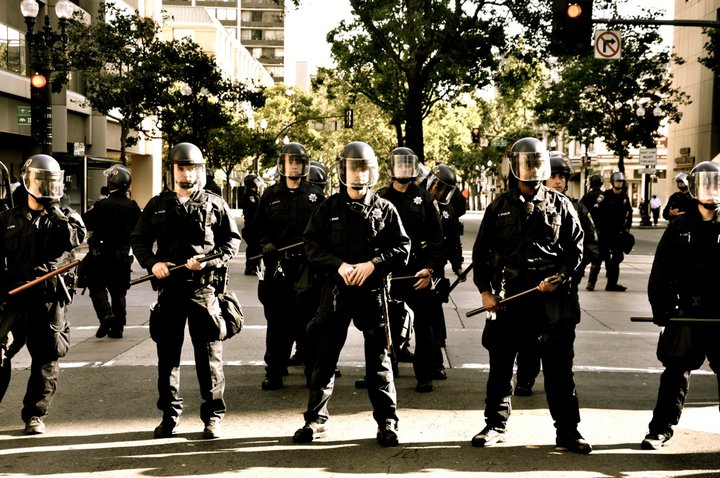 In November 2003, a man named Aaron Girard filed a
 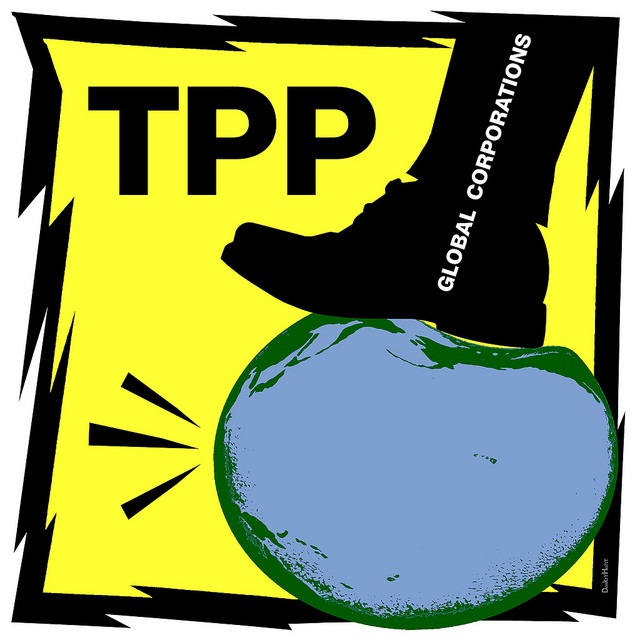 Negotiations for the world’s biggest trade deal have been conducted in total secrecy over the last four years. What’s worse, deliberations are being held between world leaders and multinational corporations that are paving the way for a global corporate coup.