Cyber Warfare, Surveillance & US Government’s Dick Pic Collection

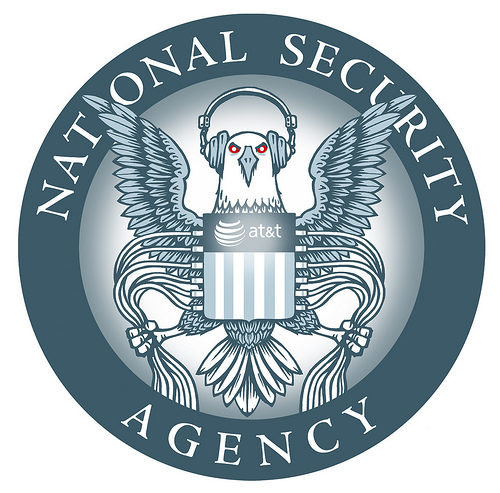
NSAbyEFFAccording to CIA Director John Brennan, the War on Terror is now being waged online. In a recent speech at the Council on Foreign Relations, Brennan warned about the threat of cyber terrorism and said the government needs to secure the internet.

Recent high profile hacks reinforce how important the safety of our personal data online is. Yet the government is using the threat to push through sweeping legislation that will erode civil liberties while exempting companies from existing privacy laws.

The Cyber Intelligence Sharing and Protection Act (CISPA), is back as CISA. And Obama just issued an executive order that grants him authority to sanction people or groups engaged in civil society online. With the renewal of the Patriot Act on the horizon, the conversation about mass surveillance couldn’t be more vital.

Co-founder of The District Sentinel News Co-op Sam Sacks joins Abby Martin on Media Roots Radio to discuss all things spying.

If you want to directly download the podcast, click the down arrow icon on the right of the soundcloud display.

This Media Roots podcast is the product of many long hours of hard work and love. If you want to encourage our voice, please consider supporting us as we continue to speak from outside party lines. Even the smallest donations help us with operating costs.

Listen to all previous episodes of Media Roots Radio here.

Follow @samsacks Follow @abbymartin

Photo by EFF

Posted in Uncategorized | 1 Reply

Panopticon Fatigue – Life, Sex and Death under the East German Stasi

[This article originally appears in issue #14 of White Fungus magazine, reprinted with publisher’s permission. Subscribe to White Fungus here

For five decades, the Stasi managed to painstakingly craft what was at the time the world’s most sophisticated surveillance state. The secret police of the German Democratic Republic’s Ministerium für Staatssicherheit (shorthand: Stasi) induced an era of fear among the East German population.

Not because they were killers, although some definitely were, but because of their manipulation capabilities. They could remove any chance for your future employment, ban your child from entering college, ruin one’s art career and even drive one to suicide. What made the Stasi particularly unique was that they had their surveillance and tracking methods down to a science. The Stasi were able to monitor and judge a situation from a far covertly and then ‘guide’ it towards an outcome they desired.

Most of the Stasi’s ‘successful’ operations were on specific targets, rarely ever were ‘legitimate threats’ detected or thwarted through massive sweeps. One senior Stasi official said their main weakness was that they could “listen in on everything”. In practice, spying on everyone simultaneously had a fundamental flaw – excesses of records made it tedious and time consuming to find the needle in the haystack. Almost all East Germans felt the presence of the Stasi in some way, but a surprising amount of former GDR citizens explain that they ‘never did anything wrong’ and therefore presumably never attracted Stasi attention. It’s this disparaging view that gives us insight into what soft totalitarianism in the form of mass surveillance does to the psychology of a society.

What happens to a collective group who are conscious of their privacy being removed? An obvious answer is that people behave differently, adapt or change their behavior in accordance to being watched, even erasing a free thought that threatens the state before it’s even fully formed. When rumors ran rampant in the GDR of Stasi cameras in private bedrooms and bathrooms and the exploitation of one’s private sexual practices or orientation had become regular fodder for blackmail, Stasi presence was probably even felt in the bedroom. The GDR hid damning suicide statistics to present a preferable image to the outside world, and finding any surviving psychological surveys of the population as a whole is virtually impossible. Only by piecing together personal stories, media and documented history of daily life under the Stasi does it become clear the unsettling side effects blanket surveillance can create in the lives of an entire population.

Instead of outright killing (for attempting to cross into West Berlin) or harshly imprisoning (for dissent), the Stasi’s preferred methods reveal an institutional and operational belief that their target’s actions could be vulnerable to influence or even prediction via total observation and control. For a man whose son was killed by GDR guards for trying to steal scrap metal off a base, it meant being monitored for over a year to make sure he didn’t raise too much of a stink about the murder. The expensive operation’s justification: his sister-in-law had spoken to a West German media outlet about the killings, which had subsequently cascaded into a worldwide story. Fearing further negative media attention, the Stasi staked out his apartment from across the road, made themselves a copy of his key, tapped his phone, and then settled in to await anything that piqued their interest. After a year of this sphere of surveillance which had now expanded to include his relatives, save for a few angry remarks about the murders, it was clear his interest had waned. The Stasi were finally satisfied that he wasn’t angling to attract media attention or escalate his cause. This is just one example of the ridiculous amount of resources dedicated to predicting the behavior of a single person suspected of merely being capable of causing embarrassment for the GDR.

the-stasi-museum-berlin[Stasi Museum : Germany. Reprinted with permission from White Fungus

Typically if someone was found to have anti-GDR sentiments, the Stasi would try to recruit a co-worker or loved one (possibly themselves already a part-time informant). In the absence of a loyal informant, the Stasi would resort to exploiting fracture points between family members. In some instances, Stasi agents would emotionally manipulate people wanting to flee to the West by convincing their parents to beg them to stay. If a dissenter continued unabated under Stasi prying eyes, then things in his or her personal life could and often did start to go awry such as losing employment, and in rarer instances mysterious failing health.

In the time of the GDR, if you were concerned about the penetrating effect of the Stasi into everyday life, suspicious of your communication being monitored, or concerned that your wife was an agent, you wouldn’t be crazy, you’d be savvy. But, the very nature of a society like this makes bringing up these concerns in public or even among friends and colleagues an untenable risk. A citizen with a tendency to go after young women behind his wife’s back would be ripe pickings the Stasi, and blackmail was often used to coerce such people into becoming a spy for the state. In one specific case, a suspected pedophile was allowed to remain free as long as he became a full-time informant for the Stasi. Generally speaking, the worse your secrets were, the more the Stasi could milk you for all you were worth.

Exploiting hidden sexual appetites was just one tactic used to swell the ranks of non-voluntary informants. The Stasi collected many genres of compromising material beyond the sexual. Blackmail was a surefire way to inevitably push any individual into indentured servitude. Records show that 1 in 60 citizens were officially on the Stasi payroll, but unofficial reports estimate that as many as 1 in 6 citizens either were passing information to the Stasi or informing in some capacity on the people in their lives.

This machine belonged to the postal inspection department of the Stasi. It automatically resealed envelopes

[This machine belonged to the postal inspection department of the Stasi. It automatically re-sealed envelopes. Reprinted with permission from White Fungus]

On January 15th, 1990, during the fall of the Berlin Wall, the Stasi Headquarters was overtaken and shut down by activists. It reopened shortly thereafter as Forschungs- und Gedenkstätte Normannenstraße, a Stasi museum open to the public. Visitors could now walk through the same spaces in which protesters had angrily breached the “‘shield and sword of the party’s” threshold and found Stasi officials still attempting to destroy incriminating files, even as they had run out of working shredders. The museum plays up the gadget aspect of Stasi spycraft reminiscent of crap films like James Bond. Necktie and pen cameras or wrist watch microphones may seem generic or crude by today’s standards, but it’s the oddities — cameras mounted in bird houses or car headlights, or hidden cameras inside tape recorders, and microphones inside watering cans and other garden accessories that leave the strongest impression. Keeping in mind that the GDR was economically isolated from the West, the miniature camera and microphone technology is in and of itself impressive.

The Stasi did indeed think outside the box, so considering the very unorthodox spy gadget concealment locations and how often and well hidden in public view they were, it’s not surprising the paranoia they instilled. The GDR in the 1980s was even able to reverse engineer an early IBM computer by procuring smuggled and cloned parts. Of course the main motivation was not to integrate programming or computer education into the GDR, it was to have cutting edge technology to database and catalog as much of the population as they possibly could. One of the strangest types of data they hoarded on the populace was olfactory, presumably to be used for police dogs. Scents were collected from clothing and personal effects and stored in labeled sealed jars. A storage room filled with these glass jars must have resembled a psychosexual experimental art installation.

gdr-stasi-museum-leipzig-2010-10

[Stasi Museum: Germany. Reprinted with permission from White Fungus]

Even more outrageous methods of tracking targets included a special kind of radioactive dust sprinkled into vehicles or clothing to give agents the ability to ‘spy’ with radiation detectors on top of microphones and cameras. Much more sinister, however, is the rumored Stasi method of assassination via highly targeted radiation poisoning. One involved a prolonged exposure emanating from an innocuous-looking  black box sitting on a table. It’s long been widely speculated that well known East German writers Jurgen Fuchs and Rudolf Bahro were assassinated by the Stasi in this way – given a carefully calibrated dose of radiation so that their deaths seemed natural and not immediate. The concept of a portable cancer box is not only bizarre, but justifiably terrifying. Even if this technique were rare, the whispers about such a punishment would undoubtedly inspire intense fear and panic in those that heard about it.

I stumbled upon this comment by a former citizen of the GDR, one Sabine Bohm on, of all places, Youtube (ironically in some ways Google, the company who owns Youtube makes the Stasi’s surveillance technologically seem quaint):

“I am glad I got out of this disaster in 1985. We were young creative, artistic people that was not wanted in the former GDR. Even without having done anything i had to sit 24 hours [in] jail and my diaries had been studied by the Stasi, who had broken into my flat and kept them with them. I was of course not so stupid to write my inner thought into it. The time was not easy”

Surveillance photo of a bedroom of a teen with alleged pro-Western sympathies simonmenner-stasi-125[Surveillance photo of a bedroom of a teen with alleged pro-Western sympathies. Reprinted with permission from White Fungus]

Sabine was aware the Stasi regularly read diaries. Although she kept one, Sabine simply made a conscious choice not to write certain thoughts down.  If you extrapolate this concept, the decision to change one’s behavior out of a fear of surveillance in other forms, it could create devastating psychological ripple effects. From the book Stasiland, another former GDR citizen, Julia, said,

“You’d go mad, if you thought about it all the time.”

She describes her experiences telephoning her overseas boyfriend,

“When I hung up I’d say goodnight to him, then I’d say, ‘Night all,’ to the others listening in, I meant it as a joke. I didn’t let myself really think about whether there was another person on the line.”

Julia felt that somehow she was actually able to tune out the worry. Calling it ‘paranoia’ would be inaccurate since, statistically speaking, the chances of the Stasi monitoring a telephone call between a foreigner and a GDR citizen was extremely high. I failed to find diagnosed cases of PTSD from people who lived under the Stasi and wondered about the philosophical underpinnings that might explain if it was a reaction to cognitive dissonance that lead to this, or if it was something else entirely.

“The Stasi Persecution Syndrome”, a 1991 research paper, makes the case that people under the Stasi experienced a unique type of PTSD that was more nuanced and harder to diagnose than typical PTSD.  The paper concludes that over 50,000 people who lived in the GDR could suffer from “persisting and paranoid anxieties, re-arousable by specific situations…persecution dreams, mood disturbances, [and] lack of confidence”

I decided to speak to a mental health professional who was well versed in the differences between genuine delusional paranoid schizophrenic thoughts and anxiety issues brought on by the prolonged fear of being watched. I spoke with Matt Likens, a licensed psychotherapist in California. Matt regularly deals with patients who have varying degrees of schizophrenia and upon my request familiarized himself with the Stasi.

Our correspondence is as follows:

–––––––––––––––––––––––––––––––

Robbie Martin: “If you aren’t doing anything wrong you don’t have anything to hide” ← what does this statement tell you about the psychological state of the person saying it?


Matt Likens: This statement presumes wrongdoing in and of itself.  It’s leading, and it’s meant in a way to intimidate, and if perpetuated, “wrongdoing” is manifested in some way, shape, or form, thus fulfilling the projected belief.  The paranoid individual trusts nobody, certainly not himself.  He is so terrified of literally not existing, annihilated.  Having oneself consumed by fear and dissolution, he must project that upon his environment.  This character structure exists not only in the individual, but is internalized by the state, and enacted in its systemic sense of omnipotent control over the masses.

RM: Some people under the Stasi who kept diaries would self-censor their thoughts in case the Stasi ever confiscated it. If that’s not ‘paranoia’, how would you describe that?

ML: Denial of one’s sense of self expression and spontaneous gestures both physically and cognitively causes pathology by definition. The formation of all repressive regimes are a result of the pathological incapacity and intolerance for the individual. Sexuality in particular is denied in these societies.  Wilhelm Reich wrote that, “..the goal of sexual suppression is that of producing an individual who is adjusted to the authoritarian order and who will submit to it in spite of all misery and degradation.”

RM: There is something inherently narcissistic about imagining that you have been targeted for surveillance and reacting as if its actually happening in the absence of any evidence.  These are characteristics of delusional schizophrenics, but in the GDR where the likelihood of being surveilled was very high, what coping mechanisms could someone use to to stop worrying? 

ML: One of the most common and well utilized psychic defense mechanisms of an unconsciously paranoid individual is a thing called “reaction formation.”  In this mechanism, the individual is capable of defining real and actual feelings towards a threat into its polar opposite, rendering it less threatening to the ego.  Individuals under the rule of repressive organizations such as the Stasi understandably utilized reaction formation to minimize paranoia.

RM: Reaction formation sounds like the opposite of willful blindness, what segments of the population do you think fell into these opposing camps?

ML: Poor, sick, and psychologically fragile individuals have a vested interest in willful ignorance, as they live with day to day stress that more privileged individuals need not worry about as much.  I think that parents in particular naturally became far more likely to act in accordance to Stasi rule and law to protect the emotional health of their children.

RM: What about people labeling themselves as ‘not important enough’ to be surveilled, what kind of psychological side effects could a thought like that have? 


ML: Labeling oneself as “not important enough” to be watched is a powerful way of eliminating real and legitimate concern for one’s safety. This individual feels intense insecurity within himself for various reasons. I also like to think that individuals who minimize their sense of self importance as “the poor me Narcissist.”

–––––––––––––––––––––––––––––––

The Stasi kept such detailed records that citizens today can go to a special facility and request any records that were compiled on them, and then sit and read their dossier. Undeniably this access provides some catharsis because it attempts to answer the ever burning question in the back of many a GDR citizen’s mind, “was I being watched?”. Many former GDR citizens were surprised to find that the answer was yes, they were indeed being watched, and some of them far more than others.

What about the people who didn’t care to inquire even after being given the privilege? Perhaps many of them had already decided long ago that they were “not important enough.” The lingering after effects of mass surveillance continue to reverberate long after the Stasi’s demise.

written by Robbie Martin with contributions from Laurie Kirchner

follow Robbie on twitter @FluorescentGrey
 

How Non-Violent Activists Can Land on the Drone King’s Kill List

obama droneSince 2008, the year of the worst financial crisis since the Great Depression of the 1930s, the U.S. Department of Defense has funded a multimillion dollar university research program to probe the complex dynamics of mass social and political movements, anticipate global trends, and ultimately augment the intelligence community’s preparations for civil unrest and insurgencies both abroad and at home.

Part of that has involved developing advanced new data mining and analysis tools for the U.S. military intelligence community to pinpoint imminent and potential threats from individuals and groups.

Among its many areas of focus are ongoing projects at Arizona State University (ASU) designed to enhance and automate the algorithms used by intelligence agencies like the NSA to analyze “open source” information from social media in order to track the potential threat-level to U.S. interests. Formal organizations and broad social networks as well as individuals could be identified and closely monitored with such tools to an unprecedented degree of precision.

Loosely defined concepts of political “radicalism,” violence and nonviolence, as well as questionable research methodologies, open the way for widespread suspicion of even peaceful activist groups and their members, and the equation of them with potential terrorists. Civil society organizations in the U.K., including both Muslim religious groups and non-religious anti-war networks, have been prioritized for study to test and improve the effectiveness of these data-mining tools.

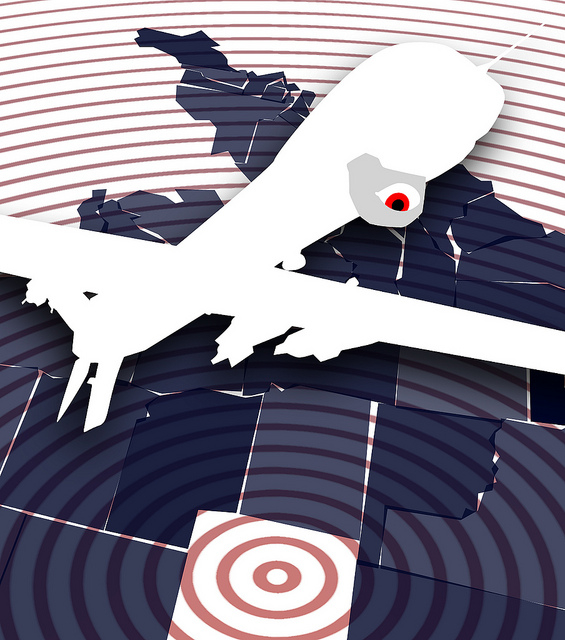
Increasingly, though, the automation of threat-detection and terrorism-classification has been accompanied by the automation of killing, in the form of the generation of “kill lists” of terrorism suspects to be targeted via extrajudicial assassination by drone strikes. As President Obama, encouraged by powerful lobbies in the defense industries, has paved the way for the systematic integration of drones into domestic law-enforcement and homeland security operations, the prospect of extrajudicial assassinations occurring on U.S. soil are no longer merely hypothetical.

Now, new but little-known Pentagon directives authorize the use of armed drones against American citizens in the homeland in the context of domestic emergencies.

**

Flawed DoD Algorithms Determine Extrajudicial Assassinations

**

Algorithms of Death

“The algorithms being developed at ASU remind me of the algorithms used as the basis for signature strikes with drones,” said Thomas Drake, a former senior National Security Agency executive who leaked information about the NSA’s data-mining project Trailblazer to the press in 2006.

Drake agreed that the algorithms linked to “LookingGlass,” a new Pentagon-sponsored visual intelligence platform, could in fact be applied to fine-tuning the generation of the CIA’s notorious “kill lists.”

“Having the U.S. government and Department of Defense fund this kind of research at the university level will bias the results by default. This is a fall-out of big data research of this type, using algorithms to detect patterns when the patterns themselves are an effect – and mixing up correlation with causality. Under this flawed approach, many false positives are possible and these results can create an ends of profiling justifying the means of data-mining.”

It is now increasingly recognized that U.S. drone strikes against foreign terrorism targets have systematically killed large numbers of civilians, with a 2012 joint Stanford and New York University report suggesting that as few as 2% of casualties are “high-level” targets – an analysis cohering with counterinsurgency expert David Kilcullen’s 2009 estimate showing a “kill ratio” of 50 civilians to one militant, or, in other words, 98% civilian casualties.

“My colleagues in Special Forces tell me that the men on the front line are furious with the lack of accuracy and integrity at the national level, and no longer trust the targeting data,” said former veteran CIA case officer Robert Steele, who previously served as a Marine Corps infantry officer.

“They have seen for themselves how wrong the system is when they look their man in the eyes. Technical surveillance is the most expensive, least useful, and least accurate form of surveillance. Technology is not a substitute for thinking. We must become deeply and broadly expert at the human factor.”

Drones Come Home

U.S. administration officials including Obama himself have repeatedly refused to confirm whether the alleged legal power to conduct extrajudicial assassinations via drone strikes extends to the U.S. homeland. Last year, prior to becoming CIA director, John Brennan told the Senate Intelligence Committee: “…we do not view our authority to use military force against al-Qaeda and associated forces as being limited to ‘hot’ battlefields like Afghanistan.” He referred to Attorney General Eric Holder’s statement that “neither Congress nor our federal courts has limited the geographic scope of our ability to use force to the current conflict in Afghanistan.”

In February 2012, Obama signed in a law directing the Federal Aviation Administration (FAA) to throw American airspace wide open to drones by as early as September 2015. U.S. Customs and Border Protection (CBP) already deploys Predator drones to spot smugglers and illegal immigrants crossing into U.S. territory, and two dozen U.S. police departments have successfully applied for FAA permits for drones. As National Geographic observes, “all 18,000 law enforcement agencies in the U.S. are potential customers.” By 2020, it is estimated that some 30,000 drones would be active across the U.S. homeland.

Documents obtained under Freedom of Information by the Electronic Frontier Foundation (EFF) show that police plan to use drones essentially for surveillance. In Seattle and Miami, drones are already being used during criminal investigations and in “hot pursuit” of suspects, and could be used during natural disasters along with “specific situations with the direct authorization of the Assistant Chief of the Homeland Security Bureau.” Hundreds of “domestic drone missions” have been flown by CBP on behalf of other state and local agencies.

Last year, government documents revealed that Department of Homeland Security had customized its Predator B drones, built originally for foreign military operations, for domestic surveillance tasks and to “respond to emergency missions across the country,” including “identifying civilians carrying guns and tracking their cell phones.”

These drones are now being used on U.S. soil by the FBI, Secret Service, Texas Rangers and some local police forces. The DHS had also proposed to arm its domestic fleet of border patrol drones with “non-lethal weapons designed to immobilize TOIs [targets of interest]” – an option also being pursued by local police agencies that want to arm drones with rubber bullets, tear gas and other riot control weapons.

According to an unclassified U.S. Air Force document, the deployment of military drones in U.S. airspace will be controlled by the Pentagon and will be able to monitor unidentified groups, as well as “specifically identified” individuals with the Secretary of Defense’s approval. Military drones “are allowed to fly drones in public areas and record information on domestic situations,” noted Jennifer Lynch of the Electronic Frontier Foundation.

Executive Decisions

In February 2013, an extraordinary Pentagon directive authorized the deployment of U.S. military resources and personnel to respond to domestic emergencies, quell civil unrest and support civilian law enforcement in a domestic terrorism incident. The new directive builds on an earlier 2010/2012 DoD directive specifically authorizing the use of military surveillance drones on U.S. soil under Pentagon authority.

Although that directive prohibited the use of “armed” drones for “DSCA [Domestic Support to Civil Authorities] operations,” the new 2013 directive for Domestic Support to Civil Law-Enforcement Agencies goes further. It broadly asserts that “the Secretary of Defense may authorize the use of DoD personnel in support of civilian law enforcement officials during a domestic terrorism incident.”

Unlike the older directive, it stipulates that U.S. military commanders, including those at USNORTHCOM, USPACOM, and USSOCOM, would receive blanket authority over “operations, including the employment of armed Federal military forces at the scene of any domestic terrorist incident.” No limit is specified on what kind of “armed military forces” the Pentagon can conceivably deploy.

The “hypothetical” but nevertheless real extension of powers here was confirmed when Republican Senator Rand Paul asked Attorney General Holder to confirm the Obama administration’s position on conducting armed drone strikes on U.S. soil.

Holder wrote back that “the president could conceivably have no choice but to authorize the military to use such force if necessary to protect the homeland in the circumstances like a catastrophic attack.”

While denying any specific “intention” to do so, Holder conceded “it is possible, I suppose, to imagine an extraordinary circumstance, in which it would be necessary and appropriate under the constitution and applicable laws of the United States for the president to authorize the military to use lethal force within the territory of the United States.”

Although Holder’s comments were widely publicized last year, their pseudo-legal parallel in the form of the Pentagon’s 2013 directive was not. The latter demonstrates that Holder’s consideration of the U.S. military’s legal authority to execute drone strikes on U.S. soil is far from “hypothetical.” On the contrary, the U.S. military was determined to ensure that this extraordinary authority was formally adopted.

I asked the U.S. Department of Defense whether it could confirm that the Minerva-funded data-mining research would not be used to support the U.S. intelligence community’s analytical tools to identify terrorism suspects, in particular to identify targets for extrajudicial assassination. I did not receive a direct answer to this question.

“Research in these areas will improve strategic and operational responses to insurgencies,” said Dr. Erin Fizgerald, chief of the Minerva program. “Perhaps more importantly, these efforts will help analysts faced with a particular political environment that seems ripe for mass mobilization – or a particular movement that appears to be turning violent or destabilizing a government – know where to look to understand a particular movement and its implications for society.”

Global Instability

Prof. Mark Woodward, an anthropologist who leads the ASU projects funded by the DoD’s Minerva Research Initiative, is also affiliated to the CIA-funded Political Instability Task Force (PITF), originally formed in 1994 by appointment of the U.S. government. Although the PITF boasts of developing a predictive model with a “two-year lead time and over 80% accuracy” based purely on modelling “political institutions, and not economic conditions, demography, or geography,” in practice U.S. intelligence was unable to anticipate the unprecedented wave of instability that has swept across the Middle East and North Africa since 2011.

The Pentagon Minerva program addresses this gap in attempting to account for a complex range of interconnected factors beyond political institutions, including the impacts of environmental, energy and economic crises.

As I reported last year, the NSA’s surveillance programs are linked to extensive Pentagon planning for civil unrest in the context of escalating risks from climate, oil, food and economic shocks. Official documents over the last decade confirm that the intelligence community anticipates a heightened threat of instability, including “domestic insurgencies,” due to social and political collapse triggered by such shocks.

As episodes like the recent conflagration in Ferguson demonstrate, the Pentagon’s fears of a future of imminent domestic civil unrest are already being borne out.

Dr. Nafeez Ahmed is a bestselling author, international security scholar, investigative journalist and regular Guardian contributor on the geopolitics of interconnected environmental, energy and economic crises. This article was originally published on Occupy.com and is the fourth and last part of an investigation published. The first part can be read here, the second part here and the third part here.

Photo by Truthout on flickr

Abby Martin on The Joe Rogan Experience & Larry King’s Politicking

JoeRoganJoe Rogan defines new media. He’s a comedian, MMA fighter and former Fear Factor host who also pioneered The Joe Rogan Experience (JRE), a wildly popular podcast featuring an eclectic variety of fascinating and unfiltered guests. Because he runs the project, there are absolutely no constraints, censorship nor shady corporate sponsorship.

I was honored to join Joe recently for an in-depth discussion about a range of issues including the Gaza massacre, Gitmo, NSA spying, Fukushima, Big Pharma & much more. Many fucks are said, so if you’re offended by swearing please skip the broadcast.


The Joe Rogan Experience with Abby Martin

**

Larry King and I have had strong differences in the past about what defines a journalist, so I was lucky to be invited on his show to share my perspective on the two-party dictatorship, stop-and-frisk and new media.

Abby Martin Faces Off with Larry King on Dinosaur Media

**

I also recently joined Kevin Pereira, hilarious host of the Pointless Podcast, to talk about a whole host of craziness.

Follow me at @AbbyMartin

Terms and Conditions May Apply: Dangers of Corporate Surveillance

Robbie Martin talks to Cullen Hoback, privacy advocate and creator of Terms and Conditions May Apply, a must-watch documentary about digital privacy rights, corporate/government spying collusion and the data mining economy of corporate surveillance.

Terms and Conditions May Apply premiered a few months before the world learned Edward Snowden’s name. Following the leaks, Cullen’s thesis was emboldened, so he added an addendum contextualizing them.

Watch the trailer:


Terms and Conditions May Apply

**

Be sure to listen to our previous Media Roots Radio episode ‘Occupy Silicon Valley‘ for more information on the history of Silicon Valley and why there is so much missing outrage over private sector spying.

If you would like to directly download the podcast click the down arrow icon on the right of the Soundcloud display. To hide the comments to enable easier rewind and fast forward, click on the icon on the very bottom right.

This Media Roots podcast is the product of many long hours of hard work and love. If you want to encourage our voice, please consider supporting us as we continue to speak from outside party lines. Even the smallest donations help us with operating costs.

Listen to all previous episodes of Media Roots Radio here.

Follow Robbie @fluorescentgrey