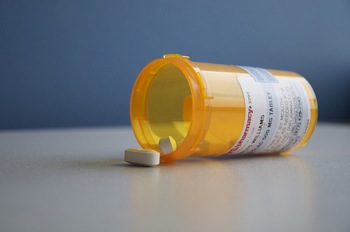
SMART PLANET– Take a look at your prescription bottle. If you’ve noticed an increasing
number of side effects on your prescription label, you aren’t alone.
According to a new study, researchers found that the average prescription drug label lists 70 potential side effects, reported WebMD. On the higher end, one medication in the study listed 525 potential side effects, reported WebMD.
“It’s out of control,” said Jon Duke, MD, an assistant professor of medicine at Indiana University School of Medicine, in a phone interview with SmartPlanet.
By looking at almost 5,600 drug labels, researchers were able to see which drugs had the highest list of side effects.
DAILY MAIL– Patients have lost access to hundreds of herbal medicines today, after European regulations came into force.
Sales of all herbal remedies, except for a small number of popular products for ‘mild’ illness such as echinacea for colds and St John’s Wort for depression have been banned.
For the first time traditional products must be licensed or prescribed by a registered herbal practitioner.
Both herbal remedy practitioners and manufacturers fear they could be forced out of business as a result.
Some of the most commonly used products were saved after the Health Secretary Andrew Lansley approved a plan for the Health
Professions Council to establish a register of practitioners supplying unlicensed herbal medicines.
However, many remedies were lost as it was only open to those who could afford the licensing process which costs between £80,000 to £120,000.
MEDIA ROOTS – In this edition of Media Roots radio Robbie and Abby Martin discuss pharmaceutical drugs, the co-opting of the tea party from the neo-conservatives, and go after “liberal” commentators like Jon Stewart and Bill Maher that frame the debate in a destructive way. We also break down the true threat of terrorism, and the importance of privacy in our lives.
The above timeline is interactive. Scroll through it to find out more about the show’s music and for the links to resources mentioned during the broadcast.
If you would like to directly download the podcast click the down arrow icon on the right of the soundcloud display. To see a larger version of the timeline with clickable resources go to the soundcloud link below the player. If the link is down, use an alternate backup stream HERE.
This Media Roots podcast is the product of many long hours of hard work and love. If you want to encourage our voice, please consider supporting us as we continue to speak from outside party lines. If you donate, we want to thank you with your choice of art from AbbyMartin.org as well as music from RecordLabelRecords.org. Much of the music you hear on our podcasts comes from Robbie’s imprint Record Label Records, and Abby’s art reflects the passion and perspective that lead her to create Media Roots.
$40 donation: One 8×10 art print and one RLR release (You choose! Tell us in the Paypal notes.)
$80 donation: Two 8×10 art prints and two RLR releases (You choose!)
$150 donation: Four 8×10 art prints and four RLR releases (You choose!)
Even the smallest donations are appreciated and help us with our operating costs.
GUARDIAN– The consequences of contamination between GM
crops and non-GM varieties will be much more serious with the next generation
of GM crops, an influential group of US scientists has warned.
Mixing between GM and non-GM varieties has
already caused serious economic losses for producers in lost sales and exports.
But the consequences of mixing will be much more serious with new crops that
are altered to produce pharmaceuticals and industrial chemicals, the scientists
argue. The crops could harm human health and be toxic to wild animals.
“What would be the impact societally,
economically if for example, cornflakes were contaminated by some sort of drug
or chemical? I think it would be a vast impact economically,” said Karen
Perry Stillerman, senior food and environment programme analyst with the Union
of Concerned Scientists.
“I think it’s really hard to say [what
impact contamination would have] because there is a variety of different drugs
and chemicals that might be manufactured in plants this way,” she added.
“Our perception is that some of them might be toxic, but all of them would
certainly cause tremendous economic upheaval.”
The group presented its findings at the
American Association for the Advancement of Science conference in Boston.



 SMART PLANET– Take a look at your prescription bottle. If you’ve noticed an increasing
number of side effects on your prescription label, you aren’t alone.
SMART PLANET– Take a look at your prescription bottle. If you’ve noticed an increasing
number of side effects on your prescription label, you aren’t alone. DAILY MAIL