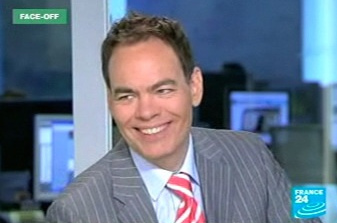
 MEDIA ROOTS — Noted economist and syndicated TV show host, Max Keiser has studied, and reported on, the global economy for decades. He looks at financial systems according to the mathematical laws of systems analysis and occasionally discusses the warning signs of impending economic collapse. On last Friday’s episode of The Alex Jones Show, Keiser discussed the looming collapse of global markets. With the Congressional Budget Office having echoed Keiser’s prediction of “fiscal tighenting” yesterday, it appears the former stock-trader is again on the mark.
“I’m saying that there is a 90% chance of collapse by next April, but it could happen at any time between now and April,” Keiser reported on August 17. “You have to look at [the global economy] in terms of the way a systems analyst would look at any complicated system. Every time you add more to the system the complexity doesn’t rise in a linear fashion, it rises exponentially. So every time the Fed puts on more quantitative easing, every time investment banks bail out some other investment bank, every time more derivatives are released into the system, you don’t go from, let’s say, 700 trillion notional value derivatives to 800 trillion in a linear way. You have to think of it in terms of this global quadrillion to two quadrillion derivative soufflé being encumbered with, exponentially, more risk. This is classic systems analysis.”
This nation’s economy has been growing in complexity, exponentially, since 1971 when the U.S. dollar was taken off the gold standard. “The game here is to try to pick where it starts, what is the trigger, and to study it in terms of how the economies rattle and roll, as a result of this complete and utter systemic breakdown,” continued the founding host of The Keiser Report, a biweekly program, that aired its 330th episode yesterday.
Could Japan trigger the global economic collapse?
Keiser looks to the economy of Japan as a “weakest link” and a possible trigger for systemic collapse. He says what turned his eye toward Japan was the recent announcement that the second biggest buyer of U.S. Treasury debt is no longer China. Keiser explains, “America is the biggest buyer of its own debt. But taking the second spot is Japan. China is walking away from the table.”
Keiser continues, “Japan has always been under the treasury of America’s thumb. They will do whatever America says. And now they are the number two biggest buyer [sic] of US Treasury bonds. But that is extremely dangerous because their economy itself is a tinderbox, probably the weakest, most fragile economy in the world—after the Fukushima disaster, after 20 years of the zombie economy and the zombie banks. But now they are supporting America. Japan, the zombie economy, is supporting the American economy, to give you an idea how fragile the system is.”
“There is no avoiding the collapse. There is no remedy for the collapse.”
He then predicts civil unrest and a generational civil war. Therefore, the government is preparing for civil unrest, long anticipated by the John Warner National Defense Authorization Act of 2007, which rewrote federal law to allow deployment of the military, specifically, in cases of “economic collapse.”
After describing our evolving “hard gulag” situation in this country with private prison systems increasing capitalization, expecting 20-50 million more inmates in the near future, Keiser defines a new type of dystopia he calls a “soft gulag,” where citizens give up more freedoms—such as facial recognition—in exchange for deals on consumer goods.
Tom Ball and Oskar Mosco for Media Roots
Photo provided by Flickr user Stacy Herbert
***
Max Keiser recently appeared on The Alex Jones Show to discuss the imminent financial collapse of global markets. (Also, see his Guns and Butter radio broadcast below.)
***
August 22, 2012
GUNS AND BUTTER — “You don’t know which snowflake is going to start the avalanche. You know that the system is under such stress that it will only take one more snowflake to start the avalanche, that the system, itself, is under extreme stress right now. It cannot take even one bit more of systemic complication, you know, exponential increase in system complication. So, we’re at that pre-avalanche phase.”
Bonnie Faulkner (c. 1:15): “I’m Bonnie Faulkner. Today on Guns and Butter: Max Keiser. Today’s show: ‘Countdown to Currency Collapse.’
“Max Keiser is a financial analyst, television and radio host, journalist, and entrepreneur. He is host of the biweekly The Keiser Report with Stacy Herbert on RT. His co-host was Stacy Herbert of the weekly radio talk show on Resonance 104.4 FM in London and is host of On the Edge on Press TV. He produces documentary films covering markets for Al Jazeera’s People & Power series and is a frequent guest on Al Jazeera English and France 24. Max Keiser is creator of PirateMyFilm, an alternative media funding mechanism, that supports the creative commons.
“Max Keiser: Welcome.”
Max Keiser (c. 2:13): “Always a pleasure to speak with you, Bonnie.”
Bonnie Faulkner (c. 2:15): “It’s been a year since we last spoke, Max. At that time, you had just returned from Greece. And we spoke about the crisis there. A lot has happened in the past year. Let’s start with fraud. Bring us up to date on the latest in financial fraud. What’s been going on?”
Max Keiser (c. 2:37): “Well, the number of frauds are increasing. And they’re getting bigger.
“At HSBC, they’re implicated in a multi-hundred-billion-dollar money laundering scandal for Mexican drug cartels.
“There’s also Barclays. They’re involved with the multi-hundred-trillion-dollar LIBOR rigging scandal.
“JPMorgan was caught fiddling their books in London on this recent two- and then five-billion-dollar error. So, the list goes on and on.
“Standard Chartered, now fined a few hundred million dollars for money laundering for Iran.
“Just about every single one of the so-called too-big-to-fail banks is involved in a multi-hundred billion dollar scandal of some type. So, the level of fraud is increasing. The numbers are getting bigger. The response from regulators around the world is still a big nothing, a big silence.”
Bonnie Faulkner (c. 3:43): “Now, I never completely understood the LIBOR scandal—banks fixing interbank lending rates. I mean, haven’t they always done this?”
Max Keiser: “Well, it’s a question of trading on the advance information. They fix the rate. But they are telegraphing their machinations to the market ahead of time to trade on that inside information.”
Bonnie Faulkner: “Well, now what about this MF Global and John Corzine with people’s money in their own private accounts just disappearing. Has anything happened with that at all?”
Max Keiser (c. 4:19): “Well, the John Corzine story at MF Global is really introducing a new chapter in all this ‘cos as you point out, money was directly taken out of segregated customer accounts—over a billion dollars.
“Corzine, himself, his defence is that money simply ‘vaporised.’ That’s the word he used. And that has held up. No regulatory agency is questioning his defence the money simply ‘vaporised.’ He has no idea where it went. And, now, the new scuttlebutt is he’s starting a new hedge fund. So, John Corzine is up and running. He’s starting a new hedge fund, back in business. And his crimes, along with Jamie Dimon at JPMorgan, are just being swept under the rug.”
Bonnie Faulkner (c. 5:15): “Yes, I did read that he was going to start a new hedge fund. I mean how can he do that? There’s no law anymore, I guess.”
Max Keiser: “Well, he’s a made man. You know he’s a former governor of New Jersey. He’s former head of Goldman Sachs. He’s part of the inner circle of the global financial mafia. He’s untouchable.”
Bonnie Faulkner: “Right. And what do you think about this Facebook IPO fiasco?”
Max Keiser: “This is a—I think it’s pretty interesting because on Wall Street for years there have been the notorious bucket jobs, as peddled in, usually, penny stocks. And it’s a really kind of an unseemly side of Wall Street, that’s operated, really, since Wall Street’s been around.
“And the pump and dump scam is [where] the insiders buy up a bunch of some company with very dubious prospects. And then they start calling people up to get them to buy into this ‘amazing’ story. And [insiders] sell out their stock at a much higher price to the new investors. And then, once [insiders] stop selling their stock, the market collapses and investors are [left] holding worthless stock.
“So, here, this is the first $104-billion-dollar pump and dump scam. Facebook’s business prospects are dubious. There’s not really much of a model there. You had the likes of [Democrat president] Barack Obama putting his arm around Mark Zuckerburg in the White House promoting this pump and dump scam. The insiders, as the stock crossed in valuation from $30 billion, $40 billion, $50 billion, etcetera, all the way up to $100 billion, all the way up to the IPO, the insiders were dumping, including Zuckerberg.
“So, the insiders, the venture capitalists, they’ve sold out. They’ve made billions of dollars. The people, who ended up buying in to this at $38 dollars a share on the IPO, they are the suckers. They are the victims. They got—the stock has been dumped on to them. And it’s a classic pump and dump scam. It’s unusual because you have never seen one ever—I don’t think there’s ever been one—a $100-billion-dollar pump and dump scam. That’s certainly novel.
“But the underlying story here is a classic penny stock Wall Street pump and dump scam.”
Bonnie Faulkner (c. 7:42): “I didn’t realise that Zuckerberg had been dumping his stock.”
Max Keiser: “Oh, sure. He’s raised over a billion dollars in cash.”
Bonnie Faulkner: “Well, now, do you think this was intended as a big scam right from the beginning?”
Max Keiser: “Well, by what I’m saying is, it’s one of many tried and true scams, that Wall Street uses to sucker people out of there money. It’s called a pump and dump scam. It’s one of many types of scams. And the people who’re behind it, when they organise it, they begin to begin the story, the narrative to this they do so with full knowledge that they are engaged in a fraudulent activity—the same thing with Groupon, the same thing with Zynga.
“Oh, by the way, all three of those companies are all pump and dump scams: Zynga, Groupon, and Facebook. And, collectively, in the last three months, shareholders have lost over $62 billion dollars. And all three of those companies share Ernst & Young, as their auditor. And that brings up another aspect to this racketeering, that’s going on because there’s several components to the racket. There’s the Wall Street banks. There’s the auditors, that are involved. Then there’s the hedge funds. Then there’s the rating agencies. Then there is mainstream financial media, like CNBC.
“But the auditor’s role is that they sign off on books, that characterise things, such as losses as revenue. So, in the case of Zynga, they were generating losses, but they mark it as revenue. I mean that’s what the auditor does. They are very corrupt and they are part of this mafia racket.”
Bonnie Faulkner (c. 9:32): “Right. So, there’s fraud in all of these accounting firms. I mean I’m reminded of Arthur Andersen. I think they went under, didn’t they?”
Max Keiser: “Well, Enron—Arthur Andersen was Enron’s accountant—they were engaged in massive fraud and hiding tens of billions of dollars’ worth of liabilities. Then, when it was exposed, they went out of business. But the remaining Big Four (or Big Five, whatever they’re down to now), they have not changed their practices at all. They’ve only gotten more egregious in their outrageous accounting misconduct because they’ve been very aggressive in getting Congress to change laws, modify laws, bring in new laws, to strengthen their stranglehold with this mafia approach. So, they’ve gotten much worse.”
Bonnie Faulkner (c. 10:23): “How important or dangerous is this continuing financial fraud? Is it something, that’s always going on? Or do you see this as a real shift, as a break down in the financial system, itself?”
Max Keiser: “The financial system started to break down in the 1970s and it’s just been getting worse. And it’s been accelerating, in terms of its breakdown.
“I just wanted to you give you a good reference here. Francine McKenna, who’s a former, one of the big accountants, writes for Forbes, and she has a great story here about Groupon, Facebook, Zynga. And they share the same accountant—Ernst & Young is the accountant.
“But the system—you asked, how much damage is this doing to the system?—it’s approaching to a point now where the system is now so overloaded with fraud and derivatives, which are desperately trying to cover over this fraud. That we are kind of rapidly approaching a point of a global financial breakdown, that would be far in excess of what we saw in 2008.”
Bonnie Faulkner (c. 11:52): “Right. And what in your opinion is keeping the stock market afloat? I mean they’re—what?—12-, 13,000, still. And, yet, I keep reading that the average investor has lost confidence in it. What’s keeping this all floating?”
Max Keiser (c. 12:11): “Well, 86% of the volume on the New York Stock Exchange are computers trading with other computers. They’re not humans.
“And the computers are programmed, using algorithms, to make massive amounts of trade. They’re funded with off-balance accounts, that are not officially on anyone’s books. And those values are basically you know ephemeral. It’s a hologram generated by computer trading, high-frequency trading, algorithmic trading, just to keep the value of the presumed collateral on these banks at a level, that they can continue their operations. That is unsustainable. And we see it breaking apart. We see these flash crashes, that are occurring, where Knight Capital blew up in 45 minutes, lost $440 million dollars in five minutes because an algorithmic trading robot blew up. So—and these are happening with greater frequency, with bigger numbers. So, that’s what we’re heading for.
“We have a systemic collapse. You’ll have a multi-trillion-dollar flash crash affecting the financial markets, that will occur, like the Enron situation, quite rapidly. And the system will be irreparably damaged.”
Bonnie Faulkner: “Now, when we talk about a systemic collapse, particularly, of the financial system. And it’s all tied together now. As you’ve stated, things are much worse now than in 2008. How do you see this happening? Nobody’s got a crystal ball. But at some point, the system’s gonna give away, isn’t it? I mean is the whole thing gonna come crashing down? People have been predicting this for a long time. But somehow it just keeps continuing.”
Max Keiser (c. 14:11): “Well, the people, who have been predicting different scenarios, they’ve been predicting, you know, different versions of this story, and with different outcomes, and different timelines. But it’s important to remember that the basic timeline is still very much in place over the last five to ten years.
“The markets are coming unglued. The income gaps are widening dramatically. The potential for civil unrest, the actual civil unrest, is increasing sharply. The amount of contortionist monetary policies required to cover the gaping holes of the system are becoming more extreme. So, you have programmes, like quantitative easing manoeuvres.
“So, all these things are coming together. And, though, the timing of it—I’ve gone on record as saying that by April of 2013 you’ll have this global collapse. You’ll have at the outset now probably in April of 2013, when they do the taxes. For the U.S., there will be a remarkable shortfall in taxes. And U.S. government paper will be downgraded pretty sharply.
(c. 15:34) “But what it looks like is the currencies, the major currencies of the world—the dollar, the euro, the yen, the Chinese RMB—collapse. Like we saw a currency fall in Argentina; like we saw a currency collapse in Iceland; as we’ve seen in the central Asian collapse of the ‘90s. But there’s a global synchronous currency collapse.
“Now, when I say currencies, I do not include gold and silver. Gold and silver, of course, would be the opposite trade, the opposite of this. This is where the smart money is moving now.
“The central banks are buying gold. China is very aggressively buying gold. Smart hedge funds, like John Paulson, increased their gold. Soros is increasing his gold. ‘Cos they know what’s about to happen. They know we’re at the end game now. So, they wanna have the only thing, that’s been good money for the last 5,000 years—gold and silver.”
Bonnie Faulkner: “I’m speaking with financial analyst and broadcast journalist Max Keiser. Today’s show: ‘Countdown to Currency Collapse.’ I’m Bonnie Faulkner. This is Guns and Butter.
“So, when you say you see the system breaking down April 2013, you’re basing that on when U.S. taxes are due, correct?”
Max Keiser (c. 16:58): “I think that’ll be the—if the system is still around by then, I project that that remarkable shortfall come April next year will be, if there needs to be a trigger, yet, to fire to cause this global meltdown—that would be the trigger. And that would be the time frame.”
Bonnie Faulkner: “You know it’s interesting because a lot of people I know who barely have any money at all are getting these letters from the IRS and the Franchise Tax Board after them for these little bits of money. And I’ve just noticed this in the last month. So—I don’t know—are they going after the little guy? It’s kind of nutty.”
Max Keiser (17:46): “Well, this is predictable. And it’s historically predictable. They’re broke. They’re looking for any money they can. They’re broke. The government is completely broke. There’s no economic scenario, that you can imagine or create, that would pay off U.S. government debt. It just mathematically can’t happen under a so-called world scenario.
“There’s only two outcomes. One is a default on the debt. That would be an utter collapse. Or, two, hyperinflation, or a currency collapse, which is what I think is gonna be the outcome.
“I think they will attempt to inflate their way out of this debt, by allowing the dollar and other currencies to collapse in hyperinflationary endgame. And that’s coming.”
Bonnie Faulkner (c. 18:46): “Well, if you see a collapse in fiat currency, how is that gonna look? I mean what would happen?”
Max Keiser: “The price of gas would be $15 dollars a gallon. And groceries would be $2-, $3-, $400 dollars for a bag of groceries.”
Bonnie Faulkner (c. 19:08): “So, when you’re talking about hyperinflation, like something like what occurred in pre-World War Germany.”
Max Keiser: “Right. Exactly.”
Bonnie Faulkner: “What about global debt and U.S. debt, in particular? A lot of economists think that because the U.S. government prints its own money and that the dollar is the world government reserve currency, that the U.S. government can stimulate the economy and create an economic recovery by creating a new New Deal (i.e., putting money into infrastructure, reconstruction, hiring people, etcetera).
“Do you see an FDR-type New Deal scenario as a possible fix?”
Max Keiser (c. 19:49): “At the time of the New Deal, the U.S. was the world’s biggest creditor. Now, the U.S. is the world’s biggest debtor. And they simply don’t have any room for that. You know, right now, the biggest buyer of U.S. debt is the U.S. government. Up until recently, the second biggest buyer was China. Now, it’s Japan. China is dumping their U.S. debt, as are various other global creditors.
“You can’t finance debt with more debt infinitely. It just doesn’t work that way. It’s like inventing an anti-gravity machine or something. It’s not gonna happen. So, you can’t make the comparison really. If you want to make the comparison, say, to another period of time, the crash of the period of the ‘20s and of the Depression, if you get go back and draw the right conclusions from that period of time.
“You know the Depression was caused primarily by the run up in speculation on Wall Street in the ‘20s. And you had the crash of ’29. The recovery was, really, the number one contributor to its recovery were the reforms, that were put in place by FDR, and also the Pecora Commission, that was in place, that went ahead and prosecuted bankers and put many, many bankers in jail, and brought in things like Glass-Steagall, and FDIC, etcetera.
“And, now, the crisis today is we have the same problem. Wall Street speculation creates this enormous bubble in derivatives, that crashed in 2007. And the solution is similar. You need to reform the banks, if you want to recover from the resultant Depression, which is the result of the banking speculation. But we’re nowhere near that. There’s no Pecora Commission. There’s no bankers going to jail. There’s nothing.
“So, there’s no hope of any kind of recovery until you learn the lessons from the crash of the Depression of the ‘20s and ‘30s.
“A stimulus programme based on issuing more fiat currency, that simply gives bankers more leeway to commit more fraud is, you know, throwing gasoline onto the fire. You don’t wanna give stimulus, print money, and to have it circulate through Wall Street, so that they can leverage that up another ten or fifteen times, create another five or ten trillion dollars of unsustainable debt. And then make simply the result a crash that much worse.
“But I don’t think we’re gonna even have the opportunity to try that experiment because I believe we’re in the last 35 weeks of the timeline, before we get the global fiat currency obliteration. So, there won’t be any time, really. It’ll be a moot point in six months.”
Bonnie Faulkner (c. 22:51): “So, you’re saying that you think that the systemic fraud, this time around—as opposed to the Depression era—is much, much worse and, actually, the banks control the government, rather than vice versa, right?”
Max Keiser (c. 23:06): “Well, I’m not necessarily saying it’s worse. I’m saying that there’s been no response. In the ‘30s there was a response. Banksters were put into jail.”
Bonnie Faulkner: “Right.”
Max Keiser: “Here, there’s been no response at all.”
Bonnie Faulkner: “Exactly.”
Max Keiser: “So, until there’s been a response, then expect more of the same.”
Bonnie Faulkner: “Now, how do you see the next nine months going? It looks pretty bleak. What do you think is gonna trigger this whole thing—the inflation of the currency?”
Max Keiser: “Well, that’s an interesting point. Then you get more into a grey, fuzzy area: What, ultimately, will be the trigger?
“I think, at the worst, at the outset of this timeline, I’m saying tax receipts April 2013 is gonna be the ultimate trigger, if there is no trigger between now and then.
“But, before that, you could get something like Japan, [which] is extremely fragile. They’ve got GDP: over 200%. They’ve got, now, demographically, a horrible situation, where, instead of being allowed to finance their debt internally, they’ve got a whole generation, that’s pulling money out of the retirement systems. So, that’s essentially collapsing. And they’re a big part of this global, globalised, financialised, transactionalised world.
“So, that could be the trigger, there. And, right at the moment, that’s my—I’m kind of looking at that pretty closely. I think that what’s happening in Japan could be the trigger to set this up.
“But it could come from a number of different sources.
“In South Africa, you know, they had these huge labour riots and the government responded by murdering many, many people. South Africa, of course, is very key on the global commodity business—gold, platinum business. If that spreads to gold–mining in South Africa, some nationalisation wave occurs across the commodity sector, that could be the possibility. There are other possibilities. Any one of those could be the trigger.
“You don’t know which snowflake is going to start the avalanche. But you know that the system is under such stress that it will only take one more snowflake to start the avalanche. But the system, itself, is under extreme stress right now. It cannot take, you know, even one bit more or systemic complication, exponential increase in system complication. And, so, we’re at that pre-avalanche phase.”
Bonnie Faulkner (c. 25:41): “And, now, you mention Japan, as a possible trigger because why? Japan is the second-largest buyer of U.S. debt?”
Max Keiser: “Well, the yen is a currency, that everyone has flocked into, as a safe haven trade. And, so, there’s a tremendous amount of money locked up in Japan right now with the idea that the economy is relatively stable with other G20 economies.
“But it looks as though that is about to reverse itself and the country will not be seen as a safe haven anymore, which would precipitate outflows, many, many, many trillions out-flowing. And then that would be the beginning of this avalanche.”
Bonnie Faulkner (c. 26:29): “Well, now, let’s say that the system, which is teetering, really does crash in some fashion. What else do you think that that would look like?
“I’ve done shows on the militarisation of the local police departments. Obviously, the U.S. has the most advanced technological weaponry. We’ve got a huge prison-complex industry going on here.
“Do you see a martial law type scenario? What do you think might it look like?”
Max Keiser (c. 27:05): “Well “Well, first of all, in terms of one or the other attributes, aside from hyperinflation, you’d have bank, so-called, holidays. So, banks would shut down. So, this would make it very difficult to fund operations. You know in 2008 we had that situation where the credit lines amongst the top banks in the world froze. And they couldn’t get money from each other. They couldn’t lend to each other. There was a complete freezing up of the global system.
“So, imagine this more comprehensively with ATMs running out of money.
“Already, in Europe we see instances—for example, here in France—the limits, that you can take out of your bank, using an ATM card, have been reduced. So, that’s kind of a soft run on the bank. So, the banks can simply say you can only take out a hundred dollars a day. Then, a week later, they’ll say you can only take out $50 dollars during the course of the day.
“In Britain, recently, you had two banks go through multi-day systemic failures where people couldn’t get their money. They couldn’t move their money. They couldn’t pay their bills.
“So, the system, again, is highly stressed. And that would be what it looks like. You can’t get money in the machine. You’re completely without money.
“You know, we’ve seen this in Argentina. And we’ve seen this before.
“But, as far as what it looks like on the social—what The Economist magazine would call—the social cohesion. You know they ran a story two or three years ago they called The Social Cohesion Index, where they tried to predict which countries would be the least fun places to be during such an event. And my general rule of thumb is you don’t wanna be anywhere with a lot of tanks, soldiers, guns, and prisons. Try to stay away from those areas.
“So, certainly, in the U.S., you have a lot of soldiers, guns, and prisons now. And that’s not a good place to be. I’m not there for this reason. So, that would be a good rule of thumb. If you see a lot of drones, cops, guns, tanks, soldiers. Try to stay away from those areas.”
Bonnie Faulkner (c. 29:29): “Yeah, no kidding.”
“I’m speaking with financial analyst and broadcast journalist Max Keiser. Today’s show: ‘Countdown to Currency Collapse.’ I’m Bonnie Faulkner. This is Guns and Butter.”
“Well, I understand that you’re planning a move to Great Britain. Now, isn’t Great Britain pretty much right up their with the police state scenarios?”
Max Keiser: “Well, as a media figure it’ll be interesting to see how that plays out. Of course, you’ve got the Julian Assange story playing out where Julian Assange, a journalist, has now taken on the biggest governments in the world. And, so far, he’s doing quite well.
“So, Britain is becoming a really interesting place, and not only for journalists’ rights, but also ground zero for global banking fraud. So, all the biggest bank frauds of the last ten years have gone through Britain, gone through the City of London, whether it’s AIG, MF Global, JPMorgan’s London Whale, Bernie Madoff, the Royal Bank of Scotland, HSBC, Barclays. They all go through London. It’s really the epicentre of the global bank fraud market. And, as we cover bank fraud, as kind of the thing, that we cover, we decided that since we’re heading into the endgame, we wanted to be in a front-row seat ‘cos the whole City of London is about to blow up. We want to be there, cover it, and give a first-hand account of that.”
Bonnie Faulkner (c. 31:02): “Boy, I’ll say. But do you ever feel that your safety is at risk, or not?”
Max Keiser: “I don’t have any fear of that. And I’ll tell you why. There was a poll done recently, asking people if they knew who Jamie Dimon was. 66% have absolutely no idea. So, if our work has in some way educated people about the people, that are abusing them, then there might be some risk. But, since 66% of the population or more have absolutely no idea how they are being abused, then the banksters, who are doing the abusing, don’t really care.”
Bonnie Faulkner: “Oh, I see. So, they feel that everyone is so uneducated that who cares if they’re being exposed.”
Max Keiser (c. 31:53): “Yeah, they are not at any risk. There’s no possibility of them being penalised or facing any kind of jail time. So, they are too busy spending their money, having fun. You know? They’ve got yachts to make payments on and vacations to go on. They’re not under any threat whatsoever. I doubt any of them even know I exist.”
Rush Transcript by Felipe Messina for Media Roots and Guns and Butter (Please check back soon for complete transcript)
***
 MEDIA ROOTS — Known mostly in parts of south east Asia and Thailand, kratom is somewhat of a cultural intoxicant similar to the use of coca leaves (from which cocaine is derived) by the Bolivians and the use of khat or betel nut used by Arabic cultures. The difference among these ‘cultural intoxicants’ is that kratom has effects similar to big pharma’s slew of ‘pain killer’ drugs. The term ‘pain killer’ here is a slight misnomer since drugs like Vicodin, OxyContin, codeine and morphine ‘kill’ pain by flooding the brain with pleasure, thus, distracting you from the physical pain you may be experiencing.
 MEDIA ROOTS —
 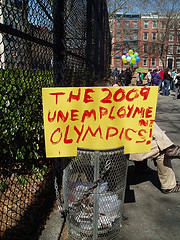 MEDIA ROOTS — Although the corporate media touts an improving economy, U.S. citizens continue to suffer cruel economic punishment and austerity. Millions of citizens still search for employment, and the typical income of a U.S. household is less now than it was in 1997. Why is the economy not improving? Wall Street makes an easy target for the ire of struggling workers, but is there a deeper, more complex reason why the economy creaks, tumbles and rolls like an outdated galleon laboring in rough seas?
.jpg) MEDIA ROOTS — The
number of deeply impoverished Americans has exploded since Obama took office,
according to Panorama, BBC’s weekly
investigative news program. In fact, the U.S. is
MEDIA ROOTS — The
number of deeply impoverished Americans has exploded since Obama took office,
according to Panorama, BBC’s weekly
investigative news program. In fact, the U.S. is